t
microwhip scorpions, schizomids
low
No known importance. Schizomids are active predators and achieve high population densities in some areas, and so have the potential to be of conservation concern. Many species have limited geographical distributions.
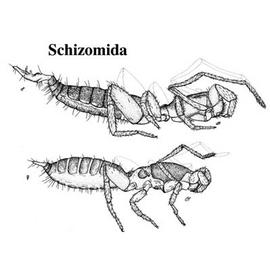
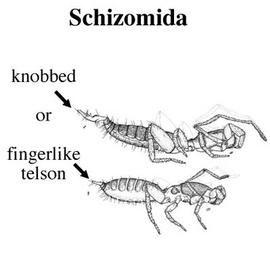
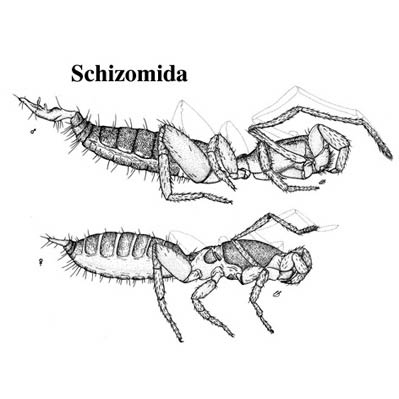
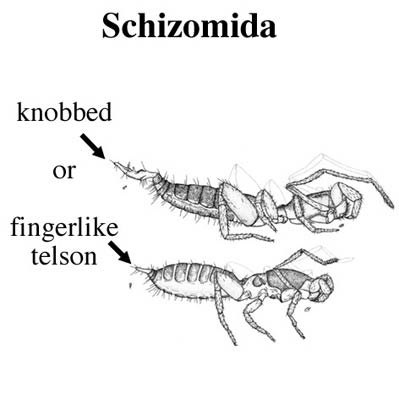
Small size and general arachnid features, but the clearly segmented opisthosomaopisthosoma:
(= abdomen) the posterior body division in arachnids; usually not distinct in mites because of the fusion of the opisthosoma with part of the prosoma to form the idiosoma.
and terminal knob or spine distinguishes schizomids from mites.
Normal adult length: <5 mm (rarely to 10 mm)
Bodybody:
the idiosoma of mites.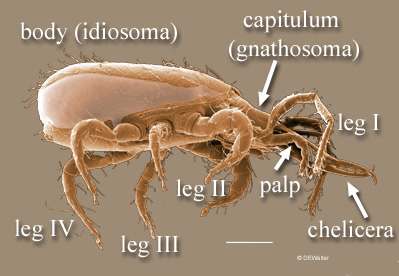 tagmata: prosomaprosoma:
(= cephalothorax) the anterior body region in arachnids; usually not distinct in mites.
, opisthosomaopisthosoma:
(= abdomen) the posterior body division in arachnids; usually not distinct in mites because of the fusion of the opisthosoma with part of the prosoma to form the idiosoma.
, telson
Eyes: absent
Antennae: absent
Mouthparts: 2-segmented fang-like chelicerae; robust, raptorialraptorial:
(Latin raptor = robber) modified for capturing prey; predatory. The pedipalps (e.g., many Cunaxidae) or legs I may be raptorial in mites.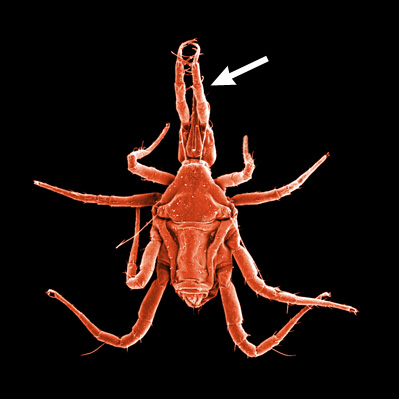 5-segmented palps with distaldistal:
towards the free end of an appendage.
claws
Legs: 4 pairs; legs I antenniform
Distinguishing features: segmented opisthosomaopisthosoma:
(= abdomen) the posterior body division in arachnids; usually not distinct in mites because of the fusion of the opisthosoma with part of the prosoma to form the idiosoma.
, stabbing chelicerae, 'tail' with knobbed (male) or finger-like process
2 families, 38 genera, >218 species
Author: David E. Walter
Content last updated Sept. 2006, unless indicated otherwise
Lucid key player updated Sept. 2025
idtools.org