t
pseudoscorpions
high
No known importance, but pseudoscorpions are predators capable of achieving high population densities and could be of conservation concern.
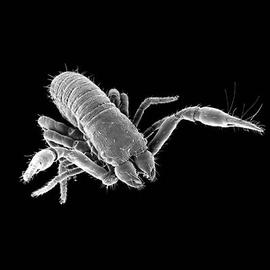
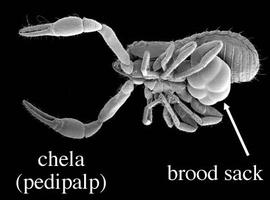
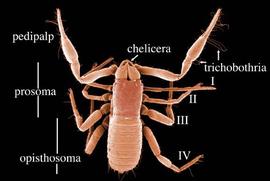
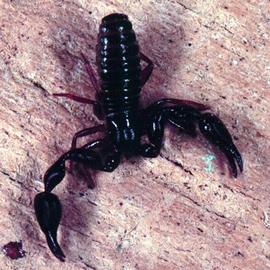
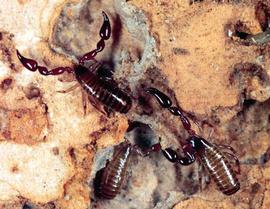
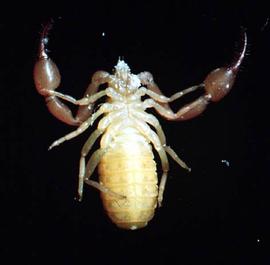
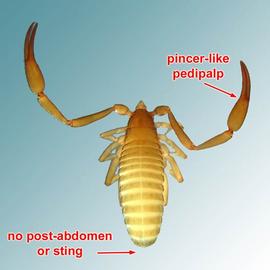
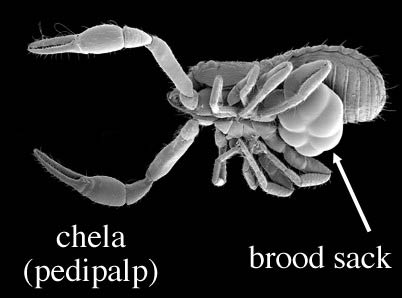
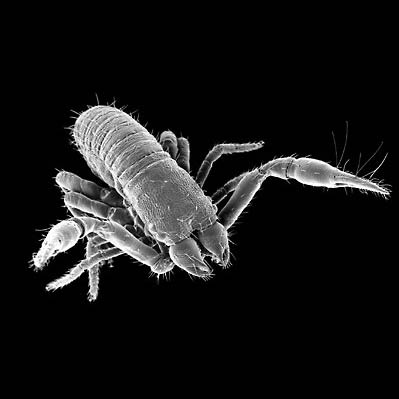
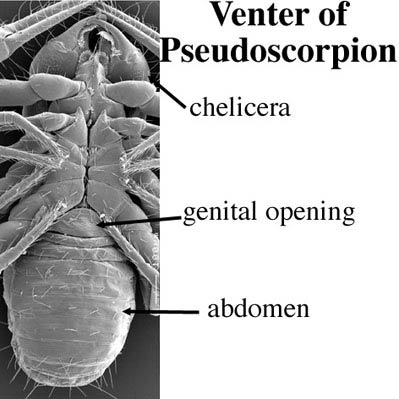
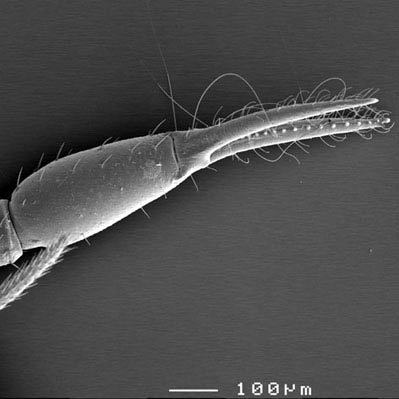
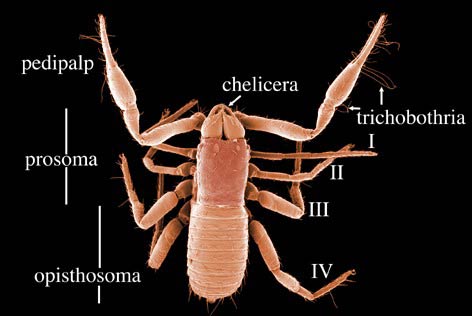
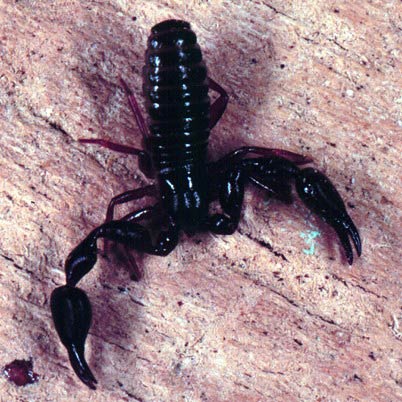
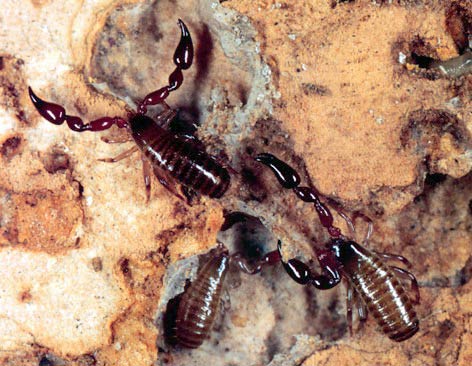
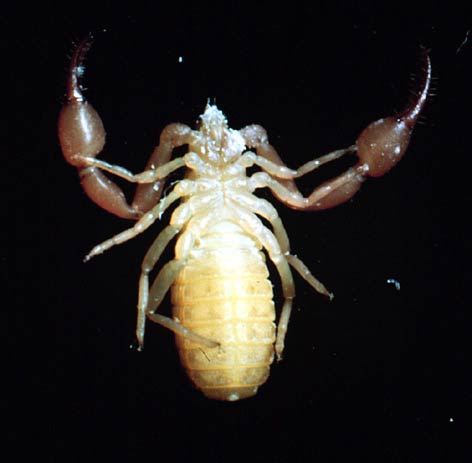
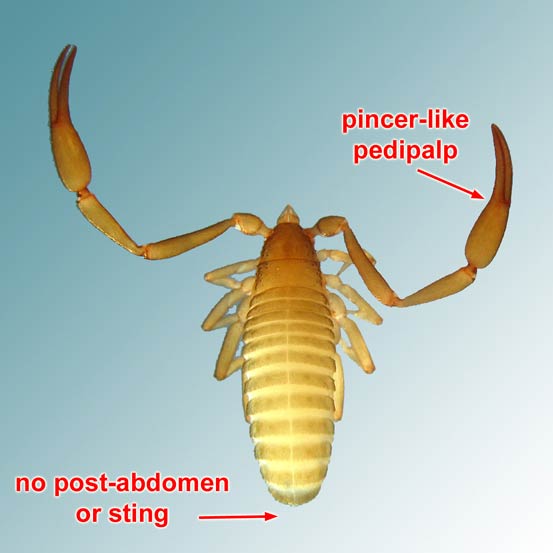
Small size, chelicerae, and mite-like build. Pseudoscorpions range from 0.5–10 mm in length, tend to be dorsoventrally flattened, and are cryptic in coloration. Their scorpion-like pedipalps may be short and massive or elongated into slender forceps. Opisthosomas are clearly segmented.
Normal adult length: <10 mm
Bodybody:
the idiosoma of mites.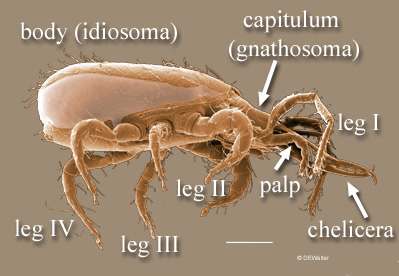 tagmata: prosomaprosoma:
(= cephalothorax) the anterior body region in arachnids; usually not distinct in mites.
and opisthosomaopisthosoma:
(= abdomen) the posterior body division in arachnids; usually not distinct in mites because of the fusion of the opisthosoma with part of the prosoma to form the idiosoma.
broadly fused
Eyes: 0–2 pairs of lateral ocelliocellus:
(pl. ocelli) a simple eye. Mites with eyes usually have one or two pairs of lateral ocelli, but some Opilioacarida have three pairs. Additionally, some acariform mites have one or two median ocelli on the underside of the naso.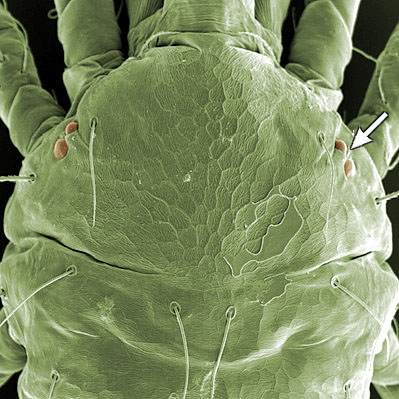
Antennae: absent
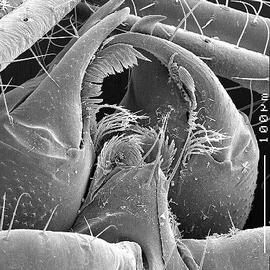
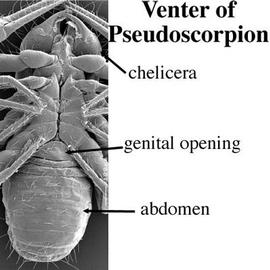
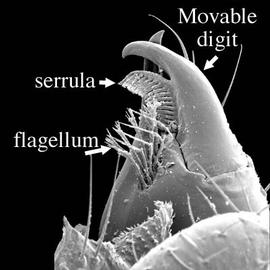
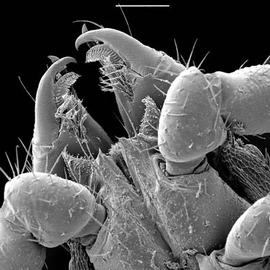
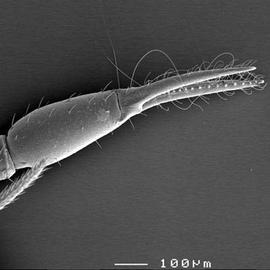
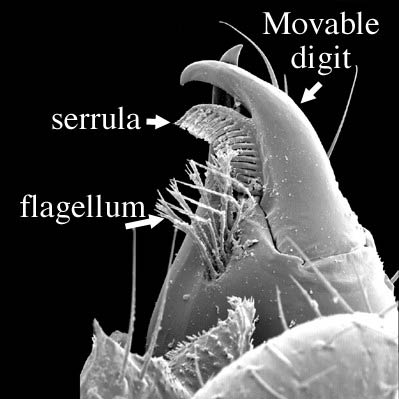
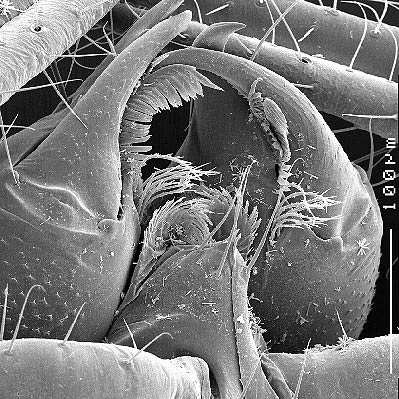
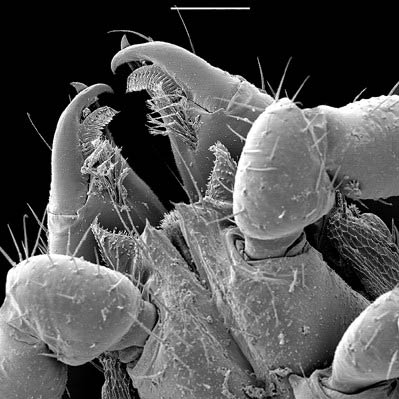
Mouthparts: 2-segmented, pincer-like chelicerae with elaborate structures (serrula and flagellum) on movable digit and usually 1 (rarely 3–4) submedian or subdistal hairhair:
usually referring to a seta; considered an imprecise and misleading term for seta.
; scorpion-like palps
Legs: 4 pairs; all legs used in walking
Distinguishing features: scorpion-like pedipalps, ventral embryo sac, serrula & flagellum on cheliceralcheliceral:
of or pertaining to the chelicera.
digit; endocephalothracic silksilk:
fine threads spun by acariform mites to form a molting chamber (cocoon), protect or attach eggs, or a loosely defined to finely woven web.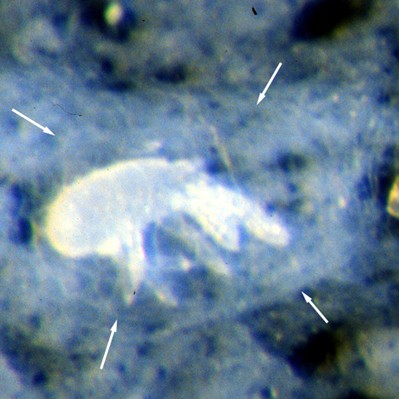 system leading to porepore:
a pore-like opening or structure in the cuticle. In Mesostigmata, lyrifissures and true pore openings are often difficult to separate and both tend to be called 'pores', e.g., the sternal pores stp1-3.
on movable cheliceralcheliceral:
of or pertaining to the chelicera.
digit
>2,000 spp.
Author: David E. Walter
Content last updated Sept. 2006, unless indicated otherwise
Lucid key player updated Sept. 2025
idtools.org