t
pauropods
medium
No known importance.
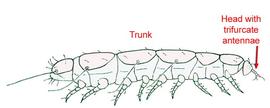
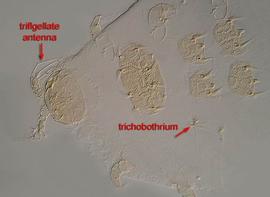
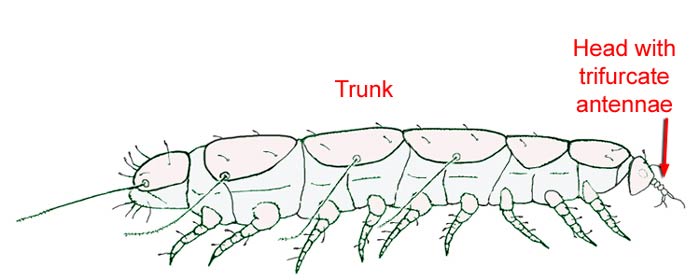
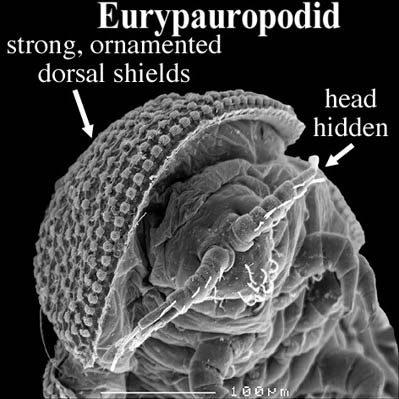
None other than small size. The presence of a head with trifurcatetrifurcate:
split into three distally.
antennae and a trunk with repeated leg-bearing segments should distinguish pauropods from mites.
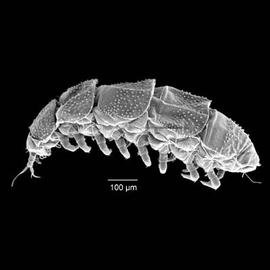
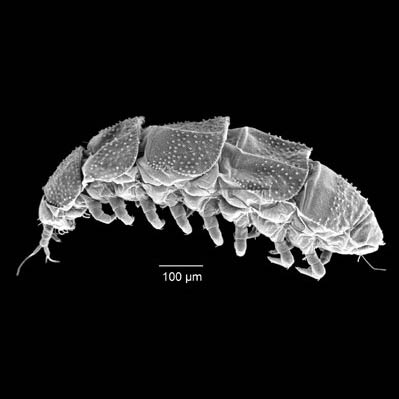
Normal adult length: 0.5–2 mm
Bodybody:
the idiosoma of mites.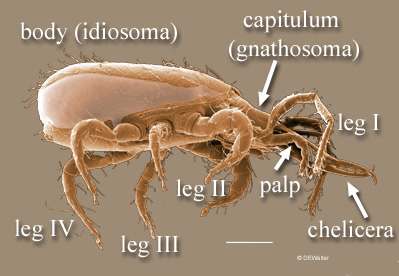 tagmata: head, trunk
Eyes: absent
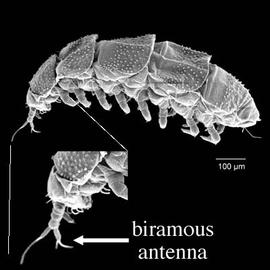
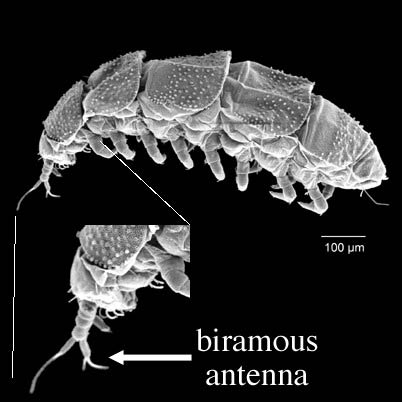
Antennae: bifurcatebifurcate:
split into two distally or with two projections. 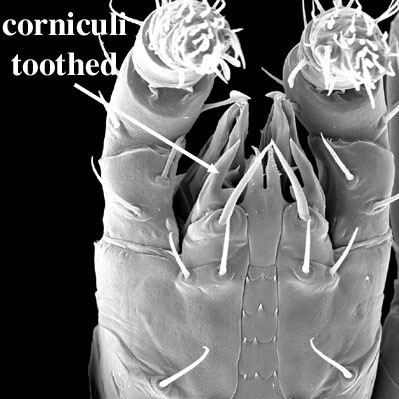 (triflagellate), branches terminating in 1 and 2 flagella
Mouthparts: entognathous mandibles, maxillae
Legs: 3–11 pairs (8 pairs normal in adults)
Respiration: cuticular
Gonopore: venterventer:
the lower or under side; opposed to dorsum.
of 3rd trunk segment
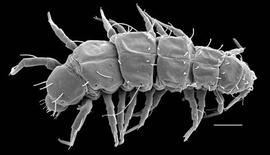
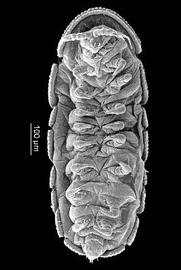
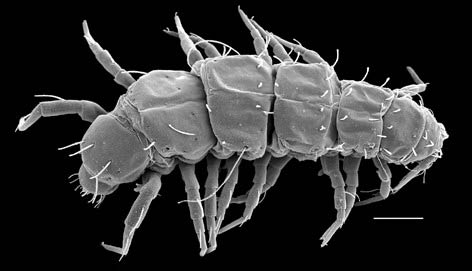
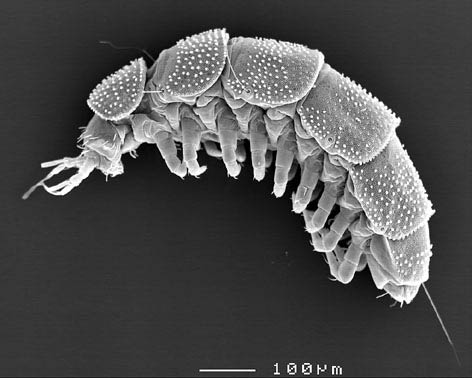
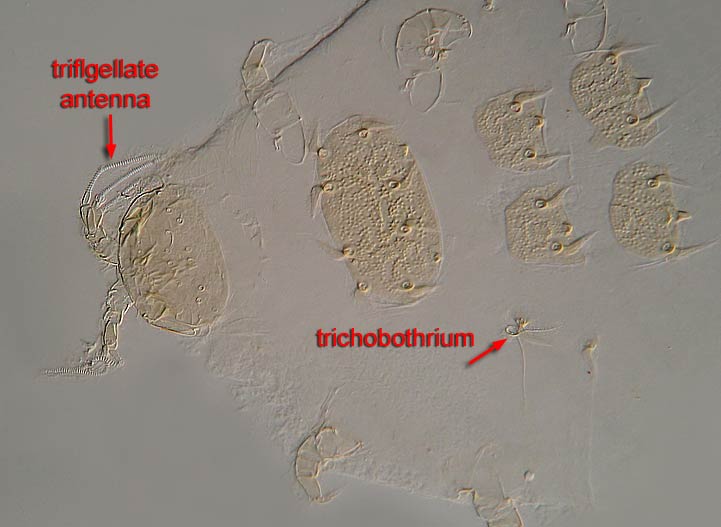
Distinguishing features: myriapod form; triflagellate antennae; paired marginal trichobothriatrichobothrium:
(pl. trichobothria) (= bothridial sensillum) an often elaborately modified seta set in a cup-like base; forms include filiform, ciliate, pectinate or variously thickened or clubbed (bat-like to globose or capitate).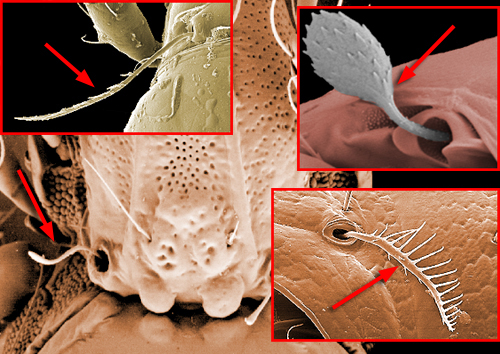 on 5 trunk segments.
Comments: Pauropods have a head with bifurcatebifurcate:
split into two distally or with two projections. antennae bearing 3 flagella. The antennae have a 4–6 segmented stalk with 2 distaldistal:
towards the free end of an appendage.
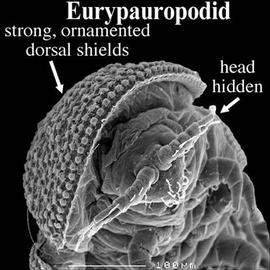
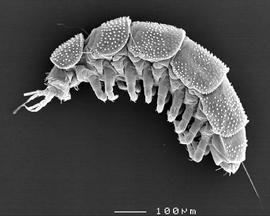
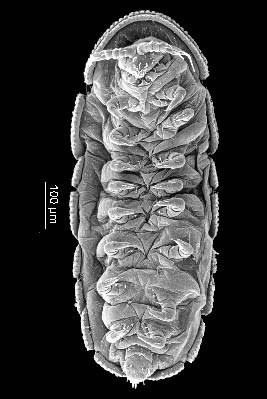
branches. One branch bears two annulate flagella on either side of a sensory structure resembling a ball in a spiny cup (globulus). The other branch has a single annulate flagellum. The trunk is 12-segmented in the adult. Vestigial limbs may be present on the 1st segment, but no limbs are found on last segment. Adults have 8–11 pairs of legs and the gonopores between 2nd pair of legs. Legs are 5-segmented and end in a large median + 2 small lateral claws or a lobed pad + a median clawclaw:
like - having a distal hook; resembling a claw.
or a single clawclaw:
like - having a distal hook; resembling a claw.
.
<400 species in 5 families
Author: David E. Walter
Content last updated Sept. 2006, unless indicated otherwise
Lucid key player updated Sept. 2025
idtools.org