t
slaters, pillbugs, isopods, sowbugs
high
Tramp species.
None.
Normal adult length: 5–15 mm
Bodybody:
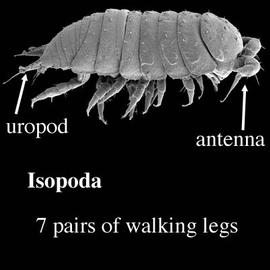
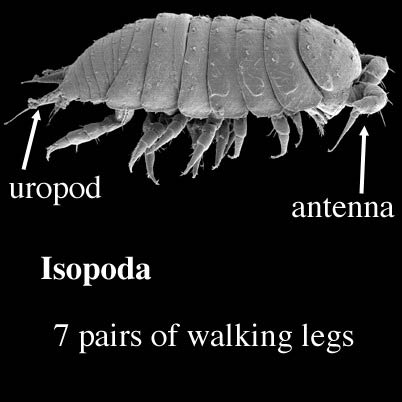
the idiosoma of mites.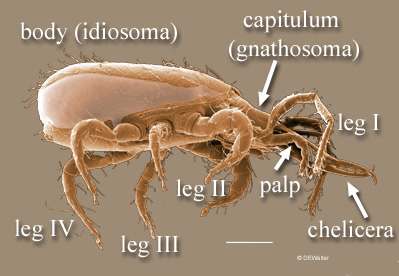 tagmata: head (1 obvious pair of antennae), thorax (7 pairs of legs), abdomen (5 free segments; 1 pair of biramous uropods)
Eyes: compound lateral
Antennae: antennae with <10 segments; antennules vestigial
Mouthparts: mandibles without palps; two pairs of maxillae
Legs: 7 thoracic pairs
Respiration: abdominal gills and pseudotracheae in basalbasal:
towards the base of a structure; on a limb, towards the insertion on the body.
leg segments
Gonopore: first abdominal segment
Distinguishing features: dorsoventrally compressed; one obvious pair of antennae; 7 pairs of legs and 1 pair of uropods
Comments: The isopod bodybody:
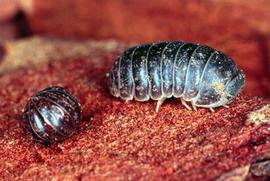
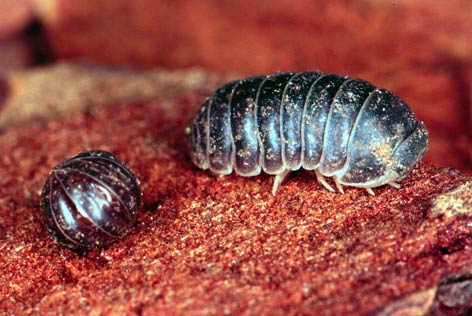
the idiosoma of mites. may be dorso-ventrally flattened, but is often dome-like dorsally and some species can curl into a ball. The second pair of antennae (antennules) are vestigial. The thorax has 7 pairs of legs and the abdomen has a single pair of biramous uropods.
>10,000 species
Author: David E. Walter
Content last updated Sept. 2006, unless indicated otherwise
Lucid key player updated Sept. 2025
idtools.org