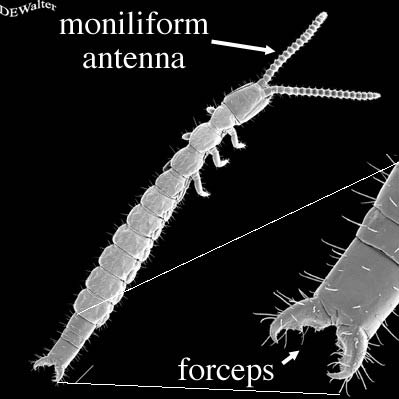
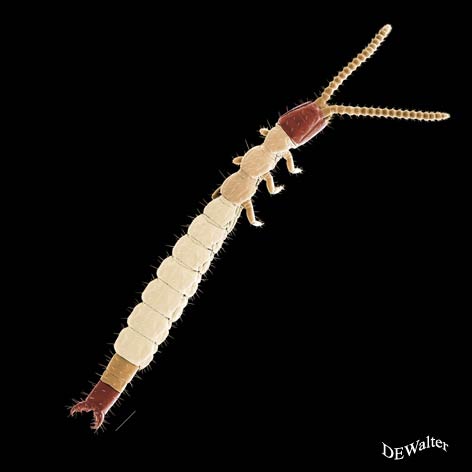
Is it a mite?
t
Common names
campodeids, japygids, diplurans
Probability of encounter
low
Quarantine importance
No known importance.
Similarity to mites
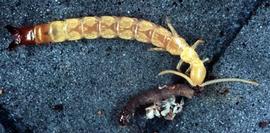
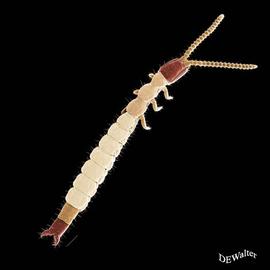
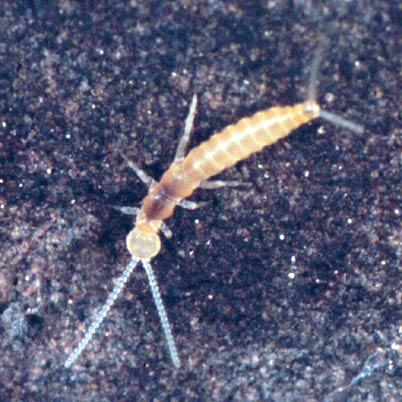
None other than small size. Japygids and their relatives may be confused with earwigs (Insecta, Dermaptera) and campodeids could be confused with silverfish (Insecta, Thysanura).
Morphology
Normal adult length: 3–28 mm
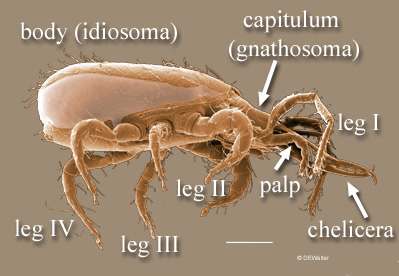
Bodybody:
the idiosoma of mites.
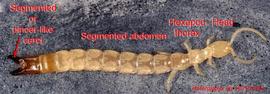
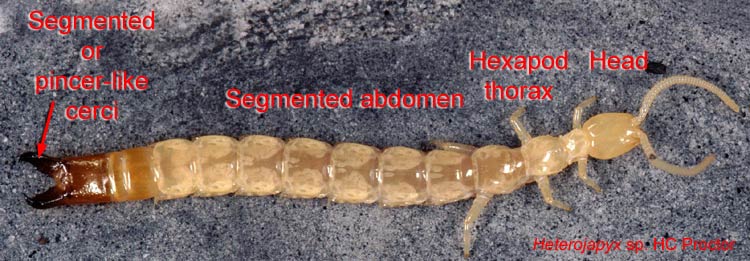
 tagmata: head, thorax, abdomen
Eyes: absent
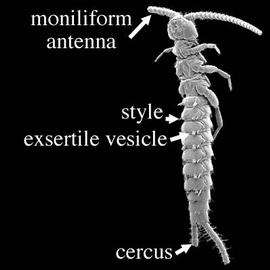
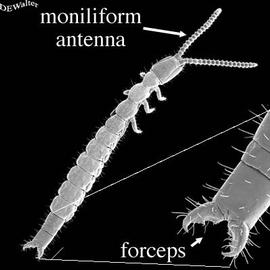
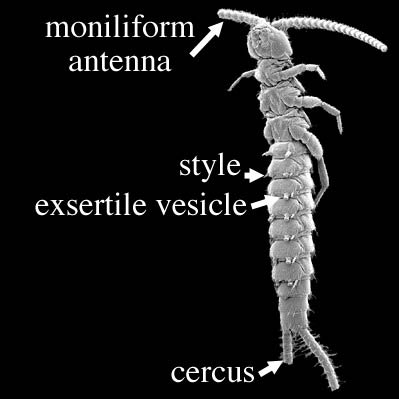
Antennae: many segmented, moniliform, often with trichobothriatrichobothrium:
(pl. trichobothria) (= bothridial sensillum) an often elaborately modified seta set in a cup-like base; forms include filiform, ciliate, pectinate or variously thickened or clubbed (bat-like to globose or capitate).
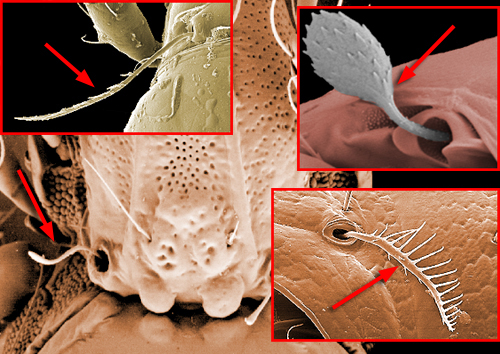 on some segments
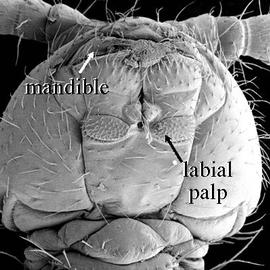
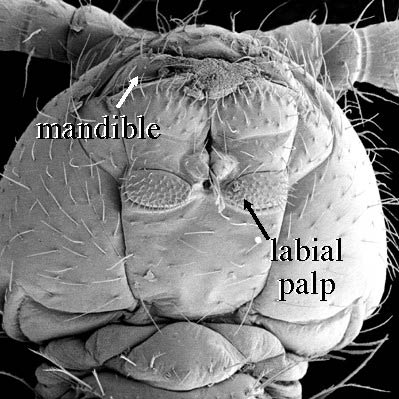
Mouthparts: entognathous, mandibles (sometimes with pectinate lamellaelamella:
(pl. lamellae) a longitudinal projection on the prodorsum of many oribatid mites that protects legs I when they are retracted; lamellae usually arise near the base of the bothridia and terminate with a projecting lamellar seta (often on a free cusp). Lamellae may be connected by a translamella.
); maxillae; maxillary palps; labial palps vestigial
Legs: 3 thoracic pairs
Respiration: thoracic and abdominal spiracles
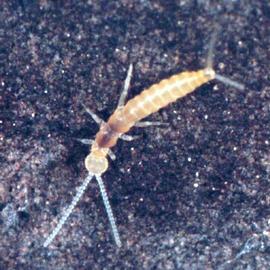
Distinguishing features: long moniliform antennae; long, many segmented pair of cerci or single-segmented pincer-like cerci; eyes absent
Diversity
ca. 800 species in 7–9 families
References
- Conde and Pages 1991Conde and Pages 1991:
Conde B, Pages J. 1991. Diplura. pp. 269–271. In: CSIRO, ed. The Insects of Australia: A textbook for students and research workers, Vol. 1. Melbourne University Press, Melbourne.
- Ferguson 1990Ferguson 1990:
Ferguson LM. 1990. Insecta: Diplura. pp. 951-963. In: Dindal DL. (Ed.) Soil biology guide. John Wiley & Sons, Brisbane.
- Houston and Greenslade 1994Houston and Greenslade 1994:
Houston WWK, Greenslade PJ. 1994. Zoological catalogue of Australia. Vol. 22: Protura, Collembola, Diplura. CSIRO Publishing, Melbourne.
- Meyer and Orr (n.d.-a)Meyer and Orr (n.d.-a):
Meyer JR, Orr DB. n.d.-a. Diplura. North Carolina State University: Agriculture and Life Sciences, Insect Identification. Accessed 2024.
- Redell 1983Redell 1983:
Redell JR. 1983. A checklist and bibliography of the Japygoidea (Insecta: Diplura) of North America, Central America, and the West Indies. Texas Memorial Museum, Pearce-Sellards Series, No. 37: 41 pp.
- Smith 1960Smith 1960:
Smith LM. 1960. The family Projapygidae and Anajapygidae (Diplura) in North America. Annals of the Entomological Society of America 53: 575–583.
- Tree of Life Web Project 1995Tree of Life Web Project 1995:
Tree of Life Web Project. 1995. Diplura. Version 01 January 1995 (temporary). The Tree of Life Web Project, http://tolweb.org/
- Townsend 1970Townsend 1970:
Townsend JI. 1970. Some notes on Heterojapyx novaezeelandiae (Verhoeff) (Diplura: Japygidae). New Zealand Entomologist 4 (3): 100–102.
- Womersley 1939Womersley 1939:
Womersley H. 1939. Primitive insects of South Australia: Silverfish, springtails, and their allies. Frank Trigg, Government Printer, Adelaide.
- Womersley 1945Womersley 1945:
Womersley H. 1945. New species of Diplura (Insecta, Apterygota) from Australia and New Guinea. Transactions of the Royal Society of South Australia 69: 223–228.