t
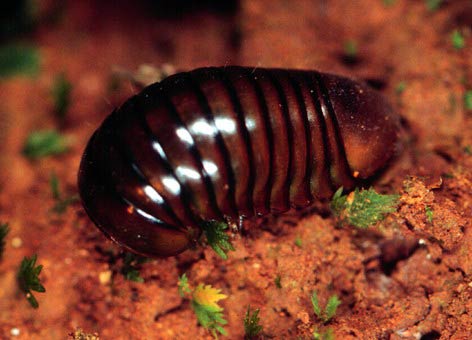
millipedes, thousand-leggers, pill bugs
high
No known importance, although a few species are minor pests of crops and some produce poisonous or caustic defensive secretions. Some of the larger millipedes are used in the pet trade.
None, although many species have mites associated with them. Polyxenida are mite-size, but otherwise unlikely to be confused with mites.
Normal adult length: 2 mm–28 cm
Bodybody:
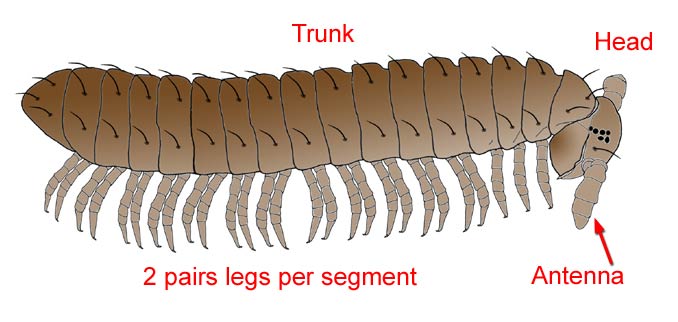
the idiosoma of mites.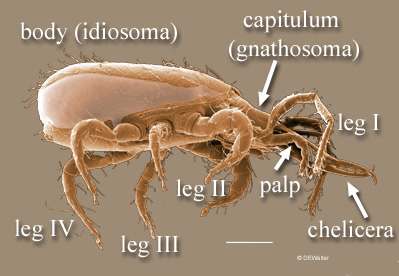 tagmata: head, trunk
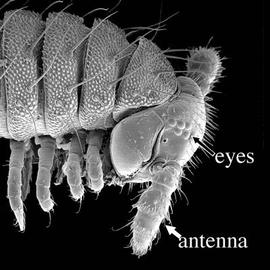
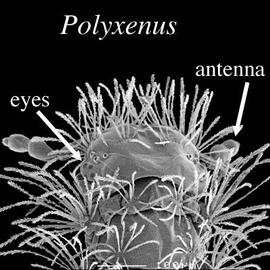
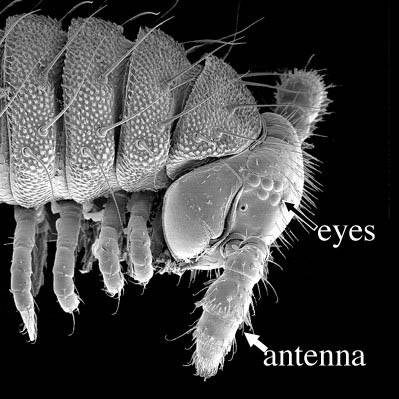
Eyes: absent or 2–80 ocelliocellus:
(pl. ocelli) a simple eye. Mites with eyes usually have one or two pairs of lateral ocelli, but some Opilioacarida have three pairs. Additionally, some acariform mites have one or two median ocelli on the underside of the naso.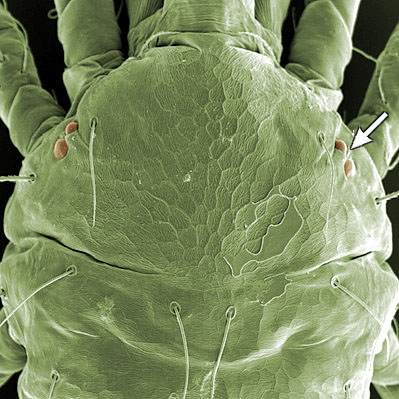
Antennae: usually relatively short
Mouthparts: ectognathous mandibles with large 'cheeks', maxillae (gnathochilarium)
Legs: 3-numerous pairs
Respiration: 4 spiracles per diplosegment, opening on sternite near coxae
Gonopore: venterventer:
the lower or under side; opposed to dorsum.
of 3rd trunk segment (behind 2nd pair of legs)
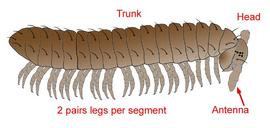
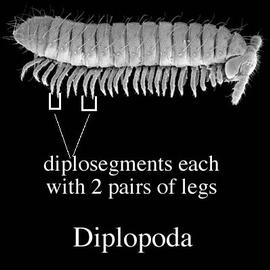
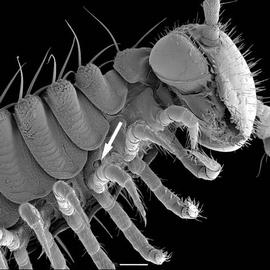
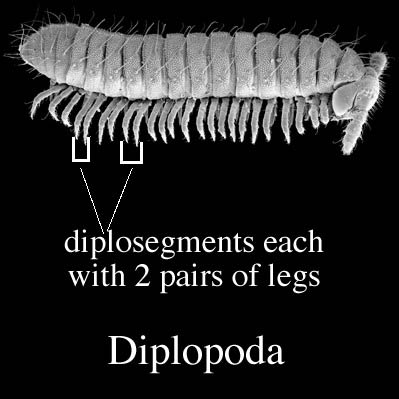
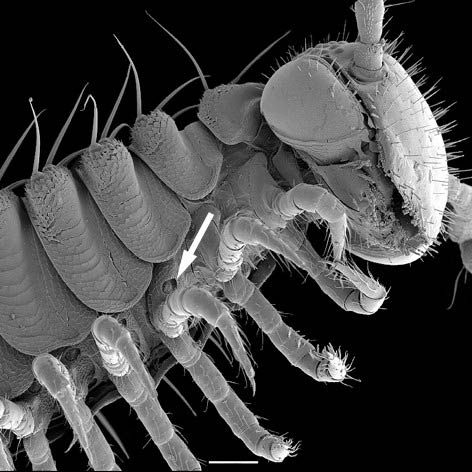
Distinguishing features: diplosegments each with two pairs of legs, second maxillae absent, 1st trunk segment (collum) legless
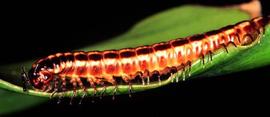
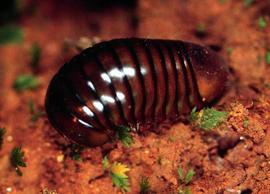
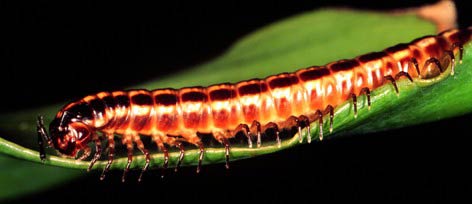
Many millipedes look as if they have thousands of legs, which gives this group its name and allows easy identification—at least of the larger specimens. All have distinct heads with antennae and elongate bodies with many segments having two pairs of legs (diplosegments). Bodybody:
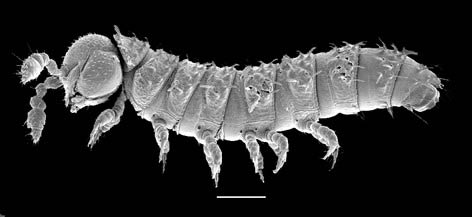
the idiosoma of mites. segments are added during development, so recently hatched individuals could be confused with springtails, insects, or mite larvae (6-legged) or with later stages of mites (8-legged).
First instarinstar:
(Latin = form) an immature mite or other arthropod between molts (or from apolysis to apolysis for some authors), or between egg hatching and the first molt. Mites mostly have determinate growth and do not molt after reaching the adult stage; therefore, the adult is not considered an instar.
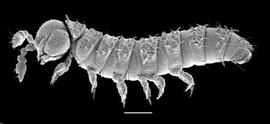
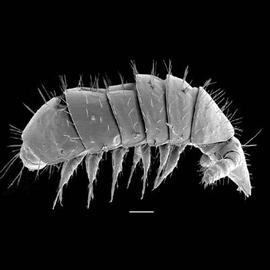
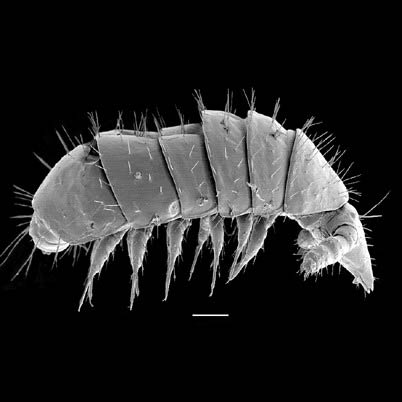
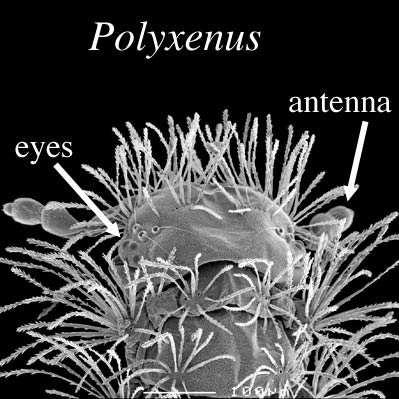
millipedes may have only 6 legs, and could be confused with insects or springtails (Collembola), but millipedes lack a distinct thorax. The minute species in the genus Polyxenus look very much like hairy beetle larvae and except for very young millipedes in other orders, are the only common diplopods in the microarthropod size category.
perhaps 15 orders, >8,000 spp.
Author: David E. Walter
Content last updated Sept. 2006, unless indicated otherwise
Lucid key player updated Sept. 2025
idtools.org