t
copepods, harpacticoids
High if appropriate extraction techniques used.
Some species are intermediate hosts of parasites of people, livestock and wildlife.
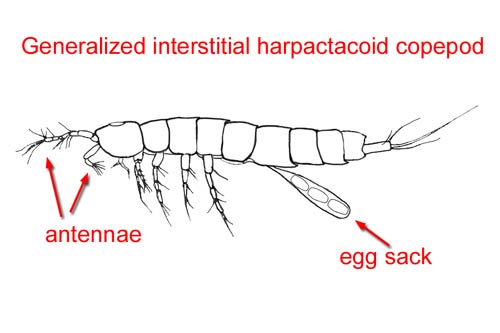
Small size and obscurity. Abdomen is distinctly segmented.
Normal adult length: <2 mm
Bodybody:
the idiosoma of mites.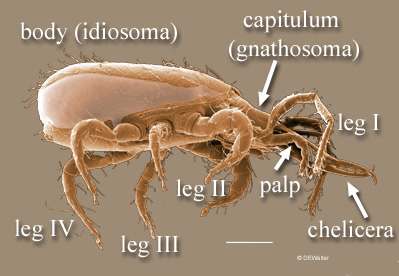 tagmata: head (2 pairs of antennae), thorax, abdomen
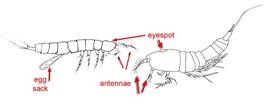
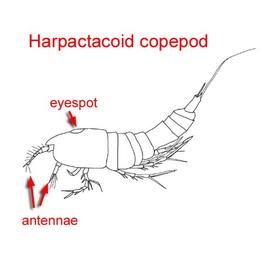
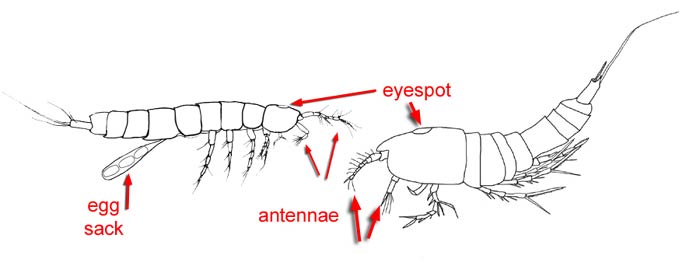
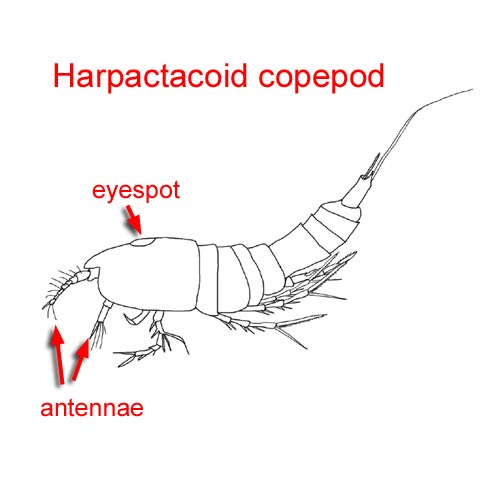
Eyes: median eye spot
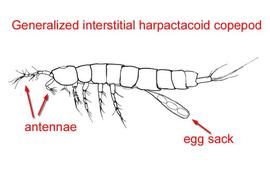
Antennae: biramous
Mouthparts: mandibles without palps; two pairs of maxillae
Legs: swimming
Respiration: cutaneous
Gonopore: first abdominal segment
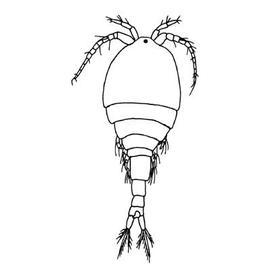
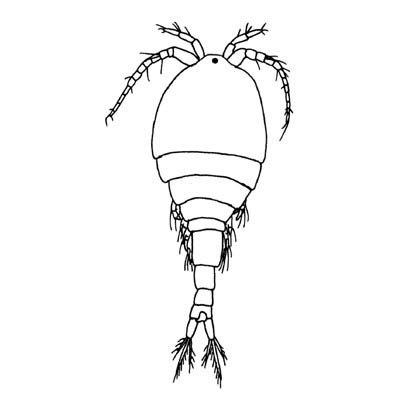
Distinguishing features: Minute swimming crustaceans with well developed antennules and a pair of cerci-like caudal rami.
Comments: Copepods are normally considered aquatic organisms and would be expected primarily in wet intercepts (e.g., bromeliads); however, some harpacticoids are inhabitants of humus.
>7,500 species, mostly marine
Author: David E. Walter
Content last updated Sept. 2006, unless indicated otherwise
Lucid key player updated Sept. 2025
idtools.org