t
springtails, collembolans, lucerne flea
high
Some species are pests of plants.
Small size and ubiquity. Members of the Symphypleona and Neelipleona have indistinct segmentationsegmentation:
in mites distinct external segments have been lost but remnants of segmentation may be represented by hysterosomal folds or transverse arrays of setae and other cuticular sense organs. In theory, all chelicerates have a prosoma composed of 6 segments (cheliceral, pedipalpal, and four leg-bearing segments = body segments I-VI). Ventrally the positions of the prosomal segments can be identified by the insertions of their appendages, but dorsally they are obscured. The opisthosoma is thought to comprise an additional 12-13 segments (body segments VII-XVIII or XIX), but appears to be somewhat to much reduced in most mites, except possibly Opilioacarida. In early derivative Acariformes (e.g., many Endeostigmata), hysterosomal folds are thought to represent segmentation and in the Grandjean system are designated (from the sejugal furrow to the anus): C, D, E, F, H, PS AD, AN, PA. There is disagreement in the literature over the origin of 'segments' C and D. Adherents of Grandjean consider them to be opisthosomatic (with C probably representing a fusion of the pregenital [body segment VII] and genital [VIII] segments). Others believe that C and D are the dorsal regions of the last two prosomal segments that bear leggs III and IV (i.e., body segments V & VI).
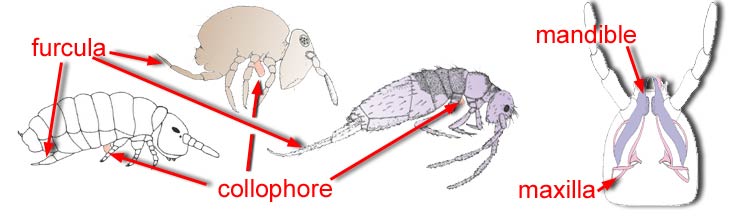
and are most likely to be confused with mites, but all have antennae and a collophore.
Normal adult length: <3 mm (0.5–10 mm)
Bodybody:
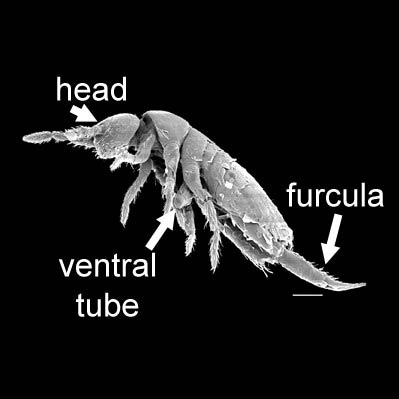
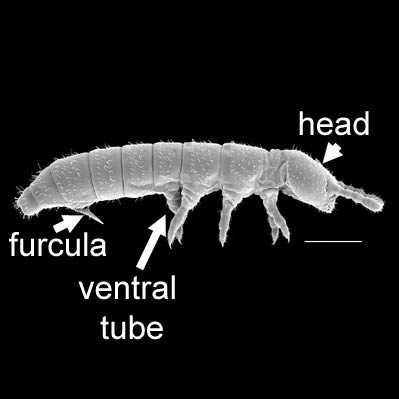
the idiosoma of mites.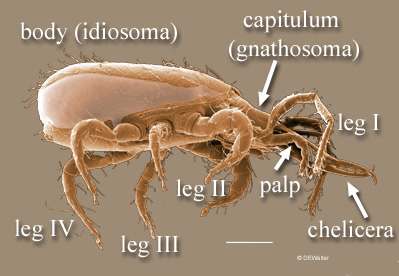 tagmata: head, thorax, abdomen (6-segmented, with ventralventral:
relating to the lower or under side; opposed to dorsal.
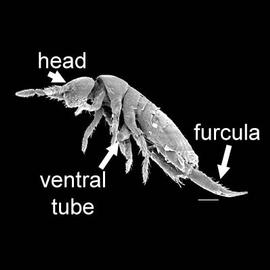
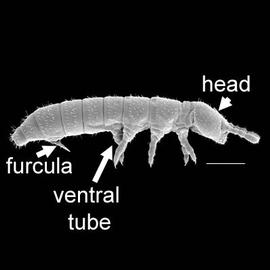
tube on S1 and furcula on S4, cerci absent)
Eyes: 8 + 8 ocelliocellus:
(pl. ocelli) a simple eye. Mites with eyes usually have one or two pairs of lateral ocelli, but some Opilioacarida have three pairs. Additionally, some acariform mites have one or two median ocelli on the underside of the naso.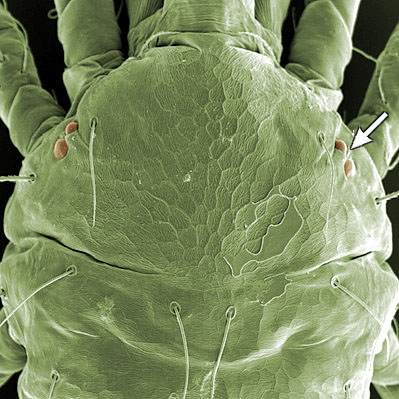 maximum
Antennae: 4 segmented (sometimes subdivided)
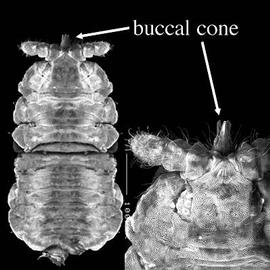
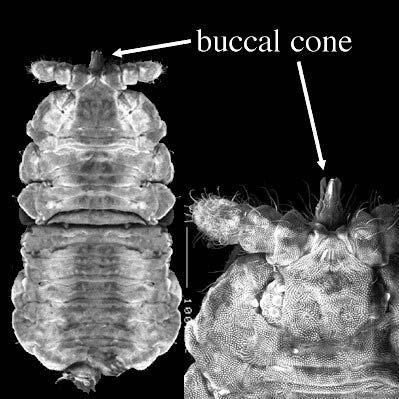
Mouthparts: entognathous, mandibles usually with molar area; short buccal cone in some taxa; labial & maxillary palps usually vestigial
Legs: 3 thoracic pairs (subcoxae + 4 segments: coxacoxa:
the basal segment of the leg, articulating with (Parasitiformes) or fused to (Acariformes) the body wall.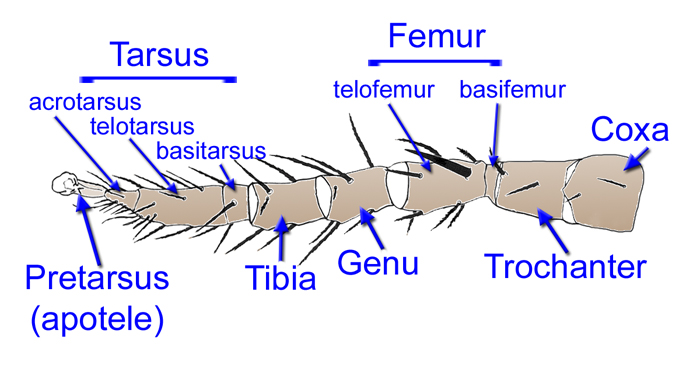 , trochantertrochanter:
the leg segment between the coxa and the femur., femurfemur:
(pl. femora) major leg segment between trochanter and genu; often subdivided into a basifemur and a telofemur., tibiotarsus); single clawclaw:
like - having a distal hook; resembling a claw.
(unguis) + empodial appendage (unguiculus)
Distinguishing features: trichobothriatrichobothrium:
(pl. trichobothria) (= bothridial sensillum) an often elaborately modified seta set in a cup-like base; forms include filiform, ciliate, pectinate or variously thickened or clubbed (bat-like to globose or capitate).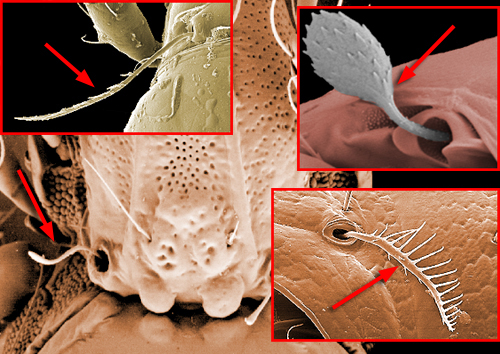 , postantennal organ (olfactory), pseudocelli (head and bodybody:
the idiosoma of mites. of Onychiuridae), distaldistal:
towards the free end of an appendage.
furcula (furca), genital opening on S5.
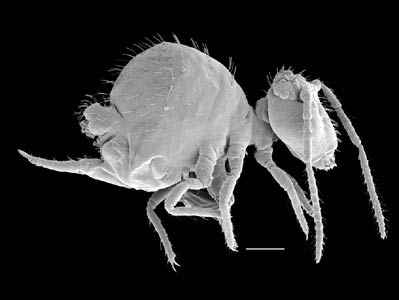
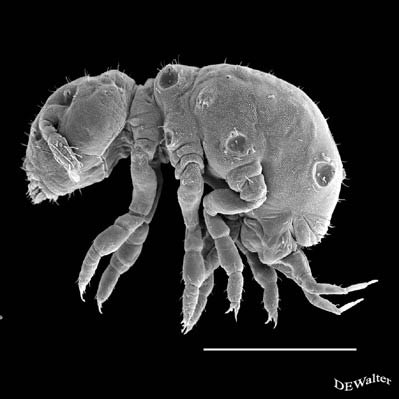
Comments: Springtails have two basic bodybody:
the idiosoma of mites. forms—elongate and rounded. The elongate species usually have clearly defined abdominal segmentationsegmentation:
in mites distinct external segments have been lost but remnants of segmentation may be represented by hysterosomal folds or transverse arrays of setae and other cuticular sense organs. In theory, all chelicerates have a prosoma composed of 6 segments (cheliceral, pedipalpal, and four leg-bearing segments = body segments I-VI). Ventrally the positions of the prosomal segments can be identified by the insertions of their appendages, but dorsally they are obscured. The opisthosoma is thought to comprise an additional 12-13 segments (body segments VII-XVIII or XIX), but appears to be somewhat to much reduced in most mites, except possibly Opilioacarida. In early derivative Acariformes (e.g., many Endeostigmata), hysterosomal folds are thought to represent segmentation and in the Grandjean system are designated (from the sejugal furrow to the anus): C, D, E, F, H, PS AD, AN, PA. There is disagreement in the literature over the origin of 'segments' C and D. Adherents of Grandjean consider them to be opisthosomatic (with C probably representing a fusion of the pregenital [body segment VII] and genital [VIII] segments). Others believe that C and D are the dorsal regions of the last two prosomal segments that bear leggs III and IV (i.e., body segments V & VI).
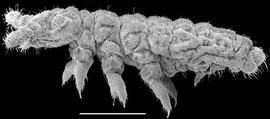
, but those with rounded bodies lack clear segmentationsegmentation:
in mites distinct external segments have been lost but remnants of segmentation may be represented by hysterosomal folds or transverse arrays of setae and other cuticular sense organs. In theory, all chelicerates have a prosoma composed of 6 segments (cheliceral, pedipalpal, and four leg-bearing segments = body segments I-VI). Ventrally the positions of the prosomal segments can be identified by the insertions of their appendages, but dorsally they are obscured. The opisthosoma is thought to comprise an additional 12-13 segments (body segments VII-XVIII or XIX), but appears to be somewhat to much reduced in most mites, except possibly Opilioacarida. In early derivative Acariformes (e.g., many Endeostigmata), hysterosomal folds are thought to represent segmentation and in the Grandjean system are designated (from the sejugal furrow to the anus): C, D, E, F, H, PS AD, AN, PA. There is disagreement in the literature over the origin of 'segments' C and D. Adherents of Grandjean consider them to be opisthosomatic (with C probably representing a fusion of the pregenital [body segment VII] and genital [VIII] segments). Others believe that C and D are the dorsal regions of the last two prosomal segments that bear leggs III and IV (i.e., body segments V & VI).
.
Springtails always have a distinct head with antennae and may or may not have simplesimple:
unadorned; simple setae are needle-like and without hairs or pectins.
eyes (ocelliocellus:
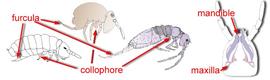
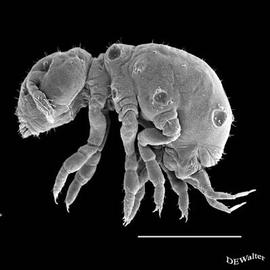
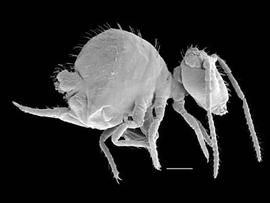
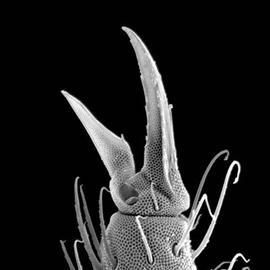
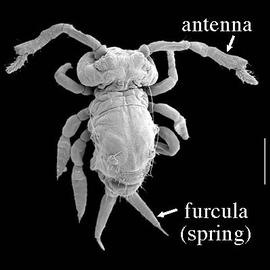
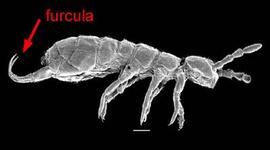
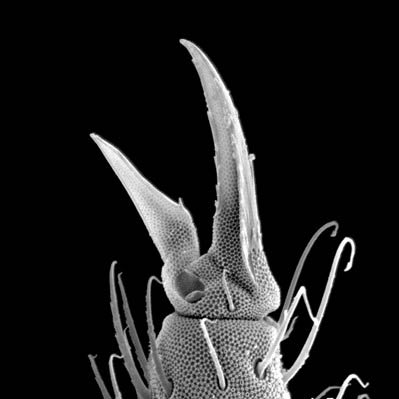
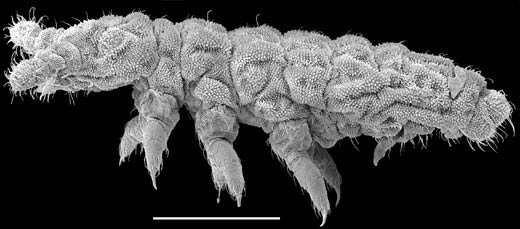
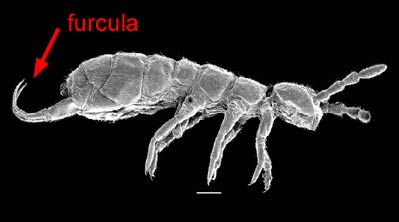
(pl. ocelli) a simple eye. Mites with eyes usually have one or two pairs of lateral ocelli, but some Opilioacarida have three pairs. Additionally, some acariform mites have one or two median ocelli on the underside of the naso.). The mouthparts are mandibulate, but withdrawn into the head and difficult to see. Neanurine springtails have a short, cone-like beak and appear to be fluid feeders. The thorax has three pairs of legs that end in distinctive claws, and the abdomen usually ends with a forked appendage—the furcula (or furca)—that is used to propel them through the air when threatened.
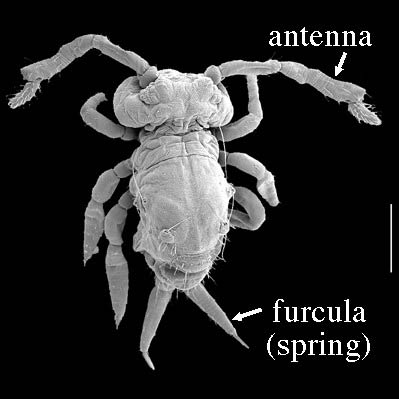
Protura are similar in size and overall appearance to some springtails, but proturans lack antennae, have antenniform front legs and have many segmented abdomens with small styli on the first three segments and no collophore or furcula.
Springtails are very common and often abundant in any kind of soil, moist or rotting wood, and areas with mildew or other fungal growths, including low growing plants, the trunks of trees, and suspended soils. Springtails were among the first terrestrial arthropods and most species feed on microbes, detritus, and minute invertebrates (e.g., nematodes). Some are predators and a few species feed on plants and are important pests—e.g., the lucerne flea. In life, most species are greyish to pale brown or colorless (white); however, some soil-dwellers are brightly colored (orange or boldly patterned in white and bluish grey).
5 orders, ca. 28 families, >6,000 species
Poduromorpha
Neanuridae
Odontellidae
Brachystomellidae
Hypogastruridae
Onychiuridae
Tullbergiidae
Gulgastruridae
Metaxypleona
Poduridae
Entomobryomorpha
Isotogastruridae
Isotomidae
Entomobryidae
Paronellidae
Cyphoderidae
Oncopoduridae
Tomoceridae
Actaletidae
Coenaletidae
Microfalculidae
Protentomobryidae
Neelipleona
Neelidae
Symphypleona
Sminthuridae (including Arrhopalitidae, Katiannidae, Bourletiellidae)
Dicyrtomidae
Mackenziellidae
Sturmiidae
Spinothecidae
Author: David E. Walter
Content last updated Sept. 2006, unless indicated otherwise
Lucid key player updated Sept. 2025
idtools.org