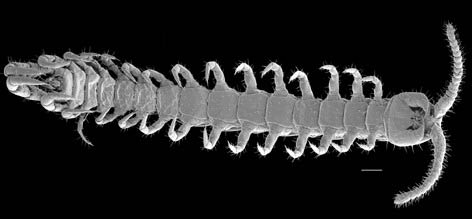
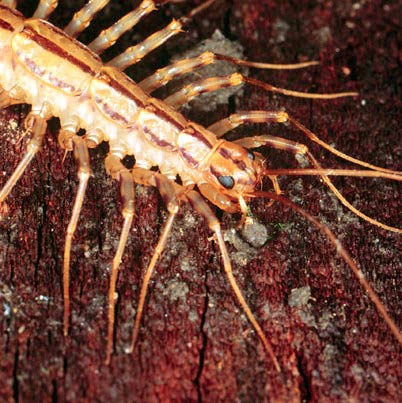
t
centipedes, hundred-leggers, logrunners
medium
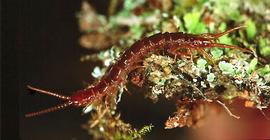
Centipedes are easily transported in logs or soil and the introduction of exotic species could be of conservation concern (including the introduction of exotic mite parasites of native centipedes). The long-legged house centipede has been moved around the world by people. All known species are predators of arthropods or small vertebrates, or scavenger-detritivores. Some large tropical scolopendromorphs are poisonous and of medical concern.
None. Large scolopendromorphs are used in the pet trade and commonly have associated mites.
Normal adult length: 3–6 cm (30 cm)
Bodybody:
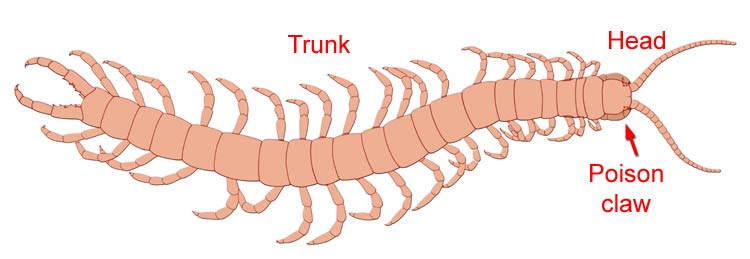
the idiosoma of mites.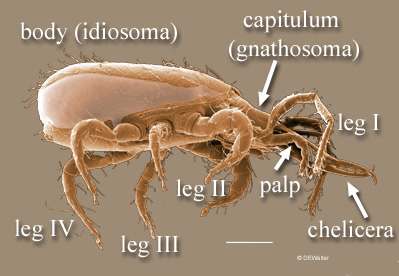 tagmata: head, trunk
Eyes: absent or 1- many ocelliocellus:
(pl. ocelli) a simple eye. Mites with eyes usually have one or two pairs of lateral ocelli, but some Opilioacarida have three pairs. Additionally, some acariform mites have one or two median ocelli on the underside of the naso.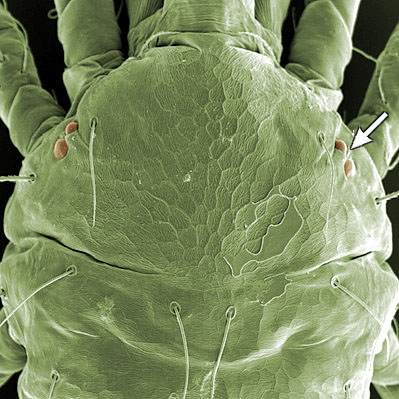 (compound eyes in Scutigeromorpha)
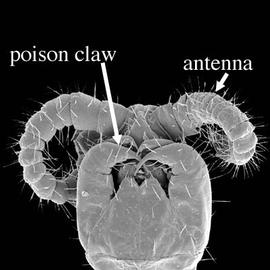
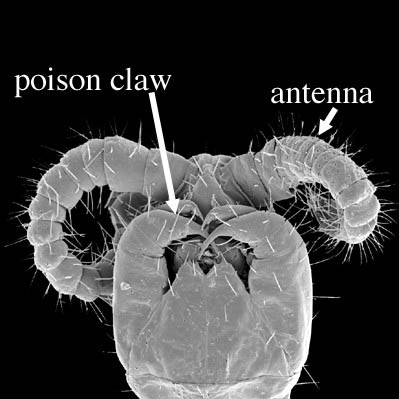
Antennae: elongate (hind legs often antenna-like)
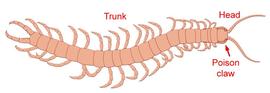
Mouthparts: ectognathous mandibles, 1st maxillae with fused coxae, 2nd maxillae with limb-like processes, labrum, poison claws (maxillipeds)
Legs: 15–191 pairs of legs in adults
Respiration: paired spiracles on trunk segments in pleural region, but those of scutigeromorphs open in dorsal tergitetergite:
the plate-like dorsal annuli of some Eriophyoidea.
Gonopore: on legless terminal segment
Distinguishing features: poison claws; one pair of legs per trunk segment; usually last pair of limbs elongate, antenna-like; organ of Tomosvary at basebase:
the usually columnar basal part of the tritosternum; sometimes expanded and rectangular or otherwise modified; the most basal part of any structure.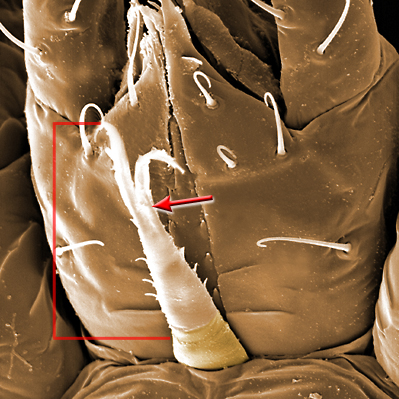 of each antenna (Lithobiomorpha, Scutigeromorpha)
Comments: The poison claws or maxillipeds are distinctive. Unlike pauropods and millipedes, centipedes have a second pair of maxillae. The mandibles may have many pectinate lamellaelamella:
(pl. lamellae) a longitudinal projection on the prodorsum of many oribatid mites that protects legs I when they are retracted; lamellae usually arise near the base of the bothridia and terminate with a projecting lamellar seta (often on a free cusp). Lamellae may be connected by a translamella.
as in Parajapyx (Diplura). Tarsitarsus:
(pl. tarsi) the subdistal leg segment between the tibia and the pretarsus (apotele).
end in a single clawclaw:
like - having a distal hook; resembling a claw.
, rarely 2–3 claws.
5 orders, >17 families, >2,800 spp. (poorly resolved taxonomically)
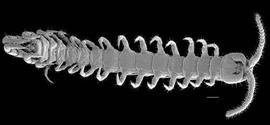
Geophilomorpha have 31–181 pairs of legs in all stages and usually 14-segmented antennae (but lack Tomosvary organs and eyes). These worm-likeworm-like:
elongate, with reduced legs as in some Nematalycidae (Endeostigmata).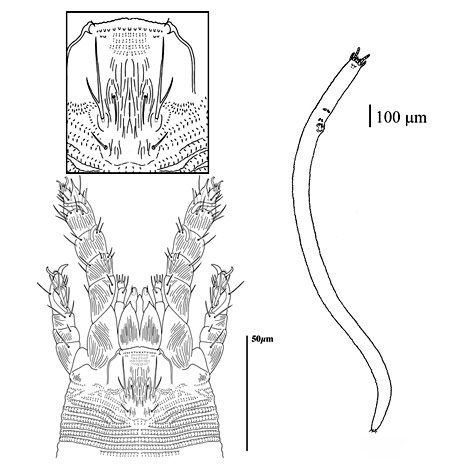 centipedes are the only ones to live up to the class' common name (hundred-leggers).
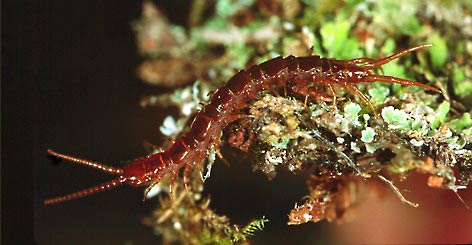
Scolopendromorpha have 21 or 23 pairs of legs in all stages and include some very large and venomous species.
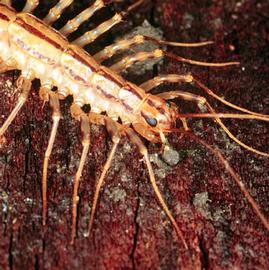
Scutigeromorpha have 4 pairs of legs on hatching and 15 pairs of legs as adults. These are the only centipedes with a type of compound eyed includes the common house centipede of basement and bathtub fame.
Lithobiomorpha have 15 pairs of legs in adults, but usually 7 pairs on hatching. Segments and legs are added during development. Lithobiomorphs also have 18 to >100 segments in their antennae, an organ of Tomosvary near the basebase:
the usually columnar basal part of the tritosternum; sometimes expanded and rectangular or otherwise modified; the most basal part of any structure. of each antenna, 0–30 pairs of ocelliocellus:
(pl. ocelli) a simple eye. Mites with eyes usually have one or two pairs of lateral ocelli, but some Opilioacarida have three pairs. Additionally, some acariform mites have one or two median ocelli on the underside of the naso., and can produce silksilk:
fine threads spun by acariform mites to form a molting chamber (cocoon), protect or attach eggs, or a loosely defined to finely woven web.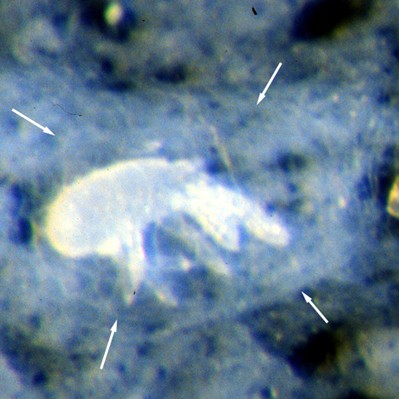 from the hind legs.
Craterostigmomorpha are restricted to Australasia and have 12 pairs of legs on hatching and 15 pairs of legs as adults. Poison claws project in front of the head.
Author: David E. Walter
Content last updated Sept. 2006, unless indicated otherwise
Lucid key player updated Sept. 2025
idtools.org