t
beach hoppers, litter hoppers
low
No known importance.
None.
Normal adult length: 1–1.5 cm
Bodybody:
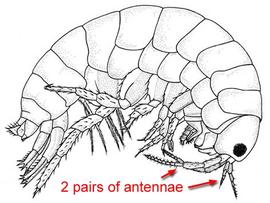
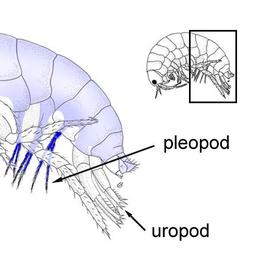
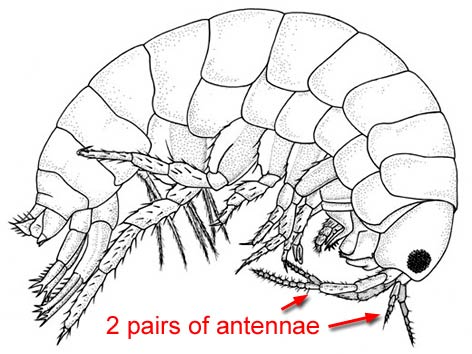
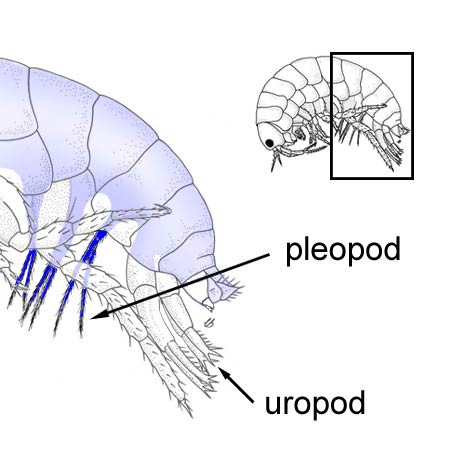
the idiosoma of mites.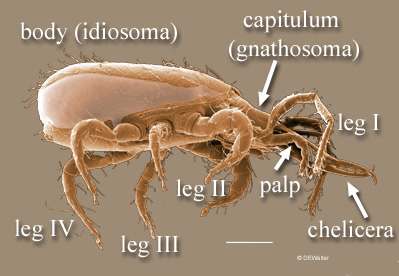 tagmata: head (2 pairs of antennae), thorax (7 pairs of legs), abdomen (3 pairs of uropods)
Eyes: compound lateral
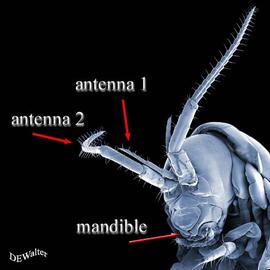
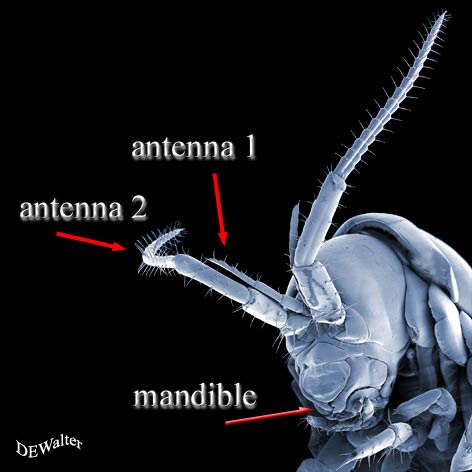
Antennae: biramous, flagellate, flagellum with many small segments; antennules 1/2 length of antennae
Mouthparts: mandibles without palps; two pairs of maxillae
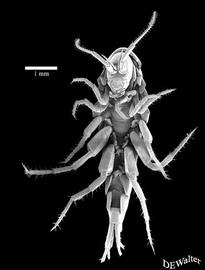
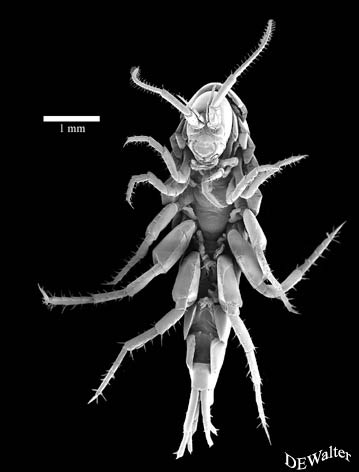
Legs: 7 thoracic pairs, 1st pair may be pincer-like
Respiration: thoracic gills
Gonopore: posteriorposterior:
the back part of the body or towards that region in comparison, e.g., 'posterior to'.
thoracic segments
Distinguishing features: laterally compressed; two pairs of antennae; 7 pairs of legs and 3 pairs of uropods
Comments: Amphipods are laterally compressed and curl ventrally. Two pairs of biramous antennae are present, and one pair (antennules) are about half the length of the other. The mandibles lack palps. The thorax has 7 pairs of legs and the abdomen has slender pleopods and three pairs of distaldistal:
towards the free end of an appendage.
uropods, the last of which has a single segment (+/- a minute ramusramus:
a branch of a structure; also the horn-like region of the laelapid-type sperm access system where the tubulus annulatus enters the sacculus foemineus.
).
Ca. 6,000 species, but only one family (Talitridae) that has fully terrestrial species.
Author: David E. Walter
Content last updated Sept. 2006, unless indicated otherwise
Lucid key player updated Sept. 2025
idtools.org