t
Epicriidae Berlese, 1885
Superorder Parasitiformes » Order Mesostigmata » Suborder Monogynaspida » Infraorder Gamasina » Hyporder Epicriiae » Superfamily Epicrioidea » Family Epicriidae
Epicrius G. Canestrini & Fanzago, Berlesiana Turk, Adenoepicrius Moraza, Neoepicrius Moraza & Johnson
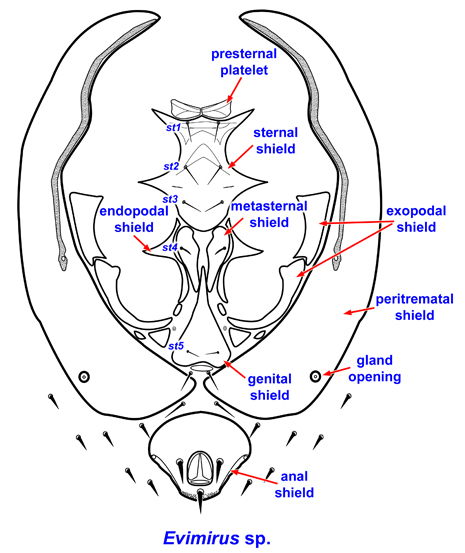 openings, and bearing 15–34 pairs of setae
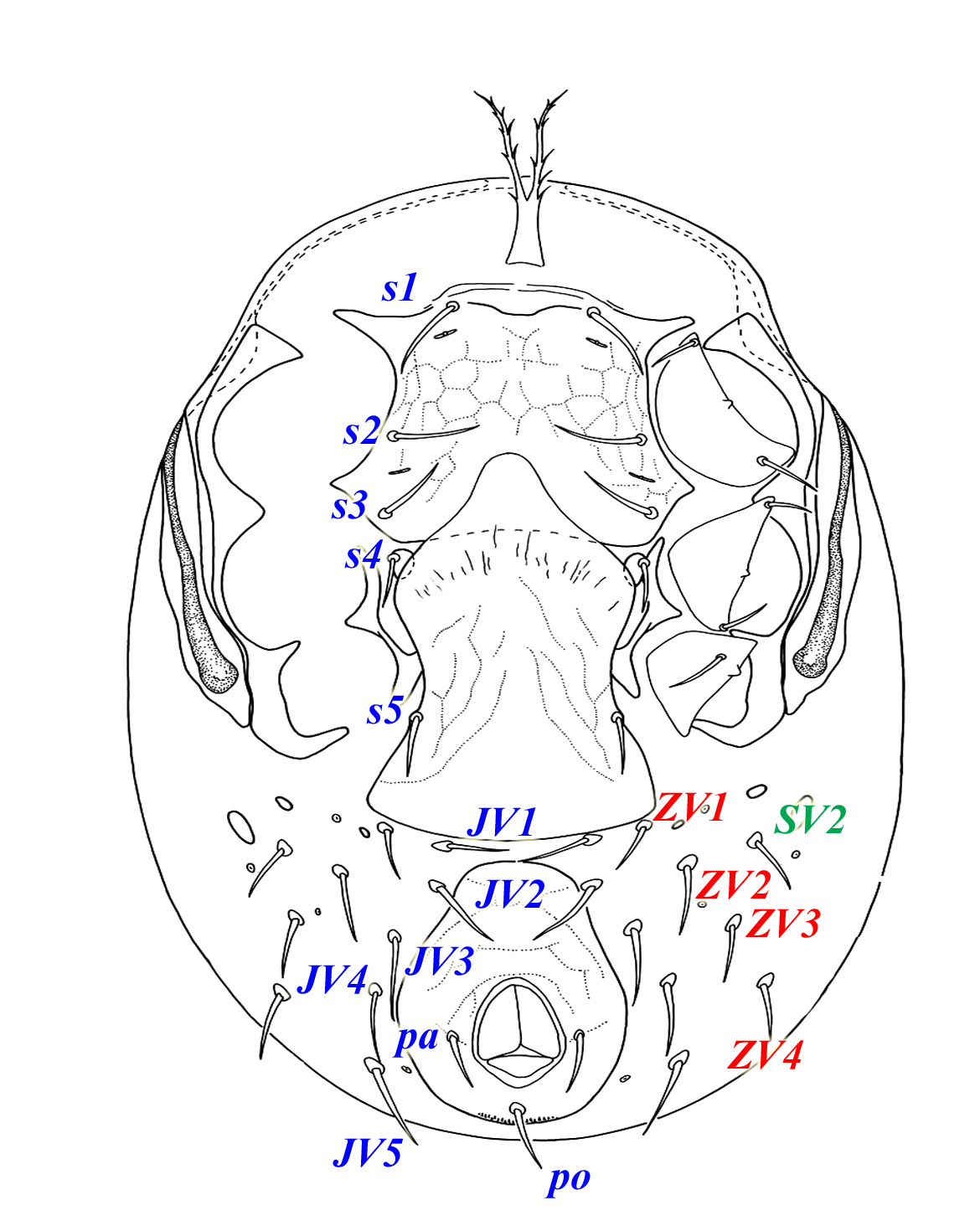 st1 off sternal shieldsternal shield:
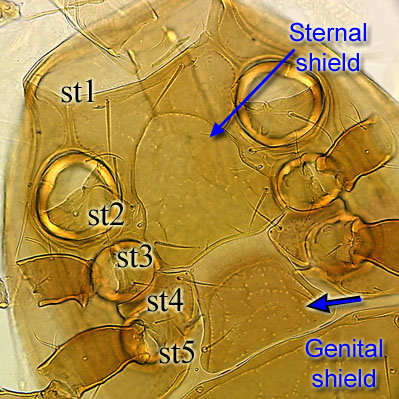 , usually on small platelets (jugulariajugularia:
Tarsitarsus:
(pl. tarsi) the subdistal leg segment between the tibia and the pretarsus (apotele).
II–IV with an intercalary scleritesclerite:
A component section of an exoskeleton; a plate forming the skeleton of an arthropod.
between the basitarsusbasitarsus:
a basal subdivision of the tarsus.
and telotarsustelotarsus:
(= acrotarsus, apicotarsus) a distal division of the tarsus. 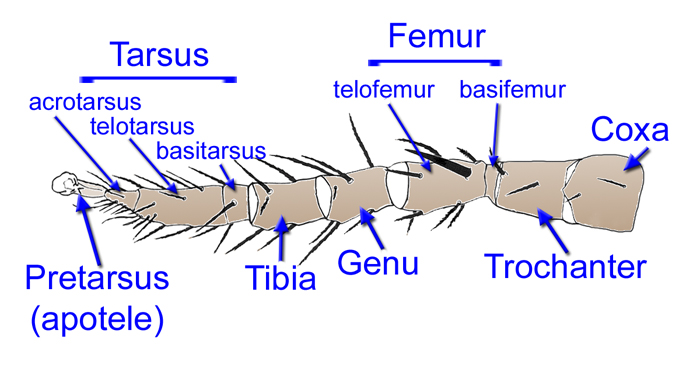 that bears setae ad3, pd3; palp apotelepalptarsal apotele:
(= palp apotele, palptarsal claw) the most distal segment of the palp; absent in Acariformes, claw-like in Opilioacarida, and a subdistal, tined structure in the Mesostigmata.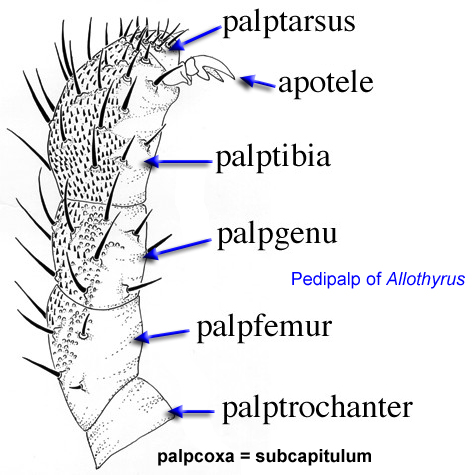 3-tined; dorsaldorsal:
relating to the upper or back side; opposed to ventral.
shield with 34 pairs of setae (19 podonotalpodonotal:
relating to the dorsal podosoma, the region of the idiosoma over the legs.
, 15 opisthosomalopisthosomal:
(opisthosomatic) adjectival form of opisthosoma.
).............................. 2
- Tarsi II–IV without a seta bearing intercalary scleritesclerite:
A component section of an exoskeleton; a plate forming the skeleton of an arthropod.
between the basitarsusbasitarsus:
a basal subdivision of the tarsus.
and telotarsustelotarsus:
(= acrotarsus, apicotarsus) a distal division of the tarsus. ; palp apotelepalptarsal apotele:
(= palp apotele, palptarsal claw) the most distal segment of the palp; absent in Acariformes, claw-like in Opilioacarida, and a subdistal, tined structure in the Mesostigmata. 2-tined; dorsaldorsal:
relating to the upper or back side; opposed to ventral.
shield with only 15 pairs of setae (10 podonotalpodonotal:
relating to the dorsal podosoma, the region of the idiosoma over the legs.
, 5 opisthonotalopisthonotal:
dorsal opisthosoma.
); Western North America .............................. Neoepicrius Moraza & Johnson
Genitoventral shield expanded behind coxae IV and capturing a glandgland:
usually referring to a glandular opening in the cuticle such as the lateral opisthonotal glands in the Sarcoptiformes or the idionotal glands in the Mesostigmata (see gdj etc. above), including hypertrophied openings that produce defensive secretions. and setae ZV1; palp tarsustarsus:
(pl. tarsi) the subdistal leg segment between the tibia and the pretarsus (apotele).
with 15 setae; Holacrtic.............................. Epicrius C&F
- Genital or genitoventral shield not expanded; palp tarsustarsus:
(pl. tarsi) the subdistal leg segment between the tibia and the pretarsus (apotele).
with 14 setae.............................. 3
Dorsaldorsal:
relating to the upper or back side; opposed to ventral.
shield with short pilosities; st4 on metasternal shield; tarsustarsus:
(pl. tarsi) the subdistal leg segment between the tibia and the pretarsus (apotele).
I with 4 clubbed macrosetae; Eastern North America.............................. Adenoepicrius Moraza
- Most dorsaldorsal:
relating to the upper or back side; opposed to ventral.
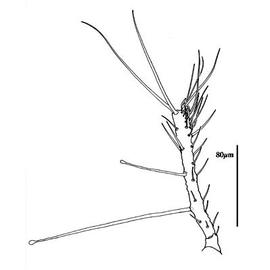
shield setae stout, strongly barbed with long pilosities; st4 in soft cuticle; tarsustarsus:
(pl. tarsi) the subdistal leg segment between the tibia and the pretarsus (apotele).
I with 3 clubbed macrosetae; Palearctic.............................. Berlesiana Turk
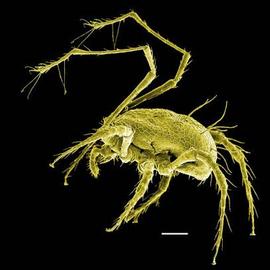
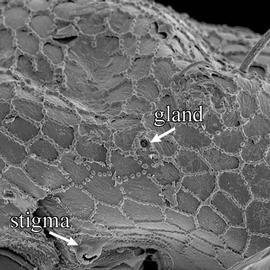
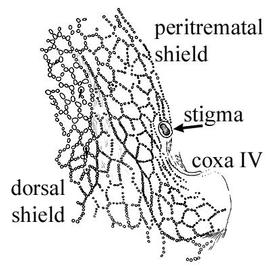
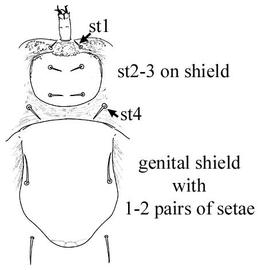
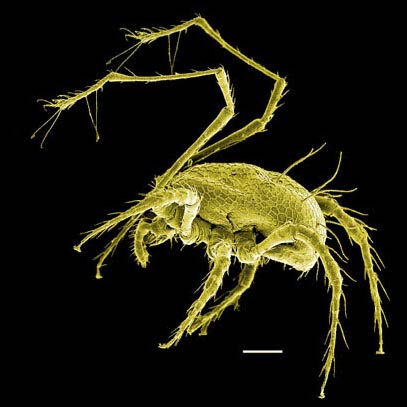
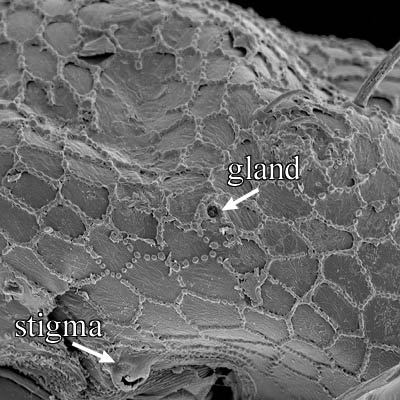
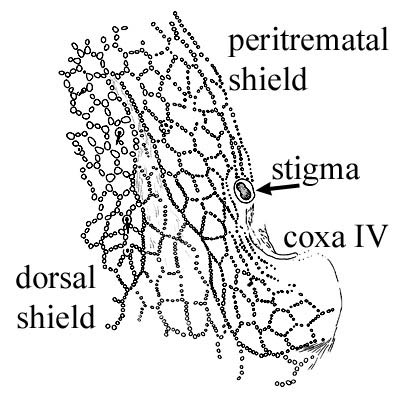
Yellow, tan or dark red brown mites, with a hypotrichous, domed holodorsal shieldholodorsal shield:
a shield that covers all of the dorsum. In Mesostigmata, the holodorsal shield is often interpreted as resulting from the fusion of podonotal and opisthonotal shields and a suture between these regions is often visible (see recurved and procurved).
covered in polygonal reticulum of tubercles and bearing a pair of large dorsolateral glandgland:
usually referring to a glandular opening in the cuticle such as the lateral opisthonotal glands in the Sarcoptiformes or the idionotal glands in the Mesostigmata (see gdj etc. above), including hypertrophied openings that produce defensive secretions. openings. First pair of sternal setaeseta:
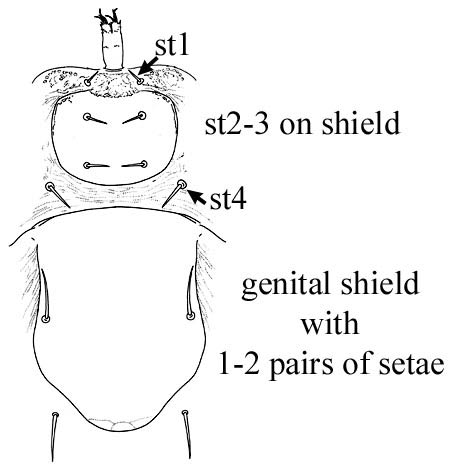
(pl. setae, from L. = bristle) cuticular process composed of a hollow shaft (sometimes filled with a refractive material) produced from a membranous socket (the alveolus); the hair-like, spine-like, branched or variously expanded structures on the surfaces of the legs and body. Most setae function as mechanoreceptors, but others (e.g., solenidia) are chemoreceptors or have unknown or ambiguous functions.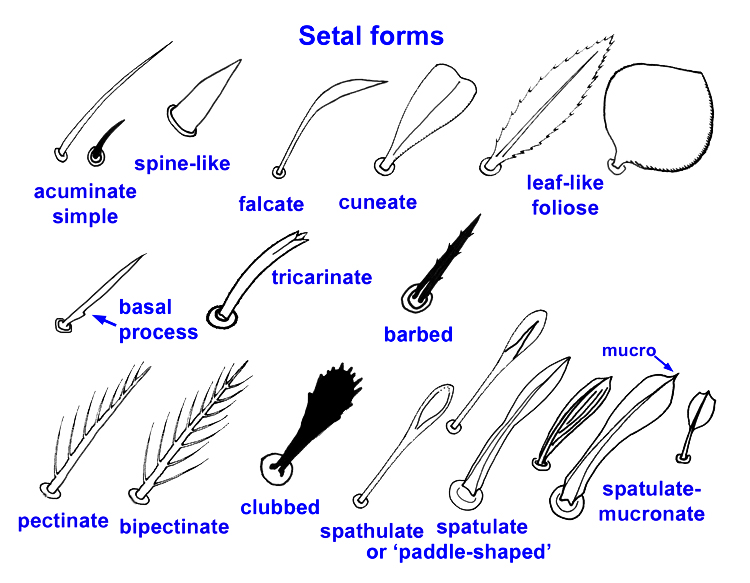 on jugulariajugularia:
(singular jugularium) in Mesostigmata, a pair of presternal shields bearing setae st1 and /or pores stp1. If fused, this shield is often called a tetartosternum.
or in soft cuticle; st2–3 on common scleritesclerite:
A component section of an exoskeleton; a plate forming the skeleton of an arthropod.
; st4 in soft cuticle or on platelets. Genital shieldgenital shield:
a shield or shields covering the genital opening; in female mongynaspine Mesostigmata this shield is usually called the epigynal (epigynial) shield.
axe- to tongue-shape, with 1–2 pairs of setaeseta:
(pl. setae, from L. = bristle) cuticular process composed of a hollow shaft (sometimes filled with a refractive material) produced from a membranous socket (the alveolus); the hair-like, spine-like, branched or variously expanded structures on the surfaces of the legs and body. Most setae function as mechanoreceptors, but others (e.g., solenidia) are chemoreceptors or have unknown or ambiguous functions.. Inguinal glands on small platelets behind coxae IV. Anal opening with 2 valves in small anal shieldanal shield:
in Mesostigmata, a ventral shield bearing the anal opening and circumanal setae (po, pa), but without any ventral setae or pores (lyrifissures) [see ventrianal shield].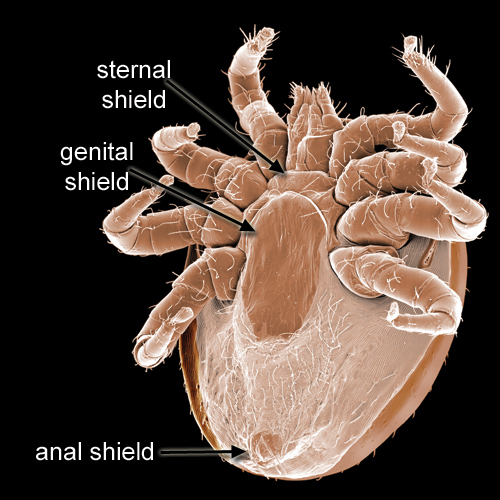 with 3–5 setaeseta:
(pl. setae, from L. = bristle) cuticular process composed of a hollow shaft (sometimes filled with a refractive material) produced from a membranous socket (the alveolus); the hair-like, spine-like, branched or variously expanded structures on the surfaces of the legs and body. Most setae function as mechanoreceptors, but others (e.g., solenidia) are chemoreceptors or have unknown or ambiguous functions.. Peritremes absent or minute. Tarsustarsus:
(pl. tarsi) the subdistal leg segment between the tibia and the pretarsus (apotele).
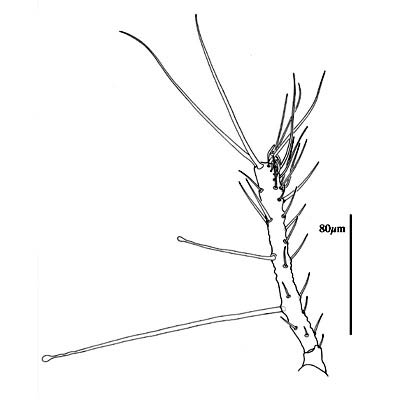
I without claws, usually with slender clubbed setaeseta:
(pl. setae, from L. = bristle) cuticular process composed of a hollow shaft (sometimes filled with a refractive material) produced from a membranous socket (the alveolus); the hair-like, spine-like, branched or variously expanded structures on the surfaces of the legs and body. Most setae function as mechanoreceptors, but others (e.g., solenidia) are chemoreceptors or have unknown or ambiguous functions.; tibiatibia:
(pl. tibiae) the leg segment between the genu and the tarsus. I sometimes with a minutely clubbed setaseta:
(pl. setae, from L. = bristle) cuticular process composed of a hollow shaft (sometimes filled with a refractive material) produced from a membranous socket (the alveolus); the hair-like, spine-like, branched or variously expanded structures on the surfaces of the legs and body. Most setae function as mechanoreceptors, but others (e.g., solenidia) are chemoreceptors or have unknown or ambiguous functions.. Palppalp:
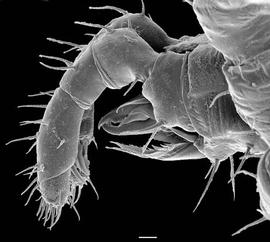
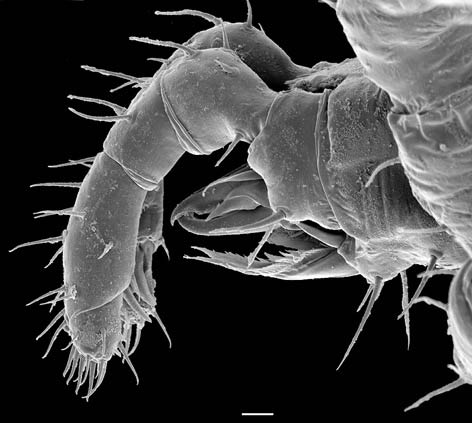
(= pedipalp) the second pair of limbs in arachnids, used in feeding and originating on either side of the chelicerae. In mites, the palps may be vestigial, with only a few segments, or have a maximum of 5 freely articulating segments (rarely the femur is subdivided) and a distal or subdistal apotele. genu with 6 setaeseta:
(pl. setae, from L. = bristle) cuticular process composed of a hollow shaft (sometimes filled with a refractive material) produced from a membranous socket (the alveolus); the hair-like, spine-like, branched or variously expanded structures on the surfaces of the legs and body. Most setae function as mechanoreceptors, but others (e.g., solenidia) are chemoreceptors or have unknown or ambiguous functions.; palp apotelepalptarsal apotele:
(= palp apotele, palptarsal claw) the most distal segment of the palp; absent in Acariformes, claw-like in Opilioacarida, and a subdistal, tined structure in the Mesostigmata. with 2 or 3 tines. Epistomegnathotectum:
(= epistome, tectum) an often membranous dorsal projection of the anterior margin of the basis capitulum in Mesostigmata; often diagnostic at family-, genus- or species-levels; also often difficult to see without high magnification and good optics.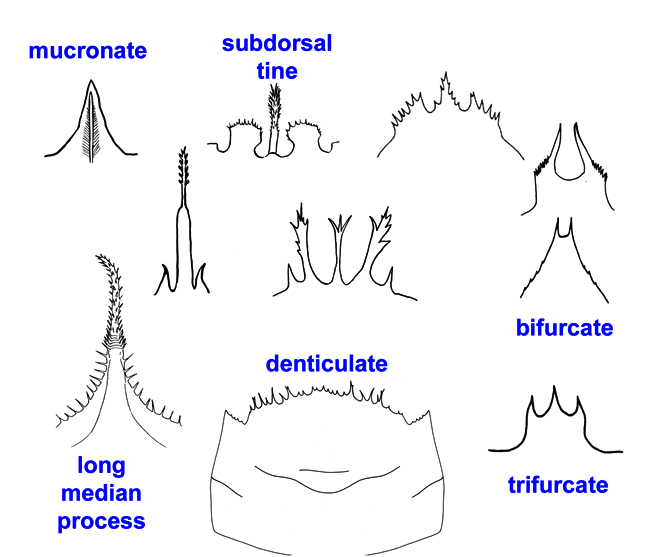 denticulate; hypostomal setaeseta:
(pl. setae, from L. = bristle) cuticular process composed of a hollow shaft (sometimes filled with a refractive material) produced from a membranous socket (the alveolus); the hair-like, spine-like, branched or variously expanded structures on the surfaces of the legs and body. Most setae function as mechanoreceptors, but others (e.g., solenidia) are chemoreceptors or have unknown or ambiguous functions. in triangular array; hypostomal groove broad, with denticlesdenticles:
small tooth-like processes, e.g., on the subcapitula of ticks and many mesostigmatans.
; corniculicorniculus:
(pl. corniculi) (also, external malae) a usually horn-like process (sometimes toothed, bifurcate, trifurcate, spine-like, spatulate, or membranous) on the subcapitulum of parasitiform mites that usually supports the salivary styli. A toothed corniculus could be confused with a rutellum, a possibly homologous structure in Acariformes and Opilioacarida. Phytoseiid image is spatulate corniculus.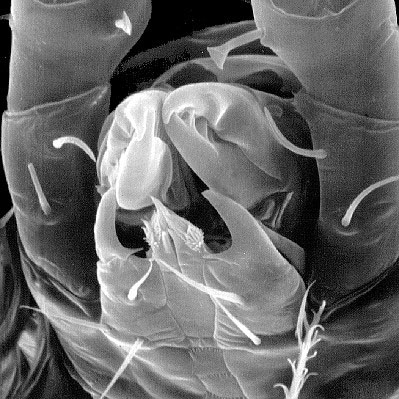 slender, horn-like. Chelicerae chelate-dentatechelate-dentate:
pincer-like chelicerae with teeth.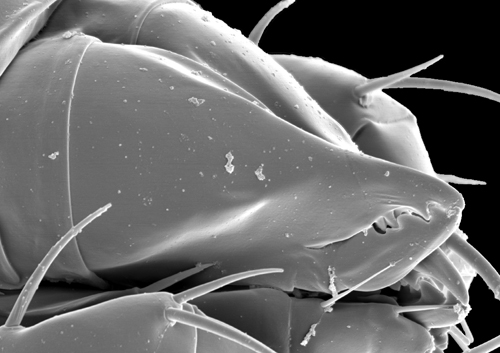 ; pilus dentilispilus dentilis:
(pl. pili dentilis) a seta-like or membranous sensory organ inserted ventrolaterally on the fixed digit of the chelicera of many Mesostigmata.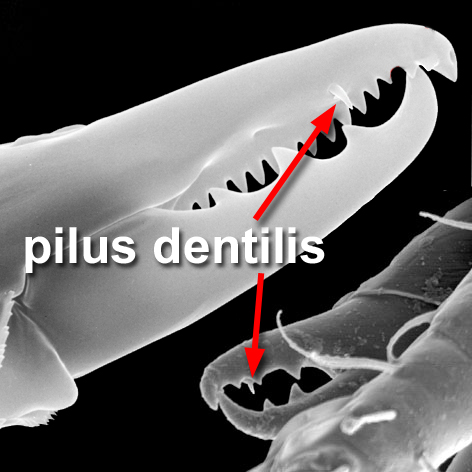 setiform; cheliceralcheliceral:
of or pertaining to the chelicera.
setaa elongate, laterad and parallel to digits. Male genital opening on intercoxal shield, valve with or without a pair of setaeseta:
(pl. setae, from L. = bristle) cuticular process composed of a hollow shaft (sometimes filled with a refractive material) produced from a membranous socket (the alveolus); the hair-like, spine-like, branched or variously expanded structures on the surfaces of the legs and body. Most setae function as mechanoreceptors, but others (e.g., solenidia) are chemoreceptors or have unknown or ambiguous functions.; neither chelicerae nor legs obviously modified for sperm transfer.
Species of Epicriopsis (Ameroseiidae) have claws and empodium on legs I and well developed peritremes. The presence of peritremes also serves to distinguish species of Podocinidae, and along with divided dorsal shields, some Ologamasidae (Euepicrius), and some Ascidae (Antennoseius) that have convergent elongate legs I and polygonal idiosomal ornamentation.
Author: David E. Walter
Content last updated Sept. 2006, unless indicated otherwise
Lucid key player updated Sept. 2025
idtools.org