t
Ologamasidae Ryke, 1962
Superorder Parasitiformes » Order Mesostigmata » Suborder Monogynaspida » Infraorder Gamasina » Hyporder Dermanyssiae » Superfamily Rhodacaroidea » Family Ologamasidae
Acugamasus Lee, Acuphis Karg, Allogamasellus Athias-Henriot, Antennolaelaps Womersley, Athiasella Lee, Caliphis Lee, Cymiphis Lee, Cyrtolaelaps Berlese, Euepicrius Womersley, Euryparasitus Oudemans, Evansellus Ryke, Gamasellevans Loots & Ryke, Gamaselliphis Ryke, Gamasiphis Berlese, Gamasiphoides Womersley, Gamasitus Womersley, Geogamasus Lee, Heterogamasus Trägårdh, Heydeniella Richters, Hiniphis Lee, Hydrogamasellus Hirschmann, Hydrogamasus Berlese, Litogamasus Lee, Laelaptiella Womersley, Lindquistoseius Genis, Loots & Ryke, Neogamsellevans Loots & Ryke, Notogamasellus Loots & Ryke, Ologamasus Berlese, Onchogamasus Womersley, Paragamasellevans Loots & Ryke, Parasitiphis Womersley, Periseius Womersley, Psammonsella Haq, Pyriphis Lee, Queenslandolaelaps Womersley, Rykellus Lee, Sessiluncus G. Canestrini, Solugamasus Lee, Tangaroellus Luxton
 on a well sclerotized sternal shieldsternal shield: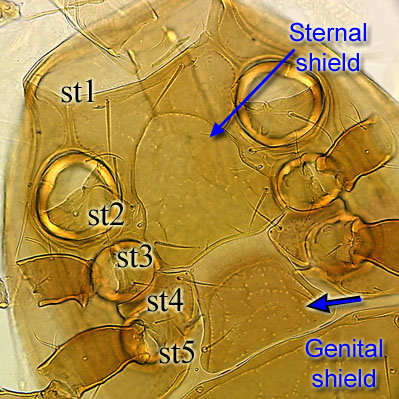
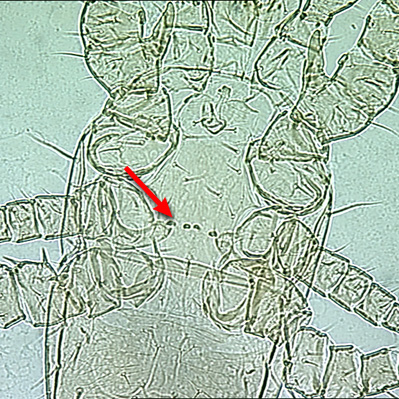 rarely present
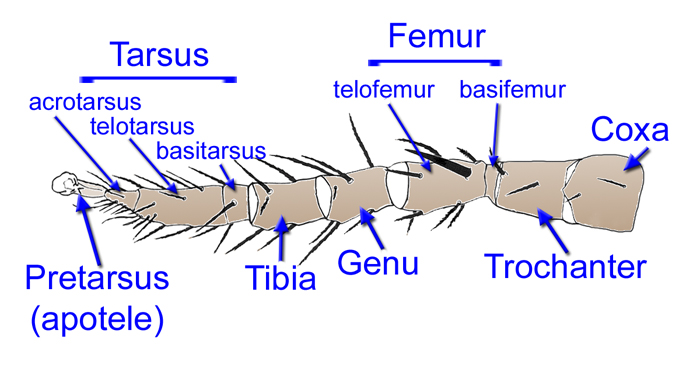 I and genugenu:
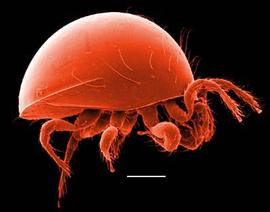
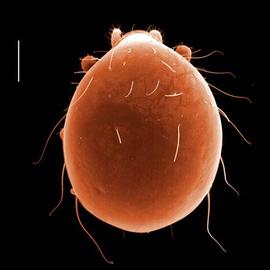
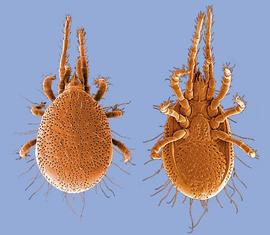
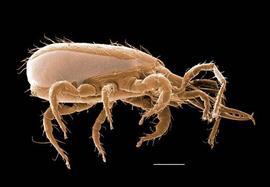
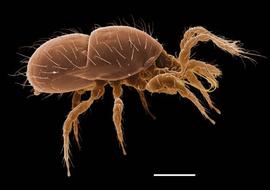
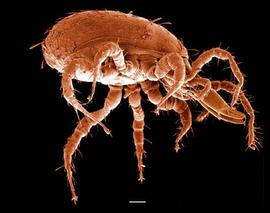
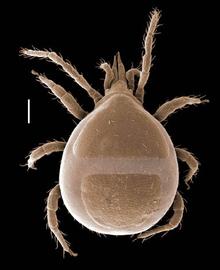
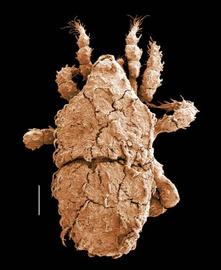
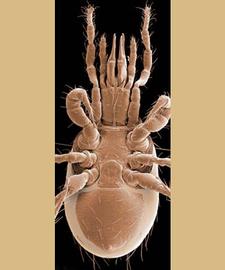
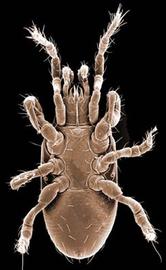
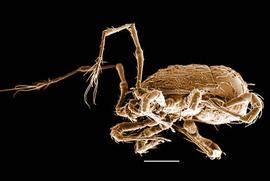
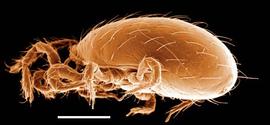
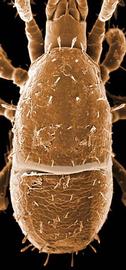
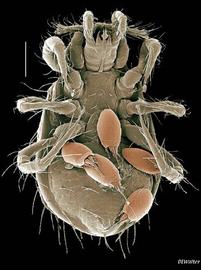
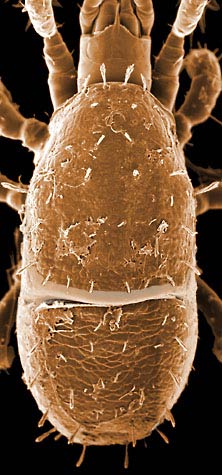
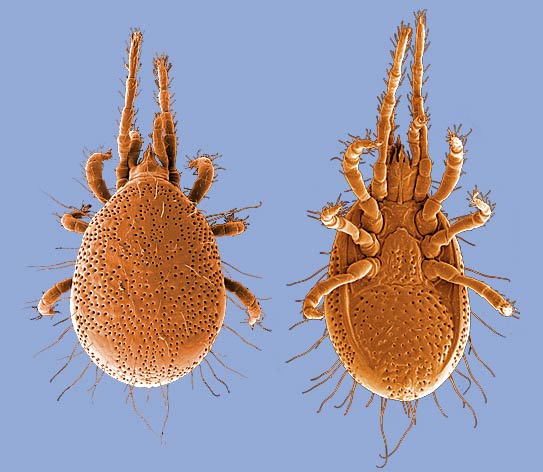
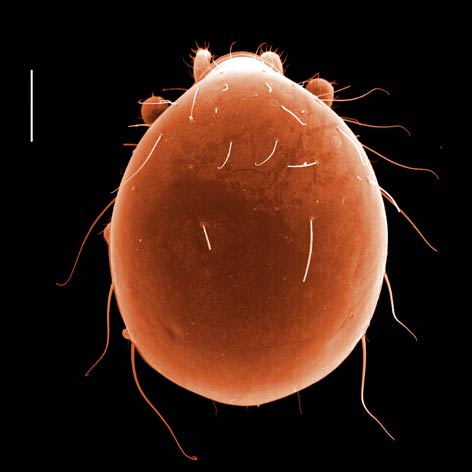
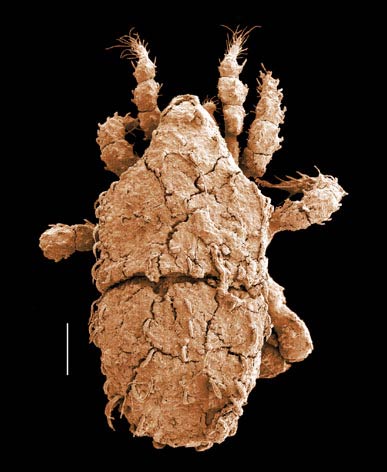
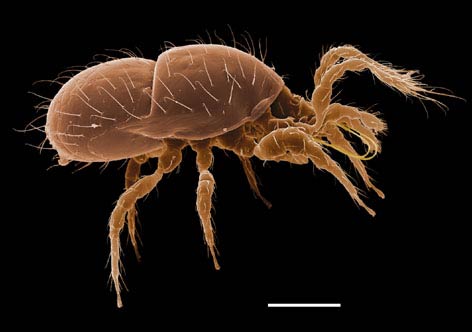
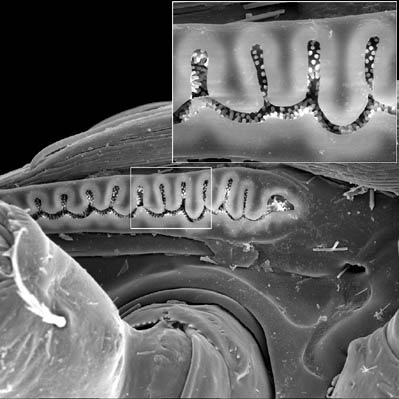
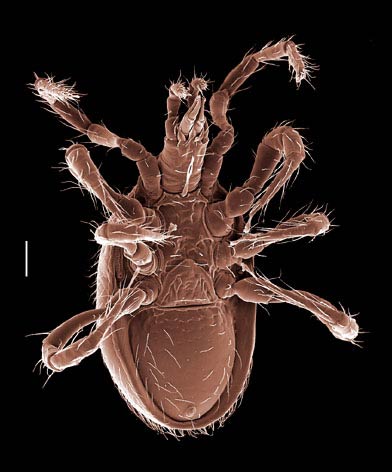
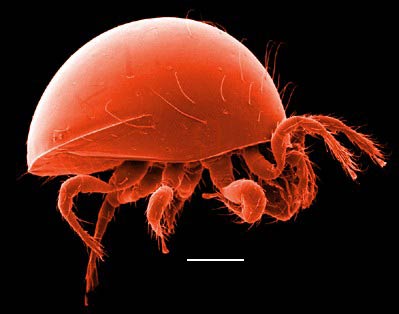
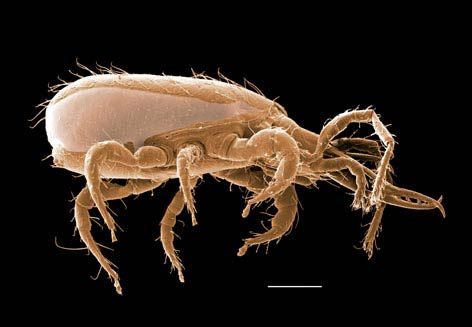
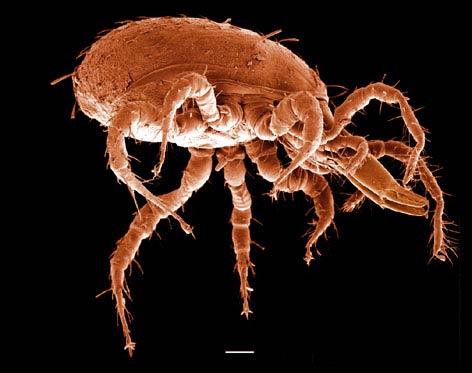
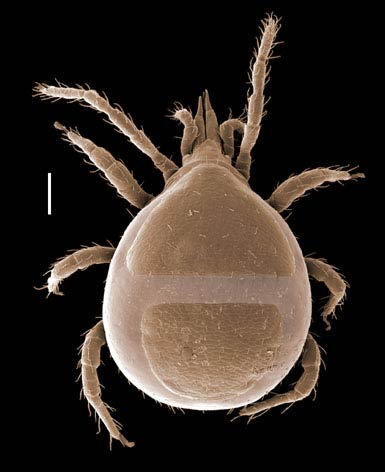
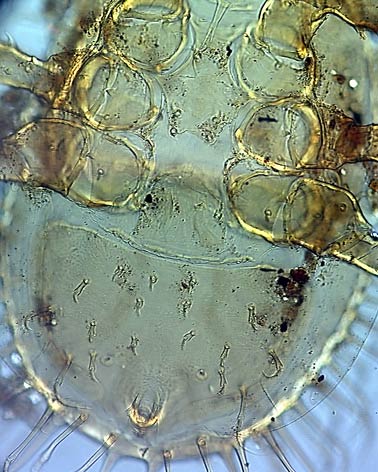
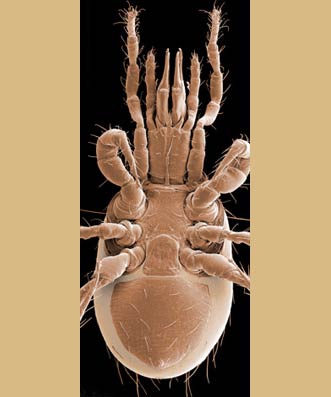
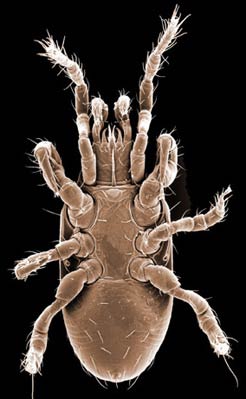
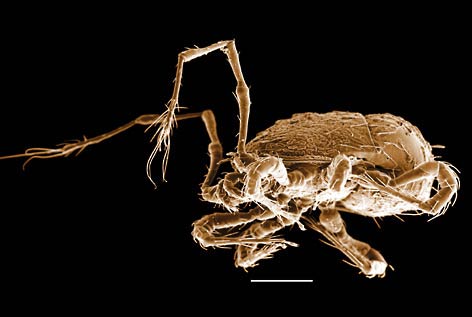
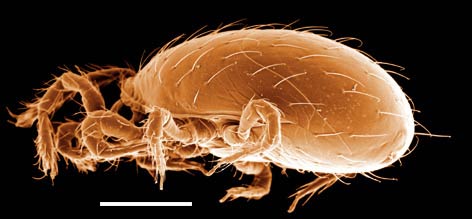
Tan, brown, orange or reddish dermanyssine mesostigmatans. Females with separate podonotalpodonotal:
relating to the dorsal podosoma, the region of the idiosoma over the legs.
and opisthonotalopisthonotal:
dorsal opisthosoma.
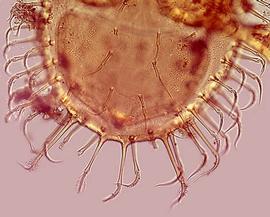
shields, fused to smoothly holodorsal shield, or beetle-like all encompassing armor, rarely encased in a layer of soil; males with holodorsal shield. Peritremes typical running past coxacoxa:
the basal segment of the leg, articulating with (Parasitiformes) or fused to (Acariformes) the body wall. I, sometimes chambered; peritrematalperitrematal:
(peritrematic) of or referring to the peritreme; adjectival form of peritreme.
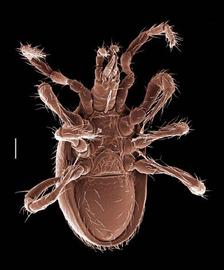
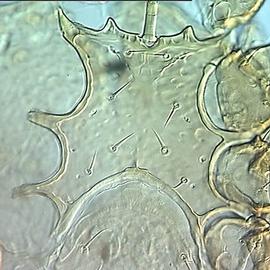
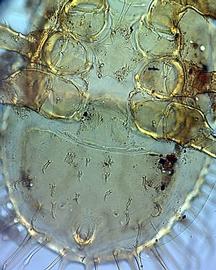
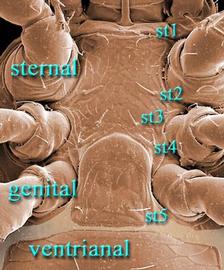
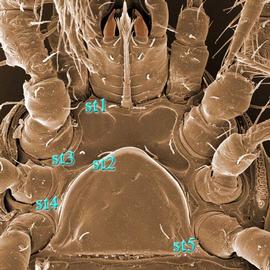
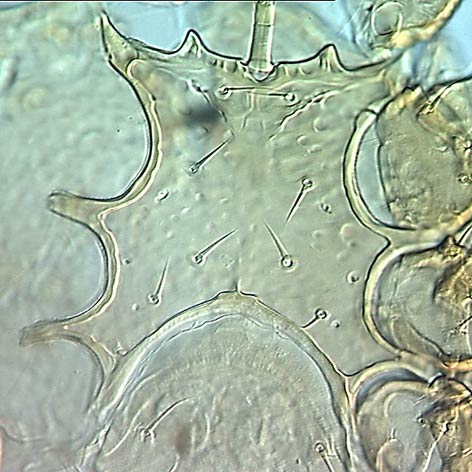
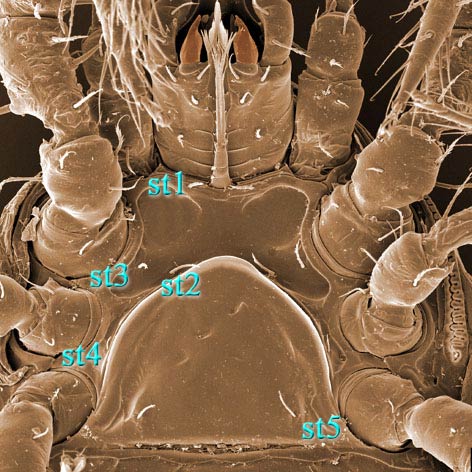
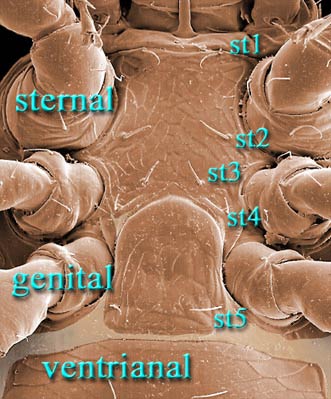
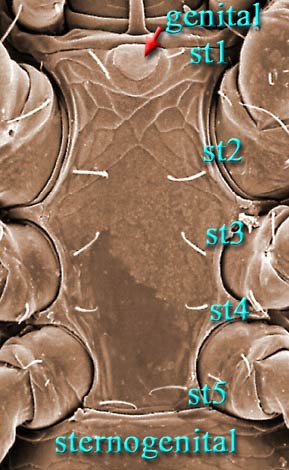
shields usually well developed. Female with large sternal shield bearing 4 pairs of setae (st1–4) and 3 pairs of lyrifissures (stp1–3), sometimes with arms embracing genital shieldgenital shield:
a shield or shields covering the genital opening; in female mongynaspine Mesostigmata this shield is usually called the epigynal (epigynial) shield.
; genital shieldgenital shield:
a shield or shields covering the genital opening; in female mongynaspine Mesostigmata this shield is usually called the epigynal (epigynial) shield.
usually mound-shaped to subrectangular, hinged at level of coxae IV, bearing 1 pair of setae, and free from ventrianal shieldventrianal shield:
in Mesostigmata, a ventral shield bearing the anal opening, circum anal setae, and one or more pairs of ventral setae or pores (lyrifissures) [see anal shield]; maybe rather narrow or very broad and covering most of the gaster.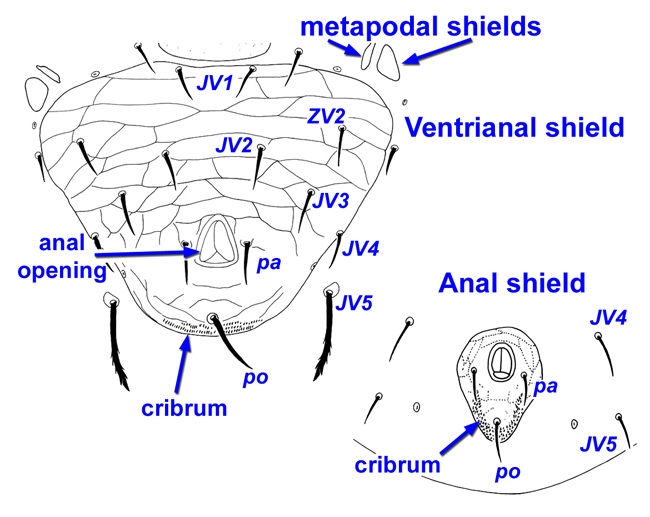 . Venterventer:
the lower or under side; opposed to dorsum.
covered by large ventrianal shield, sometimes fused to peritrematalperitrematal:
(peritrematic) of or referring to the peritreme; adjectival form of peritreme.
and/or dorsaldorsal:
relating to the upper or back side; opposed to ventral.
shields; anal opening with 3 circumanal setaecircumanal setae:
in Mesostigmata, the three setae (postanal and pair of peranal) setae surrounding the anal opening.. Tarsustarsus:
(pl. tarsi) the subdistal leg segment between the tibia and the pretarsus (apotele).
I slender, sometimes elongate, with or without claws; trochantertrochanter:
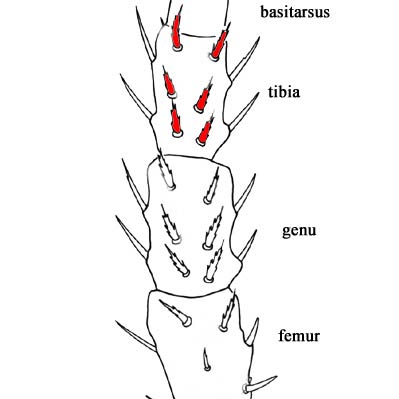
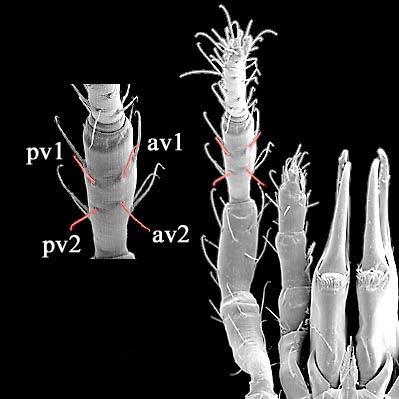
the leg segment between the coxa and the femur. I with 6 setae; tibiatibia:
(pl. tibiae) the leg segment between the genu and the tarsus. I with 6 dorsaldorsal:
relating to the upper or back side; opposed to ventral.
and 4 ventral setaeventral setae:
in the Lindquist-Evans system used in the Mesostigmata, the ventral region has up to three longitudinal rows (Jv, Zv, Lv) with 1-5 transverse row designations.
; genugenu:
(pl. genua) (= patella) the 4th leg segment, between the femur and tibia.
IV with 5 dorsaldorsal:
relating to the upper or back side; opposed to ventral.
and 2 ventral setaeventral setae:
in the Lindquist-Evans system used in the Mesostigmata, the ventral region has up to three longitudinal rows (Jv, Zv, Lv) with 1-5 transverse row designations.
. Chelicerae various, especially chelate-dentatechelate-dentate:
pincer-like chelicerae with teeth.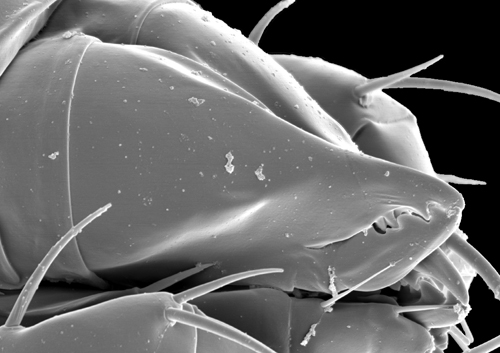 and snapping; movable digit without excrescences. Palppalp:
(= pedipalp) the second pair of limbs in arachnids, used in feeding and originating on either side of the chelicerae. In mites, the palps may be vestigial, with only a few segments, or have a maximum of 5 freely articulating segments (rarely the femur is subdivided) and a distal or subdistal apotele.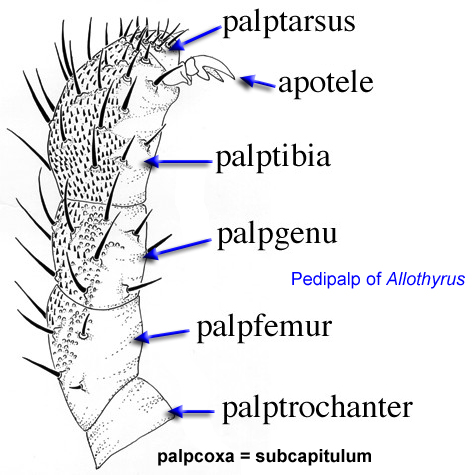 genu with 6 setae, palp apotelepalptarsal apotele:
(= palp apotele, palptarsal claw) the most distal segment of the palp; absent in Acariformes, claw-like in Opilioacarida, and a subdistal, tined structure in the Mesostigmata. 3-tined; corniculicorniculus:
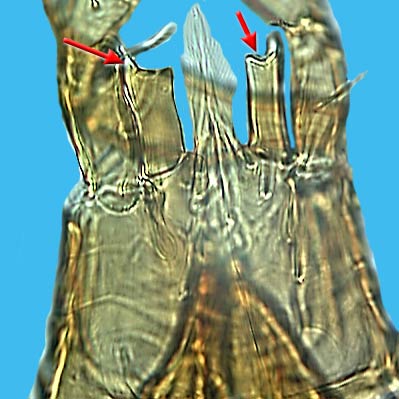
(pl. corniculi) (also, external malae) a usually horn-like process (sometimes toothed, bifurcate, trifurcate, spine-like, spatulate, or membranous) on the subcapitulum of parasitiform mites that usually supports the salivary styli. A toothed corniculus could be confused with a rutellum, a possibly homologous structure in Acariformes and Opilioacarida. Phytoseiid image is spatulate corniculus.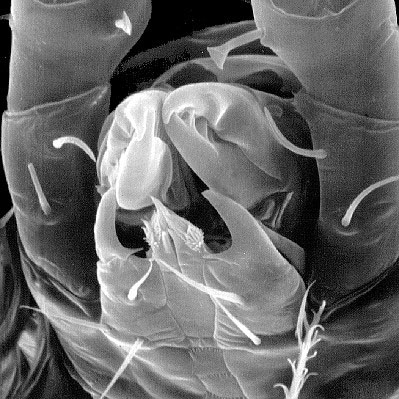 usually horn-like, rarely truncate and toothed; internal male highly divided. Tritosternumtritosternum:
the sternum of the 3rd body segment (between legs I); produced as a biflagellate structure in Mesostigmata, although sometimes the flagellae (laciniae) are partially or completely fused. 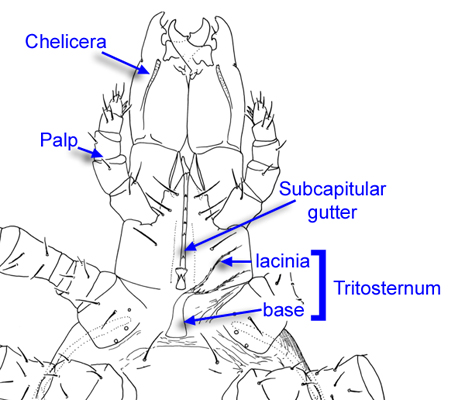 biflagellate, with columnar basebase:
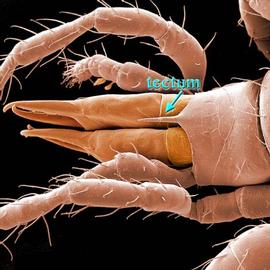
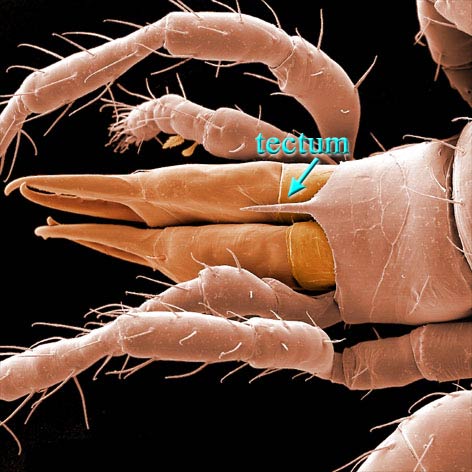
the usually columnar basal part of the tritosternum; sometimes expanded and rectangular or otherwise modified; the most basal part of any structure.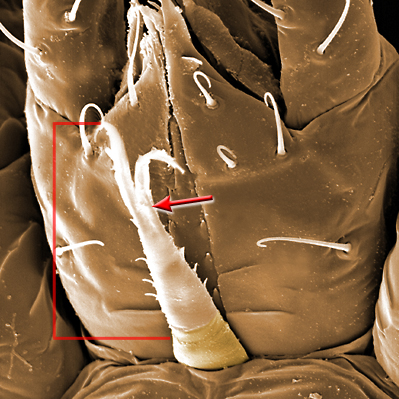 . Tectumgnathotectum:
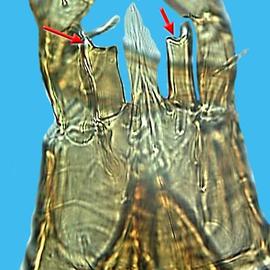
(= epistome, tectum) an often membranous dorsal projection of the anterior margin of the basis capitulum in Mesostigmata; often diagnostic at family-, genus- or species-levels; also often difficult to see without high magnification and good optics.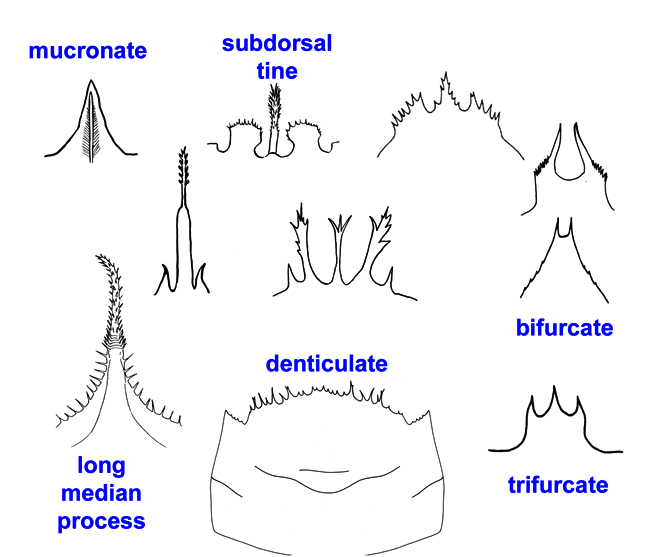 various, but typically including an elongate median process. Female sperm induction pores at basebase:
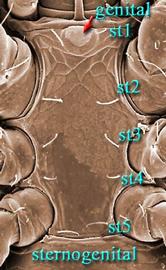
the usually columnar basal part of the tritosternum; sometimes expanded and rectangular or otherwise modified; the most basal part of any structure. of coxae IV, on coxae IV, on coxae or trochanters III, or other sites; sperm ducts lead to unpaired, central spermathecal sack (laelapid type). Males with genital opening at basebase:
the usually columnar basal part of the tritosternum; sometimes expanded and rectangular or otherwise modified; the most basal part of any structure. of tritosternumtritosternum:
the sternum of the 3rd body segment (between legs I); produced as a biflagellate structure in Mesostigmata, although sometimes the flagellae (laciniae) are partially or completely fused. in sternogenital shield; spermatodactylspermatodactyl:
(also spermadactyl) the 'sperm finger' on the chelicerae of male dermanyssine Mesostigmata used to transfer sperm to the secondary sperm system in the female; spermatodactyls take various forms, from simple finger-like processes to very long, contorted structures. 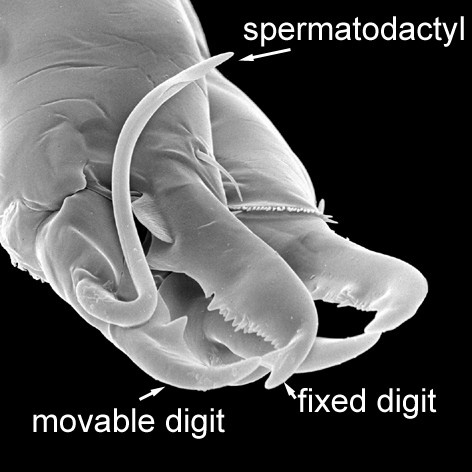 simple and finger-like to extremely complex; legs II commonly with femoral spurspur:
a projection, usually tooth- or spine-like, from the body or limbs.
. Deutonymphs with divided dorsal shielddivided dorsal shield:
in Mesostigmata, adult mites have two usually subequal dorsal shields.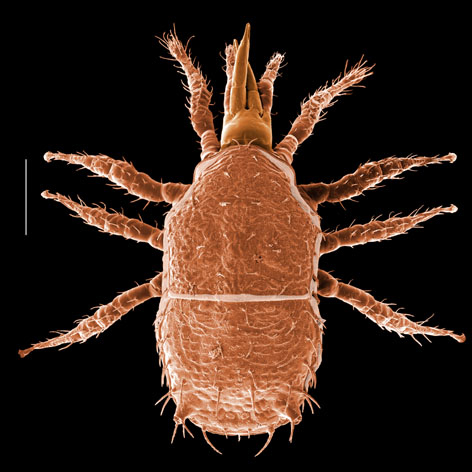 , rarely with acrotarsus (Euryparasitus), sometimes phoretic on mammals.
The various families in the Rhodacaroidea are usually easy to distinguish from other Mesostigmata by their entireentire:
a shield or sclerite with a continuous margin without incisions.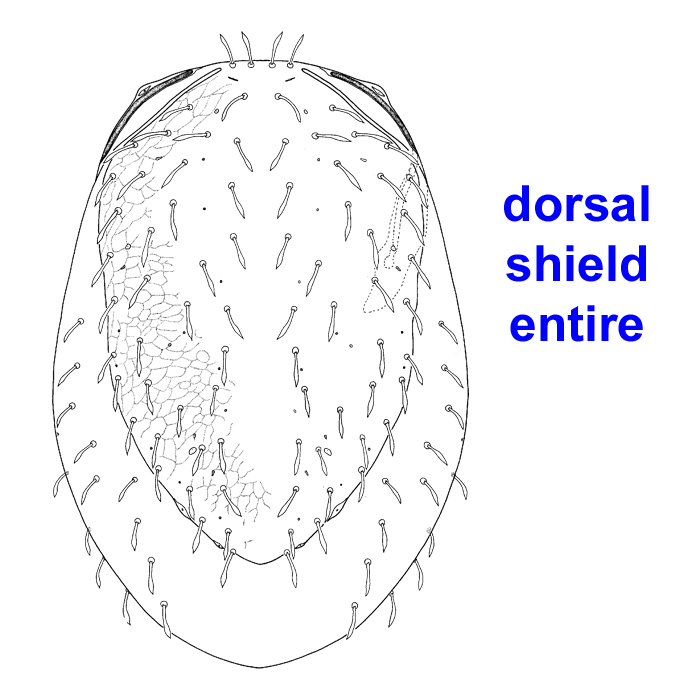 sternal shields with 4 pairs of setaeseta:
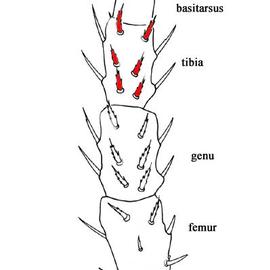
(pl. setae, from L. = bristle) cuticular process composed of a hollow shaft (sometimes filled with a refractive material) produced from a membranous socket (the alveolus); the hair-like, spine-like, branched or variously expanded structures on the surfaces of the legs and body. Most setae function as mechanoreceptors, but others (e.g., solenidia) are chemoreceptors or have unknown or ambiguous functions. and 6/4 dorsal/ventral setation of tibiatibia:
(pl. tibiae) the leg segment between the genu and the tarsus. I. In Rhodacaridae, most of which are small, lightly sclerotized mites, the anterioranterior:
the front part of the body or towards that region in comparison, e.g., 'anterior to'
margin of the sternal shieldsternal shield:
a shield in the anterior intercoxal region of parasitiform mites that bears one or more pairs of sternal setae. is usually membranous to about the level of st1. Digamasellidae have a highly reduced leg chaetomechaetome:
a complement of setae; the setal array present on a stage or body part.
and a distinctive tectumgnathotectum:
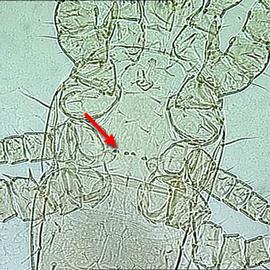
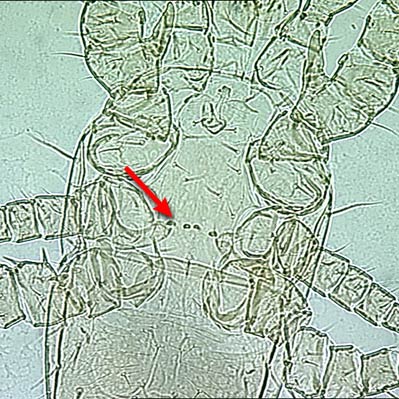
(= epistome, tectum) an often membranous dorsal projection of the anterior margin of the basis capitulum in Mesostigmata; often diagnostic at family-, genus- or species-levels; also often difficult to see without high magnification and good optics. with a subdorsal median tine. Species of both Australian Rhodacaridae (except Protogamasellopsis) and Digamasellidae (Digamasellus) usually have 3–4 scleronoduli, but I know of only 1 undescribed Australian ologamasid with these light refracting podonotalpodonotal:
relating to the dorsal podosoma, the region of the idiosoma over the legs.
structures. Some Pachylaelapidae and Parholaspididae may have sternal shields that 'capture' st4, but both families have highly reduced leg chaetomes.
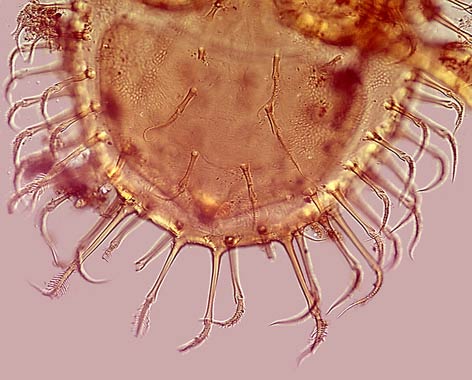
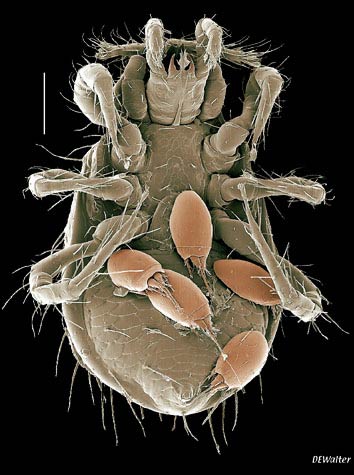
Ologamasids are the dominant predatory mesostigmatans in forest litter in the Southern Hemisphere, but few species have been studied in detail (see Lee 1973, 1974). Most are considered free-living predators, but species of Cyrtolaelaps and Euryparasitusare are associated with mammal nests and their deutonymphs are phoretic on the nest builders. Also, deutonymphs of the aberrant genera Iphidosoma (often assigned to the Eviphididae) and Epiphis (often Rhodacaridae) are found on carabid beetles, and the former sometimes on sciarid flies.
Author: David E. Walter
Content last updated Sept. 2006, unless indicated otherwise
Lucid key player updated Sept. 2025
idtools.org