t
Pseudoparasitus Berlese
Superorder Parasitiformes » Order Mesostigmata » Suborder Monogynaspida » Infraorder Gamasina » Hyporder Dermanyssiae » Superfamily Dermanyssoidea » Family Laelapidae » Subfamily Hypoaspidinae » Tribe Pseudoparasitini » Genus Pseudoparasitus
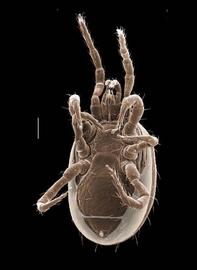
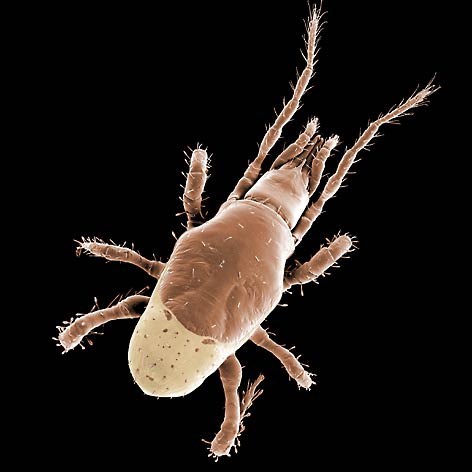
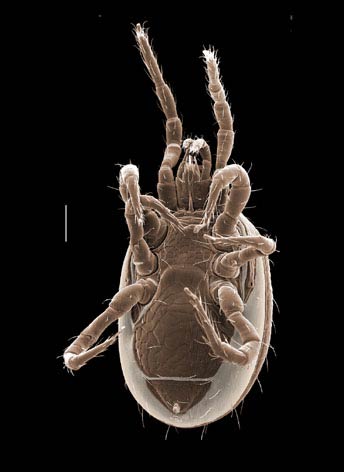
Free-living soil mesostigmatans with a holodorsal shieldholodorsal shield:
a shield that covers all of the dorsum. In Mesostigmata, the holodorsal shield is often interpreted as resulting from the fusion of podonotal and opisthonotal shields and a suture between these regions is often visible (see recurved and procurved).
; an entire sternal shieldsternal shield:
a shield in the anterior intercoxal region of parasitiform mites that bears one or more pairs of sternal setae.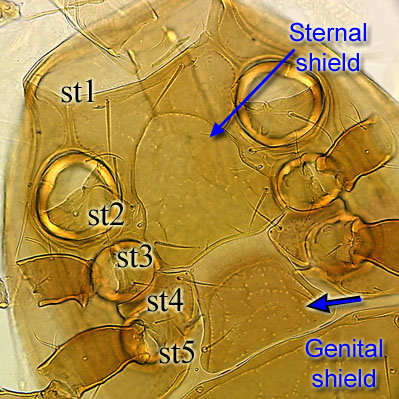 bearing 3 pairs of setae; a tongue-, axe head-, or flask-shaped genital shieldgenital shield:
a shield or shields covering the genital opening; in female mongynaspine Mesostigmata this shield is usually called the epigynal (epigynial) shield.
with 1 or more (rarely none) pairs of setae; and a small anal shield with 3 circumanal setaecircumanal setae:
in Mesostigmata, the three setae (postanal and pair of peranal) setae surrounding the anal opening.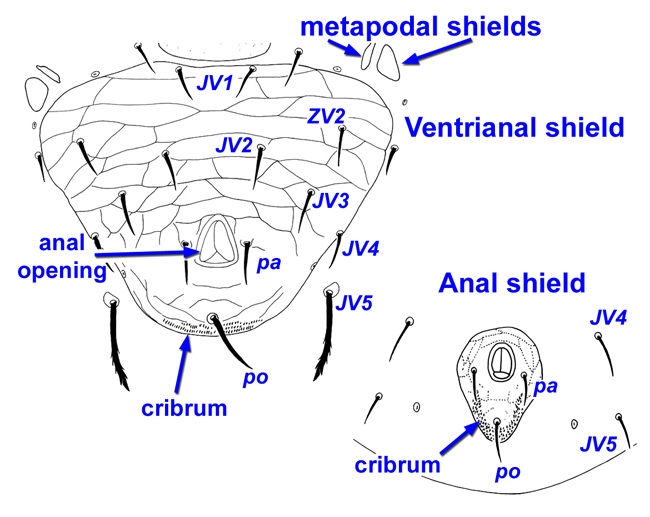 are usually Laelapidae. Eviphidid, ameroseiids, and phytoseiidphytoseiid:
a member of the Phytoseiidae, including over 2000 described species, some of which are important biocontrol agents. 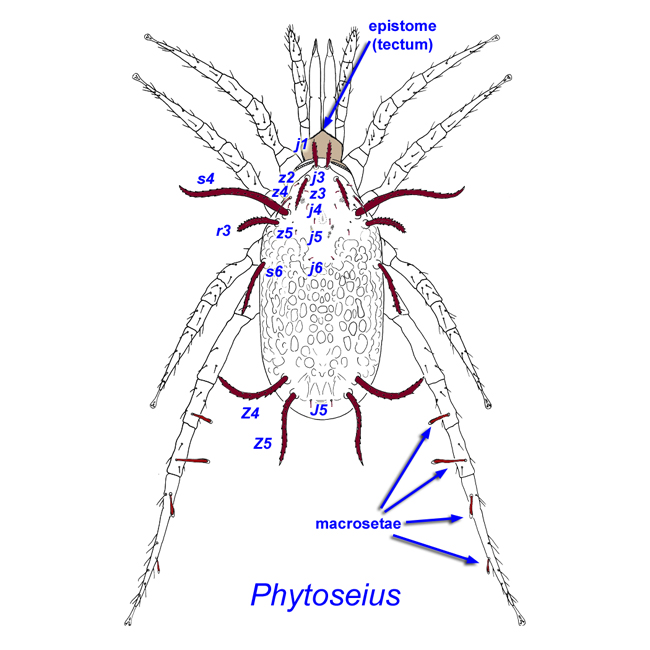 mites may have similar anal shields, but typically have a posteriorly truncate genital shieldgenital shield:
a shield or shields covering the genital opening; in female mongynaspine Mesostigmata this shield is usually called the epigynal (epigynial) shield.
and a highly reduced leg and dorsaldorsal:
relating to the upper or back side; opposed to ventral.
shield chaetomechaetome:
a complement of setae; the setal array present on a stage or body part.
. Arctacarid mites are not known to occur in Australia but are superficially similar to laelapids. Arctacarids can be distinguished by their truncate dorsaldorsal:
relating to the upper or back side; opposed to ventral.
shield, 3-tined palp apotelepalptarsal apotele:
(= palp apotele, palptarsal claw) the most distal segment of the palp; absent in Acariformes, claw-like in Opilioacarida, and a subdistal, tined structure in the Mesostigmata.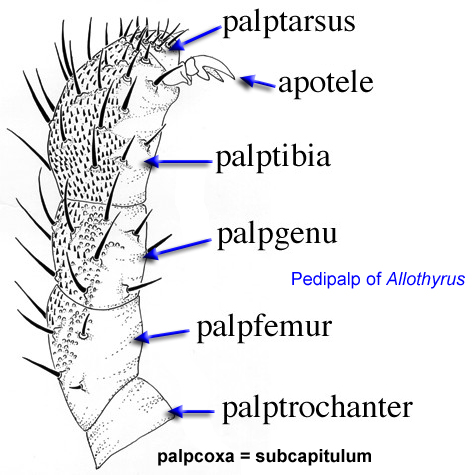 , and bifurcate pilus dentilispilus dentilis:
(pl. pili dentilis) a seta-like or membranous sensory organ inserted ventrolaterally on the fixed digit of the chelicera of many Mesostigmata.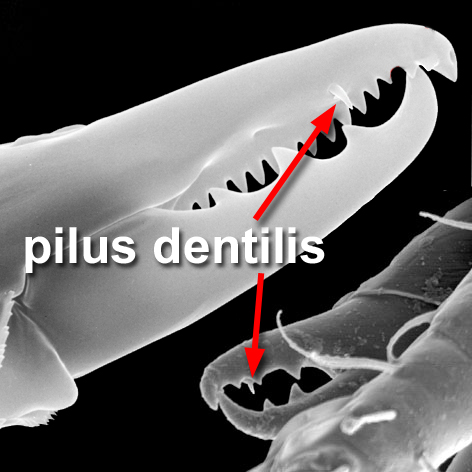 . Ololaelaps species have a large opisthogenital shield and may be confused with some Parholaspididae or Ologamasidae; however, they lack an arthrodial brusharthrodial brush:
a brush like extension of the arthrodial membrane at the articulation of the movable and fixed digits in some Mesostigmata. Not to be confused with cheliceral excrescences that are produced from openings in the movable digit.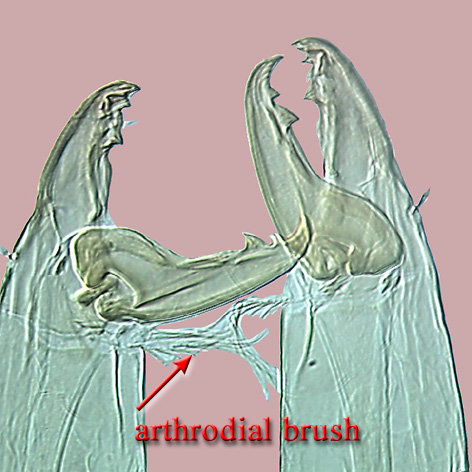 and have only 3 pairs of sternal setaesternal setae:
in Mesostigmata, the five pairs of setae in the intercoxal region designated st1-5; st1-3 are present in the larva and usually are borne on a sternal shield in the adult female; st4, the metasternal setae, are added in the deutonymph, often are borne on metasternal platelets, and sometimes on the sternal shield; st5, the genital setae, are added in the protonymph and usually borne on or are inserted laterad the epigynal shield in the adult female.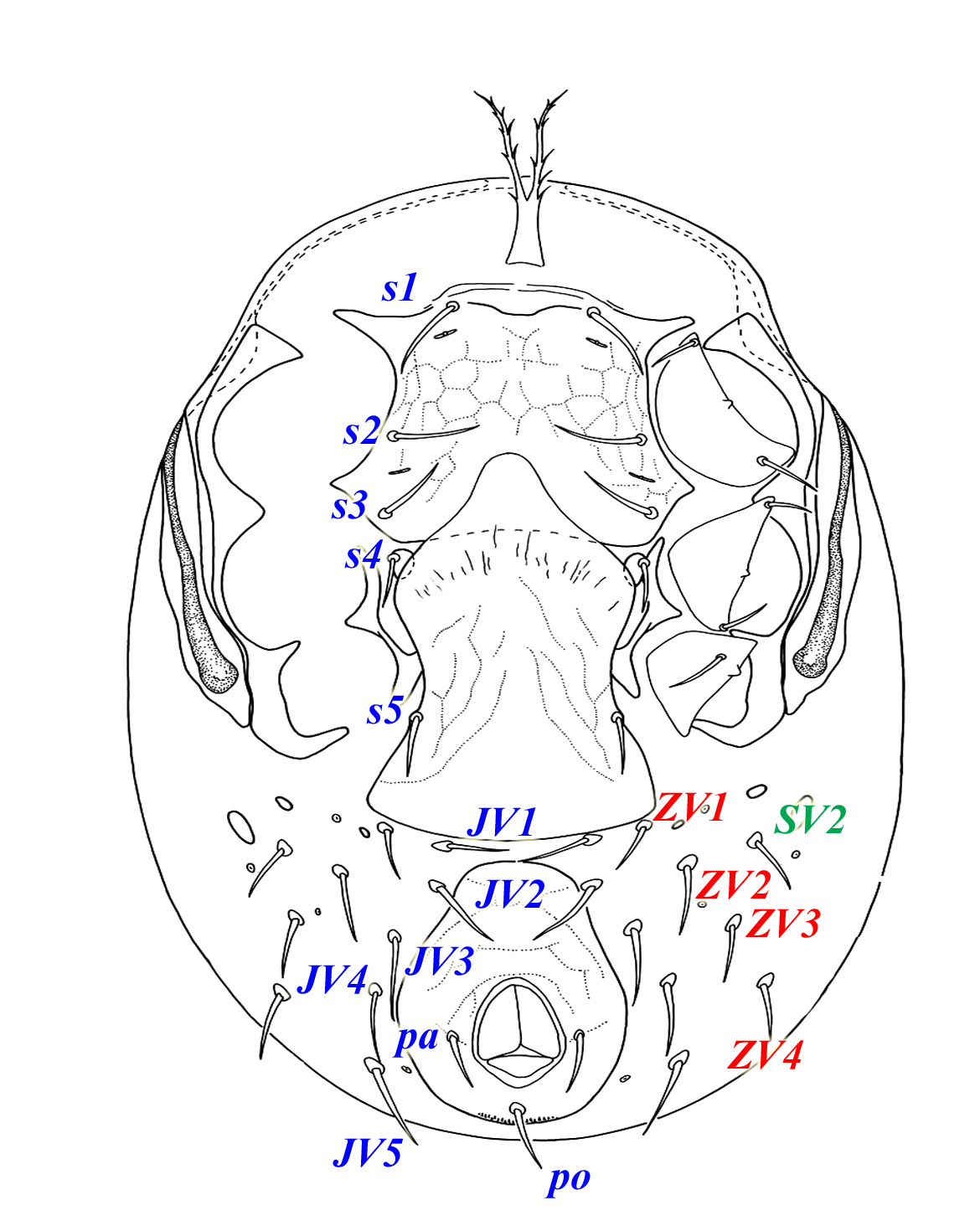 . Pseudoparasitus species have a flask-shaped opisthogenital shield that abuts an inversely triangular anal shield, similar to some Pachylaelapidae, but again have only 3 pairs of sternal setaesternal setae:
in Mesostigmata, the five pairs of setae in the intercoxal region designated st1-5; st1-3 are present in the larva and usually are borne on a sternal shield in the adult female; st4, the metasternal setae, are added in the deutonymph, often are borne on metasternal platelets, and sometimes on the sternal shield; st5, the genital setae, are added in the protonymph and usually borne on or are inserted laterad the epigynal shield in the adult female..
As well as the free-living soil mites that resemble free-living laelapids, a host of nest-, fur- and feather-inhabiting symbiotic Dermanyssoidea may be confused with Laelapidae. Whenever samples are from burrows, nests, tree hollows, soil near nests, carrion, or from other areas likely to contain parasites, a tentative identification of a laelapid mite should be checked against a key to parasitic Mesostigmata (e.g., Domrow 1988Domrow 1988:
Domrow R. 1988. Acari Mesostigmata parasitic on Australian vertebrates: An annotated checklist, keys and bibliography. Invertebrate Taxonomy 1: 817–948.) or taxa known to be associated with insects, spiders and myriapods.
Dorsaldorsal:
relating to the upper or back side; opposed to ventral.
shield setae spatulatespatulate:
(Latin spatula = spoon) spatula-shaped; variously interpreted, but usually referring to setae that are flattened and somewhat expanded distally.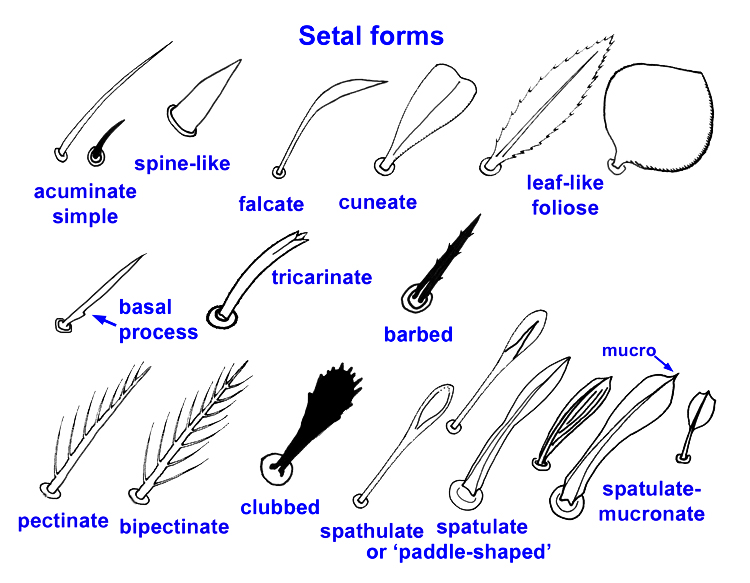 to spatulatespatulate:
(Latin spatula = spoon) spatula-shaped; variously interpreted, but usually referring to setae that are flattened and somewhat expanded distally.-mucronate or paddle-shaped.............................. 2
- Dorsaldorsal:
relating to the upper or back side; opposed to ventral.
shield setae acuminate, not expanded distally.............................. 3
Digits of chelicerae and corniculicorniculus:
(pl. corniculi) (also, external malae) a usually horn-like process (sometimes toothed, bifurcate, trifurcate, spine-like, spatulate, or membranous) on the subcapitulum of parasitiform mites that usually supports the salivary styli. A toothed corniculus could be confused with a rutellum, a possibly homologous structure in Acariformes and Opilioacarida. Phytoseiid image is spatulate corniculus.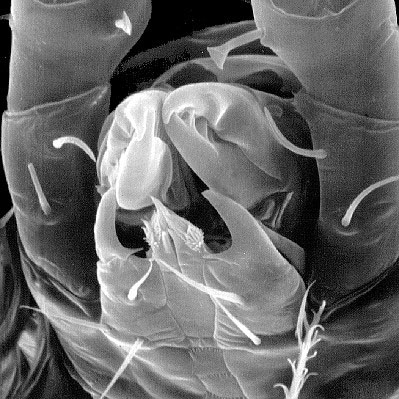 elongate, the latter reaching palppalp:
(= pedipalp) the second pair of limbs in arachnids, used in feeding and originating on either side of the chelicerae. In mites, the palps may be vestigial, with only a few segments, or have a maximum of 5 freely articulating segments (rarely the femur is subdivided) and a distal or subdistal apotele. femur.............................. Stratiolaelaps
- Chelicerae and corniculicorniculus:
(pl. corniculi) (also, external malae) a usually horn-like process (sometimes toothed, bifurcate, trifurcate, spine-like, spatulate, or membranous) on the subcapitulum of parasitiform mites that usually supports the salivary styli. A toothed corniculus could be confused with a rutellum, a possibly homologous structure in Acariformes and Opilioacarida. Phytoseiid image is spatulate corniculus. not elongate.............................. Cosmolaelaps (pars)
With hologastric shieldhologastric shield:
in Mesostigmata, a shield that covers the genital, ventral and anal regions; a ventrianal shield that incorporates the metapodal elements and is fused to the epigynal shield. 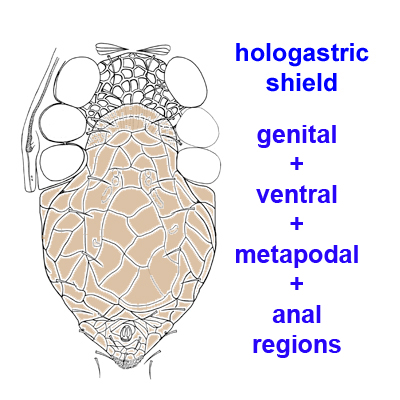 ; sternal shieldsternal shield:
a shield in the anterior intercoxal region of parasitiform mites that bears one or more pairs of sternal setae. usually with 4 pairs of setae.............................. Ololaelaps
- With genital or opisthogenital shields not fused to anal shield; 3 pairs of sternal shieldsternal shield:
a shield in the anterior intercoxal region of parasitiform mites that bears one or more pairs of sternal setae. setae.............................. 4
With opisthogenital shield expanded to cover much of venterand abutting anal shield.............................. 5
- With genital shieldgenital shield:
a shield or shields covering the genital opening; in female mongynaspine Mesostigmata this shield is usually called the epigynal (epigynial) shield.
, usually more or less tongue-shaped and separated from anal shield.............................. 6
All ventral setaeventral setae:
in the Lindquist-Evans system used in the Mesostigmata, the ventral region has up to three longitudinal rows (Jv, Zv, Lv) with 1-5 transverse row designations.
captured by opisthogenital shield on margin; dorsaldorsal:
relating to the upper or back side; opposed to ventral.
shield setae often whip-likewhip-like:
long, slender and sinuous as in the posterior setae of some phytoseiid mites (Mesostigmata) or the stylets of spider mites and their relatives (Prostigmata: Tetranychoidea).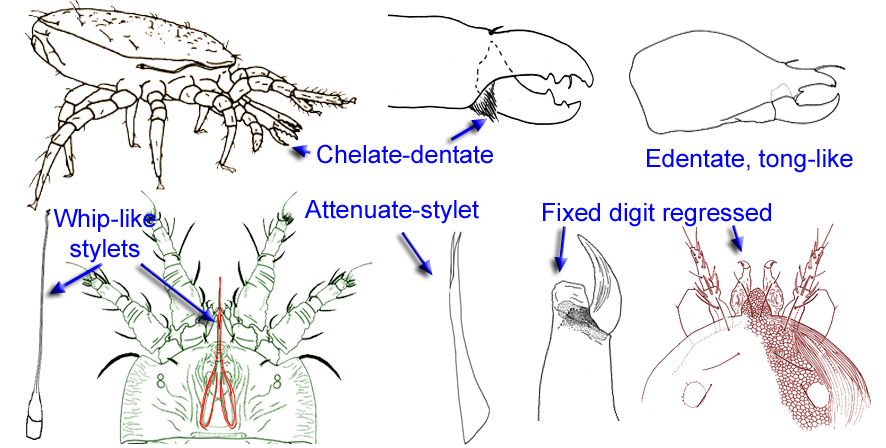 ; associated with ants .............................. Laelaspis
- Usually 2 pairs of ventral setaeventral setae:
in the Lindquist-Evans system used in the Mesostigmata, the ventral region has up to three longitudinal rows (Jv, Zv, Lv) with 1-5 transverse row designations.
removed from margin of opisthogenital shield; dorsaldorsal:
relating to the upper or back side; opposed to ventral.
shield setae simplesimple:
unadorned; simple setae are needle-like and without hairs or pectins.
; free-living, on wood with bark beetles, or rarely with ants............................... Pseudoparasitus
Dorsaldorsal:
relating to the upper or back side; opposed to ventral.
shield setae scimitar-like or curved and taperingtapering:
drawn out or with margins converging.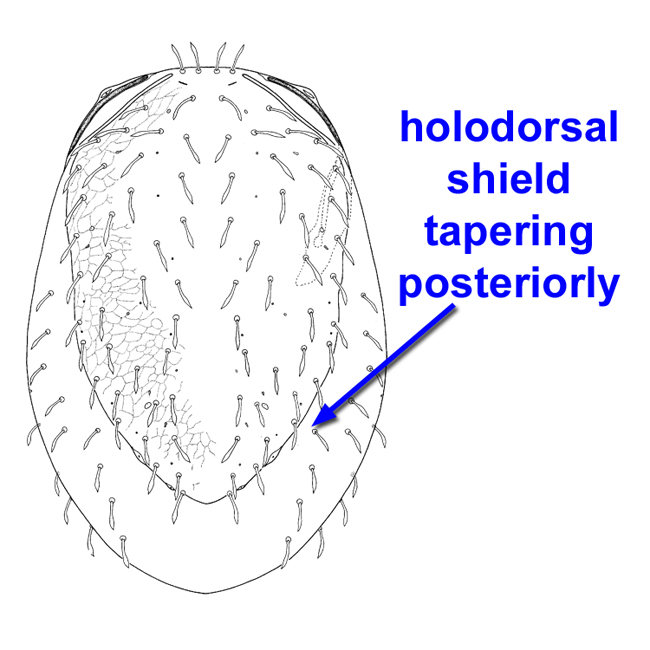 from swollen basebase:
the usually columnar basal part of the tritosternum; sometimes expanded and rectangular or otherwise modified; the most basal part of any structure.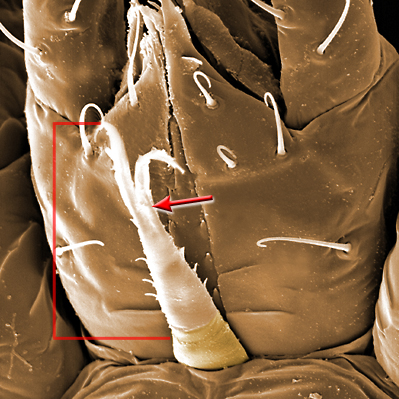 .............................. Cosmolaelaps (pars)
- Dorsaldorsal:
relating to the upper or back side; opposed to ventral.
shield setae simplesimple:
unadorned; simple setae are needle-like and without hairs or pectins.
.............................. 7
Pilus dentilispilus dentilis:
(pl. pili dentilis) a seta-like or membranous sensory organ inserted ventrolaterally on the fixed digit of the chelicera of many Mesostigmata. elongate and inflated basally; genus IV with 9 setae.............................. Androlaelaps
- Pilus dentilispilus dentilis:
(pl. pili dentilis) a seta-like or membranous sensory organ inserted ventrolaterally on the fixed digit of the chelicera of many Mesostigmata. setiform, not inflated basally; genugenu:
(pl. genua) (= patella) the 4th leg segment, between the femur and tibia.
IV with 10 setae.............................. 8
Fixed digitfixed digit:
the distal extension of the middle article of the chelicera; usually bearing teeth and a distal hook and opposed to the movable digit in chelate-dentate forms, but often regressed; in Mesostigmata the fixed digit may bear the pilus dentilis.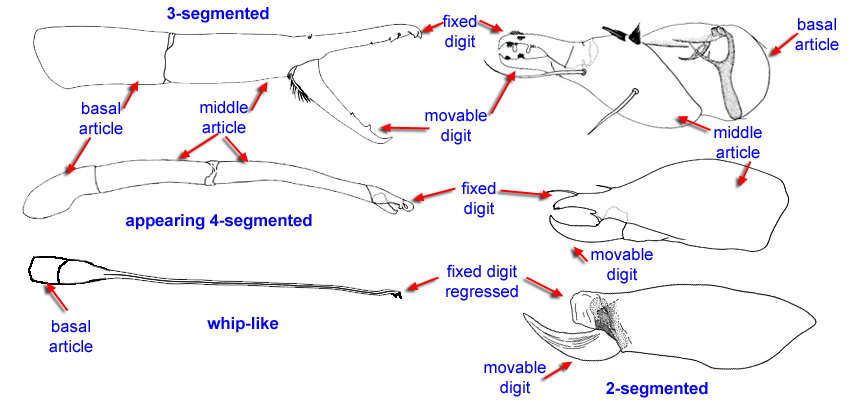 of chelicerachelicera:
a limb on the presumed first body segment in chelicerate arthropods, the primary mouthparts. In mites the chelicerae are primitively chelate-dentate, but may be modified into almost unrecognizable forms. In Acariformes, the chelicerae are usually 2-segmented, but in other mites and some basal acariforms they have three segments. Rarely, in some Uropodoidea (Mesostigmata), a subdivision makes them appear 4-segmented. with arched row of serrations; dorsaldorsal:
relating to the upper or back side; opposed to ventral.
shield taperingtapering:
drawn out or with margins converging. posteriorly to expose much of opisthosomaopisthosoma:
(= abdomen) the posterior body division in arachnids; usually not distinct in mites because of the fusion of the opisthosoma with part of the prosoma to form the idiosoma.
, at least when female is well fed or gravid.............................. Gaeolaelaps
- Fixed digitfixed digit:
the distal extension of the middle article of the chelicera; usually bearing teeth and a distal hook and opposed to the movable digit in chelate-dentate forms, but often regressed; in Mesostigmata the fixed digit may bear the pilus dentilis. without arched row of serrations; dorsaldorsal:
relating to the upper or back side; opposed to ventral.
shield usually broadly covering opisthsoma.............................. 9
Genital shieldgenital shield:
a shield or shields covering the genital opening; in female mongynaspine Mesostigmata this shield is usually called the epigynal (epigynial) shield.
expanded posteriorly, nearly reaching anal shield; setae JV1 on margin of shield or closely flanking shield.............................. "Hypoaspis" oblonga (Halbert) group
- Genital shieldgenital shield:
a shield or shields covering the genital opening; in female mongynaspine Mesostigmata this shield is usually called the epigynal (epigynial) shield.
not expanded, well removed from anal shield; setae JV1 in soft cuticle.............................. "Hypoaspis" s.l.
Species of Stratiolaelaps are predatory and some are used in greenhouses against thrips and fungus gnats.
Author: David E. Walter
Content last updated Sept. 2006, unless indicated otherwise
Lucid key player updated Sept. 2025
idtools.org