Mesostigmata
t
Taxonomy
updated 2025
Name
Ornithonyssus Sambon
Classification
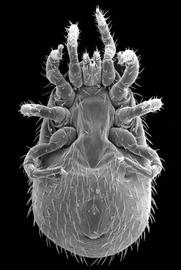
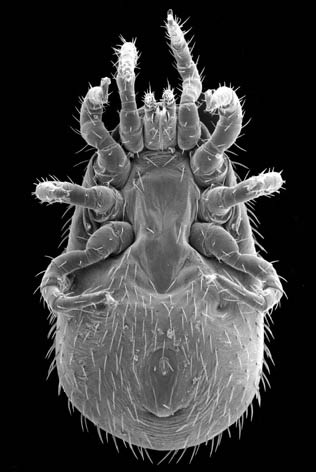
Superorder Parasitiformes » Order Mesostigmata » Suborder Monogynaspida » Infraorder Gamasina » Hyporder Dermanyssiae » Superfamily Dermanyssoidea » Family Macronyssidae » Genus Ornithonyssus
Diagnostic characters
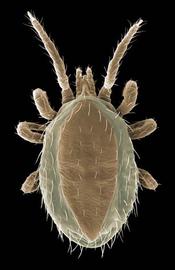
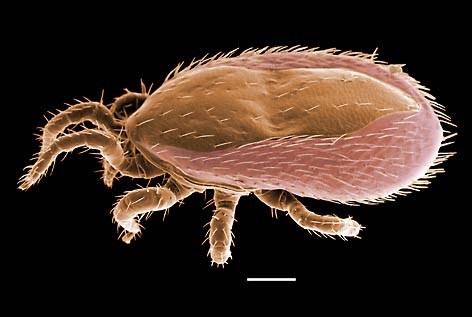
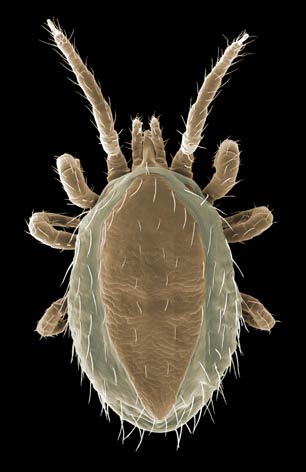
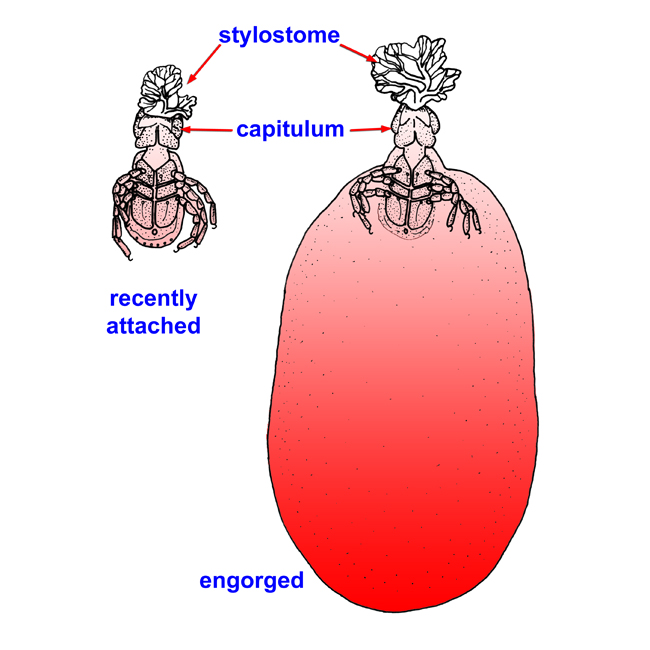
- Grey-brown to red (when blood engorgedengorged:
swollen from feeding as in a tick or chigger.
 ) or black parasitic dermanyssine mesostigmatans with taperingtapering:
drawn out or with margins converging.
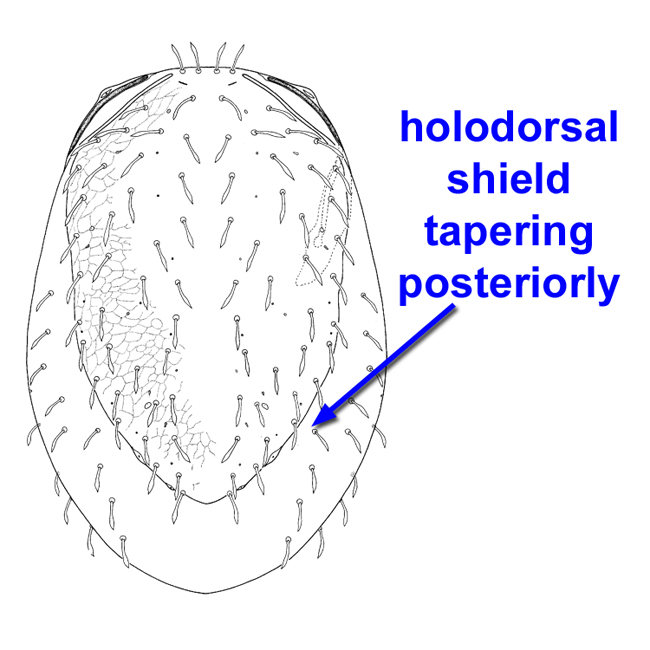 holodorsal shields
- Sternal shieldsternal shield:
a shield in the anterior intercoxal region of parasitiform mites that bears one or more pairs of sternal setae.
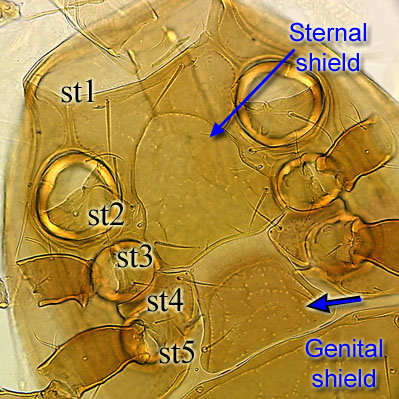 entire to eroded sternal shieldsternal shield:
a shield in the anterior intercoxal region of parasitiform mites that bears one or more pairs of sternal setae.
bearing 1–3 pairs of setae; genital shieldgenital shield:
a shield or shields covering the genital opening; in female mongynaspine Mesostigmata this shield is usually called the epigynal (epigynial) shield.
tongue- or knife-shaped genital shieldgenital shield:
a shield or shields covering the genital opening; in female mongynaspine Mesostigmata this shield is usually called the epigynal (epigynial) shield.
with 0–1 pairs of setae.
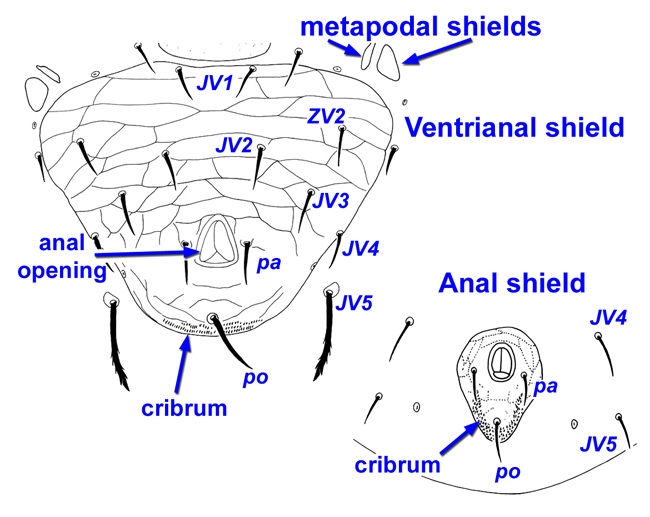
- Anal shield small, with 3 circumanal setaecircumanal setae:
in Mesostigmata, the three setae (postanal and pair of peranal) setae surrounding the anal opening.
 ; some ventralventral:
relating to the lower or under side; opposed to dorsal.
and lateral hypertrichy present
- Tarsustarsus:
(pl. tarsi) the subdistal leg segment between the tibia and the pretarsus (apotele).
I with claws; trochantertrochanter:
the leg segment between the coxa and the femur.
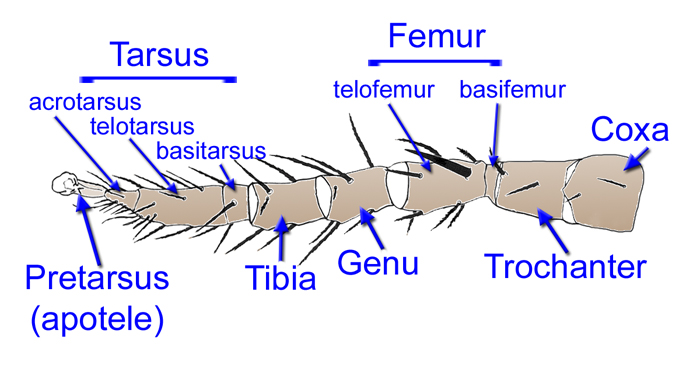 I with 6 setae; tibiatibia:
(pl. tibiae) the leg segment between the genu and the tarsus.
and genugenu:
(pl. genua) (= patella) the 4th leg segment, between the femur and tibia.
I each with 6/3 dorsal/ ventral setaeventral setae:
in the Lindquist-Evans system used in the Mesostigmata, the ventral region has up to three longitudinal rows (Jv, Zv, Lv) with 1-5 transverse row designations.
; genugenu:
(pl. genua) (= patella) the 4th leg segment, between the femur and tibia.
IV with 5/2 dorsal/ ventralventral:
relating to the lower or under side; opposed to dorsal.
.
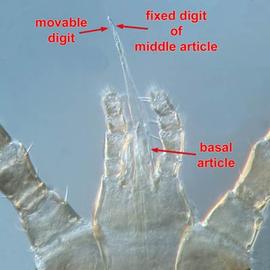
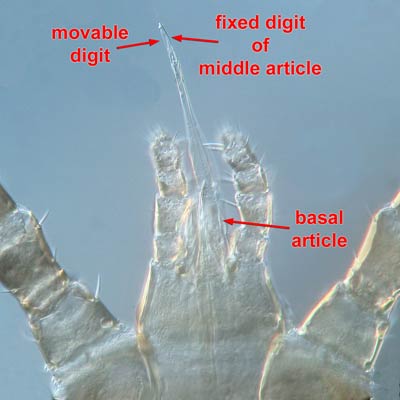
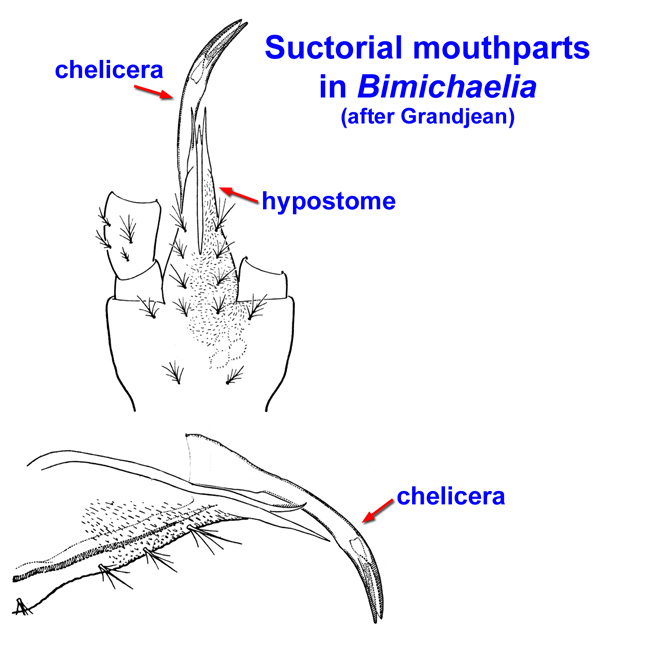
- Chelicerae elongate and edentateedentate:
with out teeth; usually referring to chelicerae.
 ; movable digit without excrescences. Palppalp:
(= pedipalp) the second pair of limbs in arachnids, used in feeding and originating on either side of the chelicerae. In mites, the palps may be vestigial, with only a few segments, or have a maximum of 5 freely articulating segments (rarely the femur is subdivided) and a distal or subdistal apotele.
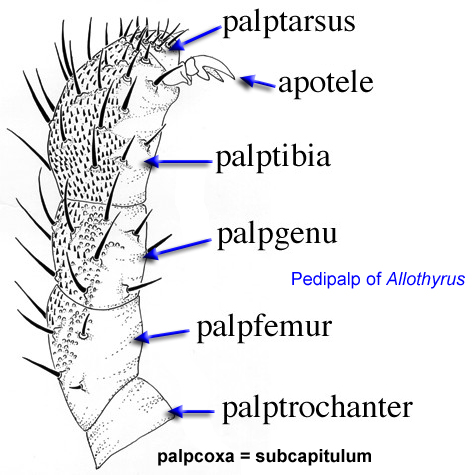 genu with 6 setae, palp apotelepalptarsal apotele:
(= palp apotele, palptarsal claw) the most distal segment of the palp; absent in Acariformes, claw-like in Opilioacarida, and a subdistal, tined structure in the Mesostigmata.
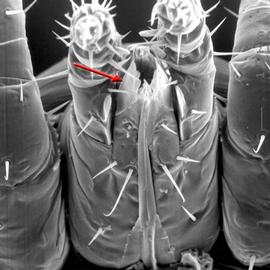
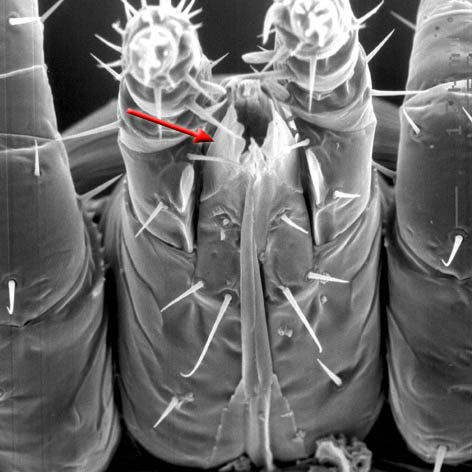
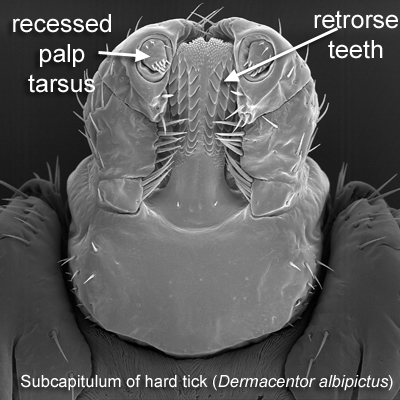
2-tined; corniculicorniculus:
(pl. corniculi) (also, external malae) a usually horn-like process (sometimes toothed, bifurcate, trifurcate, spine-like, spatulate, or membranous) on the subcapitulum of parasitiform mites that usually supports the salivary styli. A toothed corniculus could be confused with a rutellum, a possibly homologous structure in Acariformes and Opilioacarida. Phytoseiid image is spatulate corniculus.
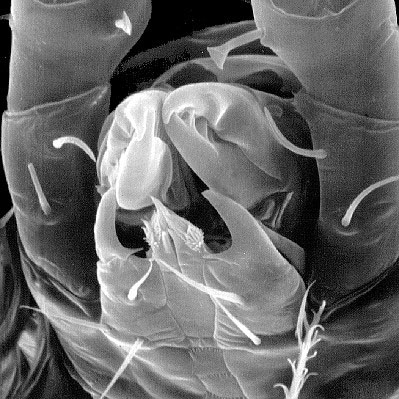 membranous.
- Tritosternumtritosternum:
the sternum of the 3rd body segment (between legs I); produced as a biflagellate structure in Mesostigmata, although sometimes the flagellae (laciniae) are partially or completely fused.
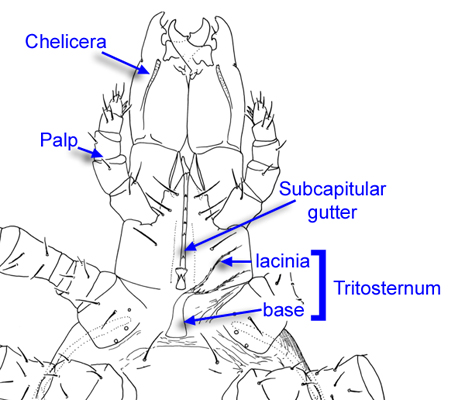 biflagellate with denticulate membranous margin in soil genera
- Tectumgnathotectum:
(= epistome, tectum) an often membranous dorsal projection of the anterior margin of the basis capitulum in Mesostigmata; often diagnostic at family-, genus- or species-levels; also often difficult to see without high magnification and good optics.
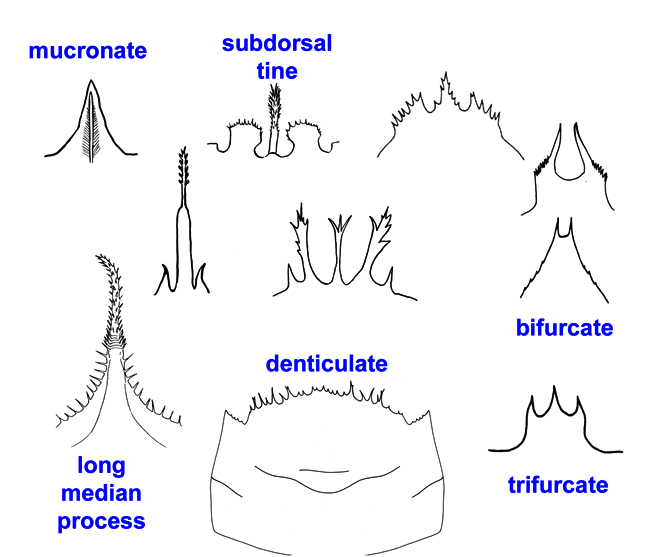 smooth or slightly denticulatedenticulate:
bearing small, sharp processes, e.g., the hypostome of ticks.
Similar taxa
Laelapid mites are similar, but lack the expanded margins of the tritosternal laciniae and have well developed corniculi (horn- to bayonet-shaped).
Ecology and distribution
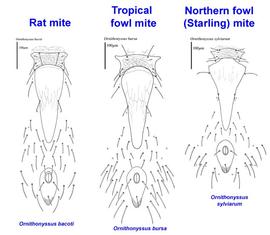
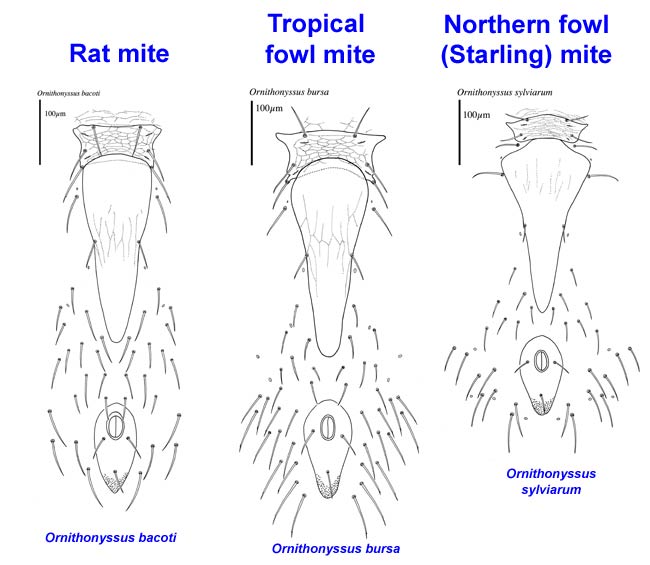
Macronyssids are parasites of birds, mammals and reptiles, but they often leave their hosts to lay eggs in soil and crevices around dens, burrows and nests. The tropical rat mite, Ornithonyssus bacoti, builds up large populations on feral mice and infests native mammals as well. The tropical fowl mite, Ornithonyssus bursa, infests a variety of introduced and native birds and is the most common source of human bites by mites in Brisbane; O. sylviarum causes similar problems in more temperate regions.
References
- Domrow 1988Domrow 1988:
Domrow R. 1988. Acari Mesostigmata parasitic on Australian vertebrates: An annotated checklist, keys and bibliography. Invertebrate Taxonomy 1: 817-948.
- Evans and Till 1979Evans and Till 1979:
Evans EO and Till WM. 1979. Mesostigmatic mites of Britain and Ireland (Chelicerata: Acari-Parasitiformes): An introduction to their external morphology and classification. Transactions of the Zoological Society of London 35 (2): 145-270.
- Krantz 1978Krantz 1978:
Krantz GW. 1978. A manual of acarology [2nd ed.]. Oregon State University Book Stores, Corvallis.