t
Eviphididae Berlese, 1913
Superorder Parasitiformes » Order Mesostigmata » Suborder Monogynaspida » Infraorder Gamasina » Hyporder Dermanyssiae » Superfamily Eviphidoidea » Family Eviphididae
Alliphis Halbert, Canestriniphis Potter & Johnston, Copriphis Berlese, Crassicheles Karg, Evimirus Karg, Eviphis Berlese, Pelethiphis Berlese, Rafaphis Skorupski & Blaszak, Scamaphis Karg, Scarabaspis Womersley, Scarabacariphis Masan, Thinoseius Berlese
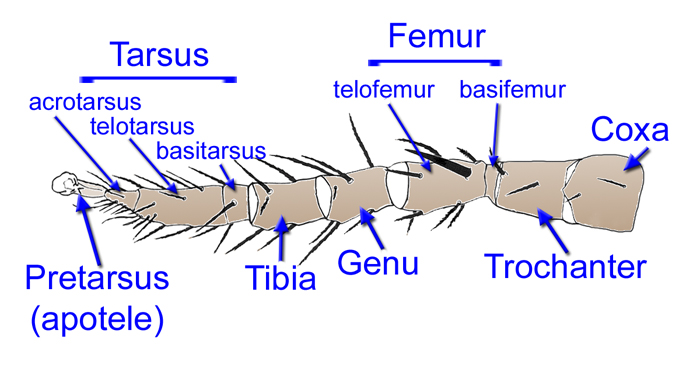 and genugenu: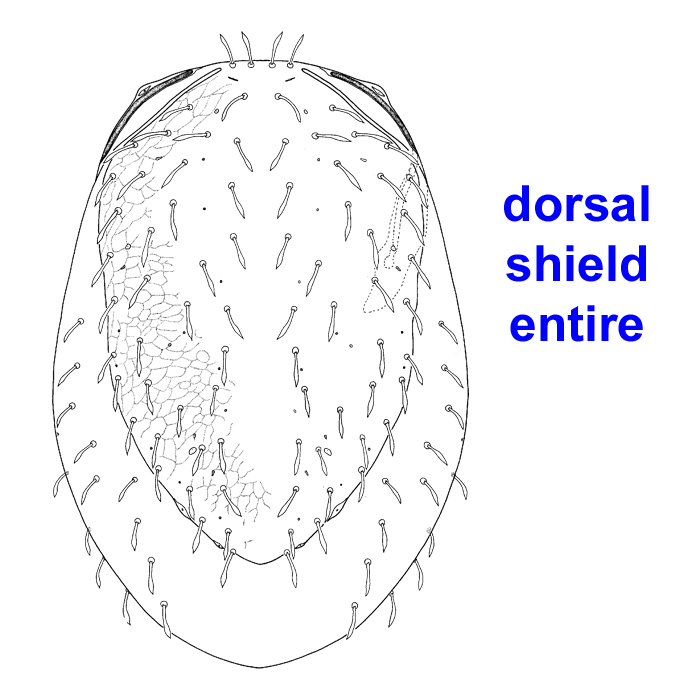
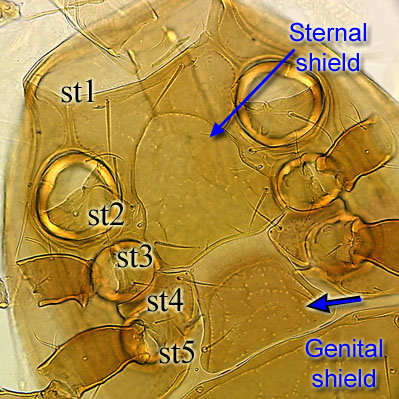 with 3 pairs of setae
Palppalp:
(= pedipalp) the second pair of limbs in arachnids, used in feeding and originating on either side of the chelicerae. In mites, the palps may be vestigial, with only a few segments, or have a maximum of 5 freely articulating segments (rarely the femur is subdivided) and a distal or subdistal apotele.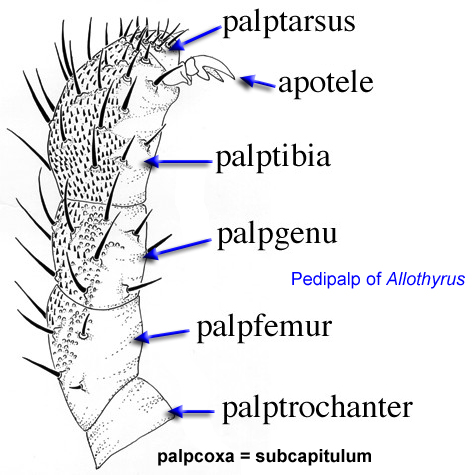 genu with 6 setae.............................. 2
- Palppalp:
(= pedipalp) the second pair of limbs in arachnids, used in feeding and originating on either side of the chelicerae. In mites, the palps may be vestigial, with only a few segments, or have a maximum of 5 freely articulating segments (rarely the femur is subdivided) and a distal or subdistal apotele. genu with 5 setae.............................. Thinoseius
Tibiatibia:
(pl. tibiae) the leg segment between the genu and the tarsus. I with 3 ventral setaeventral setae:
in the Lindquist-Evans system used in the Mesostigmata, the ventral region has up to three longitudinal rows (Jv, Zv, Lv) with 1-5 transverse row designations.
; 4–6 rows of deutosternal denticlesdeutosternal denticles:
rows of small teeth-like projections (often irregular and sometimes reduced to a single tooth) running transversely across the deutosternal groove and sometimes onto the lateral faces of the subcapitulum.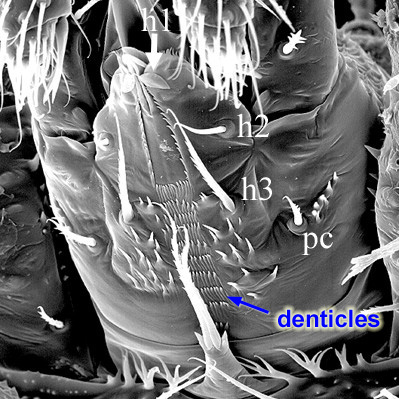 ; palp apotelepalptarsal apotele:
(= palp apotele, palptarsal claw) the most distal segment of the palp; absent in Acariformes, claw-like in Opilioacarida, and a subdistal, tined structure in the Mesostigmata. 2-tined.............................. 3
- Tibiatibia:
(pl. tibiae) the leg segment between the genu and the tarsus. I with 2 ventral setaeventral setae:
in the Lindquist-Evans system used in the Mesostigmata, the ventral region has up to three longitudinal rows (Jv, Zv, Lv) with 1-5 transverse row designations.
; 3 rows of deutosternal denticlesdeutosternal denticles:
rows of small teeth-like projections (often irregular and sometimes reduced to a single tooth) running transversely across the deutosternal groove and sometimes onto the lateral faces of the subcapitulum.; palp apotelepalptarsal apotele:
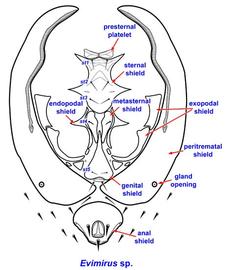
(= palp apotele, palptarsal claw) the most distal segment of the palp; absent in Acariformes, claw-like in Opilioacarida, and a subdistal, tined structure in the Mesostigmata. 3-tined.............................. Evimirus
Genugenu:
(pl. genua) (= patella) the 4th leg segment, between the femur and tibia.
III with 2 ventralventral:
relating to the lower or under side; opposed to dorsal.
seta; chelicerae normal.............................. 4
- Genugenu:
(pl. genua) (= patella) the 4th leg segment, between the femur and tibia.
III with 1 ventralventral:
relating to the lower or under side; opposed to dorsal.
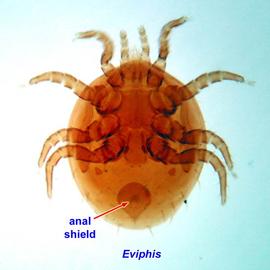
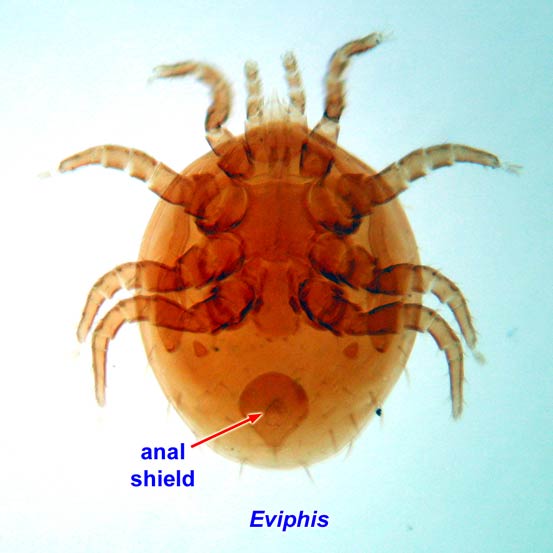
seta; chelicerae slender, elongate, with small digits.............................. Eviphis
Setae on coxae I–II setiform or spine-likespine-like:
a seta or other structure that resembles a thorn or spine; spiniform.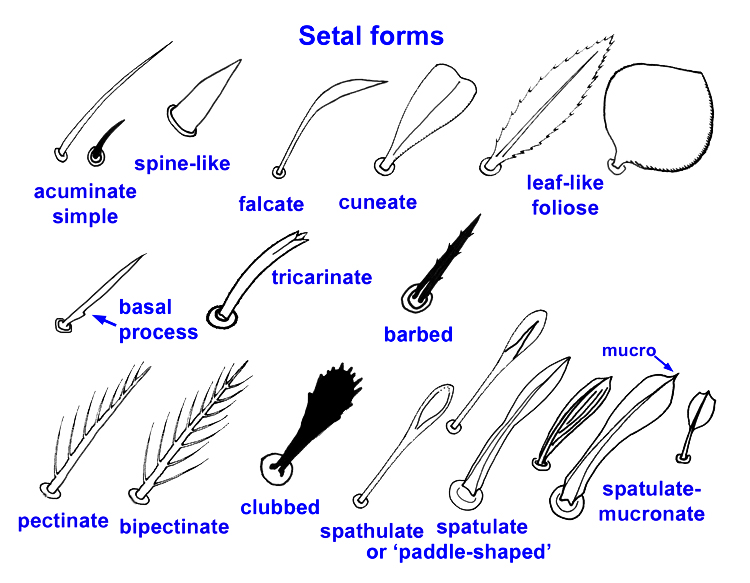 .............................. 5
- Setae on coxae I–II mostly knob-like.............................. Scarabaspis
Peritrematalperitrematal:
(peritrematic) of or referring to the peritreme; adjectival form of peritreme.
shield not extending posteriorposterior:
the back part of the body or towards that region in comparison, e.g., 'posterior to'.
to coxacoxa:
the basal segment of the leg, articulating with (Parasitiformes) or fused to (Acariformes) the body wall. IV.............................. 6
- Peritrematalperitrematal:
(peritrematic) of or referring to the peritreme; adjectival form of peritreme.
shield produced strongly behind coxae IV.............................. Copriphis
Dorsaldorsal:
relating to the upper or back side; opposed to ventral.
shield with 30 pairs of setae; J1 present.............................. 7
- Dorsaldorsal:
relating to the upper or back side; opposed to ventral.
shield with 26 pairs of setae; J1 absent.............................. Scamaphis
Vertical setae (j1) elongate and conspicuous..............................8
- Vertical setae (j1) shorts.............................. Alliphis
Tibiatibia:
(pl. tibiae) the leg segment between the genu and the tarsus. II with 10 setae; genugenu:
(pl. genua) (= patella) the 4th leg segment, between the femur and tibia.
II with 9 setae.............................. Crassicheles
- Tibiatibia:
(pl. tibiae) the leg segment between the genu and the tarsus. II with 11 setae; genugenu:
(pl. genua) (= patella) the 4th leg segment, between the femur and tibia.
II with 10 setae.............................. Uroiphis
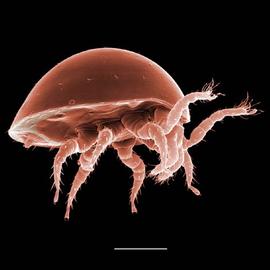
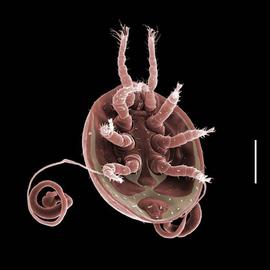
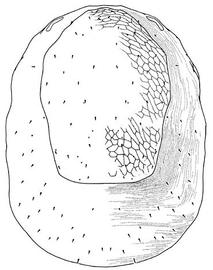
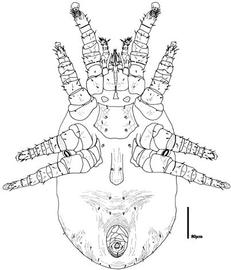
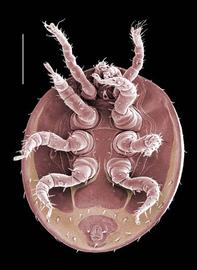
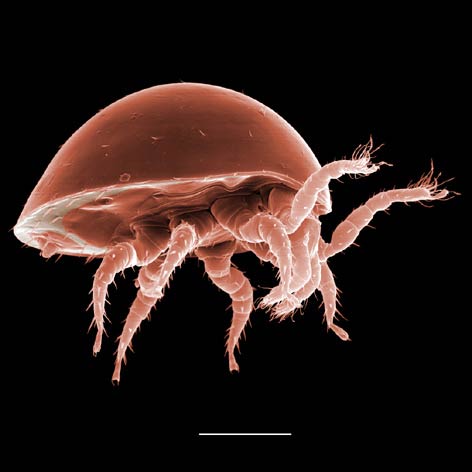
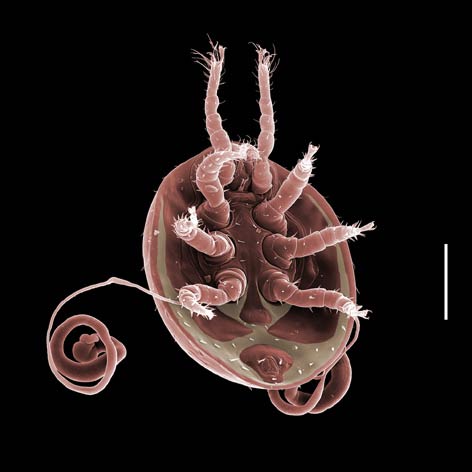
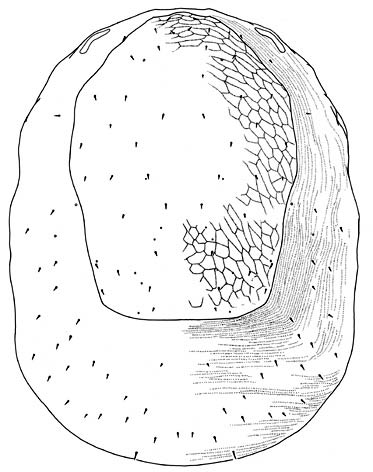
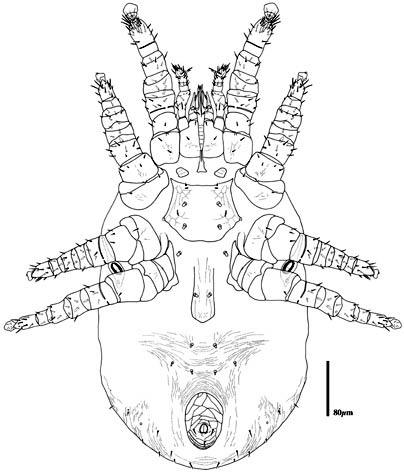
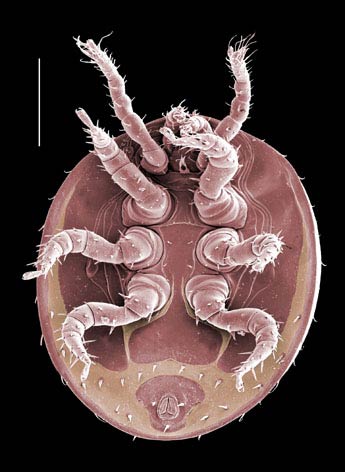
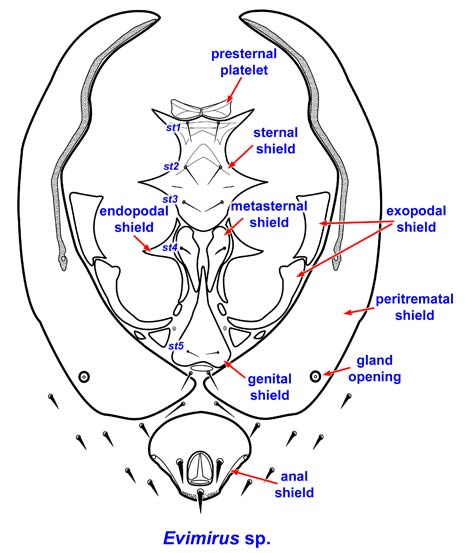
Yellow, brownish to bright pink dermanyssine mesostigmatans with holodorsal shields usually bearing 25–30 pairs of setae (17 in Thinoseius), sometimes dome-like. Peritremes generally well developed, shield sometimes produced posteriorly; large glands may be present near stigmata that secrete a viscous substance. Sternal shieldsternal shield:
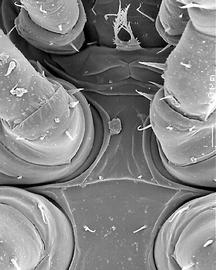
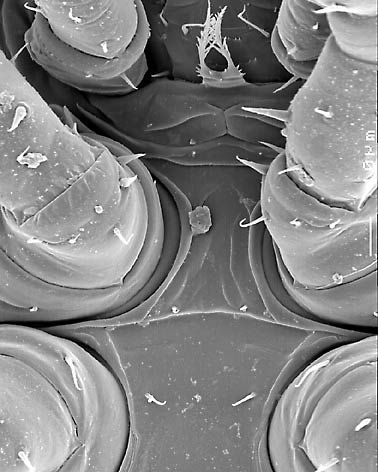
a shield in the anterior intercoxal region of parasitiform mites that bears one or more pairs of sternal setae. (absent in Thinoseius) bearing 3 pairs of setae (st1–3) and 2 pairs of lyrifissures; metasternal shields present with st4 or absent (st4 in soft cuticle); genital shieldgenital shield:
a shield or shields covering the genital opening; in female mongynaspine Mesostigmata this shield is usually called the epigynal (epigynial) shield.
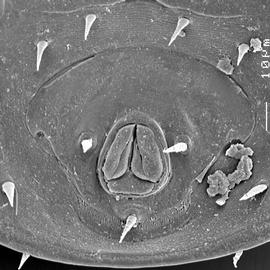
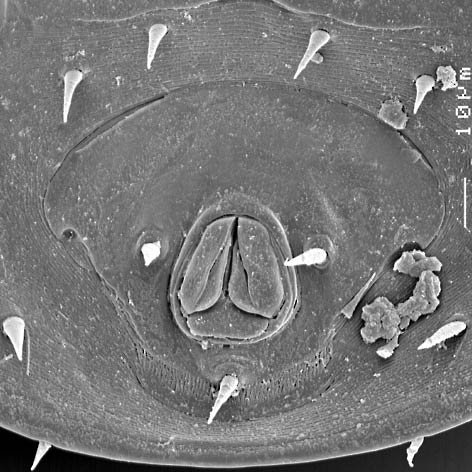
subrectangular, strap-like or onion-shaped (Evimirus), with 0–1 pair of setae; anal shield with 3 circumanal setaecircumanal setae:
in Mesostigmata, the three setae (postanal and pair of peranal) setae surrounding the anal opening.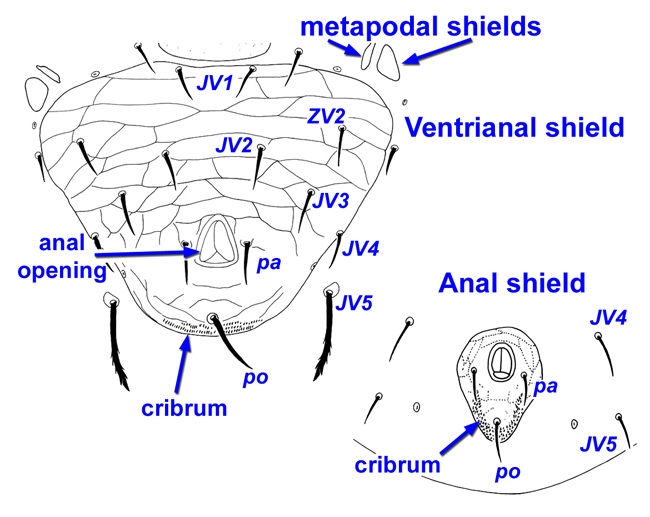 . Tarsustarsus:
(pl. tarsi) the subdistal leg segment between the tibia and the pretarsus (apotele).
I with claws; trochantertrochanter:
the leg segment between the coxa and the femur. I with 5–6 setae; tibiatibia:
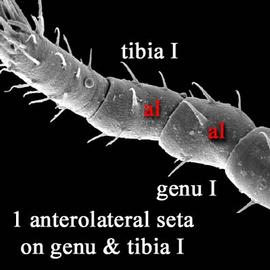
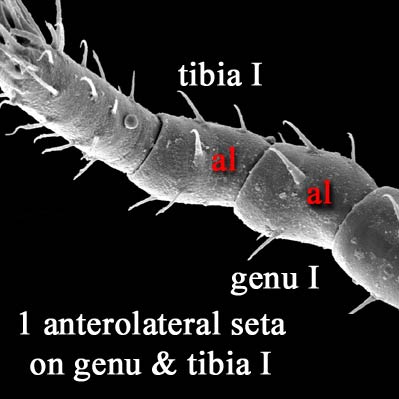
(pl. tibiae) the leg segment between the genu and the tarsus. I with 5/2–3 dorsal/ventral setae, genugenu:
(pl. genua) (= patella) the 4th leg segment, between the femur and tibia.
I 5/3; genugenu:
(pl. genua) (= patella) the 4th leg segment, between the femur and tibia.
IV with 7 setae, 4/1 dorsal/ ventralventral:
relating to the lower or under side; opposed to dorsal.
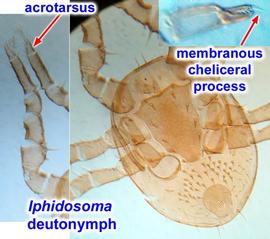
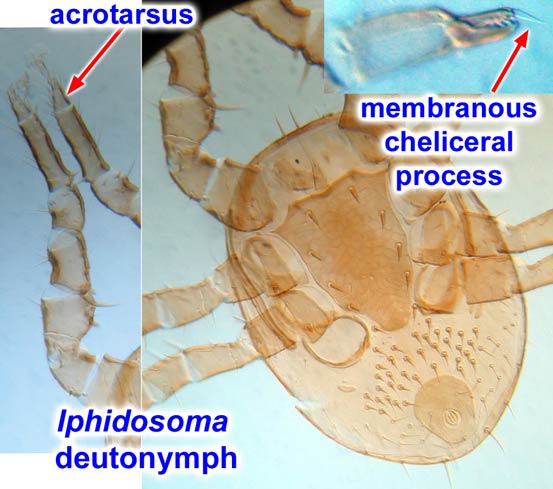
; coxal spurs are found in Scarabaspis. Chelicerae chelate-dentatechelate-dentate:
pincer-like chelicerae with teeth.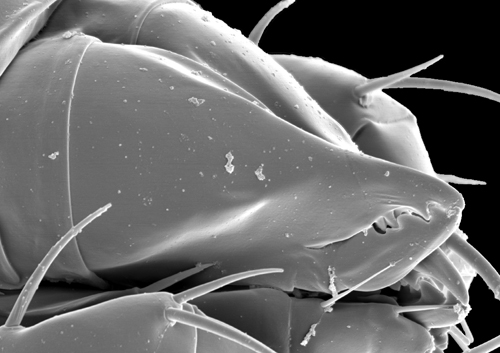 or elongate and slender (uropodoid), sometimes with a distal excrescenceexcrescence:
(1) a brush-like, dendritic or otherwise elaborated processes produced from openings in the movable digit in trigynaspid and some microgyniine Mesostigmata; (2) an encrusted covering or outgrowth-like structure.
in the males. Palppalp:
(= pedipalp) the second pair of limbs in arachnids, used in feeding and originating on either side of the chelicerae. In mites, the palps may be vestigial, with only a few segments, or have a maximum of 5 freely articulating segments (rarely the femur is subdivided) and a distal or subdistal apotele. genu with 6 setae, palp apotelepalptarsal apotele:
(= palp apotele, palptarsal claw) the most distal segment of the palp; absent in Acariformes, claw-like in Opilioacarida, and a subdistal, tined structure in the Mesostigmata. 2- or 3-tined; corniculicorniculus:
(pl. corniculi) (also, external malae) a usually horn-like process (sometimes toothed, bifurcate, trifurcate, spine-like, spatulate, or membranous) on the subcapitulum of parasitiform mites that usually supports the salivary styli. A toothed corniculus could be confused with a rutellum, a possibly homologous structure in Acariformes and Opilioacarida. Phytoseiid image is spatulate corniculus.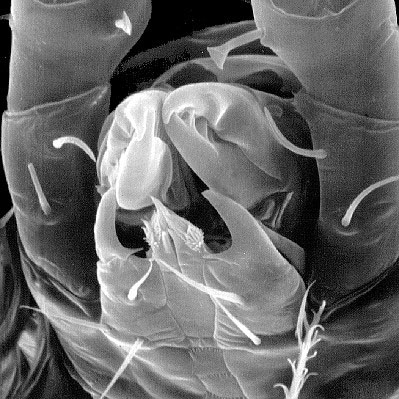 horn-like; subcapitulumsubcapitulum:
(also infracapitulum) the venter of the capitulum; the ventral faces of the fused palpcoxae; apparently formed independently in the two superorders of mites.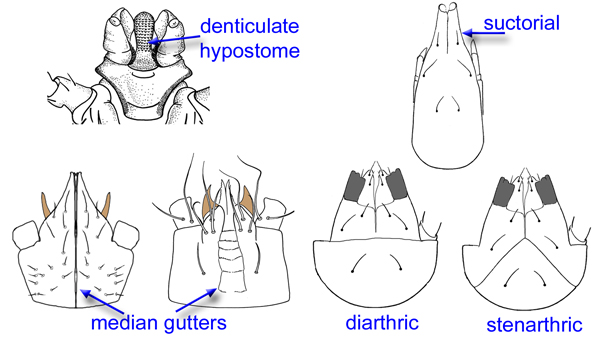 with 3–6 rows of denticlesdenticles:
small tooth-like processes, e.g., on the subcapitula of ticks and many mesostigmatans.
. Tritosternumtritosternum:
the sternum of the 3rd body segment (between legs I); produced as a biflagellate structure in Mesostigmata, although sometimes the flagellae (laciniae) are partially or completely fused. 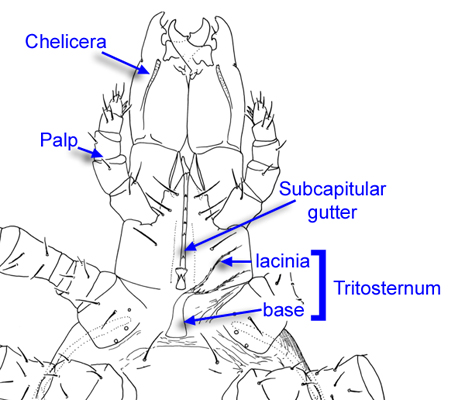 biflagellate with columnar or short, squat basebase:
the usually columnar basal part of the tritosternum; sometimes expanded and rectangular or otherwise modified; the most basal part of any structure.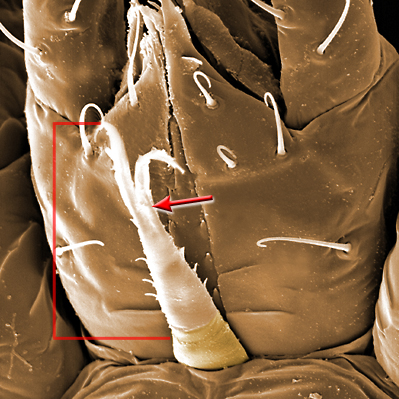 . Tectumgnathotectum:
(= epistome, tectum) an often membranous dorsal projection of the anterior margin of the basis capitulum in Mesostigmata; often diagnostic at family-, genus- or species-levels; also often difficult to see without high magnification and good optics.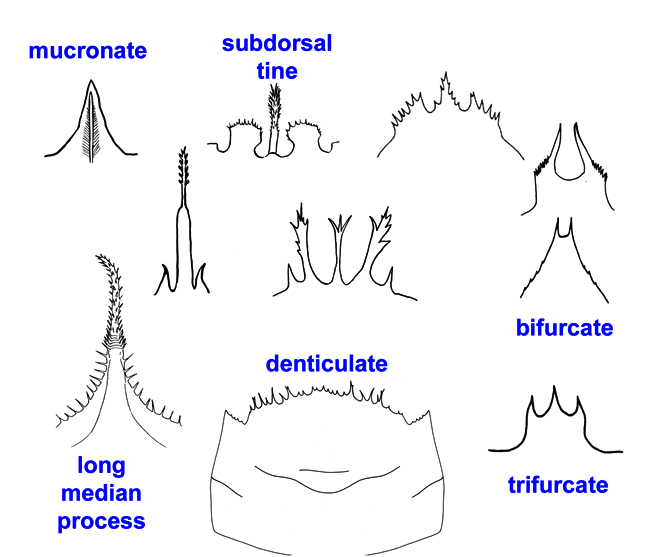 with long median process or denticulatedenticulate:
bearing small, sharp processes, e.g., the hypostome of ticks.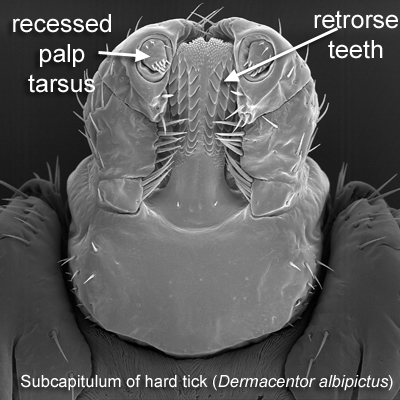 . Female sperm induction pores near bases of coxae IV. Males with genital opening at basebase:
the usually columnar basal part of the tritosternum; sometimes expanded and rectangular or otherwise modified; the most basal part of any structure. of tritosternumtritosternum:
the sternum of the 3rd body segment (between legs I); produced as a biflagellate structure in Mesostigmata, although sometimes the flagellae (laciniae) are partially or completely fused. in sternogenital shield; spermatodactylspermatodactyl:
(also spermadactyl) the 'sperm finger' on the chelicerae of male dermanyssine Mesostigmata used to transfer sperm to the secondary sperm system in the female; spermatodactyls take various forms, from simple finger-like processes to very long, contorted structures. 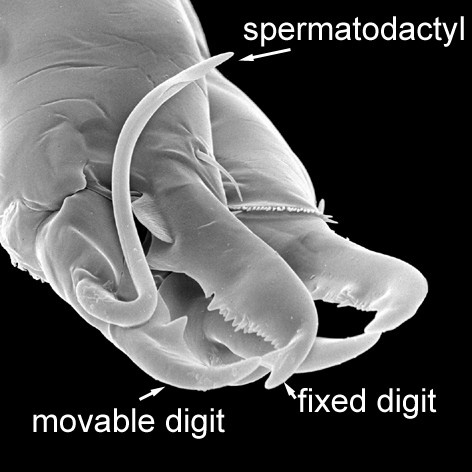 usually well developed.
The mouthparts of some eviphidoids resemble those of uropodoids.
Author: David E. Walter
Content last updated Sept. 2006, unless indicated otherwise
Lucid key player updated Sept. 2025
idtools.org