t
Zerconopsis Hull
Superorder Parasitiformes » Order Mesostigmata » Suborder Monogynaspida » Infraorder Gamasina » Hyporder Dermanyssiae » Superfamily Ascoidea » Family Ascidae » Subamily Arctoseiinae » Genus Zerconopsis
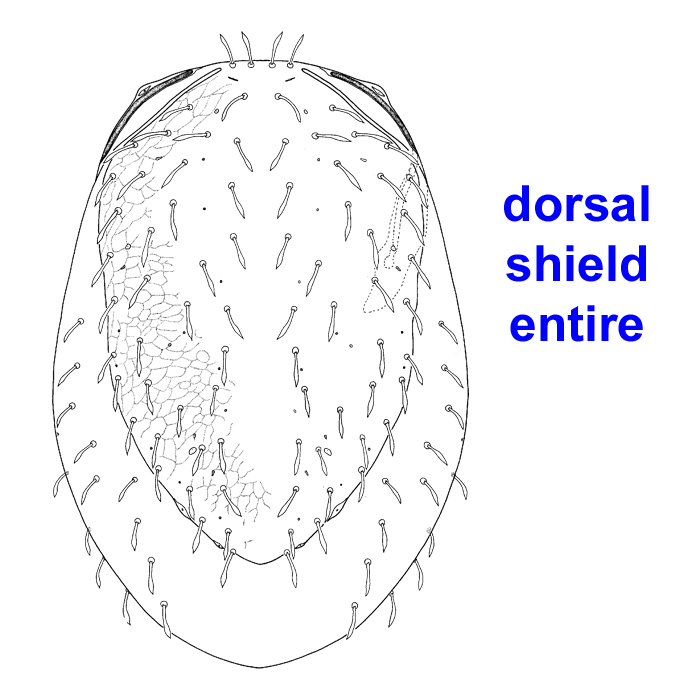 , setae j1 and z1 smooth, pointed (j1 rarely paddle-shaped), variable in length; some dorsaldorsal:
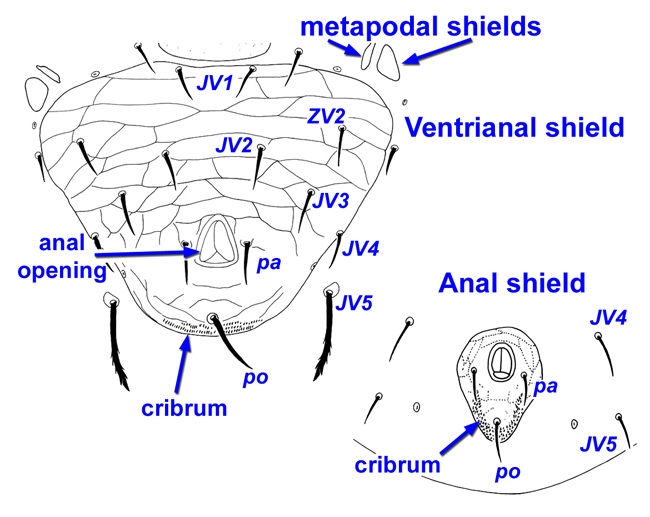 bearing 1–6 pairs of ventral setaeventral setae:
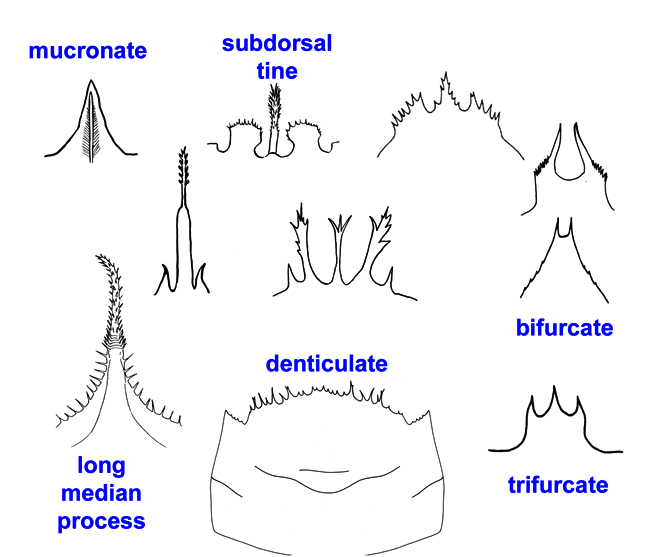 with 3 denticulatedenticulate:
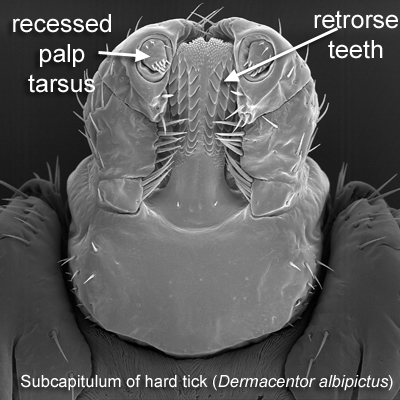 tines
tinesSimilar taxa not in Lucid key (see below). Arctoseoides Willmann, Zercoseius Berlese, Arctopsis Athias-Henriot, Leioseius Berlese
Similar taxa in key. Arctoseius Thor, Iphidozercon Berlese, Neojordensia Athias-Henriot, Xenoseius Lindquist & Evans
Leg chaetotaxychaetotaxy:
the use of setal position and form in taxonomy; see Lindquist-Evans system, Grandjean system, Rostral-lamellar system, etc.
reduced, maximum setation: genugenu:
(pl. genua) (= patella) the 4th leg segment, between the femur and tibia.
II = 10, genugenu:
(pl. genua) (= patella) the 4th leg segment, between the femur and tibia.
IV = 7, tibiatibia:
(pl. tibiae) the leg segment between the genu and the tarsus.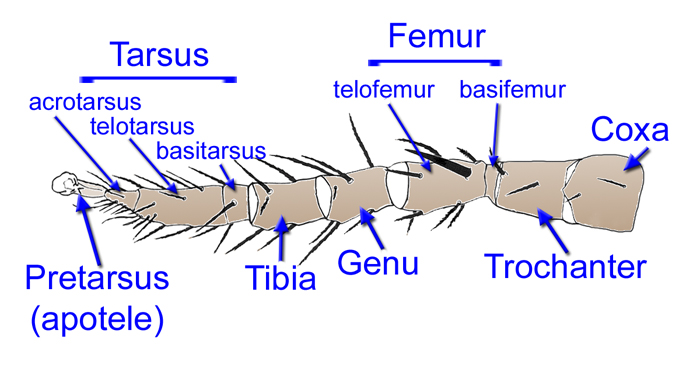 III = 7, tibiatibia:
(pl. tibiae) the leg segment between the genu and the tarsus. IV = 7; opisthonotalopisthonotal:
dorsal opisthosoma.
region of dorsaldorsal:
relating to the upper or back side; opposed to ventral.
shield usually with 4 pairs of lateral setaeseta:
(pl. setae, from L. = bristle) cuticular process composed of a hollow shaft (sometimes filled with a refractive material) produced from a membranous socket (the alveolus); the hair-like, spine-like, branched or variously expanded structures on the surfaces of the legs and body. Most setae function as mechanoreceptors, but others (e.g., solenidia) are chemoreceptors or have unknown or ambiguous functions.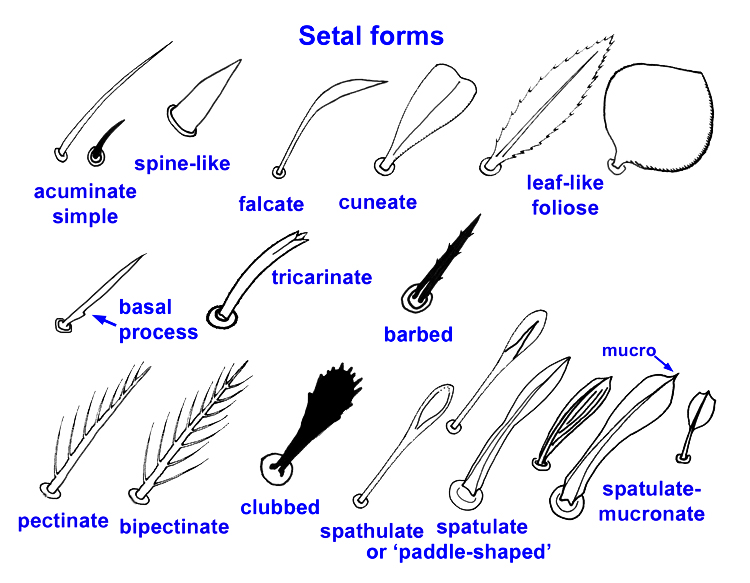 (S1 present, S2 usually absent); deutosternal denticular rows moderately wide, multidenticulate.............................. 2
- Leg chaetotaxychaetotaxy:
the use of setal position and form in taxonomy; see Lindquist-Evans system, Grandjean system, Rostral-lamellar system, etc.
without above reductions, minimum setation: genugenu:
(pl. genua) (= patella) the 4th leg segment, between the femur and tibia.
II = 11, genugenu:
(pl. genua) (= patella) the 4th leg segment, between the femur and tibia.
IV = 9, tibiatibia:
(pl. tibiae) the leg segment between the genu and the tarsus. III = 8, tibiatibia:
(pl. tibiae) the leg segment between the genu and the tarsus. IV = 10; opisthonotalopisthonotal:
dorsal opisthosoma.
region of dorsaldorsal:
relating to the upper or back side; opposed to ventral.
shield usually with 5 pairs of lateral setaeseta:
(pl. setae, from L. = bristle) cuticular process composed of a hollow shaft (sometimes filled with a refractive material) produced from a membranous socket (the alveolus); the hair-like, spine-like, branched or variously expanded structures on the surfaces of the legs and body. Most setae function as mechanoreceptors, but others (e.g., solenidia) are chemoreceptors or have unknown or ambiguous functions. (S2 present, S1 rarely absent); deutosternal denticular rows narrow, each with few (usually 2–6) denticlesdenticles:
small tooth-like processes, e.g., on the subcapitula of ticks and many mesostigmatans.
.............................. 5
Tarsitarsus:
(pl. tarsi) the subdistal leg segment between the tibia and the pretarsus (apotele).
II–IV each with dorso-proximal setaeseta:
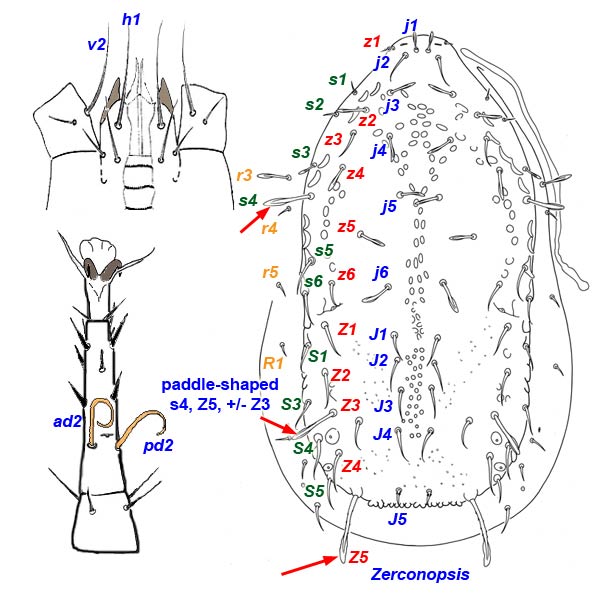
(pl. setae, from L. = bristle) cuticular process composed of a hollow shaft (sometimes filled with a refractive material) produced from a membranous socket (the alveolus); the hair-like, spine-like, branched or variously expanded structures on the surfaces of the legs and body. Most setae function as mechanoreceptors, but others (e.g., solenidia) are chemoreceptors or have unknown or ambiguous functions. ad2, pd2 elongate, curved; genugenu:
(pl. genua) (= patella) the 4th leg segment, between the femur and tibia.
III usually with 8 setaeseta:
(pl. setae, from L. = bristle) cuticular process composed of a hollow shaft (sometimes filled with a refractive material) produced from a membranous socket (the alveolus); the hair-like, spine-like, branched or variously expanded structures on the surfaces of the legs and body. Most setae function as mechanoreceptors, but others (e.g., solenidia) are chemoreceptors or have unknown or ambiguous functions.; female with ventrianal shieldventrianal shield:
in Mesostigmata, a ventral shield bearing the anal opening, circum anal setae, and one or more pairs of ventral setae or pores (lyrifissures) [see anal shield]; maybe rather narrow or very broad and covering most of the gaster. bearing 1–6 pairs of ventral setaeseta:
(pl. setae, from L. = bristle) cuticular process composed of a hollow shaft (sometimes filled with a refractive material) produced from a membranous socket (the alveolus); the hair-like, spine-like, branched or variously expanded structures on the surfaces of the legs and body. Most setae function as mechanoreceptors, but others (e.g., solenidia) are chemoreceptors or have unknown or ambiguous functions. in addition to circumanal setaeseta:
(pl. setae, from L. = bristle) cuticular process composed of a hollow shaft (sometimes filled with a refractive material) produced from a membranous socket (the alveolus); the hair-like, spine-like, branched or variously expanded structures on the surfaces of the legs and body. Most setae function as mechanoreceptors, but others (e.g., solenidia) are chemoreceptors or have unknown or ambiguous functions............................... 3
- Tarsitarsus:
(pl. tarsi) the subdistal leg segment between the tibia and the pretarsus (apotele).
II-IV with dorso-proximal setaeseta:
(pl. setae, from L. = bristle) cuticular process composed of a hollow shaft (sometimes filled with a refractive material) produced from a membranous socket (the alveolus); the hair-like, spine-like, branched or variously expanded structures on the surfaces of the legs and body. Most setae function as mechanoreceptors, but others (e.g., solenidia) are chemoreceptors or have unknown or ambiguous functions. not elongate or curved; genugenu:
(pl. genua) (= patella) the 4th leg segment, between the femur and tibia.
III with 7 setaeseta:
(pl. setae, from L. = bristle) cuticular process composed of a hollow shaft (sometimes filled with a refractive material) produced from a membranous socket (the alveolus); the hair-like, spine-like, branched or variously expanded structures on the surfaces of the legs and body. Most setae function as mechanoreceptors, but others (e.g., solenidia) are chemoreceptors or have unknown or ambiguous functions. (pv1 absent); female with anal shield bearing only circum-anal setaeseta:
(pl. setae, from L. = bristle) cuticular process composed of a hollow shaft (sometimes filled with a refractive material) produced from a membranous socket (the alveolus); the hair-like, spine-like, branched or variously expanded structures on the surfaces of the legs and body. Most setae function as mechanoreceptors, but others (e.g., solenidia) are chemoreceptors or have unknown or ambiguous functions. (rarely with ventral setaeseta:
(pl. setae, from L. = bristle) cuticular process composed of a hollow shaft (sometimes filled with a refractive material) produced from a membranous socket (the alveolus); the hair-like, spine-like, branched or variously expanded structures on the surfaces of the legs and body. Most setae function as mechanoreceptors, but others (e.g., solenidia) are chemoreceptors or have unknown or ambiguous functions. JV3 on shield).............................. 4
Tarsustarsus:
(pl. tarsi) the subdistal leg segment between the tibia and the pretarsus (apotele).
I without claws; dorsaldorsal:
relating to the upper or back side; opposed to ventral.
shield setaeseta:
(pl. setae, from L. = bristle) cuticular process composed of a hollow shaft (sometimes filled with a refractive material) produced from a membranous socket (the alveolus); the hair-like, spine-like, branched or variously expanded structures on the surfaces of the legs and body. Most setae function as mechanoreceptors, but others (e.g., solenidia) are chemoreceptors or have unknown or ambiguous functions. j1 & z1 smooth, short and blunt or barbed and variable in length; other dorsaldorsal:
relating to the upper or back side; opposed to ventral.
shield setaeseta:
(pl. setae, from L. = bristle) cuticular process composed of a hollow shaft (sometimes filled with a refractive material) produced from a membranous socket (the alveolus); the hair-like, spine-like, branched or variously expanded structures on the surfaces of the legs and body. Most setae function as mechanoreceptors, but others (e.g., solenidia) are chemoreceptors or have unknown or ambiguous functions. simple (J5 sometimes barbed), none paddle-shaped.............................. Xenoseius
- Tarsustarsus:
(pl. tarsi) the subdistal leg segment between the tibia and the pretarsus (apotele).
I with claws; dorsaldorsal:
relating to the upper or back side; opposed to ventral.
shield setaeseta:
(pl. setae, from L. = bristle) cuticular process composed of a hollow shaft (sometimes filled with a refractive material) produced from a membranous socket (the alveolus); the hair-like, spine-like, branched or variously expanded structures on the surfaces of the legs and body. Most setae function as mechanoreceptors, but others (e.g., solenidia) are chemoreceptors or have unknown or ambiguous functions. j1 and z1 smooth, pointed (j1 rarely paddle-shaped), variable in length; some dorsaldorsal:
relating to the upper or back side; opposed to ventral.
shield setaeseta:
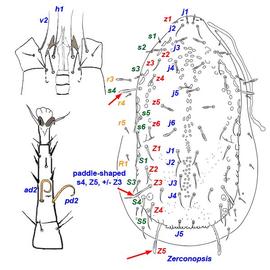
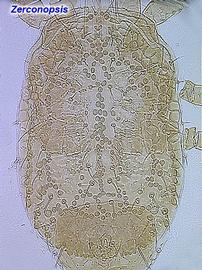
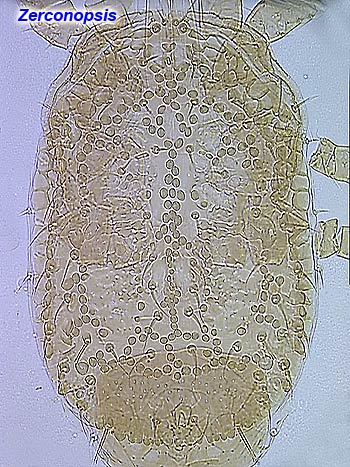
(pl. setae, from L. = bristle) cuticular process composed of a hollow shaft (sometimes filled with a refractive material) produced from a membranous socket (the alveolus); the hair-like, spine-like, branched or variously expanded structures on the surfaces of the legs and body. Most setae function as mechanoreceptors, but others (e.g., solenidia) are chemoreceptors or have unknown or ambiguous functions. (always s4 and Z5) paddle-shaped.............................. Zerconopsis
Vertexvertex:
an anterior extension of the idiosoma that covers the capitulum in many uropodid mites.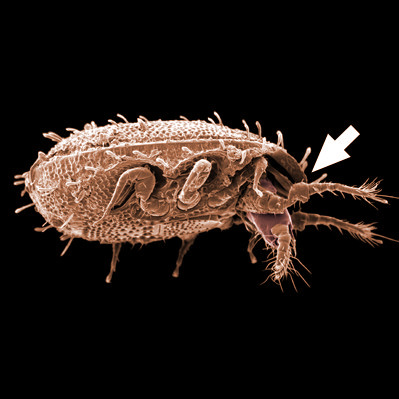 of dorsaldorsal:
relating to the upper or back side; opposed to ventral.
shield strongly arched downward, setaeseta:
(pl. setae, from L. = bristle) cuticular process composed of a hollow shaft (sometimes filled with a refractive material) produced from a membranous socket (the alveolus); the hair-like, spine-like, branched or variously expanded structures on the surfaces of the legs and body. Most setae function as mechanoreceptors, but others (e.g., solenidia) are chemoreceptors or have unknown or ambiguous functions. j1 concealed from above; peritremes sharply recurvedrecurved:
a curved suture or line of dehiscence that arches posteriorly; opposed to procurved.
distally; dorsaldorsal:
relating to the upper or back side; opposed to ventral.
shield without midlateral incisions; tarsitarsus:
(pl. tarsi) the subdistal leg segment between the tibia and the pretarsus (apotele).
II-IV with 1 (al1) or 2 (al1, pl1) dorso-lateral subapical setaeseta:
(pl. setae, from L. = bristle) cuticular process composed of a hollow shaft (sometimes filled with a refractive material) produced from a membranous socket (the alveolus); the hair-like, spine-like, branched or variously expanded structures on the surfaces of the legs and body. Most setae function as mechanoreceptors, but others (e.g., solenidia) are chemoreceptors or have unknown or ambiguous functions. very slender and elongate; palp tarsustarsus:
(pl. tarsi) the subdistal leg segment between the tibia and the pretarsus (apotele).
with macroseta.............................. Iphidozercon
- Vertexvertex:
an anterior extension of the idiosoma that covers the capitulum in many uropodid mites. of dorsaldorsal:
relating to the upper or back side; opposed to ventral.
shield not strongly arched downward, setaeseta:
(pl. setae, from L. = bristle) cuticular process composed of a hollow shaft (sometimes filled with a refractive material) produced from a membranous socket (the alveolus); the hair-like, spine-like, branched or variously expanded structures on the surfaces of the legs and body. Most setae function as mechanoreceptors, but others (e.g., solenidia) are chemoreceptors or have unknown or ambiguous functions. j1 visible from above; anterior extremities of peritremes not recurvedrecurved:
a curved suture or line of dehiscence that arches posteriorly; opposed to procurved.
; dorsaldorsal:
relating to the upper or back side; opposed to ventral.
shield with or without midlateral incisions; tarsitarsus:
(pl. tarsi) the subdistal leg segment between the tibia and the pretarsus (apotele).
II–IV with neither of dorso-lateral subapical setaeseta:
(pl. setae, from L. = bristle) cuticular process composed of a hollow shaft (sometimes filled with a refractive material) produced from a membranous socket (the alveolus); the hair-like, spine-like, branched or variously expanded structures on the surfaces of the legs and body. Most setae function as mechanoreceptors, but others (e.g., solenidia) are chemoreceptors or have unknown or ambiguous functions. slender and elongate; palp tarsustarsus:
(pl. tarsi) the subdistal leg segment between the tibia and the pretarsus (apotele).
without macroseta .............................. Arctoseius
Dorsaldorsal:
relating to the upper or back side; opposed to ventral.
shield lacking setaeseta:
(pl. setae, from L. = bristle) cuticular process composed of a hollow shaft (sometimes filled with a refractive material) produced from a membranous socket (the alveolus); the hair-like, spine-like, branched or variously expanded structures on the surfaces of the legs and body. Most setae function as mechanoreceptors, but others (e.g., solenidia) are chemoreceptors or have unknown or ambiguous functions. z1; epistomegnathotectum:
(= epistome, tectum) an often membranous dorsal projection of the anterior margin of the basis capitulum in Mesostigmata; often diagnostic at family-, genus- or species-levels; also often difficult to see without high magnification and good optics. convex and smooth or slightly denticulatedenticulate:
bearing small, sharp processes, e.g., the hypostome of ticks.; genugenu:
(pl. genua) (= patella) the 4th leg segment, between the femur and tibia.
I with 12 setaeseta:
(pl. setae, from L. = bristle) cuticular process composed of a hollow shaft (sometimes filled with a refractive material) produced from a membranous socket (the alveolus); the hair-like, spine-like, branched or variously expanded structures on the surfaces of the legs and body. Most setae function as mechanoreceptors, but others (e.g., solenidia) are chemoreceptors or have unknown or ambiguous functions. (av2 absent), tibiatibia:
(pl. tibiae) the leg segment between the genu and the tarsus. II with 9 setaeseta:
(pl. setae, from L. = bristle) cuticular process composed of a hollow shaft (sometimes filled with a refractive material) produced from a membranous socket (the alveolus); the hair-like, spine-like, branched or variously expanded structures on the surfaces of the legs and body. Most setae function as mechanoreceptors, but others (e.g., solenidia) are chemoreceptors or have unknown or ambiguous functions. (ad2 absent).............................. 6
- Setaeseta:
(pl. setae, from L. = bristle) cuticular process composed of a hollow shaft (sometimes filled with a refractive material) produced from a membranous socket (the alveolus); the hair-like, spine-like, branched or variously expanded structures on the surfaces of the legs and body. Most setae function as mechanoreceptors, but others (e.g., solenidia) are chemoreceptors or have unknown or ambiguous functions. z1 present; tectumgnathotectum:
(= epistome, tectum) an often membranous dorsal projection of the anterior margin of the basis capitulum in Mesostigmata; often diagnostic at family-, genus- or species-levels; also often difficult to see without high magnification and good optics. bi- or triramous; genugenu:
(pl. genua) (= patella) the 4th leg segment, between the femur and tibia.
I with 13 setaeseta:
(pl. setae, from L. = bristle) cuticular process composed of a hollow shaft (sometimes filled with a refractive material) produced from a membranous socket (the alveolus); the hair-like, spine-like, branched or variously expanded structures on the surfaces of the legs and body. Most setae function as mechanoreceptors, but others (e.g., solenidia) are chemoreceptors or have unknown or ambiguous functions., tibiatibia:
(pl. tibiae) the leg segment between the genu and the tarsus. II with 10 setaeseta:
(pl. setae, from L. = bristle) cuticular process composed of a hollow shaft (sometimes filled with a refractive material) produced from a membranous socket (the alveolus); the hair-like, spine-like, branched or variously expanded structures on the surfaces of the legs and body. Most setae function as mechanoreceptors, but others (e.g., solenidia) are chemoreceptors or have unknown or ambiguous functions............................... 7
Dorsaldorsal:
relating to the upper or back side; opposed to ventral.
shield with midlateral incisions; all r–R marginal setaeseta:
(pl. setae, from L. = bristle) cuticular process composed of a hollow shaft (sometimes filled with a refractive material) produced from a membranous socket (the alveolus); the hair-like, spine-like, branched or variously expanded structures on the surfaces of the legs and body. Most setae function as mechanoreceptors, but others (e.g., solenidia) are chemoreceptors or have unknown or ambiguous functions. on soft cuticle flanking dorsaldorsal:
relating to the upper or back side; opposed to ventral.
shield; female with: first pair of sternal setaeseta:
(pl. setae, from L. = bristle) cuticular process composed of a hollow shaft (sometimes filled with a refractive material) produced from a membranous socket (the alveolus); the hair-like, spine-like, branched or variously expanded structures on the surfaces of the legs and body. Most setae function as mechanoreceptors, but others (e.g., solenidia) are chemoreceptors or have unknown or ambiguous functions. on sternal shieldsternal shield:
a shield in the anterior intercoxal region of parasitiform mites that bears one or more pairs of sternal setae.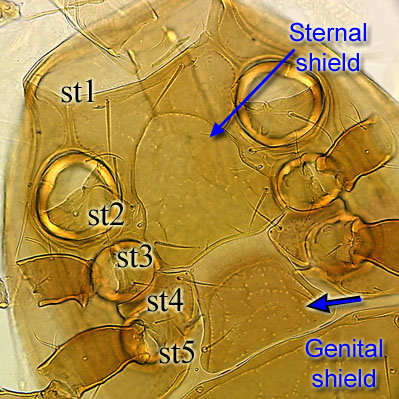 , genital setaeseta:
(pl. setae, from L. = bristle) cuticular process composed of a hollow shaft (sometimes filled with a refractive material) produced from a membranous socket (the alveolus); the hair-like, spine-like, branched or variously expanded structures on the surfaces of the legs and body. Most setae function as mechanoreceptors, but others (e.g., solenidia) are chemoreceptors or have unknown or ambiguous functions. and pores on soft cuticle flanking epigynialepigynal:
(also epigynial) of or relating to the female genital opening or a shield protecting it.
shield, anal shield bearing only circum-anal setaeseta:
(pl. setae, from L. = bristle) cuticular process composed of a hollow shaft (sometimes filled with a refractive material) produced from a membranous socket (the alveolus); the hair-like, spine-like, branched or variously expanded structures on the surfaces of the legs and body. Most setae function as mechanoreceptors, but others (e.g., solenidia) are chemoreceptors or have unknown or ambiguous functions............................... Arctopsis
- Dorsaldorsal:
relating to the upper or back side; opposed to ventral.
shield lacking midlateral incisions; r–R marginal setaeseta:
(pl. setae, from L. = bristle) cuticular process composed of a hollow shaft (sometimes filled with a refractive material) produced from a membranous socket (the alveolus); the hair-like, spine-like, branched or variously expanded structures on the surfaces of the legs and body. Most setae function as mechanoreceptors, but others (e.g., solenidia) are chemoreceptors or have unknown or ambiguous functions. on edges of dorsaldorsal:
relating to the upper or back side; opposed to ventral.
shield; female with: first pair of sternal setaeseta:
(pl. setae, from L. = bristle) cuticular process composed of a hollow shaft (sometimes filled with a refractive material) produced from a membranous socket (the alveolus); the hair-like, spine-like, branched or variously expanded structures on the surfaces of the legs and body. Most setae function as mechanoreceptors, but others (e.g., solenidia) are chemoreceptors or have unknown or ambiguous functions. on jugular plates separated from sternal shieldsternal shield:
a shield in the anterior intercoxal region of parasitiform mites that bears one or more pairs of sternal setae. or on margin of shield, genital setaeseta:
(pl. setae, from L. = bristle) cuticular process composed of a hollow shaft (sometimes filled with a refractive material) produced from a membranous socket (the alveolus); the hair-like, spine-like, branched or variously expanded structures on the surfaces of the legs and body. Most setae function as mechanoreceptors, but others (e.g., solenidia) are chemoreceptors or have unknown or ambiguous functions. and pores on epigynialepigynal:
(also epigynial) of or relating to the female genital opening or a shield protecting it.
shield, ventri-anal shield incorporating metapodal platesmetapodal shields:
(also metapodal plates, metapodal platelets, metapodal sclerites) in Mesostigmata, a pair (sometimes fused) of small sclerites posteriad coxae IV in the ventral region that probably reflect muscle attachments. and bearing 4–5 pairs of setaeseta:
(pl. setae, from L. = bristle) cuticular process composed of a hollow shaft (sometimes filled with a refractive material) produced from a membranous socket (the alveolus); the hair-like, spine-like, branched or variously expanded structures on the surfaces of the legs and body. Most setae function as mechanoreceptors, but others (e.g., solenidia) are chemoreceptors or have unknown or ambiguous functions. in addition to circum-anal setaeseta:
(pl. setae, from L. = bristle) cuticular process composed of a hollow shaft (sometimes filled with a refractive material) produced from a membranous socket (the alveolus); the hair-like, spine-like, branched or variously expanded structures on the surfaces of the legs and body. Most setae function as mechanoreceptors, but others (e.g., solenidia) are chemoreceptors or have unknown or ambiguous functions............................... Neojordensia
Dorsaldorsal:
relating to the upper or back side; opposed to ventral.
shield lacking setaeseta:
(pl. setae, from L. = bristle) cuticular process composed of a hollow shaft (sometimes filled with a refractive material) produced from a membranous socket (the alveolus); the hair-like, spine-like, branched or variously expanded structures on the surfaces of the legs and body. Most setae function as mechanoreceptors, but others (e.g., solenidia) are chemoreceptors or have unknown or ambiguous functions. z3, J2, S1; R3, R4 on dorsaldorsal:
relating to the upper or back side; opposed to ventral.
shield, others (r6, R2, R5) absent; genugenu:
(pl. genua) (= patella) the 4th leg segment, between the femur and tibia.
and tibiatibia:
(pl. tibiae) the leg segment between the genu and the tarsus. I each with 12 setaeseta:
(pl. setae, from L. = bristle) cuticular process composed of a hollow shaft (sometimes filled with a refractive material) produced from a membranous socket (the alveolus); the hair-like, spine-like, branched or variously expanded structures on the surfaces of the legs and body. Most setae function as mechanoreceptors, but others (e.g., solenidia) are chemoreceptors or have unknown or ambiguous functions. (av2 absent); genugenu:
(pl. genua) (= patella) the 4th leg segment, between the femur and tibia.
III with 10 setaeseta:
(pl. setae, from L. = bristle) cuticular process composed of a hollow shaft (sometimes filled with a refractive material) produced from a membranous socket (the alveolus); the hair-like, spine-like, branched or variously expanded structures on the surfaces of the legs and body. Most setae function as mechanoreceptors, but others (e.g., solenidia) are chemoreceptors or have unknown or ambiguous functions., tibiatibia:
(pl. tibiae) the leg segment between the genu and the tarsus. III with 9 setaeseta:
(pl. setae, from L. = bristle) cuticular process composed of a hollow shaft (sometimes filled with a refractive material) produced from a membranous socket (the alveolus); the hair-like, spine-like, branched or variously expanded structures on the surfaces of the legs and body. Most setae function as mechanoreceptors, but others (e.g., solenidia) are chemoreceptors or have unknown or ambiguous functions. (pl2 present on both); genugenu:
(pl. genua) (= patella) the 4th leg segment, between the femur and tibia.
IV with 10 setaeseta:
(pl. setae, from L. = bristle) cuticular process composed of a hollow shaft (sometimes filled with a refractive material) produced from a membranous socket (the alveolus); the hair-like, spine-like, branched or variously expanded structures on the surfaces of the legs and body. Most setae function as mechanoreceptors, but others (e.g., solenidia) are chemoreceptors or have unknown or ambiguous functions. (pv1 present).............................. Arctoseoides
- Dorsaldorsal:
relating to the upper or back side; opposed to ventral.
shield holotrichous, with z3, J2, S1; 10–11 pairs of marginal r–R setaeseta:
(pl. setae, from L. = bristle) cuticular process composed of a hollow shaft (sometimes filled with a refractive material) produced from a membranous socket (the alveolus); the hair-like, spine-like, branched or variously expanded structures on the surfaces of the legs and body. Most setae function as mechanoreceptors, but others (e.g., solenidia) are chemoreceptors or have unknown or ambiguous functions. on soft cuticle laterally, none on dorsaldorsal:
relating to the upper or back side; opposed to ventral.
shield; genugenu:
(pl. genua) (= patella) the 4th leg segment, between the femur and tibia.
and tibiatibia:
(pl. tibiae) the leg segment between the genu and the tarsus. I each with 13 setaeseta:
(pl. setae, from L. = bristle) cuticular process composed of a hollow shaft (sometimes filled with a refractive material) produced from a membranous socket (the alveolus); the hair-like, spine-like, branched or variously expanded structures on the surfaces of the legs and body. Most setae function as mechanoreceptors, but others (e.g., solenidia) are chemoreceptors or have unknown or ambiguous functions. (av2 present); genugenu:
(pl. genua) (= patella) the 4th leg segment, between the femur and tibia.
III with 8–9 setaeseta:
(pl. setae, from L. = bristle) cuticular process composed of a hollow shaft (sometimes filled with a refractive material) produced from a membranous socket (the alveolus); the hair-like, spine-like, branched or variously expanded structures on the surfaces of the legs and body. Most setae function as mechanoreceptors, but others (e.g., solenidia) are chemoreceptors or have unknown or ambiguous functions., tibiatibia:
(pl. tibiae) the leg segment between the genu and the tarsus. III with 8 setaeseta:
(pl. setae, from L. = bristle) cuticular process composed of a hollow shaft (sometimes filled with a refractive material) produced from a membranous socket (the alveolus); the hair-like, spine-like, branched or variously expanded structures on the surfaces of the legs and body. Most setae function as mechanoreceptors, but others (e.g., solenidia) are chemoreceptors or have unknown or ambiguous functions. (pl2 absent on both); genugenu:
(pl. genua) (= patella) the 4th leg segment, between the femur and tibia.
IV with 8–9 setaeseta:
(pl. setae, from L. = bristle) cuticular process composed of a hollow shaft (sometimes filled with a refractive material) produced from a membranous socket (the alveolus); the hair-like, spine-like, branched or variously expanded structures on the surfaces of the legs and body. Most setae function as mechanoreceptors, but others (e.g., solenidia) are chemoreceptors or have unknown or ambiguous functions. (pv1 absent).............................. Leioseius
Author: David E. Walter
Content last updated Sept. 2006, unless indicated otherwise
Lucid key player updated Sept. 2025
idtools.org