t
Poecilochirus G. & R. Canestrini
Superorder Parasitiformes » Order Mesostigmata » Suborder Monogynaspida » Infraorder Gamasina » Hyporder Parasitiae » Superfamily Parasitoidea » Family Parasitidae » Subfamily Parasitinae » Genus Poecilochirus
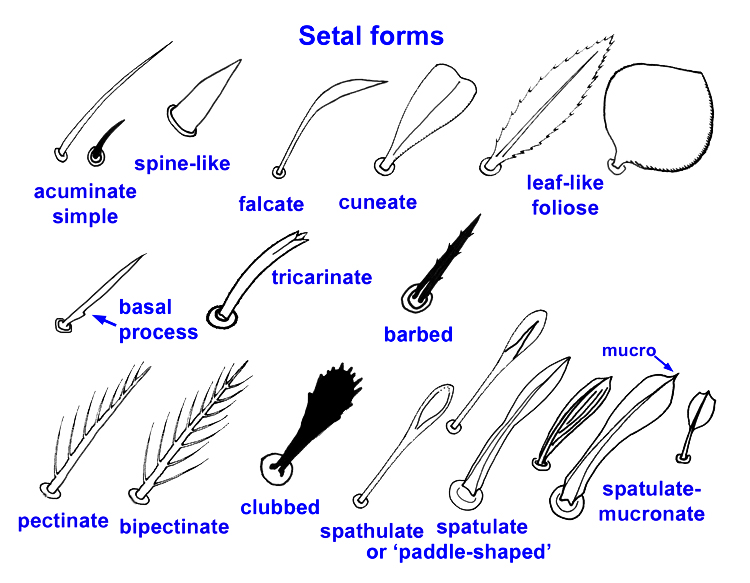
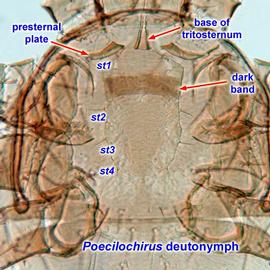
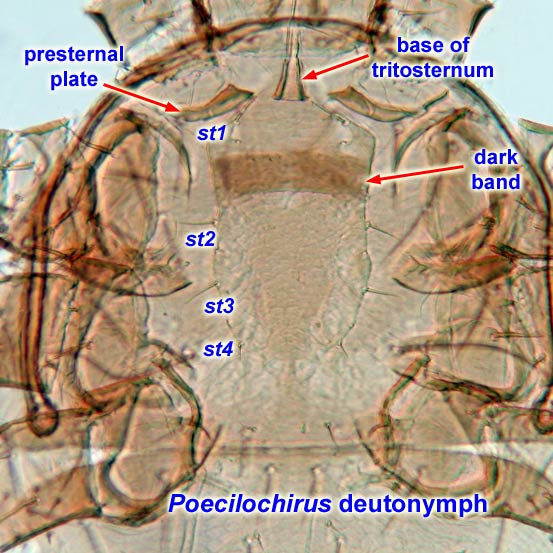
Dark band transverse between setae st1–2 not extending posteriorly.............................. 2
- Dark band extending along postero-lateral margins of intercoxal shield.............................. 3
Most podonotal shieldpodonotal shield:
the anterior shield in mesostigmatans with divided dorsal shields. 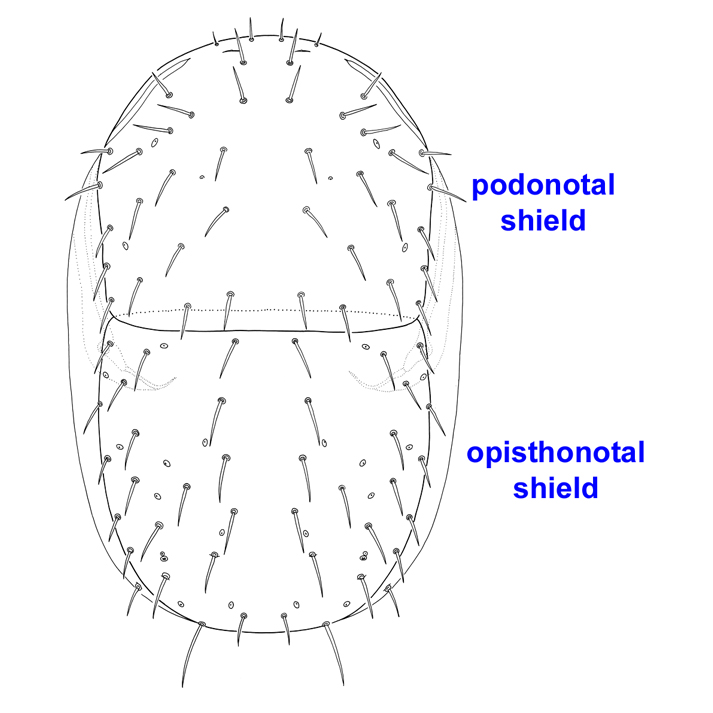 setae (except r3, z5) relatively short, not reaching next seta in series.............................. P. davydovae Hyatt
- Most podonotal shieldpodonotal shield:
the anterior shield in mesostigmatans with divided dorsal shields. setae long.............................. P. subterraneus (Mueller)
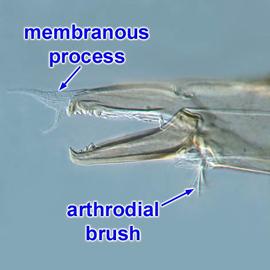
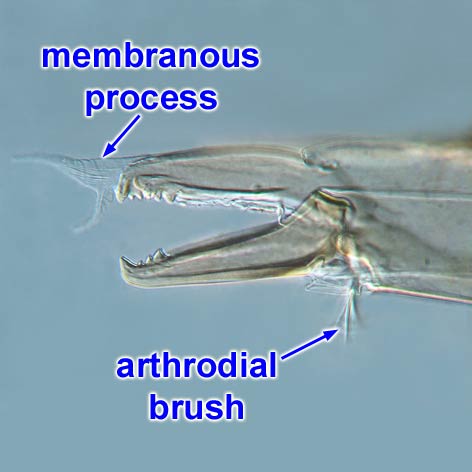
Membranous process on fixed digitfixed digit:
the distal extension of the middle article of the chelicera; usually bearing teeth and a distal hook and opposed to the movable digit in chelate-dentate forms, but often regressed; in Mesostigmata the fixed digit may bear the pilus dentilis.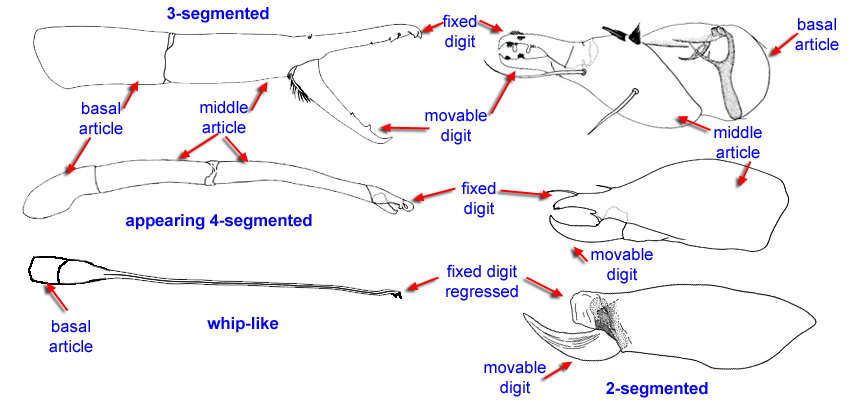 elongate, bifurcatebifurcate:
split into two distally or with two projections. 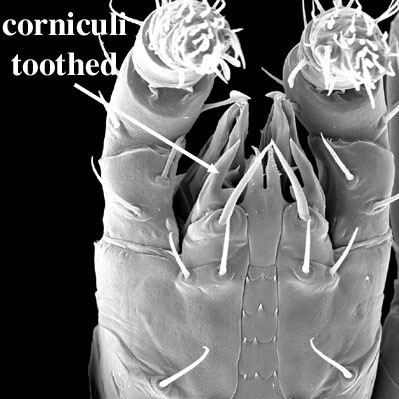 .............................. P. carabi G. & R. Canestrini
- Membranous process on fixed digitfixed digit:
the distal extension of the middle article of the chelicera; usually bearing teeth and a distal hook and opposed to the movable digit in chelate-dentate forms, but often regressed; in Mesostigmata the fixed digit may bear the pilus dentilis. rudimentary.............................. P. austroasiaticus Vitzthum
These mites are phoretic on carrion beetles (Silphidae) and feed on nematodes and mites on the carcasses that the beetles utilize as food. Poecilochirus carabi G. & R. Canestrini is rarely found on carabid or dung beetles.
Author: David E. Walter
Content last updated Sept. 2006, unless indicated otherwise
Lucid key player updated Sept. 2025
idtools.org