t
Superorder Parasitiformes » Order Mesostigmata » Suborder Monogynaspida » Infraorder Gamasina » Hyporder Parasitiae » Superfamily Parasitoidea » Family Parasitidae » Subfamily Parasitinae
Anadenosternum Athias-Henriot, Carpaidion Athias-Henriot, Colpothylax Athias-Henriot, Cornigamasus Evans and Till, Dicrogamasus Athias-Henriot, Erithosoma Athias-Henriot, Eugamasus Berlese, Leptogamasus Trägårdh, Mixogamasus Juvara-Bals, Nemnichia Oudemans, Oocarpais Berlese, Paracarpais Athias-Henriot, Parasitellus Willmann, Parasitus Latreille, Pergamasellus Evans, Phityogamasus Juvara-Bals and Athias-Henriot, Phorytocarpais Athias-Henriot, Porrhostaspis Mueller, Poecilochirus G. and R. Canestrini, Psilogamasus Athias-Henriot, Rhabdocarpais Athias-Henriot, Trachygamasus Berlese, Zelogamasus Hennessey and Farrier
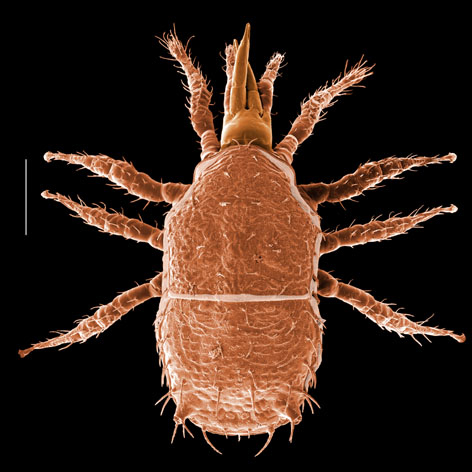
Deutonymphs of Pergamasinae lack the acrotarsusacrotarsus:
(=apicotarsus) distal subdivision of the tarsus, usually of tarsus I (NB—not to be confused with the ambulacral stalk or pretarsus)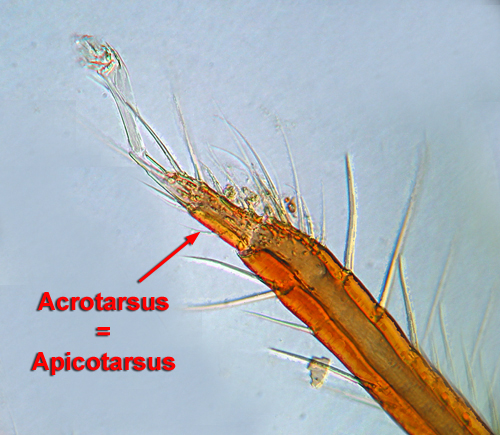 on legs I and are not phoretic on insects or other animals.
Taxa keyed separately: Gamasodes Oudemans, Poecilochirus G. & R. Canestrini
In general, immature mites can only be identified if they can be associated with adult females. However, some of the bingo characters may work on immatures, as in the case of a monogynaspidmonogynaspine:
(monogynaspid) representative of the mesostigmatan suborder Monogynaspida, characterized by having a single genital shield in the adult female that usually bears one pair of setae (st5) or may be nude.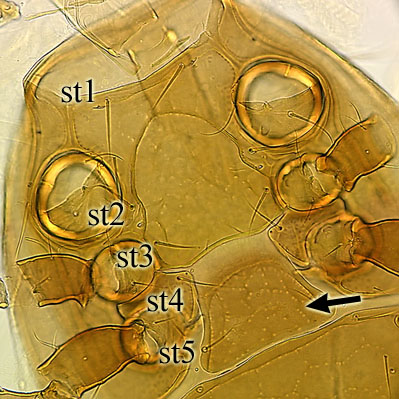 mite with an acrotarsusacrotarsus:
(=apicotarsus) distal subdivision of the tarsus, usually of tarsus I (NB—not to be confused with the ambulacral stalk or pretarsus).
Author: David E. Walter
Content last updated Sept. 2006, unless indicated otherwise
Lucid key player updated Sept. 2025
idtools.org