t
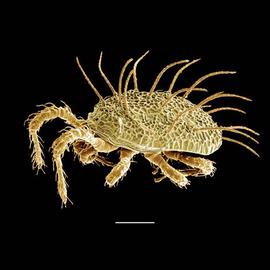
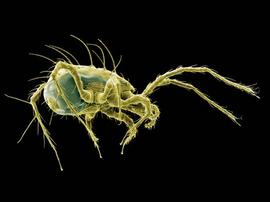
Epicriopsis Berlese
Superorder Parasitiformes » Order Mesostigmata » Suborder Monogynaspida » Infraorder Gamasina » Hyporder Dermanyssiae » Superfamily Ascoidea » Family Ameroseiidae » Genus Epicriopsis
8 described spp.
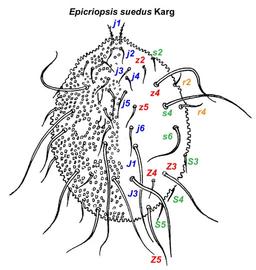
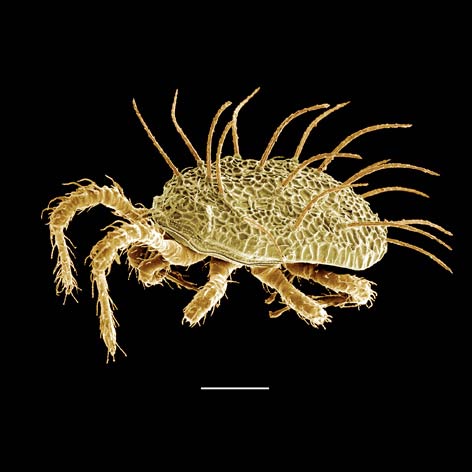
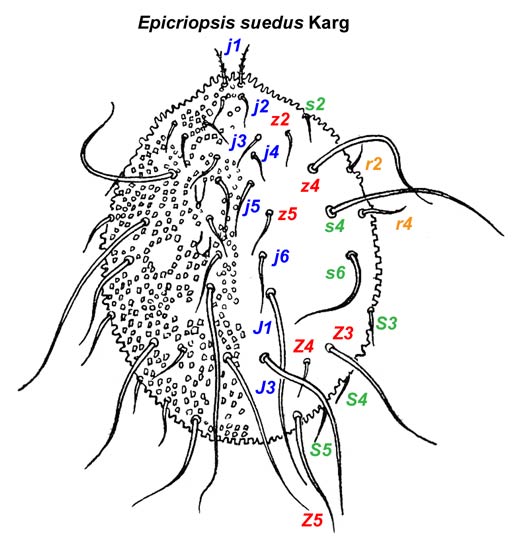
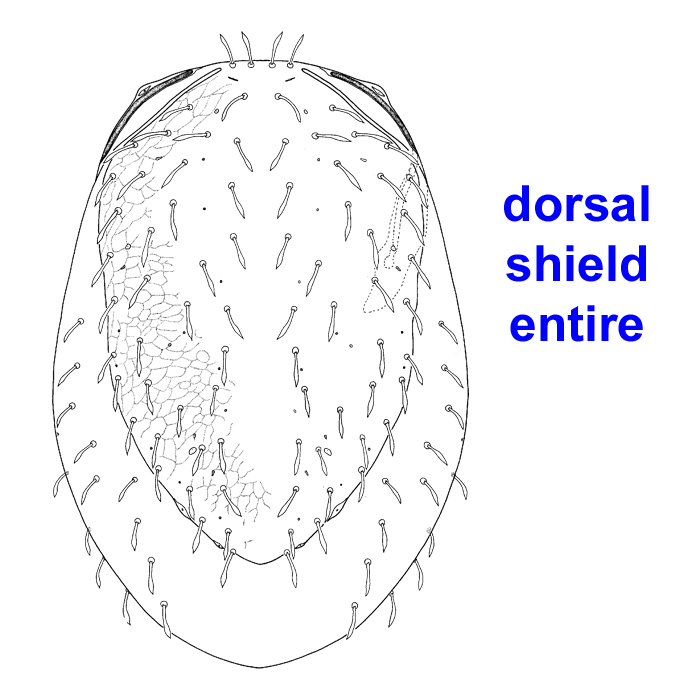 or incised, ornamented with tubercles and bearing <25 pairs of often elongate, thickened and barbed setaeseta:
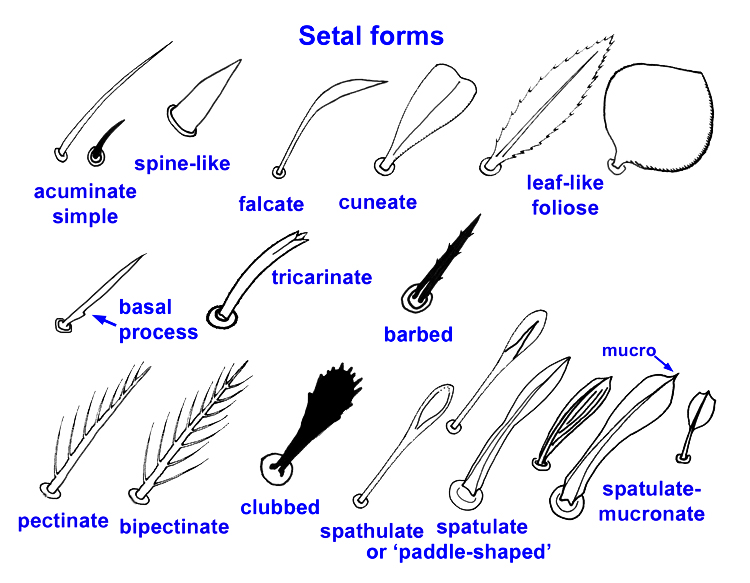 , setaeseta: J5 absent
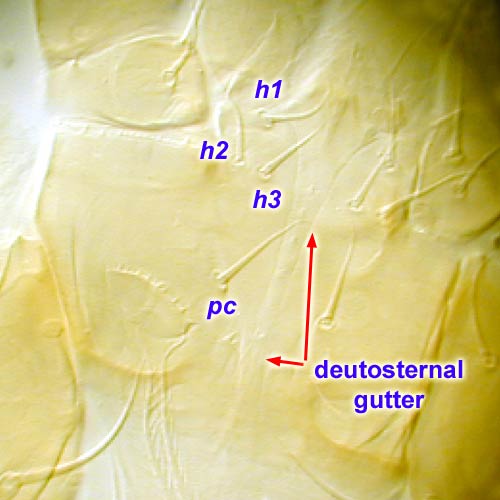
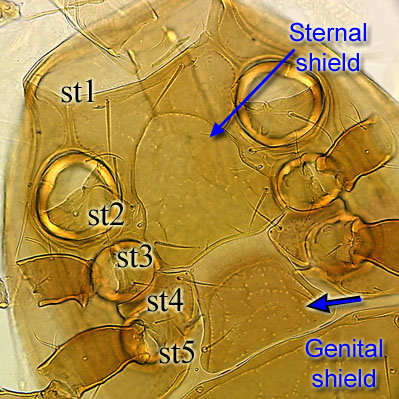 often reduced to 2 pairs of setaeseta:, st3 on shield or on platelets
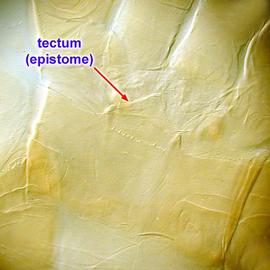
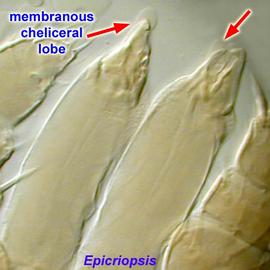
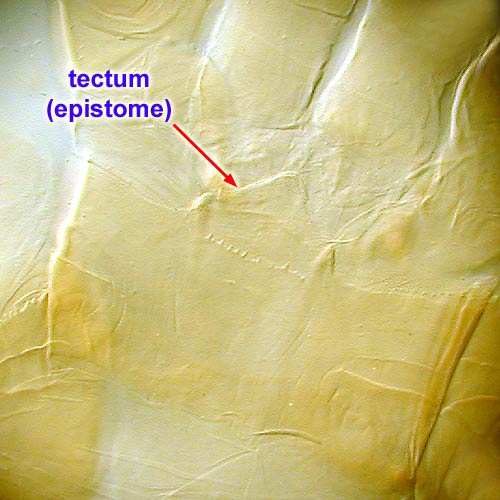
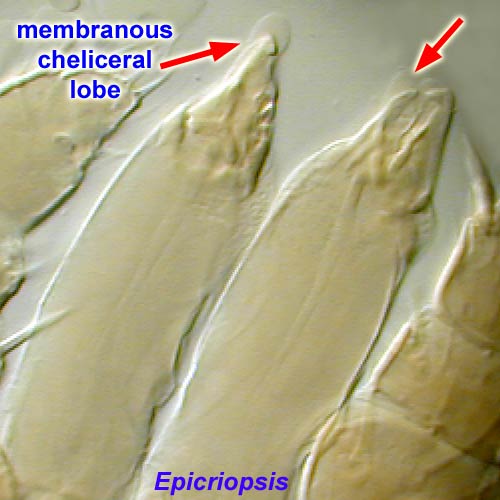
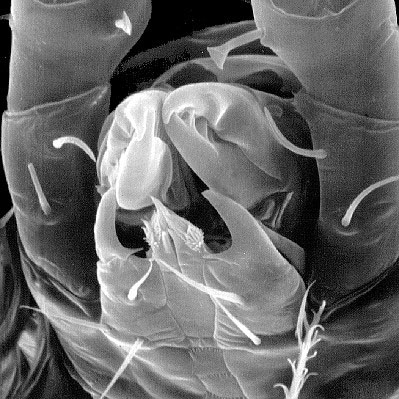 distally toothed, chisel-like, or weakly membranous
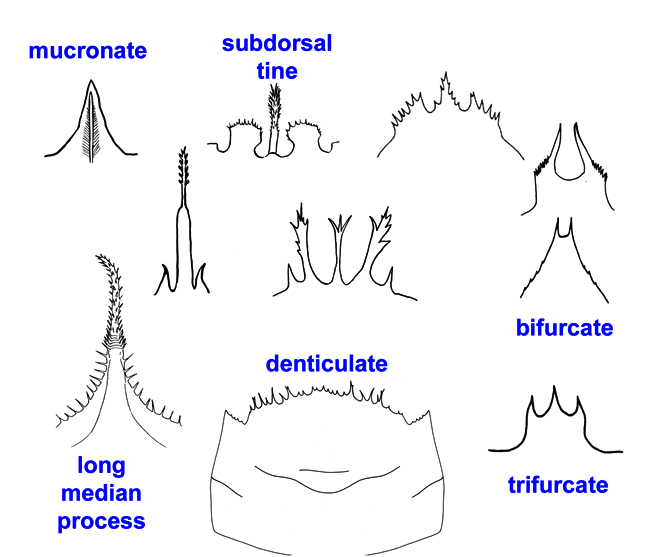 simple, smoothly subtriangularsubtriangular:
 3-tined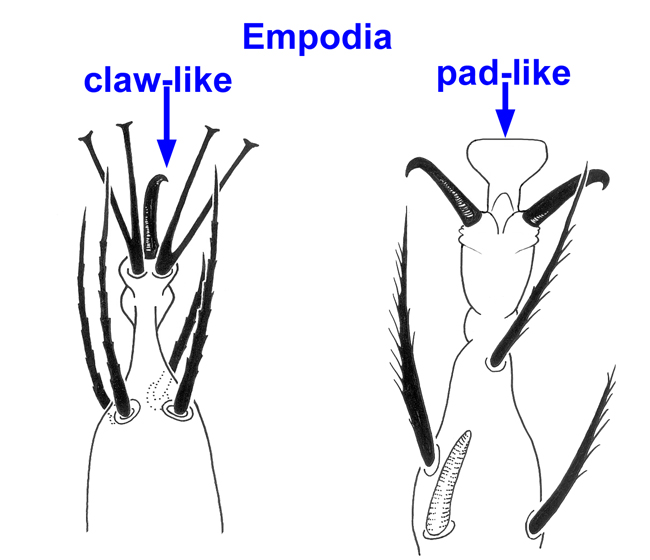
Within the Ameroseiidae, species of Epicriopsis are most likely to be confused with those in Ameroseius that have relatively long setaeseta:
(pl. setae, from L. = bristle) cuticular process composed of a hollow shaft (sometimes filled with a refractive material) produced from a membranous socket (the alveolus); the hair-like, spine-like, branched or variously expanded structures on the surfaces of the legs and body. Most setae function as mechanoreceptors, but others (e.g., solenidia) are chemoreceptors or have unknown or ambiguous functions.; however, species of Ameroseius have 29 pairs of setaeseta:
(pl. setae, from L. = bristle) cuticular process composed of a hollow shaft (sometimes filled with a refractive material) produced from a membranous socket (the alveolus); the hair-like, spine-like, branched or variously expanded structures on the surfaces of the legs and body. Most setae function as mechanoreceptors, but others (e.g., solenidia) are chemoreceptors or have unknown or ambiguous functions. on the dorsaldorsal:
relating to the upper or back side; opposed to ventral.
shield, as opposed to 24 or fewer in Epicriopsis. Dorsaldorsal:
relating to the upper or back side; opposed to ventral.
shield hypotrichy is also present and tubercular ornamentation is also characteristic of Podocinidae and Epicriidae.
Dorsaldorsal:
relating to the upper or back side; opposed to ventral.
shield with marginal ring of tubercles bearing setaeseta:
(pl. setae, from L. = bristle) cuticular process composed of a hollow shaft (sometimes filled with a refractive material) produced from a membranous socket (the alveolus); the hair-like, spine-like, branched or variously expanded structures on the surfaces of the legs and body. Most setae function as mechanoreceptors, but others (e.g., solenidia) are chemoreceptors or have unknown or ambiguous functions. j5, z2, z4, z6, s5, Z2, and S5; forest litter in eastern Australia.............................. Asperolaelaps
- Not as above.............................. 2
Sternal shieldsternal shield:
a shield in the anterior intercoxal region of parasitiform mites that bears one or more pairs of sternal setae. with 3 cog-lkie circular ornaments; dorsaldorsal:
relating to the upper or back side; opposed to ventral.
shield setaeseta:
(pl. setae, from L. = bristle) cuticular process composed of a hollow shaft (sometimes filled with a refractive material) produced from a membranous socket (the alveolus); the hair-like, spine-like, branched or variously expanded structures on the surfaces of the legs and body. Most setae function as mechanoreceptors, but others (e.g., solenidia) are chemoreceptors or have unknown or ambiguous functions. short, club-shaped to spatulatespatulate:
(Latin spatula = spoon) spatula-shaped; variously interpreted, but usually referring to setae that are flattened and somewhat expanded distally.; setaeseta:
(pl. setae, from L. = bristle) cuticular process composed of a hollow shaft (sometimes filled with a refractive material) produced from a membranous socket (the alveolus); the hair-like, spine-like, branched or variously expanded structures on the surfaces of the legs and body. Most setae function as mechanoreceptors, but others (e.g., solenidia) are chemoreceptors or have unknown or ambiguous functions. j1 on bifid vertexvertex:
an anterior extension of the idiosoma that covers the capitulum in many uropodid mites.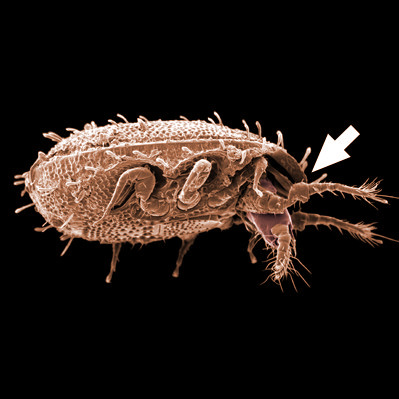 .............................. Seritympanum
- Not as above.............................. 3
Pretarsustarsal apotele:
(also pretarsus) the most distal segments of legs and palps bearing the claws and empodium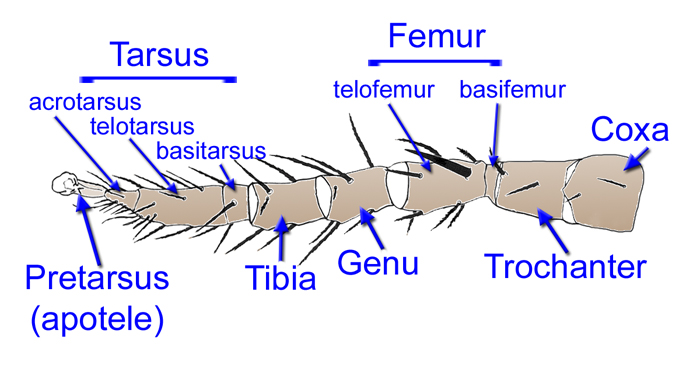 I without claws.............................. Ameroseiella
- Pretarsustarsal apotele:
(also pretarsus) the most distal segments of legs and palps bearing the claws and empodium I with claws.............................. 4
Dorsaldorsal:
relating to the upper or back side; opposed to ventral.
shield with 24 or fewer pairs of setaeseta:
(pl. setae, from L. = bristle) cuticular process composed of a hollow shaft (sometimes filled with a refractive material) produced from a membranous socket (the alveolus); the hair-like, spine-like, branched or variously expanded structures on the surfaces of the legs and body. Most setae function as mechanoreceptors, but others (e.g., solenidia) are chemoreceptors or have unknown or ambiguous functions............................... Epicriopsis
- Dorsaldorsal:
relating to the upper or back side; opposed to ventral.
shield with 27–29 pairs of setaeseta:
(pl. setae, from L. = bristle) cuticular process composed of a hollow shaft (sometimes filled with a refractive material) produced from a membranous socket (the alveolus); the hair-like, spine-like, branched or variously expanded structures on the surfaces of the legs and body. Most setae function as mechanoreceptors, but others (e.g., solenidia) are chemoreceptors or have unknown or ambiguous functions............................... 5
Dorsaldorsal:
relating to the upper or back side; opposed to ventral.
shield with 27 pairs of setaeseta:
(pl. setae, from L. = bristle) cuticular process composed of a hollow shaft (sometimes filled with a refractive material) produced from a membranous socket (the alveolus); the hair-like, spine-like, branched or variously expanded structures on the surfaces of the legs and body. Most setae function as mechanoreceptors, but others (e.g., solenidia) are chemoreceptors or have unknown or ambiguous functions.; genugenu:
(pl. genua) (= patella) the 4th leg segment, between the femur and tibia.
II without ventral setaeseta:
(pl. setae, from L. = bristle) cuticular process composed of a hollow shaft (sometimes filled with a refractive material) produced from a membranous socket (the alveolus); the hair-like, spine-like, branched or variously expanded structures on the surfaces of the legs and body. Most setae function as mechanoreceptors, but others (e.g., solenidia) are chemoreceptors or have unknown or ambiguous functions............................... Brontispalaelaps
- Dorsaldorsal:
relating to the upper or back side; opposed to ventral.
shield with 29 pairs of setaeseta:
(pl. setae, from L. = bristle) cuticular process composed of a hollow shaft (sometimes filled with a refractive material) produced from a membranous socket (the alveolus); the hair-like, spine-like, branched or variously expanded structures on the surfaces of the legs and body. Most setae function as mechanoreceptors, but others (e.g., solenidia) are chemoreceptors or have unknown or ambiguous functions.; genugenu:
(pl. genua) (= patella) the 4th leg segment, between the femur and tibia.
II with 2 ventral setaeseta:
(pl. setae, from L. = bristle) cuticular process composed of a hollow shaft (sometimes filled with a refractive material) produced from a membranous socket (the alveolus); the hair-like, spine-like, branched or variously expanded structures on the surfaces of the legs and body. Most setae function as mechanoreceptors, but others (e.g., solenidia) are chemoreceptors or have unknown or ambiguous functions............................... 6
Anal shieldanal shield:
in Mesostigmata, a ventral shield bearing the anal opening and circumanal setae (po, pa), but without any ventral setae or pores (lyrifissures) [see ventrianal shield]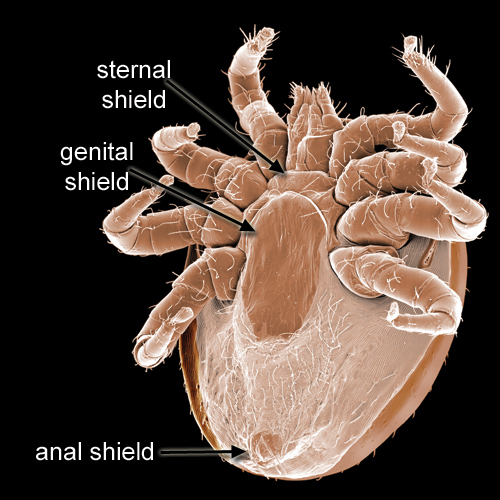 with 3 setaeseta:
(pl. setae, from L. = bristle) cuticular process composed of a hollow shaft (sometimes filled with a refractive material) produced from a membranous socket (the alveolus); the hair-like, spine-like, branched or variously expanded structures on the surfaces of the legs and body. Most setae function as mechanoreceptors, but others (e.g., solenidia) are chemoreceptors or have unknown or ambiguous functions.; genugenu:
(pl. genua) (= patella) the 4th leg segment, between the femur and tibia.
III with 1 pl setaseta:
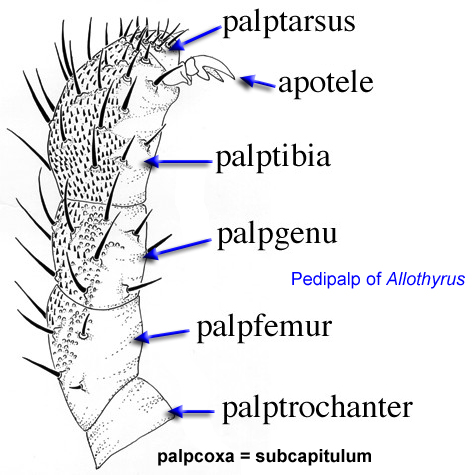
(pl. setae, from L. = bristle) cuticular process composed of a hollow shaft (sometimes filled with a refractive material) produced from a membranous socket (the alveolus); the hair-like, spine-like, branched or variously expanded structures on the surfaces of the legs and body. Most setae function as mechanoreceptors, but others (e.g., solenidia) are chemoreceptors or have unknown or ambiguous functions.; palp apotelepalptarsal apotele:
(= palp apotele, palptarsal claw) the most distal segment of the palp; absent in Acariformes, claw-like in Opilioacarida, and a subdistal, tined structure in the Mesostigmata. 3-tined.............................. Ameroseius
- Ventrianal shieldventrianal shield:
in Mesostigmata, a ventral shield bearing the anal opening, circum anal setae, and one or more pairs of ventral setae or pores (lyrifissures) [see anal shield]; maybe rather narrow or very broad and covering most of the gaster.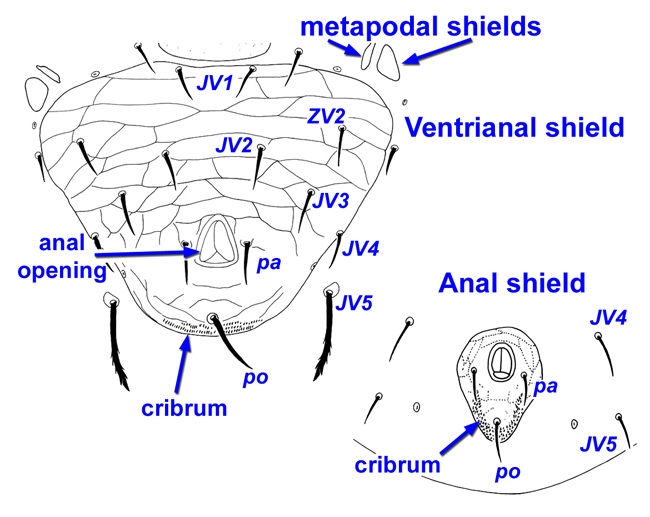 with 5 or more setaeseta:
(pl. setae, from L. = bristle) cuticular process composed of a hollow shaft (sometimes filled with a refractive material) produced from a membranous socket (the alveolus); the hair-like, spine-like, branched or variously expanded structures on the surfaces of the legs and body. Most setae function as mechanoreceptors, but others (e.g., solenidia) are chemoreceptors or have unknown or ambiguous functions.; genugenu:
(pl. genua) (= patella) the 4th leg segment, between the femur and tibia.
III with 2 pl setaseta:
(pl. setae, from L. = bristle) cuticular process composed of a hollow shaft (sometimes filled with a refractive material) produced from a membranous socket (the alveolus); the hair-like, spine-like, branched or variously expanded structures on the surfaces of the legs and body. Most setae function as mechanoreceptors, but others (e.g., solenidia) are chemoreceptors or have unknown or ambiguous functions.; palp apotelepalptarsal apotele:
(= palp apotele, palptarsal claw) the most distal segment of the palp; absent in Acariformes, claw-like in Opilioacarida, and a subdistal, tined structure in the Mesostigmata. 2-tined.............................. Kleemannia
Epicriopsis walteri Halliday lives in rainforest floor litter in Australia and can be reared on fungal hyphae. Other species are found in a variety of litter types and are assumed to be fungivores.
Author: David E. Walter
Content last updated Sept. 2006, unless indicated otherwise
Lucid key player updated Sept. 2025
idtools.org