t
Afrocypholaelaps Elsen
Superorder Parasitiformes » Order Mesostigmata » Suborder Monogynaspida » Infraorder Gamasina » Hyporder Dermanyssiae » Superfamily Ascoidea » Family Ameroseiidae » Genus Afrocypholaelaps
 , setaeseta: J5 absent
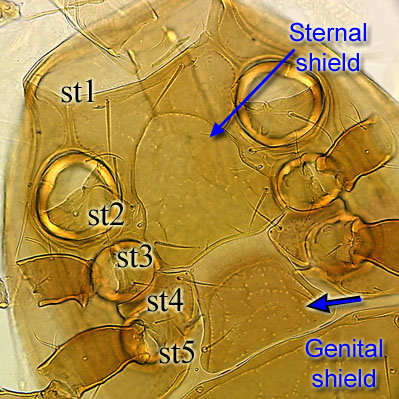 reduced and bearing 2 pairs of setaeseta:
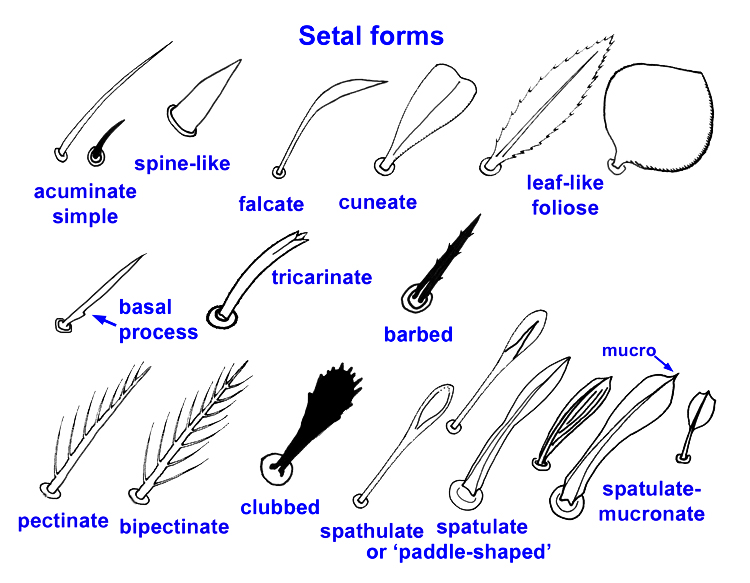
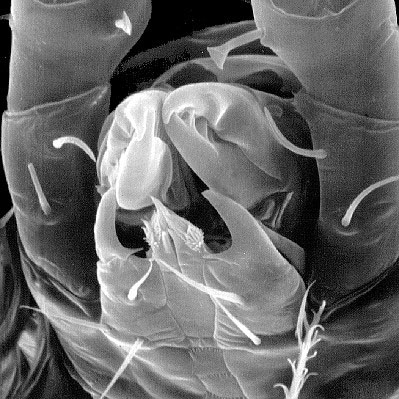 simple or bifurcatebifurcate: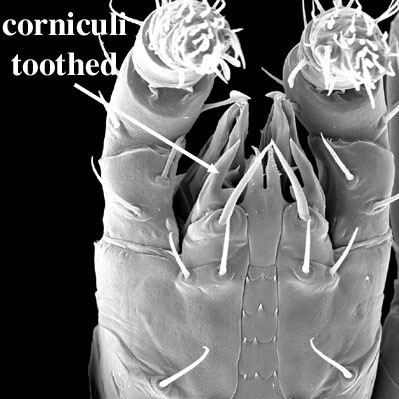
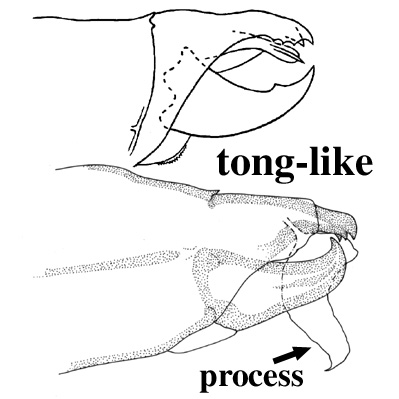 , with membranous lobe
 simple, smoothly triangular (1–2/1,2/1–1), tibiatibia:
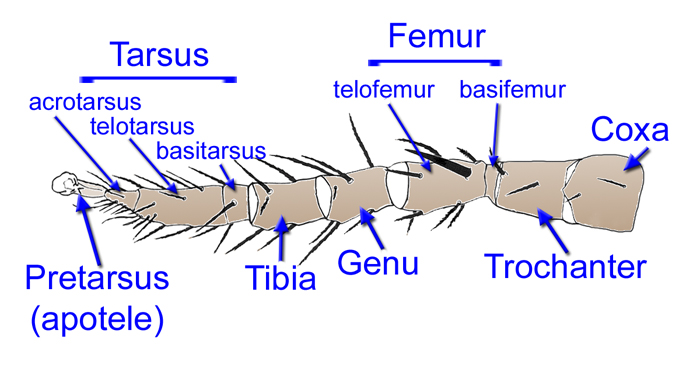 III with 7 setaeseta: (1–1/1,2/1–1)
More about Afrocypholaelaps on Bee Mite ID
The most reliable character for the Ameroseiidae is the lack of setaeseta:
(pl. setae, from L. = bristle) cuticular process composed of a hollow shaft (sometimes filled with a refractive material) produced from a membranous socket (the alveolus); the hair-like, spine-like, branched or variously expanded structures on the surfaces of the legs and body. Most setae function as mechanoreceptors, but others (e.g., solenidia) are chemoreceptors or have unknown or ambiguous functions. J5 on the posteriorposterior:
the back part of the body or towards that region in comparison, e.g., 'posterior to'.
dorsal shield. However, among the taxa with toothed or bifurcate corniculicorniculus:
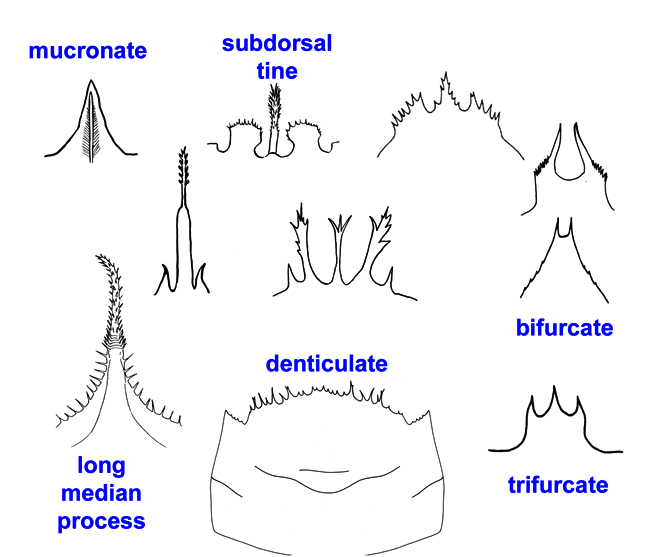
(pl. corniculi) (also, external malae) a usually horn-like process (sometimes toothed, bifurcate, trifurcate, spine-like, spatulate, or membranous) on the subcapitulum of parasitiform mites that usually supports the salivary styli. A toothed corniculus could be confused with a rutellum, a possibly homologous structure in Acariformes and Opilioacarida. Phytoseiid image is spatulate corniculus., ameroseiids are likely to be commonly confused only with species of Proctolaelaps, which occur in similar habitats, but Proctolaelaps have numerous dorsaldorsal:
relating to the upper or back side; opposed to ventral.
shield setaeseta:
(pl. setae, from L. = bristle) cuticular process composed of a hollow shaft (sometimes filled with a refractive material) produced from a membranous socket (the alveolus); the hair-like, spine-like, branched or variously expanded structures on the surfaces of the legs and body. Most setae function as mechanoreceptors, but others (e.g., solenidia) are chemoreceptors or have unknown or ambiguous functions. (including most of the r–R rows) and a ventralventral:
relating to the lower or under side; opposed to dorsal.
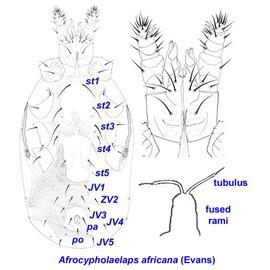
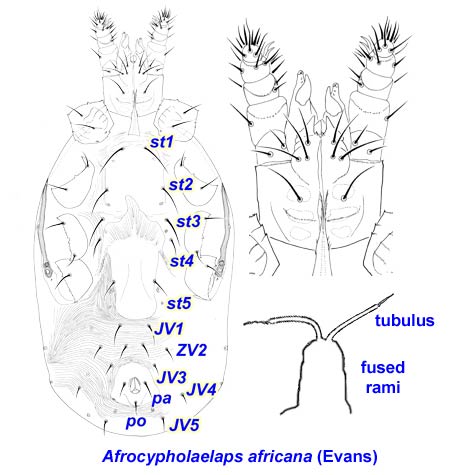
mucro on the chelicerae; rami of spermathecaspermatheca:
a structure in the female for storing sperm, typically sac-like.
fused. Species of Hattena and Neocypholaelaps also live in flowers, eat pollen and nectar, and use birds or insects for transport and can be differentiated in the key below.
Dorsal setaeseta:
(pl. setae, from L. = bristle) cuticular process composed of a hollow shaft (sometimes filled with a refractive material) produced from a membranous socket (the alveolus); the hair-like, spine-like, branched or variously expanded structures on the surfaces of the legs and body. Most setae function as mechanoreceptors, but others (e.g., solenidia) are chemoreceptors or have unknown or ambiguous functions. in s- & r-series setaeseta:
(pl. setae, from L. = bristle) cuticular process composed of a hollow shaft (sometimes filled with a refractive material) produced from a membranous socket (the alveolus); the hair-like, spine-like, branched or variously expanded structures on the surfaces of the legs and body. Most setae function as mechanoreceptors, but others (e.g., solenidia) are chemoreceptors or have unknown or ambiguous functions. leaf-like and biserratebiserrate:
with saw-like teeth on two sides (see serrate)............................... Neocypholaelaps stridulans group
- Dorsal setaeseta:
(pl. setae, from L. = bristle) cuticular process composed of a hollow shaft (sometimes filled with a refractive material) produced from a membranous socket (the alveolus); the hair-like, spine-like, branched or variously expanded structures on the surfaces of the legs and body. Most setae function as mechanoreceptors, but others (e.g., solenidia) are chemoreceptors or have unknown or ambiguous functions. acicular, simplesimple:
unadorned; simple setae are needle-like and without hairs or pectins.
or weakly barbed.............................. 2
Pretarsi with distinct claws; often some dorsaldorsal:
relating to the upper or back side; opposed to ventral.
shield setaeseta:
(pl. setae, from L. = bristle) cuticular process composed of a hollow shaft (sometimes filled with a refractive material) produced from a membranous socket (the alveolus); the hair-like, spine-like, branched or variously expanded structures on the surfaces of the legs and body. Most setae function as mechanoreceptors, but others (e.g., solenidia) are chemoreceptors or have unknown or ambiguous functions. thickened and barbed.............................. Neocypholaelaps
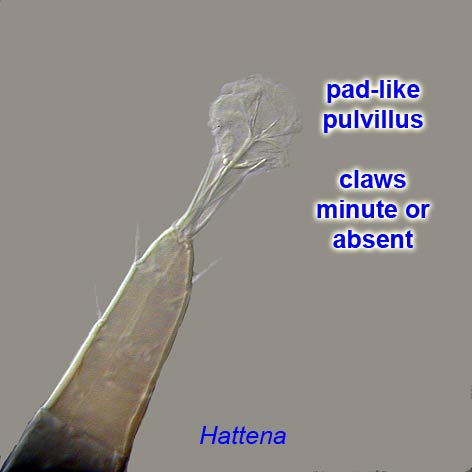
- Pretarsi without distinct claws, only pad-like pulvilluspulvillus:
a membranous, pad-like structure associated with the claws in Mesostigmata.
; dorsaldorsal:
relating to the upper or back side; opposed to ventral.
shield setaeseta:
(pl. setae, from L. = bristle) cuticular process composed of a hollow shaft (sometimes filled with a refractive material) produced from a membranous socket (the alveolus); the hair-like, spine-like, branched or variously expanded structures on the surfaces of the legs and body. Most setae function as mechanoreceptors, but others (e.g., solenidia) are chemoreceptors or have unknown or ambiguous functions. fine, simplesimple:
unadorned; simple setae are needle-like and without hairs or pectins.
.............................. 3
Dorsaldorsal:
relating to the upper or back side; opposed to ventral.
shield with 29 pairs of setaeseta:
(pl. setae, from L. = bristle) cuticular process composed of a hollow shaft (sometimes filled with a refractive material) produced from a membranous socket (the alveolus); the hair-like, spine-like, branched or variously expanded structures on the surfaces of the legs and body. Most setae function as mechanoreceptors, but others (e.g., solenidia) are chemoreceptors or have unknown or ambiguous functions.; ducts fused above spermathecaspermatheca:
a structure in the female for storing sperm, typically sac-like.
.............................. Afrocypholaelaps
- Dorsaldorsal:
relating to the upper or back side; opposed to ventral.
shield with 25 or fewer pairs of setaeseta:
(pl. setae, from L. = bristle) cuticular process composed of a hollow shaft (sometimes filled with a refractive material) produced from a membranous socket (the alveolus); the hair-like, spine-like, branched or variously expanded structures on the surfaces of the legs and body. Most setae function as mechanoreceptors, but others (e.g., solenidia) are chemoreceptors or have unknown or ambiguous functions.; ducts separate.............................. Hattena
Author: David E. Walter
Content last updated Sept. 2006, unless indicated otherwise
Lucid key player updated Sept. 2025
idtools.org