t
Platyseius Berlese (including Plesiosejus Evans & Hyatt)
Superorder Parasitiformes » Order Mesostigmata » Suborder Monogynaspida » Infraorder Gamasina » Hyporder Dermanyssiae » Superfamily Phytoseioidea » Family Blattisociidae » Subfamily Platyseiinae » Genus Platyseius
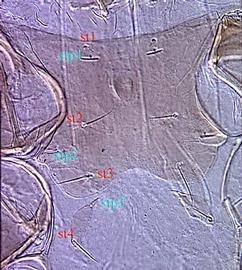
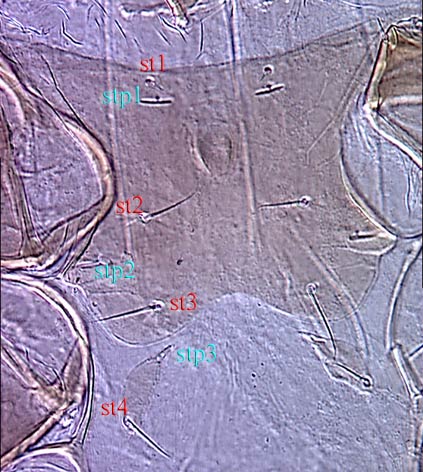
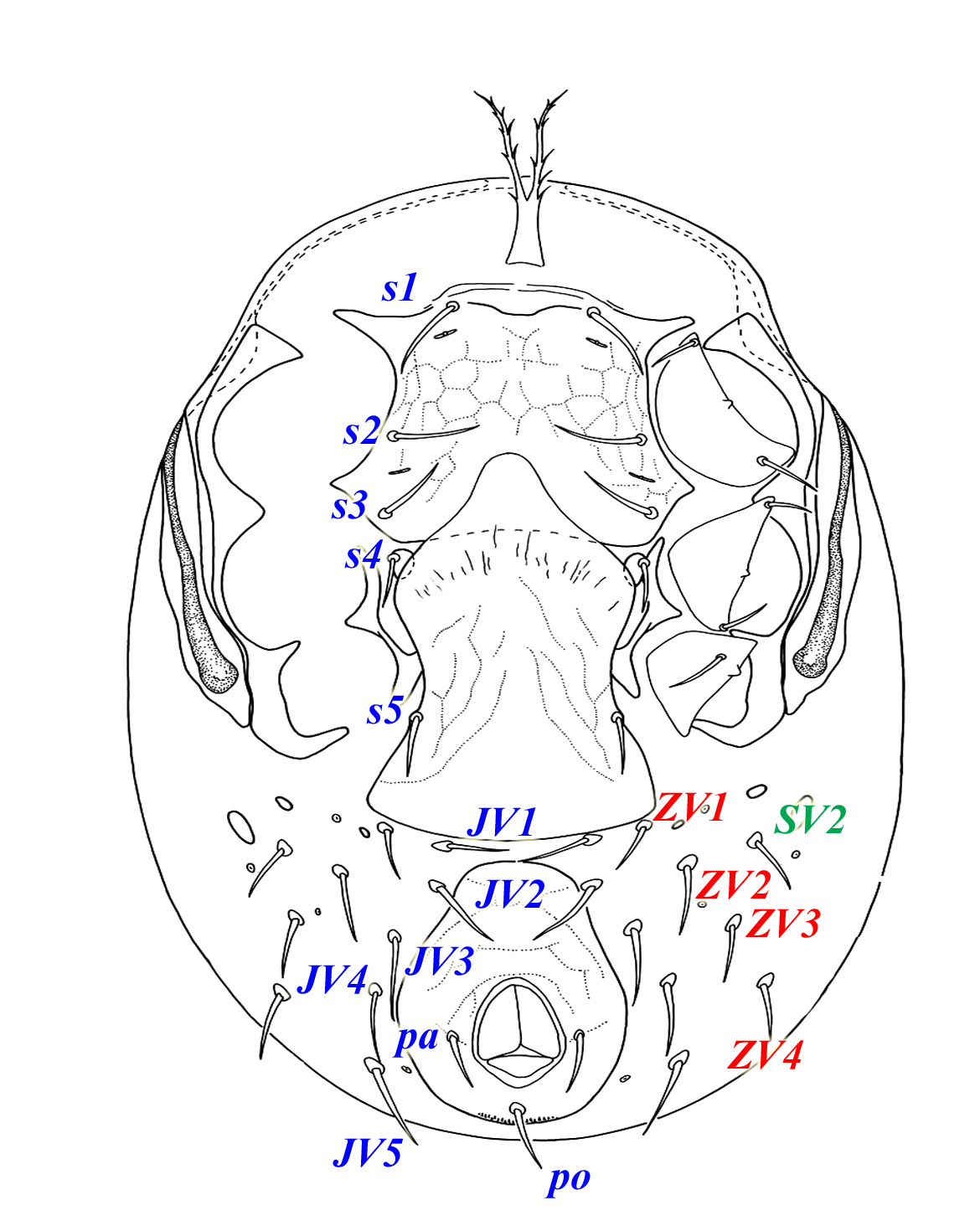 (st1) distinctly shorter than third pair (st3)
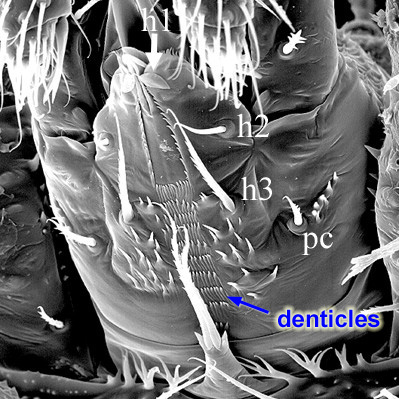 nearly twice that between fourth and fifth rows; tibiatibia:
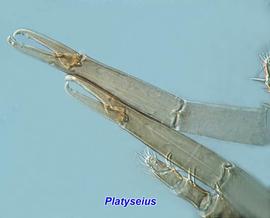
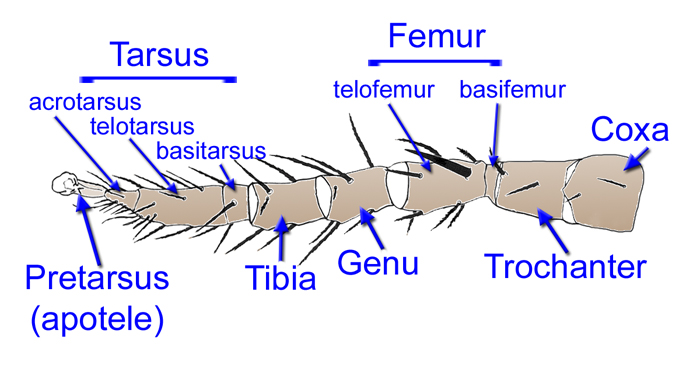 II with 9 setae (pd1 absent). I and II with 11 and 10 setae respectively (each lacking v–3). setae extremely long, whip-likewhip-like:
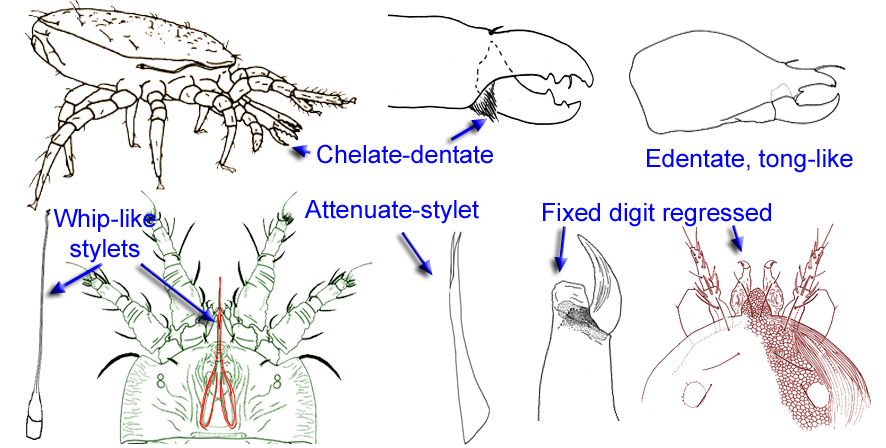 , taperingtapering:
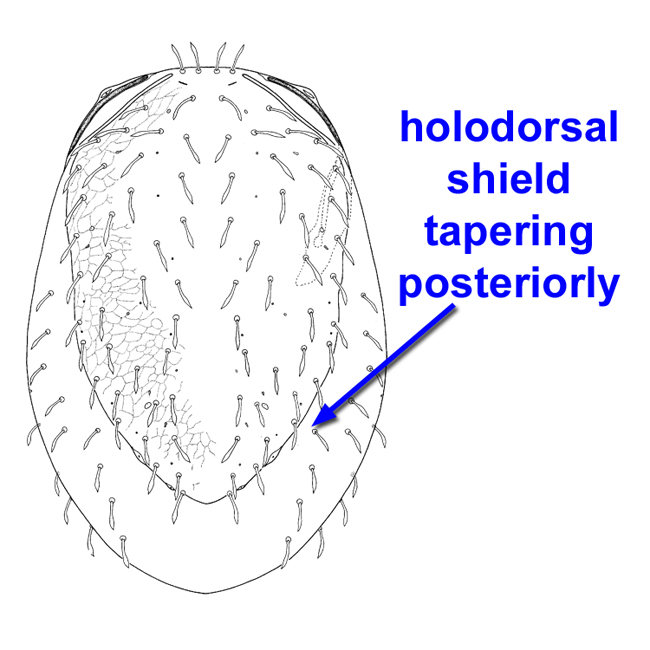 only near tip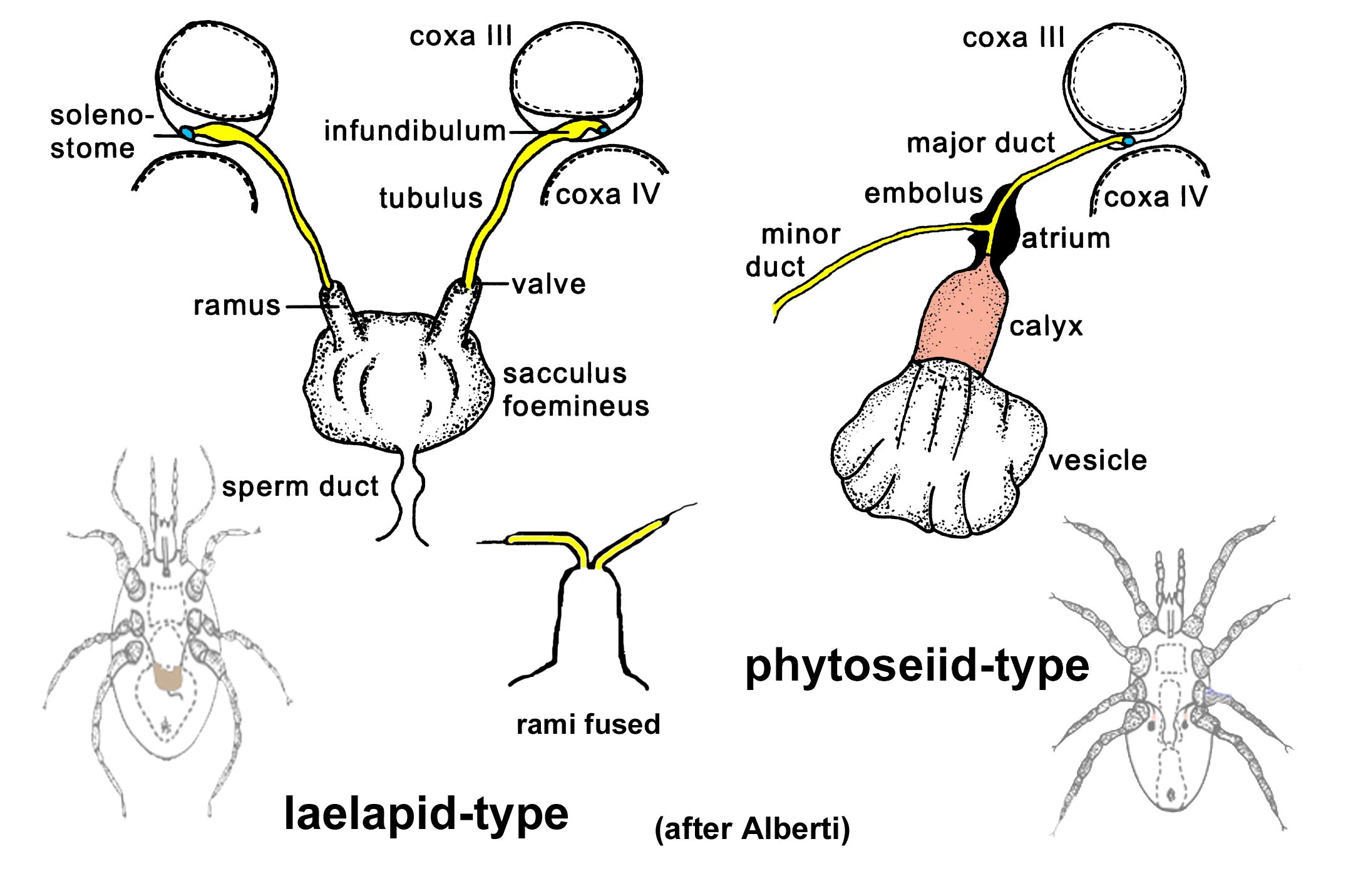
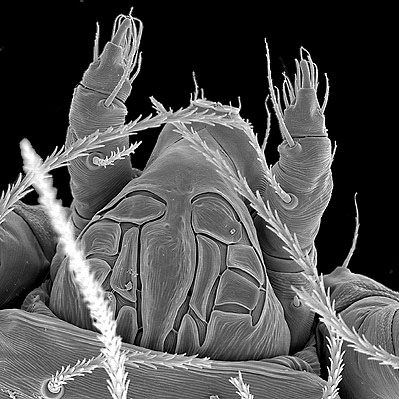 extending along coxacoxa: IV
Opisthonotalopisthonotal:
dorsal opisthosoma.
region of dorsaldorsal:
relating to the upper or back side; opposed to ventral.
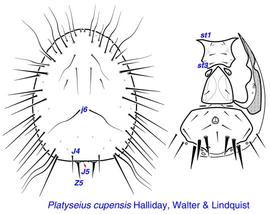
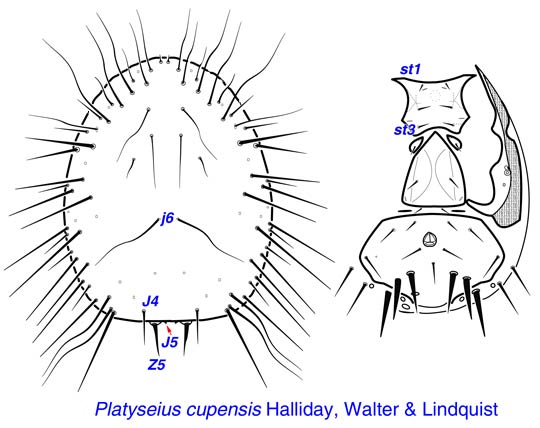
shield markedly hypotrichous, with only 5 pairs of setaeseta:
(pl. setae, from L. = bristle) cuticular process composed of a hollow shaft (sometimes filled with a refractive material) produced from a membranous socket (the alveolus); the hair-like, spine-like, branched or variously expanded structures on the surfaces of the legs and body. Most setae function as mechanoreceptors, but others (e.g., solenidia) are chemoreceptors or have unknown or ambiguous functions.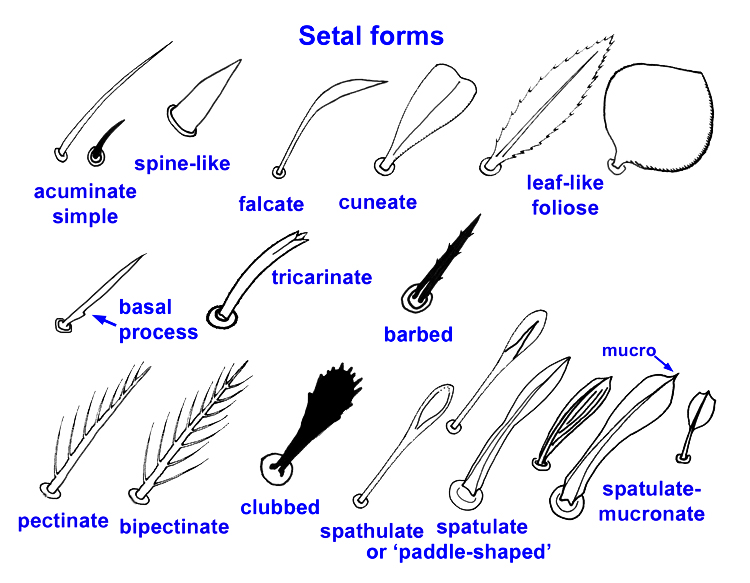 (Z1, Z4, Z5, S4, J5); sternal setaeseta:
(pl. setae, from L. = bristle) cuticular process composed of a hollow shaft (sometimes filled with a refractive material) produced from a membranous socket (the alveolus); the hair-like, spine-like, branched or variously expanded structures on the surfaces of the legs and body. Most setae function as mechanoreceptors, but others (e.g., solenidia) are chemoreceptors or have unknown or ambiguous functions. st4 in soft cuticle; with anal shieldanal shield:
in Mesostigmata, a ventral shield bearing the anal opening and circumanal setae (po, pa), but without any ventral setae or pores (lyrifissures) [see ventrianal shield]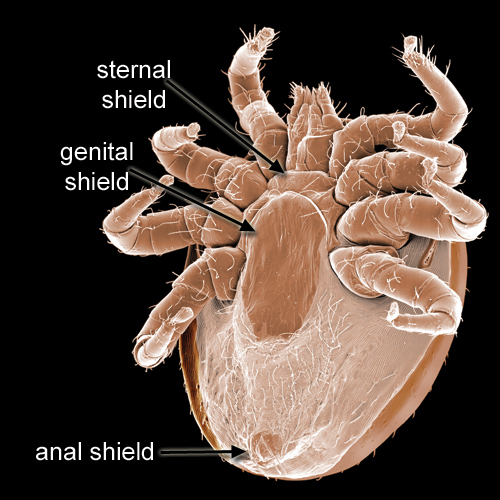 ; median lobes of pulvilluspulvillus:
a membranous, pad-like structure associated with the claws in Mesostigmata.
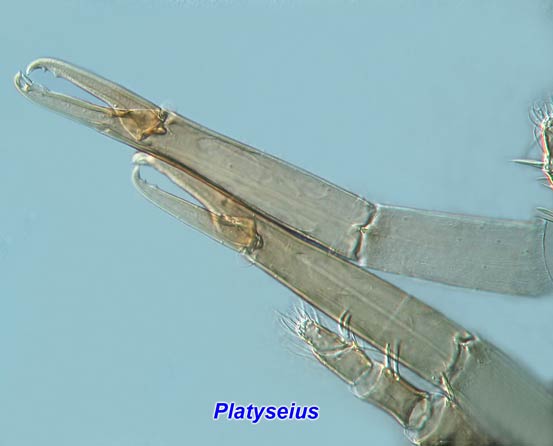
of legs II–IV blunt.............................. Cheiroseiulus
- Opisthonotalopisthonotal:
dorsal opisthosoma.
region of dorsaldorsal:
relating to the upper or back side; opposed to ventral.
shield with 12–15 pairs of setaeseta:
(pl. setae, from L. = bristle) cuticular process composed of a hollow shaft (sometimes filled with a refractive material) produced from a membranous socket (the alveolus); the hair-like, spine-like, branched or variously expanded structures on the surfaces of the legs and body. Most setae function as mechanoreceptors, but others (e.g., solenidia) are chemoreceptors or have unknown or ambiguous functions.; with metasternal plates bearing st4 and ventrianal shieldventrianal shield:
in Mesostigmata, a ventral shield bearing the anal opening, circum anal setae, and one or more pairs of ventral setae or pores (lyrifissures) [see anal shield]; maybe rather narrow or very broad and covering most of the gaster.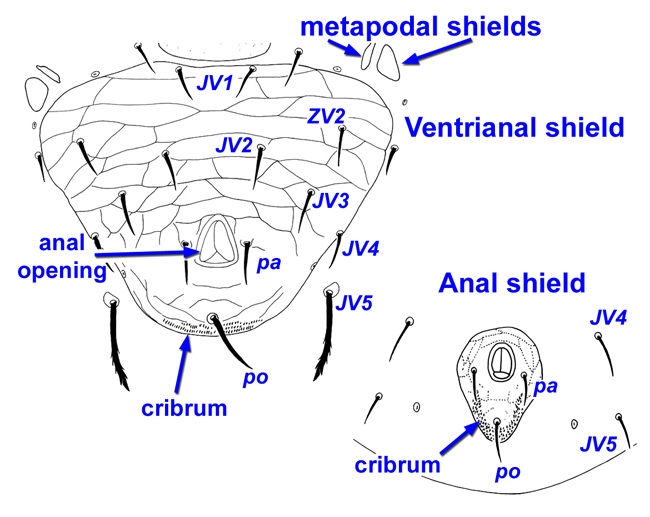 ; median lobes of pulvilluspulvillus:
a membranous, pad-like structure associated with the claws in Mesostigmata.
of legs II–IV acute.............................. 2
Opisthonotalopisthonotal:
dorsal opisthosoma.
region of dorsaldorsal:
relating to the upper or back side; opposed to ventral.
shield with 2–4 pairs of setaeseta:
(pl. setae, from L. = bristle) cuticular process composed of a hollow shaft (sometimes filled with a refractive material) produced from a membranous socket (the alveolus); the hair-like, spine-like, branched or variously expanded structures on the surfaces of the legs and body. Most setae function as mechanoreceptors, but others (e.g., solenidia) are chemoreceptors or have unknown or ambiguous functions. in J-series; first pair of sternal setaeseta:
(pl. setae, from L. = bristle) cuticular process composed of a hollow shaft (sometimes filled with a refractive material) produced from a membranous socket (the alveolus); the hair-like, spine-like, branched or variously expanded structures on the surfaces of the legs and body. Most setae function as mechanoreceptors, but others (e.g., solenidia) are chemoreceptors or have unknown or ambiguous functions. (st1) distinctly shorter than third pair (st3); distance between fifth and sixth rows of deutosternal denticlesdeutosternal denticles:
rows of small teeth-like projections (often irregular and sometimes reduced to a single tooth) running transversely across the deutosternal groove and sometimes onto the lateral faces of the subcapitulum. nearly twice that between fourth and fifth rows; tibiatibia:
(pl. tibiae) the leg segment between the genu and the tarsus. II with 9 setaeseta:
(pl. setae, from L. = bristle) cuticular process composed of a hollow shaft (sometimes filled with a refractive material) produced from a membranous socket (the alveolus); the hair-like, spine-like, branched or variously expanded structures on the surfaces of the legs and body. Most setae function as mechanoreceptors, but others (e.g., solenidia) are chemoreceptors or have unknown or ambiguous functions. (pd1 absent).............................. Platyseius
- Opisthonotalopisthonotal:
dorsal opisthosoma.
region of dorsaldorsal:
relating to the upper or back side; opposed to ventral.
shield with 5 pairs of setaeseta:
(pl. setae, from L. = bristle) cuticular process composed of a hollow shaft (sometimes filled with a refractive material) produced from a membranous socket (the alveolus); the hair-like, spine-like, branched or variously expanded structures on the surfaces of the legs and body. Most setae function as mechanoreceptors, but others (e.g., solenidia) are chemoreceptors or have unknown or ambiguous functions. in J-series; 1st and 3rd pairs of sternal setaeseta:
(pl. setae, from L. = bristle) cuticular process composed of a hollow shaft (sometimes filled with a refractive material) produced from a membranous socket (the alveolus); the hair-like, spine-like, branched or variously expanded structures on the surfaces of the legs and body. Most setae function as mechanoreceptors, but others (e.g., solenidia) are chemoreceptors or have unknown or ambiguous functions. subequal in length; distance between 5th and 6th rows of deutosternal denticlesdeutosternal denticles:
rows of small teeth-like projections (often irregular and sometimes reduced to a single tooth) running transversely across the deutosternal groove and sometimes onto the lateral faces of the subcapitulum. similar to that between 4th and 5th rows; tibiatibia:
(pl. tibiae) the leg segment between the genu and the tarsus. II with 10 setaeseta:
(pl. setae, from L. = bristle) cuticular process composed of a hollow shaft (sometimes filled with a refractive material) produced from a membranous socket (the alveolus); the hair-like, spine-like, branched or variously expanded structures on the surfaces of the legs and body. Most setae function as mechanoreceptors, but others (e.g., solenidia) are chemoreceptors or have unknown or ambiguous functions. (pd1 present).............................. Cheiroseius
Less than 20 described species and numerous undescribed species. Mites of the genus Platyseius are found in moist soils and fully aquatic habitats; some are known to feed on Culex egg rafts.
Author: David E. Walter
Content last updated Sept. 2006, unless indicated otherwise
Lucid key player updated Sept. 2025
idtools.org