t
Trachytes Michael
Superorder Parasitiformes » Order Mesostigmata » Suborder Monogynaspida » Infraorder Uropodina » Superfamily Uropodoidea » Family Trachytidae » Genus Trachytes
 ; podonotalpodonotal: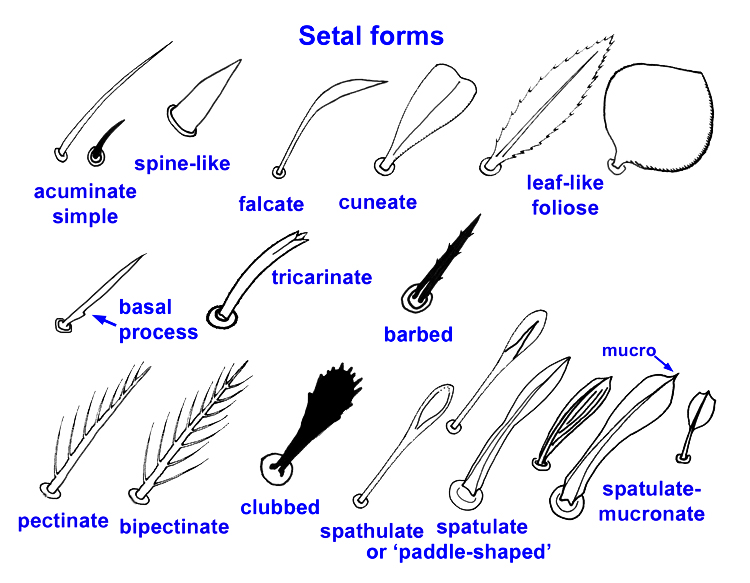
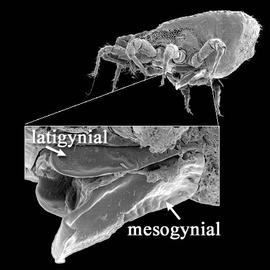
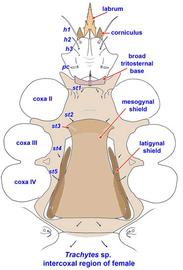
 absent (st1–4) + JV1 on ventral shieldventral shield:
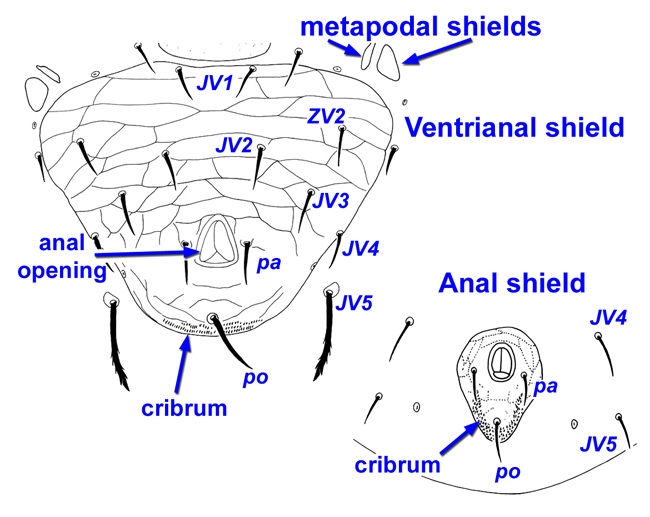 .
. I with 4 setaeseta:; tibiatibia: I with 4 dorsaldorsal:; all genuagenu:; genugenu:.
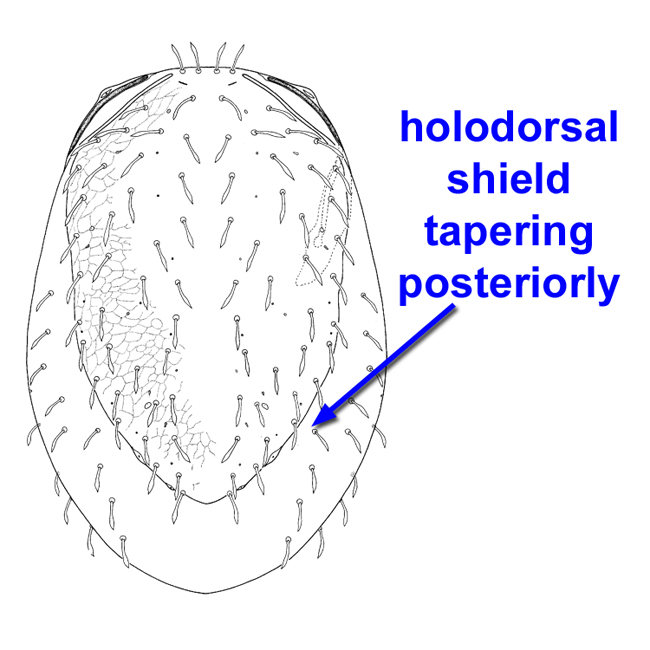
 ending in taperingtapering:
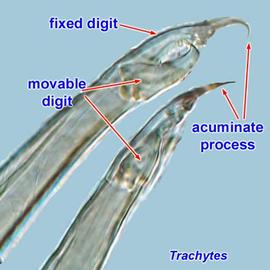
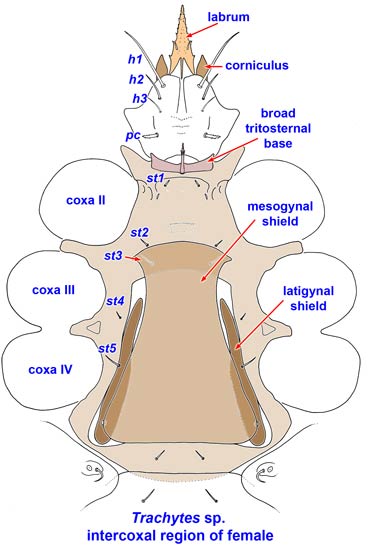
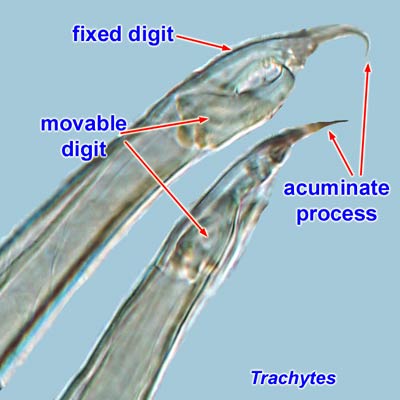
 , acuminateacuminate: process; corniculicorniculus:
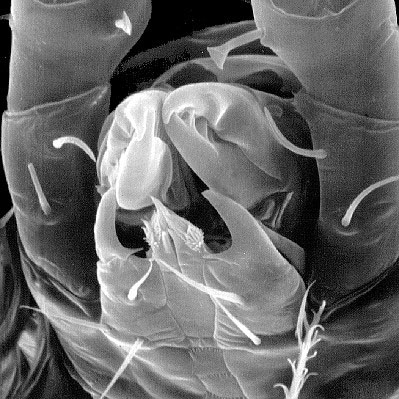 horn-like.
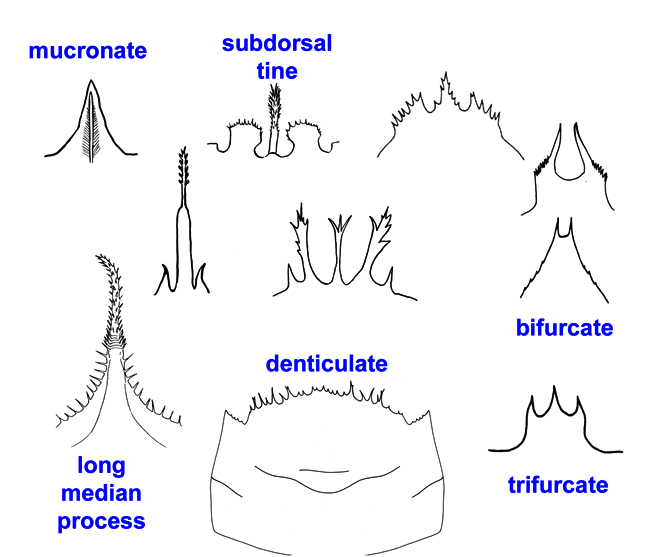 with strong, taperingtapering: median process; hypostomal denticleshypostomal denticles:
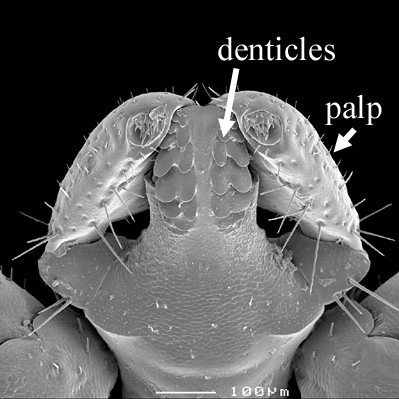 in broad median rows.
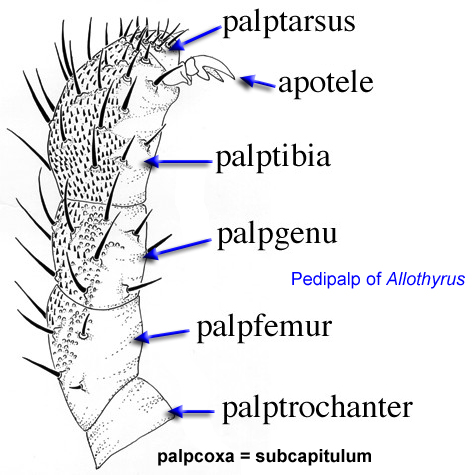 2-tined; palppalp: genu with 5 setaeseta:, palppalp: femur with 5 setaeseta:.
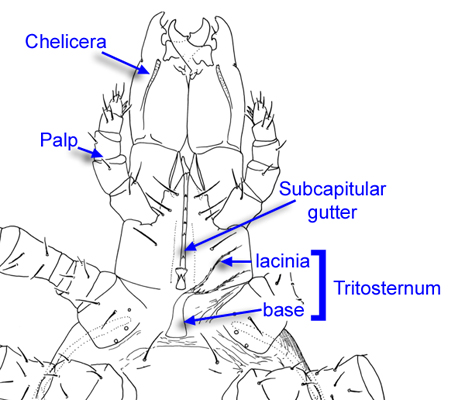 wider than long, rectangular.; chelicerae not obviously modified for sperm transfer.
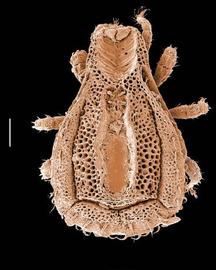
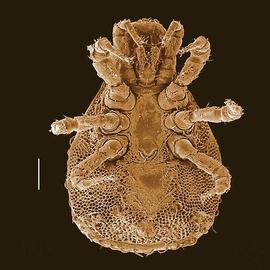
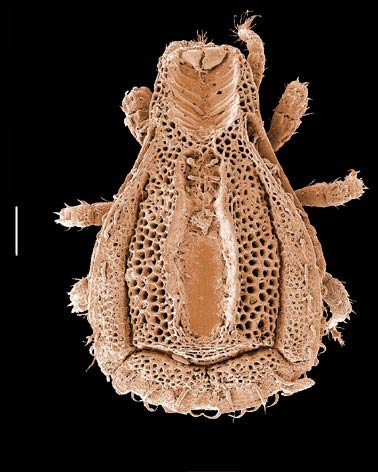
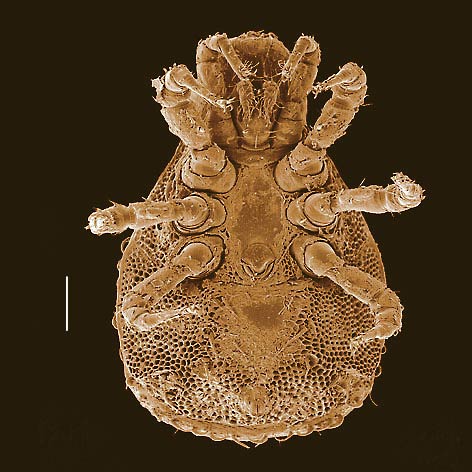
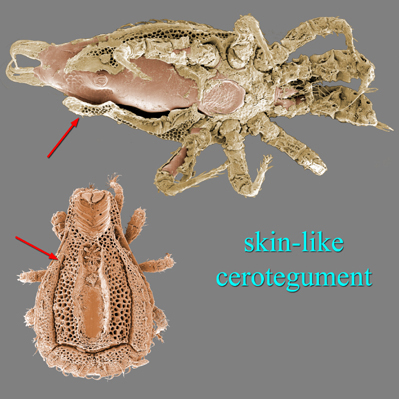
Idiosoma and mesogynal shield oval to subrectangular; marginal shield fragmentedfragmented:
broken up, composed of several discrete parts rather than of a single unit.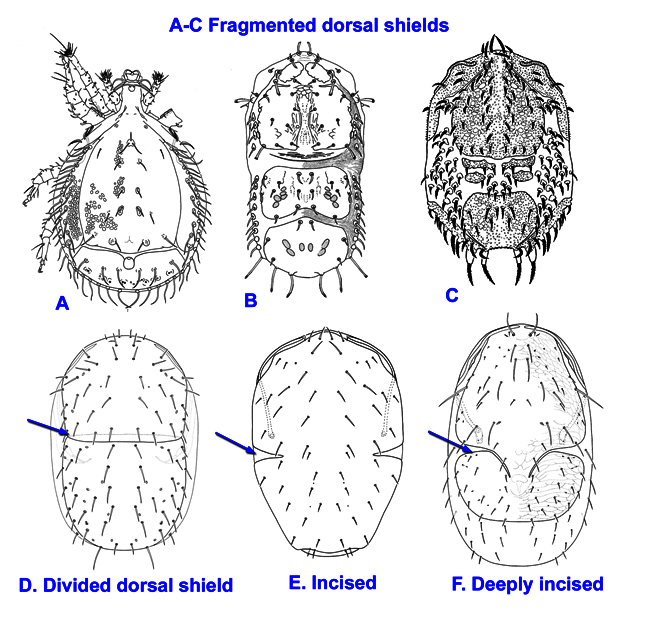 .............................. 2
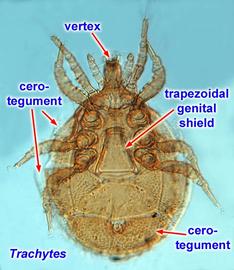
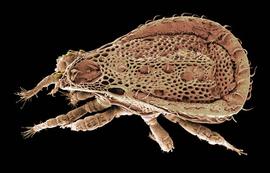
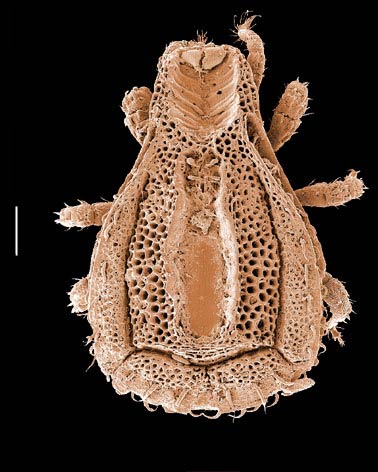
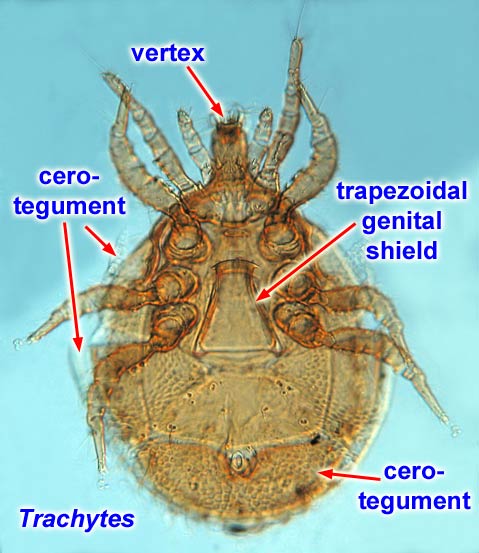
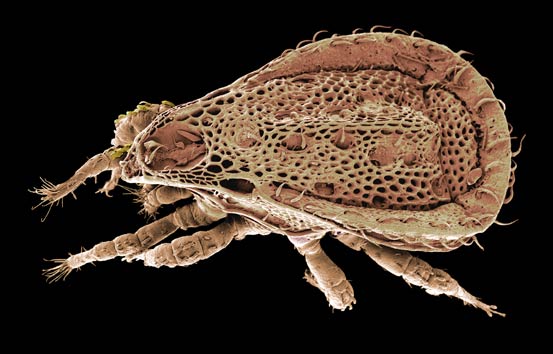
- Idiosoma pyriform, mesogynal shield trapezoidal; marginal shield entireentire:
a shield or sclerite with a continuous margin without incisions.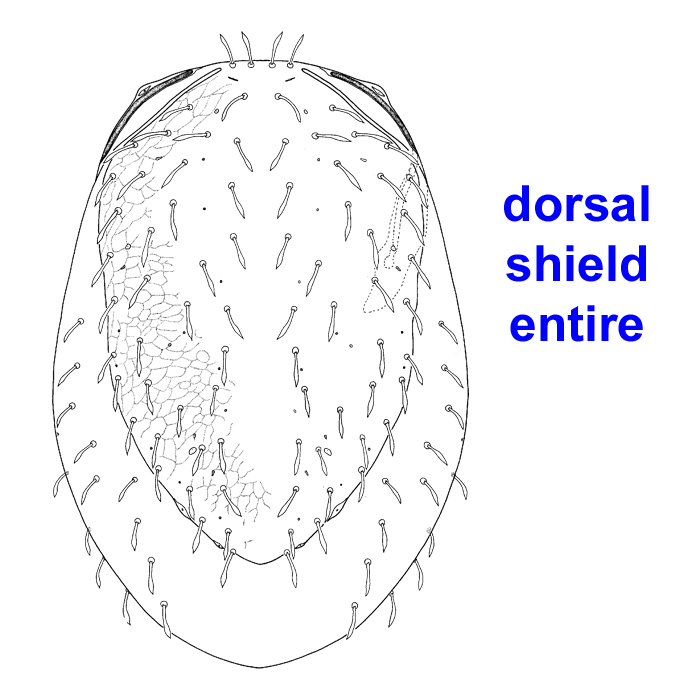 .............................. Trachytes
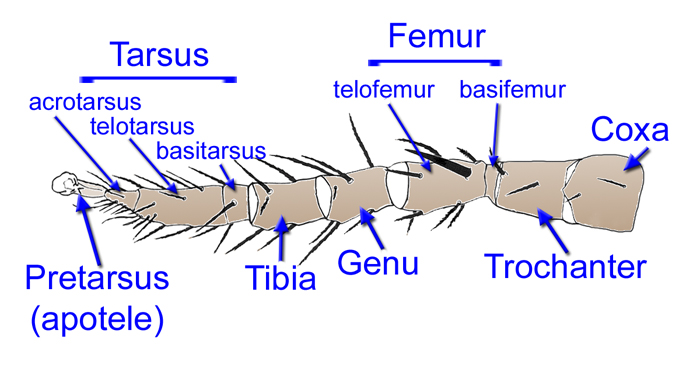
Genugenu:
(pl. genua) (= patella) the 4th leg segment, between the femur and tibia.
IV with two ventral setaeseta:
(pl. setae, from L. = bristle) cuticular process composed of a hollow shaft (sometimes filled with a refractive material) produced from a membranous socket (the alveolus); the hair-like, spine-like, branched or variously expanded structures on the surfaces of the legs and body. Most setae function as mechanoreceptors, but others (e.g., solenidia) are chemoreceptors or have unknown or ambiguous functions............................... 3
- Genugenu:
(pl. genua) (= patella) the 4th leg segment, between the femur and tibia.
IV with one ventralventral:
relating to the lower or under side; opposed to dorsal.
seta.............................. Polyaspinus (+Uroseius)
Chelicerae and corniculicorniculus:
(pl. corniculi) (also, external malae) a usually horn-like process (sometimes toothed, bifurcate, trifurcate, spine-like, spatulate, or membranous) on the subcapitulum of parasitiform mites that usually supports the salivary styli. A toothed corniculus could be confused with a rutellum, a possibly homologous structure in Acariformes and Opilioacarida. Phytoseiid image is spatulate corniculus. elongate, the latter reaching distaldistal:
towards the free end of an appendage.
end of palpgenu.............................. Polyaspis (+Dyscritaspis)
- Chelicerae and corniculicorniculus:
(pl. corniculi) (also, external malae) a usually horn-like process (sometimes toothed, bifurcate, trifurcate, spine-like, spatulate, or membranous) on the subcapitulum of parasitiform mites that usually supports the salivary styli. A toothed corniculus could be confused with a rutellum, a possibly homologous structure in Acariformes and Opilioacarida. Phytoseiid image is spatulate corniculus. not elongate.............................. Dipolyaspis
Species of Polyaspis are ambush predators, but the ecology of other Polyaspidoidea is poorly known. Many species are present in forest litter or associated with rotting wood.
Author: David E. Walter
Content last updated Sept. 2006, unless indicated otherwise
Lucid key player updated Sept. 2025
idtools.org