Mesostigmata
t
Taxonomy
updated 2025
Name
Nothogynus Walter & Krantz
Classification
Superorder Parasitiformes » Order Mesostigmata » Suborder Monogynaspida » Infraorder Uropodina » Superfamily Microgynioidea » Family Nothogynidae » Genus Nothogynus
Children
Nothogynus klompeni Walter and Krantz; Nothogynus camini Walter and Krantz; Nothogynus sp.—Lord Howe Island
Diagnostic characters
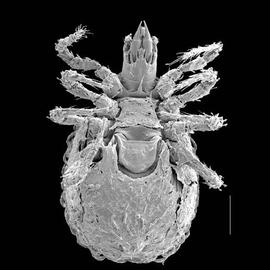
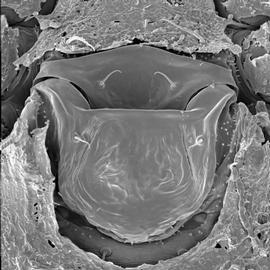
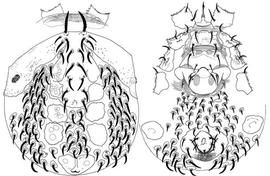
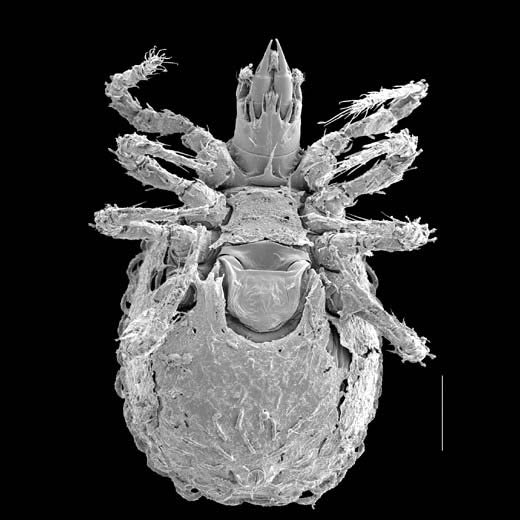
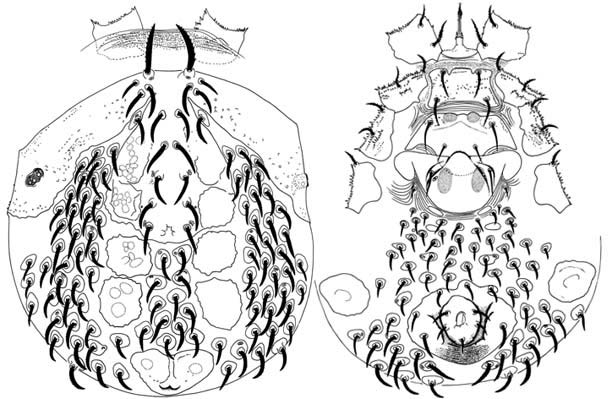
- Light tan to brown, oval mites with thick cerotegument, a truncate podonotal shieldpodonotal shield:
the anterior shield in mesostigmatans with divided dorsal shields.
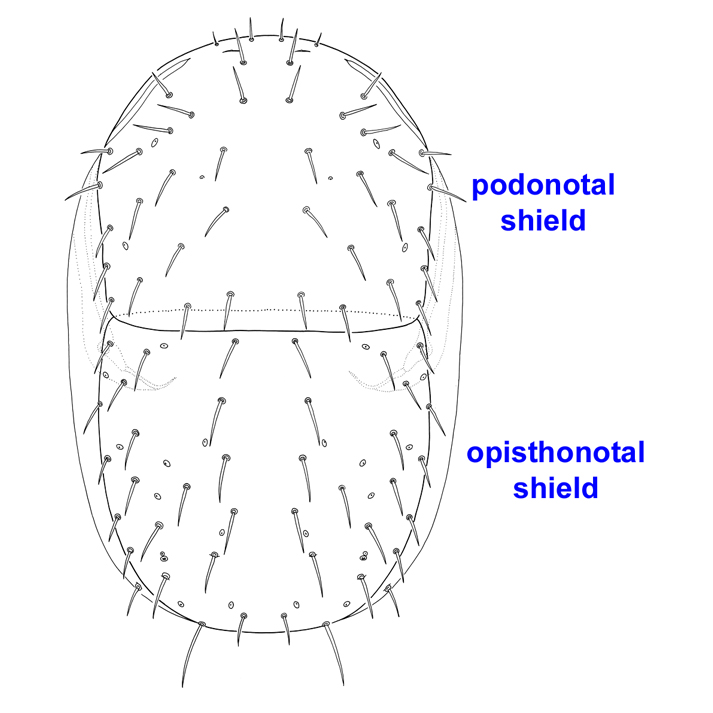 , free mesonotal scutellascutella:
(pl scutellae) small shields or platelets.
and a nude pygidial shieldpygidial shield:
(pygidial sclerite) in Mesostigmata, a shield at the back end of the idiosoma.
- Sternal shield divided, st1–2 and st3–4 on separate halves; genital shieldgenital shield:
a shield or shields covering the genital opening; in female mongynaspine Mesostigmata this shield is usually called the epigynal (epigynial) shield.
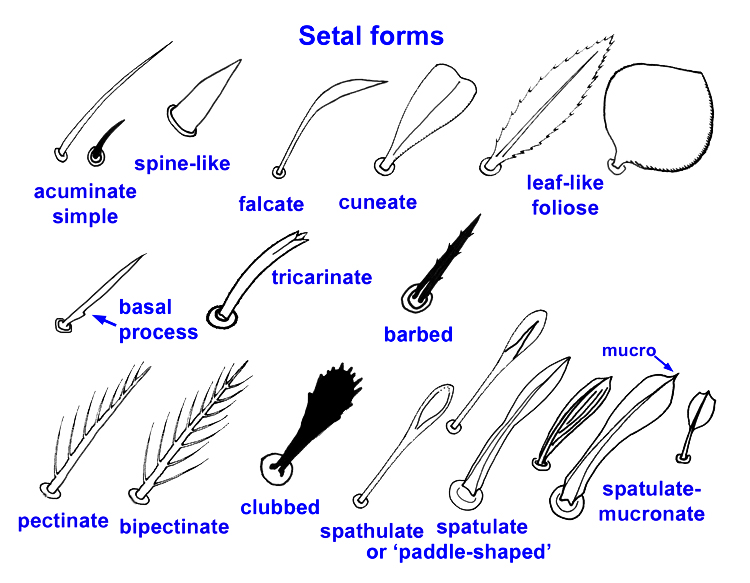
with broad wings and a single pair of setaeseta:
(pl. setae, from L. = bristle) cuticular process composed of a hollow shaft (sometimes filled with a refractive material) produced from a membranous socket (the alveolus); the hair-like, spine-like, branched or variously expanded structures on the surfaces of the legs and body. Most setae function as mechanoreceptors, but others (e.g., solenidia) are chemoreceptors or have unknown or ambiguous functions.
 .
.
- Intercalary scleritesclerite:
A component section of an exoskeleton; a plate forming the skeleton of an arthropod.
of tarsustarsus:
(pl. tarsi) the subdistal leg segment between the tibia and the pretarsus (apotele).
IV reduced to linear remnant; setaeseta:
(pl. setae, from L. = bristle) cuticular process composed of a hollow shaft (sometimes filled with a refractive material) produced from a membranous socket (the alveolus); the hair-like, spine-like, branched or variously expanded structures on the surfaces of the legs and body. Most setae function as mechanoreceptors, but others (e.g., solenidia) are chemoreceptors or have unknown or ambiguous functions.
av4 and pv4 absent
- Trochantertrochanter:
the leg segment between the coxa and the femur.
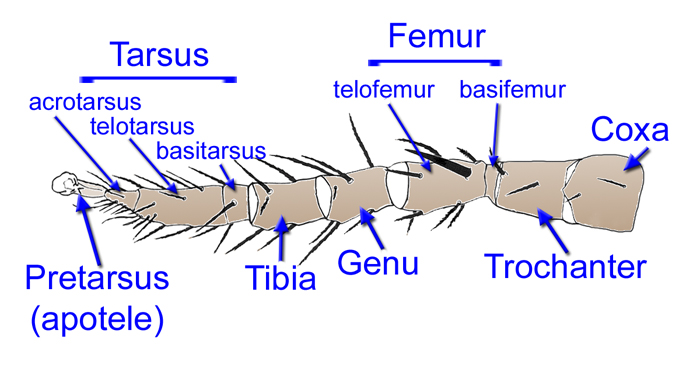 I of adult with larval setalsetal:
of or pertaining to a seta.
complement (4 setaeseta:
(pl. setae, from L. = bristle) cuticular process composed of a hollow shaft (sometimes filled with a refractive material) produced from a membranous socket (the alveolus); the hair-like, spine-like, branched or variously expanded structures on the surfaces of the legs and body. Most setae function as mechanoreceptors, but others (e.g., solenidia) are chemoreceptors or have unknown or ambiguous functions.
); femorafemur:
(pl. femora) major leg segment between trochanter and genu; often subdivided into a basifemur and a telofemur.
, genuagenu:
(pl. genua) (= patella) the 4th leg segment, between the femur and tibia.
and tibiaetibia:
(pl. tibiae) the leg segment between the genu and the tarsus.
I with 10 setaeseta:
(pl. setae, from L. = bristle) cuticular process composed of a hollow shaft (sometimes filled with a refractive material) produced from a membranous socket (the alveolus); the hair-like, spine-like, branched or variously expanded structures on the surfaces of the legs and body. Most setae function as mechanoreceptors, but others (e.g., solenidia) are chemoreceptors or have unknown or ambiguous functions.
; tibiaetibia:
(pl. tibiae) the leg segment between the genu and the tarsus.
II–IV with 9 setaeseta:
(pl. setae, from L. = bristle) cuticular process composed of a hollow shaft (sometimes filled with a refractive material) produced from a membranous socket (the alveolus); the hair-like, spine-like, branched or variously expanded structures on the surfaces of the legs and body. Most setae function as mechanoreceptors, but others (e.g., solenidia) are chemoreceptors or have unknown or ambiguous functions.
(2–1/1,2/1–2).
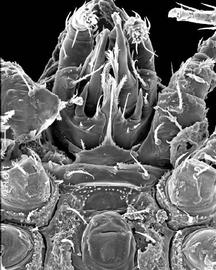
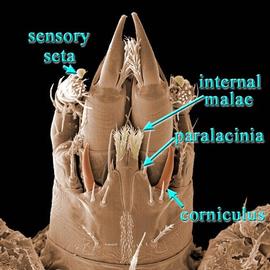
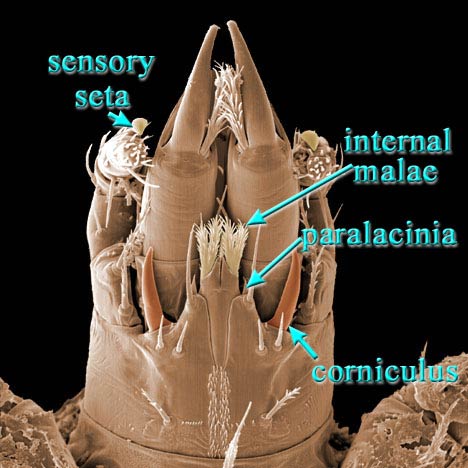
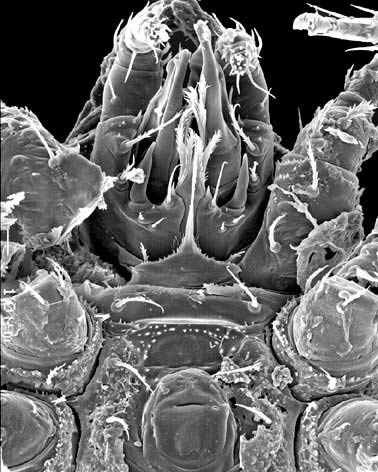
- Hypostomal setaeseta:
(pl. setae, from L. = bristle) cuticular process composed of a hollow shaft (sometimes filled with a refractive material) produced from a membranous socket (the alveolus); the hair-like, spine-like, branched or variously expanded structures on the surfaces of the legs and body. Most setae function as mechanoreceptors, but others (e.g., solenidia) are chemoreceptors or have unknown or ambiguous functions.
in triangular array; subcapitular gutter filled basally with dense denticlesdenticles:
small tooth-like processes, e.g., on the subcapitula of ticks and many mesostigmatans.
; palptibia-tarsustarsus:
(pl. tarsi) the subdistal leg segment between the tibia and the pretarsus (apotele).
fused; palp apotelepalptarsal apotele:
(= palp apotele, palptarsal claw) the most distal segment of the palp; absent in Acariformes, claw-like in Opilioacarida, and a subdistal, tined structure in the Mesostigmata.
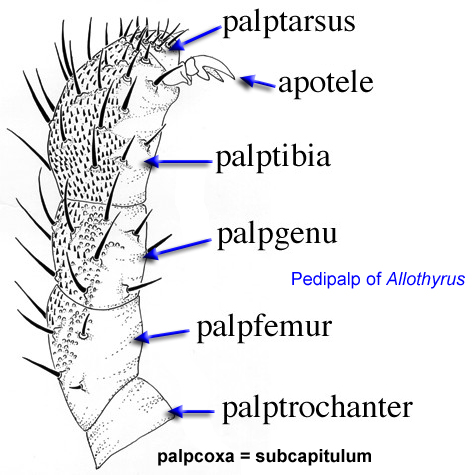 2-tined.
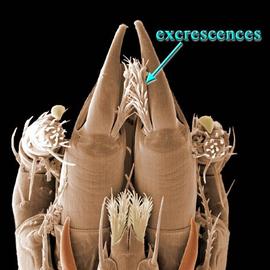
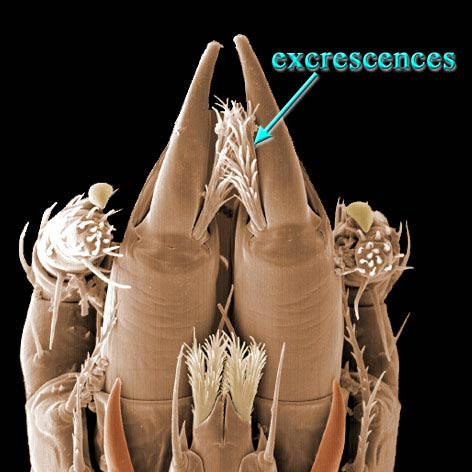
- Chelicerae serrateserrate:
with closely set teeth that resemble the cutting edge of a saw.
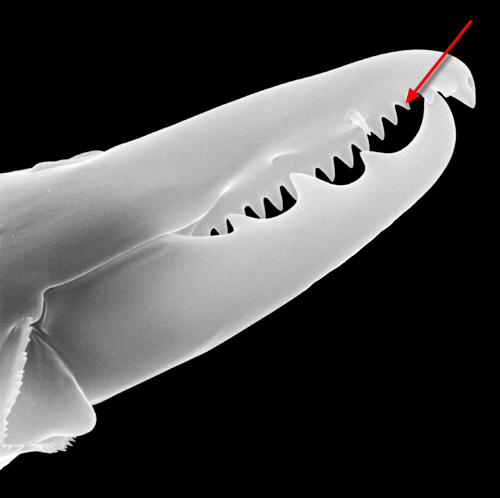 , movable digit with 3 excrescences
- Larval idiosoma holotrichous (29 pairs of setaeseta:
(pl. setae, from L. = bristle) cuticular process composed of a hollow shaft (sometimes filled with a refractive material) produced from a membranous socket (the alveolus); the hair-like, spine-like, branched or variously expanded structures on the surfaces of the legs and body. Most setae function as mechanoreceptors, but others (e.g., solenidia) are chemoreceptors or have unknown or ambiguous functions.
+ postanal setapostanal seta:
the unpaired median seta inserted posterior to the anal opening in the Mesostigmata; usually designated po or POS.
), adults hypertrichous
- Males with sternal-genital shieldgenital shield:
a shield or shields covering the genital opening; in female mongynaspine Mesostigmata this shield is usually called the epigynal (epigynial) shield.
bearing 4 pairs of setaeseta:
(pl. setae, from L. = bristle) cuticular process composed of a hollow shaft (sometimes filled with a refractive material) produced from a membranous socket (the alveolus); the hair-like, spine-like, branched or variously expanded structures on the surfaces of the legs and body. Most setae function as mechanoreceptors, but others (e.g., solenidia) are chemoreceptors or have unknown or ambiguous functions.
; genital opening between coxae III; fifth pair of sternal setaeseta:
(pl. setae, from L. = bristle) cuticular process composed of a hollow shaft (sometimes filled with a refractive material) produced from a membranous socket (the alveolus); the hair-like, spine-like, branched or variously expanded structures on the surfaces of the legs and body. Most setae function as mechanoreceptors, but others (e.g., solenidia) are chemoreceptors or have unknown or ambiguous functions.
on or near a separate plate between coxae IV.
Similar taxa
Microgyniids and sejids have 1 or more setaseta:
(pl. setae, from L. = bristle) cuticular process composed of a hollow shaft (sometimes filled with a refractive material) produced from a membranous socket (the alveolus); the hair-like, spine-like, branched or variously expanded structures on the surfaces of the legs and body. Most setae function as mechanoreceptors, but others (e.g., solenidia) are chemoreceptors or have unknown or ambiguous functions.
-bearing mesonotal plates and setose pygidial shields, and the latter have setaeseta:
(pl. setae, from L. = bristle) cuticular process composed of a hollow shaft (sometimes filled with a refractive material) produced from a membranous socket (the alveolus); the hair-like, spine-like, branched or variously expanded structures on the surfaces of the legs and body. Most setae function as mechanoreceptors, but others (e.g., solenidia) are chemoreceptors or have unknown or ambiguous functions.
av4/ pv4. Polyaspidids have a nude genital shieldgenital shield:
a shield or shields covering the genital opening; in female mongynaspine Mesostigmata this shield is usually called the epigynal (epigynial) shield.
.
Ecology and distribution
Nothogynidae has two described species of Nothogynus from treeholes and logs rainforests in Australia, where they feed on nematodes and possibly other small invertebrates.
Known species
References
- Walter and Krantz 1999Walter and Krantz 1999:
Walter DE and Krantz GW. 1999. New early derivative mesostigmatans from Australia: Nothogynus, n. g., Nothogynidae, n. fam. (Mesostigmata: Microgyniina). International Journal of Acarology 25: 67-76.