Mesostigmata
t
Taxonomy
updated 2025
Classification
Superorder Parasitiformes » Order Mesostigmata » Suborder Monogynaspida » Infraorder Gamasina » Hyporder Epicriiae » Superfamily Heatherelloidea » Family Heatherellidae » Genus Heatherella
Diagnostic characters
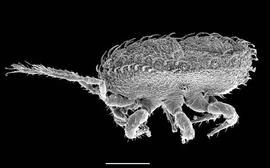
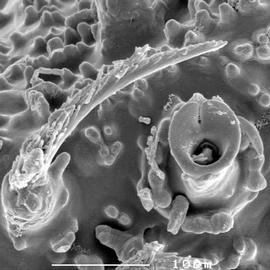
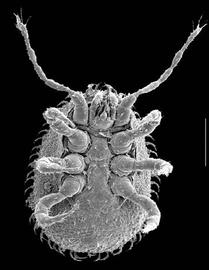
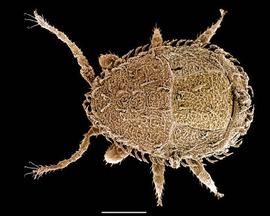
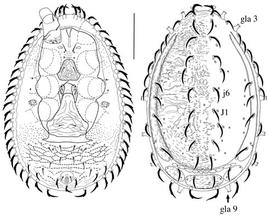
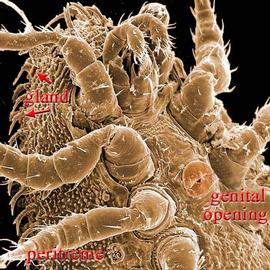
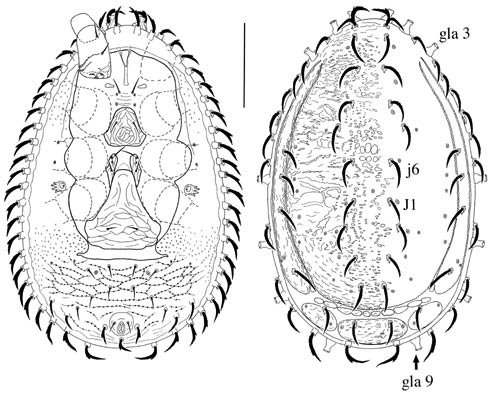
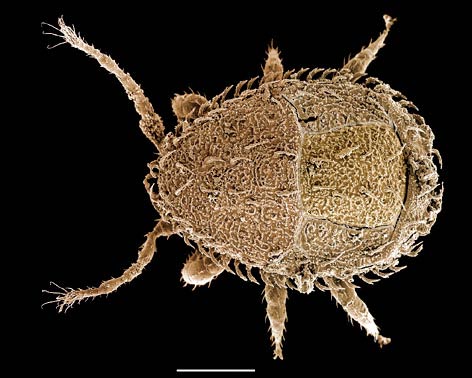
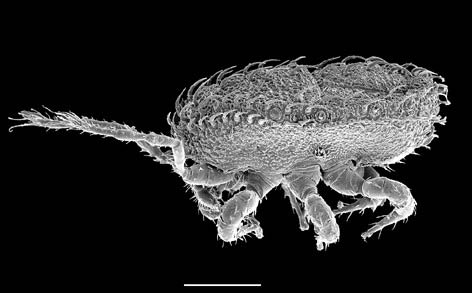
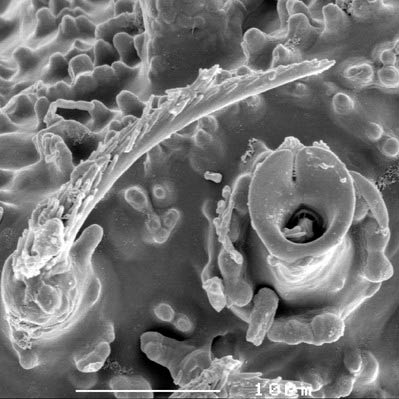
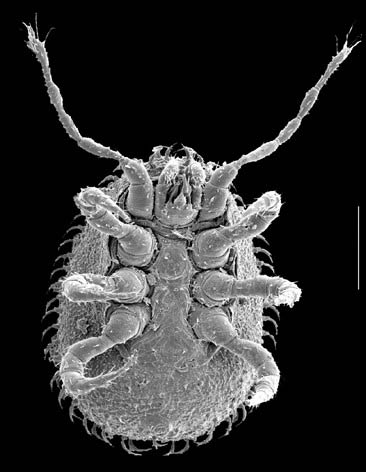
- Brownish oval mites covered in waxy cerotegumentcerotegument:
the outer layers of the epicuticle, including the wax and cement layers; often thin and inconspicuous, but sometimes very thick, ornamented, and obscuring the underlying cuticle; thick ceroteguments often can be peeled off to expose a very different-looking mite.
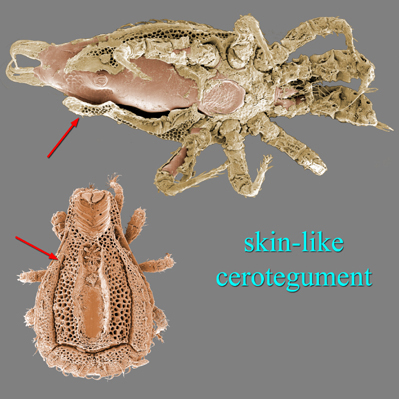 and fringed with bifurcatebifurcate:
split into two distally or with two projections.
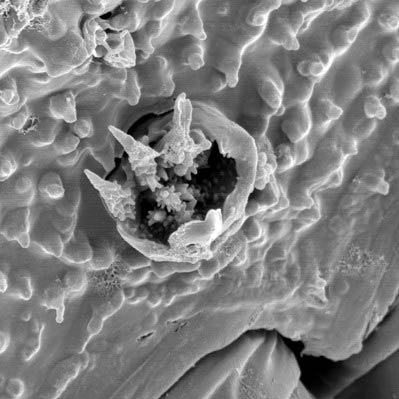
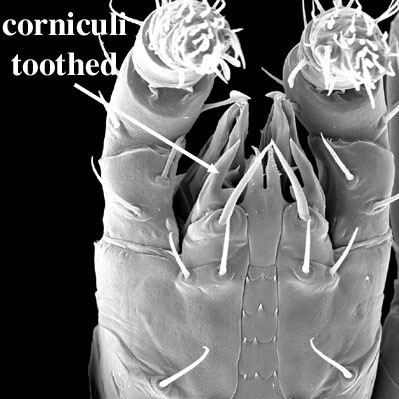 setae and large glandgland:
usually referring to a glandular opening in the cuticle such as the lateral opisthonotal glands in the Sarcoptiformes or the idionotal glands in the Mesostigmata (see gdj etc. above), including hypertrophied openings that produce defensive secretions.
 openings
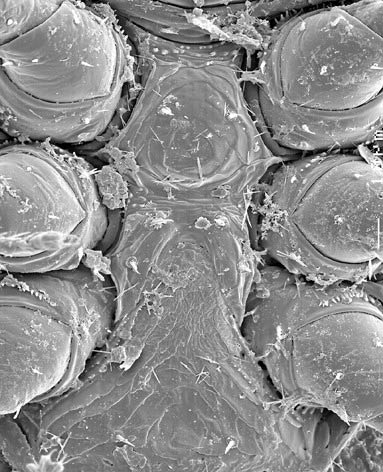
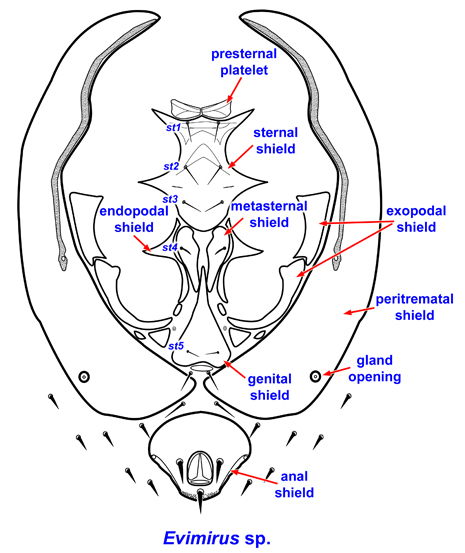
- Sternal setaesternal setae:
in Mesostigmata, the five pairs of setae in the intercoxal region designated st1-5; st1-3 are present in the larva and usually are borne on a sternal shield in the adult female; st4, the metasternal setae, are added in the deutonymph, often are borne on metasternal platelets, and sometimes on the sternal shield; st5, the genital setae, are added in the protonymph and usually borne on or are inserted laterad the epigynal shield in the adult female.
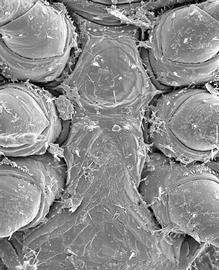
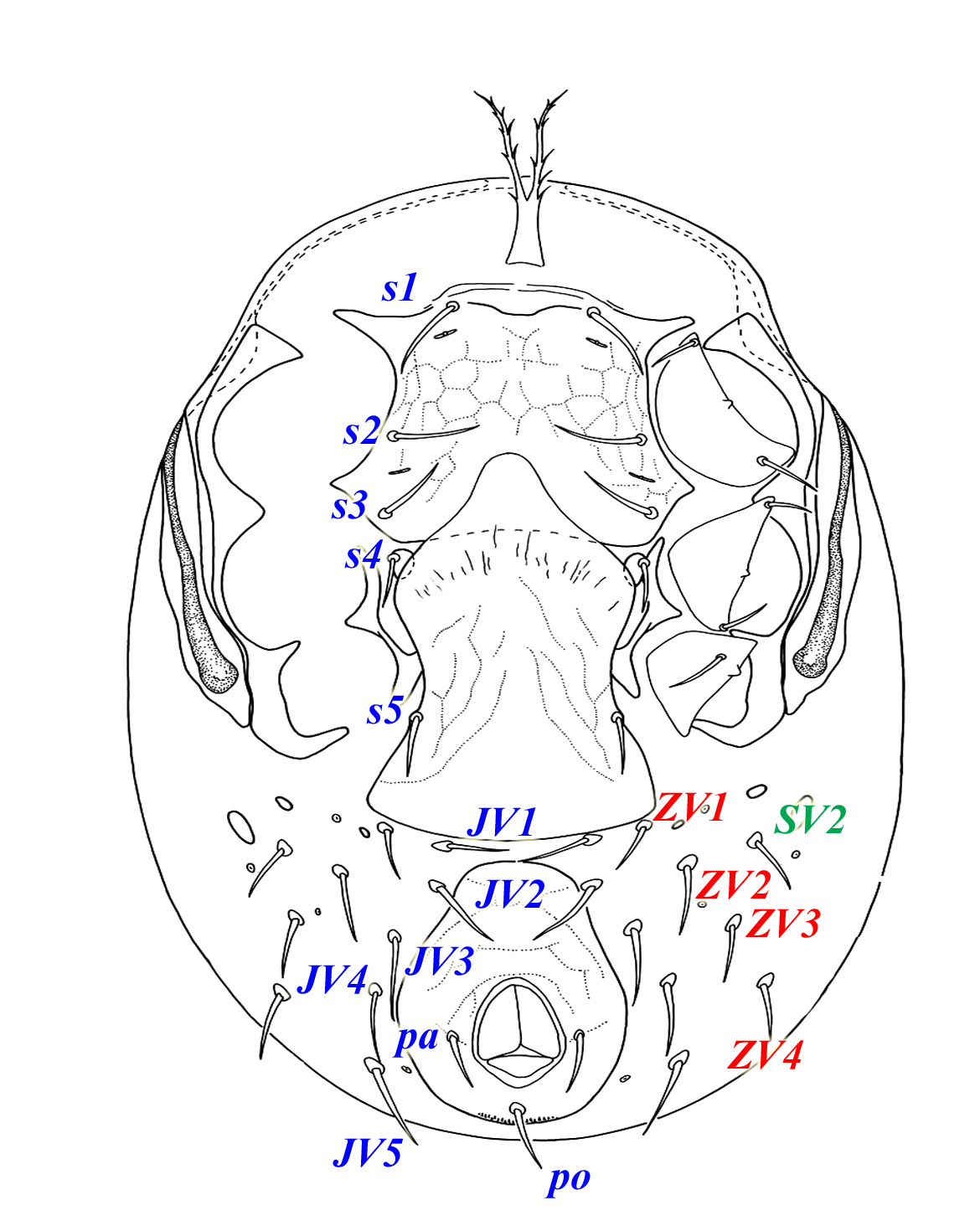 st1 in soft cuticle, st2 on sternal shieldsternal shield:
a shield in the anterior intercoxal region of parasitiform mites that bears one or more pairs of sternal setae.
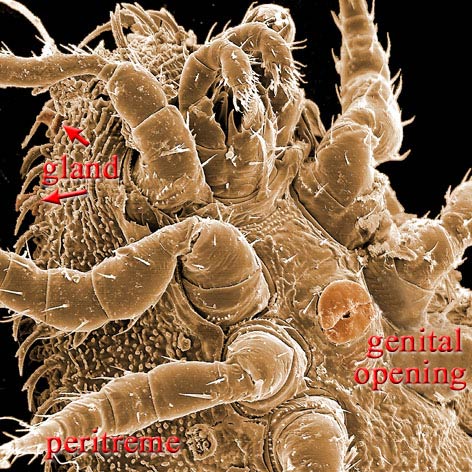
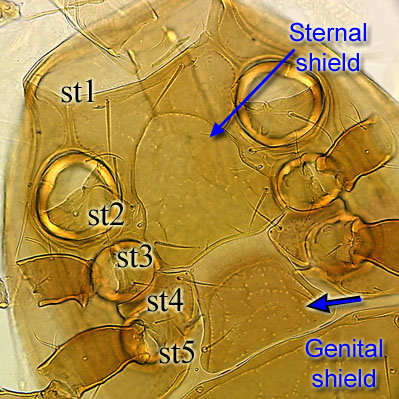 , st3 and/or st4 on metasternal shields, and st5 on triangular-trapezoidal genital shieldgenital shield:
a shield or shields covering the genital opening; in female mongynaspine Mesostigmata this shield is usually called the epigynal (epigynial) shield.
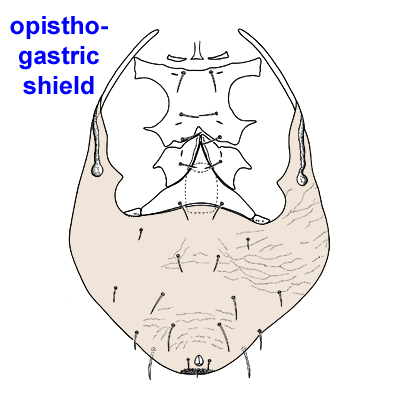
; remainder covered by a opisthogastric shieldopisthogastric shield:
in Mesostigmata, a shield that covers all of the venter behind legs IV including the anal region; a ventrianal shield that incorporates the metapodal and usually the exopodal elements (e.g., in Parasitidae).
 carrying stalkedstalked:
raised up or otherwise produced on a stalk.
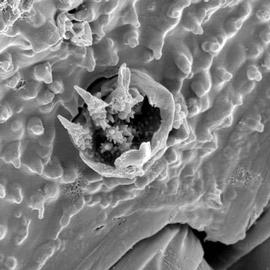
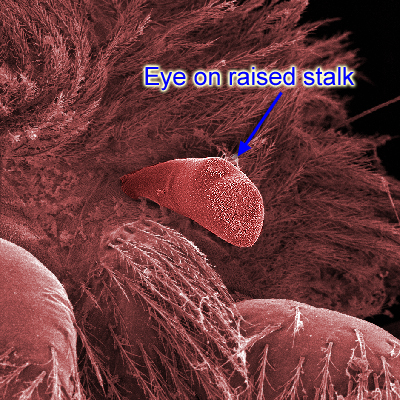 setae and nine pairs of spout-like glandgland:
usually referring to a glandular opening in the cuticle such as the lateral opisthonotal glands in the Sarcoptiformes or the idionotal glands in the Mesostigmata (see gdj etc. above), including hypertrophied openings that produce defensive secretions.
openings.
- Peritremes absent, stigmatal openings within raised, digitate structures laterally between coxae III–IV
- Dorsum of female with median shield composed of fused podonotalpodonotal:
relating to the dorsal podosoma, the region of the idiosoma over the legs.
and mesonotal elements; marginal plates narrow, fused anteriorly to median and circumventral shields; and three setose pygidial plates.
- Tectumgnathotectum:
(= epistome, tectum) an often membranous dorsal projection of the anterior margin of the basis capitulum in Mesostigmata; often diagnostic at family-, genus- or species-levels; also often difficult to see without high magnification and good optics.
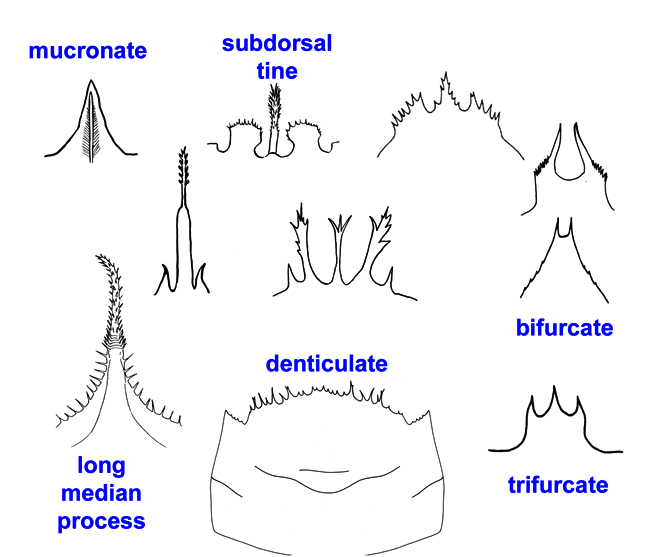 mucronate-denticulatedenticulate:
bearing small, sharp processes, e.g., the hypostome of ticks.
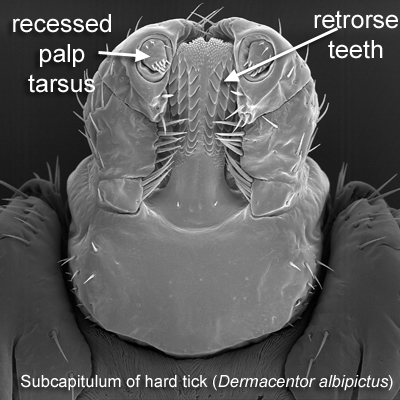
- Capitulumgnathosoma:
(= capitulum) the anteriormost part of a mite or ricinuleid, composed of the cheliceral and pedipalpal segments and separated from the body (idiosoma) by a ring of soft cuticle.
not visible from above
- Palp apotelepalptarsal apotele:
(= palp apotele, palptarsal claw) the most distal segment of the palp; absent in Acariformes, claw-like in Opilioacarida, and a subdistal, tined structure in the Mesostigmata.
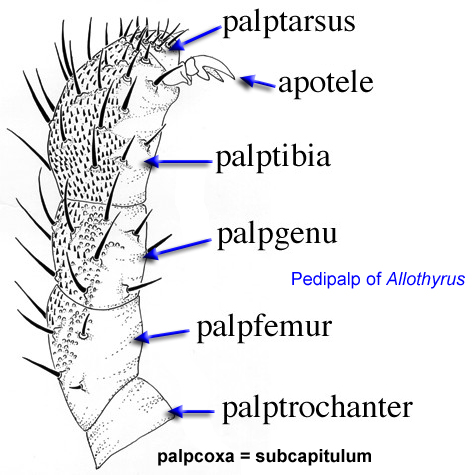 2-tined; chaetotaxychaetotaxy:
the use of setal position and form in taxonomy; see Lindquist-Evans system, Grandjean system, Rostral-lamellar system, etc.
of trochantertrochanter:
the leg segment between the coxa and the femur.
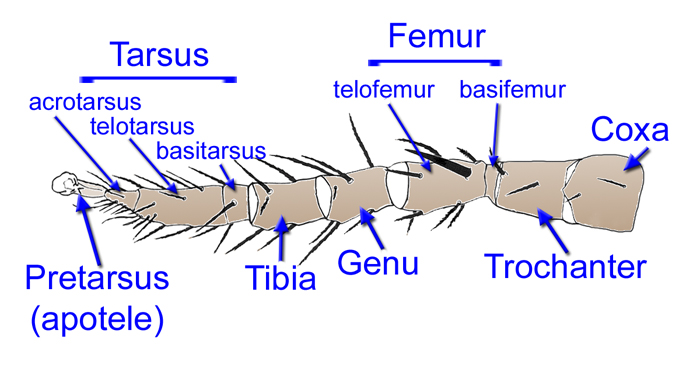 -femur-genu-tibiatibia:
(pl. tibiae) the leg segment between the genu and the tarsus.
2–5–6–14.
- Hypostomal setae 2–3 transversely arranged; small paralaciniaeparalaciniae:
a pair of small processes on the anterior margin of the subcapitulum.
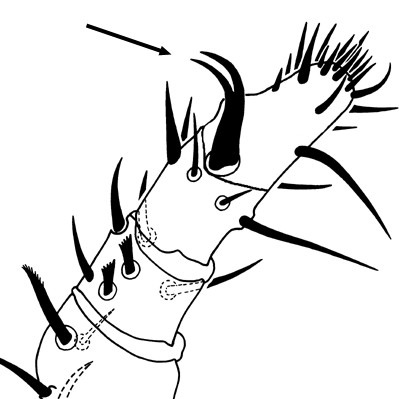
present. Tarsustarsus:
(pl. tarsi) the subdistal leg segment between the tibia and the pretarsus (apotele).
I without apoteleapotele:
(Greek apotelein = to complete)—the terminus of an appendage; the most distal leg segment, often consisting of an empodium and a pair of claws. The apotele of a leg is usually treated as equivalent to the pretarsus or some part thereof (e.g., the claws and empodium), but the palptarsal apotele in Mesostigmata is a tined structure originating at the base of the palptarsus and thought to be a remnant of the claws. The chelicerae are also an appendage and terminate in the movable digit.
 ; trochantertrochanter:
the leg segment between the coxa and the femur.
I with 6 setae.
- Male with sternal shieldsternal shield:
a shield in the anterior intercoxal region of parasitiform mites that bears one or more pairs of sternal setae.
carrying st2–st4 surrounding genital opening covered by two subequal plates; st5 on triangular region of circumventral plate behind coxae IV; with podonotalpodonotal:
relating to the dorsal podosoma, the region of the idiosoma over the legs.
, marginal, mesonotal, and three setose pygidial shields.
Similar taxa
The 8–9 pairs of large, spout-like glandgland:
usually referring to a glandular opening in the cuticle such as the lateral opisthonotal glands in the Sarcoptiformes or the idionotal glands in the Mesostigmata (see gdj etc. above), including hypertrophied openings that produce defensive secretions.
openings, the bifurcatebifurcate:
split into two distally or with two projections.
marginal setaeseta:
(pl. setae, from L. = bristle) cuticular process composed of a hollow shaft (sometimes filled with a refractive material) produced from a membranous socket (the alveolus); the hair-like, spine-like, branched or variously expanded structures on the surfaces of the legs and body. Most setae function as mechanoreceptors, but others (e.g., solenidia) are chemoreceptors or have unknown or ambiguous functions.
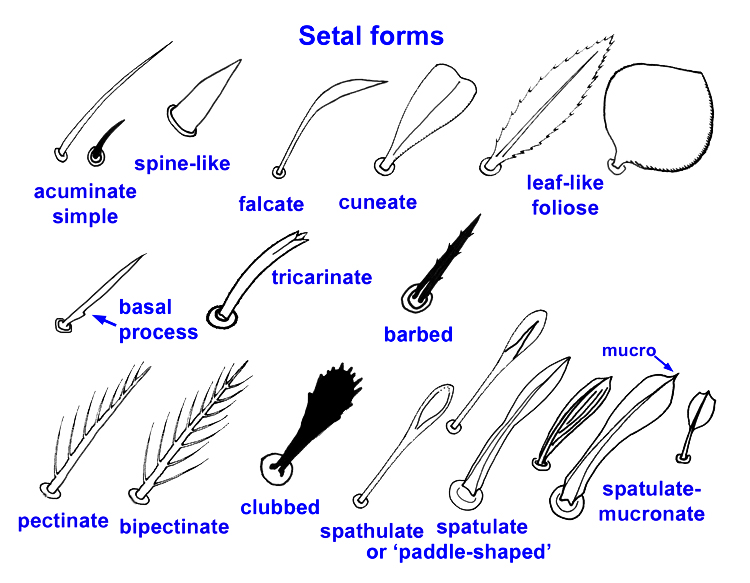 , and setose pygidial shields serve to distinguish Heatherellidae from other monogynaspids with fragmentedfragmented:
broken up, composed of several discrete parts rather than of a single unit.
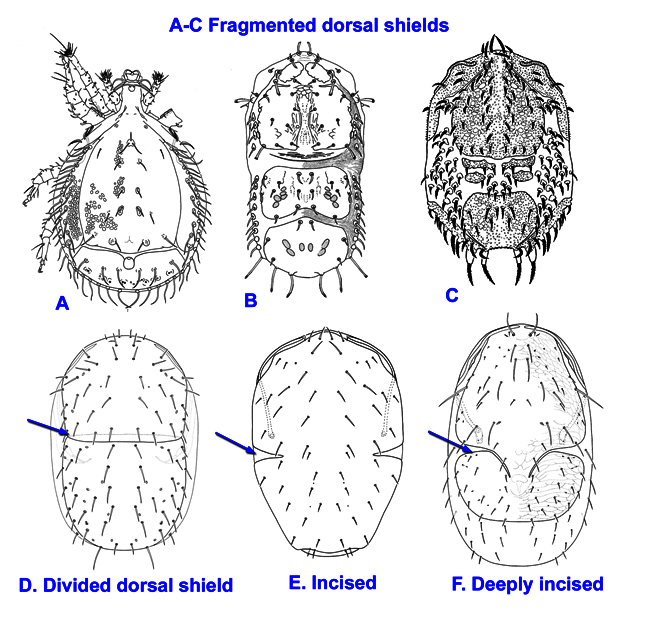 dorsal shields.
Ecology and distribution
Species of Heatherella occur in open to rainforest litter on the east coast of Australia at least from the Sydney region into central Queensland. Sperm is transferred directly to the female genital opening and they will feed on nematodes, but other aspects of their life history are unknown.
Known species
Heatherella acanthocharis Walter, 1997
Heatherella callimaulos Walter, 1997
Heatherella spp.
References
- Walter 1997aWalter 1997a:
Walter DE. 1997a. Heatherellidae - a new family of Mesostigmata (Acari: Parasitiformes) based on two new species from rainforest litter in Australia. International Journal of Acarology 23: 167-175.