test
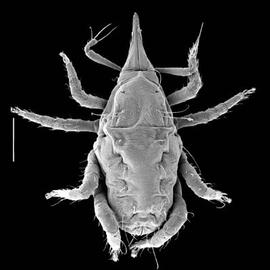
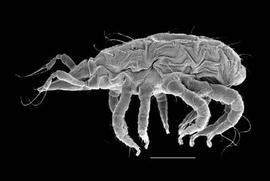
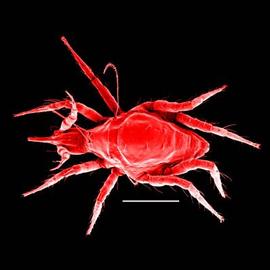
Eupodina Krantz, 1978Krantz, 1978:
Krantz GW. 1978. A manual of acarology [2nd ed.]. Oregon State University Book Stores, Corvallis.
Superorder Acariformes » Order Trombidiformes » Suborder Prostigmata » Infraorder Eupodina
superfamilies: Bdelloidea, Eupodoidea, Tydeoidea
snout mites, tydeids, iolinids, rhagidiids, eupodids, earth mites, pea mites, oat mites, winter grain mites, erynetids, slug mites, nasal mites, halacarids, gall mites, rust mites, erinose mites, eriophyids
very high
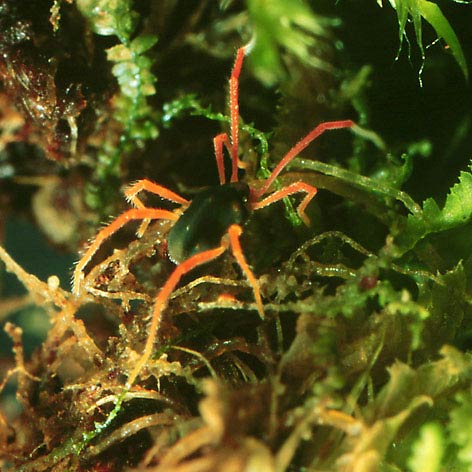
Very high. The Eriophyoidea contains many important pests of crops, including species that transmit plant diseases. The Eupodoidea contains the red-legged earth mites and their relatives (Pethalodidae). Erynetidae includes predators in soils, but also contains several subfamily of parasites, mostly in the nasal mucosa of birds, reptiles and amphibians, but some infest slugs. Tydeids are among the most common mites on vegetation and some species have made their way on to intercept lists, although there is little evidence that they harm crops. Some snout mites are used in biological control.
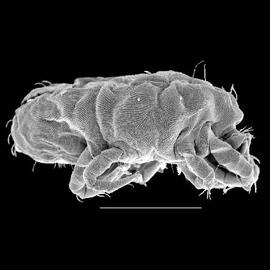
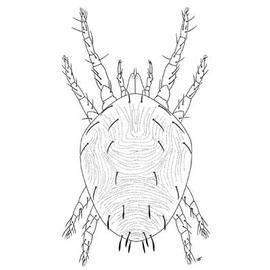
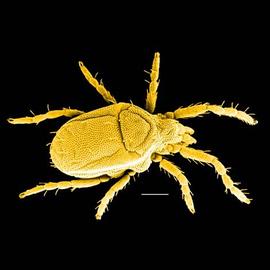
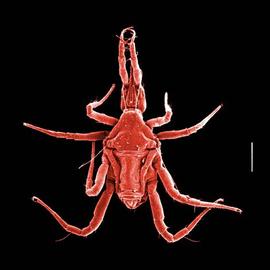
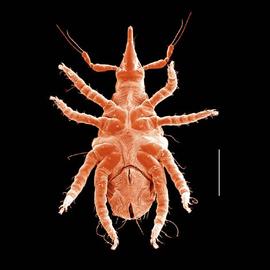
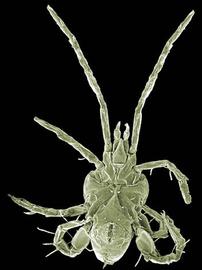
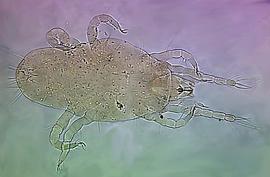
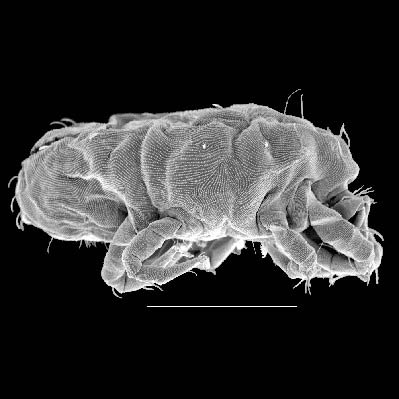
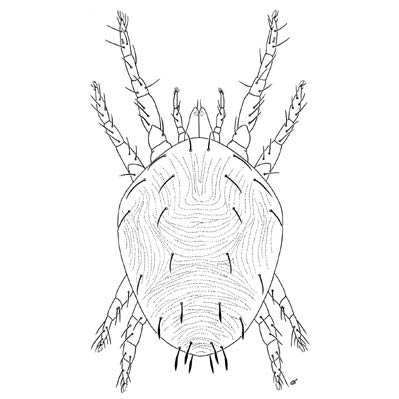
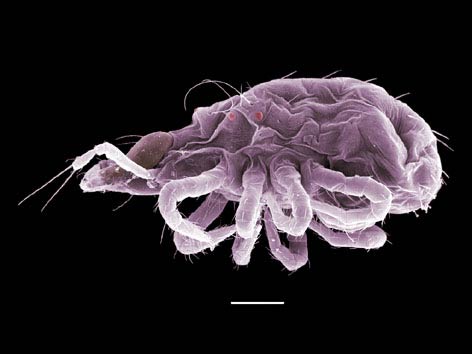
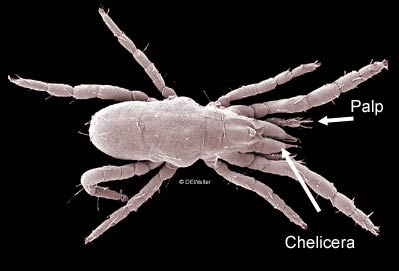
Minute to large; soft-bodied to well-sclerotized; bodybody:
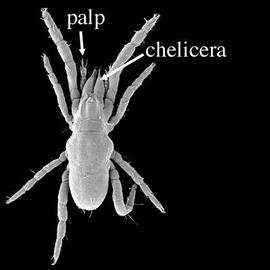
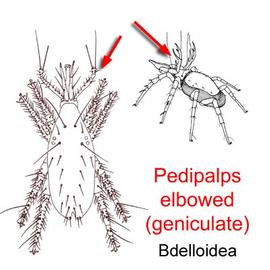
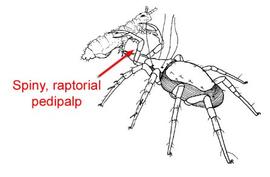
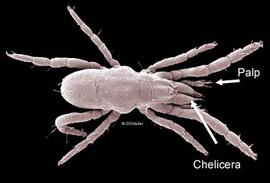
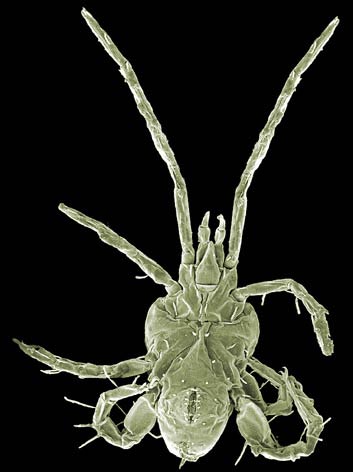
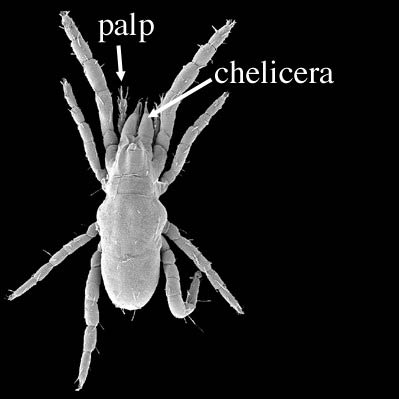
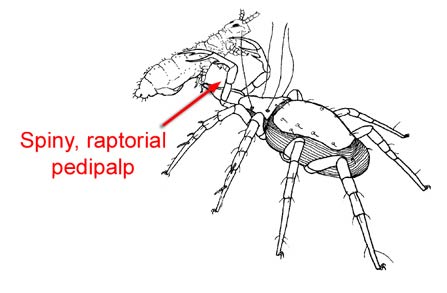
the idiosoma of mites.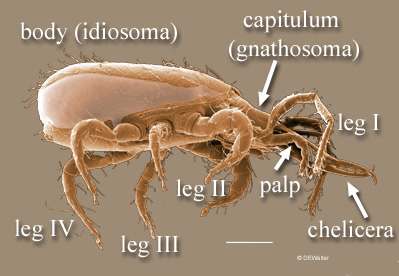 colour white, pink, yellow, green, or red. Palps 1–5 segmented, linear or raptorialraptorial:
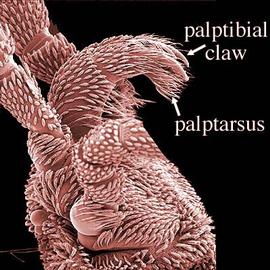
(Latin raptor = robber) modified for capturing prey; predatory. The pedipalps (e.g., many Cunaxidae) or legs I may be raptorial in mites.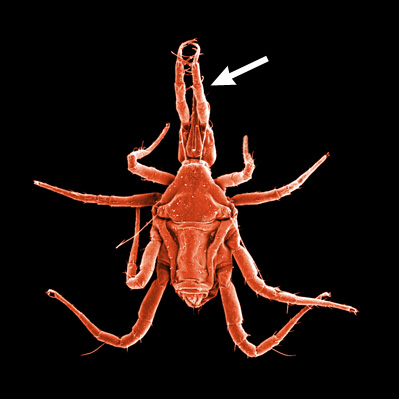 , lacking a thumb-clawthumb-claw:
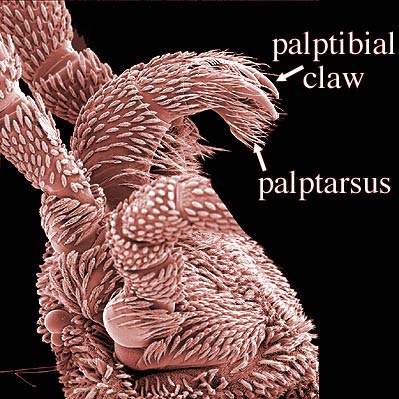
a hypertrophied, usually claw-like seta on the dorso-distal margin of the palptibia that forms a pincer with the palptarsus of some Prostigmata; the palp thumb-claw complex.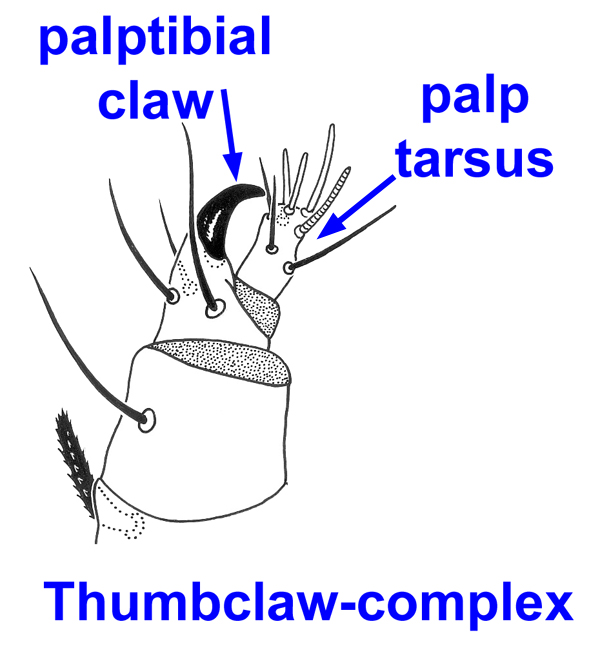 complex; cheliceralcheliceral:
of or pertaining to the chelicera.
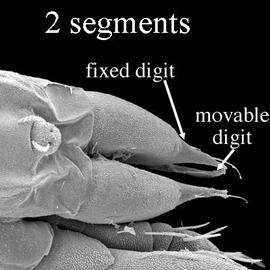
bases separate or adnate-fused; chelicerae range from strongly chelatechelate:
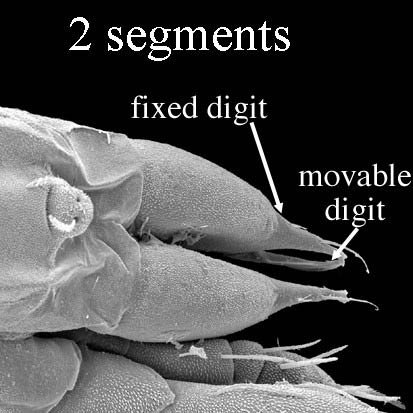
pincer-like, as in a crab's claws, a scorpion's pedipalps or many chelicerae; in water mites (Hydrachnida), chelate palps have a dorsal palptibial process opposed to a ventral movable palptarsus (opposed to uncate).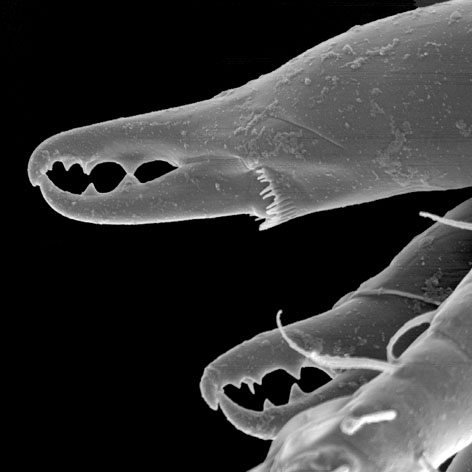 in Rhagidiidae to hooklike or styletiform in most taxa; capitulumgnathosoma:
(= capitulum) the anteriormost part of a mite or ricinuleid, composed of the cheliceral and pedipalpal segments and separated from the body (idiosoma) by a ring of soft cuticle.
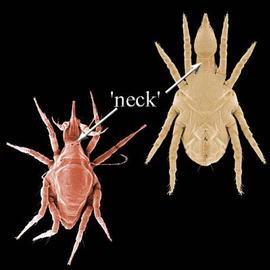
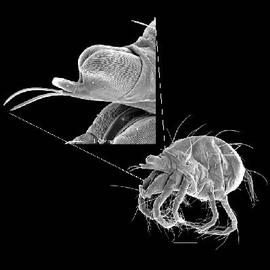
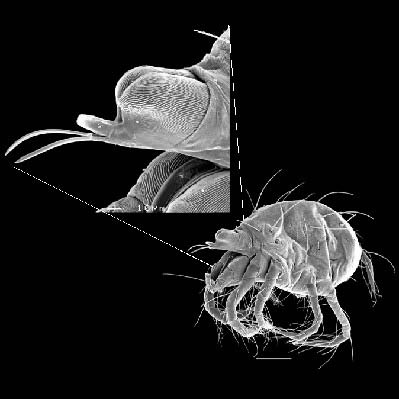
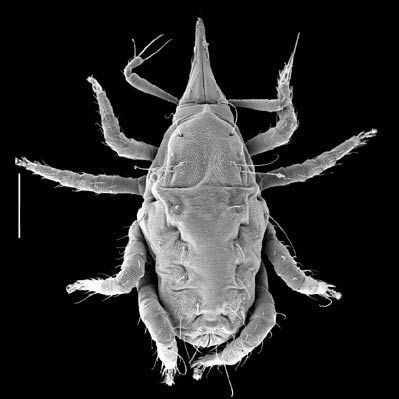
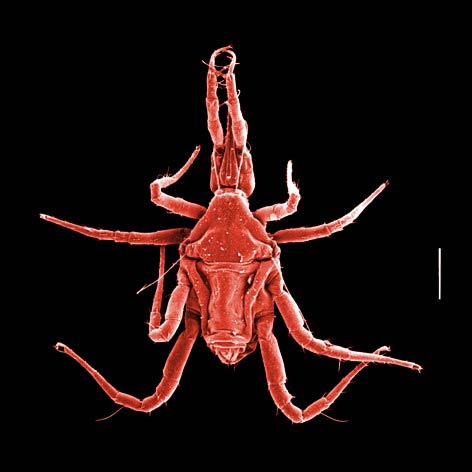
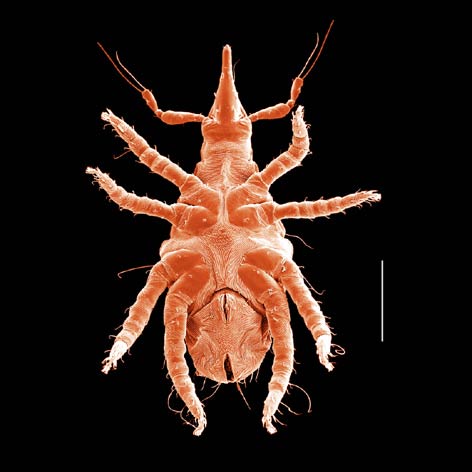
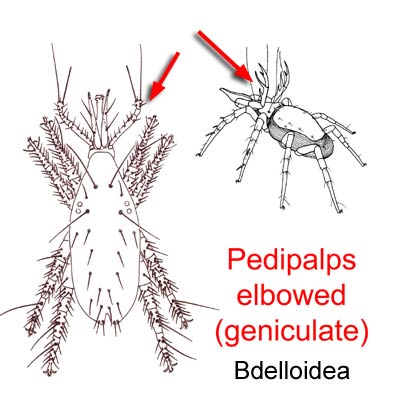
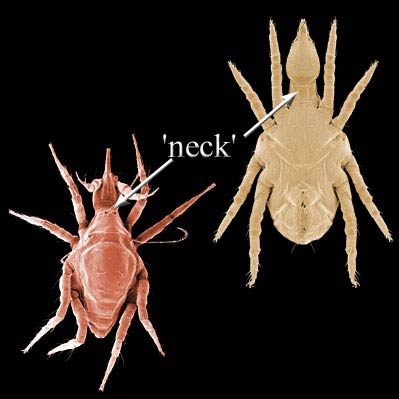
snout-like in Bdelloidea. Usually with one or two pairs of prodorsal trichobothriatrichobothrium:
(pl. trichobothria) (= bothridial sensillum) an often elaborately modified seta set in a cup-like base; forms include filiform, ciliate, pectinate or variously thickened or clubbed (bat-like to globose or capitate).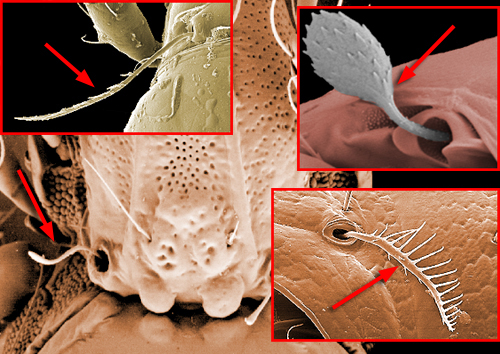 (absent in Eriophyoidea); peritremes absent; naso present or absent; lateral eyes present or absent. Bodybody:
the idiosoma of mites. setation ranges from scanty to hypertrichous; genital papillaegenital papillae:
1-3 pairs of extrusible finger-like to button-like projections, usually retracted into in the genital vestibule of acariform mites; sometimes formed as sessile disks around the genital opening; thought to be osmoregulatory structures; modified or multiplied and dispersed over the body in many freshwater mites. Genital papillae are absent in the larva, but may be added ontogenetically: protonymphs have one pair, deutonymphs two pairs, and tritonymphs (and adults) three pairs. The tritonymphal pair of papillae is often lost. The serially homologous Claparède's organ is usually present in the larvae (and prelarvae) of mites exhibiting genital papillae in nymphs and adults (Oudeman's Rule).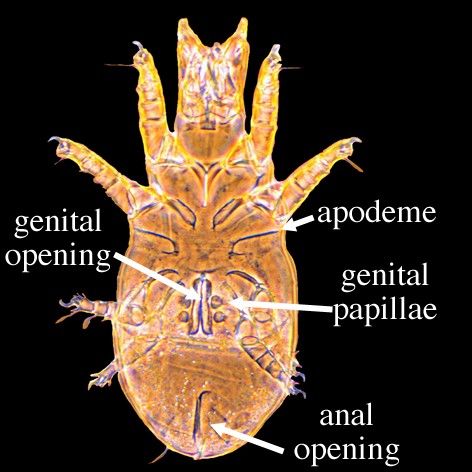 usually present but often reduced in size or number. Legs I often long and antenniformantenniform:
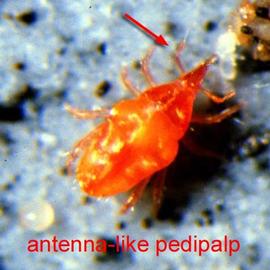
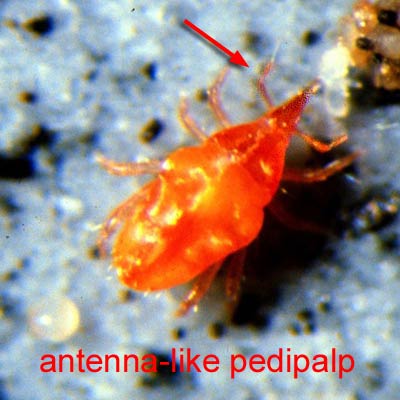
having the form of antennae, typically used for long slender legs I that often lack the apotele, or for palps that resemble antennae (e.g., Bdellidae).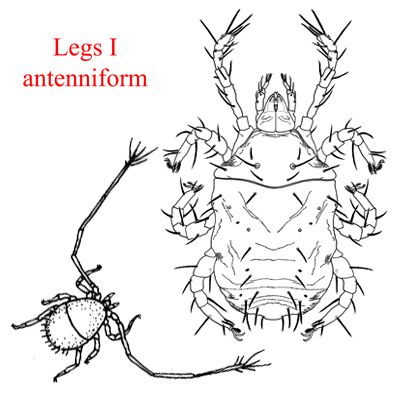 . Males sometimes with sclerotized internal ejaculatory apparatus.
Anystina usually have a thumbclaw complex, as do Raphignathina (which lack prodorsal trichobothriatrichobothrium:
(pl. trichobothria) (= bothridial sensillum) an often elaborately modified seta set in a cup-like base; forms include filiform, ciliate, pectinate or variously thickened or clubbed (bat-like to globose or capitate).). Whip-like cheliceralcheliceral:
of or pertaining to the chelicera.
digits are found only in Raphignathina.
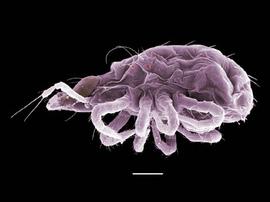
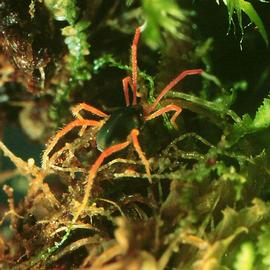
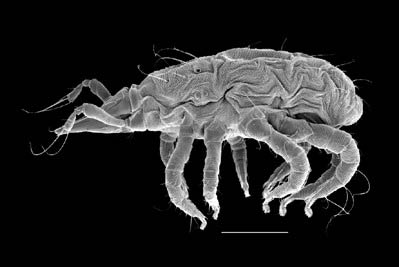
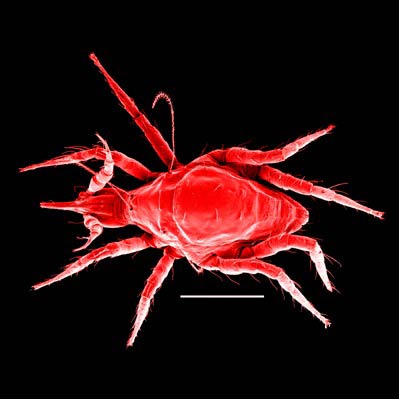
Bdelloids (snout mites) are common inhabitants of forest and grassland soils, and are also frequently collected on foliage. They are cruising or ambush predators of small arthropods. Eupodoid mites range from the large rainforest-dwelling epigaeic Eriorhynchidae to minute eupodids and rhagidiids deep in soil. Feeding habits for most taxa are unknown. The majority appear to be predators or fungivores, but some are plant parasites; members of the eupodoid family Penthaleidae (red-legged earth mites) are among Australia’s worst pasture pests. Halacaroidea are entirely aquatic and can be identified to family using Proctor et al. (1998)Proctor et al. (1998):
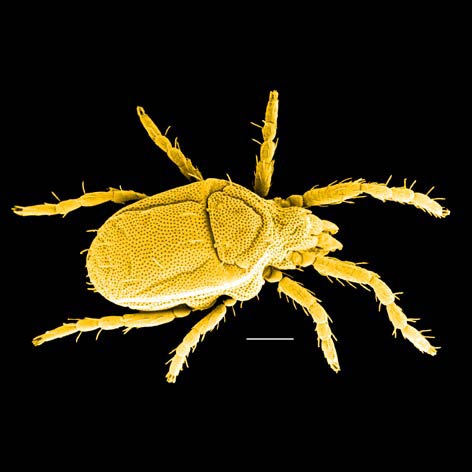
Proctor HC, Harvey M, Walter D, and Mckie B. 1998. Key to freshwater arachnids (spiders and mites) of Australia [Lucid multimedia key]. In: An Interactive Guide to Australian Aquatic Invertebrates (Windows ed. 2). CSIRO Publishing, Collingwood. (Original work published on CD-ROM). The Tydeoidea include parasites of vertebrates and invertebrates as well as free-living predators and fungivores. Members of the Tydeidae are common in soil and on foliage. The Eriophyoidea (gall and rust mitesrust mite:
leaf vagrant forms of the Eriophyoidea whose feeding causes a russet coloration on leaves.
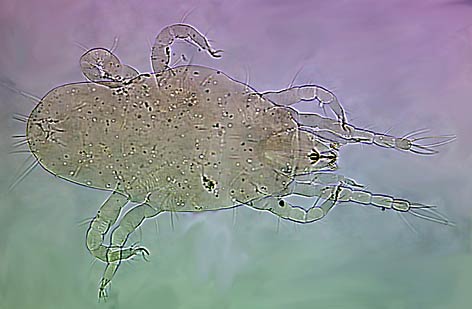
) are tiny vermiform animals with only two pairs of legs as adults. All species are parasites of vascular plants and are unlikely to show up in soil collections, with the possible exception of those associated with grasses.
Author: David E. Walter
Content last updated Sept. 2006, unless indicated otherwise
Lucid key player updated Sept. 2025
idtools.org