test
Astigmata Canestrini, 1891
Superorder Acariformes » Order Sarcoptiformes » Suborder Oribatida » Infraorder Desmonomata » Hyporder Astigmata
hypopushypopus:
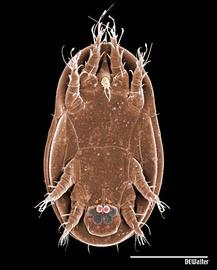
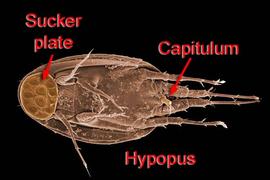
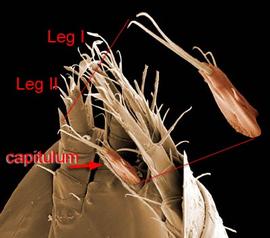
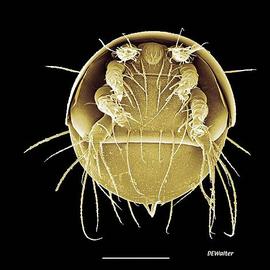
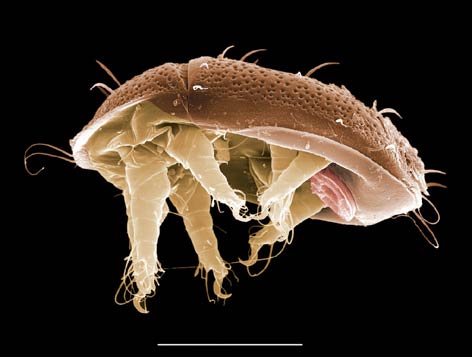
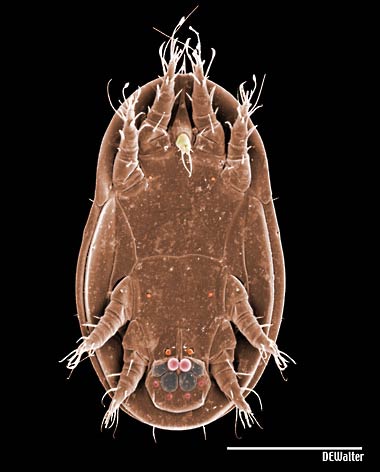
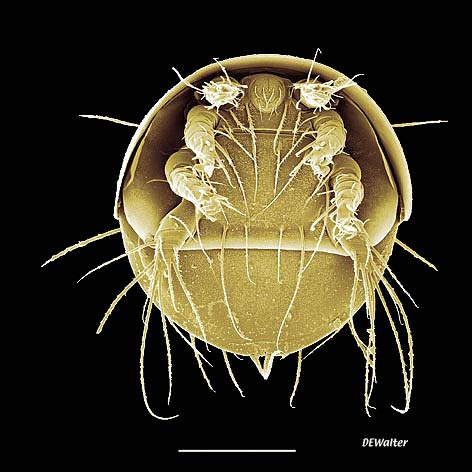
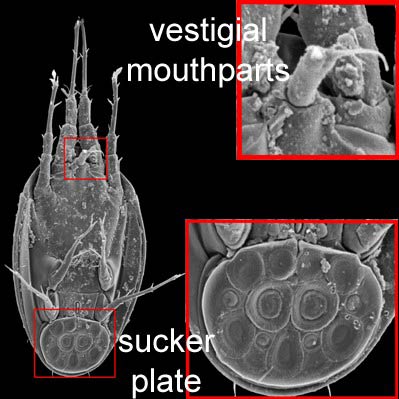
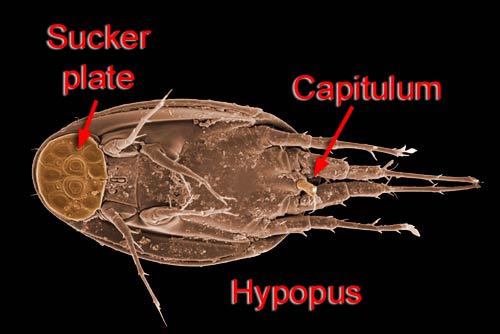
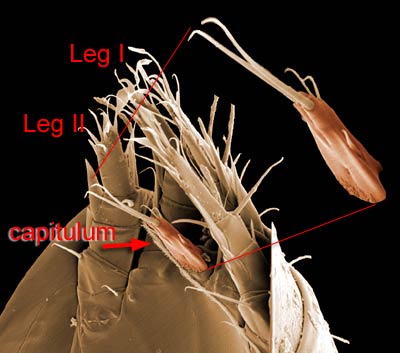
(pl. hypopi) (also hypopode) the heteromorphic deutonymph produced by many astigmatans, usually as a stage that is phoretic on insects and having a large ventral sucker plate. Hypopi lack functional mouthparts and the capitulum is reduced to a small nub bearing a pair of processes, but some appear to feed by absorbing fluids through their cuticles.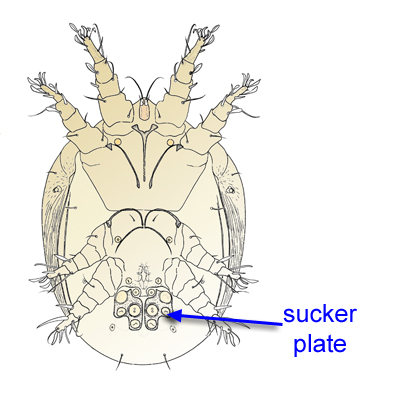 (hypopihypopus:
(pl. hypopi) (also hypopode) the heteromorphic deutonymph produced by many astigmatans, usually as a stage that is phoretic on insects and having a large ventral sucker plate. Hypopi lack functional mouthparts and the capitulum is reduced to a small nub bearing a pair of processes, but some appear to feed by absorbing fluids through their cuticles.), hypopodehypopus:
(pl. hypopi) (also hypopode) the heteromorphic deutonymph produced by many astigmatans, usually as a stage that is phoretic on insects and having a large ventral sucker plate. Hypopi lack functional mouthparts and the capitulum is reduced to a small nub bearing a pair of processes, but some appear to feed by absorbing fluids through their cuticles.
high
Many Astigmatina of quarantine importance have a specialized dispersal stagestage:
a distinct developmental form, e.g., the egg, larval, nymphal and adult stages. Since mite instars are usually morphologically distinct, they are also stages (and see stase). Some authors, however, insist that instar should be apolysis to apolysis and stage ecdysis to ecdysis. Since apolysis can be a discontinuous process and, in any case, is difficult to determine, in practice the difference between a stage and an instar is abstract and of importance only if you have a contentious referee.
, the heteromorphicheteromorphic:
having different morphological forms; referring either to different forms within a particular life stage (e.g., normal and heteromorphic deutonymphs in some Mesostigmata; protogynes vs. deutogynes in Eriophyoidea; heteromorphic vs. homeomorphic males in the Astigmata) or to a developmental stage that differs radically from other stages (e.g., the heteromorphic deutonymph or hypopus in the Astigmata).
deutonymph, that lacks functional mouthparts, has a closed gut and reduced capitulumgnathosoma:
(= capitulum) the anteriormost part of a mite or ricinuleid, composed of the cheliceral and pedipalpal segments and separated from the body (idiosoma) by a ring of soft cuticle.
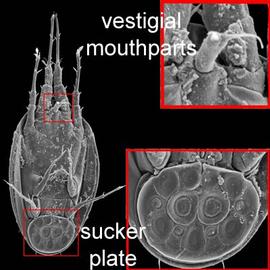
, and usually a sucker platesucker plate:
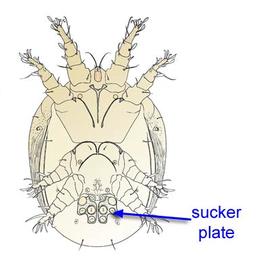
an array of modified setae in the anal region of the heteromorphic deutonymphs (hypopi) of Astigmatina.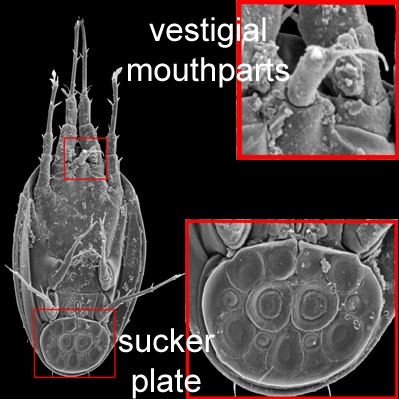 (or pair of claspers) for attaching to an arthropod (or vertebrate); a few are able to enter the pores in vertebrate skin.
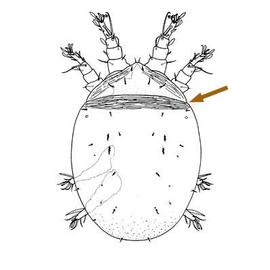
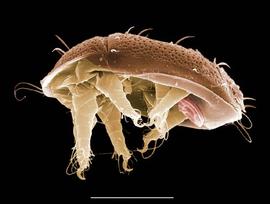
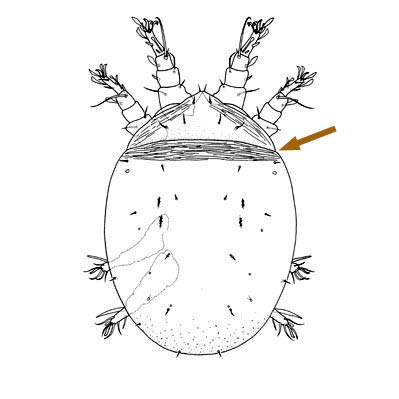
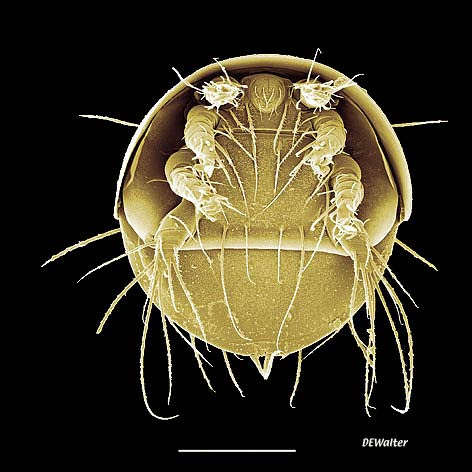
Beige, pinkish to dark brown; hemisphericalhemispherical:
roughly half a sphere; used to describe the habitus of some mites.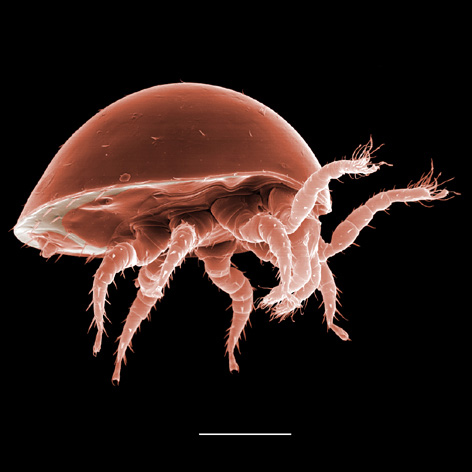 to flattened, usually oval in outline, well sclerotized, with distinct sejugal suture. Prodorsal trichobothriatrichobothrium:
(pl. trichobothria) (= bothridial sensillum) an often elaborately modified seta set in a cup-like base; forms include filiform, ciliate, pectinate or variously thickened or clubbed (bat-like to globose or capitate).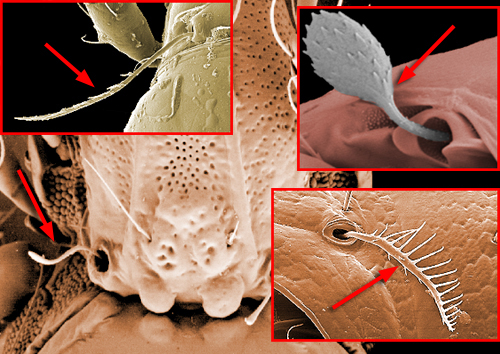 and pteromorphs absent. Capitulumgnathosoma:
(= capitulum) the anteriormost part of a mite or ricinuleid, composed of the cheliceral and pedipalpal segments and separated from the body (idiosoma) by a ring of soft cuticle.
tubular to button-like, without functional mouthparts; palps reduced to setiform appendages. Venterventer:
the lower or under side; opposed to dorsum.
usually with well developed sucker plate.
Heterostigmata (Prostigmata) often attach to arthropods and could be confused with astigmatan hypopihypopus:
(pl. hypopi) (also hypopode) the heteromorphic deutonymph produced by many astigmatans, usually as a stage that is phoretic on insects and having a large ventral sucker plate. Hypopi lack functional mouthparts and the capitulum is reduced to a small nub bearing a pair of processes, but some appear to feed by absorbing fluids through their cuticles., especially Scutacaridae, but the latter lack the sucker platesucker plate:
an array of modified setae in the anal region of the heteromorphic deutonymphs (hypopi) of Astigmatina. and have a well-developed gnathosomal capsule.
Hypopihypopus:
(pl. hypopi) (also hypopode) the heteromorphic deutonymph produced by many astigmatans, usually as a stage that is phoretic on insects and having a large ventral sucker plate. Hypopi lack functional mouthparts and the capitulum is reduced to a small nub bearing a pair of processes, but some appear to feed by absorbing fluids through their cuticles. (singular hypopushypopus:
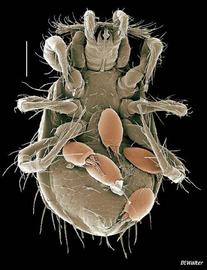
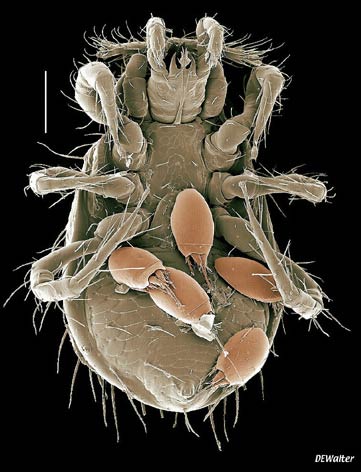
(pl. hypopi) (also hypopode) the heteromorphic deutonymph produced by many astigmatans, usually as a stage that is phoretic on insects and having a large ventral sucker plate. Hypopi lack functional mouthparts and the capitulum is reduced to a small nub bearing a pair of processes, but some appear to feed by absorbing fluids through their cuticles.) are deutonymphs that act as special dispersal morphs of some astigmatans. Because they do not look like other stages, they are called heteromorphicheteromorphic:
having different morphological forms; referring either to different forms within a particular life stage (e.g., normal and heteromorphic deutonymphs in some Mesostigmata; protogynes vs. deutogynes in Eriophyoidea; heteromorphic vs. homeomorphic males in the Astigmata) or to a developmental stage that differs radically from other stages (e.g., the heteromorphic deutonymph or hypopus in the Astigmata).
deutonymphs. Another term used for this stagestage:
a distinct developmental form, e.g., the egg, larval, nymphal and adult stages. Since mite instars are usually morphologically distinct, they are also stages (and see stase). Some authors, however, insist that instar should be apolysis to apolysis and stage ecdysis to ecdysis. Since apolysis can be a discontinuous process and, in any case, is difficult to determine, in practice the difference between a stage and an instar is abstract and of importance only if you have a contentious referee.
by some authors is hypopodehypopus:
(pl. hypopi) (also hypopode) the heteromorphic deutonymph produced by many astigmatans, usually as a stage that is phoretic on insects and having a large ventral sucker plate. Hypopi lack functional mouthparts and the capitulum is reduced to a small nub bearing a pair of processes, but some appear to feed by absorbing fluids through their cuticles..
Hypopihypopus:
(pl. hypopi) (also hypopode) the heteromorphic deutonymph produced by many astigmatans, usually as a stage that is phoretic on insects and having a large ventral sucker plate. Hypopi lack functional mouthparts and the capitulum is reduced to a small nub bearing a pair of processes, but some appear to feed by absorbing fluids through their cuticles. usually do not feed and hence have no mouthparts or anal opening. The capitulumgnathosoma:
(= capitulum) the anteriormost part of a mite or ricinuleid, composed of the cheliceral and pedipalpal segments and separated from the body (idiosoma) by a ring of soft cuticle.
is reduced to a small tubular or button-like structure, often with a few setaseta:
(pl. setae, from L. = bristle) cuticular process composed of a hollow shaft (sometimes filled with a refractive material) produced from a membranous socket (the alveolus); the hair-like, spine-like, branched or variously expanded structures on the surfaces of the legs and body. Most setae function as mechanoreceptors, but others (e.g., solenidia) are chemoreceptors or have unknown or ambiguous functions.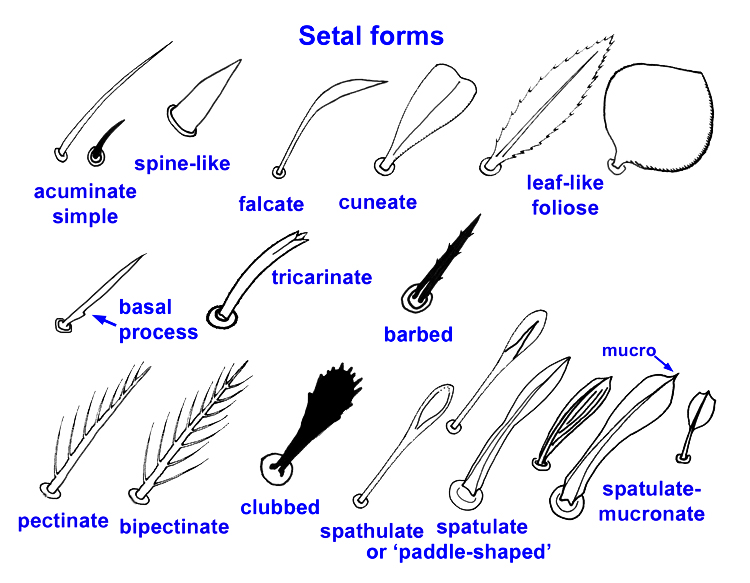 -like processes (true setaeseta:
(pl. setae, from L. = bristle) cuticular process composed of a hollow shaft (sometimes filled with a refractive material) produced from a membranous socket (the alveolus); the hair-like, spine-like, branched or variously expanded structures on the surfaces of the legs and body. Most setae function as mechanoreceptors, but others (e.g., solenidia) are chemoreceptors or have unknown or ambiguous functions. and the remnants of the palps). In a few cases, e.g., some endodermal parasites of vertebrates, the hypopihypopus:
(pl. hypopi) (also hypopode) the heteromorphic deutonymph produced by many astigmatans, usually as a stage that is phoretic on insects and having a large ventral sucker plate. Hypopi lack functional mouthparts and the capitulum is reduced to a small nub bearing a pair of processes, but some appear to feed by absorbing fluids through their cuticles. absorb nutrients through their skin. Most hypopihypopus:
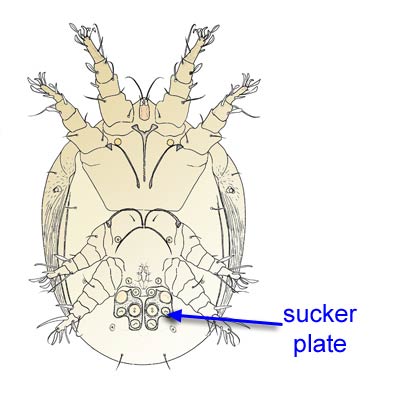
(pl. hypopi) (also hypopode) the heteromorphic deutonymph produced by many astigmatans, usually as a stage that is phoretic on insects and having a large ventral sucker plate. Hypopi lack functional mouthparts and the capitulum is reduced to a small nub bearing a pair of processes, but some appear to feed by absorbing fluids through their cuticles. disperse by attaching to an insect or other arthropod (rarely lizards) using a complex sucker platesucker plate:
an array of modified setae in the anal region of the heteromorphic deutonymphs (hypopi) of Astigmatina. near the rear of the venterventer:
the lower or under side; opposed to dorsum.
. This sucker platesucker plate:
an array of modified setae in the anal region of the heteromorphic deutonymphs (hypopi) of Astigmatina. is highly distinctive—if you see it you know that you have some kind of hypopal astigmatanastigmatan:
a member of the Astigmata; characteristic of or belonging to the Astigmata.
. Formation of the hypopal stagestage:
a distinct developmental form, e.g., the egg, larval, nymphal and adult stages. Since mite instars are usually morphologically distinct, they are also stages (and see stase). Some authors, however, insist that instar should be apolysis to apolysis and stage ecdysis to ecdysis. Since apolysis can be a discontinuous process and, in any case, is difficult to determine, in practice the difference between a stage and an instar is abstract and of importance only if you have a contentious referee.
is usually facultative in response to deteriorating environmental conditions. Most vertebrate parasites and some common stored product astigmatans have completely lost the ability to form hypopihypopus:
(pl. hypopi) (also hypopode) the heteromorphic deutonymph produced by many astigmatans, usually as a stage that is phoretic on insects and having a large ventral sucker plate. Hypopi lack functional mouthparts and the capitulum is reduced to a small nub bearing a pair of processes, but some appear to feed by absorbing fluids through their cuticles. (e.g., species of Tyrophagus).
Author: David E. Walter
Content last updated Sept. 2006, unless indicated otherwise
Lucid key player updated Sept. 2025
idtools.org