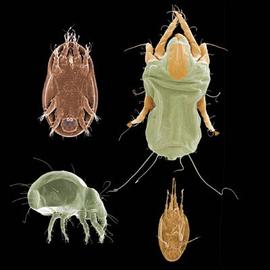
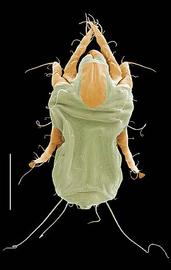
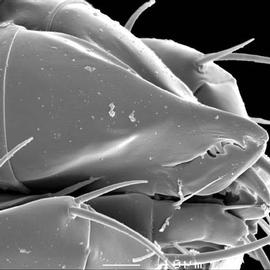
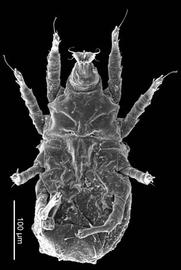
test
Astigmata Canestrini, 1891
Superorder Acariformes » Order Sarcoptiformes » Suborder Oribatida » Infraorder Desmonomata » Hyporder Astigmata
acarids, astigmatids, dust mites, tyroglyphids, cheese mites, grain mites, fur mites, feather mites, mange mites, scab mites, scabies, scaly leg mites, grocer's itch, lemon-scented mites
high
The AstigmatinaAstigmatina:
An alternative name for the hyporder Astigmata. While sometimes referred to as a "cohort," a term traditionally denoting a taxonomic rank between a class and an order, Astigmata represents a lineage between the ranks of order and family.
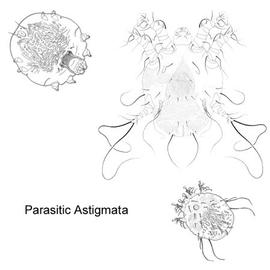
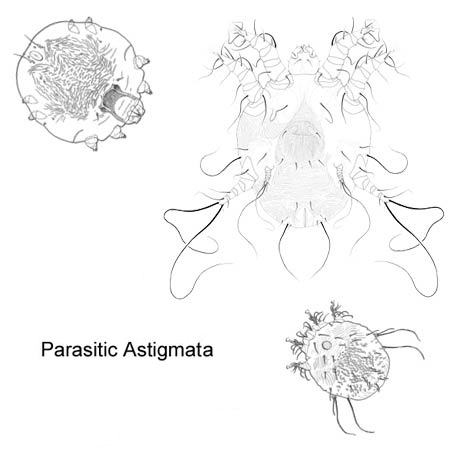
contains many species of concern that are pests in homes (house dust, furniture, food) and stored products. These products are directly damaged by mite feeding and indirectly by the dispersal of microbial propagules. Additionally, astigmatans are major sources of allergens and significant contributors to asthma and other allergic reactions. Astigmatans are also significant parasites of vertebrates, including species that cause mange in livestock, pets and wildlife. Scabies is a significant disease in people and sarcoptic mange a major problem with livestock, pets and wildlife. Insects, especially those that build nests or inhabit logs, have a host of astigmatanastigmatan:
a member of the Astigmata; characteristic of or belonging to the Astigmata.
associates that may be significant if found on insects imported as biocontrol agents, pets, or pollinating agents. A few species of Acaridae are minor pests of seedling crops, and one genus, Heimsarcoptes, contains useful predators of scale insects.
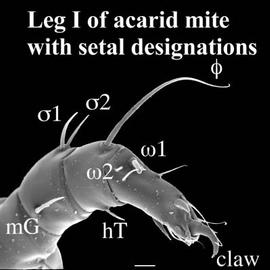
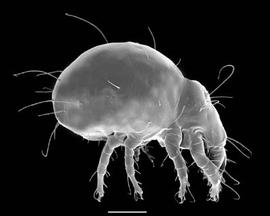
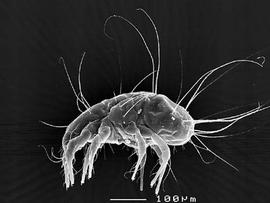
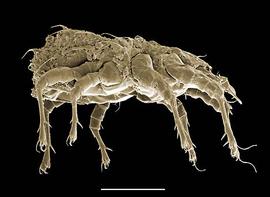
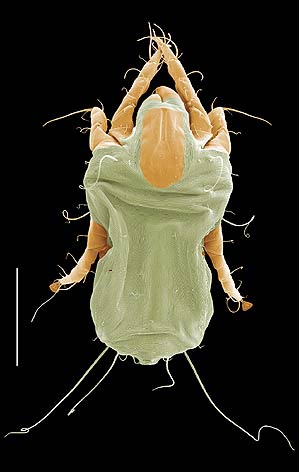
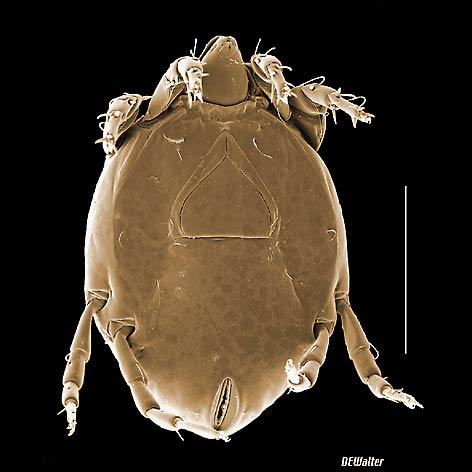
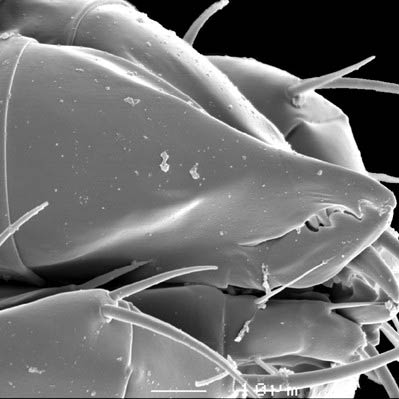
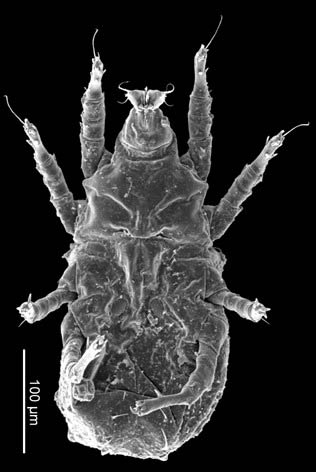
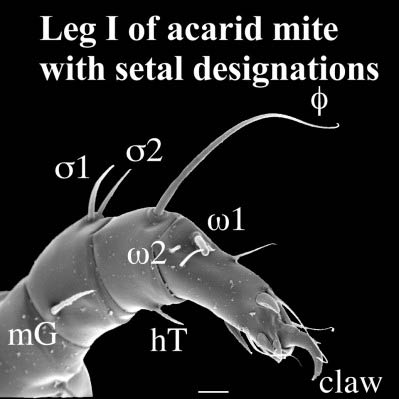
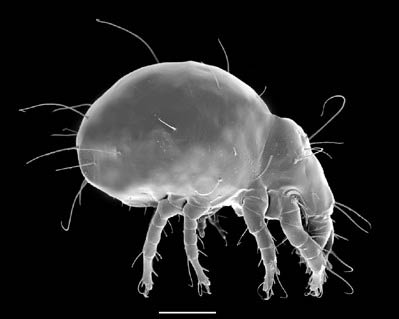
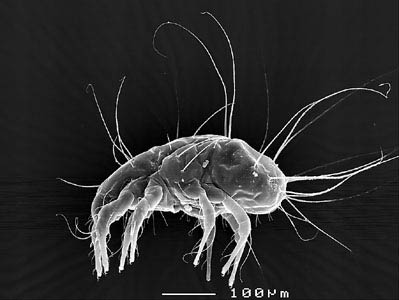
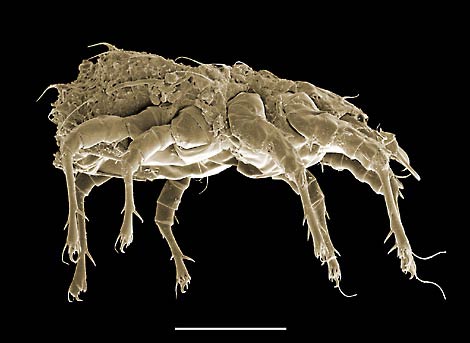
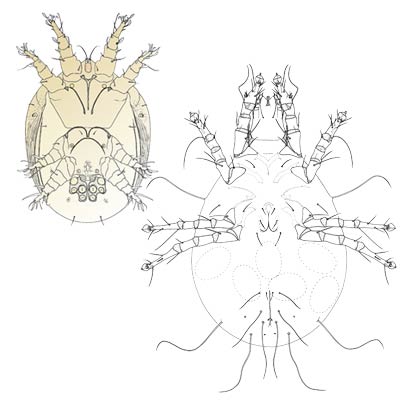
Very small (0.15 mm long) to large (2 mm) mites without stigmatal openings or peritremes; gnathosomagnathosoma:
(= capitulum) the anteriormost part of a mite or ricinuleid, composed of the cheliceral and pedipalpal segments and separated from the body (idiosoma) by a ring of soft cuticle.
usually exposed, cheliceralcheliceral:
of or pertaining to the chelicera.
bases not covered by sclerotized ring; palps with 1–2 free segments, without palp apotelepalptarsal apotele:
(= palp apotele, palptarsal claw) the most distal segment of the palp; absent in Acariformes, claw-like in Opilioacarida, and a subdistal, tined structure in the Mesostigmata.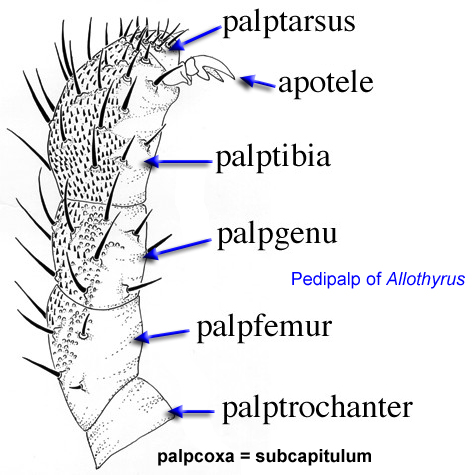 ; subcapitulumsubcapitulum:
(also infracapitulum) the venter of the capitulum; the ventral faces of the fused palpcoxae; apparently formed independently in the two superorders of mites.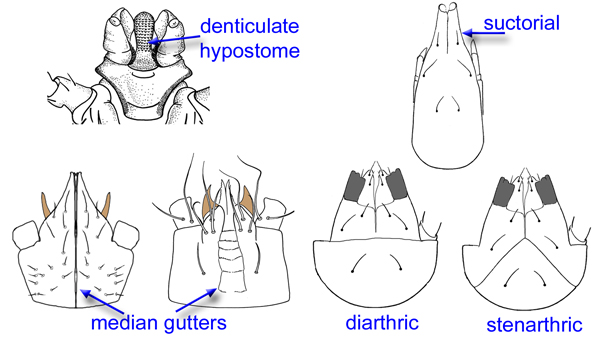 without median groove, rutellarutellum:
(pl. rutella) In Sarcoptiformes, the hypertrophied setae on the hypostome, often toothed; not to be confused with a corniculus (although possibly a homologue). In Astigmata, the rutellum may be referred to as a pseudorutellum, although it is the same structure. Various forms of rutella are recognized, including the atelebasic and pantelebasic.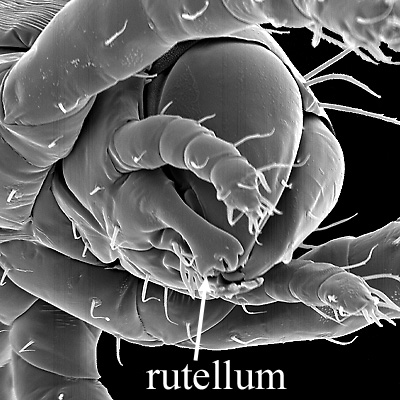 (pseudorutella) chisel-like to obscure; tritosternumtritosternum:
the sternum of the 3rd body segment (between legs I); produced as a biflagellate structure in Mesostigmata, although sometimes the flagellae (laciniae) are partially or completely fused. 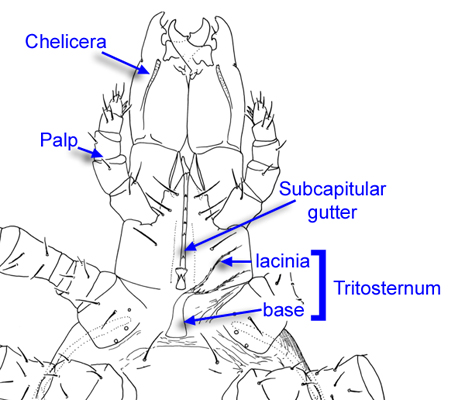 absent; coxae fused to bodybody:
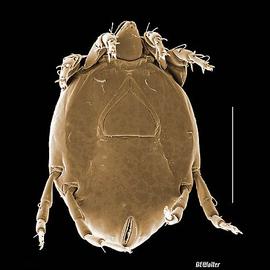
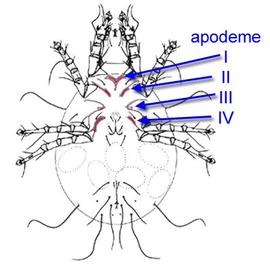
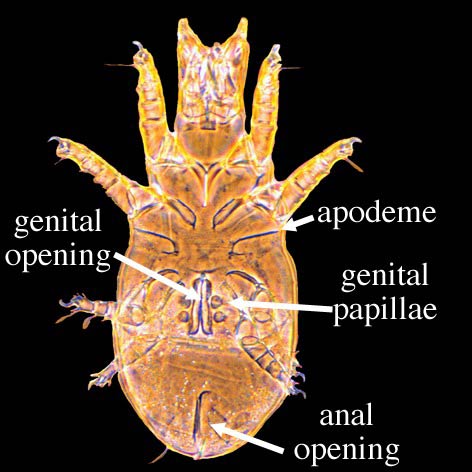
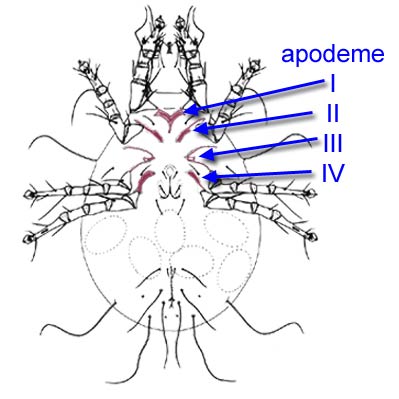
the idiosoma of mites.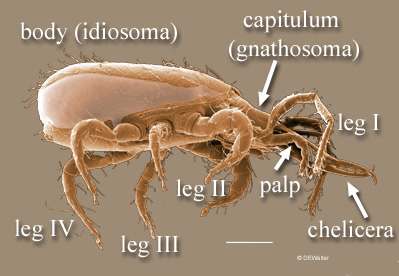 and reduced to internal sclerotized elements (apodemes); chelicerae 2-segmented; without prodorsal trichobothriatrichobothrium:
(pl. trichobothria) (= bothridial sensillum) an often elaborately modified seta set in a cup-like base; forms include filiform, ciliate, pectinate or variously thickened or clubbed (bat-like to globose or capitate).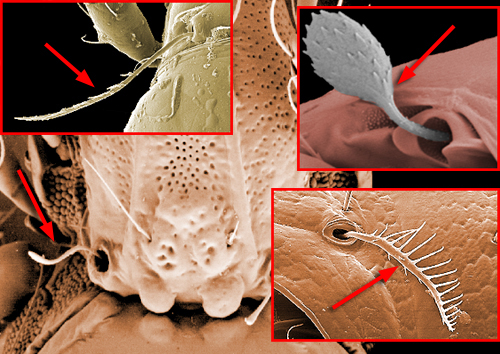 ; intercoxal region without sternal and genital shieldgenital shield:
a shield or shields covering the genital opening; in female mongynaspine Mesostigmata this shield is usually called the epigynal (epigynial) shield.
elements; development: hexapodhexapod:
with three pairs of legs (i.e. 6 legs), as in the larvae of mites or the larviform stages of others.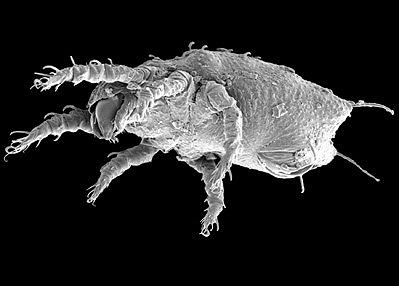 larva and 2–3 octopod nymphal stages (protonymphprotonymph:
the first nymphal stage or instar, usually octopod.
, +/- deutonymphdeutonymph:
(also deuteronymph) the second nymphal stage or instar.
, tritonymphtritonymph:
the third, and final, nymphal stage or instar present in Opilioacarida, Holothyrida, Argasidae, and many Acariformes.
); when present, the deutonymphdeutonymph:
(also deuteronymph) the second nymphal stage or instar.
is heteromorphicheteromorphic:
having different morphological forms; referring either to different forms within a particular life stage (e.g., normal and heteromorphic deutonymphs in some Mesostigmata; protogynes vs. deutogynes in Eriophyoidea; heteromorphic vs. homeomorphic males in the Astigmata) or to a developmental stage that differs radically from other stages (e.g., the heteromorphic deutonymph or hypopus in the Astigmata).
: usually non-feeding with a reduced gnathosomagnathosoma:
(= capitulum) the anteriormost part of a mite or ricinuleid, composed of the cheliceral and pedipalpal segments and separated from the body (idiosoma) by a ring of soft cuticle.
and modified for phoresyphoresy:
a type of migration where mites board larger animals (usually insects or other arthropods) and cease or otherwise alter normal behaviors (e.g., feeding, reproduction, movement) until some cue elicits the departure from the animal and the resumption of normal behavior. Phoresy usually results in the dispersal of populations, but may result in reaggregation, especially for mites using highly specialized habitats (e.g., pitcher plants and other phytotelmata). Some mites hold on to their phoretic carriers with specialized structures (e.g., the anal pedicel in Uropodina; modified legs I in phoretomorphic Pygmephoridae; a specialized tooth on the chelicerae of many Macrocheles), but others simply use their feet or grip a seta with unmodified mouthparts. Phoretic relationships my be highly host specific, very general, or anywhere in between, depending on the species. In earlier work, phoresy was differentiated from parasitism by whether or not feeding occurred on the host. However, recent work has shown that some phoretic mites may also feed on or otherwise harm their host.
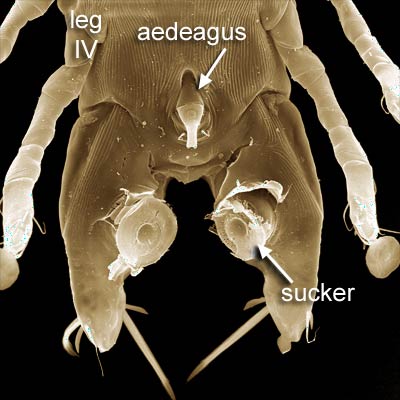
, typically with a large ventral sucker platesucker plate:
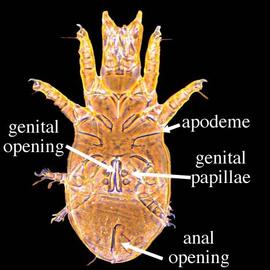
an array of modified setae in the anal region of the heteromorphic deutonymphs (hypopi) of Astigmatina.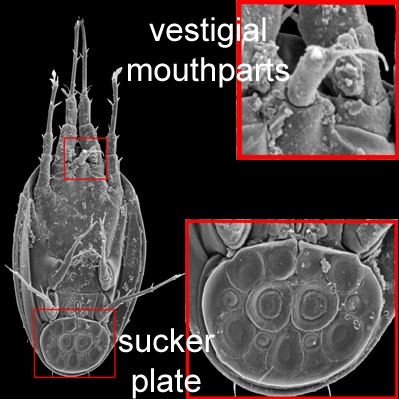 or pair of claspers; genital opening develops gradually with 1 pair of genital papillaegenital papillae:
1-3 pairs of extrusible finger-like to button-like projections, usually retracted into in the genital vestibule of acariform mites; sometimes formed as sessile disks around the genital opening; thought to be osmoregulatory structures; modified or multiplied and dispersed over the body in many freshwater mites. Genital papillae are absent in the larva, but may be added ontogenetically: protonymphs have one pair, deutonymphs two pairs, and tritonymphs (and adults) three pairs. The tritonymphal pair of papillae is often lost. The serially homologous Claparède's organ is usually present in the larvae (and prelarvae) of mites exhibiting genital papillae in nymphs and adults (Oudeman's Rule).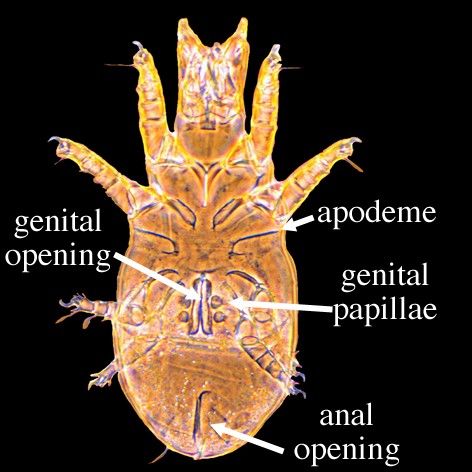 added in the protonymphprotonymph:
the first nymphal stage or instar, usually octopod.
and 2 pairs in the tritonymphtritonymph:
the third, and final, nymphal stage or instar present in Opilioacarida, Holothyrida, Argasidae, and many Acariformes.
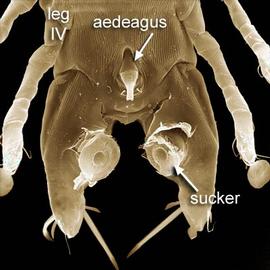
and adult; males with a usually postcoxalpostcoxal:
posterior to the coxae. 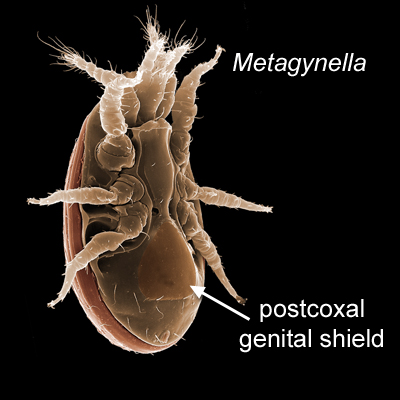 aedeagus, chelicerae not modified for sperm transfer; female sperm receiving structure secondary, with bursa copulatrixbursa copulatrix:
a secondary sperm system opening terminally in some Prostigmata and Astigmatina.
.
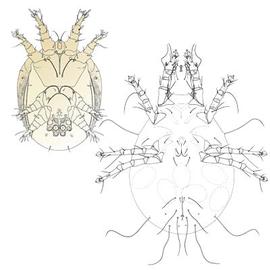
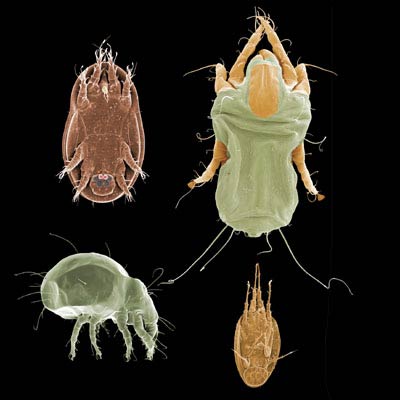
Most astigmatans are soft-bodied, white to brownish acariform mites without prodorsal sensillasensillum:
(pl. sensilla) (also sensillae; 'sensillus' is incorrect) a sensory structure; sensilla is often used for the bothridial seta in Acariformes.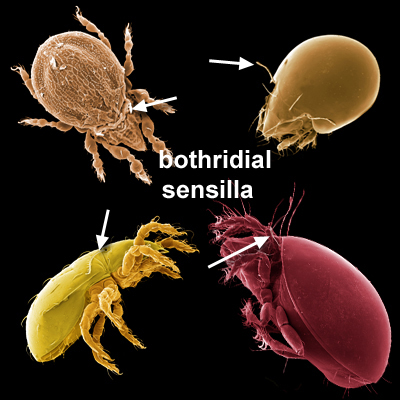 ; sometimes tan and well sclerotized. Opisthosomal glandsopisthosomal glands:
see oil glands.
present, usually well developed; prodorsal trichobothriatrichobothrium:
(pl. trichobothria) (= bothridial sensillum) an often elaborately modified seta set in a cup-like base; forms include filiform, ciliate, pectinate or variously thickened or clubbed (bat-like to globose or capitate). and pteromorphs absent. Chelicerae usually chelate-dentatechelate-dentate:
pincer-like chelicerae with teeth.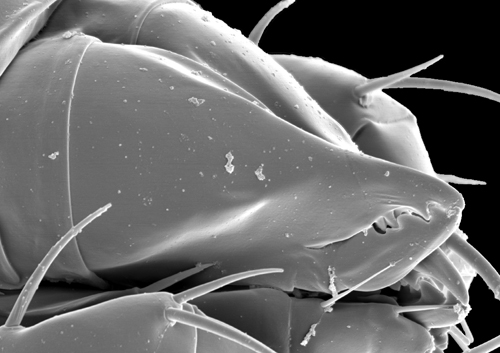 , rarely whip-likewhip-like:
long, slender and sinuous as in the posterior setae of some phytoseiid mites (Mesostigmata) or the stylets of spider mites and their relatives (Prostigmata: Tetranychoidea).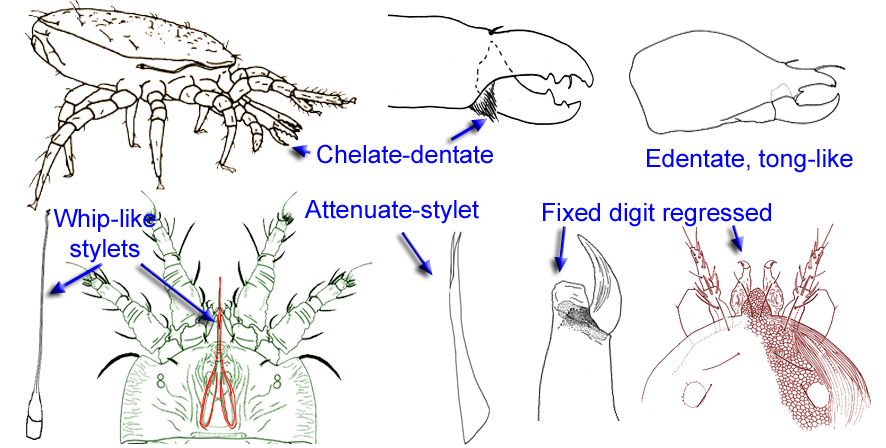 (Histiostomatidae). Rutellumrutellum:
(pl. rutella) In Sarcoptiformes, the hypertrophied setae on the hypostome, often toothed; not to be confused with a corniculus (although possibly a homologue). In Astigmata, the rutellum may be referred to as a pseudorutellum, although it is the same structure. Various forms of rutella are recognized, including the atelebasic and pantelebasic. present and chisel-like, or absent. Genital papillaegenital papillae:
1-3 pairs of extrusible finger-like to button-like projections, usually retracted into in the genital vestibule of acariform mites; sometimes formed as sessile disks around the genital opening; thought to be osmoregulatory structures; modified or multiplied and dispersed over the body in many freshwater mites. Genital papillae are absent in the larva, but may be added ontogenetically: protonymphs have one pair, deutonymphs two pairs, and tritonymphs (and adults) three pairs. The tritonymphal pair of papillae is often lost. The serially homologous Claparède's organ is usually present in the larvae (and prelarvae) of mites exhibiting genital papillae in nymphs and adults (Oudeman's Rule). present (2 pairs) or transformed into ring-like organs (Histiostomatidae). Ovipore of female usually with inverted-V arrangement of sclerites, rarely with parasitoid arrangement (Fusacarus); insemination through a terminal porepore:
a pore-like opening or structure in the cuticle. In Mesostigmata, lyrifissures and true pore openings are often difficult to separate and both tend to be called 'pores', e.g., the sternal pores stp1-3.
. Males with a sclerotized aedeagus (penis).
Similar soft-bodied acariform mites in the Supercohorts Palaeosomatides and Parhyposomatides have prodorsal trichobothriatrichobothrium:
(pl. trichobothria) (= bothridial sensillum) an often elaborately modified seta set in a cup-like base; forms include filiform, ciliate, pectinate or variously thickened or clubbed (bat-like to globose or capitate)..
AstigmatinaAstigmatina:
An alternative name for the hyporder Astigmata. While sometimes referred to as a "cohort," a term traditionally denoting a taxonomic rank between a class and an order, Astigmata represents a lineage between the ranks of order and family.
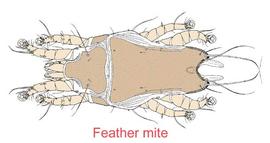
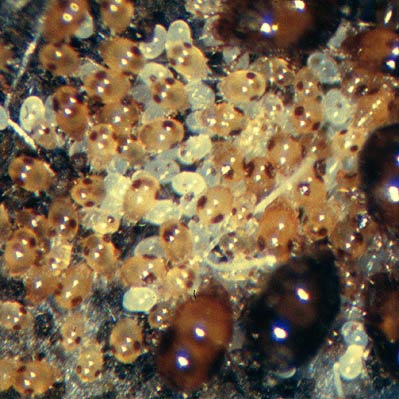
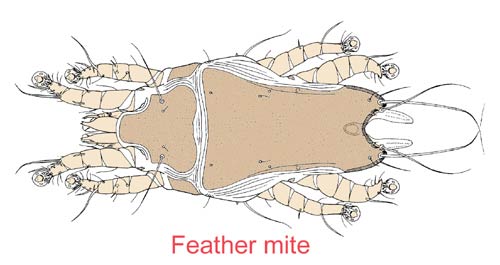
are primarily associated with nests, stored products, fungal sporocarps, and animals, but some families are free-living. Those associated with animals range from commensals (e.g., many feather mites) to severe parasites (e.g., mange mites), with at least a few taxa appearing to have mutualistic relationships to their hosts. Several families have representatives in wet, rotting vegetation, sap fluxes, and other aquatic habitats including treeholes, other phytoteles, and algal mats in freshwater and intertidal systems.

Using a dichotomous key to identify a mite specimen as Astigmata
Author: David E. Walter
Content last updated Sept. 2006, unless indicated otherwise
Lucid key player updated Sept. 2025
idtools.org