Major mite taxa
test
Taxonomy
updated 2025
Name
Brachypylina Hull, 1918
Classification
Superorder Acariformes » Order Sarcoptiformes » Suborder Oribatida » Infraorder Desmonomata » Hyporder Brachypylina
Common names
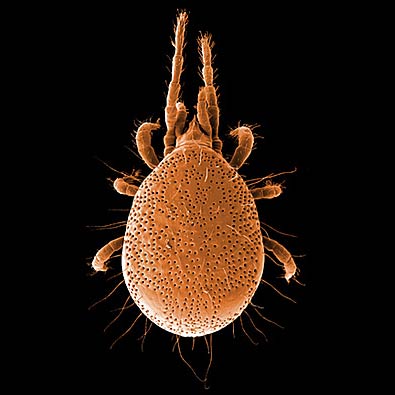
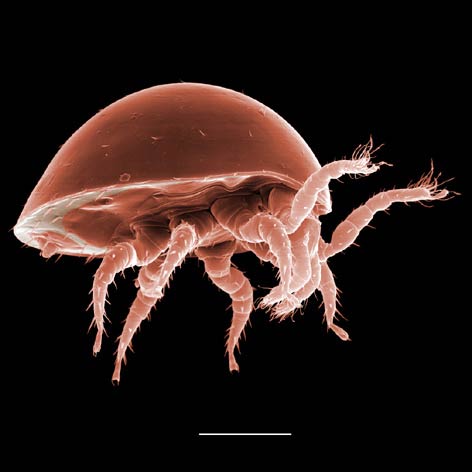
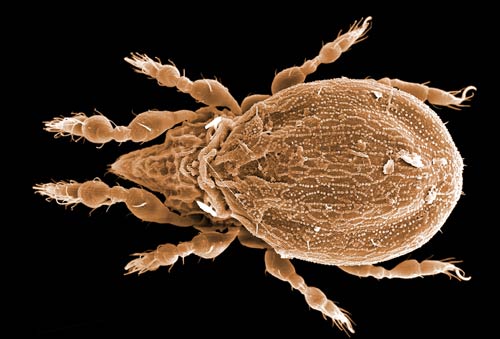
oribatid mites, beetle mites, armored mites, moss mites
Probability of encounter
high
Quarantine importance
Low. Only a few species have been associated with minor damage to plants, probably mostly in association with fungal damage, and none are parasites of vertebrates. Some species have the potential to vector the propagules of plant pathogens or to serve as intermediate hosts of tapeworms.
Diagnosis
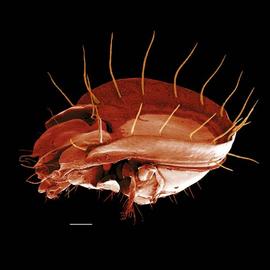
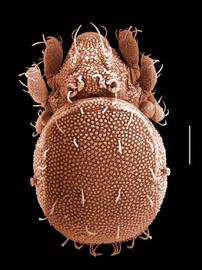
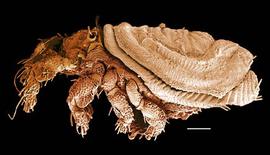
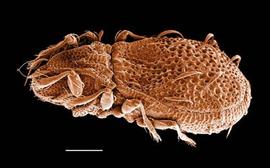
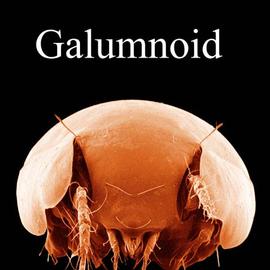
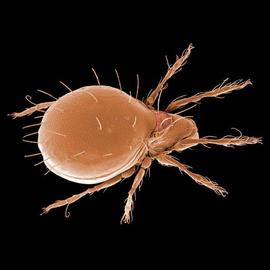
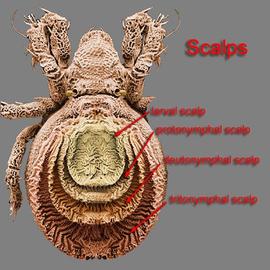
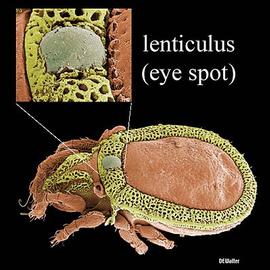
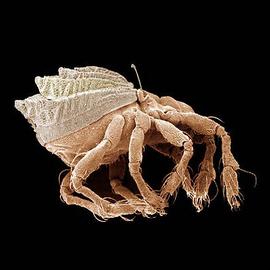
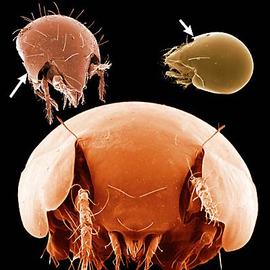
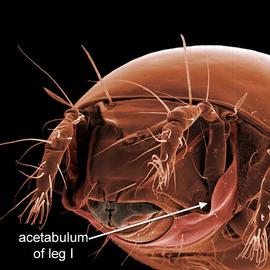
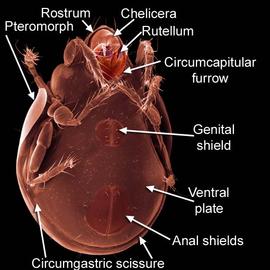
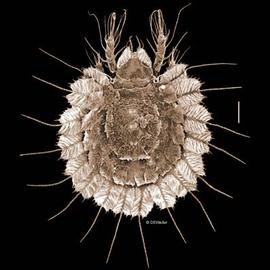
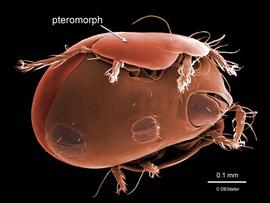
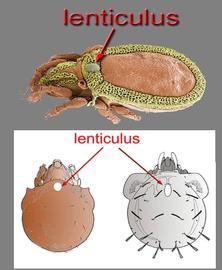
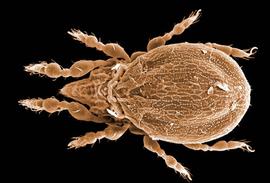
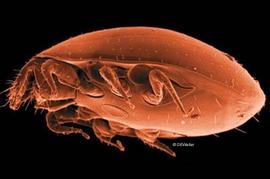
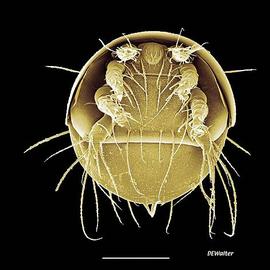
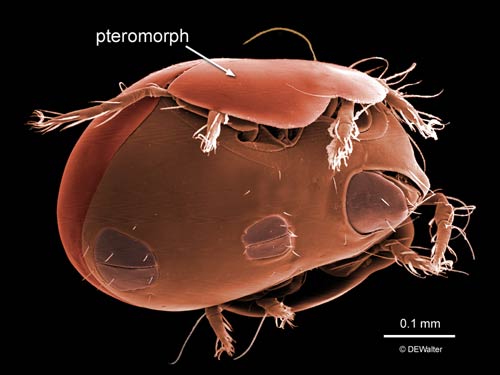
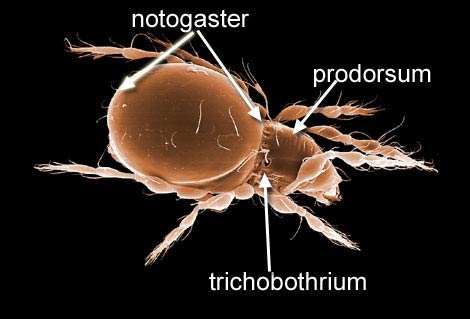
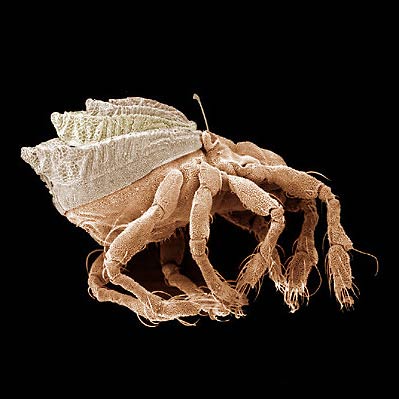
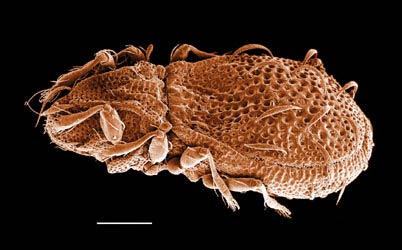
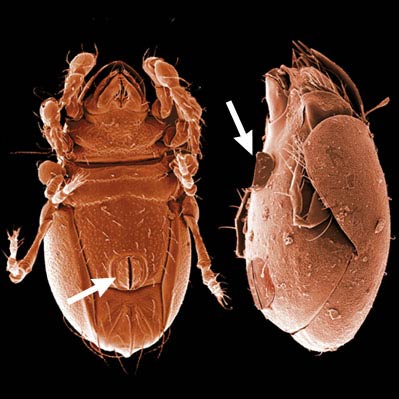
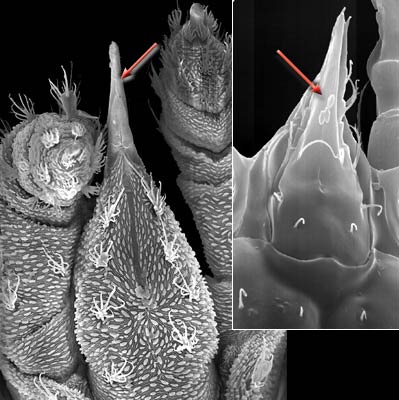
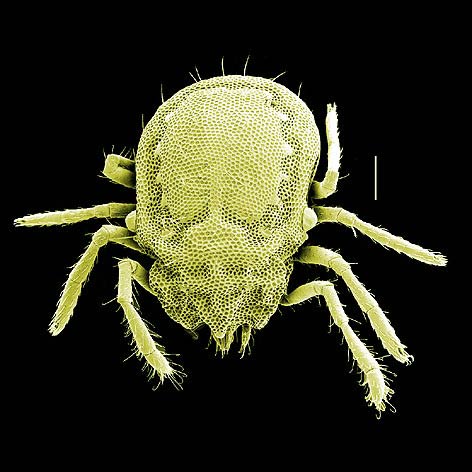
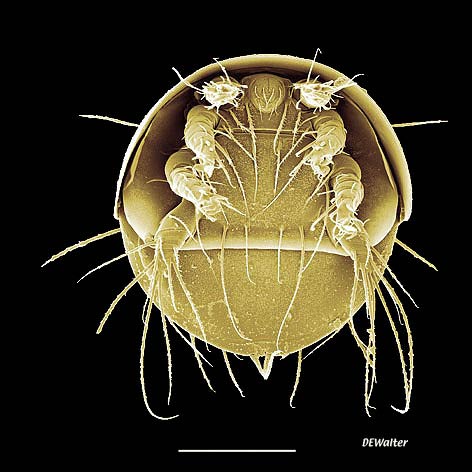
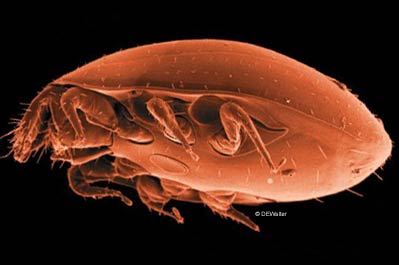
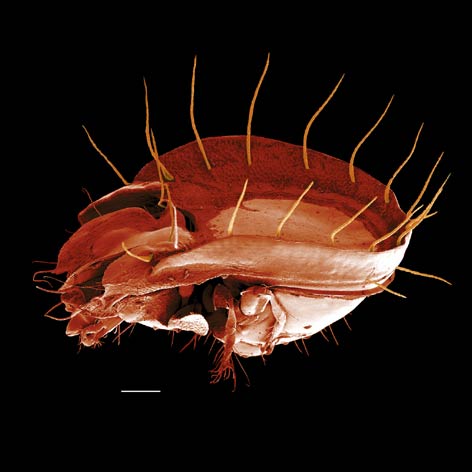
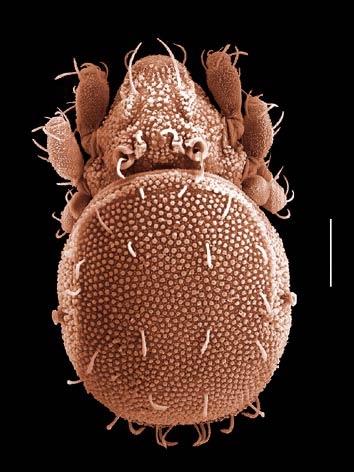
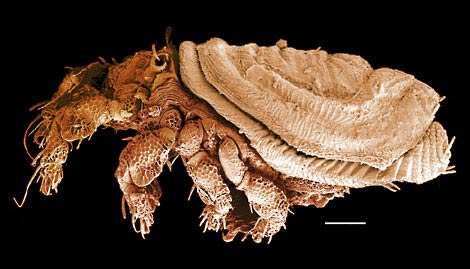
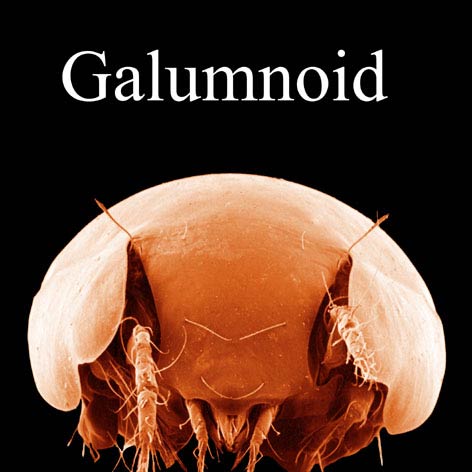
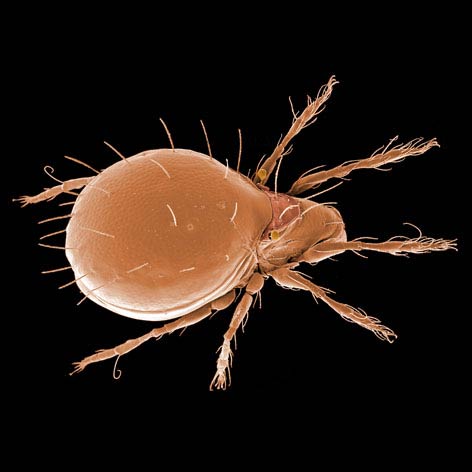
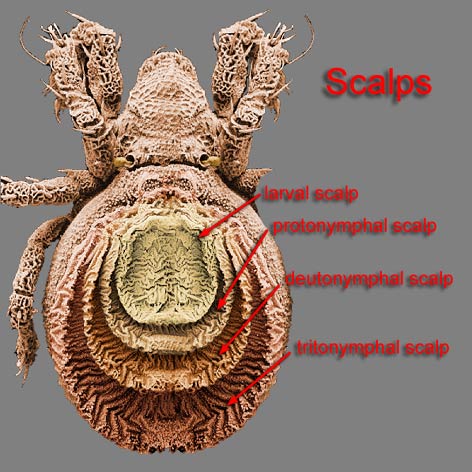
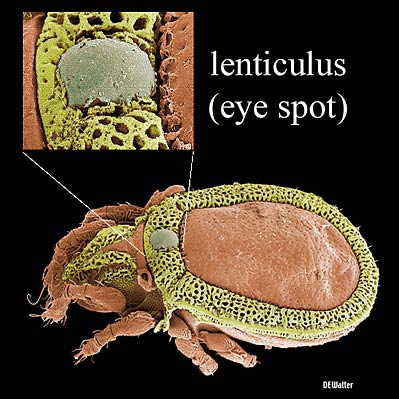
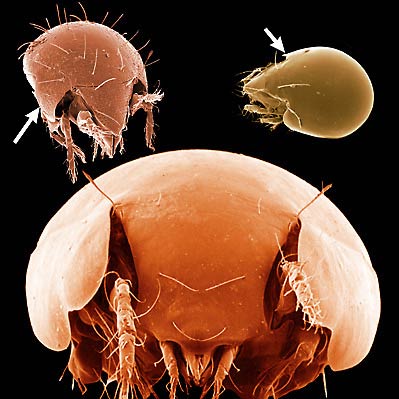
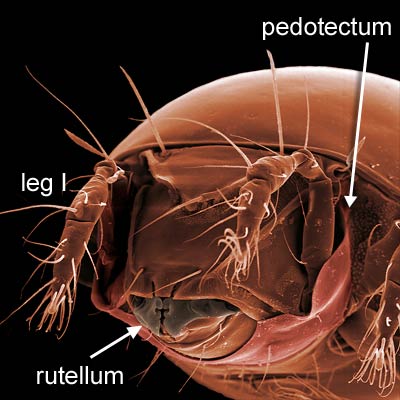
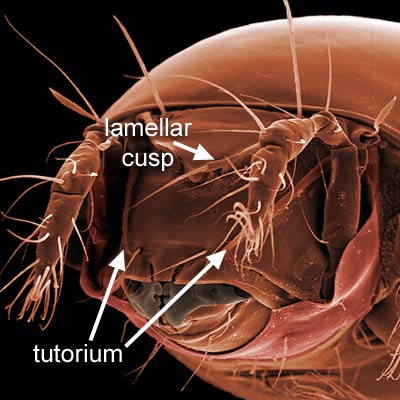
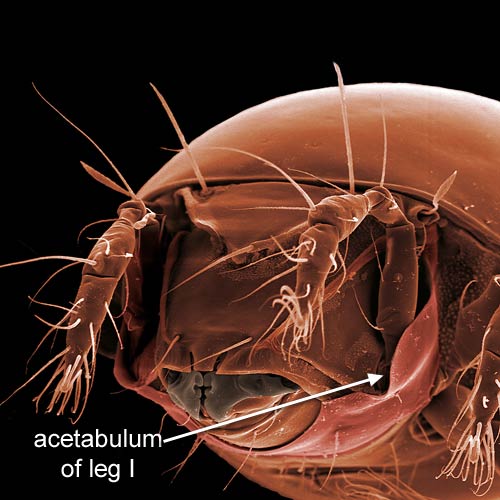
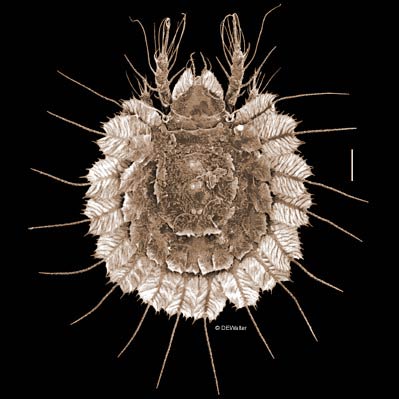
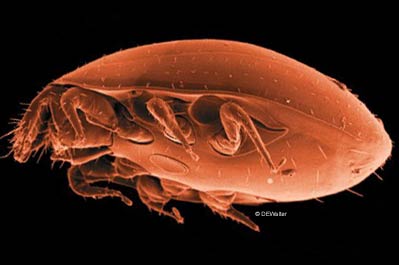
Beetle-like oribatid mites usually tan to dark brown in color and completely encased in armor; with or without pteromorphs; with or without piled scalpsscalps:
notogastral portions of exuviae retained by some oribatid mites, often as a pagoda-like pile of larval through tritonymphal exuviae, although one or more of these may fall off during handling of specimens. Scalp is also used to indicate the macerated cuticle of a mite that has been cleared and mounted on a microscope slide.
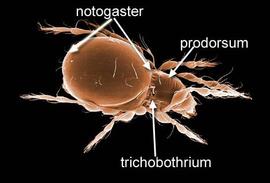
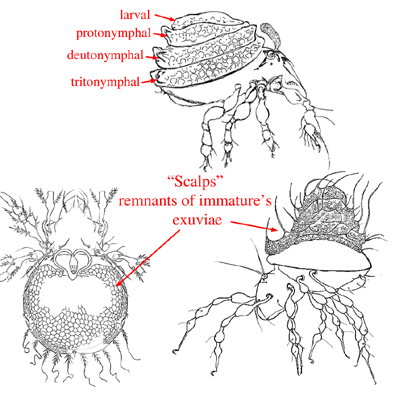 ; notogastralnotogastral:
referring to the notogaster. [ Back to Top]
shield separated from prodorsal-ventralventral:
relating to the lower or under side; opposed to dorsal.
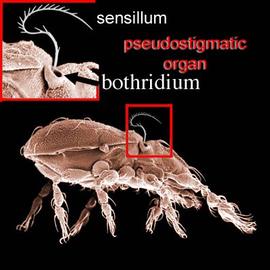
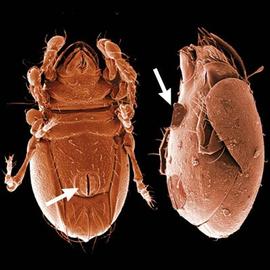
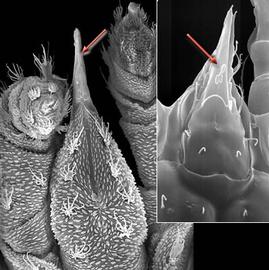
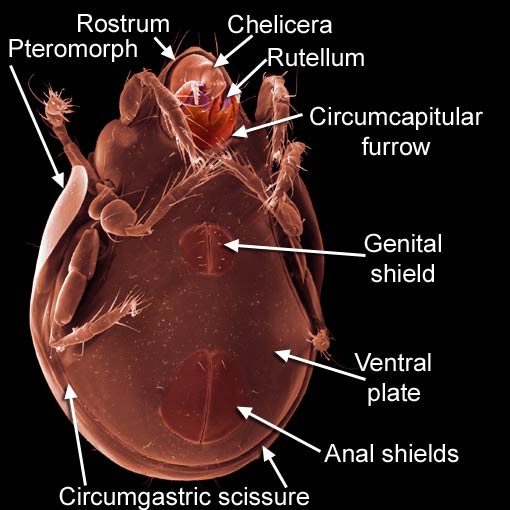
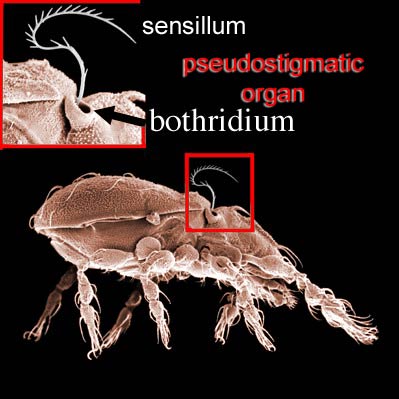
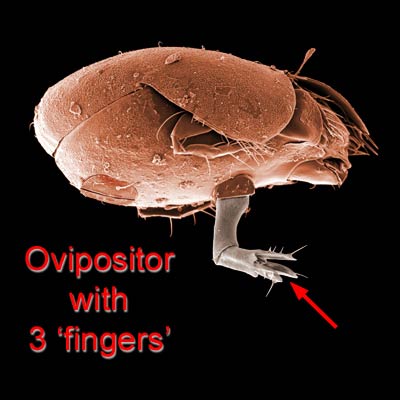
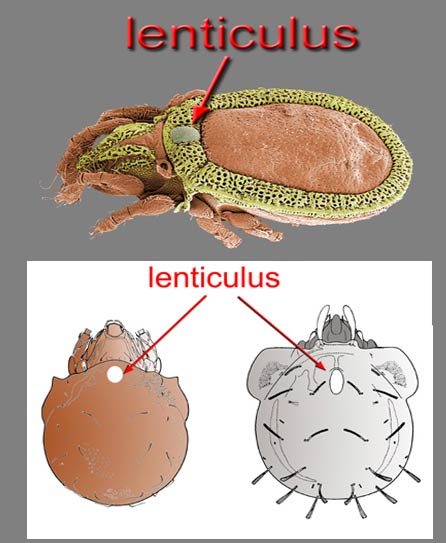
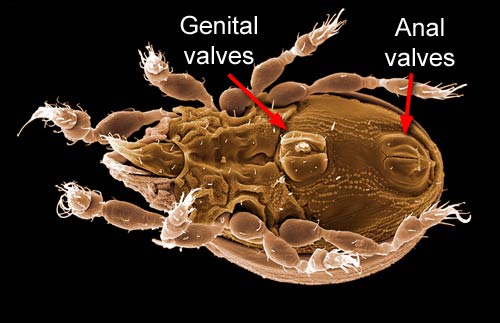
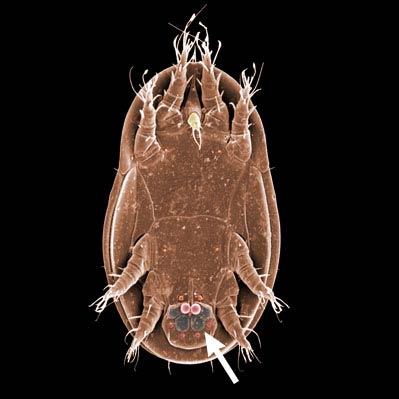
shielding by line of dehiscence (circumgastric furrow). Most species have a well-developed pair of prodorsal trichobothria. Brachypyline, 3 (rarely seemingly 2) pairs of genital papillaegenital papillae:
1-3 pairs of extrusible finger-like to button-like projections, usually retracted into in the genital vestibule of acariform mites; sometimes formed as sessile disks around the genital opening; thought to be osmoregulatory structures; modified or multiplied and dispersed over the body in many freshwater mites. Genital papillae are absent in the larva, but may be added ontogenetically: protonymphs have one pair, deutonymphs two pairs, and tritonymphs (and adults) three pairs. The tritonymphal pair of papillae is often lost. The serially homologous Claparède's organ is usually present in the larvae (and prelarvae) of mites exhibiting genital papillae in nymphs and adults (Oudeman's Rule).
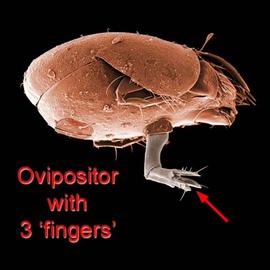
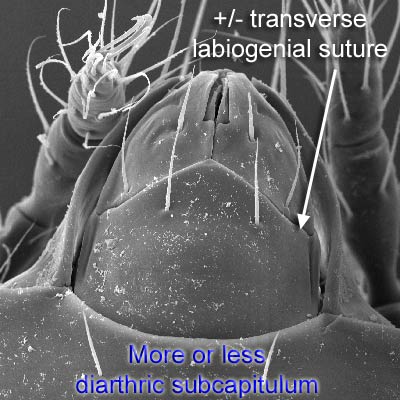
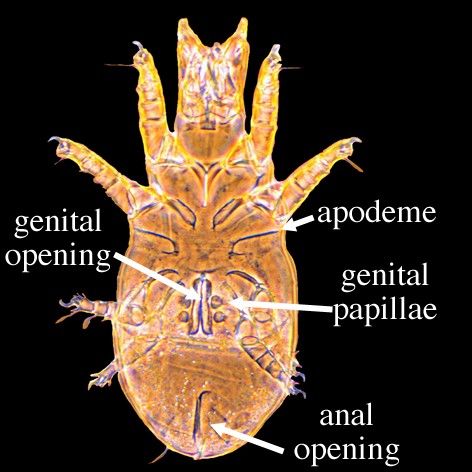 ; well developed ovipositor in the female, spermatophoric organ in the male. Subcapitulumsubcapitulum:
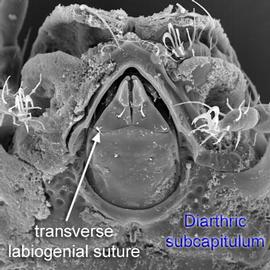
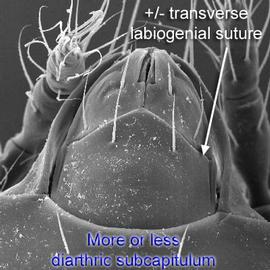
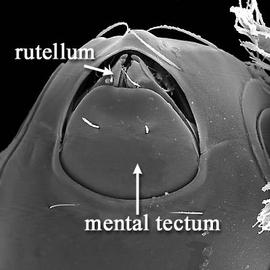
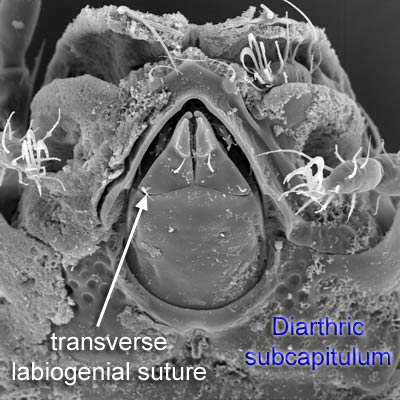
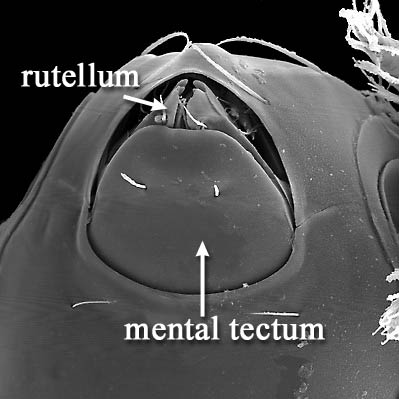
(also infracapitulum) the venter of the capitulum; the ventral faces of the fused palpcoxae; apparently formed independently in the two superorders of mites.
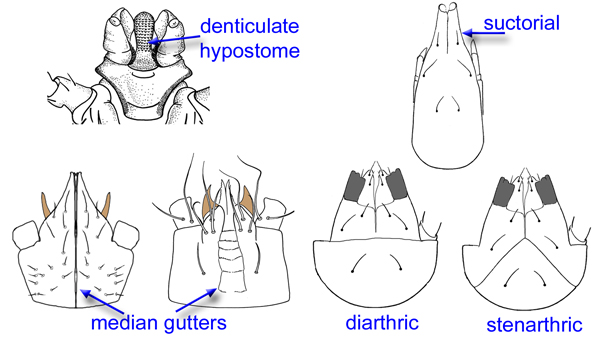 often diarthric, sometimes with mental tectum or suctorial. Bodybody:
the idiosoma of mites.
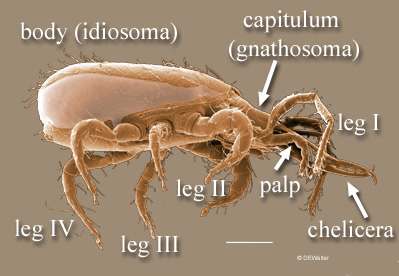 lengths range from about 0.15 to 2.0 mm or more. Males are usually about half the bodybody:
the idiosoma of mites.
mass of the females, lack ovipositors, and have a smaller genital opening in which a spermatophoric organ often can be discerned.
Similar taxa
Adult brachypylinebrachypyline:
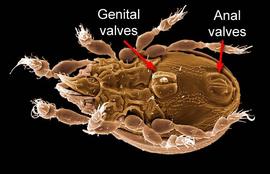
having separate genital and anal plates surrounded by a large ventral plate (composed of aggenital and adanal elements); usage usually restricted to traditional oribatid mites (see macropyline).
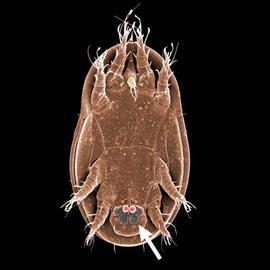
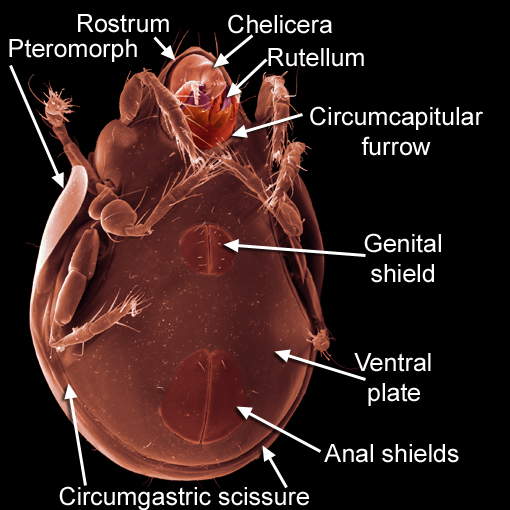 oribatid mites could be confused with other fully armored mites in the Prostigmata (Labidostommatides, Scutacaridae), Mesostigmata (Uropodidae, Ologamasidae, Eviphididae), or the hypopi of the Astigmatina, but none of these will have a single pair of prodorsal trichobothriatrichobothrium:
(pl. trichobothria) (= bothridial sensillum) an often elaborately modified seta set in a cup-like base; forms include filiform, ciliate, pectinate or variously thickened or clubbed (bat-like to globose or capitate).
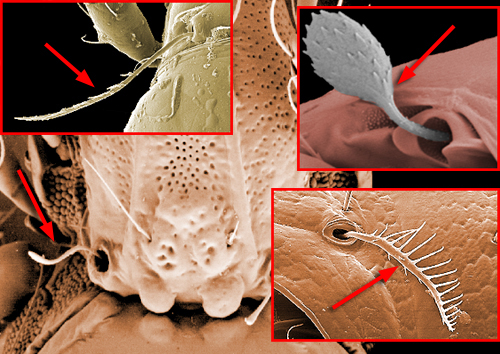 (2 pairs in Labidostommatides).
Ecology and distribution
About 10,000 species of oribatid mites have been described and they occur everywhere, but generally limit their activities to grazing on algae, fungi, detritus, and the small invertebrates (e.g., nematodes, rotifers, tardigrades) that inhabit microbial mats and detritus. Many brachypylines occur on vegetation, especially on the bark and twigs of trees with epiphytes and in suspended soils, but these appear to be primarily fungivore-scavengers.
References
- Allred 1954Allred 1954:
Allred DM. 1954. Mites as intermediate hosts of tapeworms. Proceedings of the Utah Academy of Sciences 31: 44–51.
- Balogh 1972Balogh 1972:
Balogh J. 1972. The Oribatid genera of the world. Akadémiai Kiadó, Budapest. pp. 1–188 + Plates 1-71.
- Balogh and Balogh 1984Balogh and Balogh 1984:
Balogh J, Balogh P. 1984. A review of the Oribatuloidea Thor, 1929 (Acari: Oribatei). Acta Zoologica Academiae Scientiarum Hungaricae 30: 257–313.
- Balogh and Balogh 1988Balogh and Balogh 1988:
Balogh J, Balogh P. 1988. Oribatid mites of the Neotropical Region I. The Soil Mites of the World, Vol. 2. Elsevier, Amsterdam. 335 pp.
- Balogh and Balogh 1990Balogh and Balogh 1990:
Balogh J, Balogh P. 1990. Oribatid mites of the Neotropical Region II. The Soil Mites of the World, Vol. 3. Elsevier, Amsterdam. 333 pp.
- Balogh and Balogh 1992Balogh and Balogh 1992:
Balogh J, Balogh P. 1992. The oribatid mites genera of the world, Vol. 1. The Hungarian National Museum Press, Budapest. 263 pp.
- Balogh and Balogh 2002Balogh and Balogh 2002:
Balogh J, Balogh P. 2002. Identification keys to the Oribatid mites of the Extra-Holarctic regions, Vol. 1-2. Well-Press Publishing Limited, Budapest. Vol. I: 451 pp; Vol. II: 504 pp.
- Behan-Pelletier 1993Behan-Pelletier 1993:
Behan-Pelletier VM. 1993. Eremaeidae (Acari: Oribatida) of North America. Memoirs of the Entomological Society of Canada 168: 1–193.
- Behan-Pelletier 2000Behan-Pelletier 2000:
Behan-Pelletier VM. 2000. Ceratozetidae (Acari: Oribatida) of arboreal habitats. The Canadian Entomologist 132: 153–182.
- Behan-Pelletier and Bissett 1994Behan-Pelletier and Bissett 1994:
Behan-Pelletier VM, Bissett B. 1994. Oribatida of Canadian peatlands. Memoirs of the Entomological Society of Canada 169: 73–88.
- Colloff and Halliday 1998Colloff and Halliday 1998:
Colloff M, Halliday B. 1998. Oribatid mites: A catalogue of Australian genera and species. Monograph on Invertebrate Taxonomy, Vol. 6. CSIRO Publishing, Melbourne.
- Del Fosse et al. 1975Del Fosse et al. 1975:
Del Fosse ES, Cromroy HL, and Habek DH. 1975. Determination of the feeding mechanism of the waterhyacinth mite. Hyacinth Control Journal 13: 53-55.
- Denegri 1993Denegri 1993:
Denegri GM. 1993. Review of oribatid mites as intermediate hosts of the Anoplocephalidae. Experimental and Applied Acarology 17: 567-580.
- Denegri et al. 1998Denegri et al. 1998:
Denegri G, Bernadina W, Perez-Serrano J, and Rodriguez-Caabeiro F. 1998. Anoplocephalid cestodes of veterinary and medical significance: A review. Folia Parasitologica 45: 1-8
- Denegri et al. 2002Denegri et al. 2002:
Denegri GM, Elissondo MC, and Dopchiz MC. 2002. Oribatid mites as intermediate hosts of Thysanosoma actinioides (Cestoda: Anoplocephalidae): A preliminary study. Veterinary Parasitology 103: 267‑271.
- Fain and Lambrechts 1987Fain and Lambrechts 1987:
Fain A and Lambrechts L. 1987. Observations on the acarofauna of fish aquariums. I. Mites associated with Discus fish. Bulletin et Annales de la Société Royale Belge d'Entomologie 123: 87-102.
- Fain et al. 1988Fain et al. 1988:
Fain A, Lambrechts L, and Wauthy G. 1988. Observations on the acarofauna of fish aquariums. III. Presence of Hydrozetes lemnae (Coggi, 1899) in aquariums in Belgium. Bulletin et Annales de la Société Royale Belge d'Entomologie 124: 255-256.
- Fritz 1995Fritz 1995:
Fritz GN. 1995. Oribatid mites infected with cysticercoids of Moniezia expansa (Cestoda: Anoplocephalidae). International Journal of Acarology 21: 233-238.
- Fujikawa 1991Fujikawa 1991:
Fujikawa T. 1991. List of Oribatid families and genera of the world. Edaphologia 46: 1-123.
- Fujikawa et al. 1993Fujikawa et al. 1993:
Fujikawa T, Fujita M, and Aoki J. 1993. Checklist of Oribatid mites of Japan (Acari: Oribatida). Journal of the Acarological Society of Japan 2 (Supplement 1): 1-121
- Gilyarov and Krivolutsky 1975Gilyarov and Krivolutsky 1975:
Gilyarov MS and Krivolutsky DA, eds. 1975. Handbook for the identification of soil-inhabiting mites, Sarcoptiformes. Zoological Institute of the Academy of Sciences, Petrograd.
- Hunt et al. 1998Hunt et al. 1998:
Hunt GS, Norton RA, Kelly JPH, Colloff MJ, Lindsay SM, Dallwitz MJ, and Walter DE. 1998. Oribatid Mites: An Interactive Glossary of Oribatid Mites, An Interactive Key to the Oribatid Mites of Australia [Intkey software and user guide on CD-ROM]. CSIRO Publishing, Collingwood.
- Luxton 1985Luxton 1985:
Luxton M. 1985. Cryptostigmata (Arachnida: Acari) - a concise review. Fauna of New Zealand 7: 1-106.
- Luxton 1996Luxton 1996:
Luxton M. 1996. Oribatid mites of the British Isles - a checklist and notes on biogeography (Acari, Oribatida). Journal of Natural History 30 (6): 803-822.
- McClure 1995McClure 1995:
McClure MS. 1995. Diapterobates humeralis (Oribatida: Ceratozetidae): An effective control agent of hemlock woolly adelgid (Homoptera: Adelgidae) in Japan. Environmental Entomology 24: 1207-1215.
- Nannelli et al. 1998Nannelli et al. 1998:
Nannelli R, Turchetti T, and Maresi G. 1998. Corticolous mites (Acari) as potential vectors of Cryphonectria parasitica (Murr.) Barr hypovirulent strains. International Journal of Acarology 24: 237-244.
- Niemi et al. 1997Niemi et al. 1997:
Niemi R, Karppinen E, and Uusitalo M. 1997. Catalogue of the Oribatida of Finland. Acta Zoologica Fennica 207: 1-39.
- Subías and Balogh 1989Subías and Balogh 1989:
Subías LS and Balogh P. 1989. Identification keys to the genera of Oppiidae Grandjean, 1951 (Acari: Oribatei). Acta Zoologica Academiae Scientiarum Hungaricae 35: 355-412.