test
Mixonomata Grandjean, 1969
Superorder Acariformes » Order Sarcoptiformes » Suborder Oribatida » Infraorder Mixonomata
box mites, eulohmanniid, epilohmanniid & perlohmanniid oribatid mites
low
No known quarantine importance.
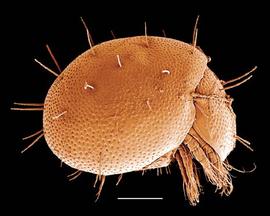
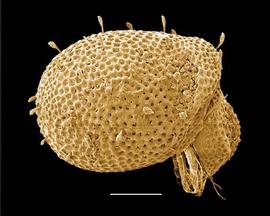
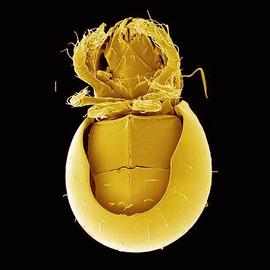
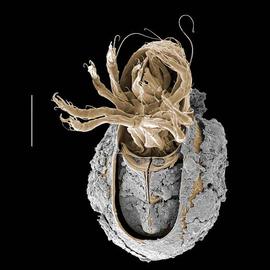
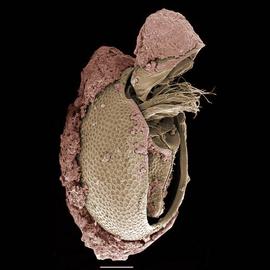
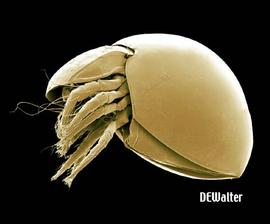
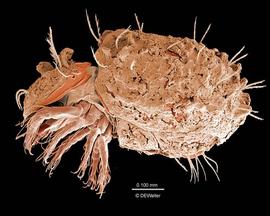
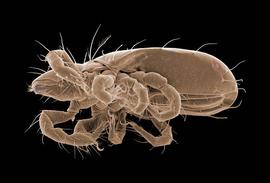
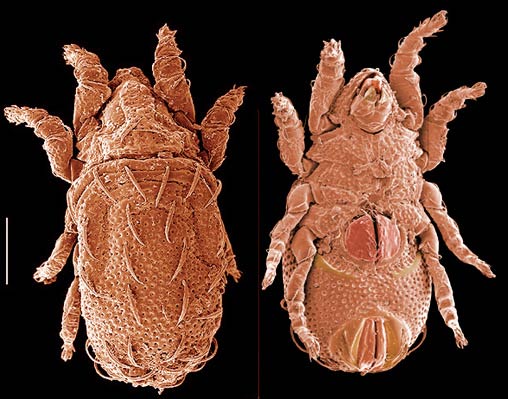
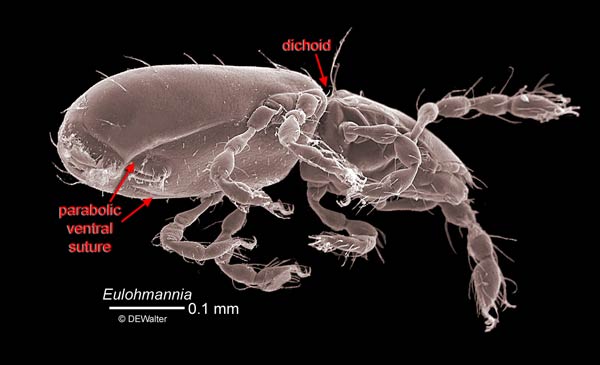
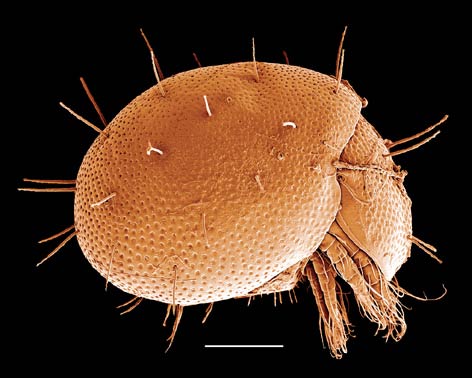
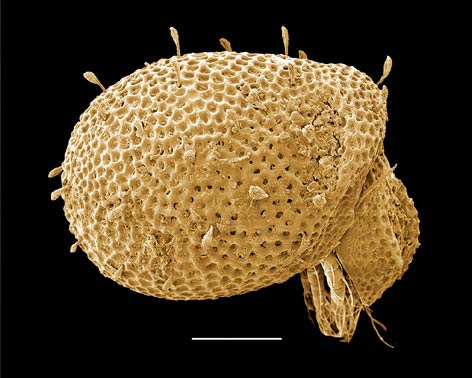
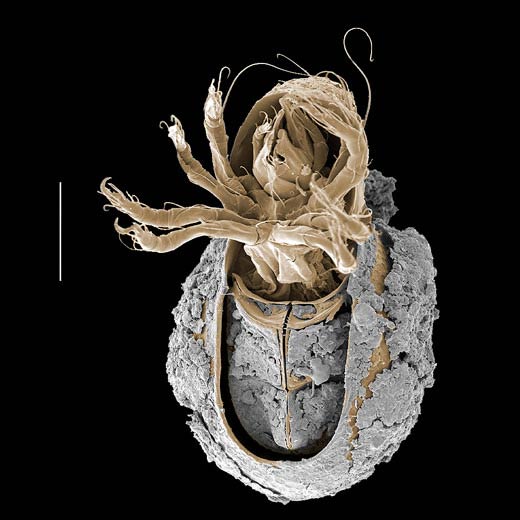
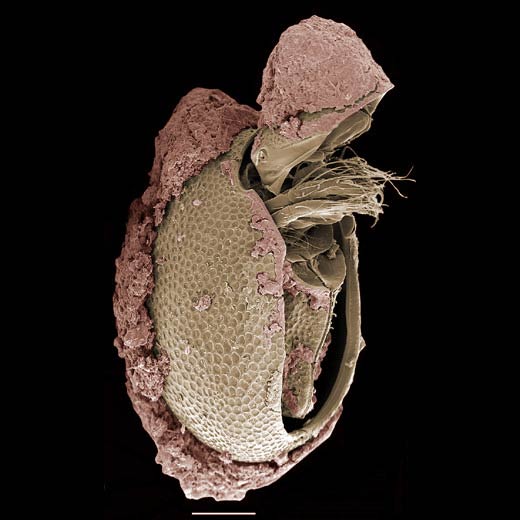
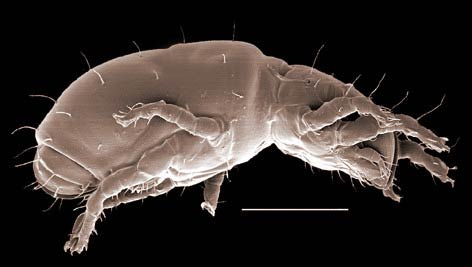
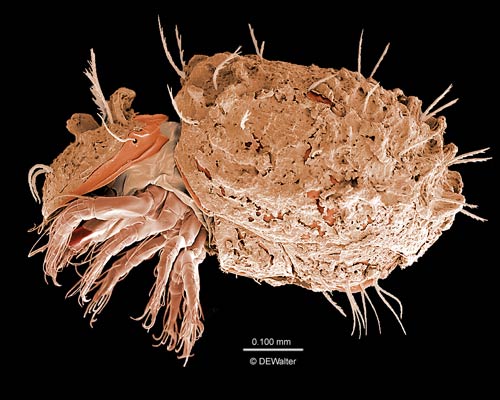
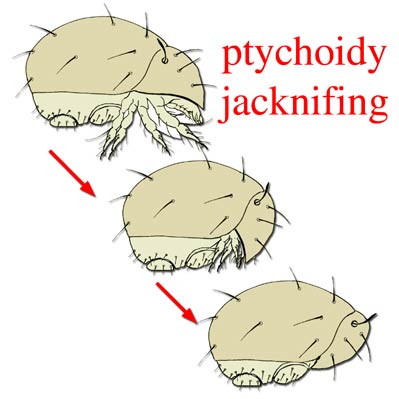
Brown, reddish, beige or yellowish dichoid or ptychoid (Phthiracaroidea, Euphthiracaroidea) oribatid mites with the capitulumgnathosoma:
(= capitulum) the anteriormost part of a mite or ricinuleid, composed of the cheliceral and pedipalpal segments and separated from the body (idiosoma) by a ring of soft cuticle.
withdrawn within a camerostomecamerostome:
a recess under the rostral tectum that allows retraction of the chelicerae and palps of oribatid mites and that is sealed by the subcapitulum when retracted; a deep recess containing the gnathosoma in Uropodina.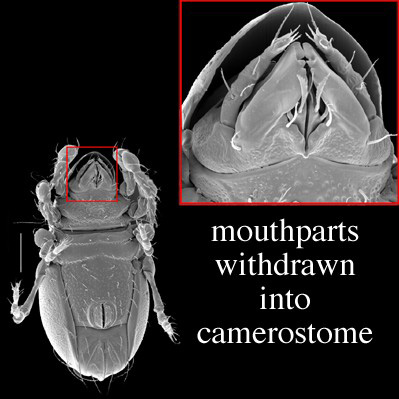 . Notogastralnotogastral:
referring to the notogaster. [ Back to Top]
shield entireentire:
a shield or sclerite with a continuous margin without incisions.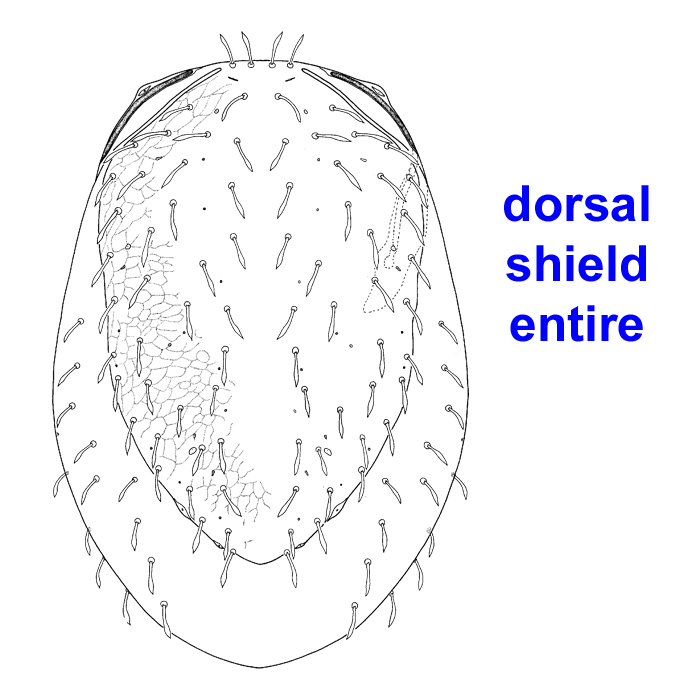 ; ventral plateventral plate:
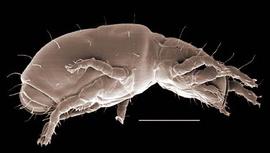
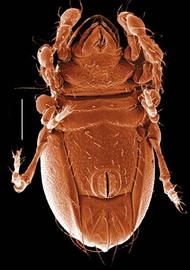
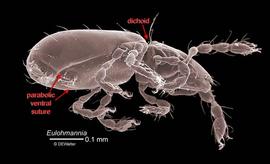
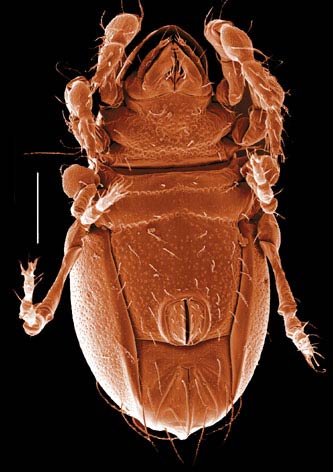
a sclerotized plate covering the ventral region of the opisthosoma in brachypyline oribatid mites and separated from the notogaster by the circumgastric scissure; also any plate in the ventral region.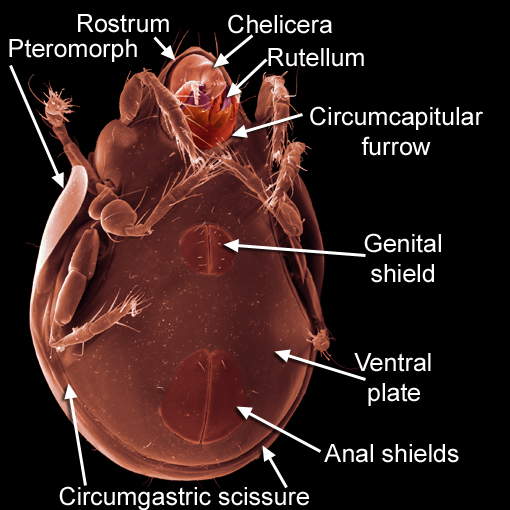 sometimes divided (Epilohmannia) or incised (Eulohmannia); discrete aggenital plates present (Epilohmannia, Perlohmannia, box mitesbox mites:
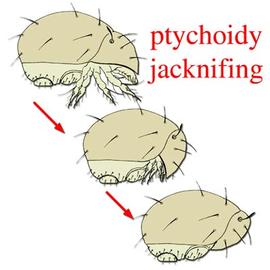
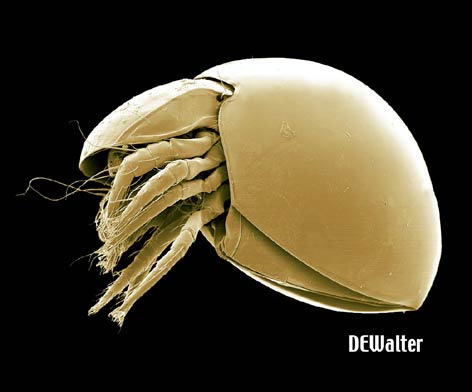
oribatid mites that exhibit ptychoidy, the ability to withdraw their limbs and close-up like a box.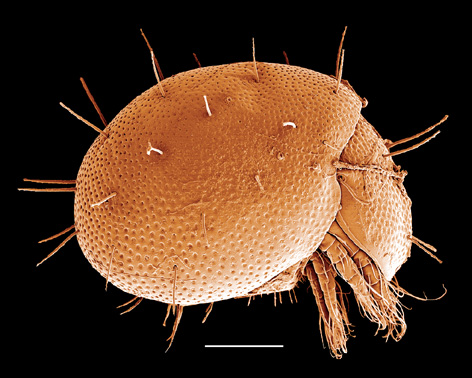 ). Macropyline, genital valvesgenital valves:
sclerites covering the genital opening; usually referring to small sclerites (larger ones are usually called 'shields' or 'plates'.
sometimes divided (Perlohmannia); 3 pairs of genital papillaegenital papillae:
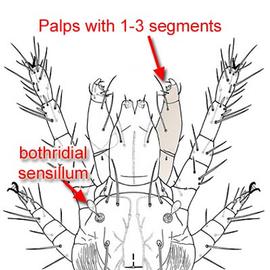
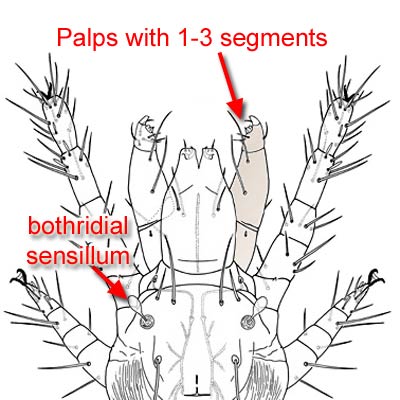
1-3 pairs of extrusible finger-like to button-like projections, usually retracted into in the genital vestibule of acariform mites; sometimes formed as sessile disks around the genital opening; thought to be osmoregulatory structures; modified or multiplied and dispersed over the body in many freshwater mites. Genital papillae are absent in the larva, but may be added ontogenetically: protonymphs have one pair, deutonymphs two pairs, and tritonymphs (and adults) three pairs. The tritonymphal pair of papillae is often lost. The serially homologous Claparède's organ is usually present in the larvae (and prelarvae) of mites exhibiting genital papillae in nymphs and adults (Oudeman's Rule).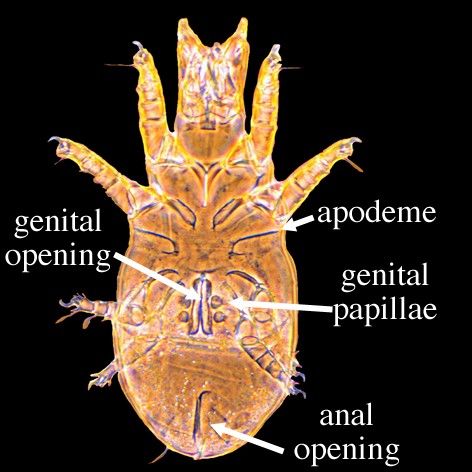 . Palps with 2–5 free segments. Lateral opisthonotall glands present or absent.
Some Enarthronota (Mesoplophoridae, Protoplophoridae) resemble true box mitesbox mites:
oribatid mites that exhibit ptychoidy, the ability to withdraw their limbs and close-up like a box., but lack the elongate genital and anal valves. Some Nothrina (e.g., Nanhermaniidae) are superficially similar to Epilohmanniidae and Eulohmanniidae but have an incised, rather than split ventral shieldventral shield:
in Mesostigmata, any shield or shields in the ventral region; often fused with the anal shield to form a ventrianal shield. [Back to Top]
and are holoidholoid:
lacking flexible cuticle between legs II-III.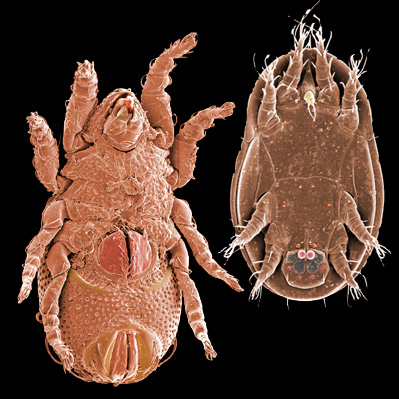 rather than dichoiddichoid:
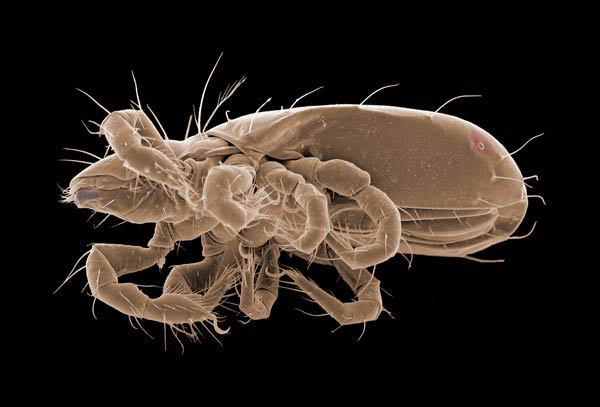
a body appearing to be divided between legs II-III by a flexible sejugal furrow (Acariformes).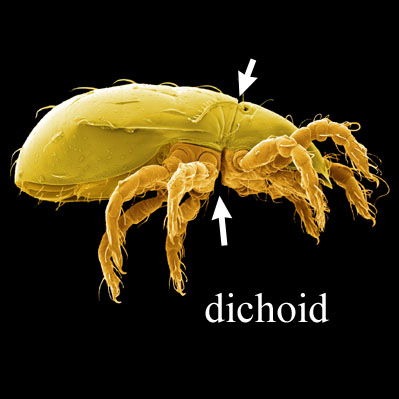 .
.
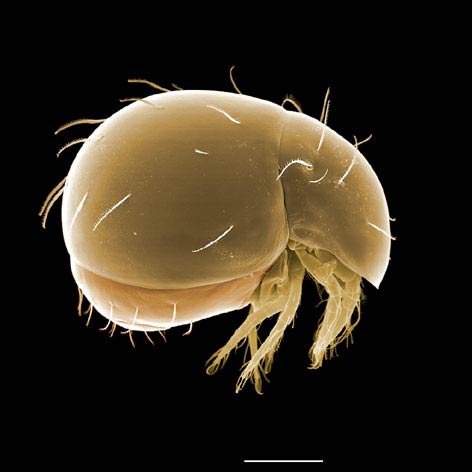
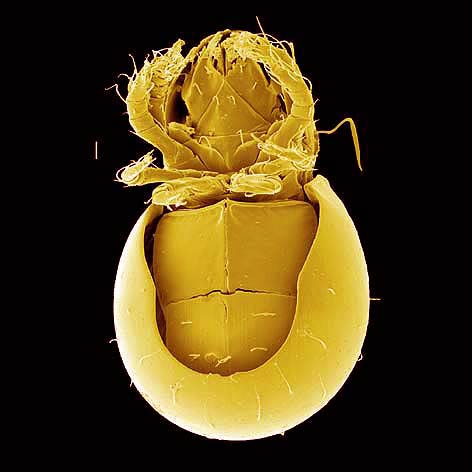
Box mitesbox mites:
oribatid mites that exhibit ptychoidy, the ability to withdraw their limbs and close-up like a box. occur in most litter habitats and range in size from fairly small to very large. They often burrow in woody litter and are also frequently found on bark. Perlohmannia are large, more or less dorso-ventrally flattened mites. Collohmannia are not flattened and are one of the few oribatid mites known to have direct contact between the sexes during mating. Epilohmannia are subcylindrical and reasonably common. Eulohmannia are relatively small and seem characteristic of disturbed soils.
Author: David E. Walter
Content last updated Sept. 2006, unless indicated otherwise
Lucid key player updated Sept. 2025
idtools.org