test
Parhyposomata Grandjean, 1969
Superorder Acariformes » Order Sarcoptiformes » Suborder Oribatida » Infraorder Parhyposomata
superfamily: Parhypochthonioidea
parhypochthonoid and gehypochthonoid oribatids
low
No known quarantine importance.
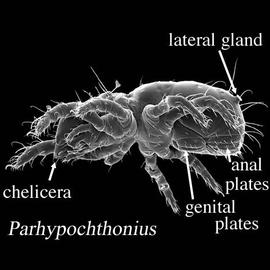
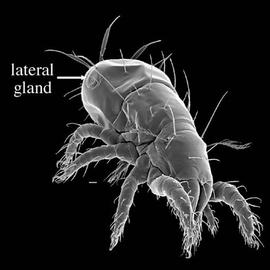
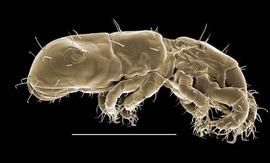
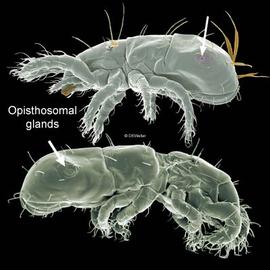
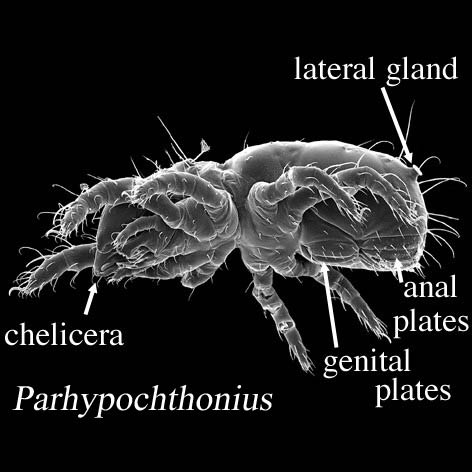
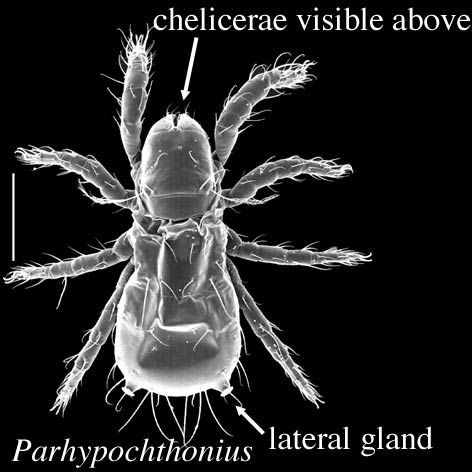
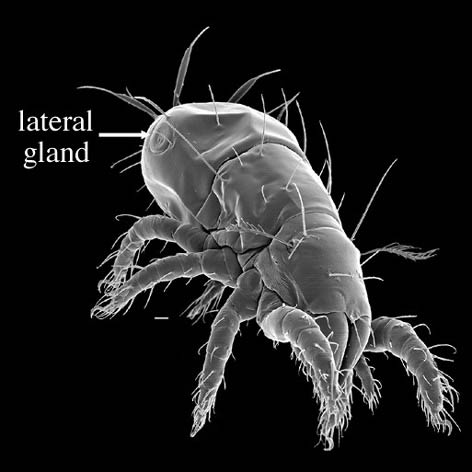
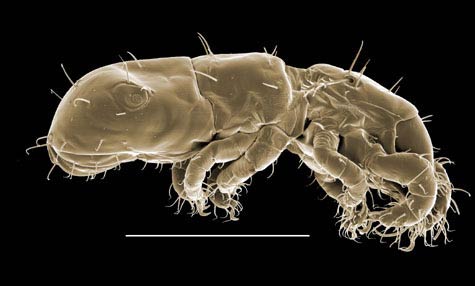
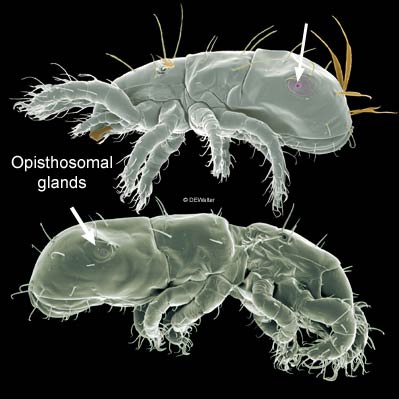
White to tan, sac-like oribatid mites with a transverse suturesuture:
an inflexible juncture between two body parts; line of fusion between two formerly separate body parts or regions. This term is often misused for flexible articulations.
between setalsetal:
of or pertaining to a seta.
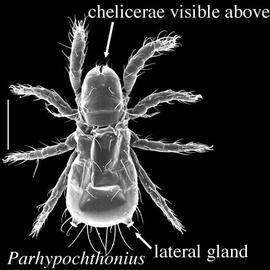
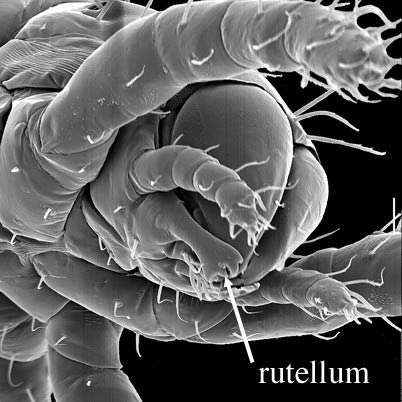
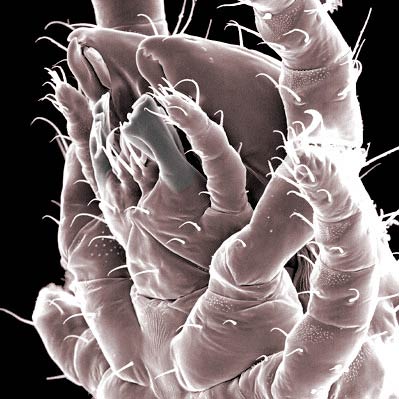
rows D and E and well developed lateral opisthonotal glands. Subcapitulumsubcapitulum:
(also infracapitulum) the venter of the capitulum; the ventral faces of the fused palpcoxae; apparently formed independently in the two superorders of mites.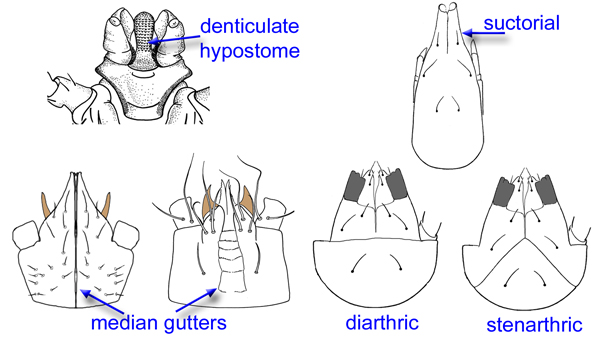 usually stenarthricstenarthric:
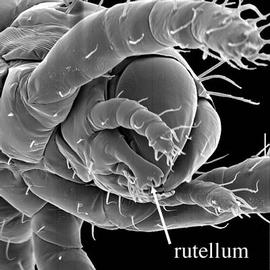
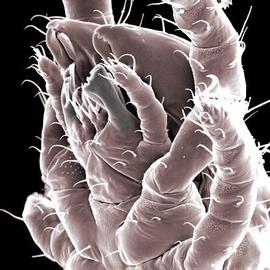
a subcapitulum with a triangular mentum and oblique labiogenal sutures; probable primitive condition in Acariformes. and chelicerae usually visible from above; rutellarutellum:
(pl. rutella) In Sarcoptiformes, the hypertrophied setae on the hypostome, often toothed; not to be confused with a corniculus (although possibly a homologue). In Astigmata, the rutellum may be referred to as a pseudorutellum, although it is the same structure. Various forms of rutella are recognized, including the atelebasic and pantelebasic.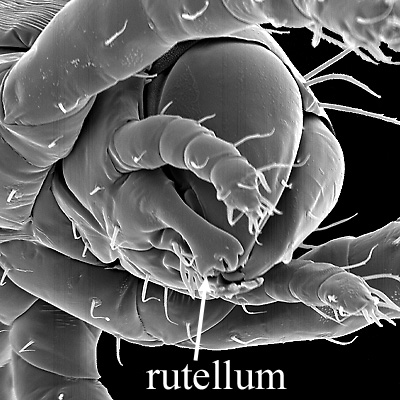 well developed. Claws of adults bi- or tridactyloustridactylous:
having three claws. 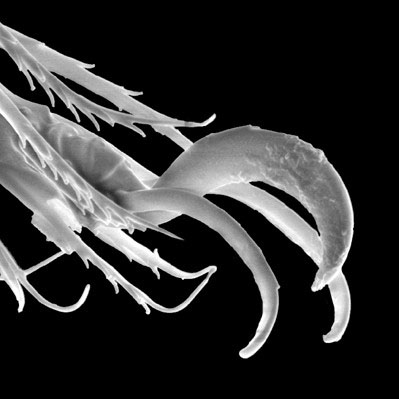 ; palps with 4–5 free segments. Macropyline, with 3 pairs of genital papillaegenital papillae:
1-3 pairs of extrusible finger-like to button-like projections, usually retracted into in the genital vestibule of acariform mites; sometimes formed as sessile disks around the genital opening; thought to be osmoregulatory structures; modified or multiplied and dispersed over the body in many freshwater mites. Genital papillae are absent in the larva, but may be added ontogenetically: protonymphs have one pair, deutonymphs two pairs, and tritonymphs (and adults) three pairs. The tritonymphal pair of papillae is often lost. The serially homologous Claparède's organ is usually present in the larvae (and prelarvae) of mites exhibiting genital papillae in nymphs and adults (Oudeman's Rule).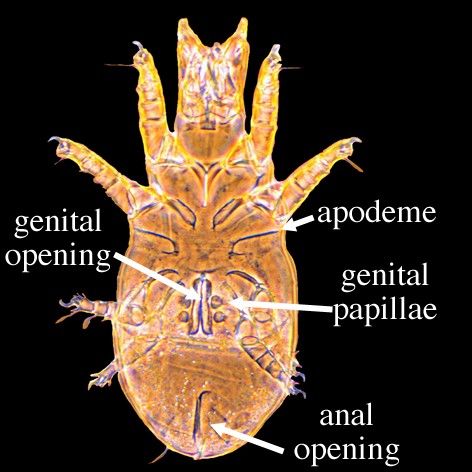 .
.
The transverse suturesuture:
an inflexible juncture between two body parts; line of fusion between two formerly separate body parts or regions. This term is often misused for flexible articulations.
between rows D and E should distinguish parhypochthonioids from oribatid immatures. Astigmatina do not have trichobothriatrichobothrium:
(pl. trichobothria) (= bothridial sensillum) an often elaborately modified seta set in a cup-like base; forms include filiform, ciliate, pectinate or variously thickened or clubbed (bat-like to globose or capitate).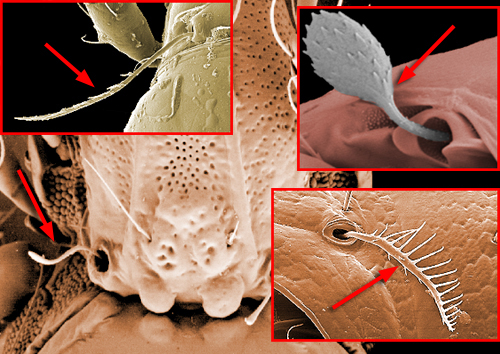 and Palaeosomatides do not have lateral opisthonotalopisthonotal:
dorsal opisthosoma.
gland openings. Some Brachypylina have large glands, but are well sclerotized as adults.
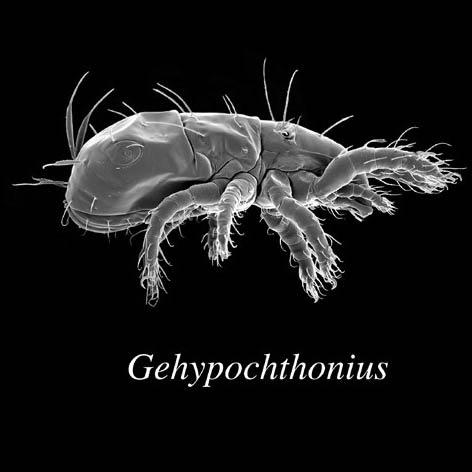
Parhypochthonioids can be common in dry soils, but are usually missed because they resemble immature oribatidsoribatidmites:
are a member of the sarcoptiform suborder Oribatida (=Cryptostigmata, Oribatei); some academics consider the use of 'oribatid' as a noun to be low class, but others consider that attitude pedantic.
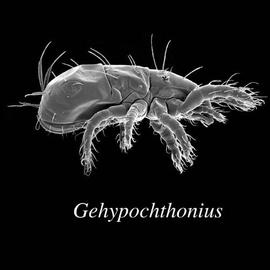
. Species of Gehypochthonius species inhabit a number of dry soil types, including dune sand. Parhypochthonius is found in treeholes, often in high numbers.
Author: David E. Walter
Content last updated Sept. 2006, unless indicated otherwise
Lucid key player updated Sept. 2025
idtools.org