t
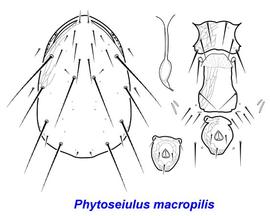
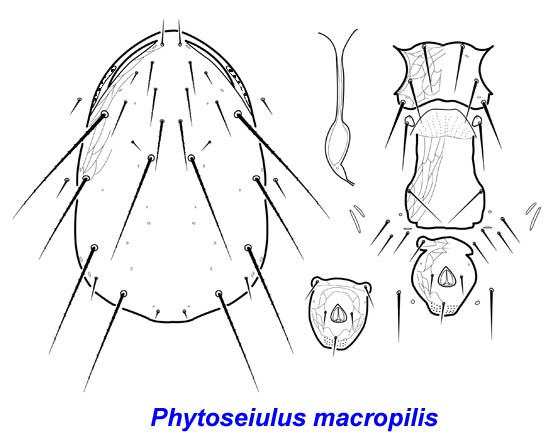
Phytoseiulus macropilis (Banks)
Phytoseiulus speyeri Evans, P. chanti Ehara, Typhlodromus macrosetis (Hirschmann)
Superorder Parasitiformes » Order Mesostigmata » Suborder Monogynaspida » Infraorder Gamasina » Hyporder Dermanyssiae » Superfamily Dermanyssoidea » Family Laelapidae » Subfamily Amblyseiinae » Genus Phytoseiulus » Species Phytoseiulus macropilis
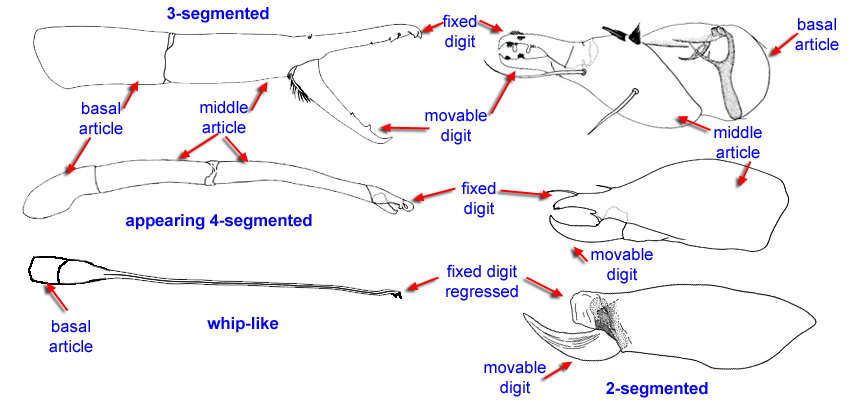 of chelicerachelicera:
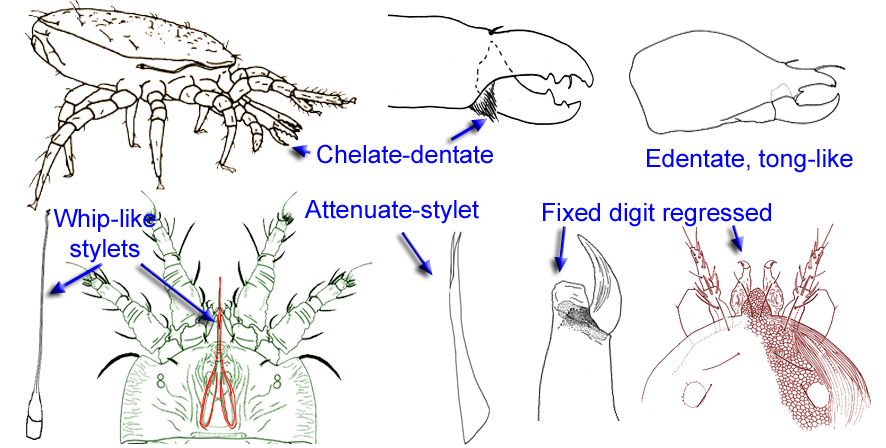 elongate and with row of 7–8 teeth
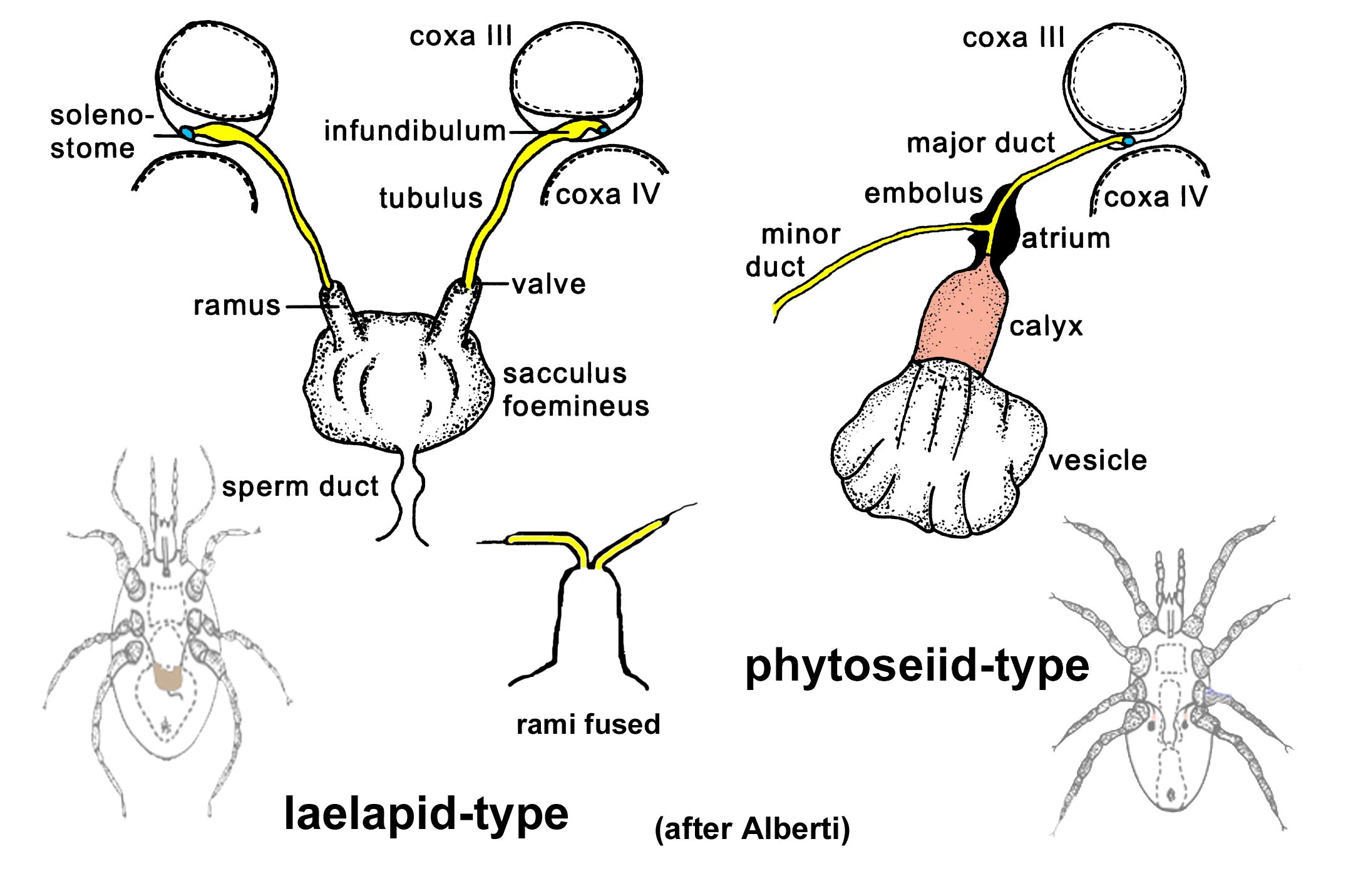 of spermathecaspermatheca:
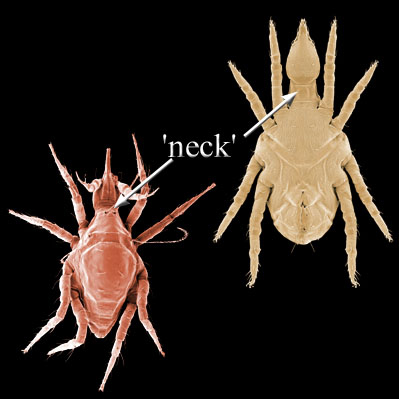 of variable length
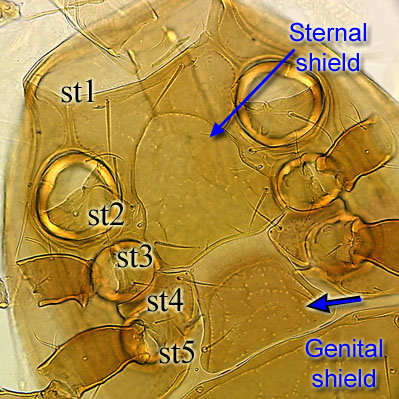 with 3 pairs of setae; st4 on small platelets
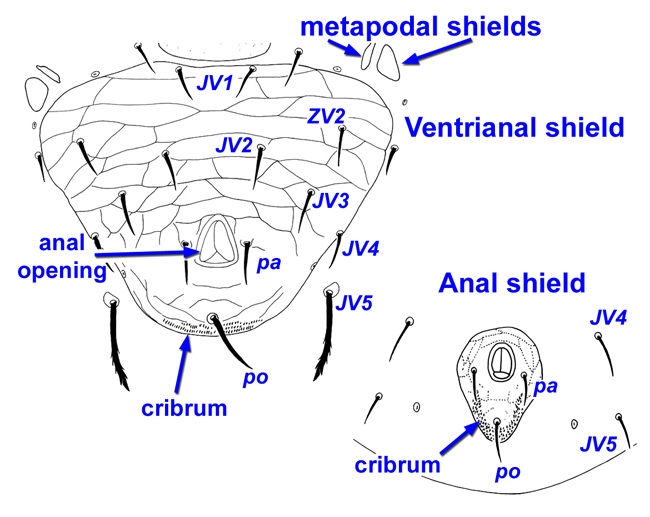 with 5 setae; however, antero-lateral margins of the shield may be eroded and one or both setae JV2 in the soft cuticle
Phytoseiulus longipes has a sternal shieldsternal shield:
a shield in the anterior intercoxal region of parasitiform mites that bears one or more pairs of sternal setae. with only 2 pairs of setaeseta:
(pl. setae, from L. = bristle) cuticular process composed of a hollow shaft (sometimes filled with a refractive material) produced from a membranous socket (the alveolus); the hair-like, spine-like, branched or variously expanded structures on the surfaces of the legs and body. Most setae function as mechanoreceptors, but others (e.g., solenidia) are chemoreceptors or have unknown or ambiguous functions.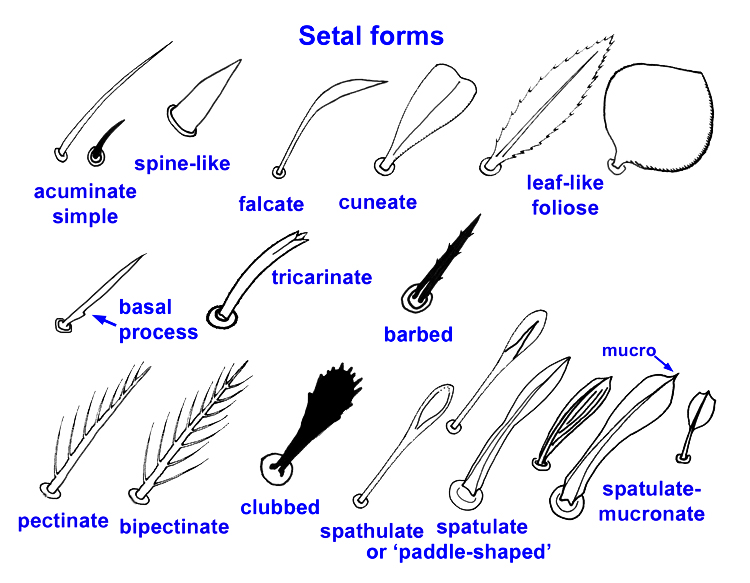 (st1–2) and lacks dorsaldorsal:
relating to the upper or back side; opposed to ventral.
shield setae j5 and S5. Phytoseiulus fragariae has simplesimple:
unadorned; simple setae are needle-like and without hairs or pectins.
setae j6 shorter than Z1 and setae JV4 present laterad the ventrianal shieldventrianal shield:
in Mesostigmata, a ventral shield bearing the anal opening, circum anal setae, and one or more pairs of ventral setae or pores (lyrifissures) [see anal shield]; maybe rather narrow or very broad and covering most of the gaster.. Phytoseiulus macropilis usually has a ventrianal shieldventrianal shield:
in Mesostigmata, a ventral shield bearing the anal opening, circum anal setae, and one or more pairs of ventral setae or pores (lyrifissures) [see anal shield]; maybe rather narrow or very broad and covering most of the gaster. with 4–5 setaeseta:
(pl. setae, from L. = bristle) cuticular process composed of a hollow shaft (sometimes filled with a refractive material) produced from a membranous socket (the alveolus); the hair-like, spine-like, branched or variously expanded structures on the surfaces of the legs and body. Most setae function as mechanoreceptors, but others (e.g., solenidia) are chemoreceptors or have unknown or ambiguous functions. (rarely an anal shield with 3 setaeseta:
(pl. setae, from L. = bristle) cuticular process composed of a hollow shaft (sometimes filled with a refractive material) produced from a membranous socket (the alveolus); the hair-like, spine-like, branched or variously expanded structures on the surfaces of the legs and body. Most setae function as mechanoreceptors, but others (e.g., solenidia) are chemoreceptors or have unknown or ambiguous functions.) and a barbed macroseta on basitarsusbasitarsus:
a basal subdivision of the tarsus.
IV. Phytoseiulus persimilispersimilis:
the phytoseiid mite Phytoseiulus persimilis Athias-Henriot, a commercially available and extremely efficient predator of spider mites. Also called the Chilean predatory mite or the predatory mite.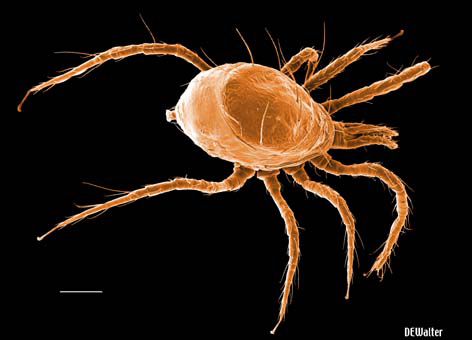 always has an anal shield and has a simplesimple:
unadorned; simple setae are needle-like and without hairs or pectins.
macroseta on basitarsusbasitarsus:
a basal subdivision of the tarsus.
IV.
Author: David E. Walter
Content last updated Sept. 2006, unless indicated otherwise
Lucid key player updated Sept. 2025
idtools.org