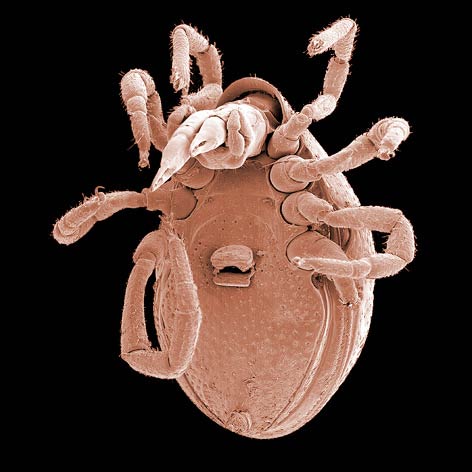
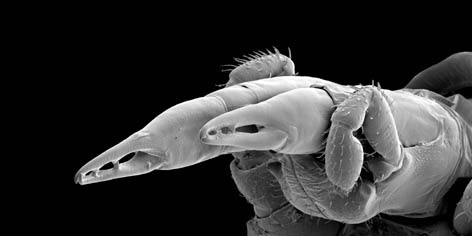
test
Holothyrida Thon, 1905
Superorder Parasitiformes » Order Holothyrida
holothyrans, holothyrids, allothyrids
very low
None. These mites are rare and of no known quarantine importance, although some species are toxic if ingested.
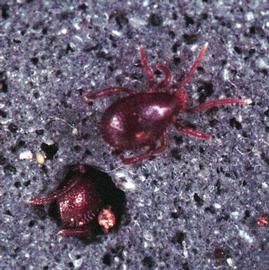
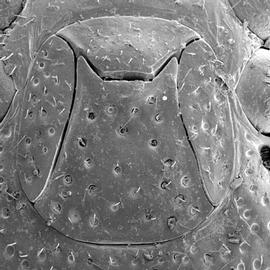
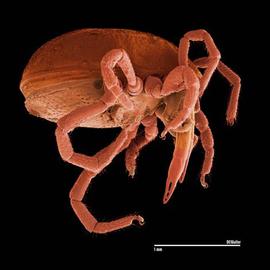
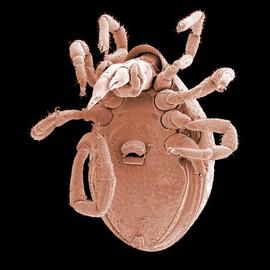
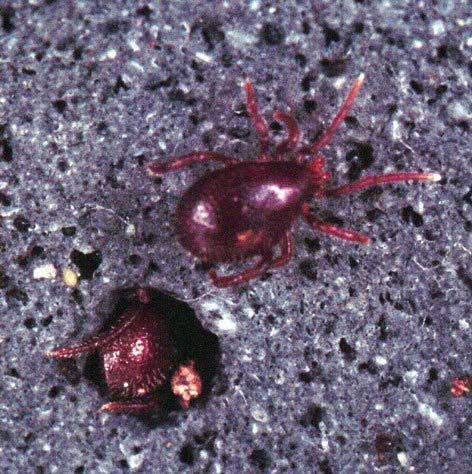
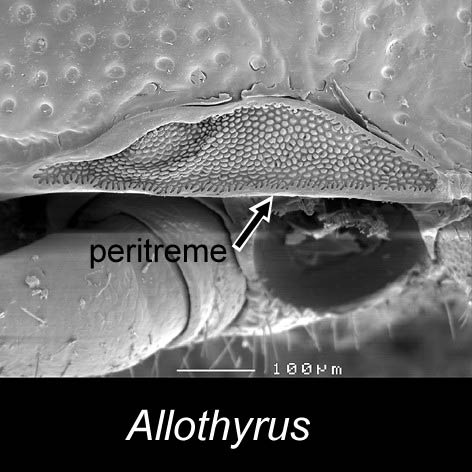
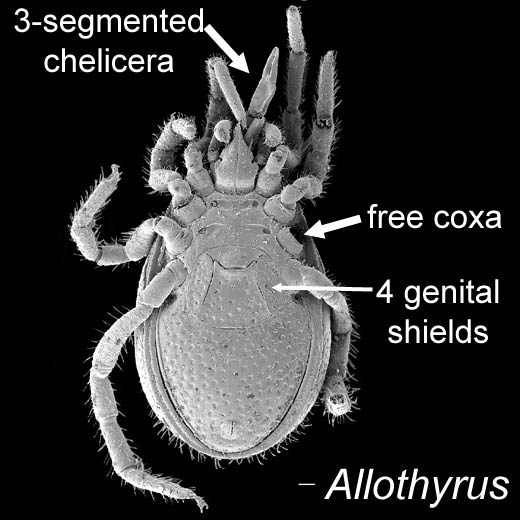
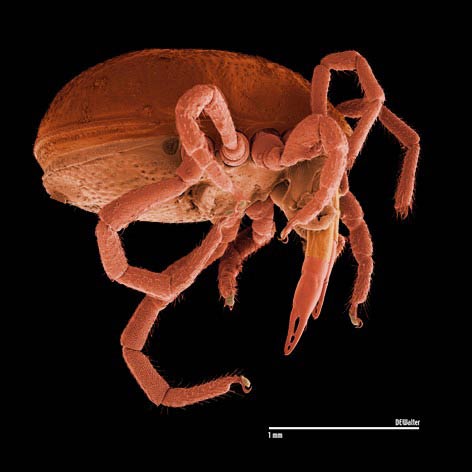
Adults orange, red, reddish brown to almost black, beetle-like with fully sclerotized dome-shaped holodorsal shieldholodorsal shield:
a shield that covers all of the dorsum. In Mesostigmata, the holodorsal shield is often interpreted as resulting from the fusion of podonotal and opisthonotal shields and a suture between these regions is often visible (see recurved and procurved).
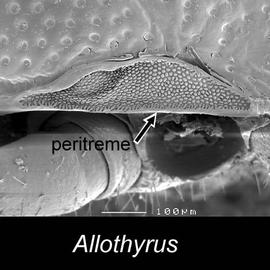
with short, broad peritremes above legs III and with or without one pair of lateral ocelliocellus:
(pl. ocelli) a simple eye. Mites with eyes usually have one or two pairs of lateral ocelli, but some Opilioacarida have three pairs. Additionally, some acariform mites have one or two median ocelli on the underside of the naso.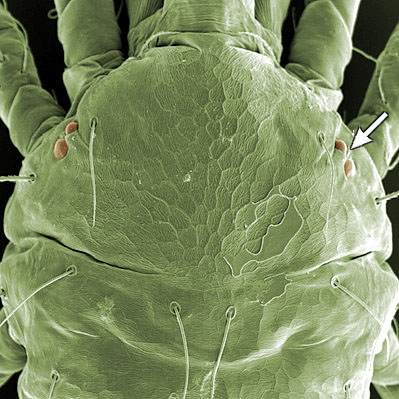 ; the holoventral shield encompasses a posteriorposterior:
the back part of the body or towards that region in comparison, e.g., 'posterior to'.
pair of anal valves each with ≥2 setaeseta:
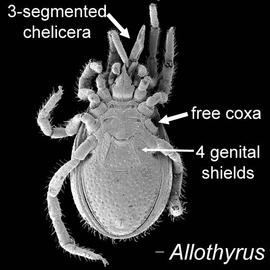
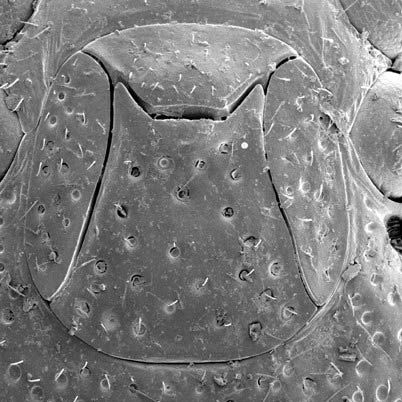
(pl. setae, from L. = bristle) cuticular process composed of a hollow shaft (sometimes filled with a refractive material) produced from a membranous socket (the alveolus); the hair-like, spine-like, branched or variously expanded structures on the surfaces of the legs and body. Most setae function as mechanoreceptors, but others (e.g., solenidia) are chemoreceptors or have unknown or ambiguous functions.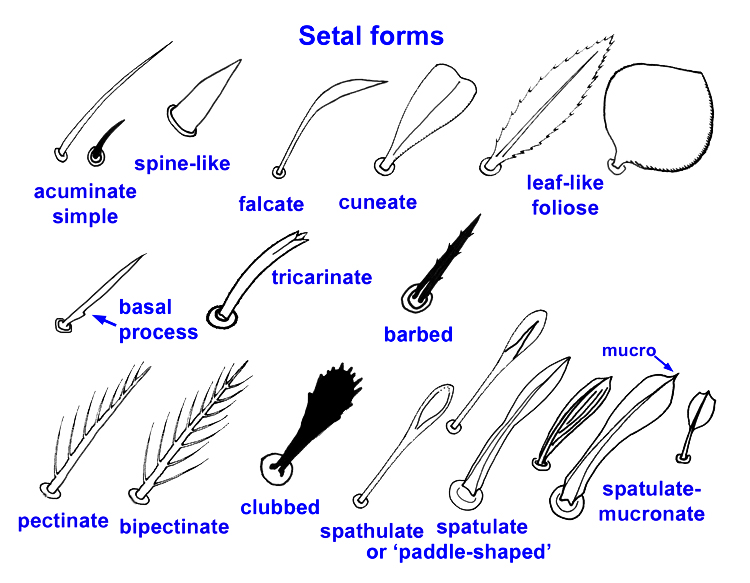 , and in the intercoxal region, a pair of transverse, setose genital valvesgenital valves:
sclerites covering the genital opening; usually referring to small sclerites (larger ones are usually called 'shields' or 'plates'.
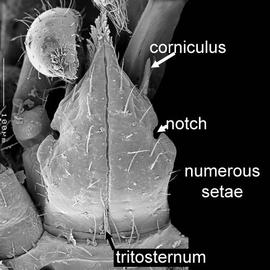
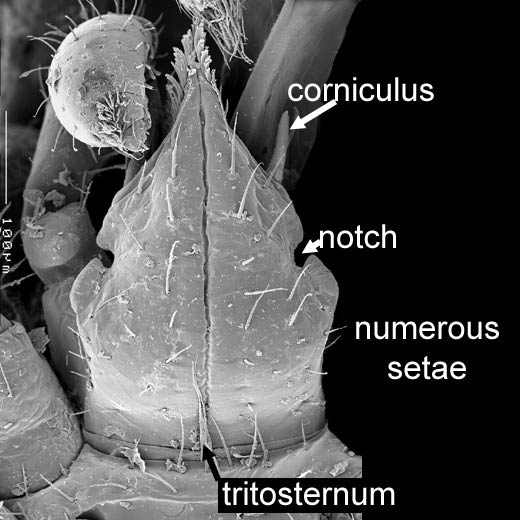
in the male and usually 4 setose genital shields in the female. Tritosternumtritosternum:
the sternum of the 3rd body segment (between legs I); produced as a biflagellate structure in Mesostigmata, although sometimes the flagellae (laciniae) are partially or completely fused. 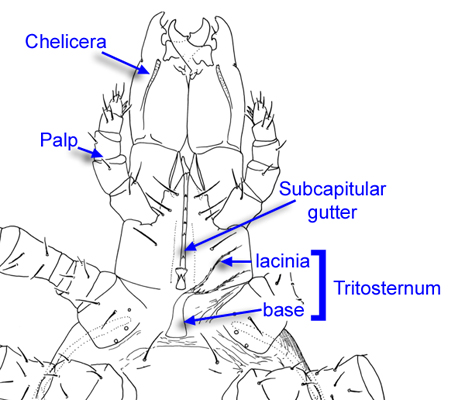 present and flagelliform or absent; hypostome with ≥5 pairs of setaeseta:
(pl. setae, from L. = bristle) cuticular process composed of a hollow shaft (sometimes filled with a refractive material) produced from a membranous socket (the alveolus); the hair-like, spine-like, branched or variously expanded structures on the surfaces of the legs and body. Most setae function as mechanoreceptors, but others (e.g., solenidia) are chemoreceptors or have unknown or ambiguous functions. (including palpcoxal); sclerotized gnathotectumgnathotectum:
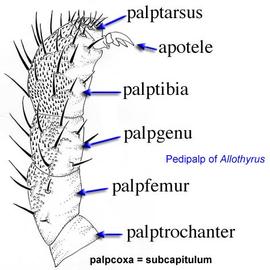
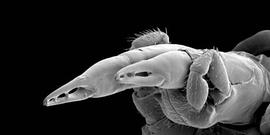
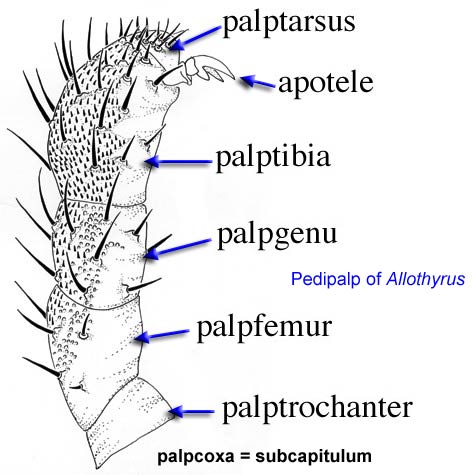
(= epistome, tectum) an often membranous dorsal projection of the anterior margin of the basis capitulum in Mesostigmata; often diagnostic at family-, genus- or species-levels; also often difficult to see without high magnification and good optics.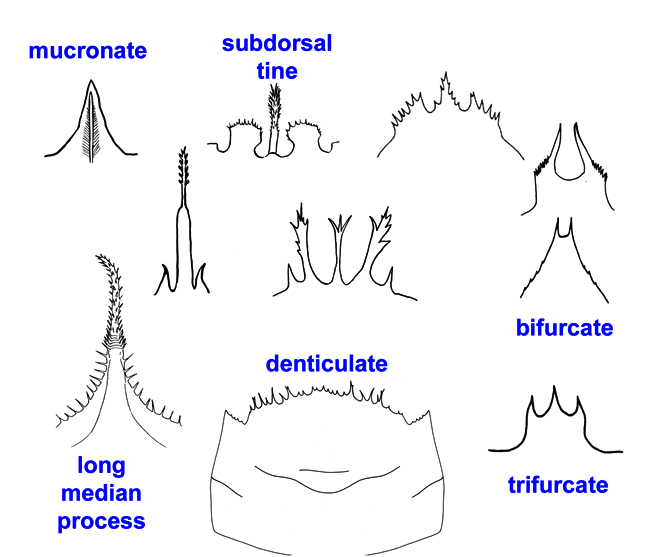 absent. Chelicerae 3-segmented; palps 5-segmented; coxae free.
Other relatively large and heavily sclerotised mites occur in the Brachypylina, Monogynaspida (especially the Ologamasidae), and Trigynaspida, but none of these will have the short, broad peritrematal plates, more than 5 pairs of subcapitular setae, or a dense covering of short setae.
Holothyrans can be found in leaf litter, mosses, and under stones in moist forests from near sea level to about 2,000 m in elevation. Allothyrids and some holothyrids are known to scavenge, but none have been demonstrated to be predators. Field collections of Allothyrus in eastern Australia tend to have about equal numbers of adult males and females. Adults are lethargic animals that play dead when disturbed. Nymphs tend to be more active, and nymphal Allothyrus have a pair of large glands that open on the dorso-lateral aspects of the idiosoma that excrete fluid when the mites are annoyed. Adults of Holothyrus coccinella Gervais produce a distasteful exudate that is reported to be fatal to fowl that eat them.
Author: David E. Walter
Content last updated Sept. 2006, unless indicated otherwise
Lucid key player updated Sept. 2025
idtools.org