test
Mesostigmata G. Canestrini, 1891
Superorder Parasitiformes » Order Mesostigmata
suborders: Sejida, Trigynaspida, Monogynaspida
mesostigmatans, mesostigmatid mites, mesostigmatic mites
very high
High. Including many species parasitic on mammals, birds, reptiles and social insects such as bees (eg., Varroa, Tropilaelaps), predatory mites used in biocontrol, flower mites, stored product predators, and predatory soil mites.
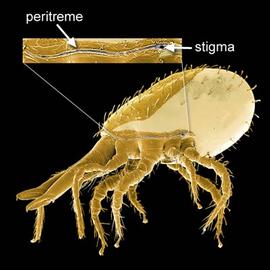
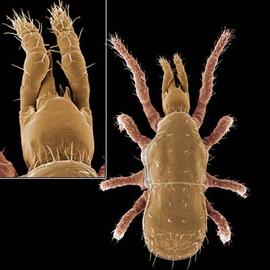
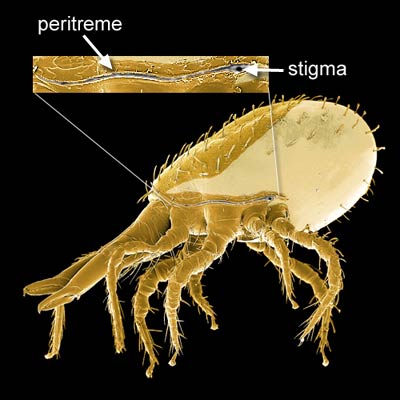
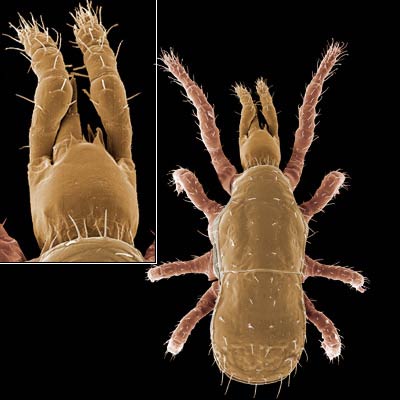
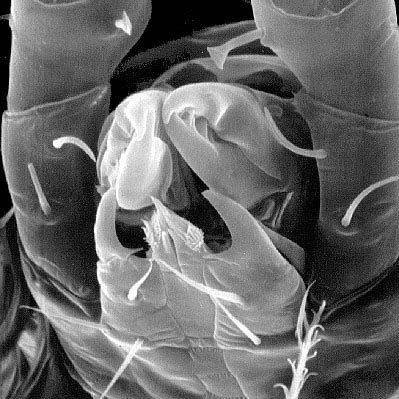
Very small (0.12 mm long) to large (4 mm) mites with a pair of stigmatal openings above legs III–IV usually associated with a peritrematal groove; gnathosomagnathosoma:
(= capitulum) the anteriormost part of a mite or ricinuleid, composed of the cheliceral and pedipalpal segments and separated from the body (idiosoma) by a ring of soft cuticle.
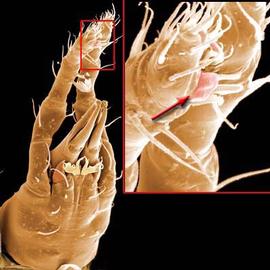
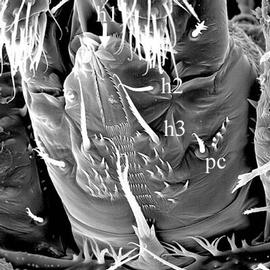
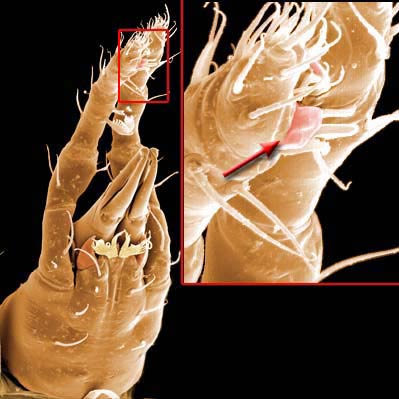
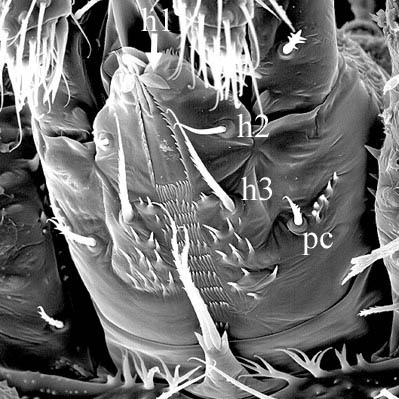
with a sclerotized ring, the basis capitulum, that encompasses the bases of the chelicerae; palps with 5 (rarely 4) free segments and usually with a subdistal palppalp:
(= pedipalp) the second pair of limbs in arachnids, used in feeding and originating on either side of the chelicerae. In mites, the palps may be vestigial, with only a few segments, or have a maximum of 5 freely articulating segments (rarely the femur is subdivided) and a distal or subdistal apotele.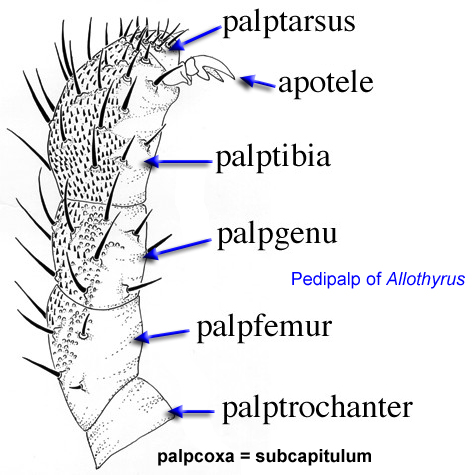 apotele; a median groove with transverse rows of 1-many denticlesdenticles:
small tooth-like processes, e.g., on the subcapitula of ticks and many mesostigmatans.
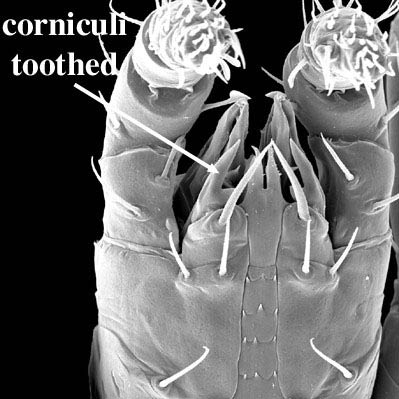
; horn-like, bifurcate to membranous corniculicorniculus:
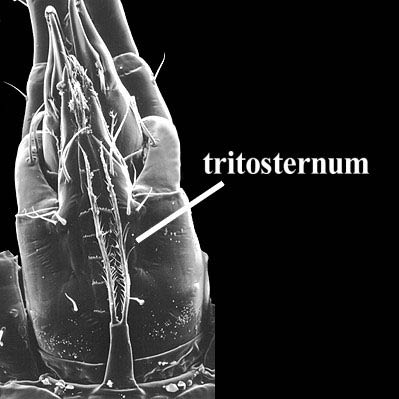
(pl. corniculi) (also, external malae) a usually horn-like process (sometimes toothed, bifurcate, trifurcate, spine-like, spatulate, or membranous) on the subcapitulum of parasitiform mites that usually supports the salivary styli. A toothed corniculus could be confused with a rutellum, a possibly homologous structure in Acariformes and Opilioacarida. Phytoseiid image is spatulate corniculus.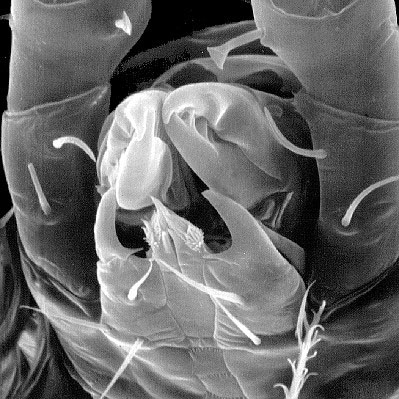 typically present; flagellate tritosternum present except in a few parasites; coxae freely articulating with bodybody:
the idiosoma of mites.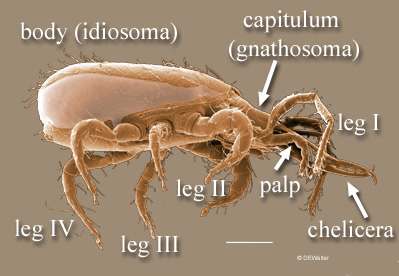 ; chelicerae 3-segmented; without prodorsal trichobothriatrichobothrium:
(pl. trichobothria) (= bothridial sensillum) an often elaborately modified seta set in a cup-like base; forms include filiform, ciliate, pectinate or variously thickened or clubbed (bat-like to globose or capitate).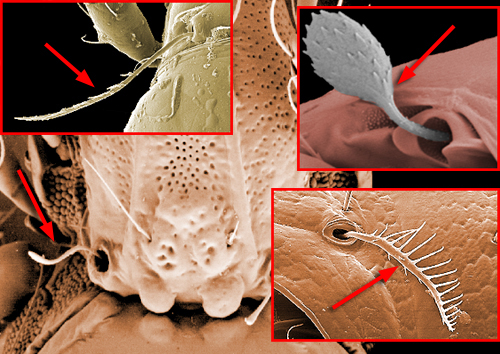 ; intercoxal region with sternal and genital shieldgenital shield:
a shield or shields covering the genital opening; in female mongynaspine Mesostigmata this shield is usually called the epigynal (epigynial) shield.
elements; development: hexapodhexapod:
with three pairs of legs (i.e. 6 legs), as in the larvae of mites or the larviform stages of others.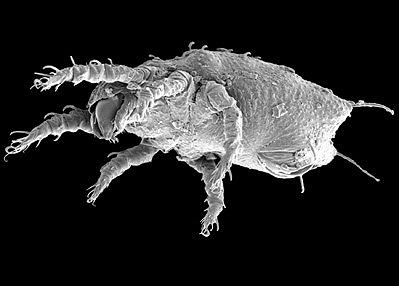 larva (feeding or non-feeding) and two octopod nymphal stages (protonymphprotonymph:
the first nymphal stage or instar, usually octopod.
, deutonymphdeutonymph:
(also deuteronymph) the second nymphal stage or instar.
) bearing usually lightly sclerotized dorsaldorsal:
relating to the upper or back side; opposed to ventral.
, intercoxal and ventralventral:
relating to the lower or under side; opposed to dorsal.
plates; genital opening not expressed until adult stagestage:
a distinct developmental form, e.g., the egg, larval, nymphal and adult stages. Since mite instars are usually morphologically distinct, they are also stages (and see stase). Some authors, however, insist that instar should be apolysis to apolysis and stage ecdysis to ecdysis. Since apolysis can be a discontinuous process and, in any case, is difficult to determine, in practice the difference between a stage and an instar is abstract and of importance only if you have a contentious referee.
; males never with a aedeagusaedeagus:
a male intromittent organ, especially when sclerotized (e.g., in Tetranycoidea, Raphignathoidea); a penis is a flexible, membranous intromittent organ, although 'penis' is often used for aedeagi (e.g., in Astigmata)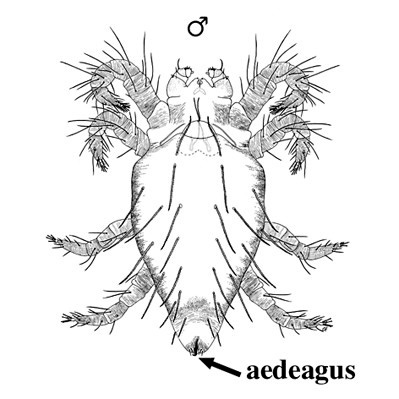 , but often with chelicerae modified for sperm transfer (spermatodactylspermatodactyl:
(also spermadactyl) the 'sperm finger' on the chelicerae of male dermanyssine Mesostigmata used to transfer sperm to the secondary sperm system in the female; spermatodactyls take various forms, from simple finger-like processes to very long, contorted structures. 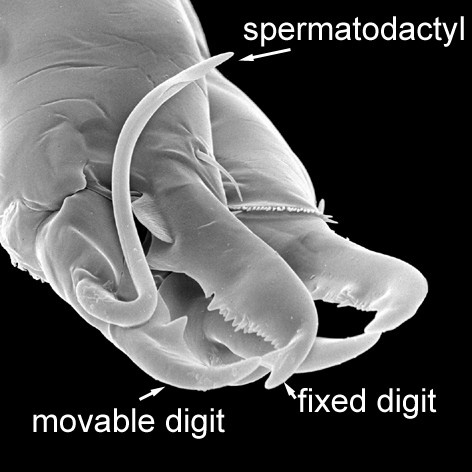 , spermatotremespermatotreme:
a slit-like opening on the movable digit of male Parasitidae that grasps the neck of the spermatophore during sperm transfer; considered to be a foramen left by the distal fusion of a spermatodactyl to the movable digit.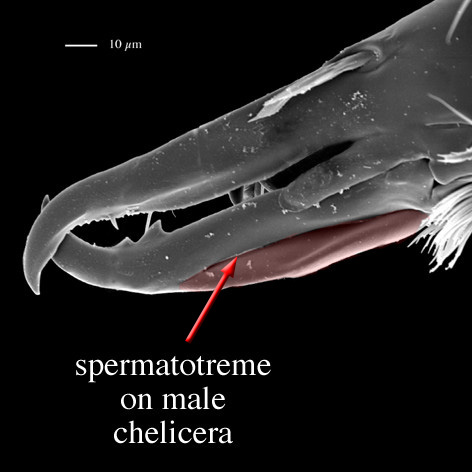 ); female sperm receiving structure primary or secondary.
Key to Mesostigmata, (Monogynaspida)
Mesostigmata, (Monogynaspida) fact sheet index
Holothyrans and soft ticks have lateral stigmatal openings, but holothyrans lack the basis capitulumgnathosoma:
(= capitulum) the anteriormost part of a mite or ricinuleid, composed of the cheliceral and pedipalpal segments and separated from the body (idiosoma) by a ring of soft cuticle.
and ticks have a denticulatedenticulate:
bearing small, sharp processes, e.g., the hypostome of ticks.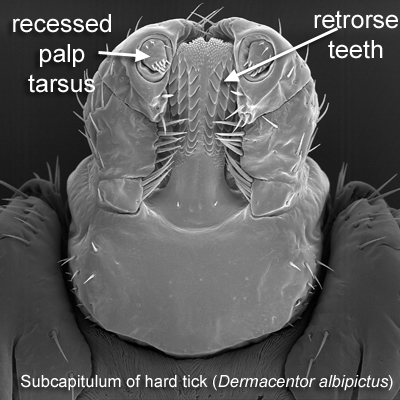 hypostome. Some Heterostigmatina are similar in shape and coloring to small mesostigmatans, but will have capitate trichobothriatrichobothrium:
(pl. trichobothria) (= bothridial sensillum) an often elaborately modified seta set in a cup-like base; forms include filiform, ciliate, pectinate or variously thickened or clubbed (bat-like to globose or capitate). and a gnathosomal capsulegnathosomal capsule:
a fusion of the gnathosomal elements (chelicerae and subcapitulum) into a single structure, as seen in protigmatans such as Heterostigmata, Myobiidae, and Cheyletoidea (also tegmen).
.
Cosmopolitan. Although most species are free-living predators (including the members of the Phytoseiidae and Laelapidae used in biological control), the Dermanyssoidea contains numerous lineages parasitic on vertebrates and large or social arthropods. Many are phoretic on insects as deutonymphs or inseminated adult females. A few lineages have colonized flowers where they feed on pollen and nectar, and some species feed on fungi. With rare exceptions, most mesostigmatans are fluid-feeders.
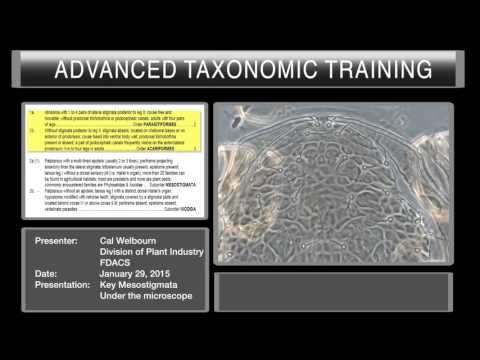
Using a dichotomous key to identify a mite specimen as Mesostigmata, part 1

Using a dichotomous key to identify a mite specimen as Mesostigmata, part 2
Author: David E. Walter
Content last updated Sept. 2006, unless indicated otherwise
Lucid key player updated Sept. 2025
idtools.org