Oribatida—immature stagestage:
a distinct developmental form, e.g., the egg, larval, nymphal and adult stages. Since mite instars are usually morphologically distinct, they are also stages (and see stase). Some authors, however, insist that instar should be apolysis to apolysis and stage ecdysis to ecdysis. Since apolysis can be a discontinuous process and, in any case, is difficult to determine, in practice the difference between a stage and an instar is abstract and of importance only if you have a contentious referee.
(see Major Mite Taxa Key)
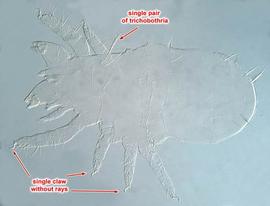
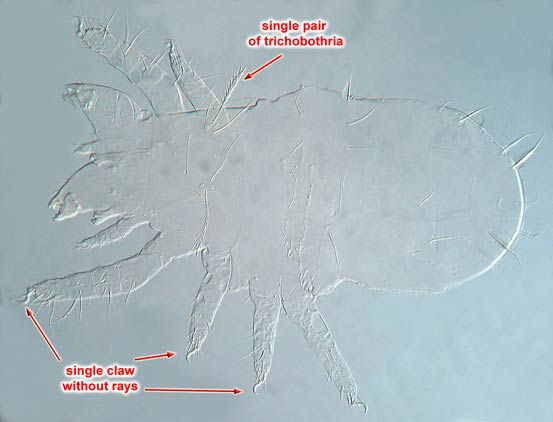
Prodorsum with 1 pair of variously formed trichobothria and usually 5 pairs of setae, naso and/or eyes rarely present, legs ending in a single claw without rays, opisthonotal gland often present.
The immature stages of some oribatid mites may be confused with Endeostigmata.
Author: David E. Walter
Content last updated Sept. 2006, unless indicated otherwise
Lucid key player updated Sept. 2025
idtools.org