t
Micropsammidae Coineau & Theron, 1983
Micropsammus Coineau & Theron, 1983: 275–280
Micropsammus litoralis Coineau & Theron, 1983
Superorder Acariformes » Order Sarcoptiformes » Suborder Endeostigmata » Infraorder Nematalycina » Superfamily Nematalycoidea » Family Micropsammidae » Genus Microspammus
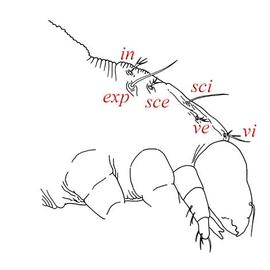
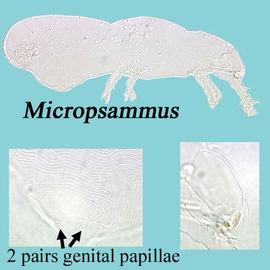
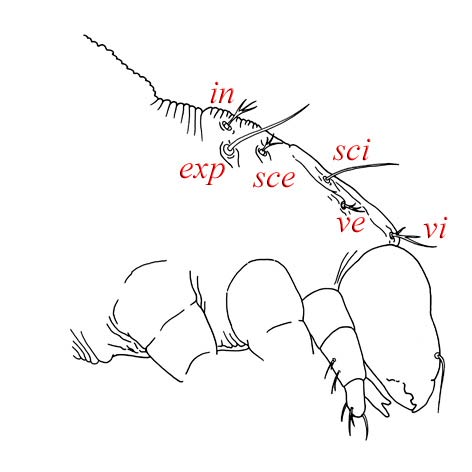
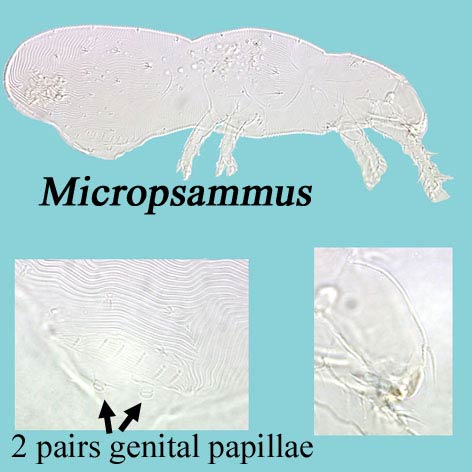
Elongate endeostigmatans without prodorsal trichobothria, but with postpedal constrictions and massive chelicerae.
Micropsammus, an elongate mite with a strong constriction behind legs IV, is the least aberrant of the Nematalycoidea and retains 3 pairs of prodorsal setaeseta:
(pl. setae, from L. = bristle) cuticular process composed of a hollow shaft (sometimes filled with a refractive material) produced from a membranous socket (the alveolus); the hair-like, spine-like, branched or variously expanded structures on the surfaces of the legs and body. Most setae function as mechanoreceptors, but others (e.g., solenidia) are chemoreceptors or have unknown or ambiguous functions.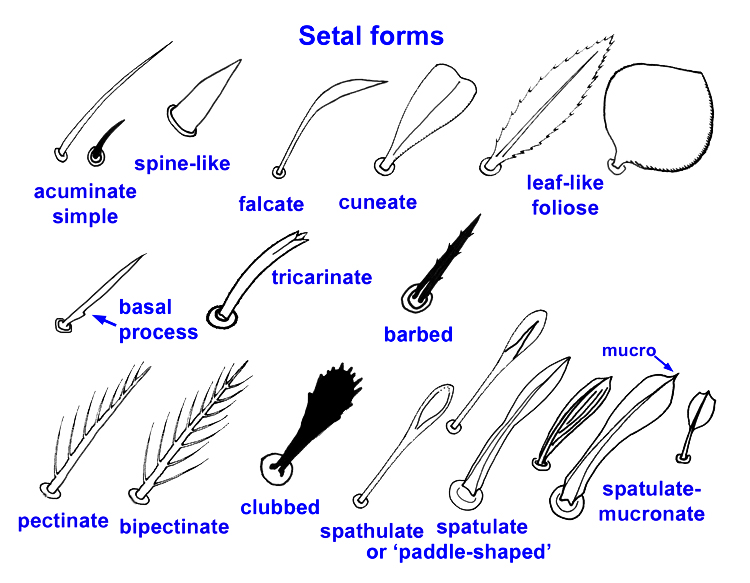 , a naso bearing setae ro, and well developed rutellarutellum:
(pl. rutella) In Sarcoptiformes, the hypertrophied setae on the hypostome, often toothed; not to be confused with a corniculus (although possibly a homologue). In Astigmata, the rutellum may be referred to as a pseudorutellum, although it is the same structure. Various forms of rutella are recognized, including the atelebasic and pantelebasic.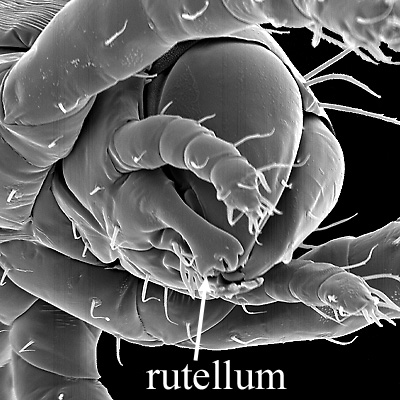 . Species of Micropsammus feed on fungi and form gut boluses, but nothing is known about the other members of the cohort except that they appear to be fluid feeders.
Author: David E. Walter
Content last updated Sept. 2006, unless indicated otherwise
Lucid key player updated Sept. 2025
idtools.org