t
Proteonematalycidae Kethley, 1989Kethley, 1989:
Kethley J. 1989. Proteonematalycidae (Acari: Acariformes), a new mite family from fore-dune sand of Lake Michigan. International Journal of Acarology 15 (4): 209-217.
Proteonematalycus Kethley, 1989Kethley, 1989:
Kethley J. 1989. Proteonematalycidae (Acari: Acariformes), a new mite family from fore-dune sand of Lake Michigan. International Journal of Acarology 15 (4): 209-217.
Proteonematalycus wagneri Kethley, 1989—fore-dune sand Lake Michigan (Indiana)
Superorder Acariformes » Order Sarcoptiformes » Suborder Endeostigmata » Infraorder Nematalycina » Superfamily Nematalycoidea » Family Proteonematalycidae » Genus Proteonematalycus
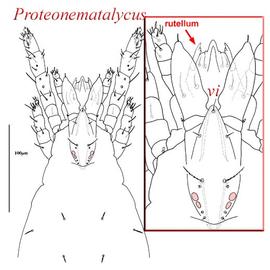
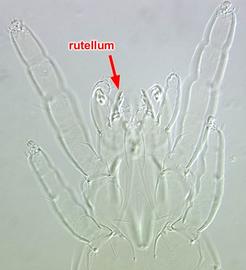
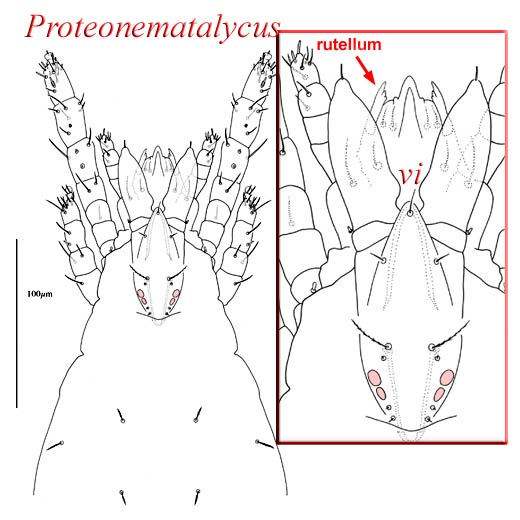
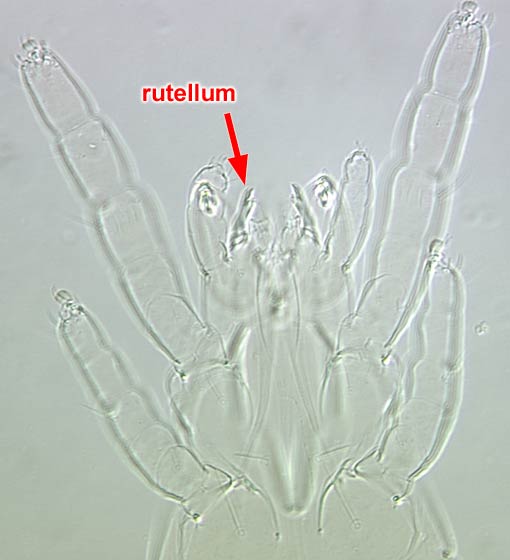
Proteonematalycus, an even more worm-likeworm-like:
elongate, with reduced legs as in some Nematalycidae (Endeostigmata).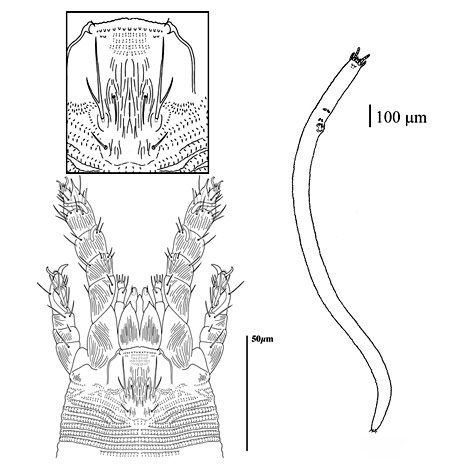 mite, has an unpaired median seta ro and minute prodorsal setae exa, in and exp. It also retains median and lateral eyes, as well as rutellarutellum:
(pl. rutella) In Sarcoptiformes, the hypertrophied setae on the hypostome, often toothed; not to be confused with a corniculus (although possibly a homologue). In Astigmata, the rutellum may be referred to as a pseudorutellum, although it is the same structure. Various forms of rutella are recognized, including the atelebasic and pantelebasic.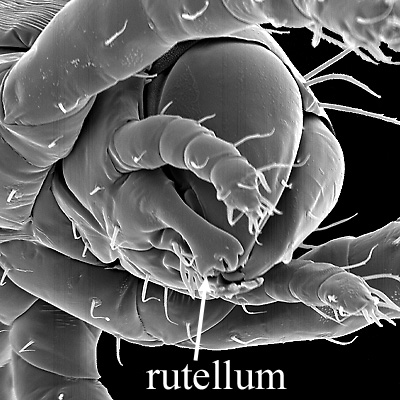 and 3 pairs of genital papillaegenital papillae:
1-3 pairs of extrusible finger-like to button-like projections, usually retracted into in the genital vestibule of acariform mites; sometimes formed as sessile disks around the genital opening; thought to be osmoregulatory structures; modified or multiplied and dispersed over the body in many freshwater mites. Genital papillae are absent in the larva, but may be added ontogenetically: protonymphs have one pair, deutonymphs two pairs, and tritonymphs (and adults) three pairs. The tritonymphal pair of papillae is often lost. The serially homologous Claparède's organ is usually present in the larvae (and prelarvae) of mites exhibiting genital papillae in nymphs and adults (Oudeman's Rule).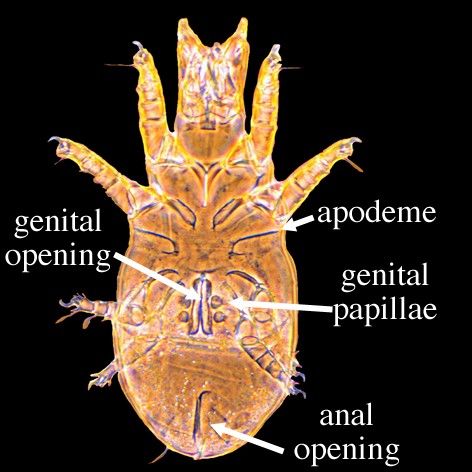 .
.
Author: David E. Walter
Content last updated Sept. 2006, unless indicated otherwise
Lucid key player updated Sept. 2025
idtools.org