t
Proterorhagiidae Lindquist & Palacios-Vargas, 1991—1 genus, 1 sp.
Proterorhagia Lindquist & Palacios-Vargas, 1991
Proterorhagia oztotloica Lindquist & Palacios-Vargas
Superorder Acariformes » Order Sarcoptiformes » Suborder Endeostigmata » Infraorder Bimichaliida » Superfamily Alycoidea » Family Proterorhagiidae » Genus Proterorhagia
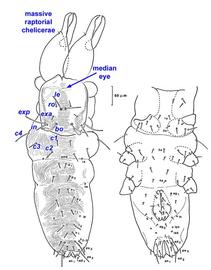
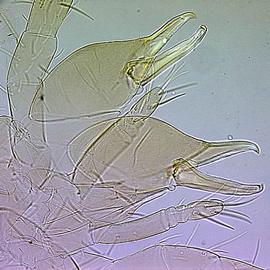
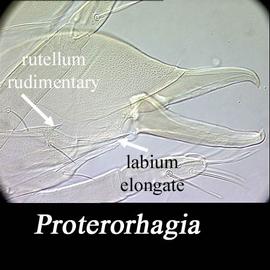
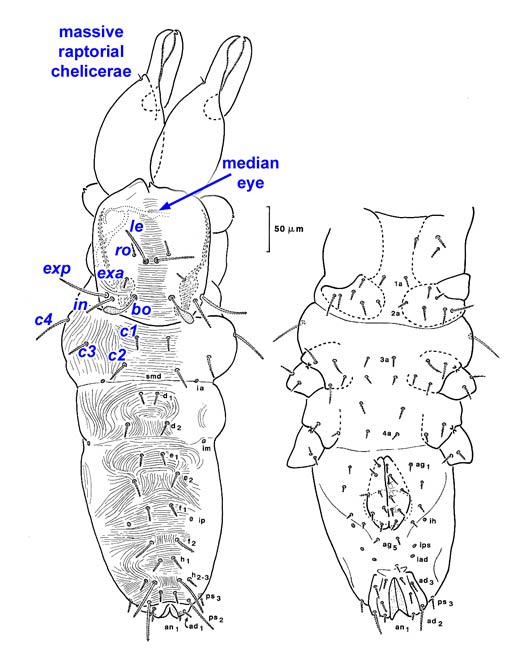
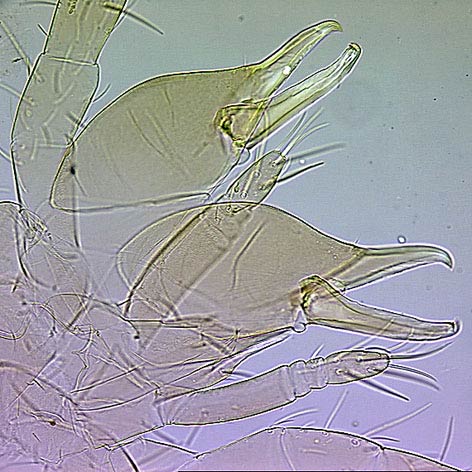
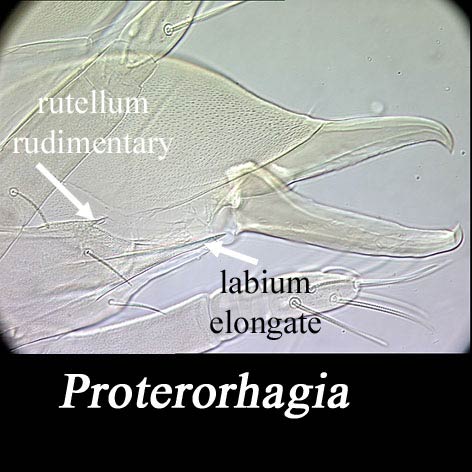
Chelicerae massive, 1/3rd length of idiosoma, and chelatechelate:
pincer-like, as in a crab's claws, a scorpion's pedipalps or many chelicerae; in water mites (Hydrachnida), chelate palps have a dorsal palptibial process opposed to a ventral movable palptarsus (opposed to uncate).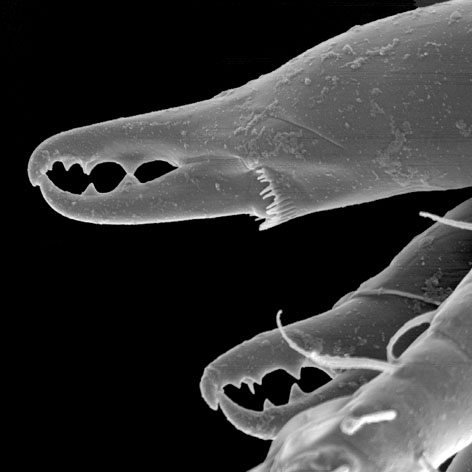 -serrulate; subcapitulumsubcapitulum:
(also infracapitulum) the venter of the capitulum; the ventral faces of the fused palpcoxae; apparently formed independently in the two superorders of mites.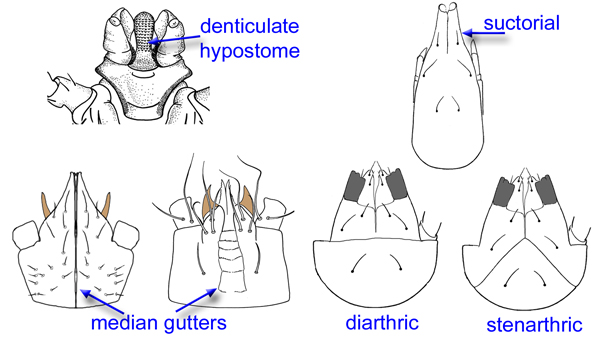 with elongate labium; rutellarutellum:
(pl. rutella) In Sarcoptiformes, the hypertrophied setae on the hypostome, often toothed; not to be confused with a corniculus (although possibly a homologue). In Astigmata, the rutellum may be referred to as a pseudorutellum, although it is the same structure. Various forms of rutella are recognized, including the atelebasic and pantelebasic.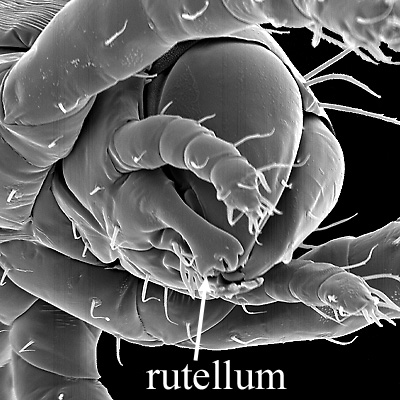 vestigial; palps with 5 free segments. Prodorsumprodorsum:
the dorsal surface of the propodosoma.
with two pairs of trichobothriatrichobothrium:
(pl. trichobothria) (= bothridial sensillum) an often elaborately modified seta set in a cup-like base; forms include filiform, ciliate, pectinate or variously thickened or clubbed (bat-like to globose or capitate).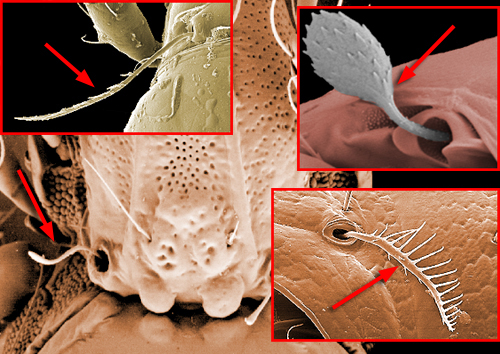 (bo capitatecapitate:
with a terminal knob or head-like swelling; clavate; globose.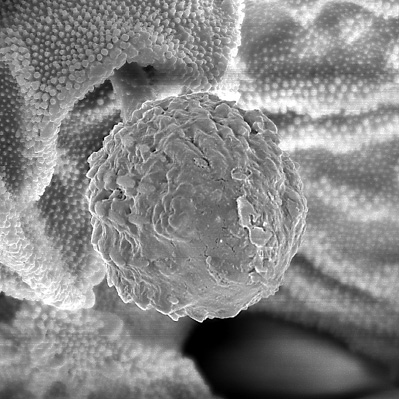 , le setiform), 4 pairs of setaeseta:
(pl. setae, from L. = bristle) cuticular process composed of a hollow shaft (sometimes filled with a refractive material) produced from a membranous socket (the alveolus); the hair-like, spine-like, branched or variously expanded structures on the surfaces of the legs and body. Most setae function as mechanoreceptors, but others (e.g., solenidia) are chemoreceptors or have unknown or ambiguous functions.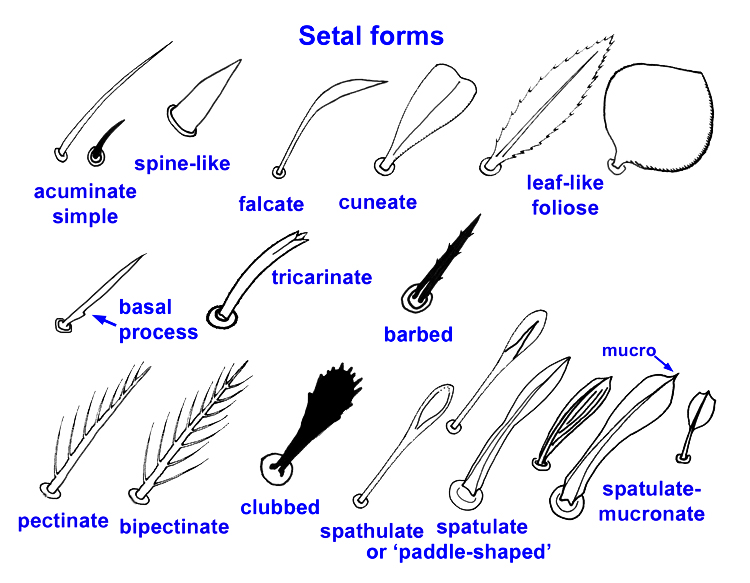 , and remnant of median eye; lateral eyes absent; naso absent. Opisthosomaopisthosoma:
(= abdomen) the posterior body division in arachnids; usually not distinct in mites because of the fusion of the opisthosoma with part of the prosoma to form the idiosoma.
with 16 pairs of dorso-lateral setaeseta:
(pl. setae, from L. = bristle) cuticular process composed of a hollow shaft (sometimes filled with a refractive material) produced from a membranous socket (the alveolus); the hair-like, spine-like, branched or variously expanded structures on the surfaces of the legs and body. Most setae function as mechanoreceptors, but others (e.g., solenidia) are chemoreceptors or have unknown or ambiguous functions. (c1–4, d1–2, e1–2, f1–2, h1–3, ps1–3); 3 pairs of genital papillaegenital papillae:
1-3 pairs of extrusible finger-like to button-like projections, usually retracted into in the genital vestibule of acariform mites; sometimes formed as sessile disks around the genital opening; thought to be osmoregulatory structures; modified or multiplied and dispersed over the body in many freshwater mites. Genital papillae are absent in the larva, but may be added ontogenetically: protonymphs have one pair, deutonymphs two pairs, and tritonymphs (and adults) three pairs. The tritonymphal pair of papillae is often lost. The serially homologous Claparède's organ is usually present in the larvae (and prelarvae) of mites exhibiting genital papillae in nymphs and adults (Oudeman's Rule).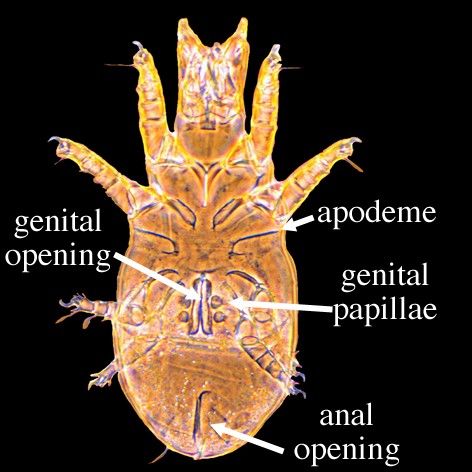 . All pretarsi with paired claws and clawclaw:
like - having a distal hook; resembling a claw.
-like empodiumempodium:
(pl. empodia) an unpaired structure arising between the tarsal claws, ranging from pad-like to claw-like and often bearing structures such as tenent hairs, dense setulae, or taking the form of a featherclaw (Eriophyoidea)..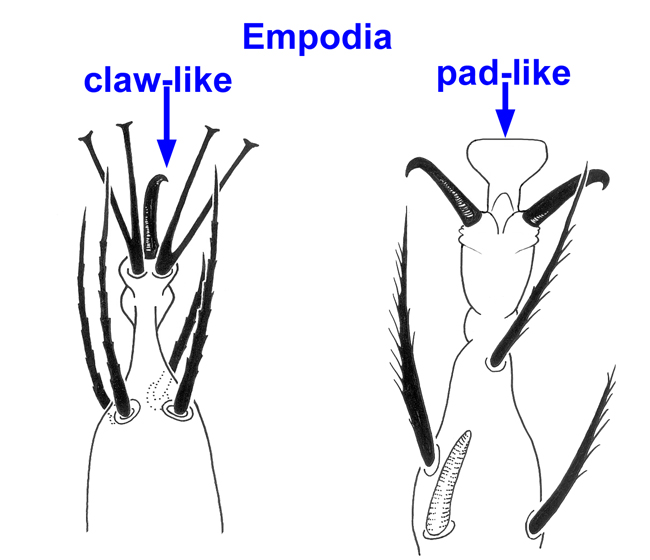 .
.
A unique mite in every respect, including its being described from a single specimen from a mine shaft in Mexico. Although they somewhat resemble strange Rhagidiidae, there are no obvious synapomorphies (see Table 2) linking the mite to the Prostigmata. An undescribed species is known from the US.
Author: David E. Walter
Content last updated Sept. 2006, unless indicated otherwise
Lucid key player updated Sept. 2025
idtools.org