t
Alicorhagiidae Grandjean, 1939Grandjean, 1939:
Grandjean F. 1939. Quelques genres d’acariens appartenant au groupe des Endeostigmata. Annales des Sciences Naturelles, Zoologie 11 (ser. 2): 1–122.
Stigmalychus Theron, Meyer & Ryke, 1970: 672–675.
Superorder Acariformes » Order Sarcoptiformes » Suborder Endeostigmata » Infraorder Alicorhagiida » Superfamily Alicorhagioidea » Family Alicorhagiidae » Genus Stigmalychus
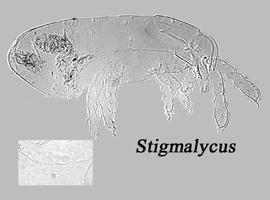
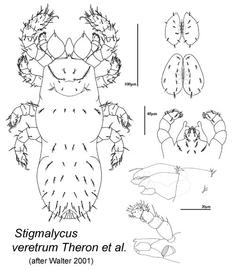
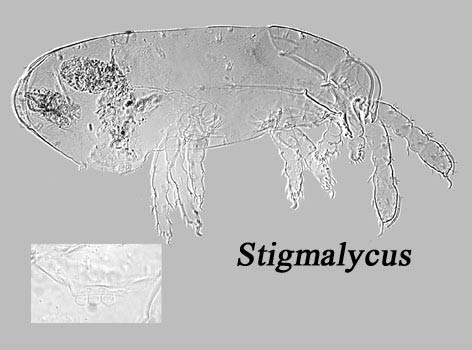
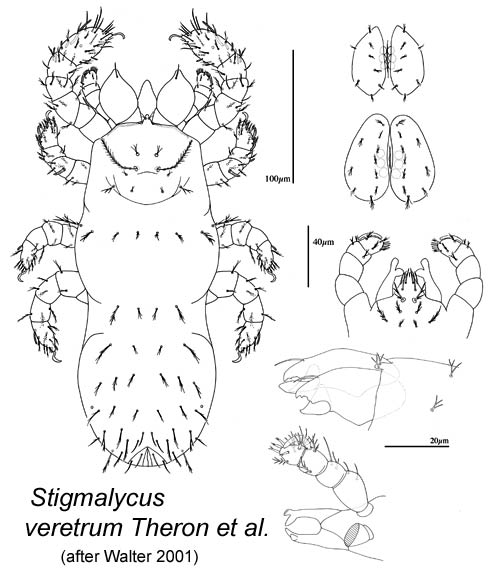
Stigmalychus veretrum Theron et al., 1970—pasture soil in South Africa; rainforest soil in Queensland
Prodorsumprodorsum:
the dorsal surface of the propodosoma.
with 1 pair of filiform trichobothriatrichobothrium:
(pl. trichobothria) (= bothridial sensillum) an often elaborately modified seta set in a cup-like base; forms include filiform, ciliate, pectinate or variously thickened or clubbed (bat-like to globose or capitate).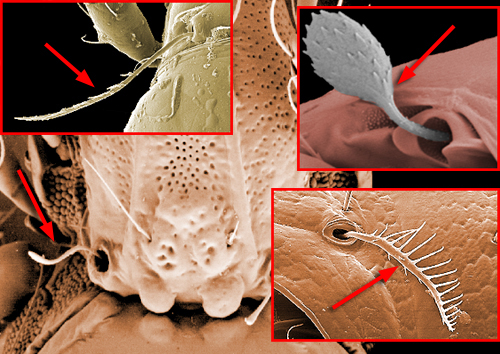 (sci) and 5 pairs of setaeseta:
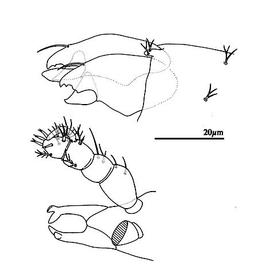
(pl. setae, from L. = bristle) cuticular process composed of a hollow shaft (sometimes filled with a refractive material) produced from a membranous socket (the alveolus); the hair-like, spine-like, branched or variously expanded structures on the surfaces of the legs and body. Most setae function as mechanoreceptors, but others (e.g., solenidia) are chemoreceptors or have unknown or ambiguous functions.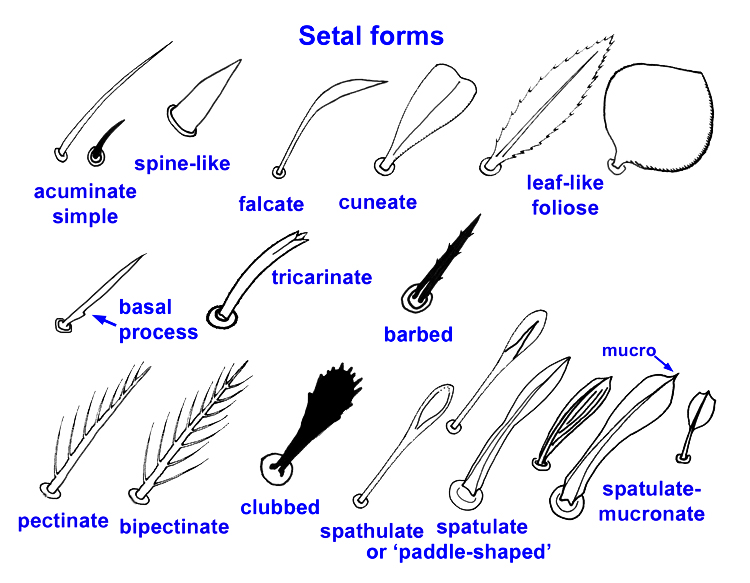 ; naso well developed and bearing setae vi; median and lateral eyes absent. Subcapitulumsubcapitulum:
(also infracapitulum) the venter of the capitulum; the ventral faces of the fused palpcoxae; apparently formed independently in the two superorders of mites.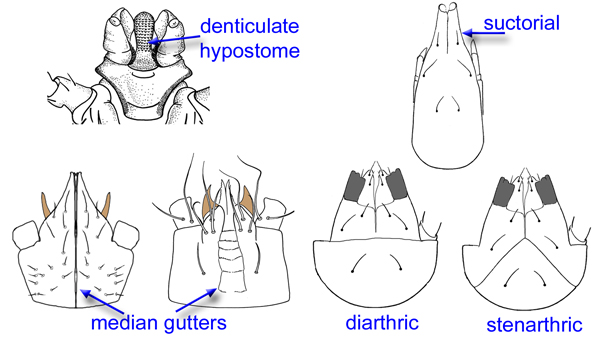 with 6 pairs of setaeseta:
(pl. setae, from L. = bristle) cuticular process composed of a hollow shaft (sometimes filled with a refractive material) produced from a membranous socket (the alveolus); the hair-like, spine-like, branched or variously expanded structures on the surfaces of the legs and body. Most setae function as mechanoreceptors, but others (e.g., solenidia) are chemoreceptors or have unknown or ambiguous functions.; rutellarutellum:
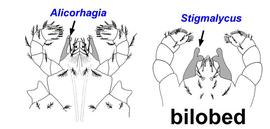
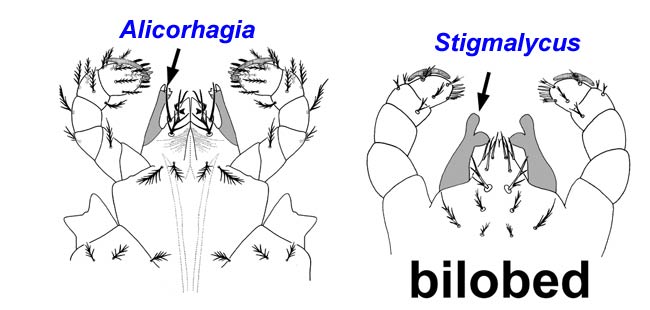
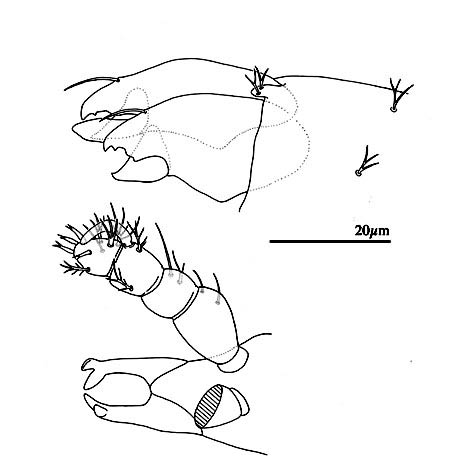
(pl. rutella) In Sarcoptiformes, the hypertrophied setae on the hypostome, often toothed; not to be confused with a corniculus (although possibly a homologue). In Astigmata, the rutellum may be referred to as a pseudorutellum, although it is the same structure. Various forms of rutella are recognized, including the atelebasic and pantelebasic.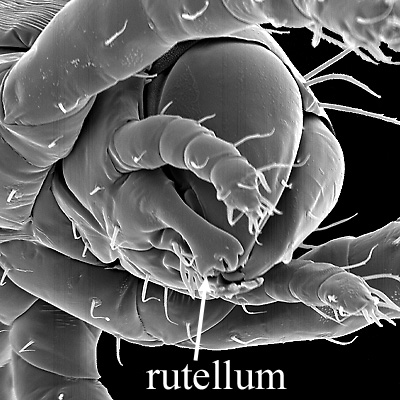 slender, bilobed distally; chelicerae chelate-dentatechelate-dentate:
pincer-like chelicerae with teeth.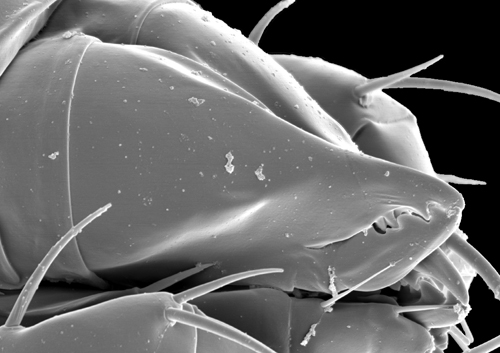 , each with one setaseta:
(pl. setae, from L. = bristle) cuticular process composed of a hollow shaft (sometimes filled with a refractive material) produced from a membranous socket (the alveolus); the hair-like, spine-like, branched or variously expanded structures on the surfaces of the legs and body. Most setae function as mechanoreceptors, but others (e.g., solenidia) are chemoreceptors or have unknown or ambiguous functions.. Opisthosomal setalsetal:
of or pertaining to a seta.
rows C–D–E–F–H–PS–AD–AN with 4–2–2–3–3–3–4–4 pairs of setaeseta:
(pl. setae, from L. = bristle) cuticular process composed of a hollow shaft (sometimes filled with a refractive material) produced from a membranous socket (the alveolus); the hair-like, spine-like, branched or variously expanded structures on the surfaces of the legs and body. Most setae function as mechanoreceptors, but others (e.g., solenidia) are chemoreceptors or have unknown or ambiguous functions., respectively; PA absent; constricted posteriadposteriad:
to the rear (do not use with the preposition 'to' since this is part of the meaning of the word), e.g., 'setae le are usually inserted posteriad setae ro'.
legs IV. Genital flaps with 7–10 pairs of setaeseta:
(pl. setae, from L. = bristle) cuticular process composed of a hollow shaft (sometimes filled with a refractive material) produced from a membranous socket (the alveolus); the hair-like, spine-like, branched or variously expanded structures on the surfaces of the legs and body. Most setae function as mechanoreceptors, but others (e.g., solenidia) are chemoreceptors or have unknown or ambiguous functions. in 2 rows; 3 pairs of genital papillaegenital papillae:
1-3 pairs of extrusible finger-like to button-like projections, usually retracted into in the genital vestibule of acariform mites; sometimes formed as sessile disks around the genital opening; thought to be osmoregulatory structures; modified or multiplied and dispersed over the body in many freshwater mites. Genital papillae are absent in the larva, but may be added ontogenetically: protonymphs have one pair, deutonymphs two pairs, and tritonymphs (and adults) three pairs. The tritonymphal pair of papillae is often lost. The serially homologous Claparède's organ is usually present in the larvae (and prelarvae) of mites exhibiting genital papillae in nymphs and adults (Oudeman's Rule).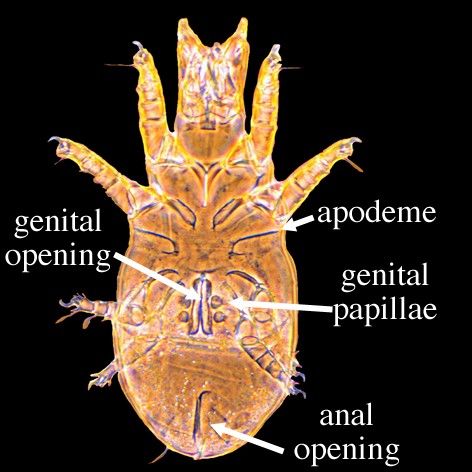 in adult. All pretarsi with a simplesimple:
unadorned; simple setae are needle-like and without hairs or pectins.
, clawclaw:
like - having a distal hook; resembling a claw.
-like empodiumempodium:
(pl. empodia) an unpaired structure arising between the tarsal claws, ranging from pad-like to claw-like and often bearing structures such as tenent hairs, dense setulae, or taking the form of a featherclaw (Eriophyoidea)..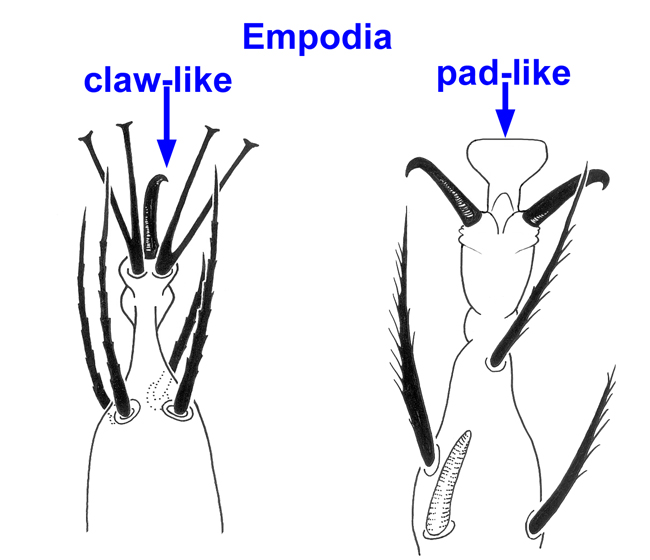 ; lateral claws absent. Gut boluses composed of fungal hyphae, spores, and bits of small, soft-bodied invertebrates.
Little is known about species in this genus.
Species of Alicorhagia have dentate rutella, are not constricted behind legs IV, and have only 2 pairs of genital papillae in the adults.
Author: David E. Walter
Content last updated Sept. 2006, unless indicated otherwise
Lucid key player updated Sept. 2025
idtools.org