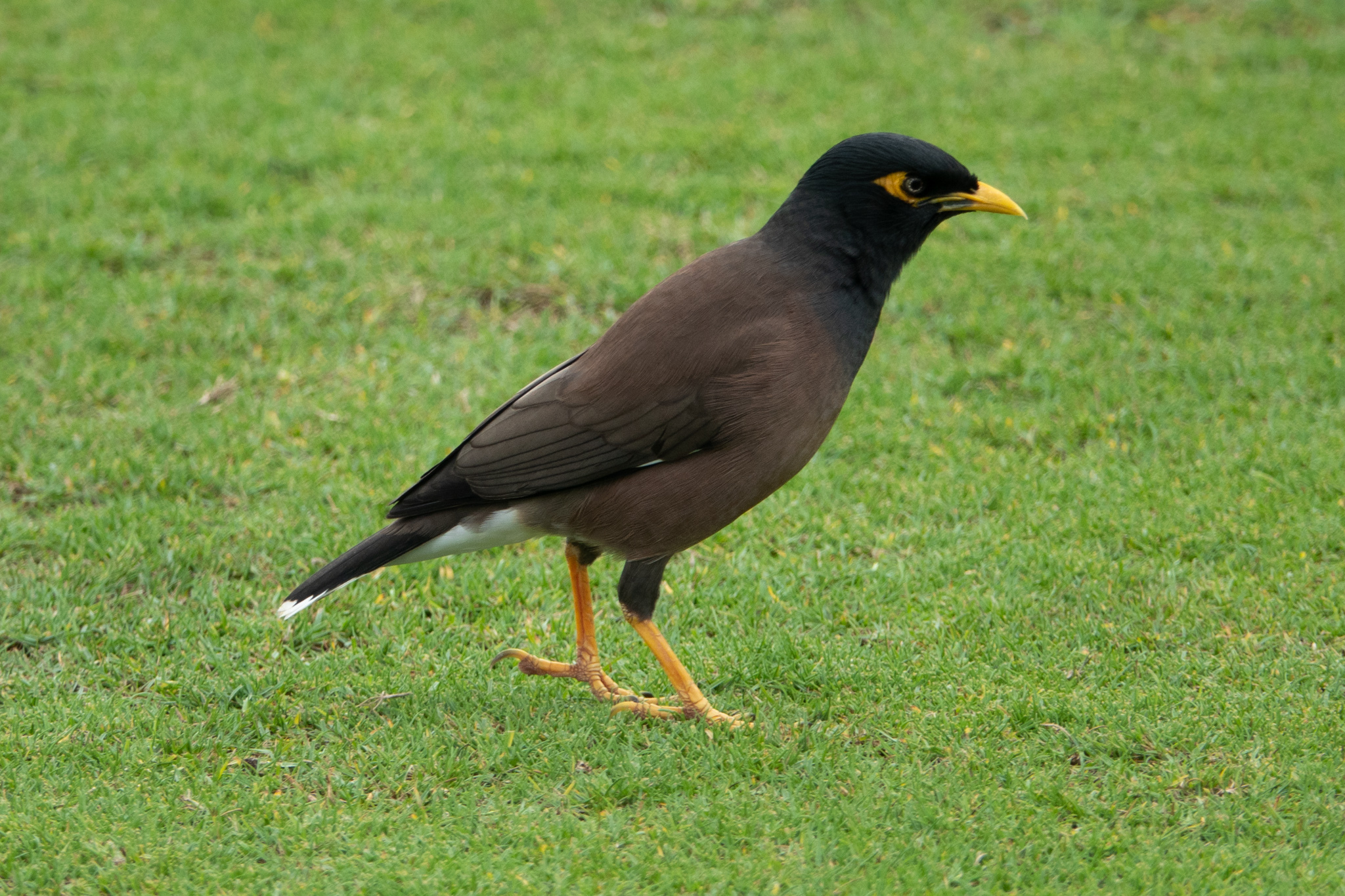
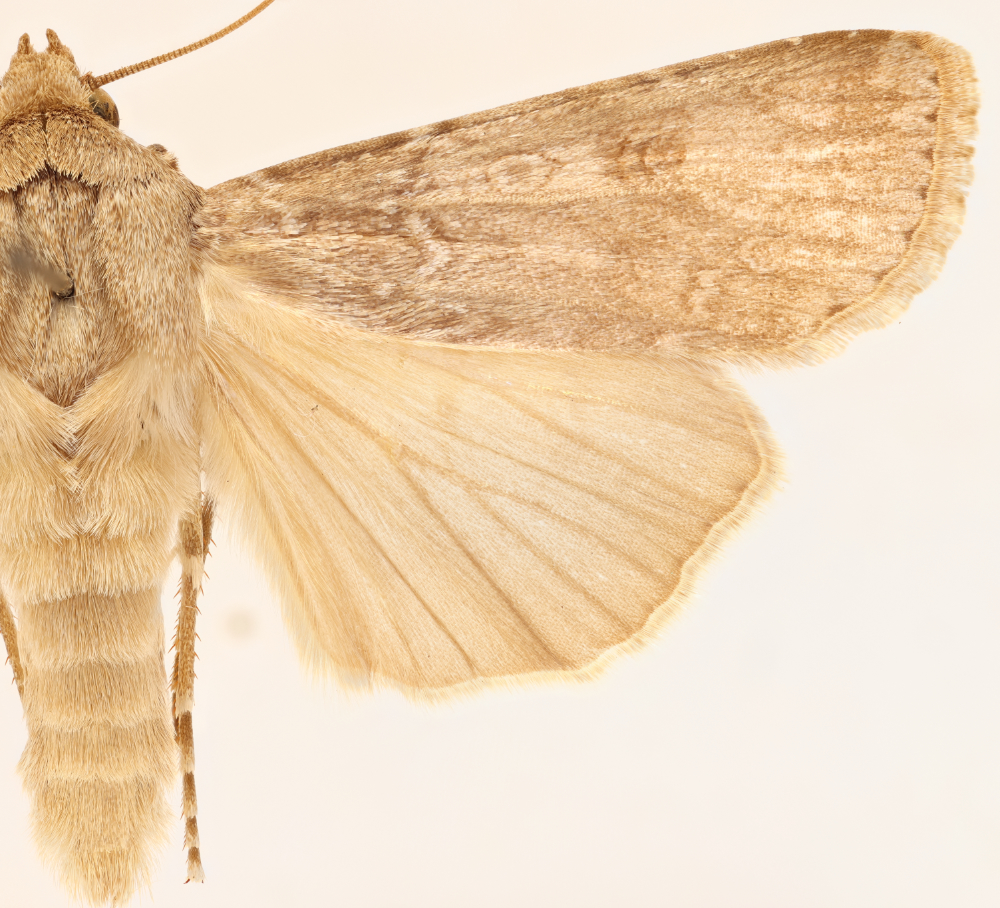
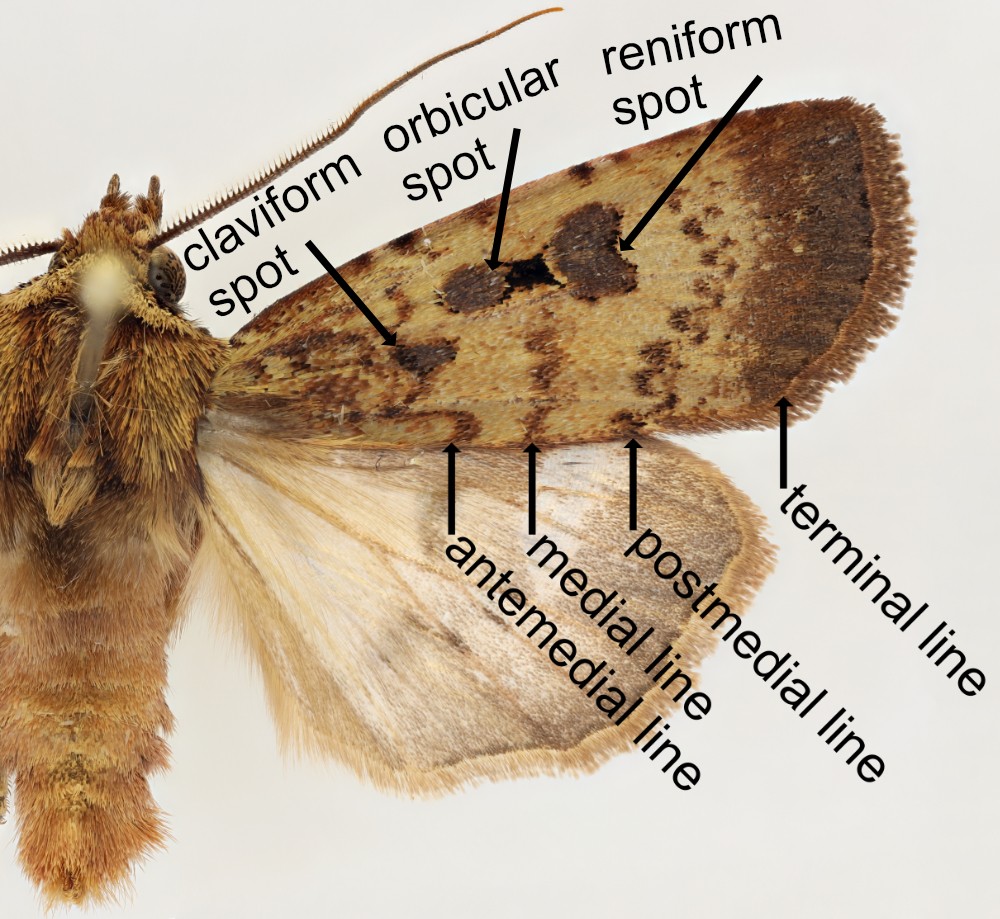
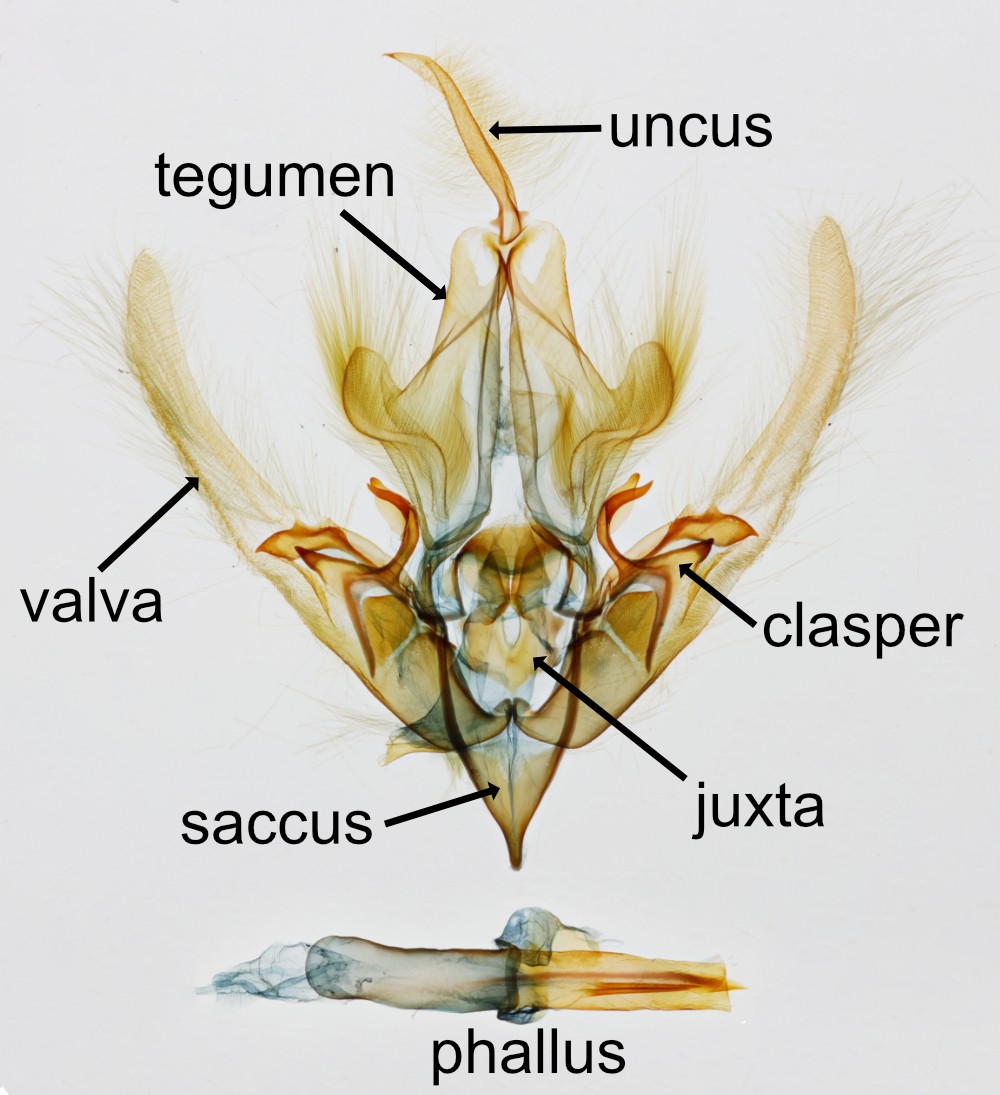
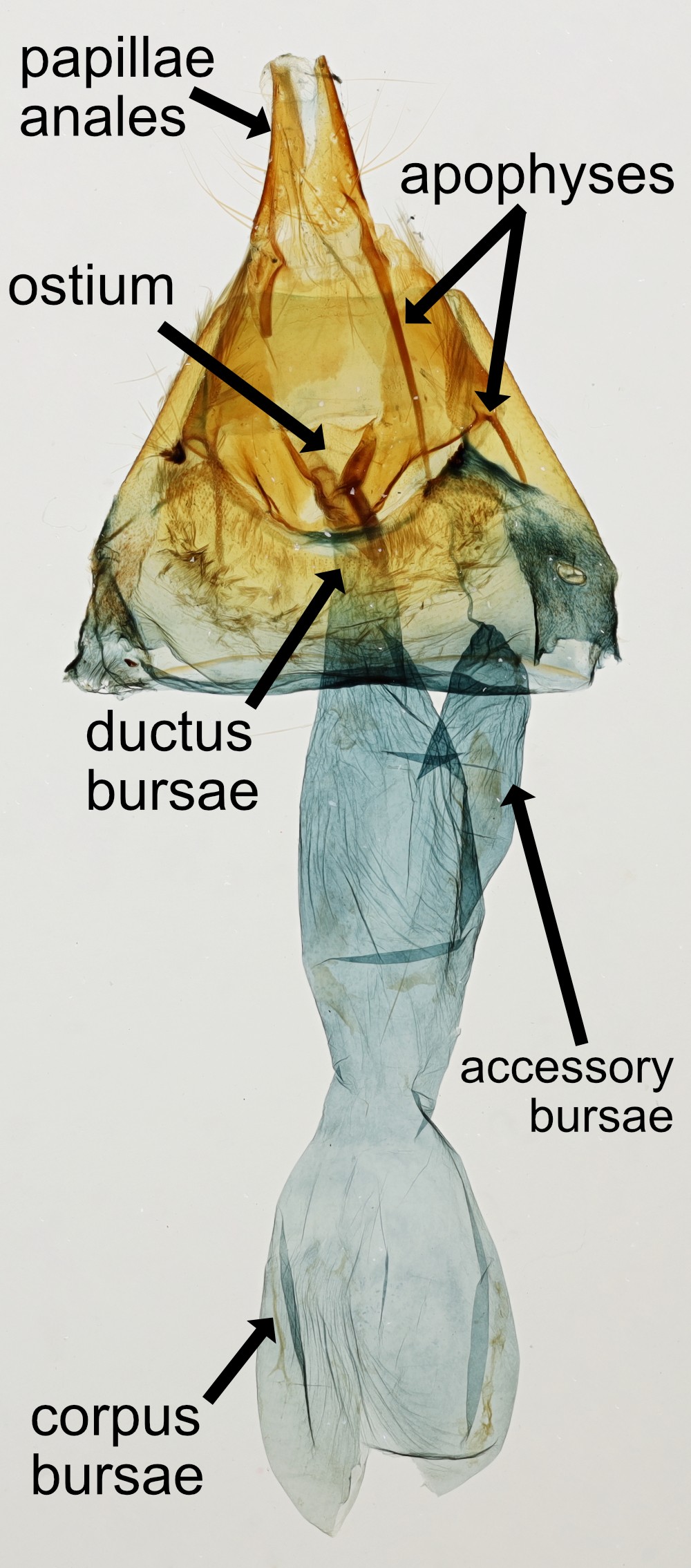
Perhaps no other group of animals has had such an understated yet far-reaching impact on the current state of the Hawaiian Islands as the moth family Noctuidae. The first moth to be described from Hawaiʻi was a noctuid: Agrotis dislocata (Walker 1856). This early recognition perhaps foreshadowed the ecological and economic significance that members of this family would come to hold for the Hawaiian Islands. In fact, the introduction of the now-ubiquitous mynah bird (Acridotheres tristis Linnaeus, 1766) in 1865 by Dr. William Hillebrand was specifically intended to control outbreaks of noctuid larvae, or "armyworms," which were devastating pasturelands (Berger 1981Berger 1981:
Berger AJ. 1981. Hawaiian birdlife. University Press of Hawaii, Honolulu. 2nd ed. 260 pp.). Though not identified, these were likely greasy cutworms (Agrotis ipsilon) and armyworms (Mythimna unipuncta and Spodoptera exempta), all of which are introduced species that were well-established by the time the first resident entomologists began collecting in the 1880s. Much of the early economic entomology literature in Hawaiʻi was focused on controlling noctuid pests in sugar cane (Saccharum officinarum L.), then the cornerstone of the Hawaiian economy (Swezey 1909Swezey 1909:
Swezey OH. 1909. Army worms and cut worms on sugar cane in the Hawaiian Islands. Report of the Work of the Experiment Station of the Hawaiian Sugar Planters' Association, 7. Honolulu. 31 pp. ). With the arrival of the corn earworm (Helicoverpa zea) to Hawaiʻi in the 1920s, Hawaiian corn crops (Zea mays L.) came under attack for the first time. Because the Hawaiian native Helicoverpa spp. had been confused with Helicoverpa zea, it was believed to have been in Hawaiʻi all along and no measures to prevent it entering the islands had been taken. However, the native Helicoverpa spp. with which it was mistaken did not attack corn, and the introduction of H. zea was a large economic blow. To this day, much of the food sovereignty and agricultural and economic potential of the Hawaiian Islands has been hampered by non-native noctuid moths.
To combat noctuid outbreaks, dozens of parasitoid wasp and fly species were introduced from around the world, beginning in the 1890s (Funasaki et al. 1988Funasaki et al. 1988:
Funasaki GY, Lai PY, Nakahara LM, Beardsley JW, Ota AK. 1988. A review of biological control introductions in Hawaii: 1890 to 1985. Proceedings of the Hawaiian Entomological Society. 28:105–160.). Prior to the establishment of protocols in the 1970s to prevent non-target effects (Mason 2021Mason 2021:
Mason PG, editor. 2021. Biological control: Global impacts, challenges and future directions of pest management. CSIRO Publishing.
), these biological control efforts had profound unintended consequences. Many of the introduced parasitoids attacked not only pest species but also native Hawaiian noctuids, which had evolved in isolation and lacked defenses against such novel enemies. The resulting decline, and in some cases extinction, of endemic noctuid moths, such as the formerly abundant Agrotis crinigera (Butler, 1881) (last collected in 1933), represents an early biological signal of human-caused ecological disruption in Hawaiʻi to come in subsequent decades (Gagné 1982Gagné 1982:
Gagné WC. 1982. Working toward an assessment of the conservation status of Hawaii’s endemic arthropods, with emphasis on the moths or Lepidoptera. Proceedings of the 4th Conference on Natural Sciences, Hawaii Volcanoes National Park Science Conference. University of Hawaii, Honolulu. p 63–72., Austin and Rubinoff 2024bAustin and Rubinoff 2024b:
Austin KA, Rubinoff D. 2024b. Patterns of extinction across Hawaiian Lepidoptera offer lessons from a diverse, neglected, and vulnerable endemic fauna. Biodiversity and Conservation. 34:917–930.). The collapse of native noctuid populations has had cascading implications for conservation, ecosystem health, and food webs. Their decline reflects the broader vulnerability of Hawaiʻi’s native fauna to invasive species, poorly regulated biocontrol, and habitat change, all issues that continue to challenge conservation efforts and inform biosecurity policy today.
With over 12,000 described species globally, distributed across more than 1,150 genera, the family Noctuidae is the third most species-rich family of Lepidoptera, outnumbered in terms of described species only by one of its immediate sister groups, Erebidae, and the more distantly related Geometridae (van Nieukerken et al. 2011van Nieukerken et al. 2011:
van Nieukerken EJ, Kaila L, Kitching IJ, Kristensen NP, Lees DC, Minet J, Mitter C, Mutanen M, Regier JC, Simonsen TJ, Wahlberg N, Yen S-H, Zahiri R, Adamski D, Baixeras J, Bartsch D, Bengtsson BÅ, Brown JW, Bucheli SR, Davis DR, De Prins J, De Prins W, Epstein ME, Gentili-Poole P, Gielis C, Hättenschwiler P, Hausmann A, Holloway JD, Kallies A, Karsholt O, Kawahara AY, Koster JC, Kozlov MV, Lafontaine JD, Lamas G, Landry J-F, Lee S, Nuss M, Park K-T, Penz C, Rota J, Schintlmeister A, Schmidt BC, Sohn J-C, Solis MA, Tarmann GM, Warren AD, Weller S, Yakovlev RV, and Zolotuhin VV. 2011. Order Lepidoptera Linnaeus, 1758. Animal Biodiversity: An Outline of Higher-Level Classification and Survey of Taxonomic Richness, edited by Zhang Z-Q., Zootaxa 3703(1):212–221., Keegan et al. 2021Keegan et al. 2021:
Keegan KL, Rota J, Zahiri R, Zilli A, Wahlberg N, Schmidt BC et al. 2021. Toward a stable global Noctuidae (Lepidoptera) taxonomy. Insect Systematics and Diversity. 5:1–24.). The family includes many of the most globally significant economic and agricultural pests, including the armyworms (Mythimna spp., Spodoptera spp.), the bollworms and earworms (Helicoverpa spp.), the tobacco and cotton budworms (Chloridea virescens), cutworms (Agrotis spp.), false underwings (Noctua spp.), and various garden loopers (subfamily Plusiinae).
Noctuidae is currently divided into approximately 25 subfamilies (Keegan et al. 2021Keegan et al. 2021:
Keegan KL, Rota J, Zahiri R, Zilli A, Wahlberg N, Schmidt BC et al. 2021. Toward a stable global Noctuidae (Lepidoptera) taxonomy. Insect Systematics and Diversity. 5:1–24., Nedumpally et al. 2025Nedumpally et al. 2025:
Nedumpally V, Zilli A, Yapar E, Tammaru T, Lemmon AR, Õunap E. 2025. Elaborating the phylogeny of Noctuidae by focusing on relationships between northern European taxa. Systematic Entomology. e70010.). The monophyly of some subfamilies, such as Agaristinae and Plusiinae, is generally well supported by both morphological and molecular evidence, while others, such as Eustrotiinae and Amphipyrinae have only recently been shown to be paraphyletic or polyphyletic (Zahiri et al. 2011Zahiri et al. 2011:
Zahiri R, Holloway JD, Kitching IJ, Lafontaine JD, Mutanen M, Wahlberg N. 2011. Molecular phylogenetics of Erebidae (Lepidoptera, Noctuoidea). Systematic Entomology 37:102–124., Zahiri et al. 2013aZahiri et al. 2013a:
Zahiri R, Lafontaine, JD, Holloway, JD, Kitching IJ, Schmidt BC, Kaila L, Wahlberg N. 2013a. Major lineages of Nolidae (Lepidoptera, Noctuoidea) elucidated by molecular phylogenetics. Cladistics 29:337–359., Keegan et al. 2019Keegan et al. 2019:
Keegan KL, Lafontaine JD, Wahlberg N, Wagner DL. 2019. Towards resolving and redefining Amphipyrinae (Lepidoptera, Noctuoidea, Noctuidae): A massively polyphyletic taxon. Systematic Entomology. 44:451–464.). Traditionally, Noctuoidea was considered sister to Bombycoidea or even Geometroidea based on shared traits such as tympanal organs and features of the wing venation and genitalia (Common 1990Common 1990:
Common IFB. 1990. Moths of Australia. Melbourne University Publishing. 535 pp., Kristensen 1999Kristensen 1999:
Kristensen NP, editor. 1999. Handbook of zoology, Volume 4, Arthropoda: Insecta, part 35. Lepidoptera, moths and butterflies, Volume 1: Evolution, systematics, and biogeography. Walter de Gruyter, Berlin. New York, 491 pp). However, phylogenetic studies using both nuclear and mitochondrial genes now place Noctuoidea as sister to a clade consisting of Geometroidea + Lasiocampoidea + Bombycoidea (Kawahara et al. 2019Kawahara et al. 2019:
Kawahara AY, Plotkin D, Espeland M, Meusemann K, Toussaint EF, Donath A et al. 2019. Phylogenomics reveals the evolutionary timing and pattern of butterflies and moths. Proceedings of the National Academy of Sciences of the United States of America. 116:22657– 22663.), this clade making up the vast majority of the diversity of the so-called "Macrolepidoptera". Molecular divergence estimates suggest that Noctuidae first arose approximately 37–40 million years ago (Kergoat et al. 2021Kergoat et al. 2021:
Kergoat GJ Goldstein PZ, Le Ru B, Meagher RL, Zilli A, Mitchell A, Clamens A-L, Gimenez S, Barbut J, Nègre N, d’Alençon E, Nam K. 2021. A novel reference dated phylogeny for the genus Spodoptera Guenée (Lepidoptera: Noctuidae: Noctuinae): New insights into the evolution of a pest-rich genus. Molecular Phylogenetics and Evolution. 161:107161.), a surprisingly recent time for such a diverse clade. While early classifications relied heavily on adult morphology, especially wing pattern and venation, recent molecular studies have revealed deep splits and unexpected relationships among noctuid lineages. Despite progress, the placement of many genera remains unresolved, and a number of so-called "orphan" lineages still challenge current phylogenetic frameworks. Continued integrative studies combining adult and larval morphology with molecular data are necessary to resolve the full evolutionary history of Noctuidae, including several enigmatic Hawaiian lineages (e.g., Aumakua, Haliophyle, Lophoplusia).
At present, the noctuid fauna of Hawaiʻi comprises 60 described endemic species, at least 16 of which have not been seen in over 50 years (Austin and Rubinoff 2024bAustin and Rubinoff 2024b:
Austin KA, Rubinoff D. 2024b. Patterns of extinction across Hawaiian Lepidoptera offer lessons from a diverse, neglected, and vulnerable endemic fauna. Biodiversity and Conservation. 34:917–930.), and 27 non-native species, only one of which was deliberately introduced as a biological control agent (Neogalea sunia). The endemic noctuid fauna of Hawai?i appears to be derived from nine different colonization events, two of which are only questionably native (Acrapex spp., Heliothis melanoleuca). The remaining radiations (in decreasing order of number of described species occurring in Hawaiʻi) are as follows: Agrotis (29 spp.), Haliophyle (10 spp.), Peridroma (6 spp.), Helicoverpa (4 spp.), Lophoplusia (4 spp.), Mythimna (3 spp.), and Aumakua (1 sp.). With the exception of Spodoptera (4 spp.) and Condica (2 spp.), all of the introduced genera in Hawaiʻi are represented by a single non-native species each, making the identification of many non-native noctuids relatively easy.
Adults of the family Noctuidae can often be recognized based on their general size and shape. Most species are medium-sized or large moths (forewing lengthforewing length:
the distance of the forewing in a straight line from the base to the tip of the apex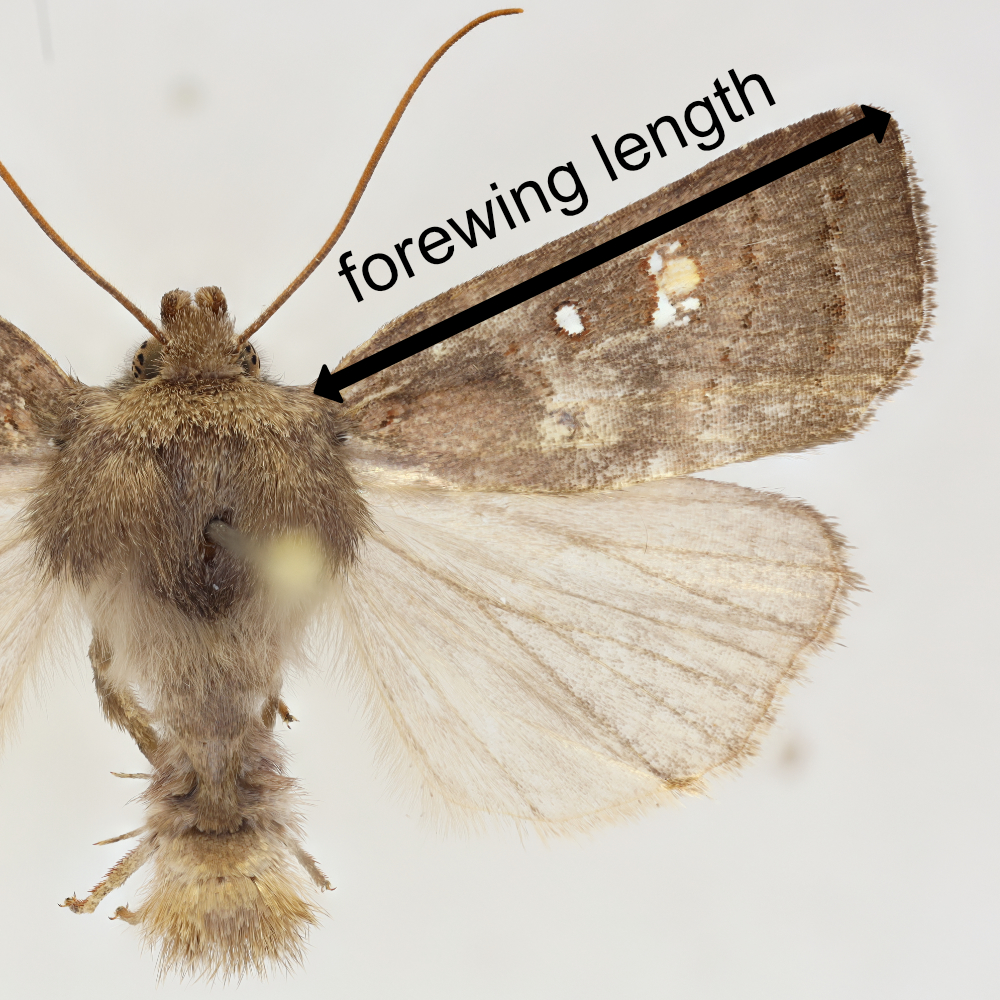 usually 8–25 mm, although some can be as small as 5 mm or as large as 40 mm), with a robust, hairy body and a triangular outline in resting position. More technical characters include a proportionally small, roughly scaled head; a well-developed, naked proboscis; three-segmented and often upturned labial palpi; reduced or vestigial maxillary palpi; ocelli typically present; chaetosemata absent or reduced; antennaeantenna:
a thin, paired, elongate, segmented sensory organ on the head that serves primarily for olfaction (smell) to find food and mates, but also aids in navigation and balance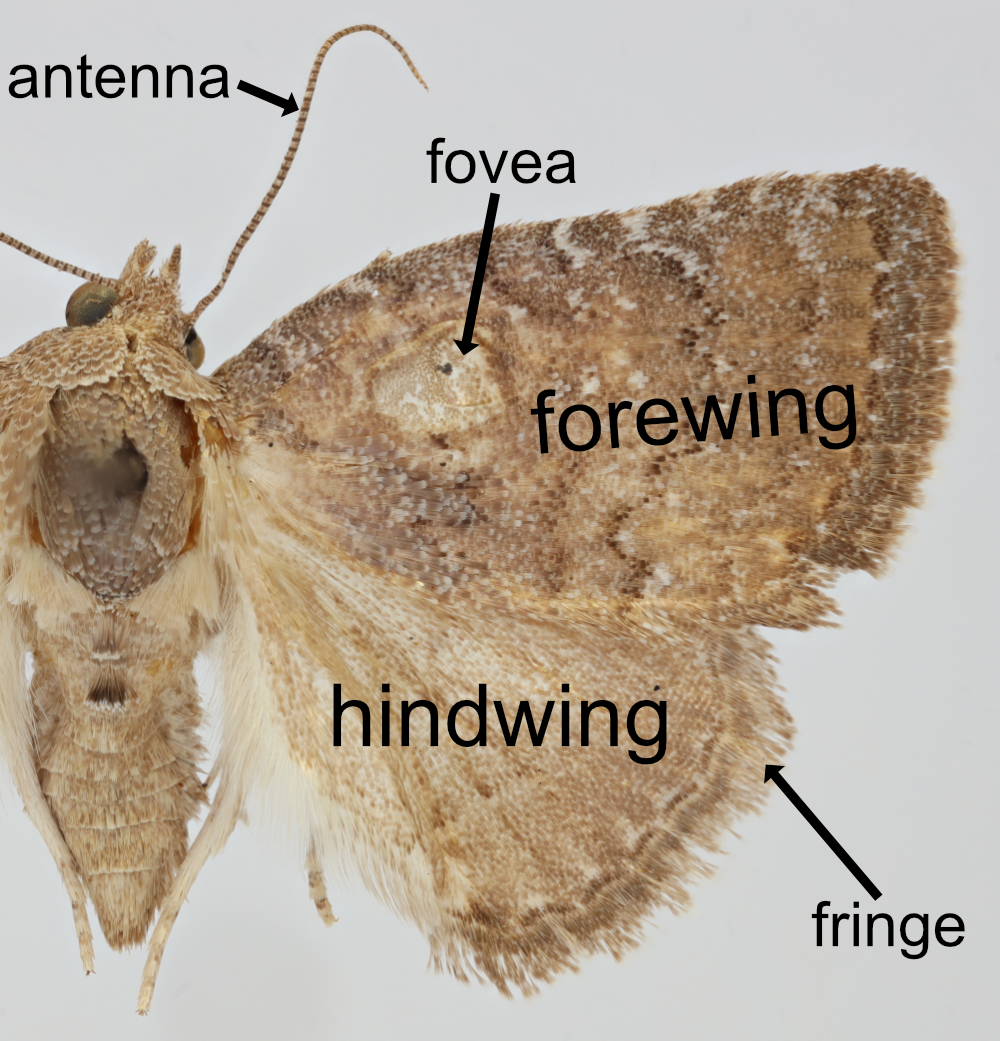 most commonly filiformfiliform:
hair-like or thread-like, usually refers to an antenna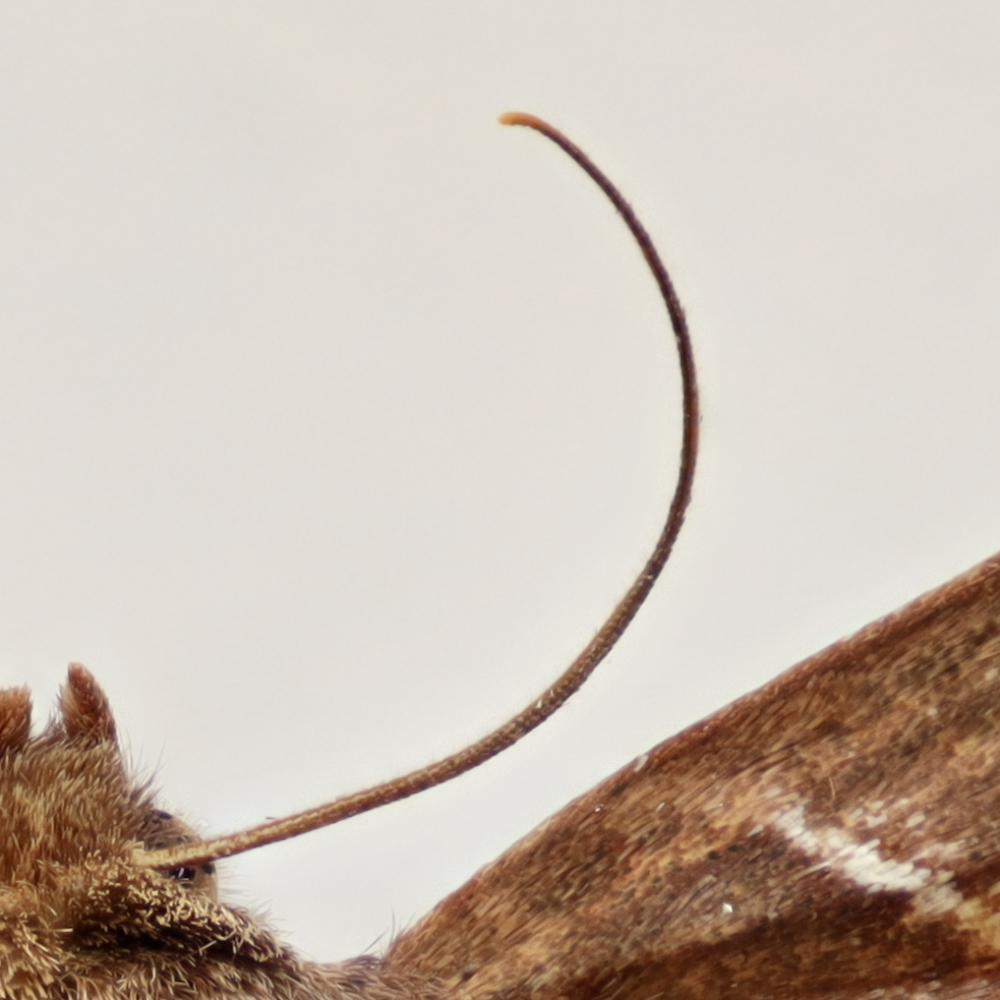 , but finely biserrate or bipectinatebipectinate:
referring to a structure with two opposite margins toothed like a feather, typically refers to the antenna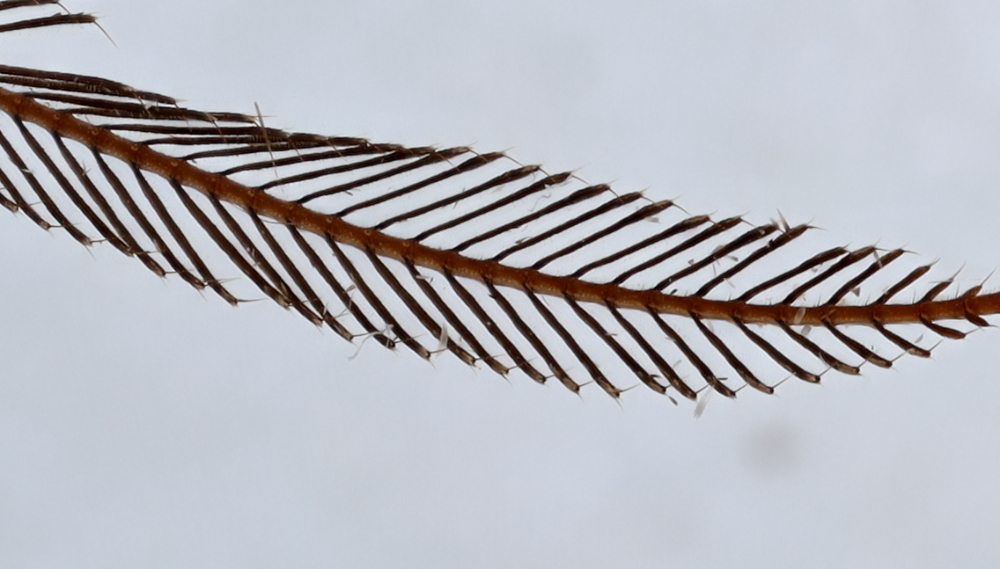 in males of some groups; female genitalia typically lacking the flattened papillae anales found in other lepidopteran groups; and tympanal (hearing) organs on the metathorax and the first abdominal segment (a key feature of Noctuoidea, including the related families Erebidae, Euteliidae, Nolidae, Notodontidae, Oenosandridae, and Scranciidae). This last character will serve to separate Noctuoidea from similar families such as Drepanoidea.
While few adult characters are universal within the family, the presence of metathoracic + abdominal tympanal organs is useful for identifying Noctuoidea, including Noctuidae (Fibiger and Lafontaine 2005Fibiger and Lafontaine 2005:
Fibiger M, Lafontaine JD. 2005. A review of the higher classification of the Noctuoidea (Lepidoptera) with special reference to the Holarctic fauna. Esperiana. 11:7–92.), although this combination is also present in Doidae. Adults of some species may only be confidently identified by DNA sequencing or careful dissection of genitalia, including eversion of the vesica, especially in difficult species complexes. Another character that is often helpful in identifying adult Noctuidae from similar families like Erebidae, Euteliidae, Nolidae, and Notodontidae is a tympanum with a well-developed hood and distinct alula (lobe), thus creating a partially obscured tympanum. This hood and lobe is often reduced or absent in other families, though exceptions exist. Adults of Noctuidae tend to be much less variable in size, forewingforewing:
the front wing of an insect; the wing attached to the second segment of the thorax (the mesothorax)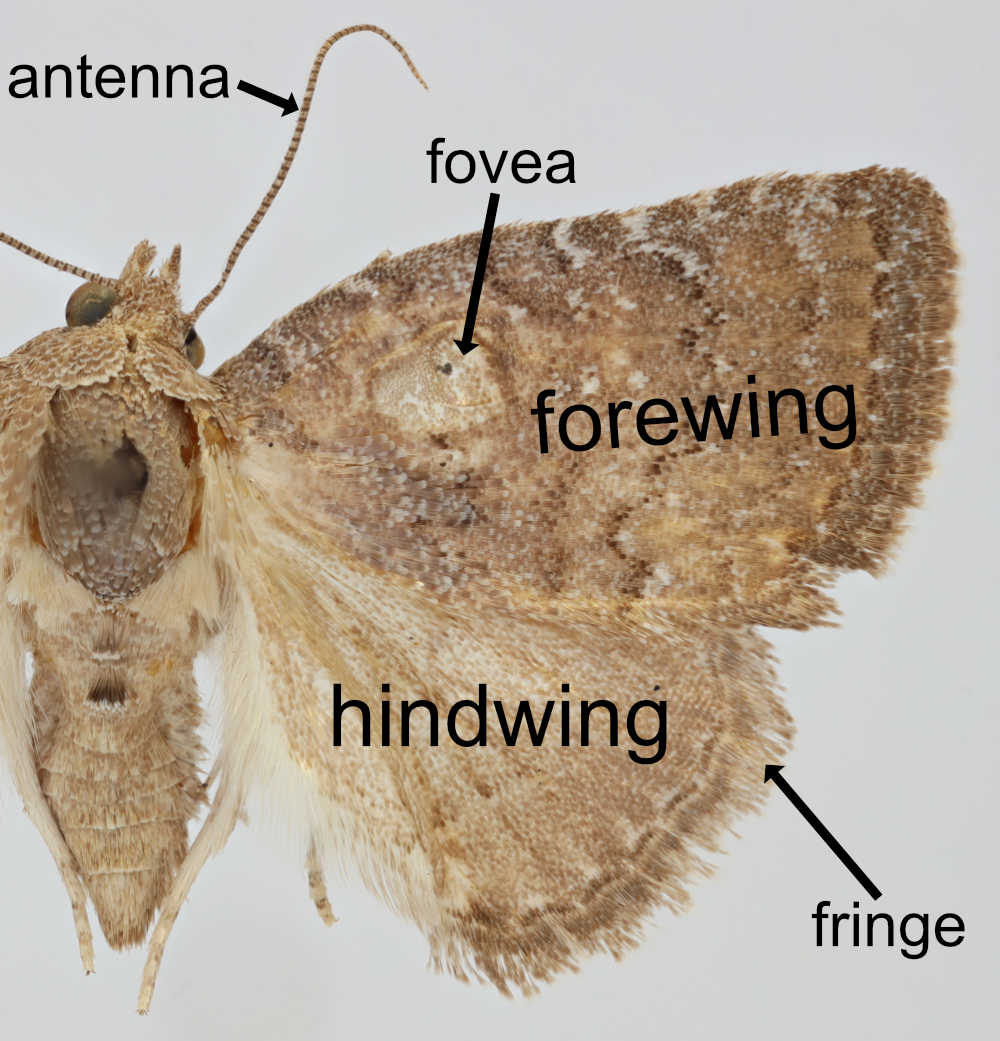 shape, and resting posture than Erebidae, which can be as small as 1 cm (e.g., Pseudoschrankia Zimmerman, 1958Zimmerman, 1958:
Zimmerman EC. 1958. Insects of Hawaii, Volume 7. Macrolepidoptera. University of Hawaii Press, Honolulu. 542 pp.) or as large as 16 cm (Ascalapha Hübner, 1809) in Hawaiʻi and often rest with their wings outstretched and typically have a long, slender terminal segment of the labial palpus. Adults of most species of Euteliidae, of which there are three introduced species in Hawaiʻi, rest with their wings outstretched and their abdomen partially curled up, which renders them easily distinct from Noctuidae. There is only one species of Nolidae in Hawaiʻi (Meganola brunellus (Hampson)), an introduced biocontrol for Miconia Ruiz and Pav., but it is much smaller any species of Noctuidae present in the state and is unlikely to be confused with one. For an excellent overview of the key differences of most of the families of Noctuoidea, refer to this video.
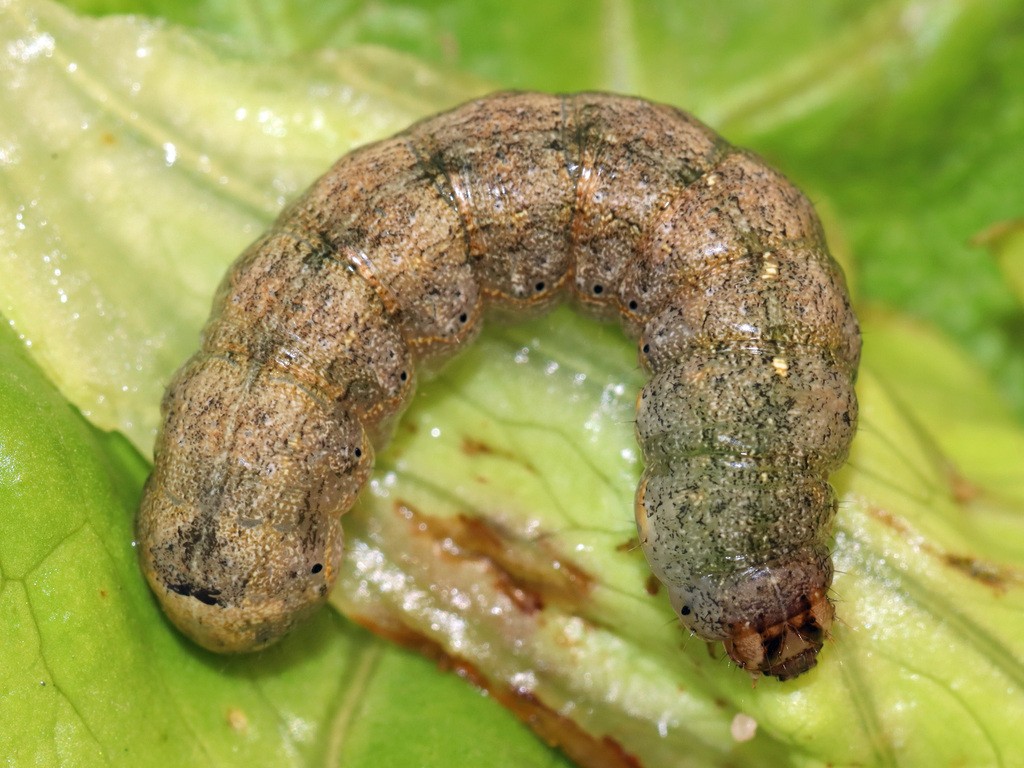
Identifying the larvae of Noctuidae requires examination of some technical characters. Though many exceptions exist, Noctuidae larvae are typically smooth, cylindrical "cutworms" with reduced secondary setae, a well-developed prothoracic shield, and fully developed abdominal prolegs on A3–A6 plus A10 bearing uniordinal crochetscrochets:
sclerotized, hooklike structures, usually arranged in rows or circles on the prolegs of Lepidoptera larvae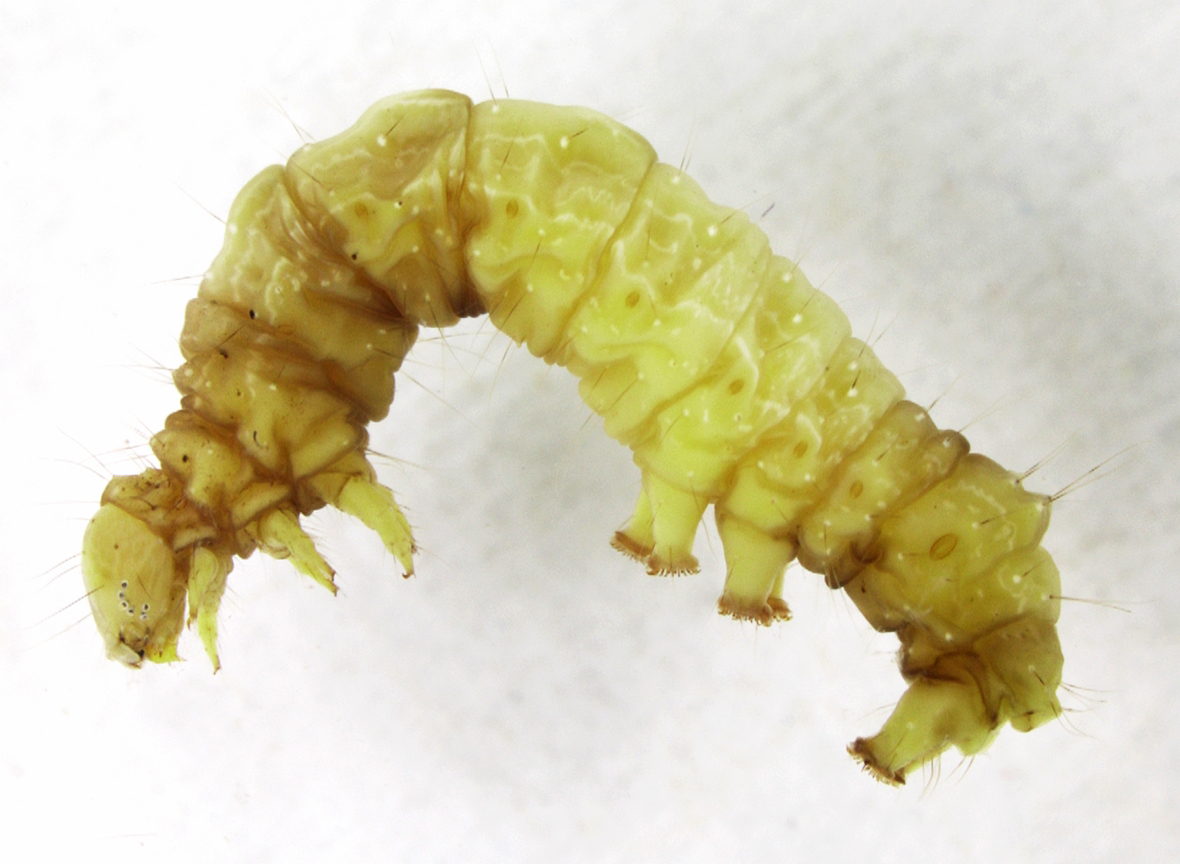 in a mesoseries or circle. They lack the dense verrucae or tufts common in Erebidae, whose larvae are often setose or bear prominent dorsal/lateral protuberances. Compared to Nolidae, noctuid larvae usually lack strongly modified dorsal glands or bizarre body forms (e.g., slug-like shapes or dorsal humps), and their setae are more evenly distributed and inconspicuous. From Euteliidae, noctuid larvae differ in having more generalized chaetotaxy and less frequent elongation or modification of A8–A10 segments; euteliids often show distinctive posteriorposterior:
the 'tail' end of an organism, as opposed to the anterior or 'head' end of an organism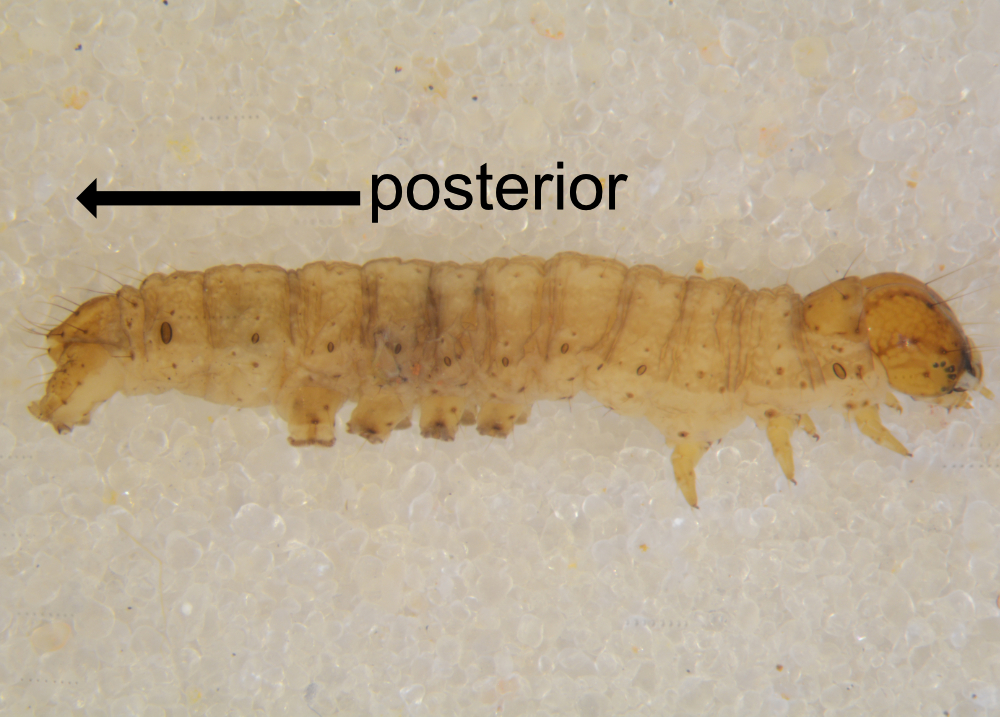 tapering or specialized anal structures. Spiracles in Noctuidae are typically oval and moderate in size, without extreme enlargement seen in some erebids. Overall, noctuid larvae are morphologically conservative, with simple integument, standard proleg arrangement, and minimal ornamentation. Most noctuid larvae are external feeders, though some groups include stem or root borers. Pupae typically lack the transverse rows of spines found in other groups like Tortricidae. A detailed account of all aspects of noctuid morphology is beyond the scope of this website, but for an excellent summary, see Marquis et al. (2019)Marquis et al. (2019):
Marquis RJ, Passoa SC, Lill JT, Whitfield JB, Le Corff J, Forkner RE, Passoa VA. 2019. Illustrated guide to the immature Lepidoptera on oaks in Missouri. FHAAST-2018-05. Morgantown, WV: U.S. Department of Agriculture, Forest Service, Forest Health Assessment and Applied Sciences Team. 369 pp..
The following publications are useful in identifying Noctuidae in Hawaiʻi:
Author: Kyhl A. Austin
Content last updated May 2026
idtools.org