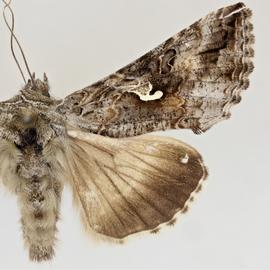
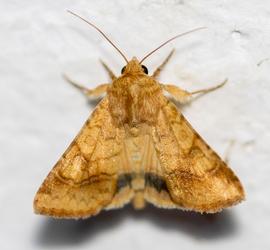
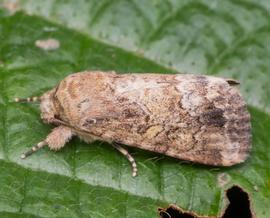
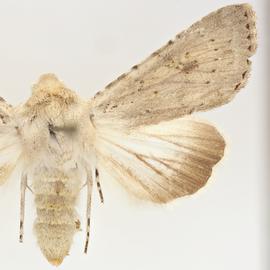
The following species have been reported from Hawai‘i but are likely not established in the state. Most are from quarantine interceptions or single records without apparent establishment. A few are based on misidentifications. They are listed here in case they are found again in the future.
Quarantine interceptions:
Acronicta rumicis (Linnaeus, 1758)
This species was reported as a quarantine interception by Nishida (2002)Nishida (2002):
Nishida GM. 2002. Hawaiian terrestrial arthropod checklist. Fourth Edition. Bishop Museum Technical Report 22. 313 pp.. The specimen is likely in the collection of the Hawai‘i Department of Agriculture & Biosecurity (HDAB).
Anagrapha falcifera (Kirby, 1837)
This species was reported as a quarantine interception by Nishida (2002)Nishida (2002):
Nishida GM. 2002. Hawaiian terrestrial arthropod checklist. Fourth Edition. Bishop Museum Technical Report 22. 313 pp.. The specimen is likely in the collection of the Hawai‘i Department of Agriculture & Biosecurity (HDAB).
Autographa californica (Speyer, 1875)
This species is known from a single specimen reared from "romaine lettuce" purchased from a Honolulu market in 1965 (Riotte 1991Riotte 1991:
Riotte JCE. 1991. Reassessment of the Noctuoidea of the Hawaiian Islands. Bishop Museum Occasional Papers. 31:139–151.).
Autographa precationis (Guenée, 1852)
This species was reported as a quarantine interception by Nishida (2002)Nishida (2002):
Nishida GM. 2002. Hawaiian terrestrial arthropod checklist. Fourth Edition. Bishop Museum Technical Report 22. 313 pp.. The specimen is likely in the collection of the Hawai‘i Department of Agriculture & Biosecurity (HDAB). Alternatively, it may represent a misidentification of Chrysodeixis eriosoma.
Helicoverpa assulta (Guenée, 1852)
This species was reported as a quarantine interception by Nishida (2002)Nishida (2002):
Nishida GM. 2002. Hawaiian terrestrial arthropod checklist. Fourth Edition. Bishop Museum Technical Report 22. 313 pp.. The specimen is likely in the collection of the Hawai‘i Department of Agriculture & Biosecurity (HDAB). Alternatively, it may represent a misidentification of Helicoverpa zea.
Spodoptera pecten Guenée, 1852
This species was reported from Midway as a quarantine interception by Nishida (2002)Nishida (2002):
Nishida GM. 2002. Hawaiian terrestrial arthropod checklist. Fourth Edition. Bishop Museum Technical Report 22. 313 pp.. The specimen is likely in the collection of the Hawai‘i Department of Agriculture & Biosecurity (HDAB). Alternatively, it may represent a misidentification of Spodoptera exigua.
Apparently extirpated:
Amyna axis (Guenée, 1852)
This species was listed in Nishida (2002)Nishida (2002):
Nishida GM. 2002. Hawaiian terrestrial arthropod checklist. Fourth Edition. Bishop Museum Technical Report 22. 313 pp. as Amyna octo (Guenée). Austin and Rubinoff (2024a)Austin and Rubinoff (2024a):
Austin KA, Rubinoff D. 2024a. New records of introduced Lepidoptera in the Hawaiian Islands for the year 2023. Bishop Museum Occasional Papers. 156:111–121. pointed out the overlooked synonymy and suggested that the species is unlikely to be established, having been known in Hawai‘i from two specimens collected over a century apart. The first specimen was described as Celaena perfundens (Walker, 1858).
Anarta decepta (Grote, 1883)
This species was first reported as Trichoclea postica Smith, 1891 from a series of five specimens collected in Iriquois Point, Oʻahu in 1947 (Swezey 1948Swezey 1948:
Swezey OH. 1948. Notes and exhibitions: Trichoclea postica. Proceedings of the Hawaiian Entomological Society. 13(2):217–218.). It was subsequently collected a handful of times over the next decade, all within a few miles of the first locality. The most recently collected specimen in Hawaiʻi is from 1957 (UHIM collectionUHIM collection:
UHIM collection. Based on identified specimens in the collection of the University of Hawaii Insect Museum, Honolulu, HI). It appears to be extirpated now.
Anarta edwardsii (Smith, 1888)
This species is known from two specimens from Hawaiʻi, the second of which was collected in an airplane in Honolulu in 1953 (Chilson 1955Chilson 1955:
Chilson LM. 1955. Notes and exhibitions: Trichoclea edwardsi. Proceedings of the Hawaiian Entomological Society. 15(3):378.). It has not been collected in Hawaiʻi since. No specimens exist in collections in Hawaiʻi (Riotte 1991Riotte 1991:
Riotte JCE. 1991. Reassessment of the Noctuoidea of the Hawaiian Islands. Bishop Museum Occasional Papers. 31:139–151.).
Anarta trifolii (Hufnagel, 1766)
This species is known in Hawaiʻi from a single specimen collected at Hickam Air Force Base, Oʻahu in 1976 (Beardsley 1980Beardsley 1980:
Beardsley JW. 1980. Notes and exhibitions: Scotogramma trifolii. Proceedings of the Hawaiian Entomological Society. 23(2):181–182.). It has not been collected since and likely arrived as a stowaway on a military flight.
Noctua pronuba (Linnaeus, 1758)
This species was first reported in Hawaiʻi by Austin and Rubinoff (2024a)Austin and Rubinoff (2024a):
Austin KA, Rubinoff D. 2024a. New records of introduced Lepidoptera in the Hawaiian Islands for the year 2023. Bishop Museum Occasional Papers. 156:111–121. from a single specimen from Oʻahu collected in 2012 but has not been detected again and does not appear to be established in Hawaiʻi. An iNaturalist observation of this species on board a plane that landed in Honolulu from San Jose demonstrates a possible future route of establishment.
Misidentifications/errors
Callopistria maillardi Guenée, 1862
Beardsley (1979)Beardsley (1979):
Beardsley JW. 1979. New immigrant insects in Hawaiʻi: 1962 through 1976. Proceedings of the Hawaiian Entomological Society. 23:35–44. first reported the presence of Callopistria in Hawaiʻi but simply listed it as "Callopistria sp." Later he identified specimens in the UHIM as Callopistria floridensis (Guenée) as evidenced by a handwritten note. Riotte (1991)Riotte (1991):
Riotte JCE. 1991. Reassessment of the Noctuoidea of the Hawaiian Islands. Bishop Museum Occasional Papers. 31:139–151. listed the species in Hawaiʻi as Callopistria meridionalis Collenette, 1929 from material in the BPBM identified by F. Howarth and P. Maddison. Someone (perhaps Riotte) then appears to have changed Beardsley’s label in UHIM to “Callopistria sp. nr. floridensis” with a separate label referencing the specimens in the BPBM identified as C. meridionalis. Nishida (2002)Nishida (2002):
Nishida GM. 2002. Hawaiian terrestrial arthropod checklist. Fourth Edition. Bishop Museum Technical Report 22. 313 pp. listed it as Callopistria maillardi Guenée, presumably following Holloway (1989)Holloway (1989):
Holloway JD. 1989. The Moths of Borneo: family Noctuidae, trifine subfamilies: Noctuinae, Heliothinae, Hadeninae, Acronictinae, Amphipyrinae, Agaristinae, Malayan Nature Journal. 42:57–226. in treating C. meridionalis as a synonym of C. maillardi. However, the species in Hawaiʻi is C. floridensis, as pointed out by Austin and Rubinoff (2022)Austin and Rubinoff (2022):
Austin KA, Rubinoff D. 2022. Eleven new records of Lepidoptera in the Hawaiian Islands including corrections to the Hawaiian terrestrial arthropod checklist. Bishop Museum Occasional Papers. 142:49–74..
Callopistria sp. of Mau et al. 1990
The "Callopistria sp. of Mau et al. 1990" mentioned by Nishida (2002)Nishida (2002):
Nishida GM. 2002. Hawaiian terrestrial arthropod checklist. Fourth Edition. Bishop Museum Technical Report 22. 313 pp. may be C. floridensis, but Austin and Rubinoff (2022) were unable to find this reference.
Heliothis cystiphora (Wallengren, 1860)
This species, under the synonym Anthoecia inflata Wallengren, 1860, was incorrectly listed by Wallengren (1860) as having been collected in Honolulu. This is based on a mislabeled specimen, as pointed out by Zimmerman and Fletcher (1956)Zimmerman and Fletcher (1956):
Zimmerman EC, Fletcher DS. 1956. Heliothis in Hawaii (Lepidopotera: Phalaenidae). Proceedings of the Hawaiian Entomological Society, 16(1):170–176.. The type was actually collected in the Galápagos Islands.
Lycophotia porphyrea (Denis and Schiffermüller, 1775)
For unclear reasons, this name, including its synonym Peridroma porphyrea, has been continually misapplied to Peridroma saucia (Hübner 1808) in Hawai‘i. This was overlooked by Zimmerman (1958)Zimmerman (1958):
Zimmerman EC. 1958. Insects of Hawaii, Volume 7. Macrolepidoptera. University of Hawaii Press, Honolulu. 542 pp., Riotte (1991)Riotte (1991):
Riotte JCE. 1991. Reassessment of the Noctuoidea of the Hawaiian Islands. Bishop Museum Occasional Papers. 31:139–151., and Nishida (2002)Nishida (2002):
Nishida GM. 2002. Hawaiian terrestrial arthropod checklist. Fourth Edition. Bishop Museum Technical Report 22. 313 pp. but corrected by Austin and Rubinoff (2022)Austin and Rubinoff (2022):
Austin KA, Rubinoff D. 2022. Eleven new records of Lepidoptera in the Hawaiian Islands including corrections to the Hawaiian terrestrial arthropod checklist. Bishop Museum Occasional Papers. 142:49–74..
Sesamia uniformis (Dudgeon, 1905)
This species was listed in Nishida (2002)Nishida (2002):
Nishida GM. 2002. Hawaiian terrestrial arthropod checklist. Fourth Edition. Bishop Museum Technical Report 22. 313 pp. with authorship incorrectly attributed to Hampson (1910), a reference that cannot be located. This record may refer to Swezey (1928)Swezey (1928):
Swezey OH. 1928. Insect fauna of Panicum torridum, a native grass in Hawaii. Proceedings of the Hawaiian Entomological Society. 7(1):170–176. , in which Swezey updated his original identification of Sesamia inferens (Walker, 1856) to Acrapex exanimis Meyrick, 1899Meyrick, 1899:
Meyrick E. 1899. Macrolepidoptera. In: Sharp D, Fauna Hawaiiensis. Cambridge University Press, Cambridge. p 123–275. . Neither S. inferens nor S. uniformis is known to occur in Hawai‘i.
Deliberately introduced, but failed to establish:
Diastema tigris Guenée, 1852
This species was released in 1954 as a biological control agent for Lantana L., but failed to establish (Krauss 1962Krauss 1962:
Krauss NLH. 1962. Biological control investigations on lantana. Proceedings of the Hawaiian Entomological Society. 18:134–136.).
Author: Kyhl A. Austin
Content last updated May 2026
idtools.org