NATIVE | ADVENTIVE
Mythimna Ochsenheimer, 1816
Higher taxonomy: Noctuidae: Noctuinae: Leucaniini
Species known to occur in Hawaiʻi:
NATIVE
Mythimna amblycasis (Meyrick, 1899Meyrick, 1899:
Meyrick E. 1899. Macrolepidoptera. In: Sharp D, Fauna Hawaiiensis. Cambridge University Press, Cambridge. p 123–275. ); Mythimna dasuta (Hampson, 1905); Mythimna macrosaris (Meyrick, 1899Meyrick, 1899:
Meyrick E. 1899. Macrolepidoptera. In: Sharp D, Fauna Hawaiiensis. Cambridge University Press, Cambridge. p 123–275. )
ADVENTIVE
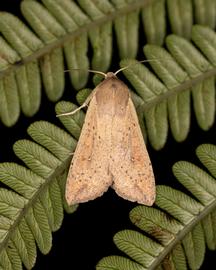
Mythimna scottii (Butler, 1886); Mythimna unipuncta (Haworth, 1809)
Note: Nedumpally et al. (2025)Nedumpally et al. (2025):
Nedumpally V, Zilli A, Yapar E, Tammaru T, Lemmon AR, Õunap E. 2025. Elaborating the phylogeny of Noctuidae by focusing on relationships between northern European taxa. Systematic Entomology. e70010. resurrected Pseudaletia Franclemont, 1951 from synonymy of Mythimna, but only formally transferred M. separata (Walker, 1865) back to Pseudaletia. Mythimna unipuncta and the native Hawaiian species of Mythimna likely need to be transferred to Pseudaletia as well.
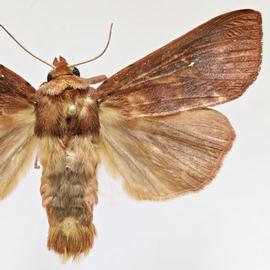
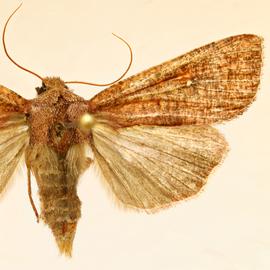
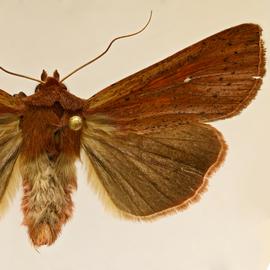
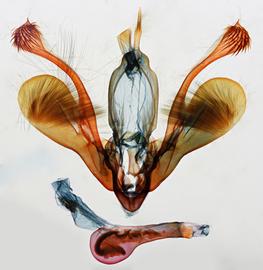
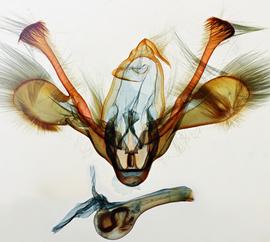
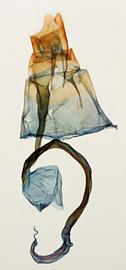
There are three described endemic species of Mythimna in Hawaiʻi, but several more undescribed species likely exist. Known host plants are grasses and sedges, both native and introduced. Some species were historically known from higher elevation sugar cane fields, but now are largely restricted to native wet forests.
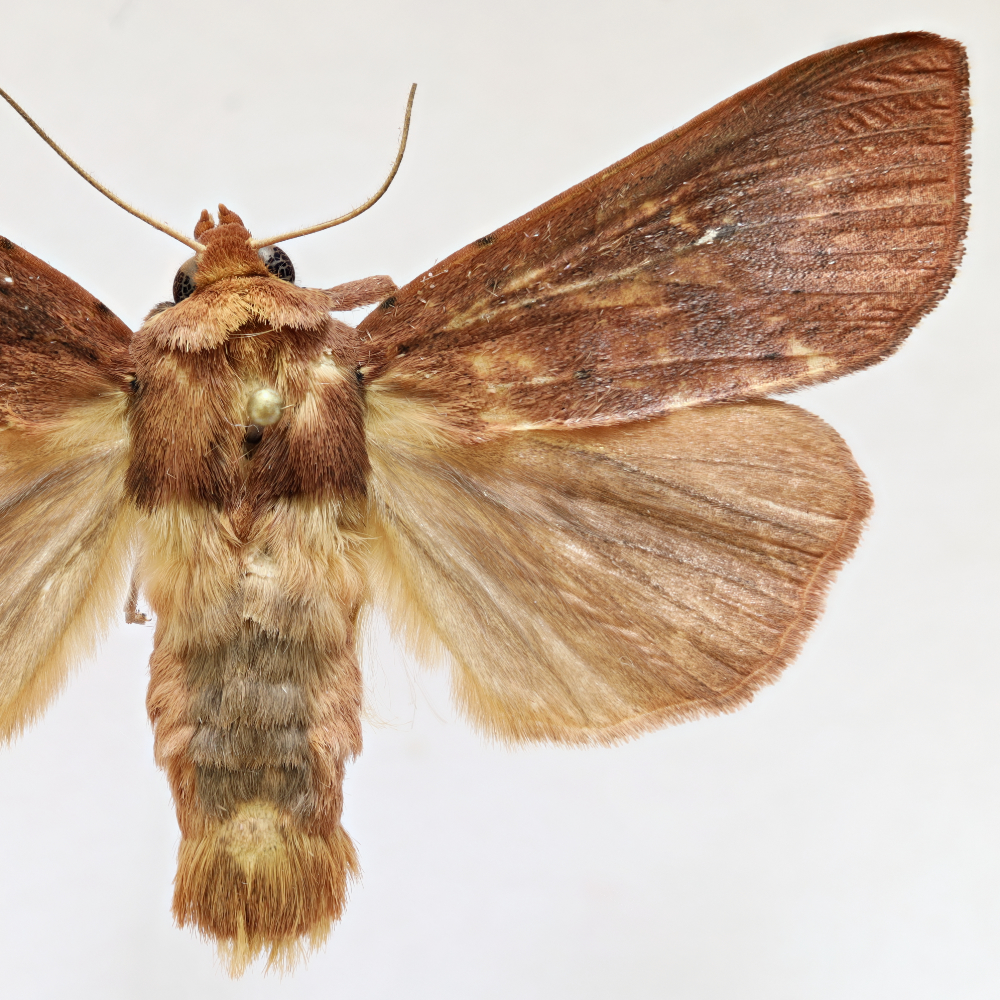
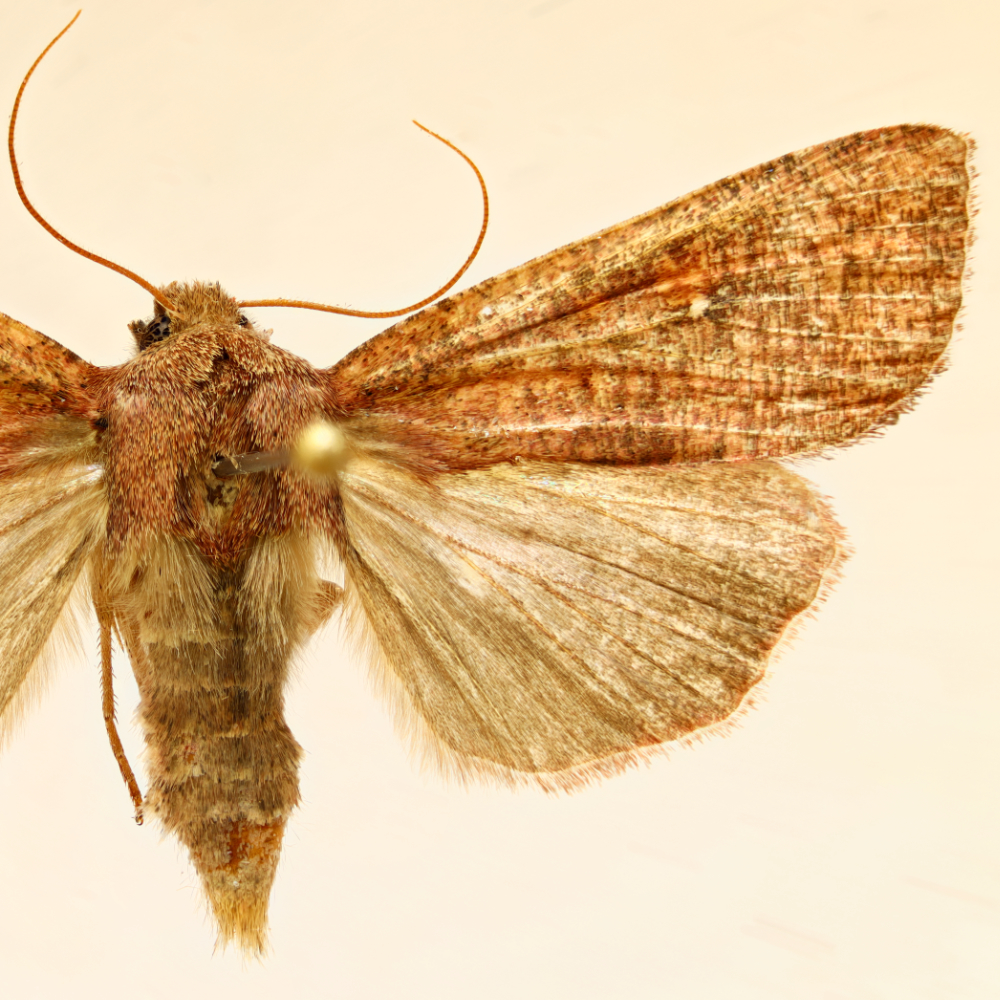
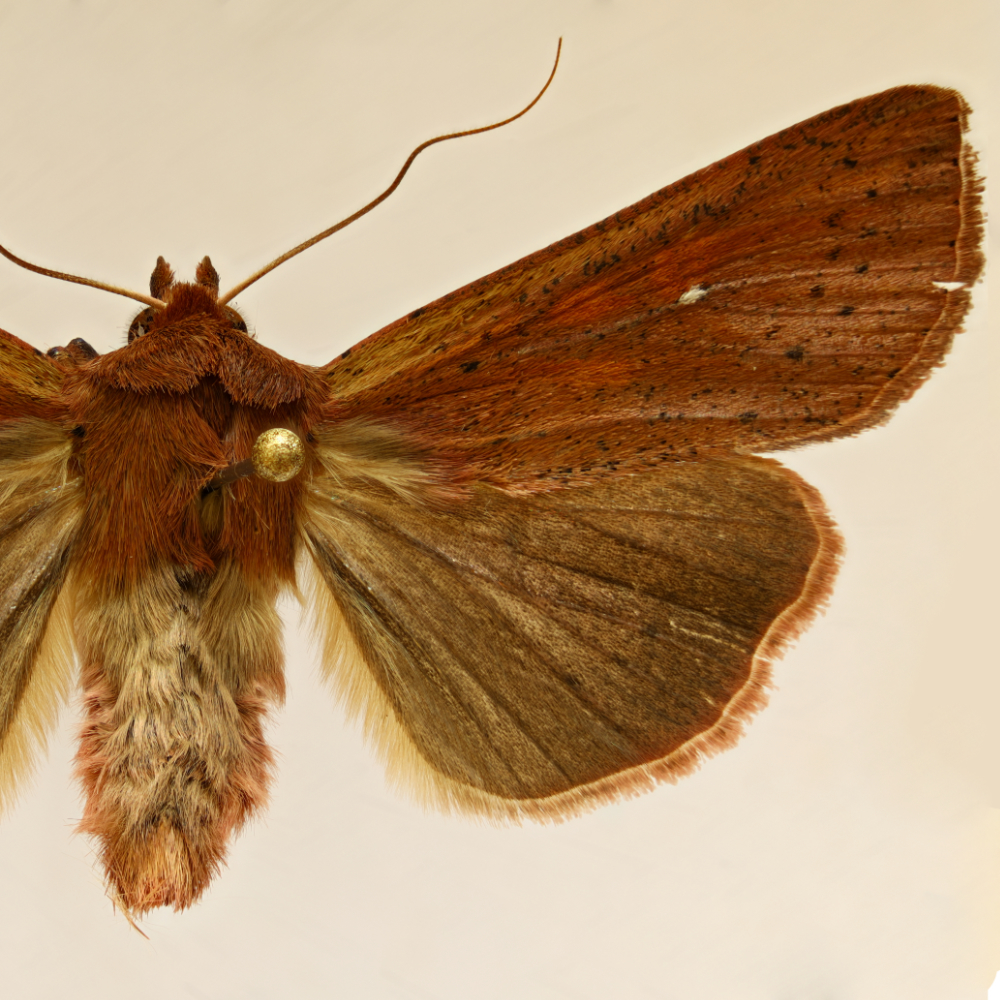
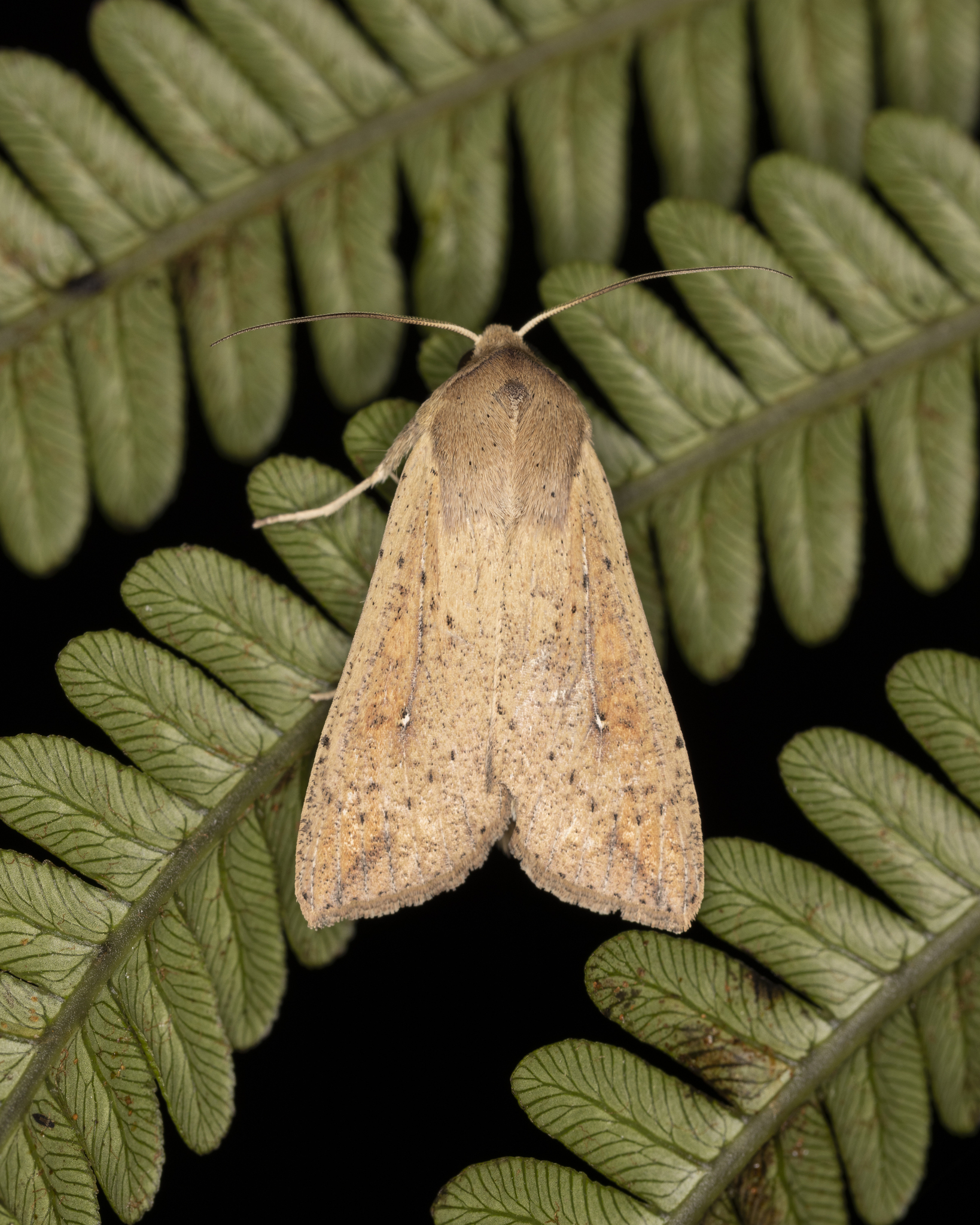
Native species of Mythimna in Hawaiʻi are medium sized to large noctuids (forewing lengthforewing length:
the distance of the forewing in a straight line from the base to the tip of the apex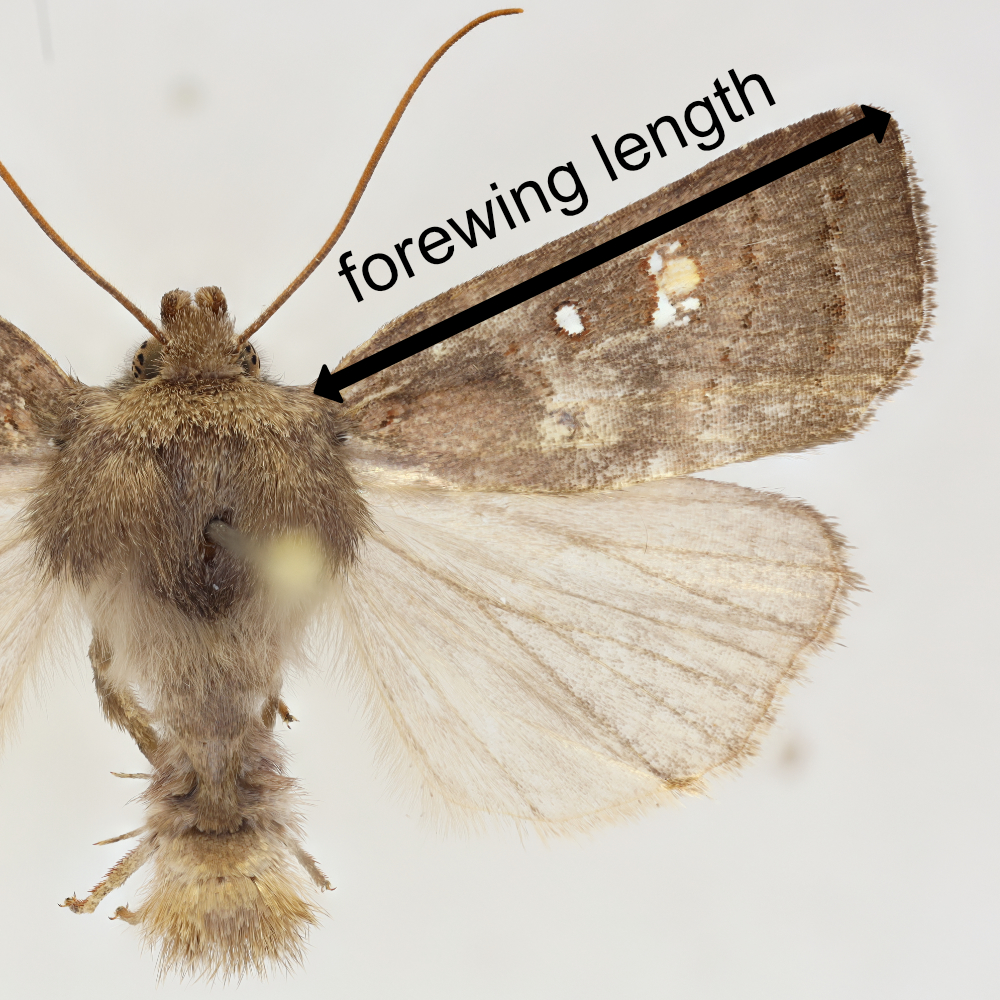 15–26 mm) characterized by a red or reddish-brown forewingforewing:
the front wing of an insect; the wing attached to the second segment of the thorax (the mesothorax)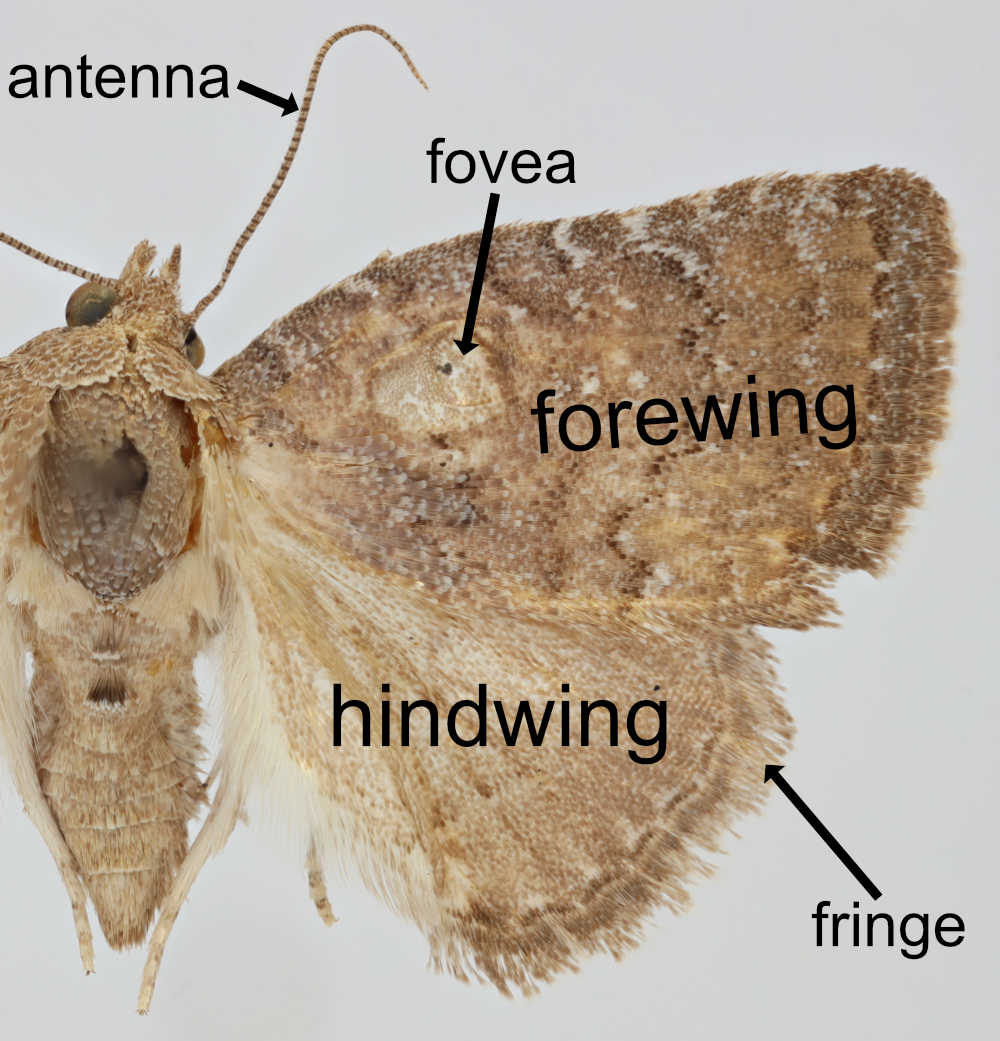 , mottled in some species, with a small white speck at the end of the discal celldiscal cell:
a large, central compartment on the wing surrounded by veins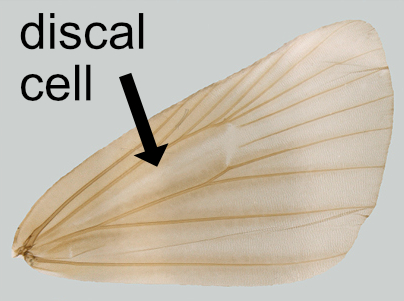 and often with the postmedial linepostmedial line:
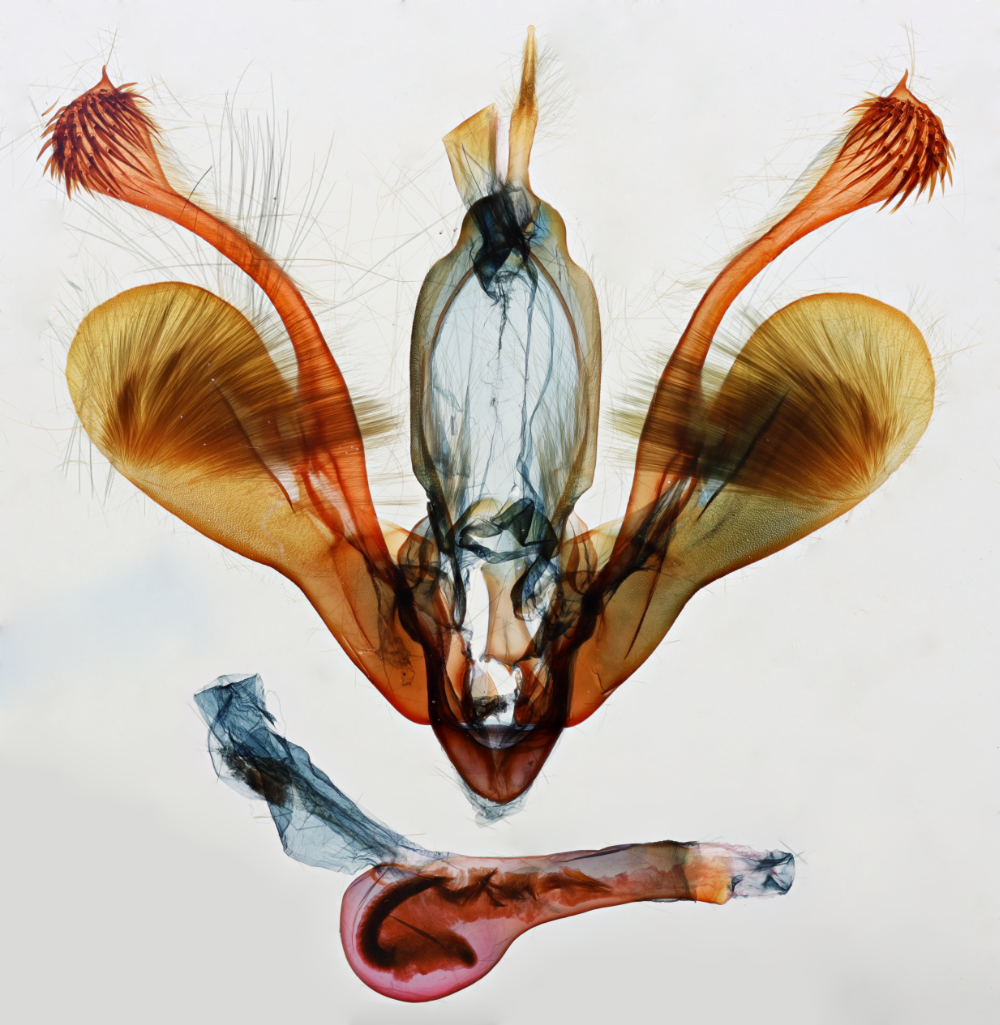
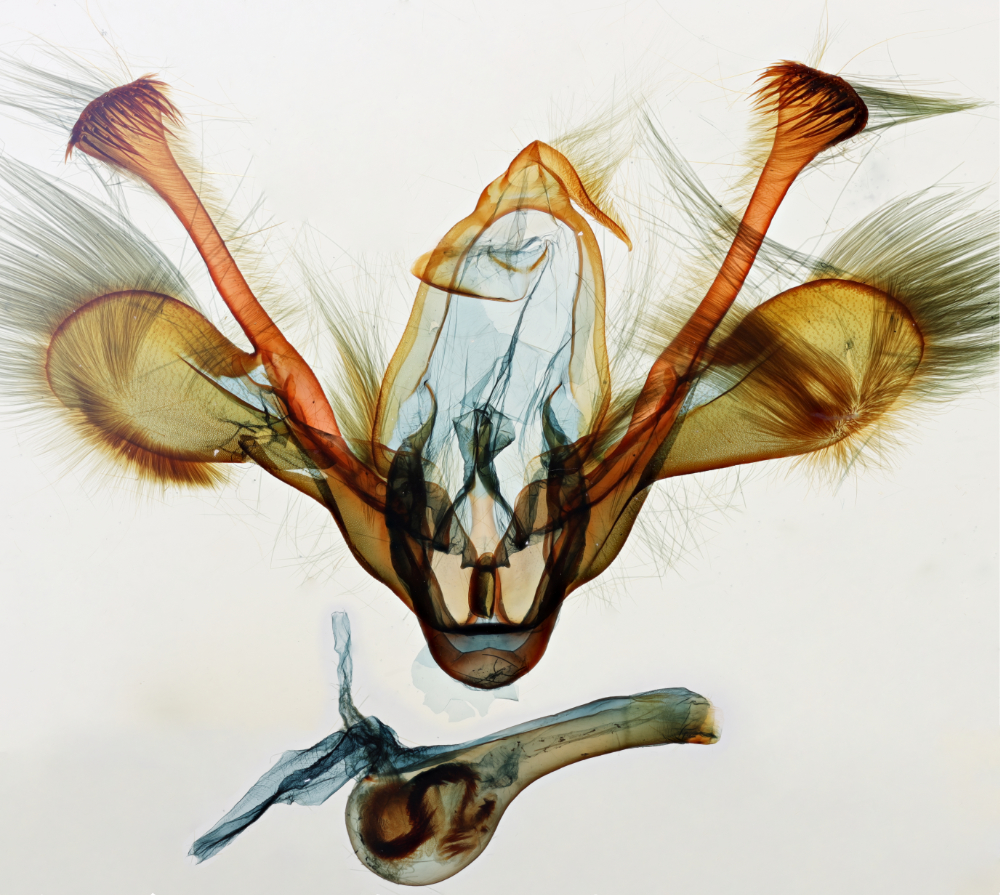
a thin, transverse line located distal to the reniform spot, typically on the distal third of the forewing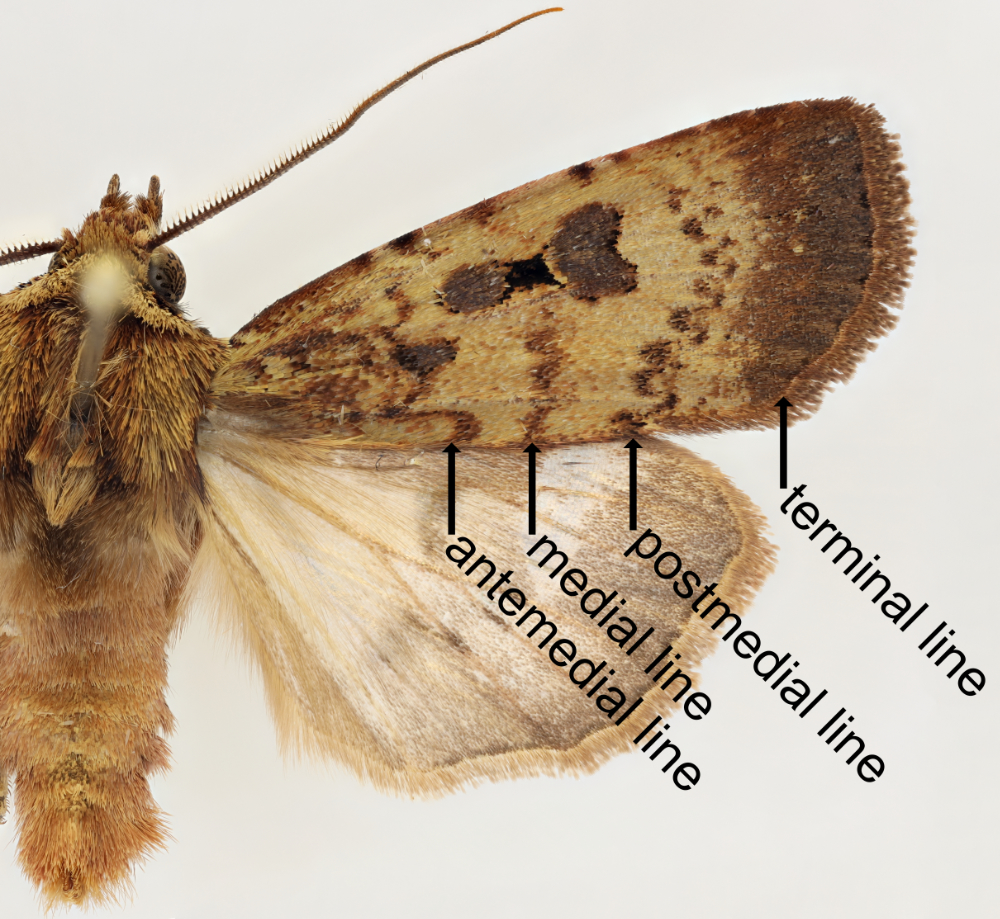 obscured. Males have large abdominal scent brushesabdominal scent brush:
long, paired, brush-like pheromone-emitting organs located at the base of the ventral abdomen in males of some moth species; sometimes called hair pencils, sex tufts, ventral tufts, or many other terms.; can also be used to refer to groups of setae on larvae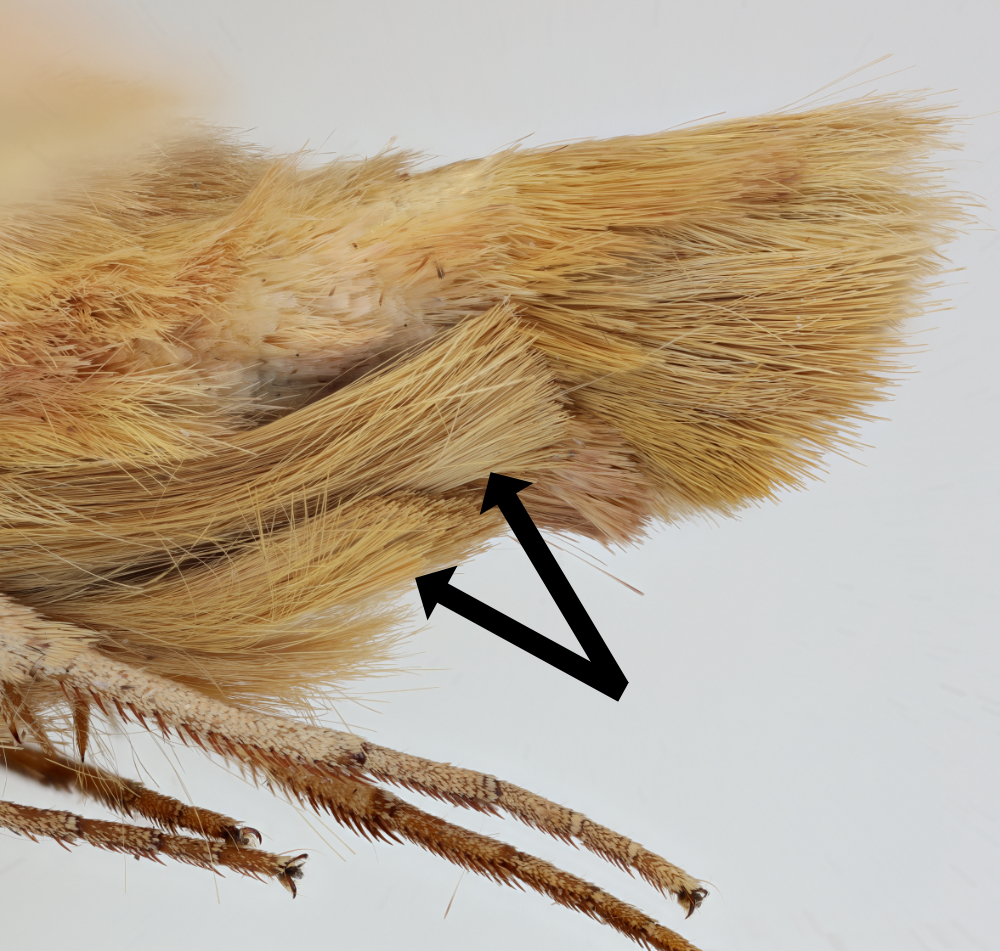 at the base of the abdomenabdomen:
the third and posterior-most body section of an insect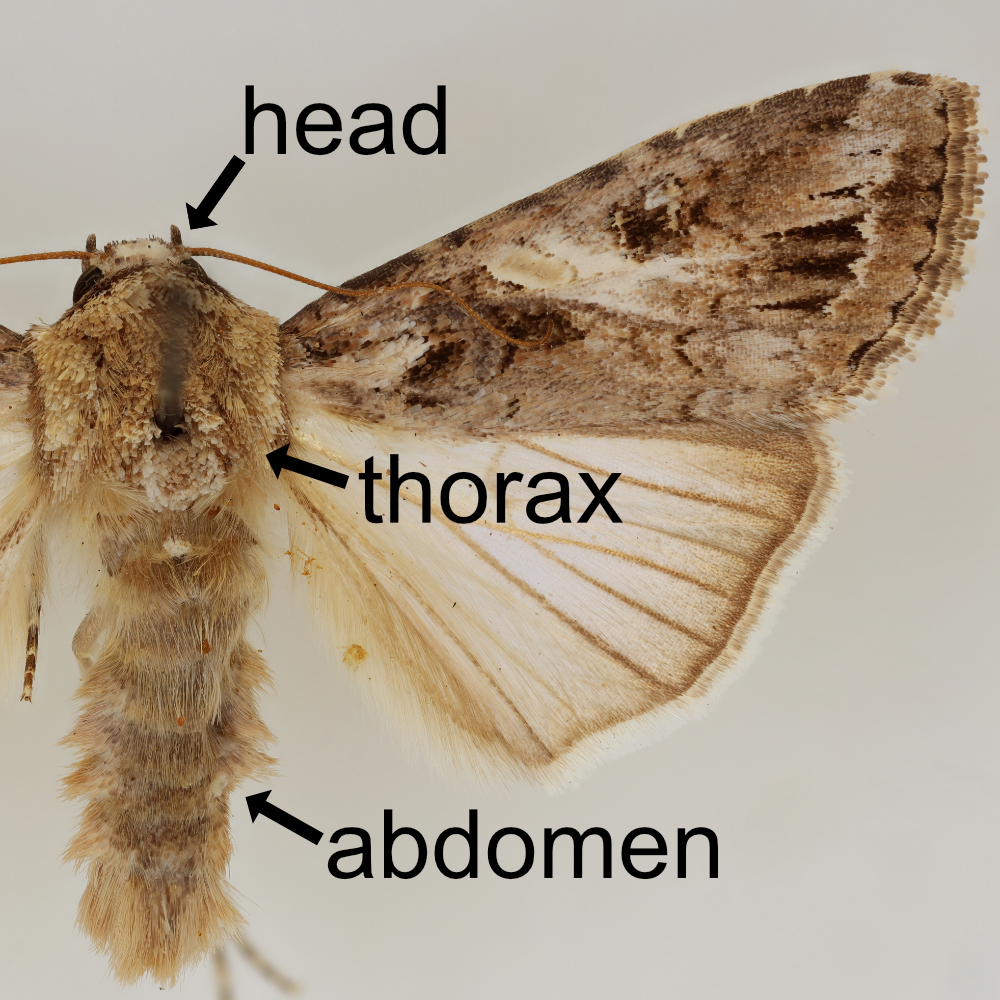 .
.
Swezey (1909)Swezey (1909):
Swezey OH. 1909. Army worms and cut worms on sugar cane in the Hawaiian Islands. Report of the Work of the Experiment Station of the Hawaiian Sugar Planters' Association, 7. Honolulu. 31 pp. described the larva of Mythimna amblycasis and M. macrosaris (as Cirphis pyrrhias).
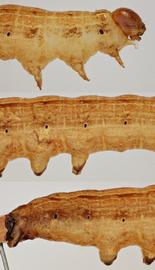
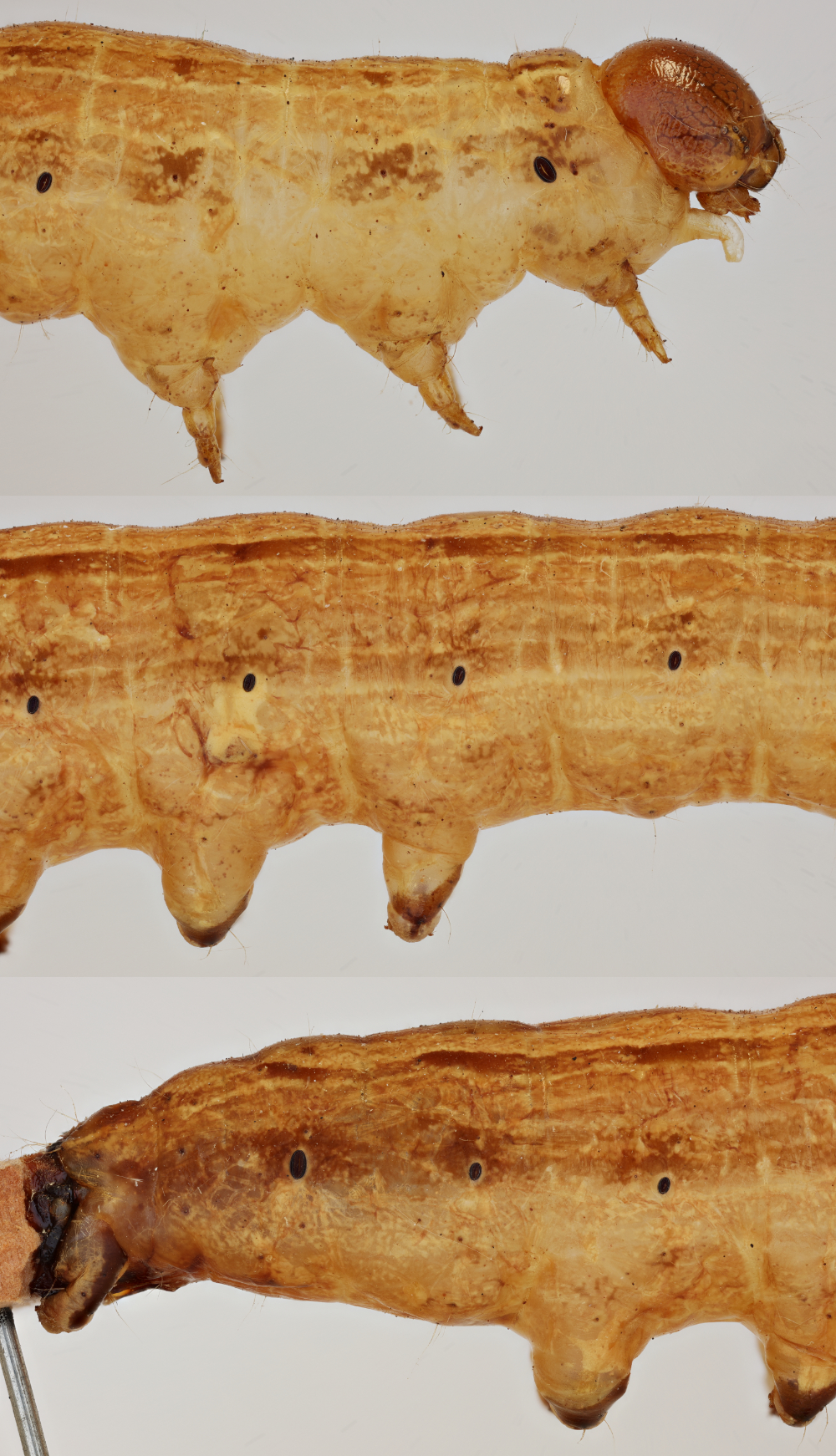
For M. amblycasis, the fully grown larva is about 38 mm in length. The body is usually cream colored, mottled with pale brown, with a dark middorsal stripe, which is paler medially; there is also a wide, dark, subdorsal stripe, concave on the upper edge of each segment, connected by transverse bar on A9; the prolegs have a dark spot on the outer side; the head is pale small brownish mottling; a rounded black spot present on metathorax and A1 above spiracles.
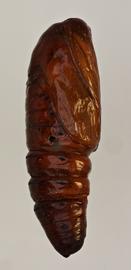
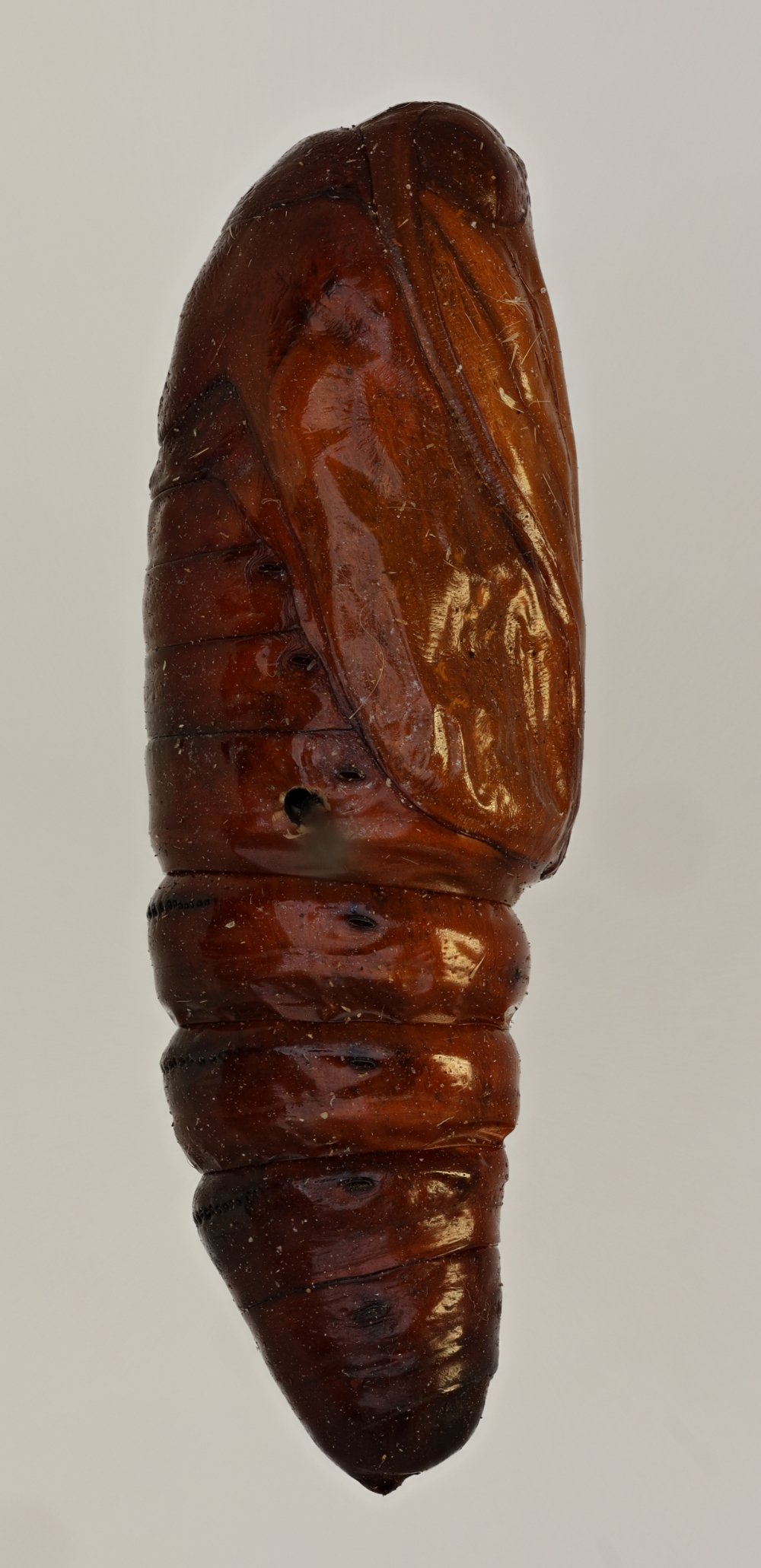
"The pupa is about 19 mm long by 5 mm thick; medium brown, darker on the back, eyes nearly black; a row of about a dozen pits on dorsal side at base of abdominal segments 5, 6 and 7; apexapex:
the point furthest from the base; the apex of the wing may be rounded, pointed, or falcate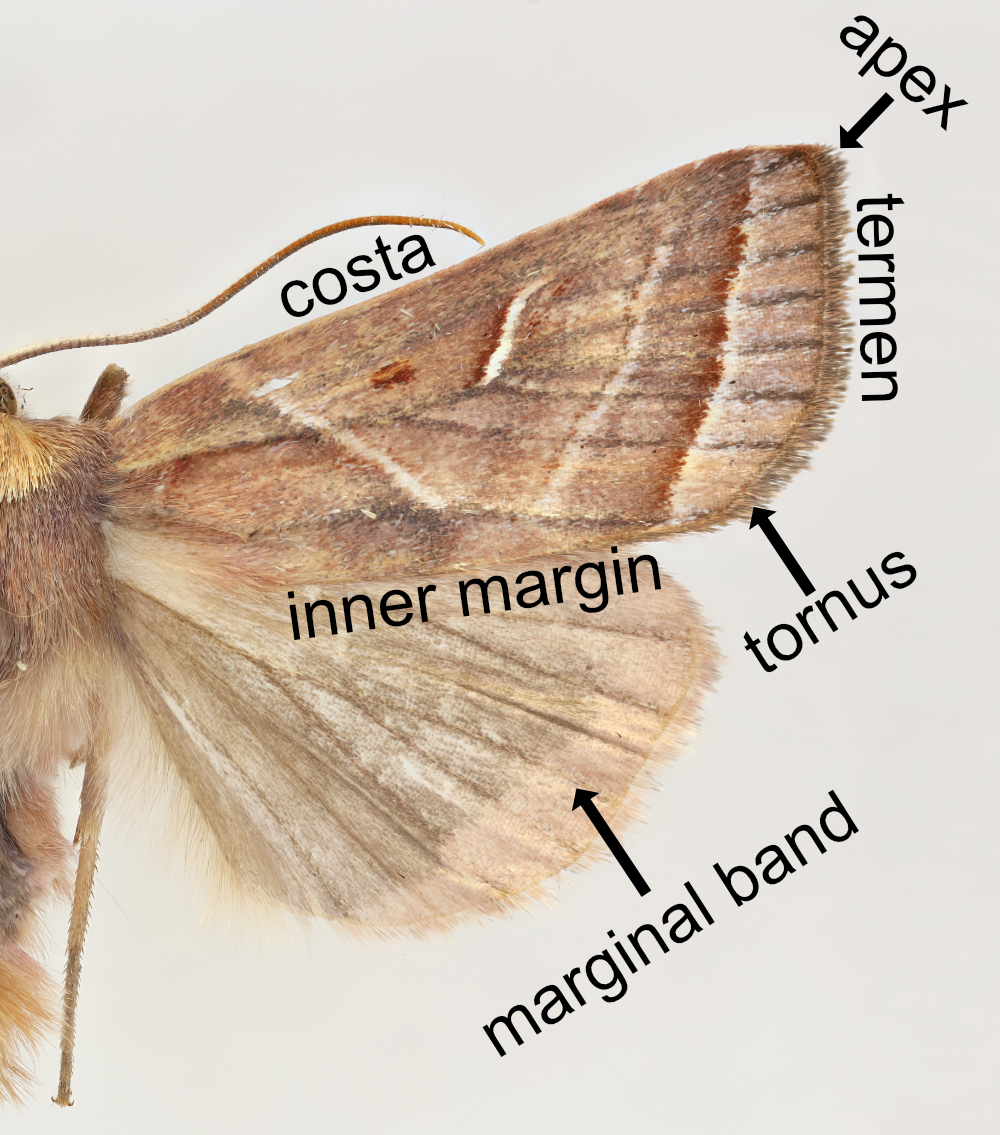 of abdomenabdomen:
the third and posterior-most body section of an insect pointing a little ventrally, with two slightly diverging, pale spines, dark at base, curved ventrally and hooked at tip, a curved hooked bristle a little dorsally, and another a little laterally from each of these terminal spines..." Swezey (1909)Swezey (1909):
Swezey OH. 1909. Army worms and cut worms on sugar cane in the Hawaiian Islands. Report of the Work of the Experiment Station of the Hawaiian Sugar Planters' Association, 7. Honolulu. 31 pp. .
The larva of M. macrosaris is similar to that of M. amblycasis but larger, averaging 42-45 mm in length when fully grown (Swezey 1909Swezey 1909:
Swezey OH. 1909. Army worms and cut worms on sugar cane in the Hawaiian Islands. Report of the Work of the Experiment Station of the Hawaiian Sugar Planters' Association, 7. Honolulu. 31 pp. ).
Adults of native Mythimna spp., especially the smaller and browner species, could be confused with the non-native Mythimna unipuncta. Native species of Mythimna are generally larger than M. unipuncta with a distinct reddish wash to the forewingforewing:
the front wing of an insect; the wing attached to the second segment of the thorax (the mesothorax).
Native species of Mythimna are known from all of the main high Hawaiian Islands. Though historically known from sea level and drier localities, species are now largely restricted to elevations between 500–2200 meters, primarily in wet cloud forests, but have been occasionally taken in mesic forests and subalpine shrubland. No recent specimens are known from Kauaʻi or Lānaʻi.
Swezey (1909)Swezey (1909):
Swezey OH. 1909. Army worms and cut worms on sugar cane in the Hawaiian Islands. Report of the Work of the Experiment Station of the Hawaiian Sugar Planters' Association, 7. Honolulu. 31 pp. described the life cycle of Mythimna amblycasis: "The caterpillars become full grown in about a month from the hatching of the eggs. Like [Mythimna unipuncta], they may often be found on their foodplant in the daytime; in cane, hiding behind the leaf-sheaths. Pupation takes place in an earthen cell a little below the surface of the ground, or beneath stones or rubbish....The moth emerges from the pupa in about two weeks."
Known hosts include Paspalum conjugatum P.J.Bergius (Poaceae) and Machaerina mariscoides meyenii (Kunth) T.Koyama (Cyperaceae) for M. macrosaris and various unidentified non-native grasses for M. amblycasis (Swezey 1909Swezey 1909:
Swezey OH. 1909. Army worms and cut worms on sugar cane in the Hawaiian Islands. Report of the Work of the Experiment Station of the Hawaiian Sugar Planters' Association, 7. Honolulu. 31 pp. ).
Author: Kyhl A. Austin
Content last updated May 2026
idtools.org