QUESTIONABLY NATIVE
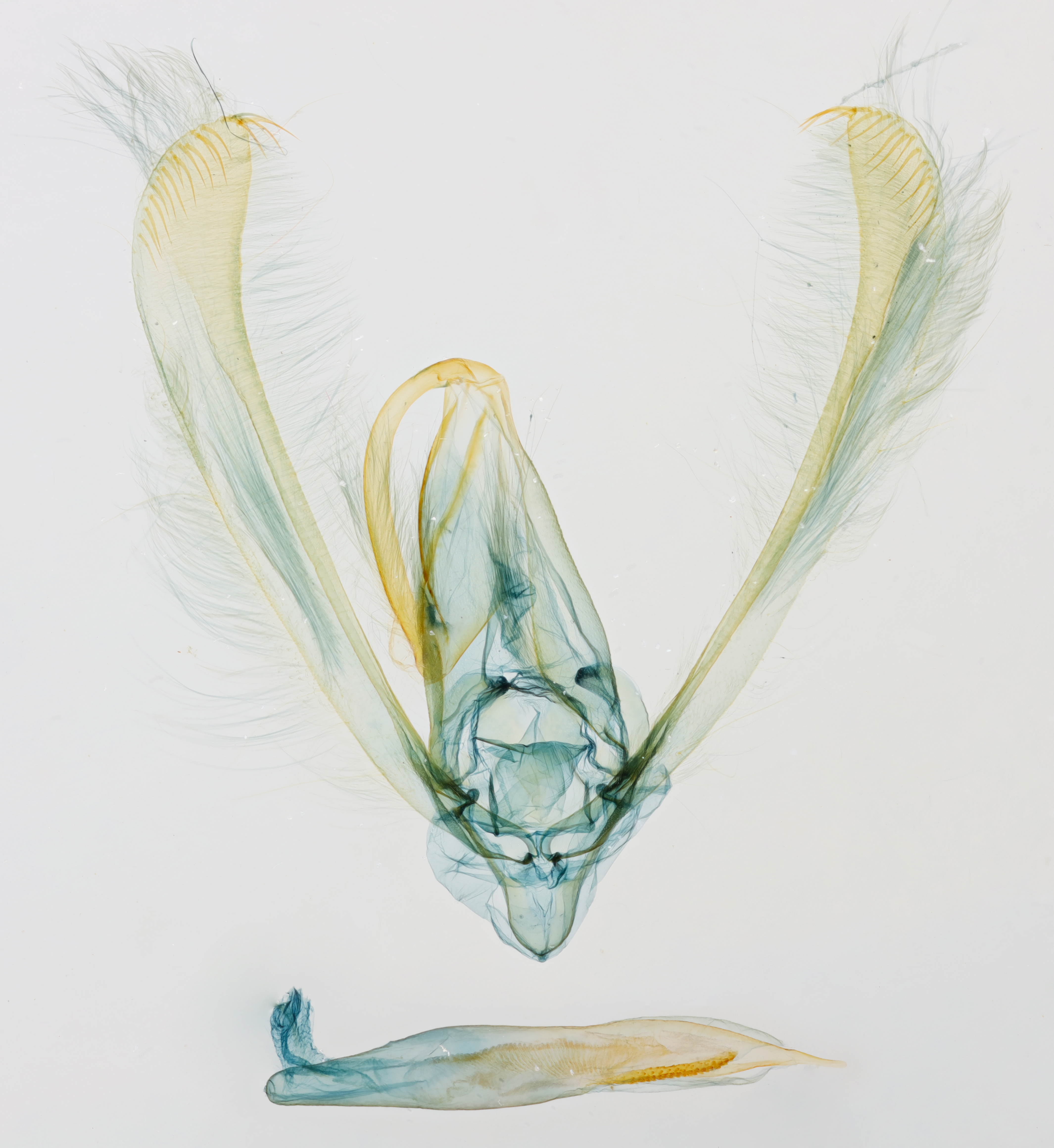
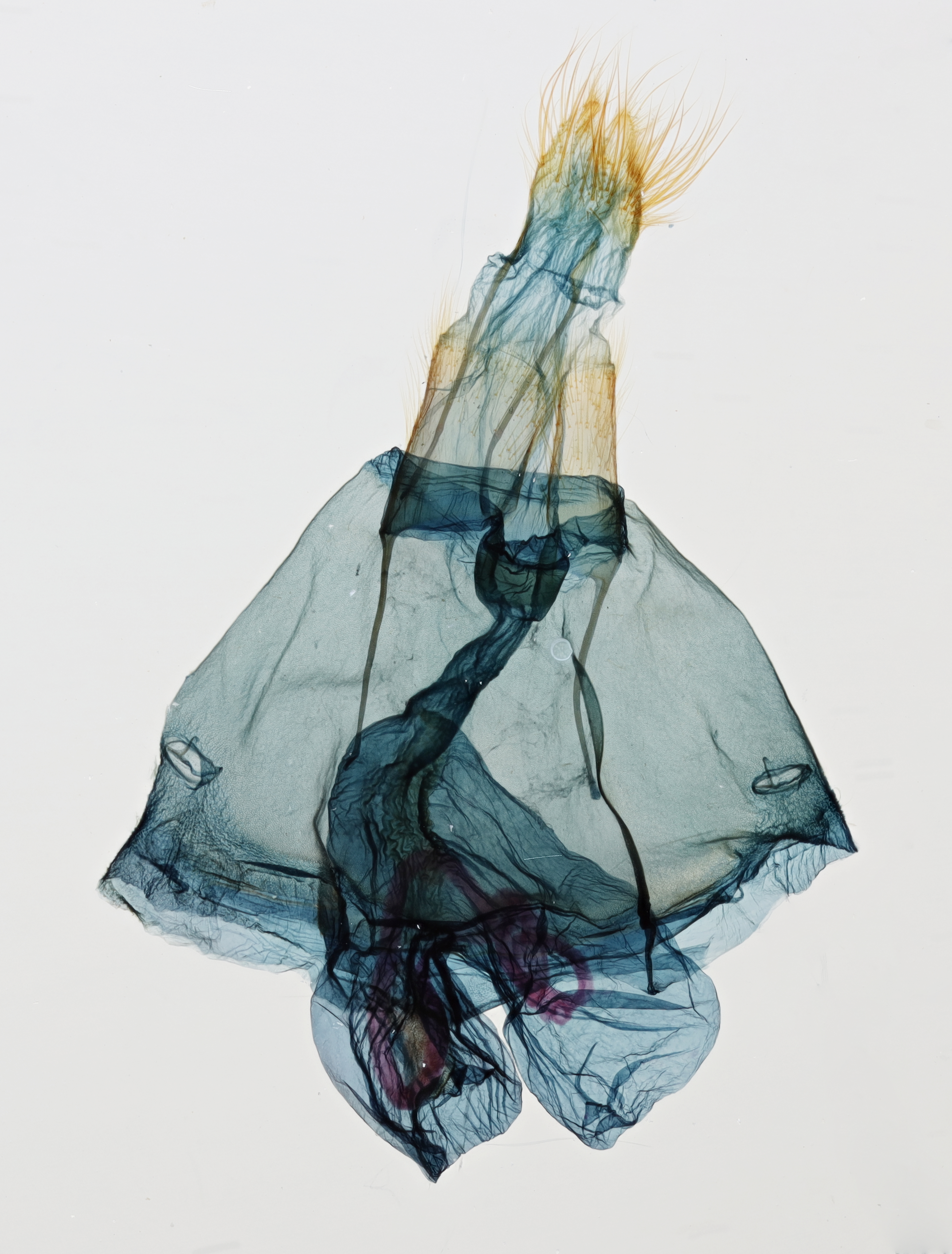
Heliothis melanoleuca Mitchell, 1997Mitchell, 1997:
Mitchell A. 1997. The first endemic Hawaiian Heliothis (Lepidoptera: Noctuidae): H. melanoleuca, a new species from riparian forest. Bishop Museum Occasional Papers. 48:78–81.
Higher taxonomy: Noctuidae: Heliothinae
Note: the assignment of this species to Heliothis by Mitchell (1997)Mitchell (1997):
Mitchell A. 1997. The first endemic Hawaiian Heliothis (Lepidoptera: Noctuidae): H. melanoleuca, a new species from riparian forest. Bishop Museum Occasional Papers. 48:78–81. should be considered provisional.
Heliothis melanoleuca is a distinctive, rarely collected noctuid that was only discovered in 1985 (Mitchell 1997Mitchell 1997:
Mitchell A. 1997. The first endemic Hawaiian Heliothis (Lepidoptera: Noctuidae): H. melanoleuca, a new species from riparian forest. Bishop Museum Occasional Papers. 48:78–81.). It is highly unlikely to be encountered in an agricultural or residential setting and is not believed to be a significant pest.
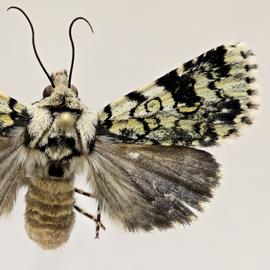
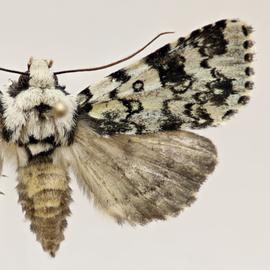
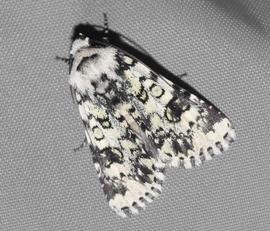
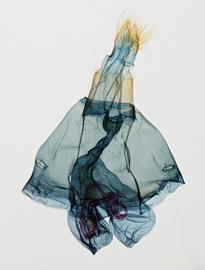
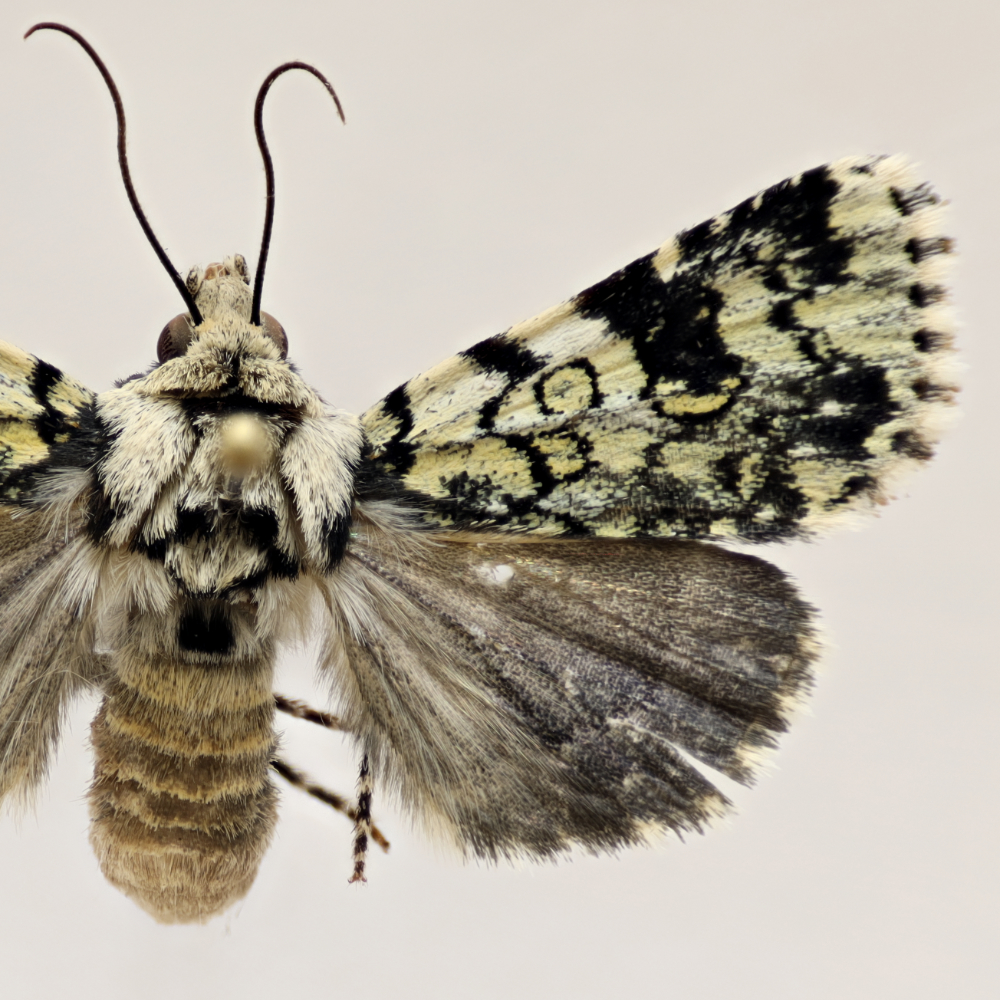
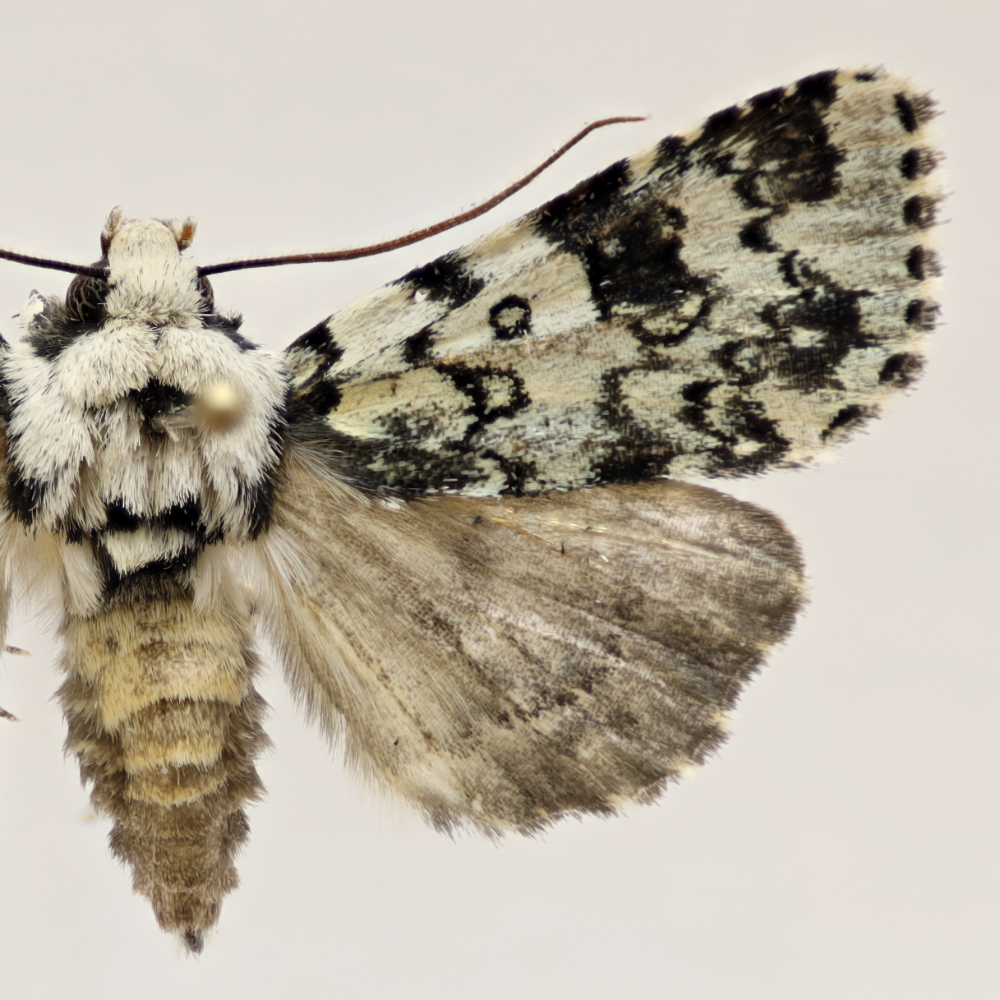
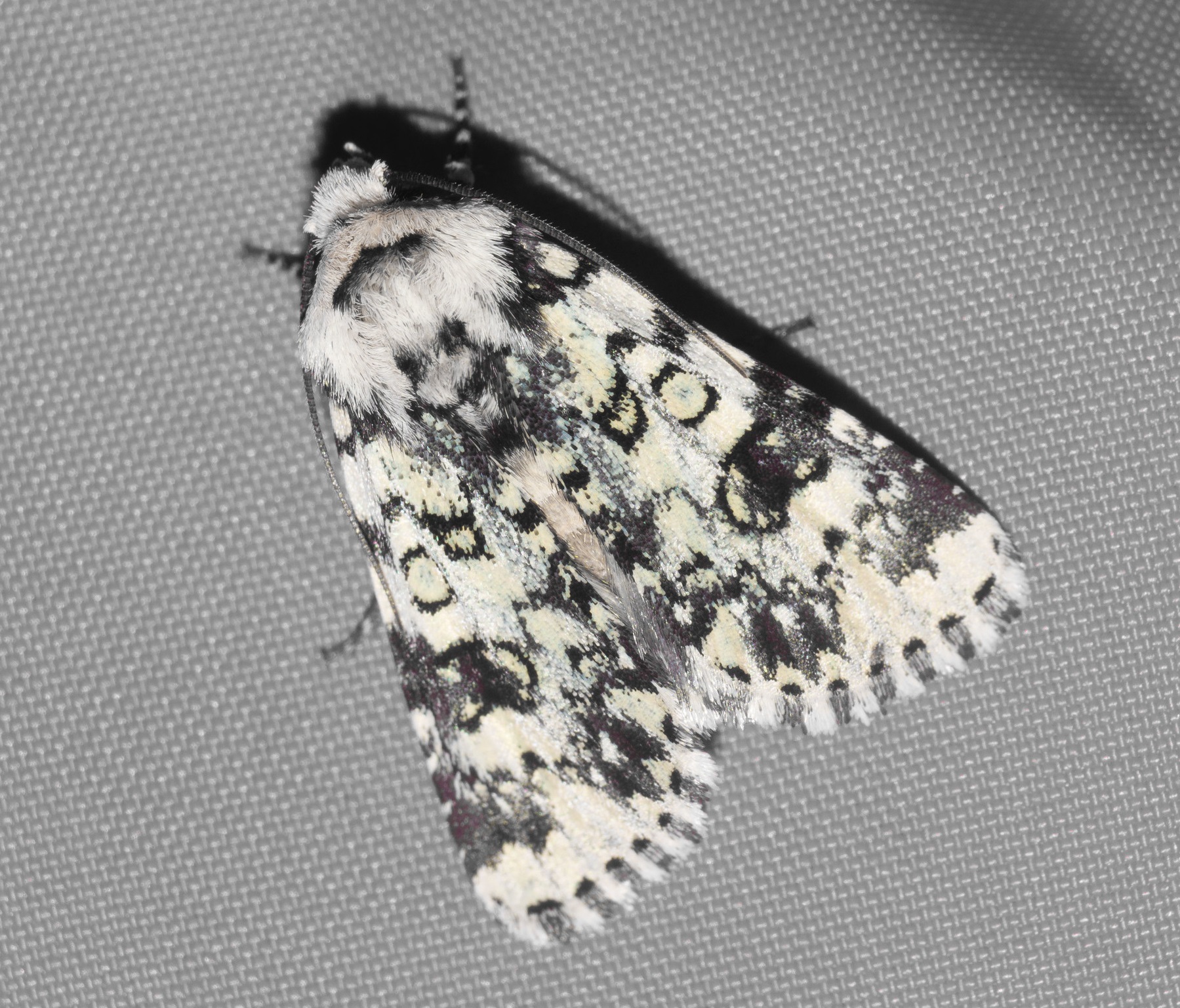
Adults of Heliothis melanoleuca are pale green, medium-sized noctuids (forewing lengthforewing length:
the distance of the forewing in a straight line from the base to the tip of the apex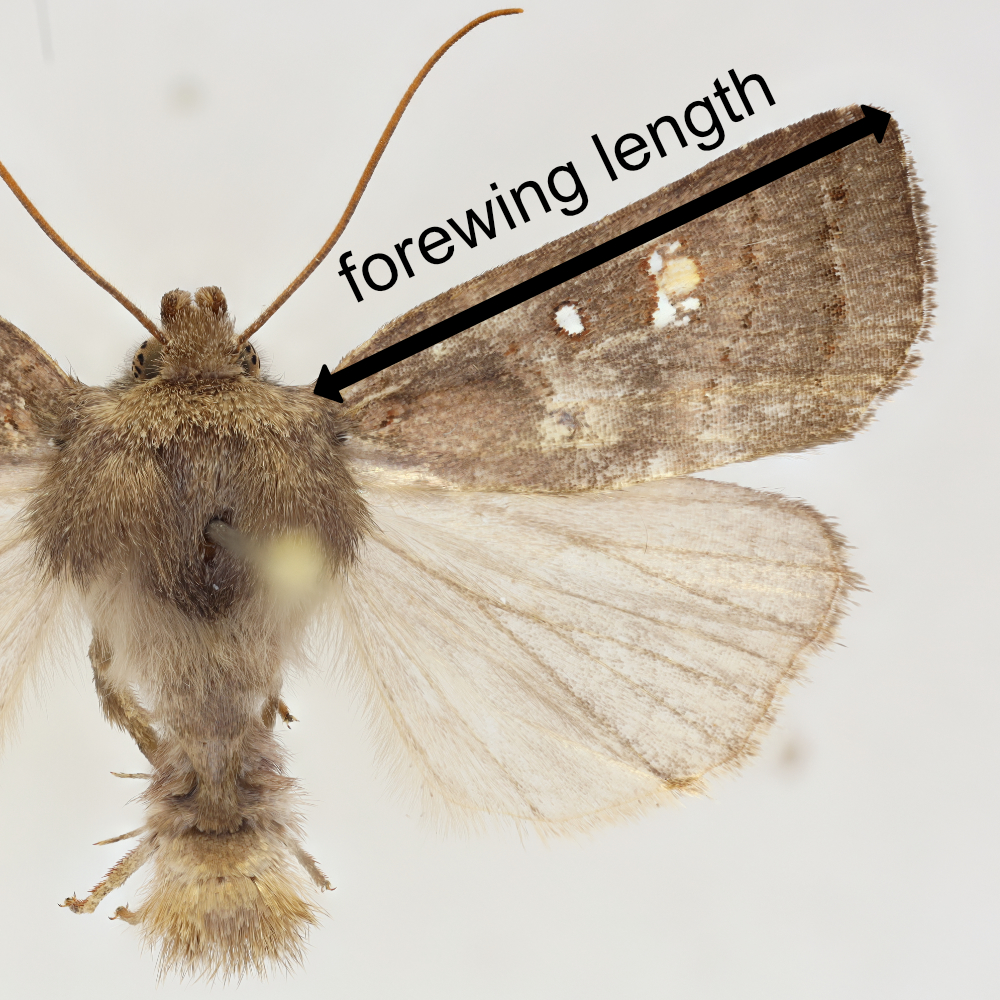 13–14 mm) with distinct reniform, orbicular, and claviform spotsclaviform spot:
an elongate spot or mark extending laterally from the antemedial line into the median area, toward and sometimes reaching the postmedial line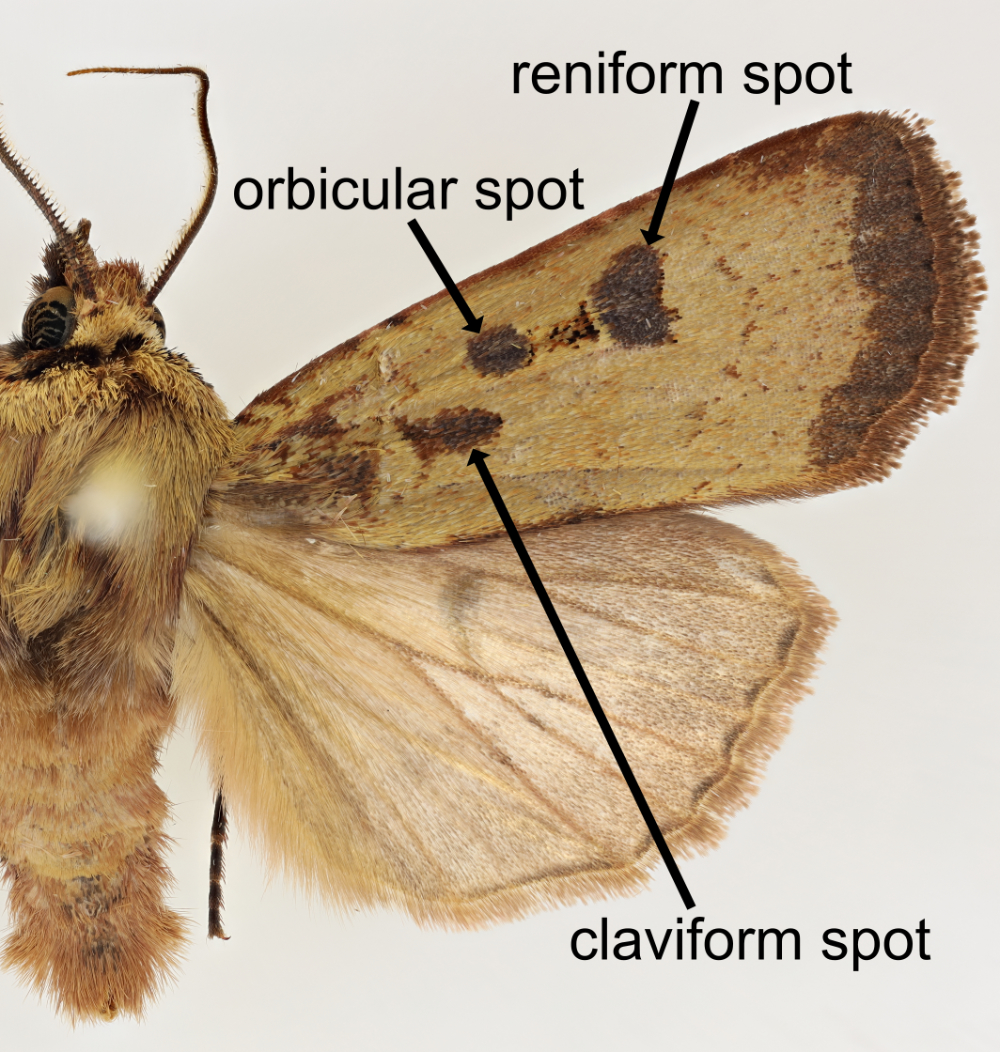 . Much of the reniform spotreniform spot:
a spot, often broad bean- or kidney-shaped, found at the distal end of the discal cell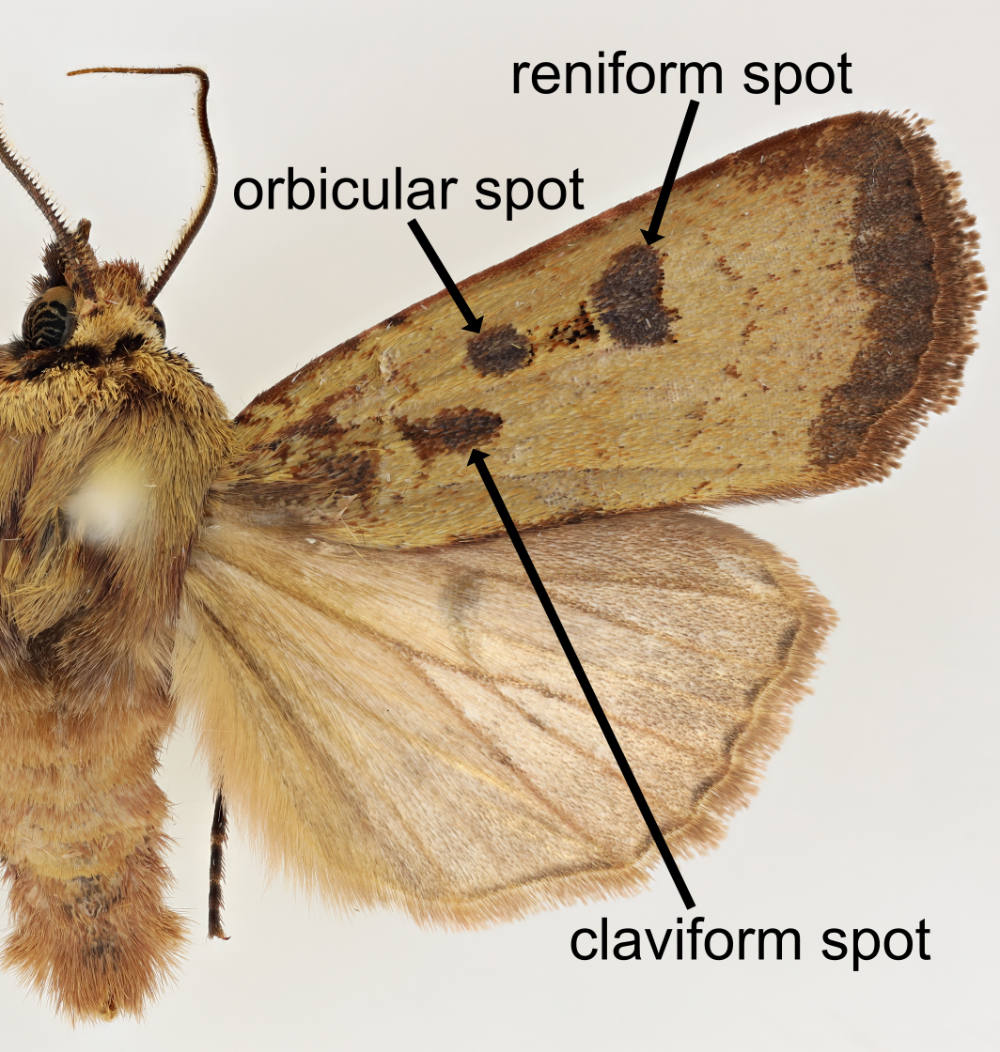 is heavily obscured by black scaling. The antemedial, median, postmedial, and subterminal linessubterminal line:
a thin, transverse line situated near the distal end of the forewing between the postmedial and terminal lines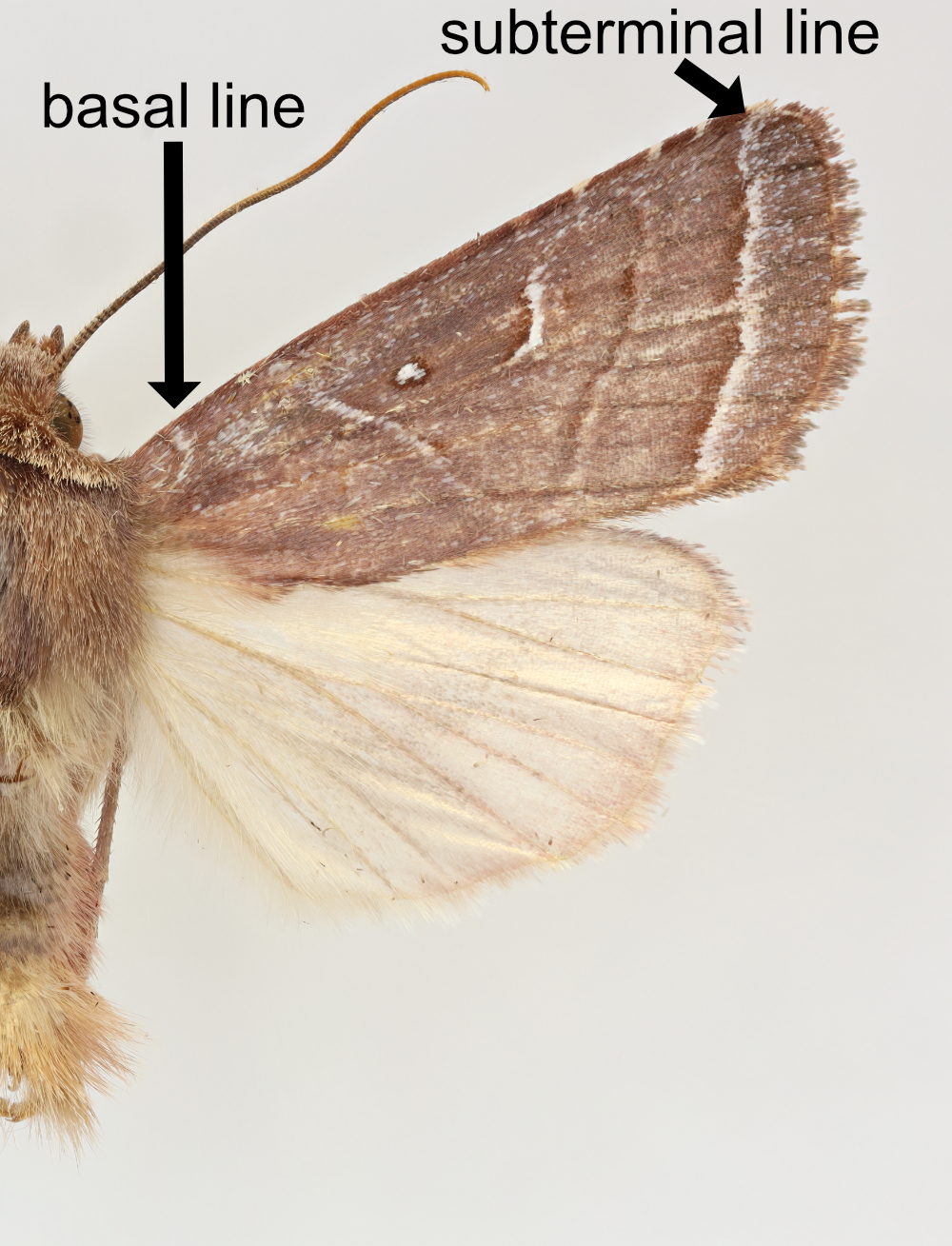 are thin, distinct, and waved and thicker along the costa. The fringefringe:
the scales, setae, or hairs that extend beyond the edge of a wing membrane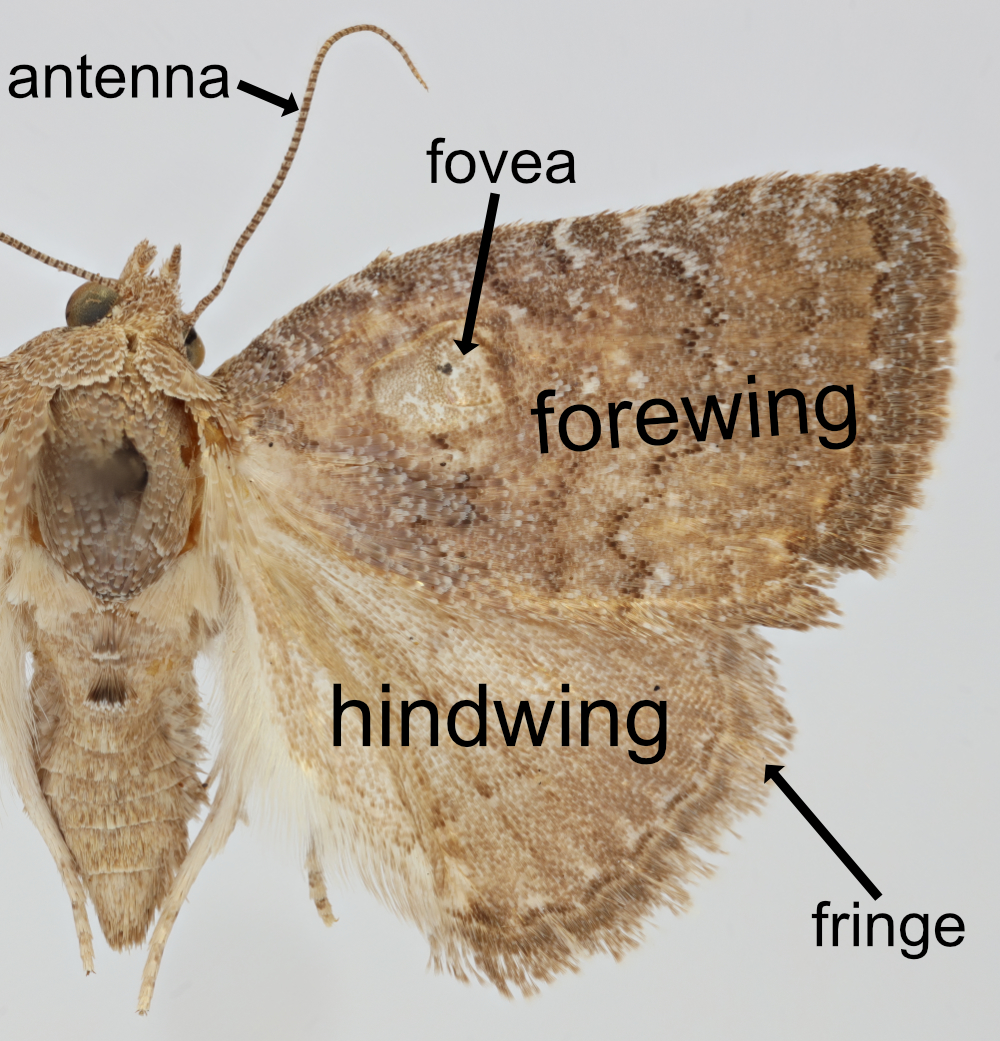 has alternating bands of black and pale green scales. Females have a pale yellow wash to much of the forewingforewing:
the front wing of an insect; the wing attached to the second segment of the thorax (the mesothorax)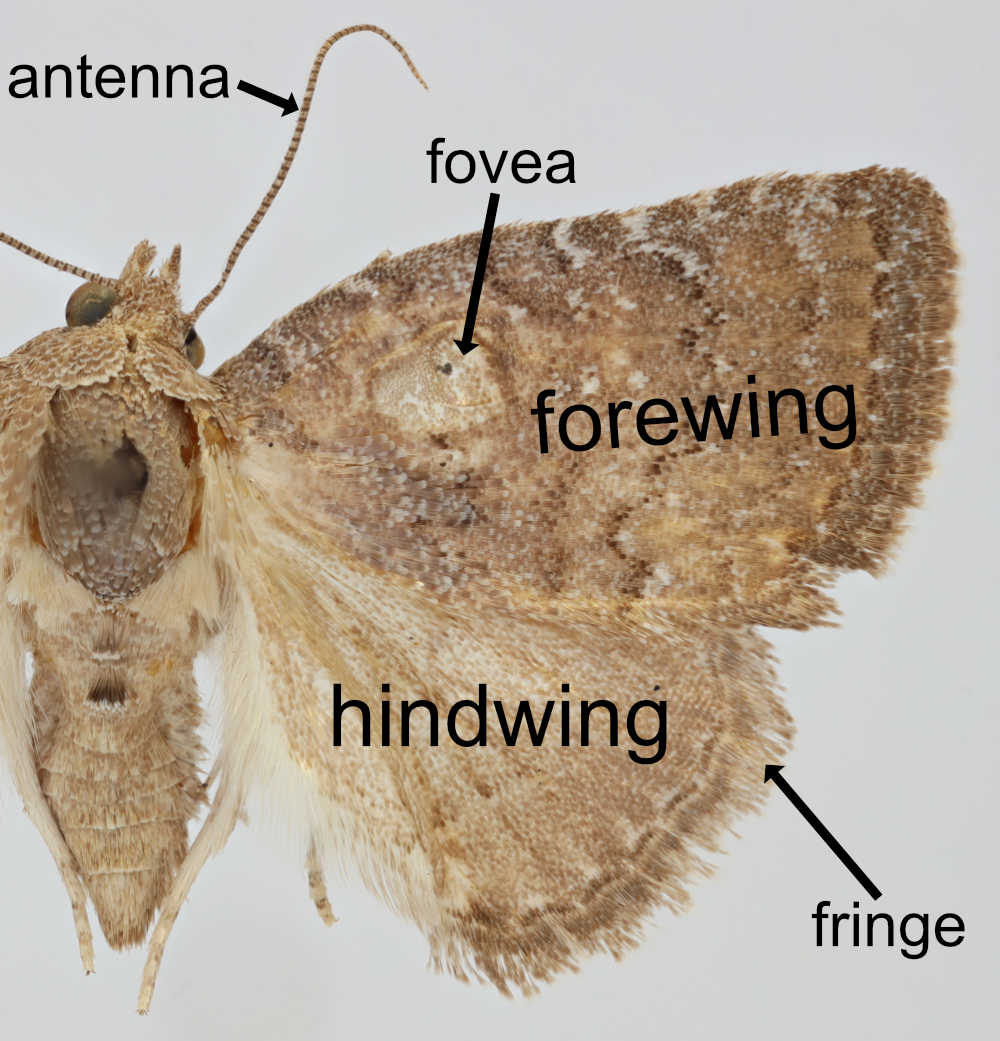 . The hindwinghindwing:
the back wing of an insect; the wing attached to the third segment of the thorax (the metathorax)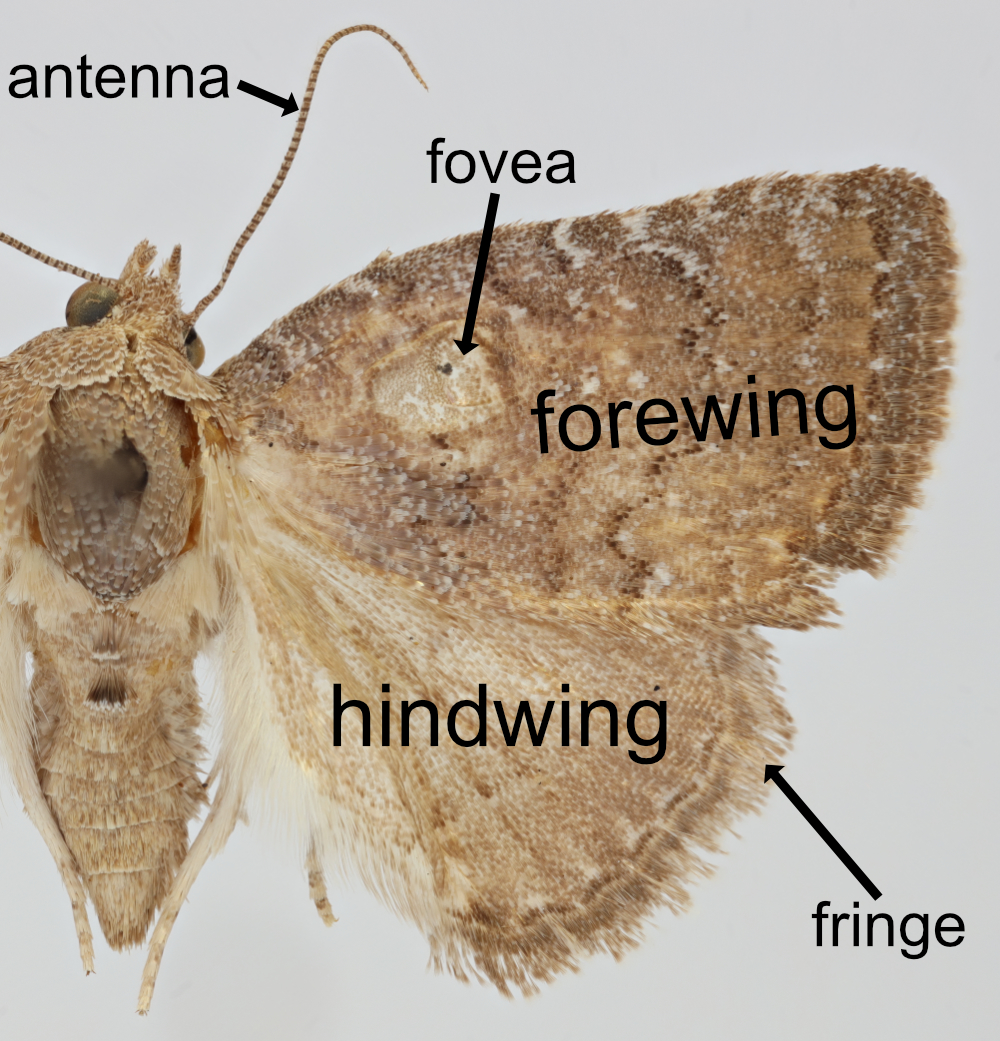 is gray with an indistinct pale discal spotdiscal spot:
a broad spot found at the end of the discal cell. The forewing discal spot is usually referred to as the reniform spot in noctuid moths.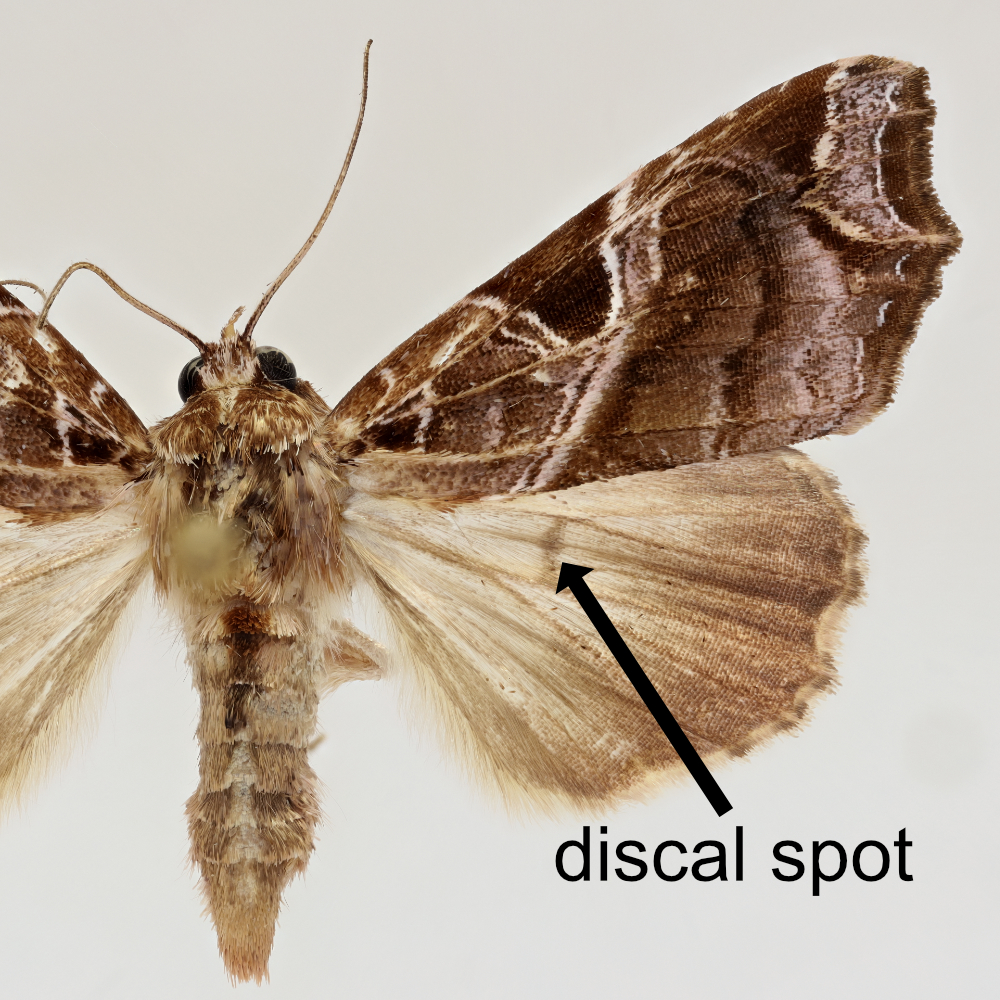 .
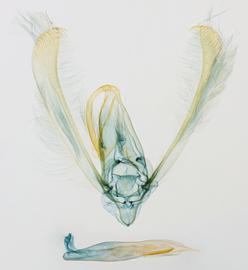
.
Larvae are unknown for Heliothis melanoleuca but likely resemble other species of Heliothinae.
Adults of Heliothis melanoleuca are highly distinctive and unlikely to confused with any noctuid in Hawaiʻi.
Heliothis melanoleuca is known from Kauaʻi (Koaiʻe Canyon) and Oʻahu (Mt. Tantalus/Mānoa Cliffs and North Hālawa Valley), in dry and mesic forests at elevations between 300–600 meters. Of these sites, it can be locally common at Mānoa Cliffs.
The host(s) for Heliothis melanoleuca is unknown. Native Hibiscus L. species are present in the immediate vicinity of the Koaiʻe Canyon and Mānoa Cliffs localities; these are one of the few vascular plants the two localities have in common.
Author: Kyhl A. Austin
Content last updated May 2026
idtools.org