NATIVE
Lophoplusia Zimmerman, 1958Zimmerman, 1958:
Zimmerman EC. 1958. Insects of Hawaii, Volume 7. Macrolepidoptera. University of Hawaii Press, Honolulu. 542 pp.
Higher taxonomy: Noctuidae: Plusiinae: Plusiini
Common name: Hawaiian looper moths
Species known to occur in Hawaiʻi:
NATIVE
Lophoplusia giffardi (Swezey, 1913); Lophoplusia psectrocera (Hampson, 1913); Lophoplusia pterylota (Meyrick, 1904); Lophoplusia violacea (Swezey, 1920Swezey, 1920:
Swezey OH. 1920. Some new Hawaiian Lepidoptera. Proceedings of the Hawaiian Entomological Society. 4(2):376–386. )
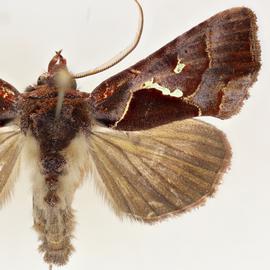
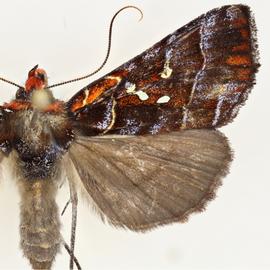
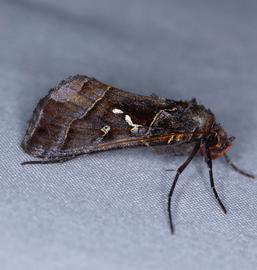
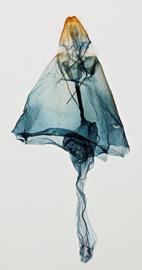
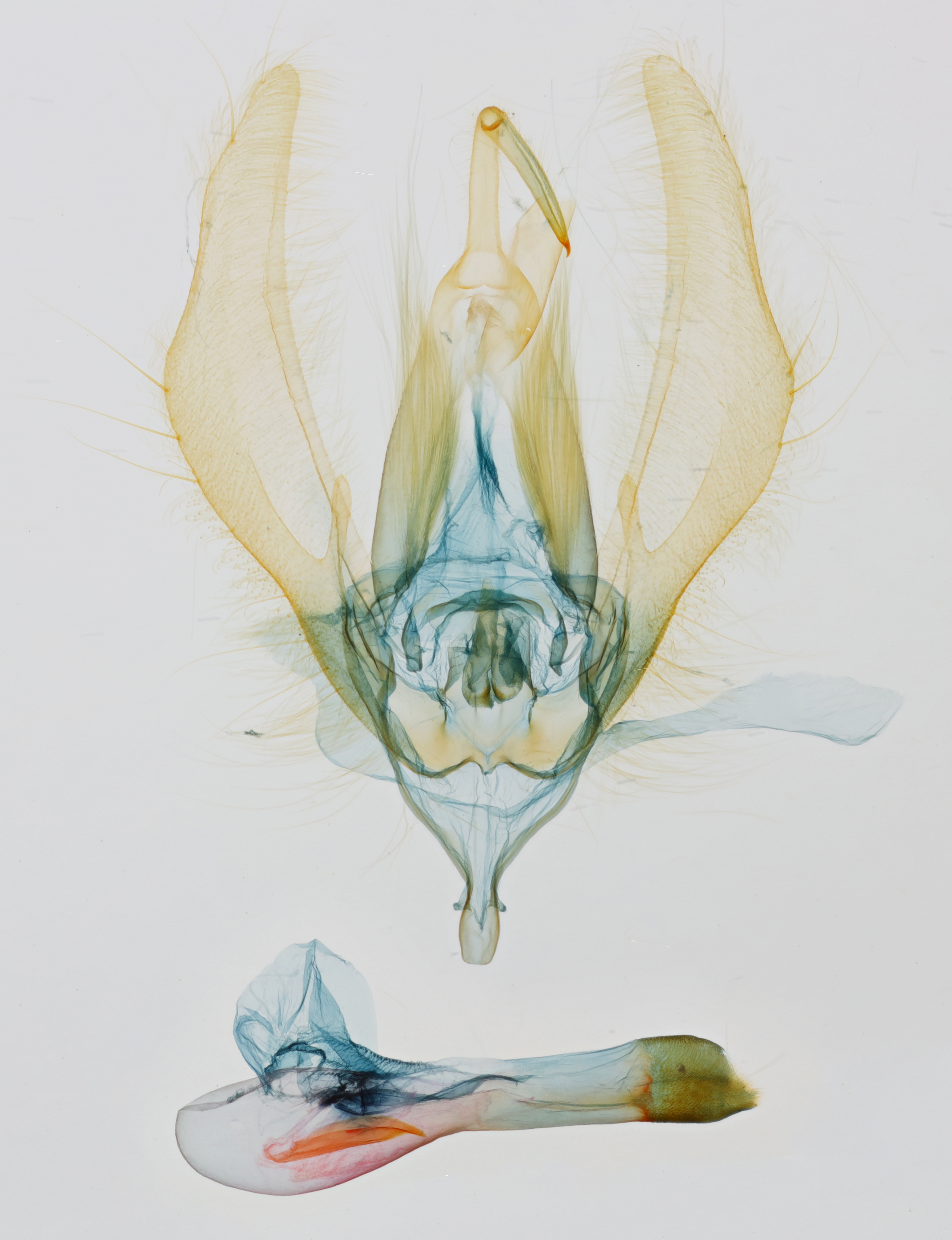
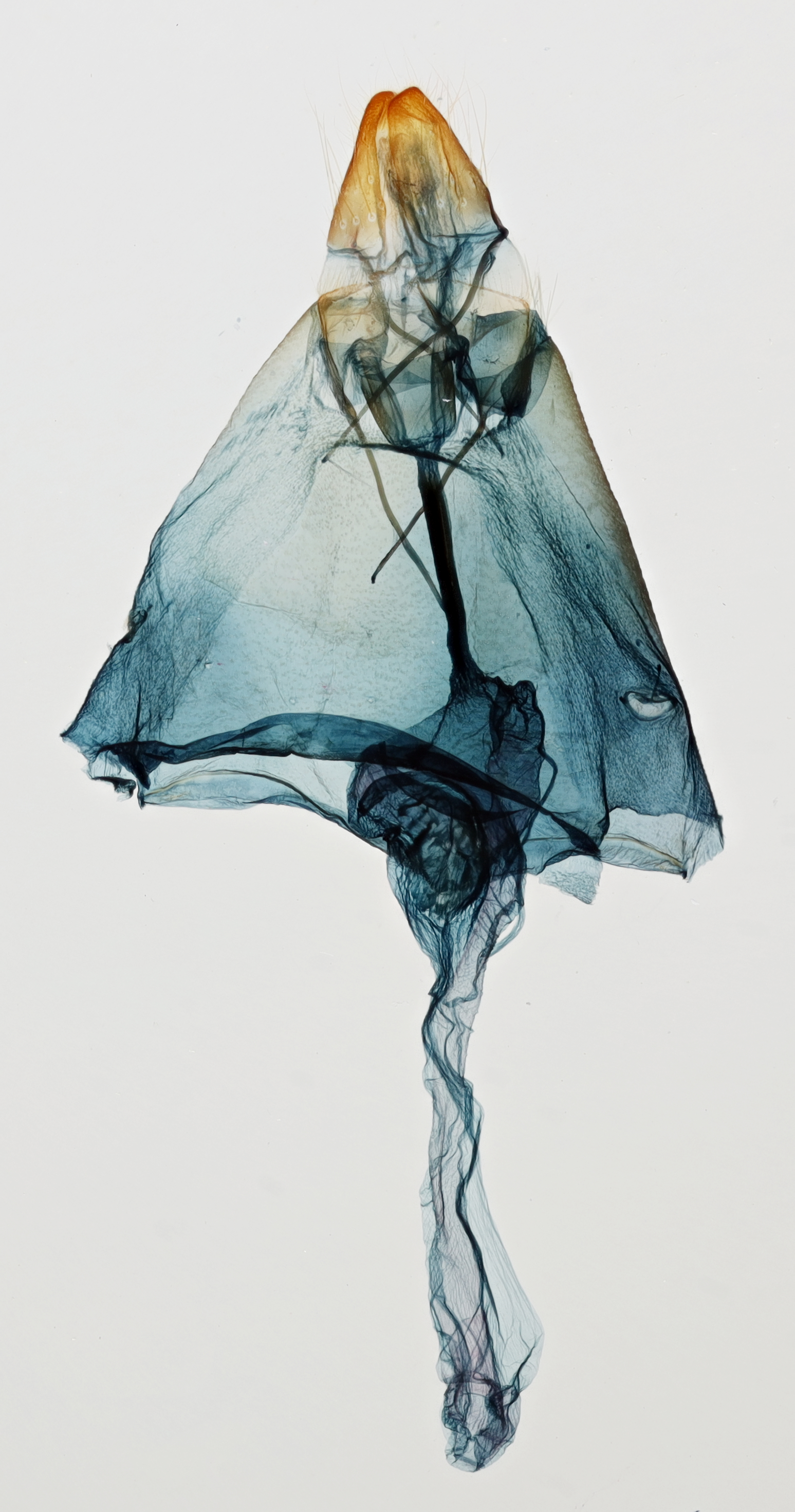
Lophoplusia (sometimes treated as a subgenus of Plusia Ochsenheimer, 1816) is a small radiation of four described species, all endemic to the Hawaiian Islands. Several additional undescribed species are known to exist in collections. All species are rare, even in pristine wet forests, and are highly unlikely to be encountered in any lowland or agricultural settings.
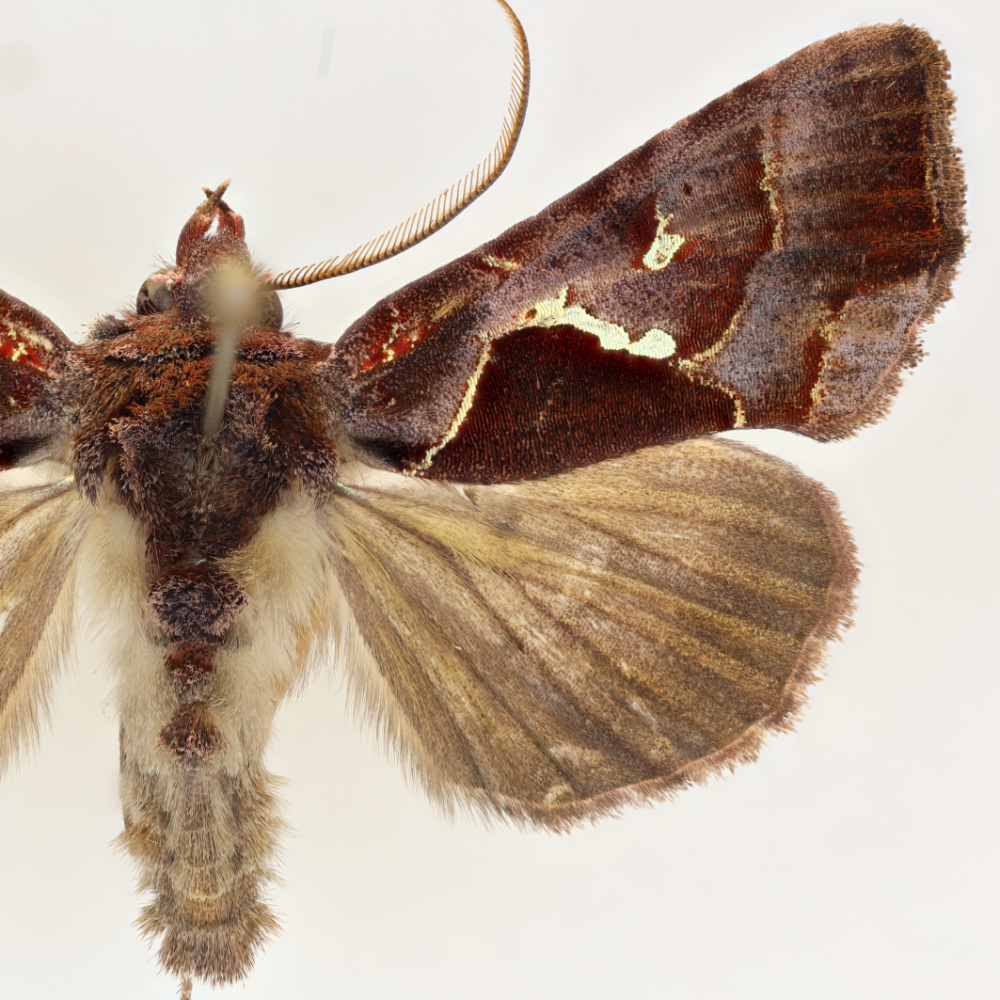
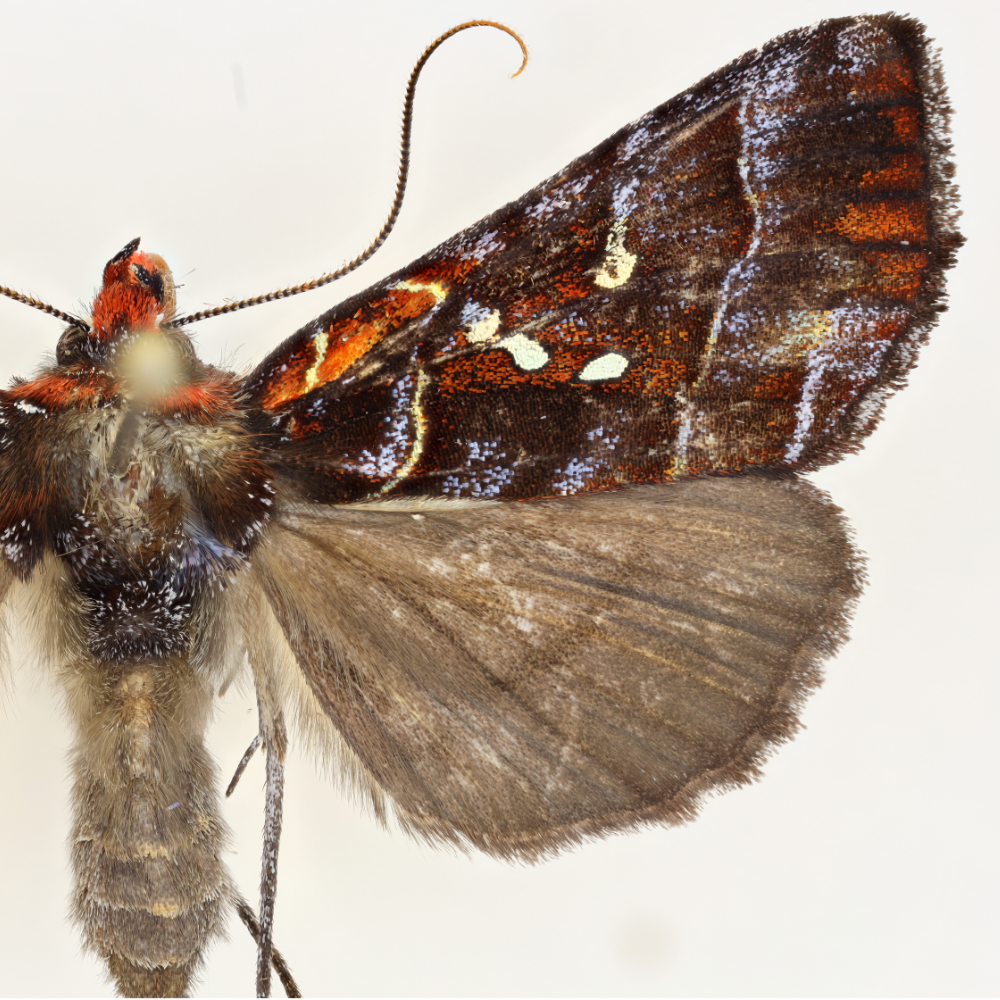
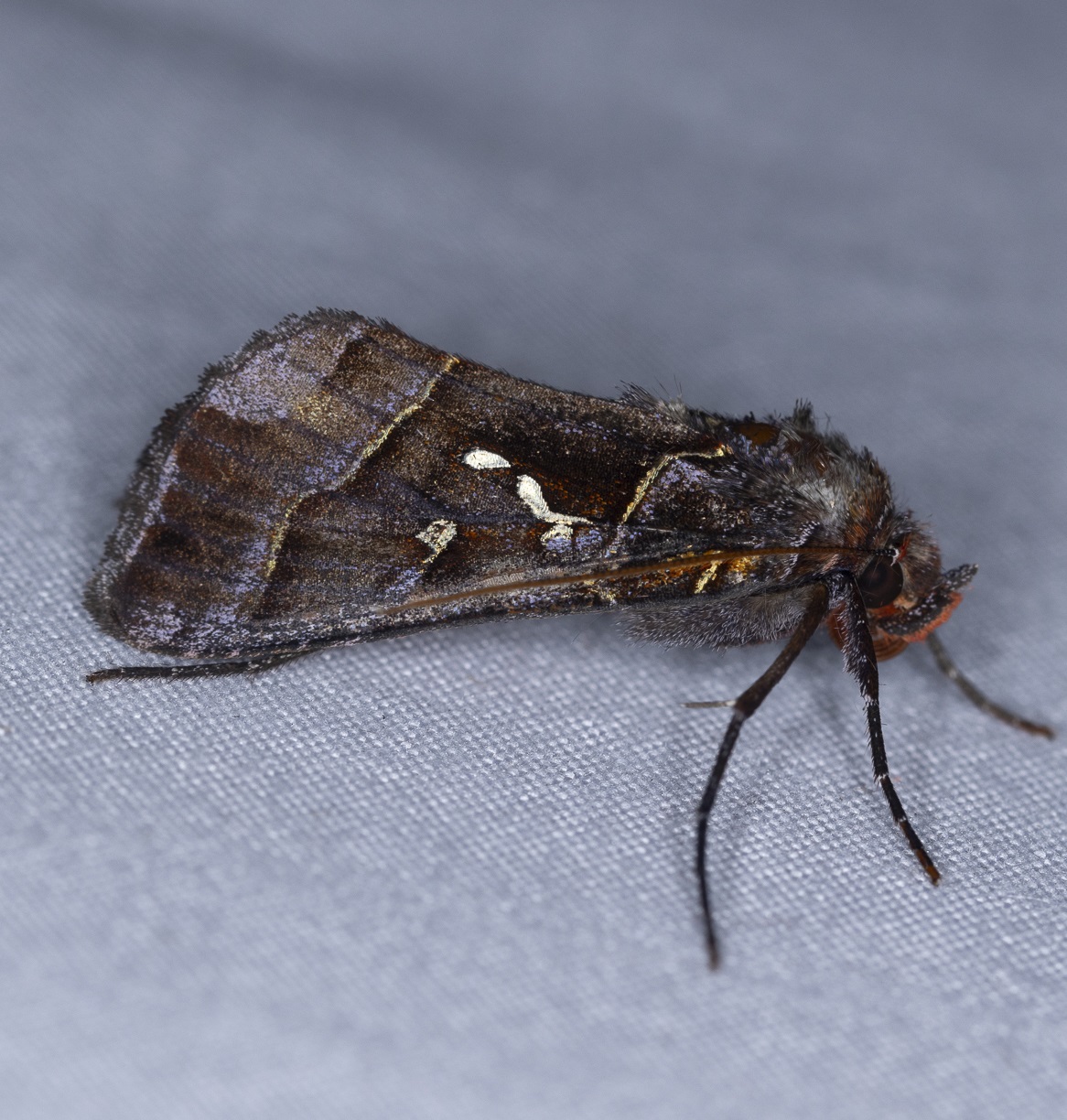
Lophoplusia are medium-sized (forewing lengthforewing length:
the distance of the forewing in a straight line from the base to the tip of the apex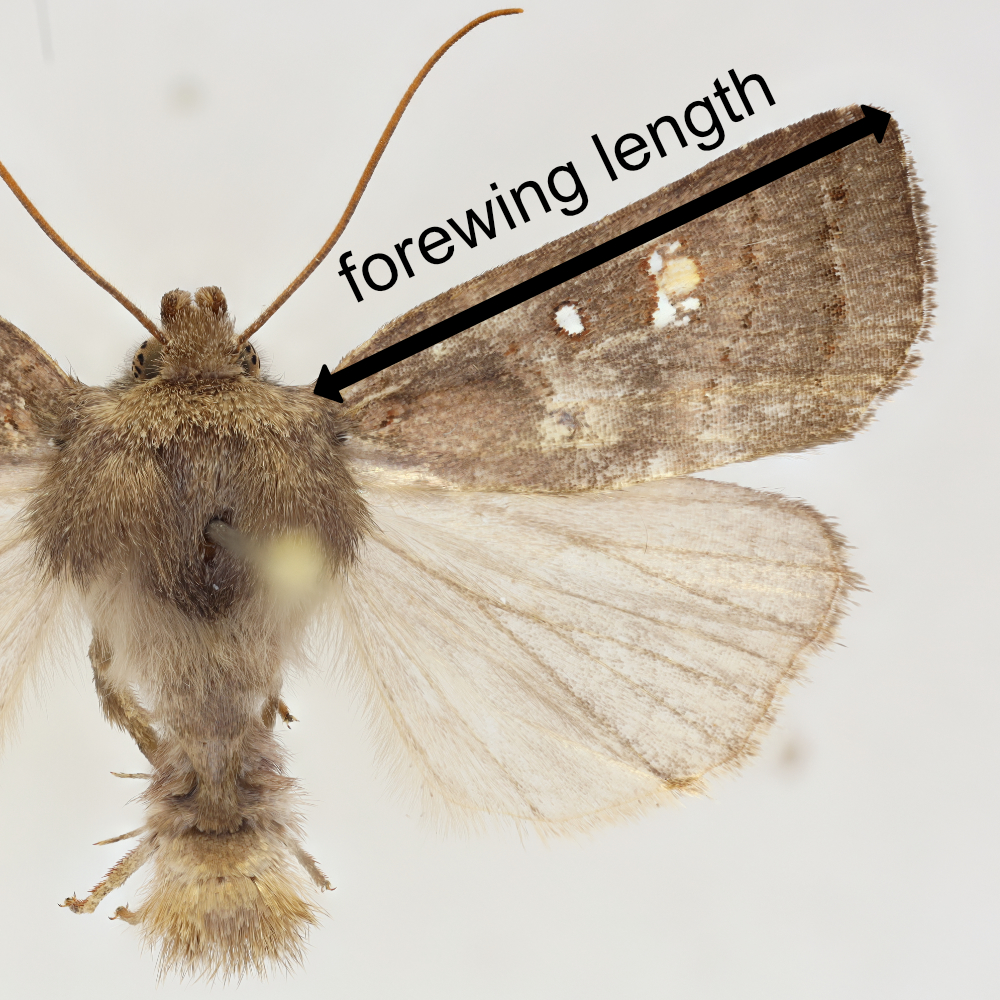 12–20 mm), typical plusiines, with large dorsal tuftsdorsal tuft:
a patch or row of raised scales along the dorsal surface of the thorax; especially common in certain subfamilies of noctuids like Plusiinae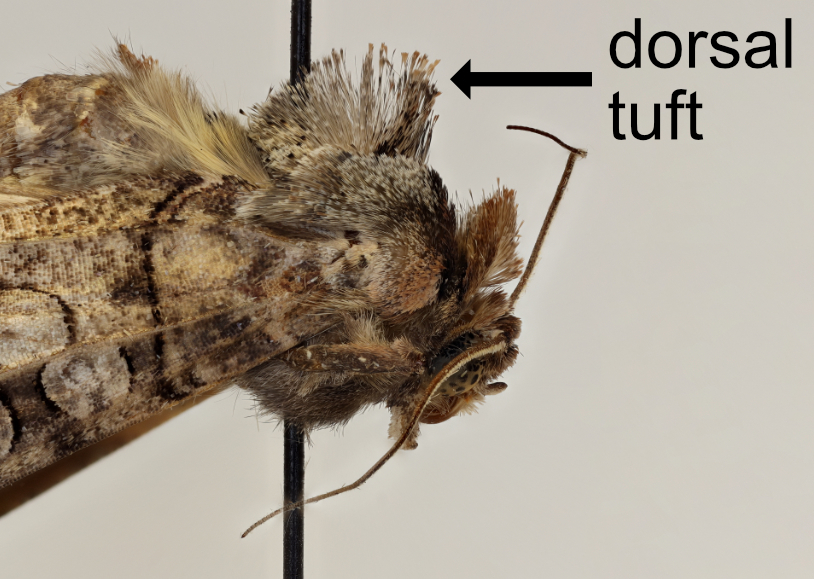 on the thoraxthorax:
the second, or middle, body segment of an insect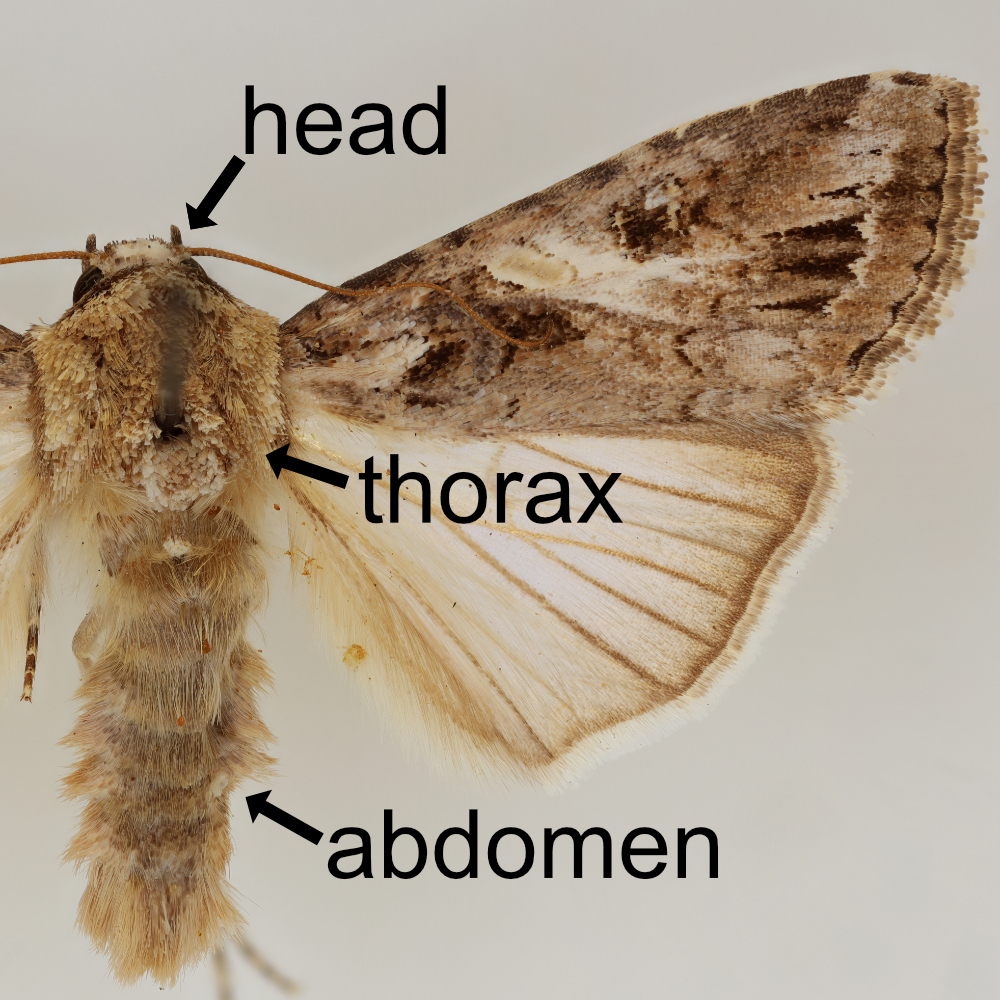 and a large, distinctive silvery stigmastigma:
a distinctive metallic, often silver or gold-colored, marking on the forewing in many species of Plusiinae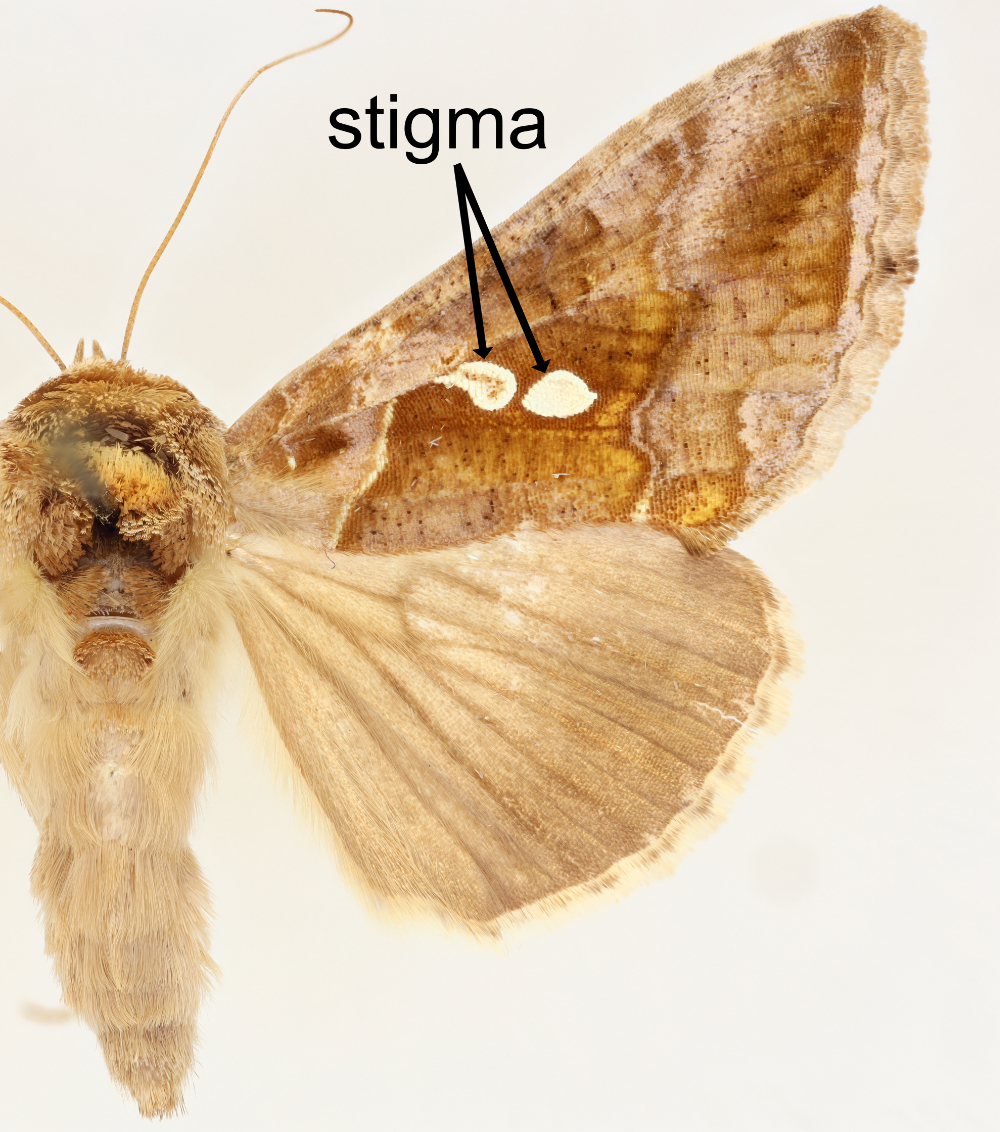 on the forewingforewing:
the front wing of an insect; the wing attached to the second segment of the thorax (the mesothorax)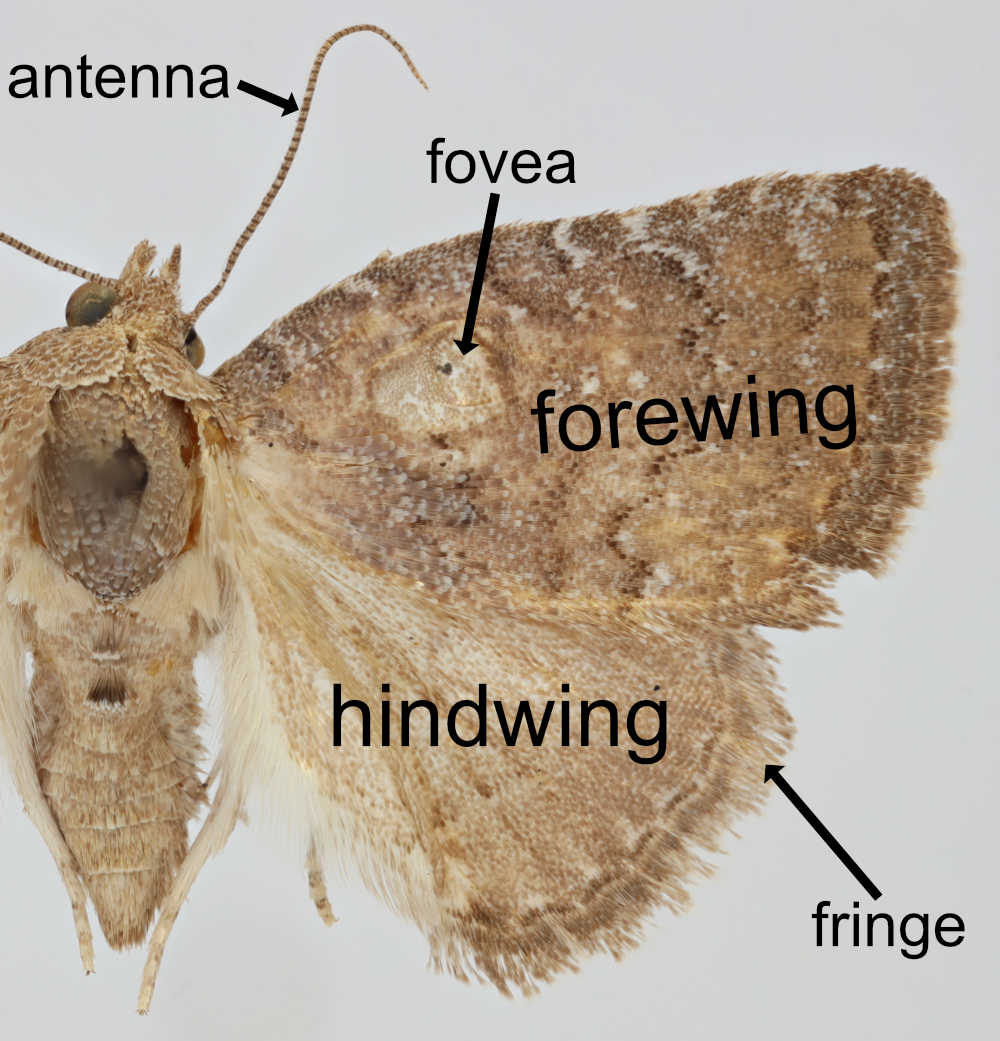 . Many species are especially colorful, with bright purple, orange, and red scales on the head, forewingsforewing:
the front wing of an insect; the wing attached to the second segment of the thorax (the mesothorax), and ventralventral:
refers to the bottom or underside of an organism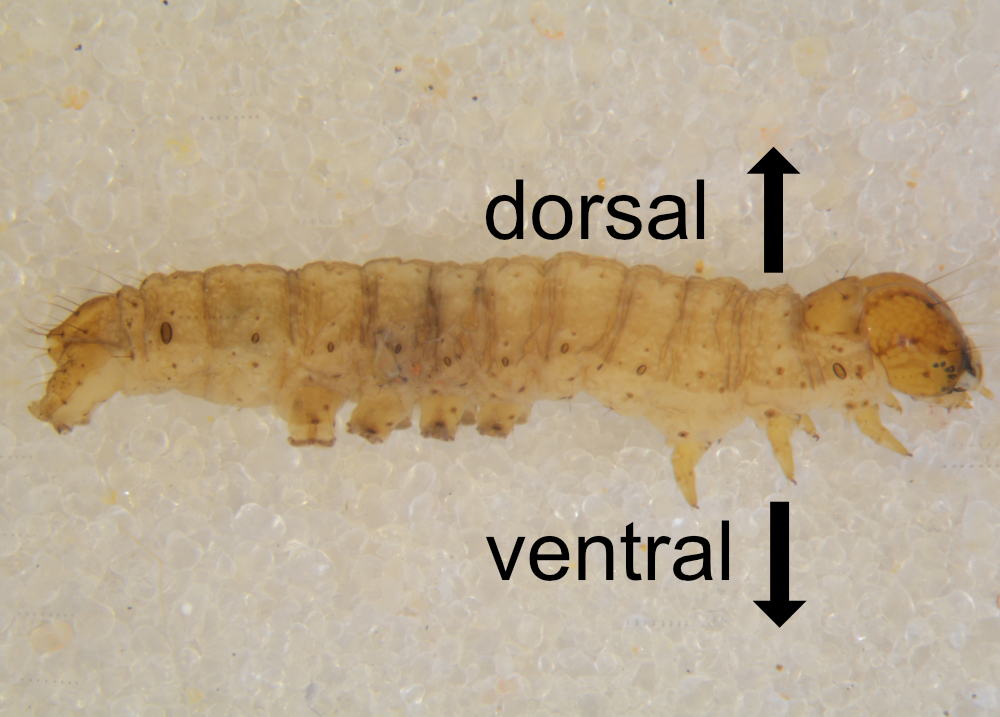 surface of the abdomenabdomen:
the third and posterior-most body section of an insect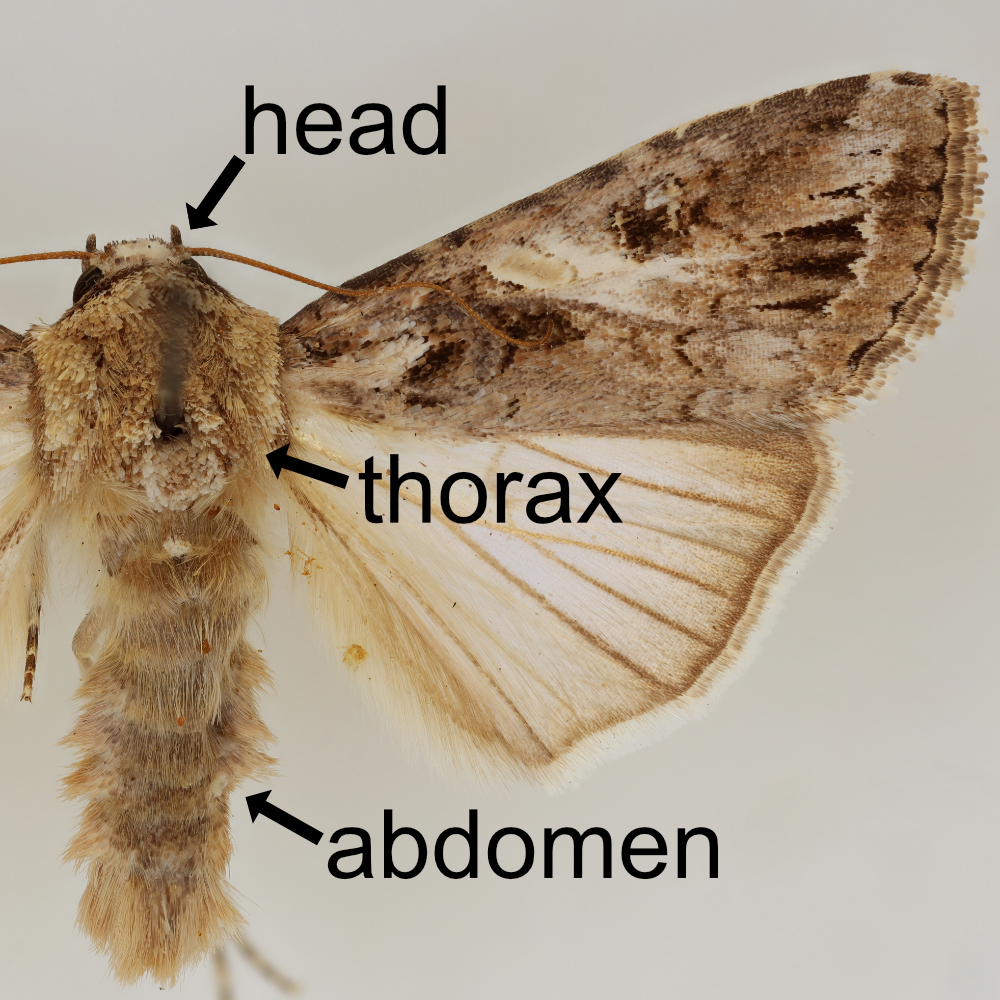 . Male antennaeantenna:
a thin, paired, elongate, segmented sensory organ on the head that serves primarily for olfaction (smell) to find food and mates, but also aids in navigation and balance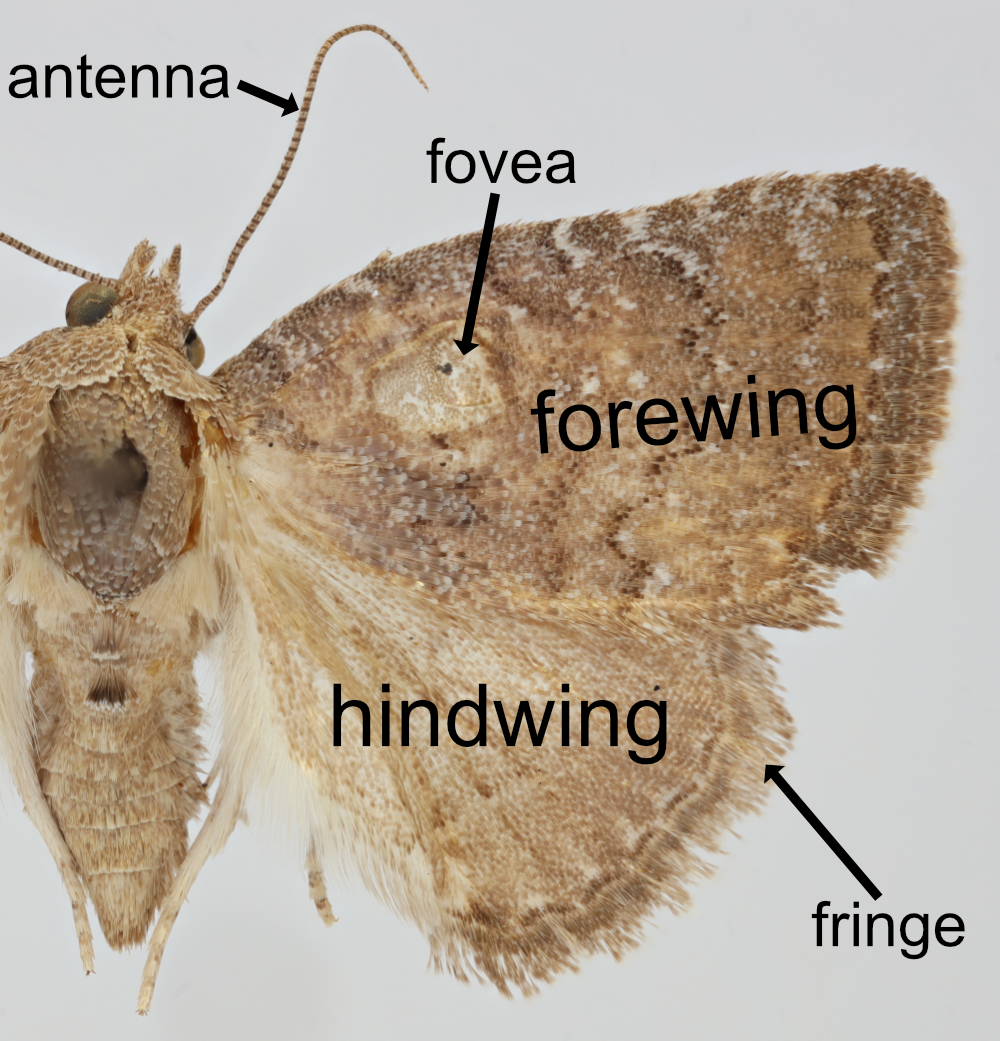 are strongly bipectinatebipectinate:
referring to a structure with two opposite margins toothed like a feather, typically refers to the antenna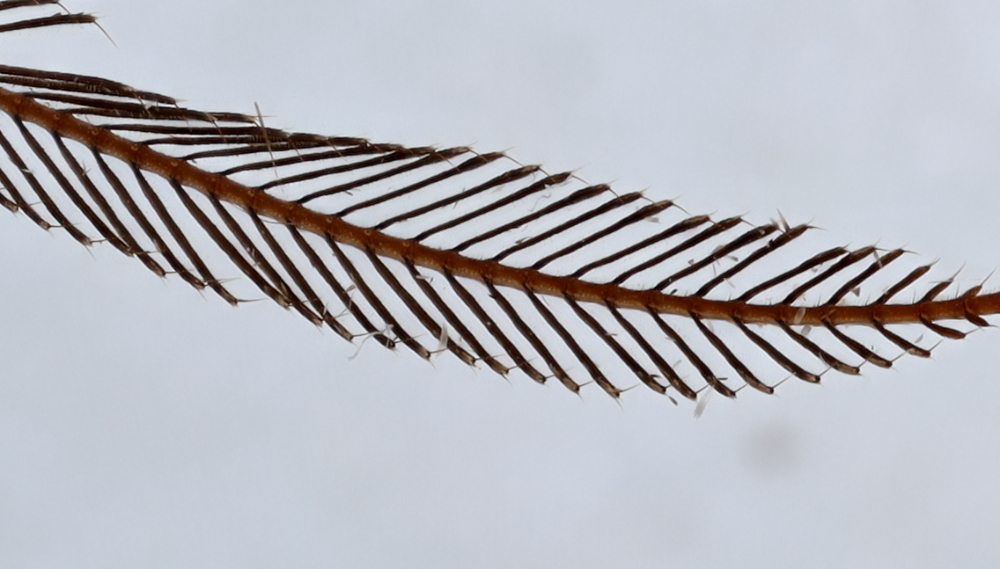 , which is unique for Plusiinae.
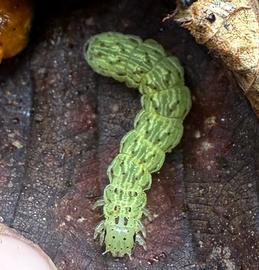
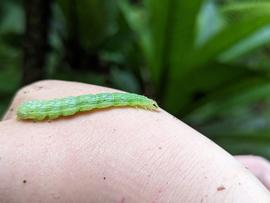
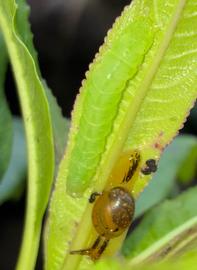
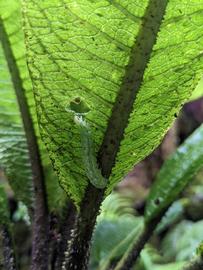
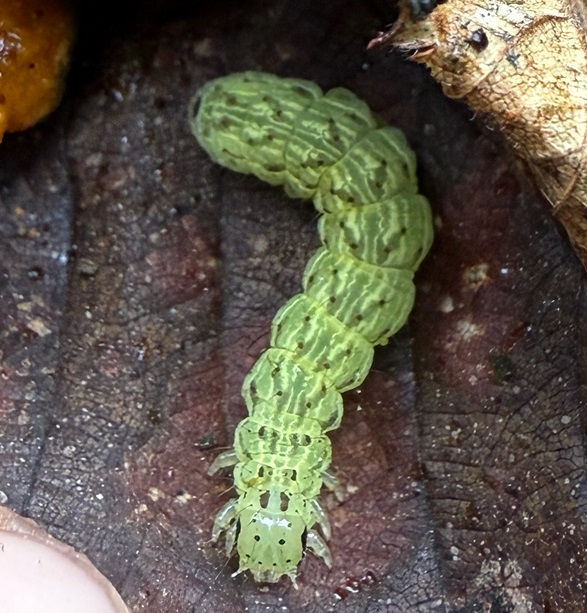
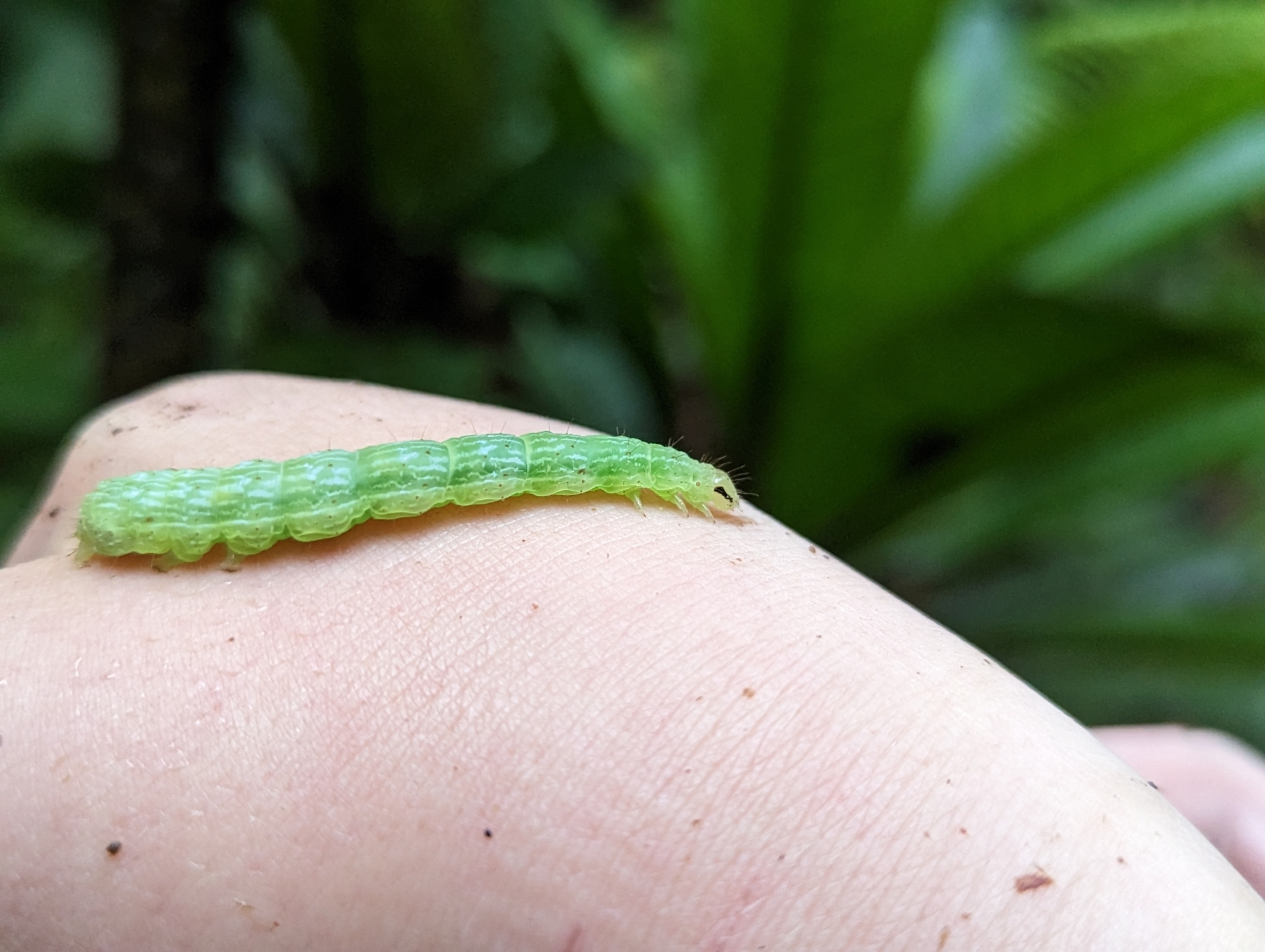
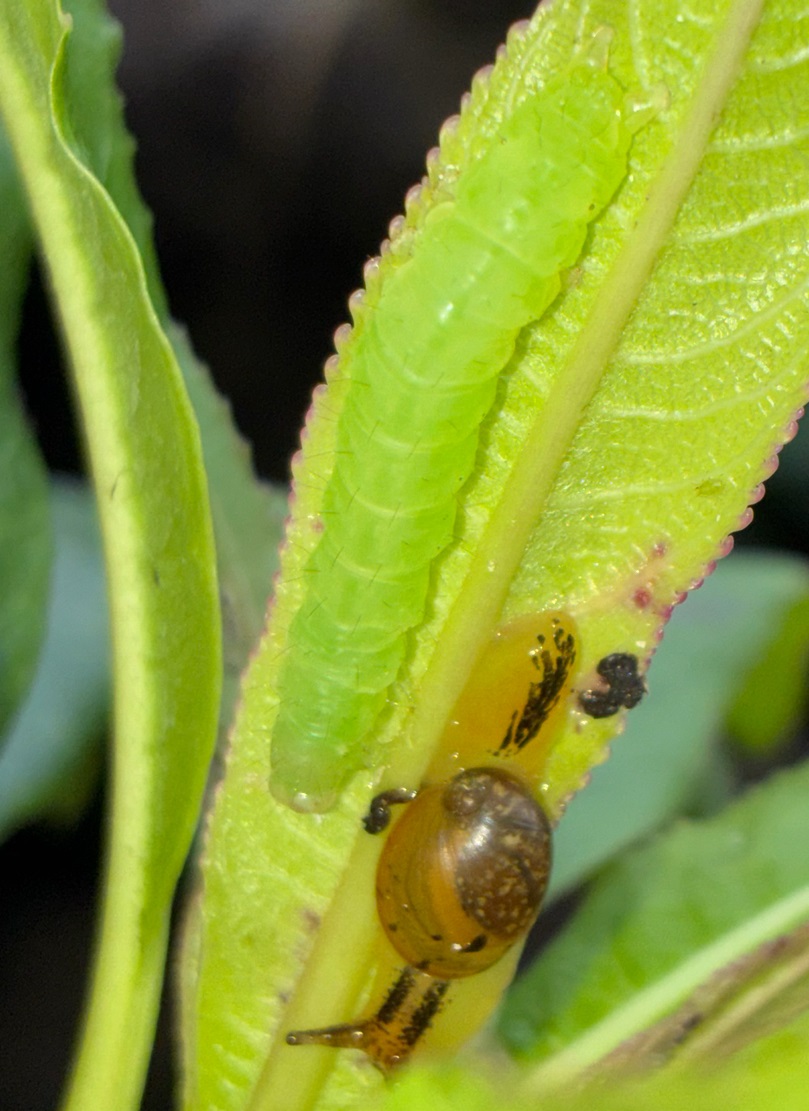
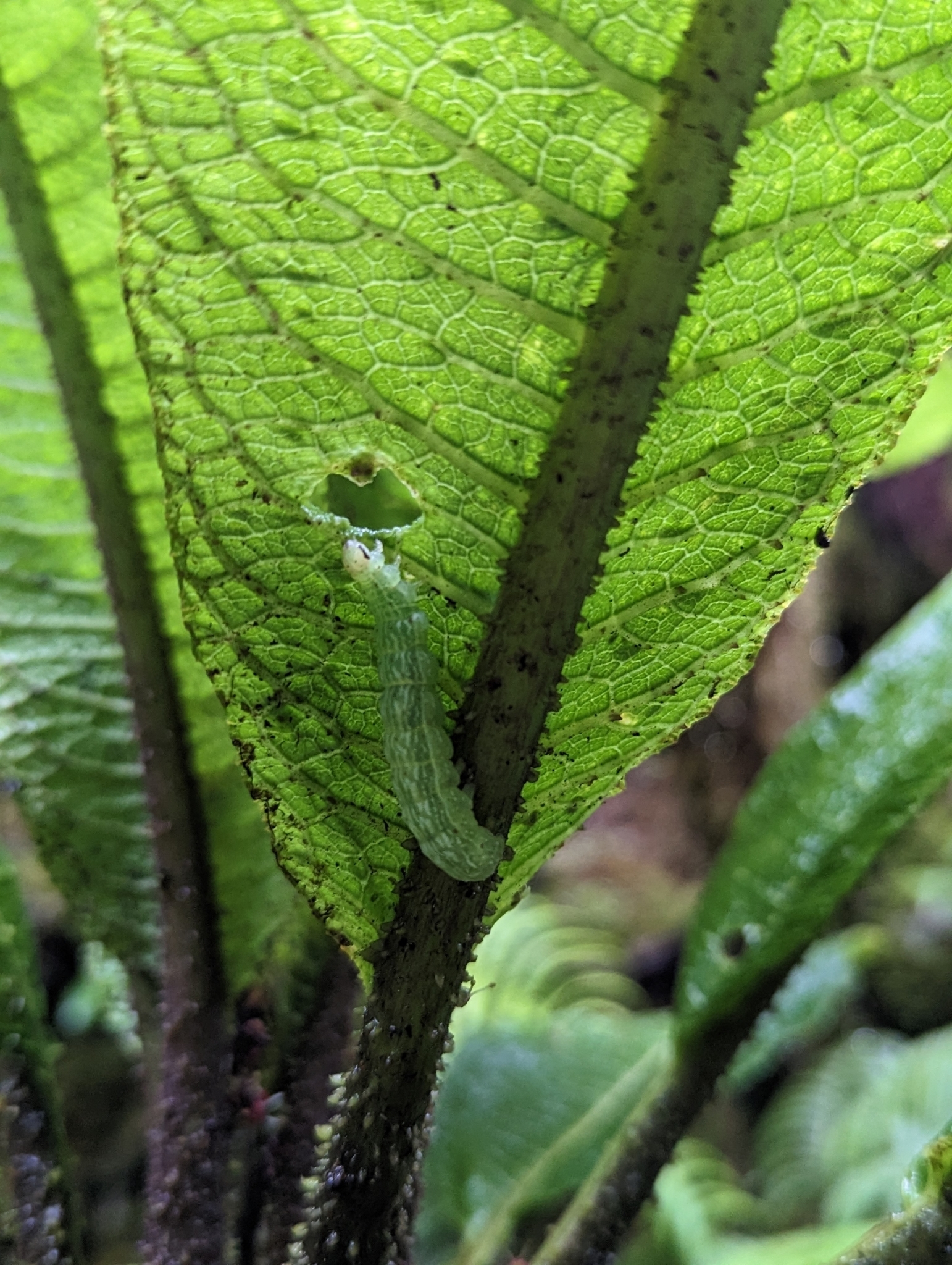
Very little is known about the early stages of Lophoplusia beyond their host plants, but a series of photos on iNaturalist of what appears to be a species of Lophoplusia offers the chance for a brief description.
Head pale yellow, with broad, black lateral streaks. Body pale green, with thin white lines running the entire length. Two pairs of abdominal prolegs present.
The combination of a colorful head, forewingforewing:
the front wing of an insect; the wing attached to the second segment of the thorax (the mesothorax), and ventralventral:
refers to the bottom or underside of an organism surface of the abdomenabdomen:
the third and posterior-most body section of an insect, along with strongly bipectinatebipectinate:
referring to a structure with two opposite margins toothed like a feather, typically refers to the antenna male antennaeantenna:
a thin, paired, elongate, segmented sensory organ on the head that serves primarily for olfaction (smell) to find food and mates, but also aids in navigation and balance will readily separate Lophoplusia from all other noctuids in Hawai'i. Lafontaine and Poole (1991)Lafontaine and Poole (1991):
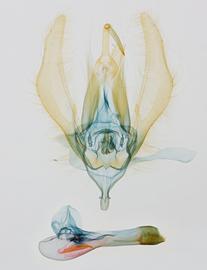
Lafontaine JD, Poole RW. 1991. The moths of America north of Mexico. Fascicle 25.1. Noctuoidea, Noctuidae (part), Plusiinae. The Wedge Entomological Research Foundation. 385 pp. suggested that Lophoplusia might be closely related to Megalographa because of similarities in the male genitalia, but this has not been tested with genetic data yet.
Species of Lophoplusia are known from Kauaʻi, Oʻahu, Molokaʻi, Maui, and Hawaiʻi island, between elevations of 600–2000 meters. They exclusively occur in wet native cloud forests where their host plants can be found.
Species of Lophoplusia are known to feed on the leaves of Phyllostegia floribunda Benth. (Lamiaceae) and Cyanea aculeatiflora Rock (Campanulaceae) (VanDeMark et al. 2010VanDeMark et al. 2010:
VanDeMark JR, Pratt LW, Euaparadorn M. 2010. Limiting factors of four rare plant species in ʻŌlaʻa Forest of Hawaiʻi Volcanoes National Park. Hawaiʻi Cooperative Studies Unit, University of Hawaiʻi at Hilo. Technical Report HCSU-018. 78 pp., iNaturalist). Generally, most native Lamiaceae and Campanulaceae are rare and restricted to intact wet forests, which may explain why Lophoplusia are so seldom seen. Adults have been observed feeding at the flowers of Leptecophylla tameiameiae (Cham.) C.M.Weiller (iNaturalist), suggesting they may be important pollinators for certain native plant species.
Author: Kyhl A. Austin
Content last updated May 2026
idtools.org