NATIVE | ADVENTIVE
Helicoverpa Hardwick, 1965
Higher taxonomy: Noctuidae: Heliothinae
Common name: Hawaiian false corn earworms
Species known to occur in Hawaiʻi:
NATIVE
Helicoverpa confusa Hardwick, 1965Hardwick, 1965:
Hardwick DF. 1965. The corn earworm complex. Memoirs of the Entomological Society of Canada. 40:1–247.; Helicoverpa hawaiiensis (Quaintance and Brues, 1905); Helicoverpa minuta Hardwick, 1965Hardwick, 1965:
Hardwick DF. 1965. The corn earworm complex. Memoirs of the Entomological Society of Canada. 40:1–247.; Helicoverpa pallida pallida Hardwick, 1965Hardwick, 1965:
Hardwick DF. 1965. The corn earworm complex. Memoirs of the Entomological Society of Canada. 40:1–247.; Helicoverpa pallida nihoaensis Hardwick, 1966Hardwick, 1966:
Hardwick DF. 1966. A description of a new subspecies of Helicoverpa pallida Hardwick with notes on the Heliothidinae (Lepidoptera: Noctuidae). The Canadian Entomologist. 98(8):867–870.
ADVENTIVE
Helicoverpa zea (Boddie, 1850)
Four species of native Helicoverpa are described from Hawaiʻi (two of which are presumed extinct). Only H. hawaiiensis and H. pallida nihoaensis have been collected in the last 50 years (Austin and Rubinoff 2024bAustin and Rubinoff 2024b:
Austin KA, Rubinoff D. 2024b. Patterns of extinction across Hawaiian Lepidoptera offer lessons from a diverse, neglected, and vulnerable endemic fauna. Biodiversity and Conservation. 34:917–930.).
It was assumed that Helicoverpa zea, the corn earworm, was already present in Hawaiʻi by 1900, but for unknown reasons did not attack corn (Van Dine 1909Van Dine 1909:
Van Dine D. 1909. A revised list of the injurious insects of Hawaii. Annual Report of the Hawaii Agricultural Experiment Station for 1908. p 29–37., Fullaway 1914Fullaway 1914:
Fullaway DT. 1914. Report of the entomologist. Annual Report of the Hawaii Agricultural Experiment Station for 1913. p 18–21., Ehrhorn 1921Ehrhorn 1921:
Ehrhorn EM. 1921. Report of the chief plant inspector. Report of the Board of Commissioners of Agriculture and Forestry for 1919–1920. p 75–85.). However, the Helicoverpa in Hawaiʻi at the time were actually a complex of four native species superficially very similar to H. zea, but which do not feed on corn (Hardwick 1965Hardwick 1965:
Hardwick DF. 1965. The corn earworm complex. Memoirs of the Entomological Society of Canada. 40:1–247.). Because the native species of Helicoverpa were misidentified as H. zea, when true H. zea eventually arrived in Hawaiʻi sometime prior to 1927, it was allowed to pass through quarantine, having assumed to be already present.
Helicoverpa zea is now a major pest in Hawaiʻi on corn and many other crops. Even worse, hybrid coupling between native H. confusa females and introduced H. zea males, or possibly broader hybridization and subsequent genomic swamping has driven H. confusa to extinction (Gagné 1982Gagné 1982:
Gagné WC. 1982. Working toward an assessment of the conservation status of Hawaii’s endemic arthropods, with emphasis on the moths or Lepidoptera. Proceedings of the 4th Conference on Natural Sciences, Hawaii Volcanoes National Park Science Conference. University of Hawaii, Honolulu. p 63–72.) and the remaining native species have become increasingly rare.
Hardwick (1965)Hardwick (1965):
Hardwick DF. 1965. The corn earworm complex. Memoirs of the Entomological Society of Canada. 40:1–247. suspected that the four native species of Helicoverpa stemmed from two independent colonization events.
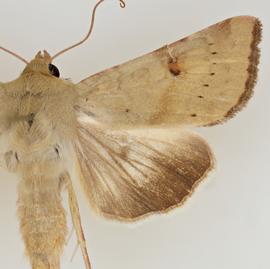
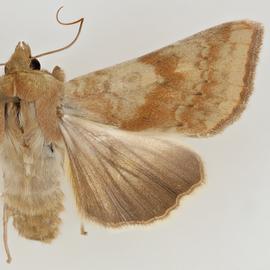
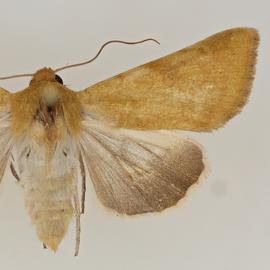
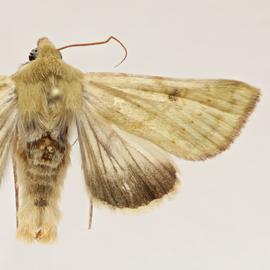
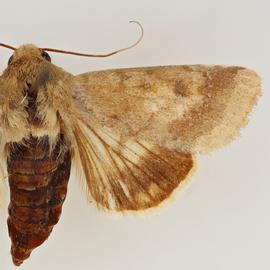
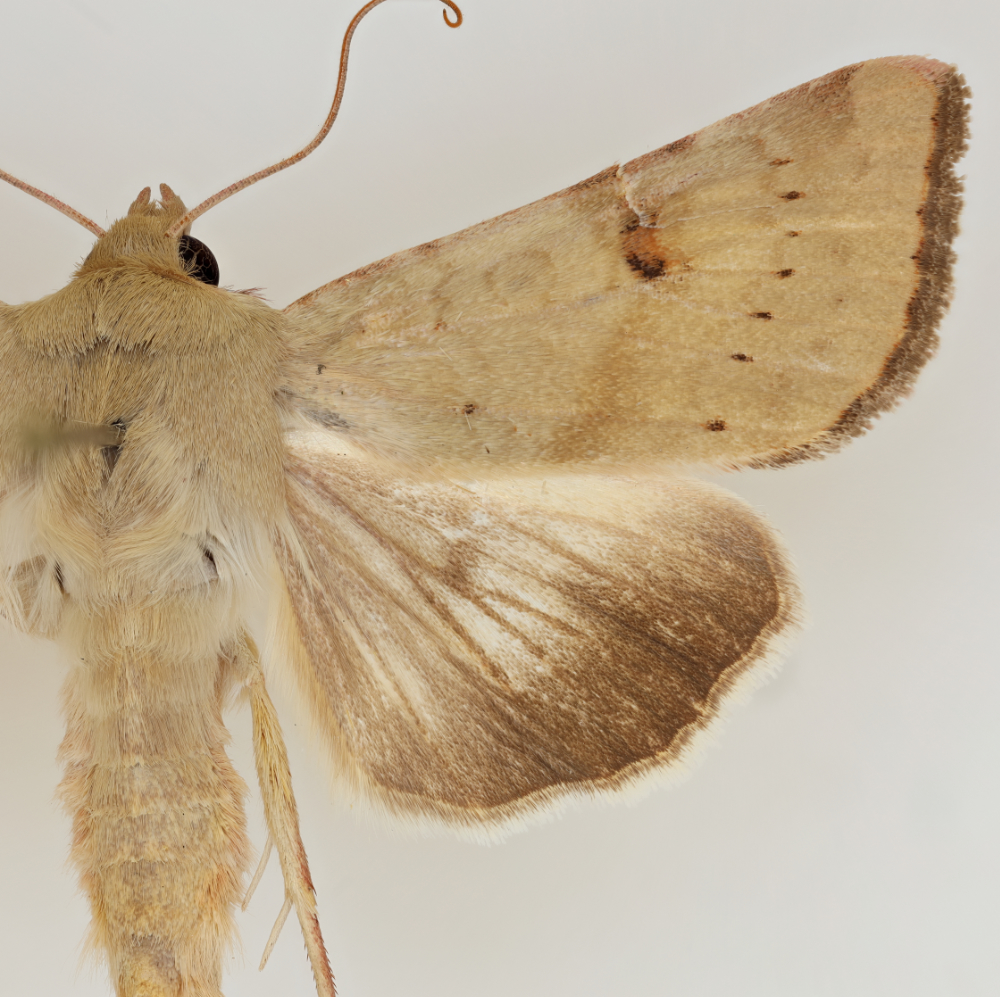
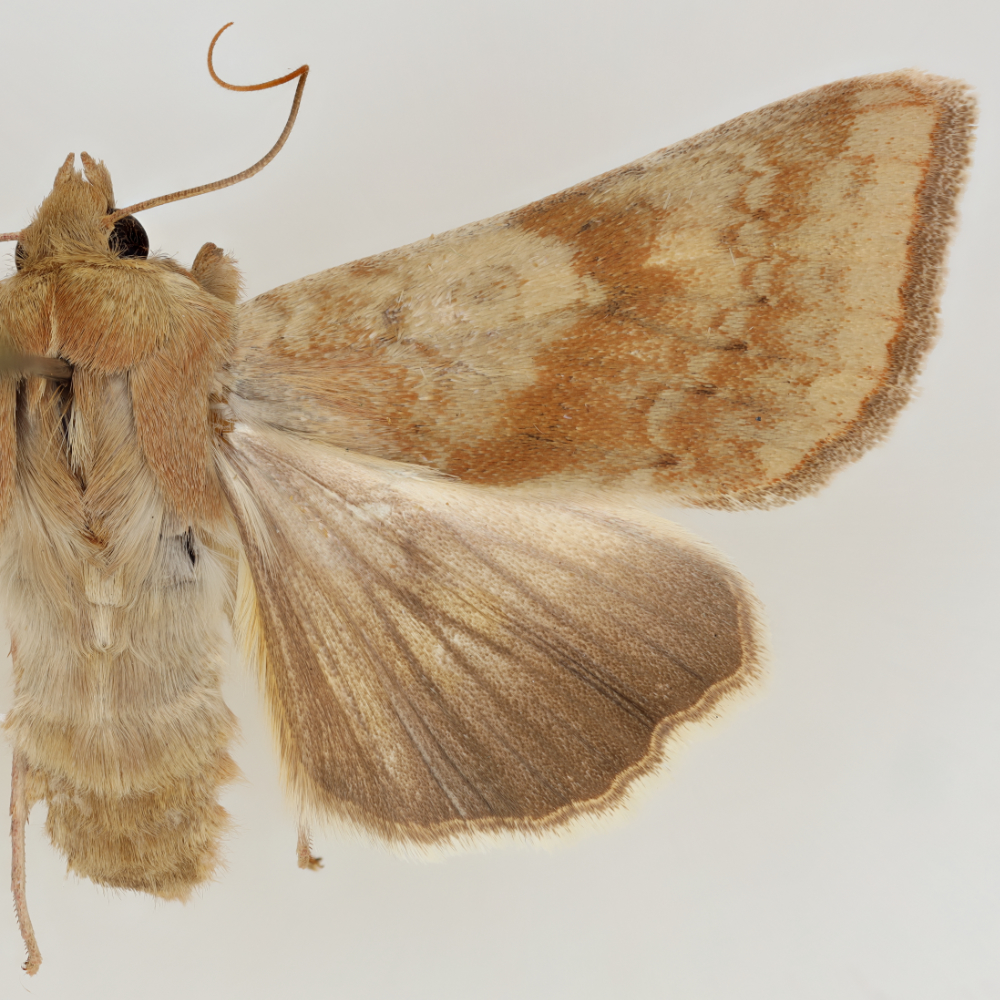
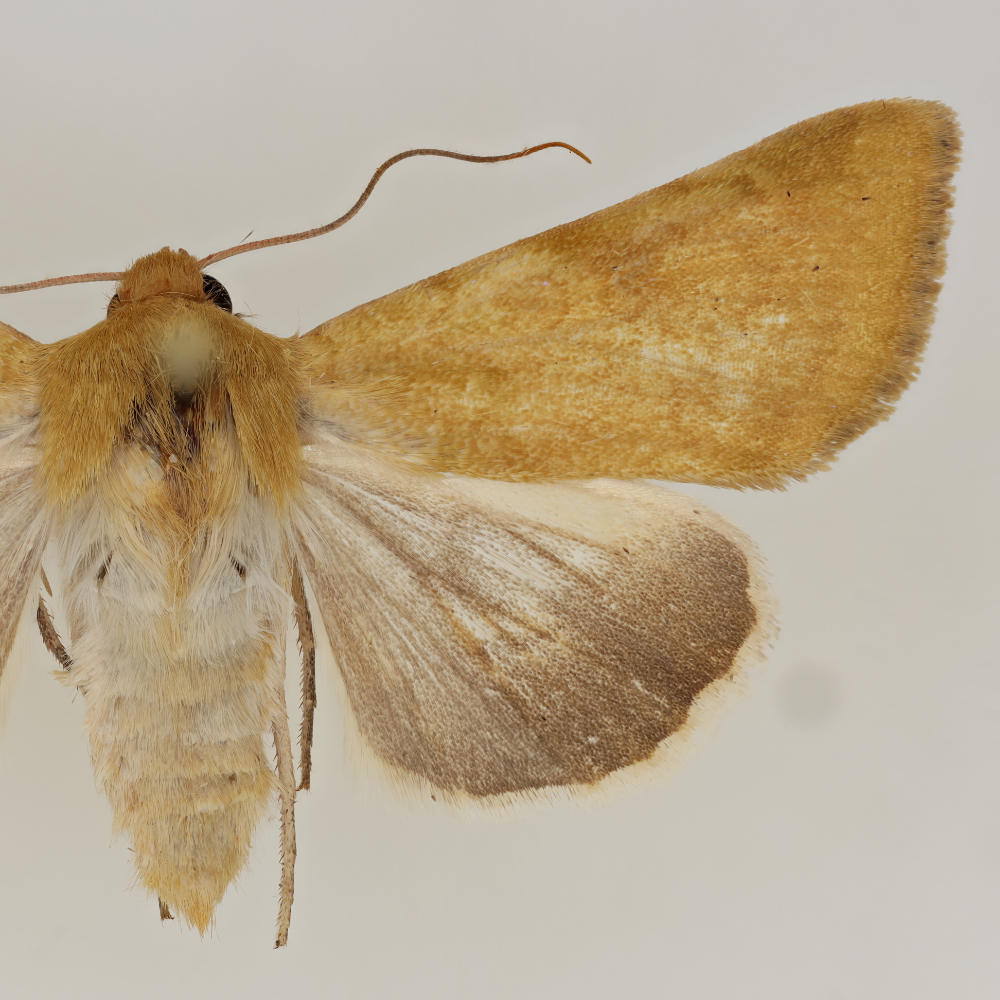
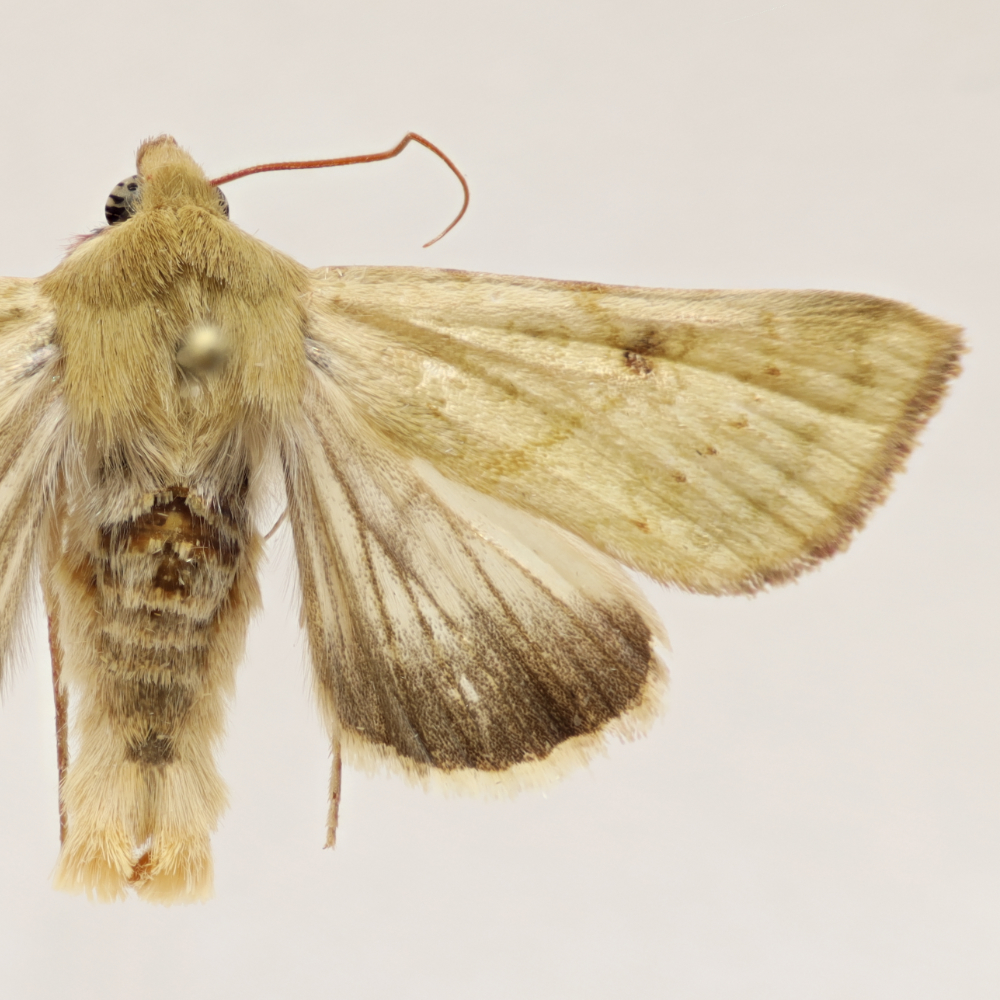
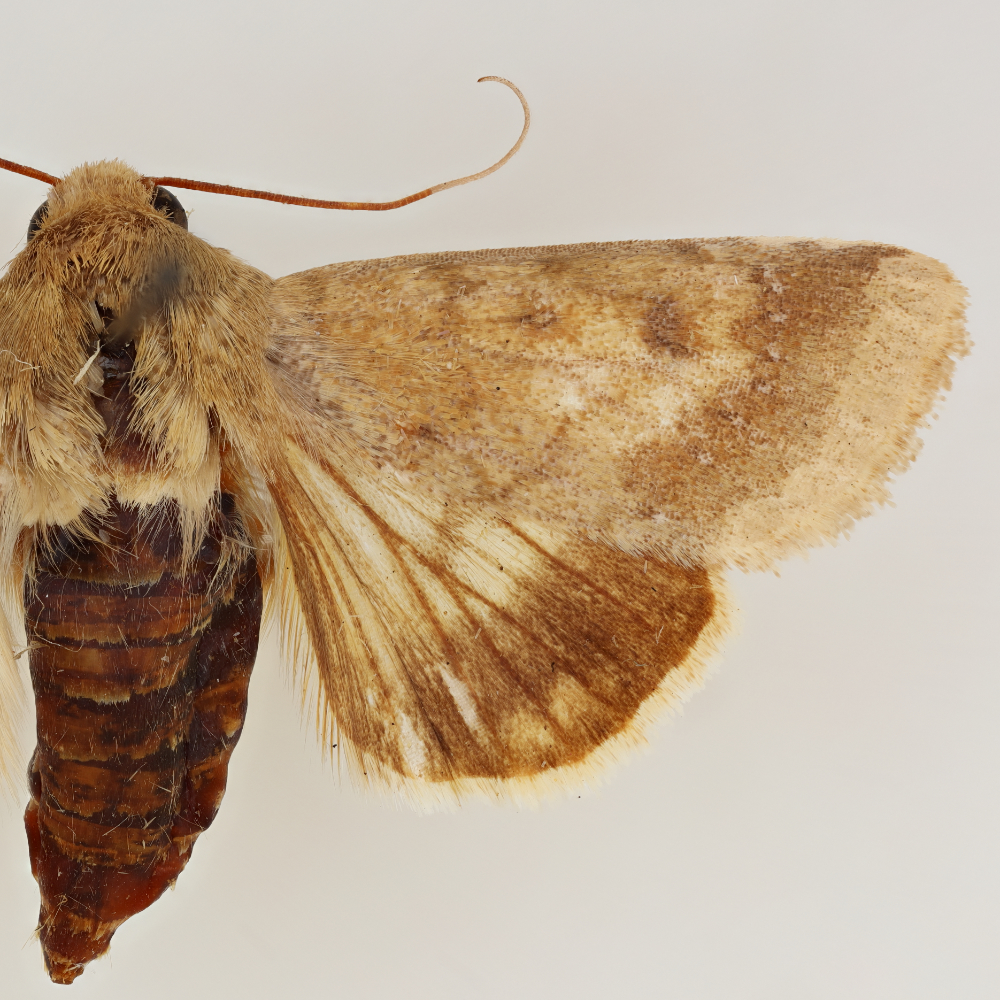
Adults of the native Helicoverpa spp. are pale yellow to golden brown, medium-sized noctuids (forewingforewing:
the front wing of an insect; the wing attached to the second segment of the thorax (the mesothorax)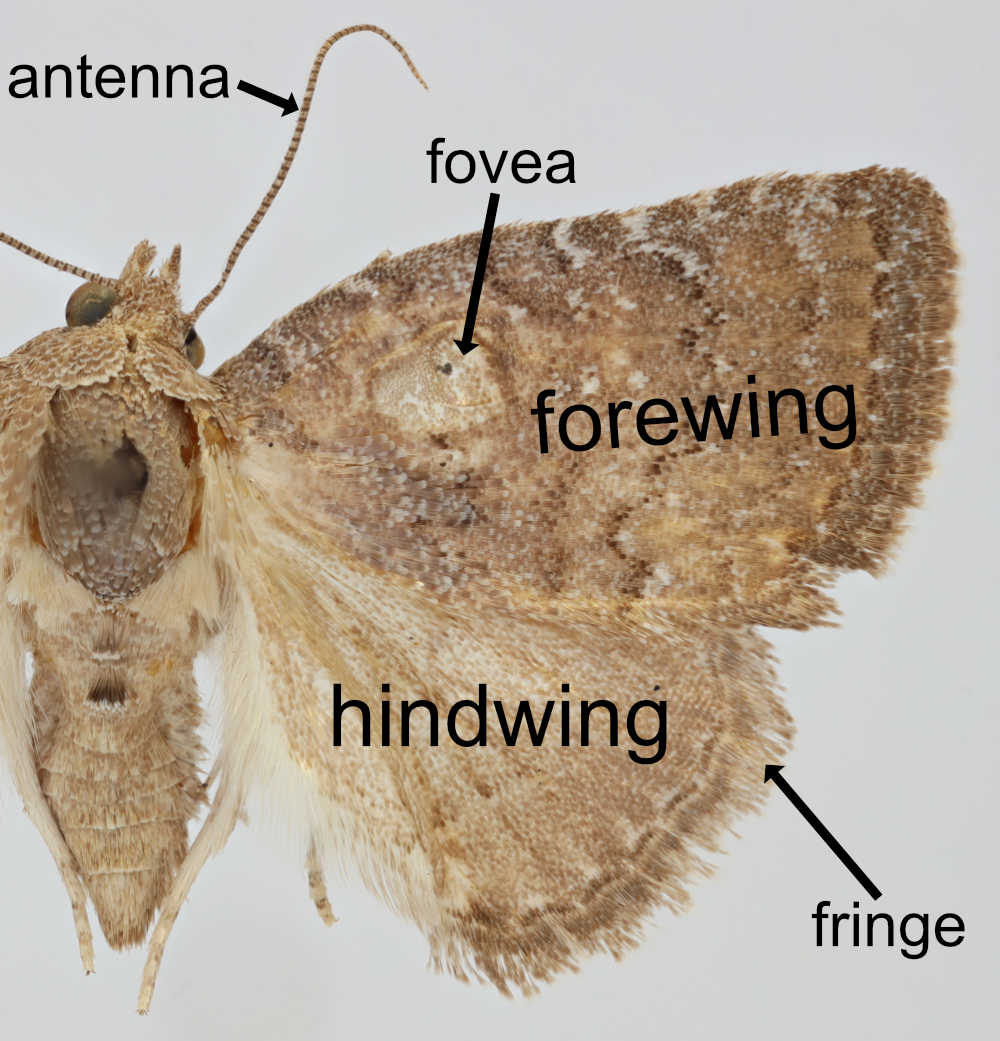 length 16–20 mm). Adults vary from virtually indistinguishable from H. zea, as is the case for H. confusa, to small and nearly uniform in coloration (H. pallida). The orbicular and reniform spotsreniform spot:
a spot, often broad bean- or kidney-shaped, found at the distal end of the discal cell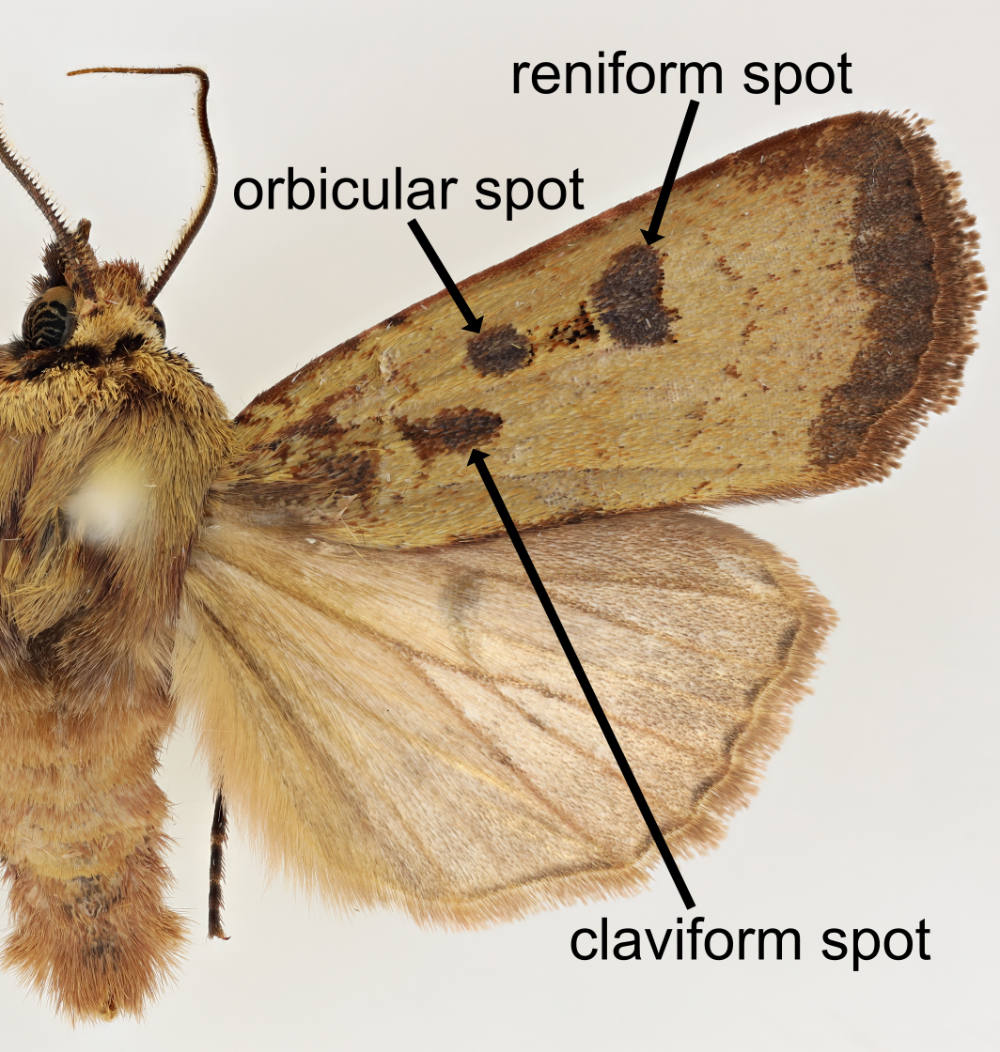 vary from well-defined (H. hawaiiensis) to obsolete (H. pallida). The hindwinghindwing:
the back wing of an insect; the wing attached to the third segment of the thorax (the metathorax)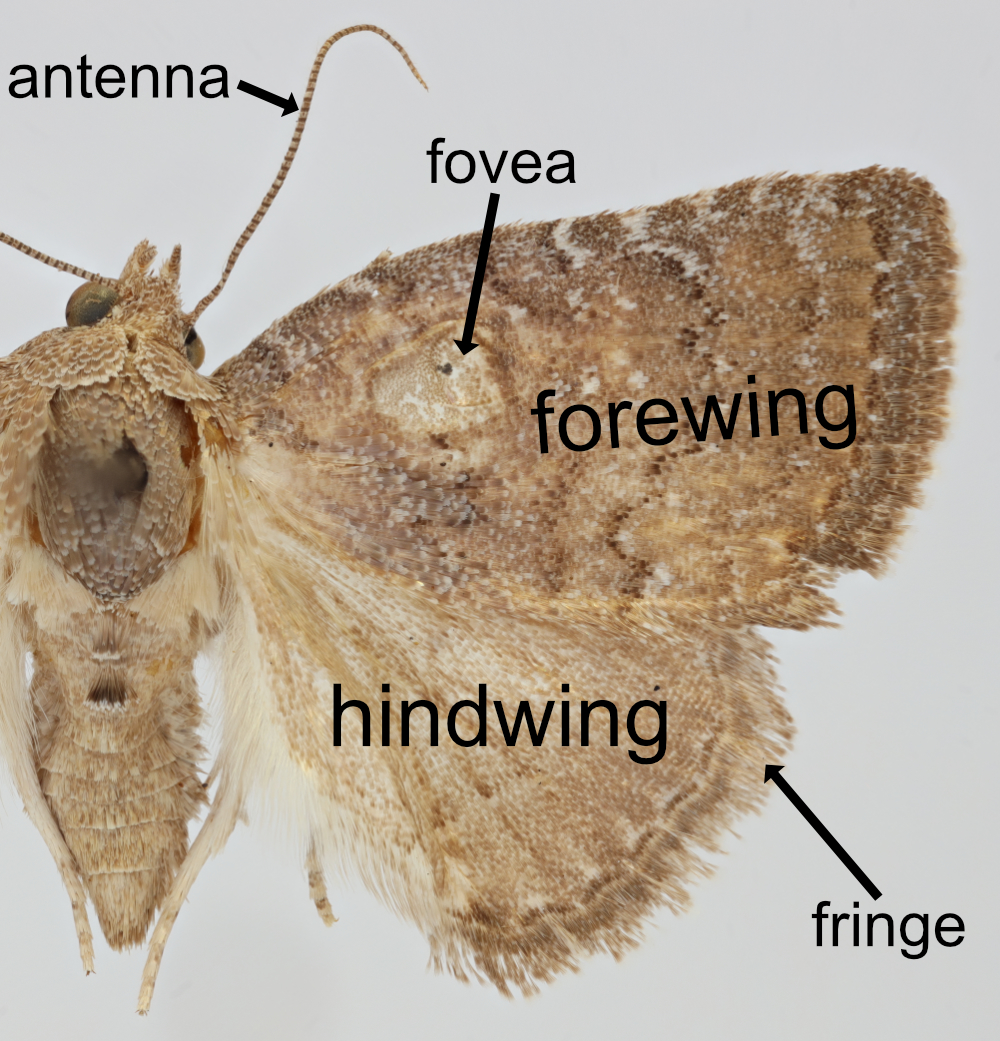 of most species are pale at the base with dark scaling along the veins and marginal bandmarginal band:
a dark, broad band along the outer margin of the hindwing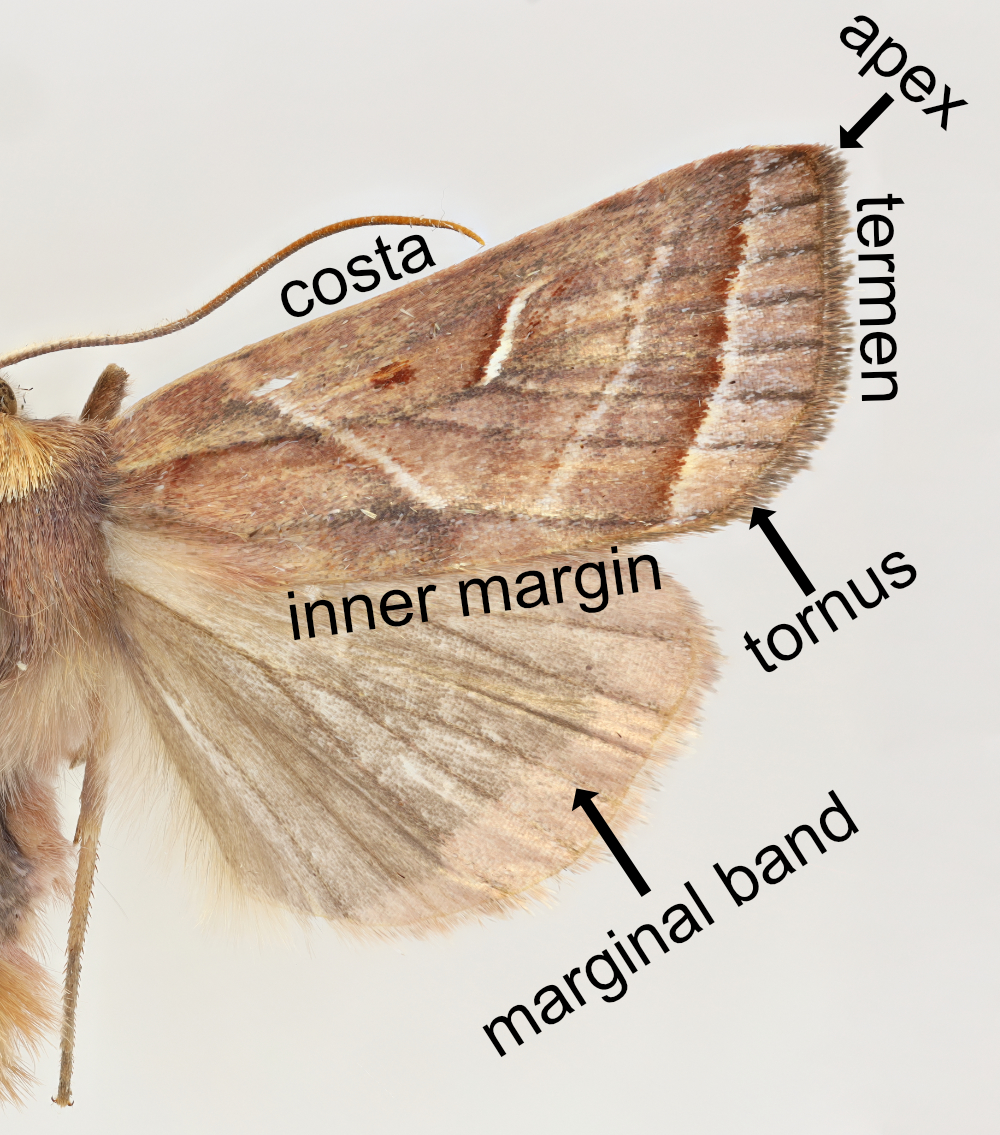 .
.
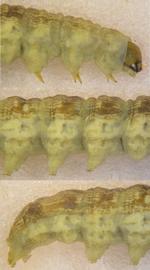
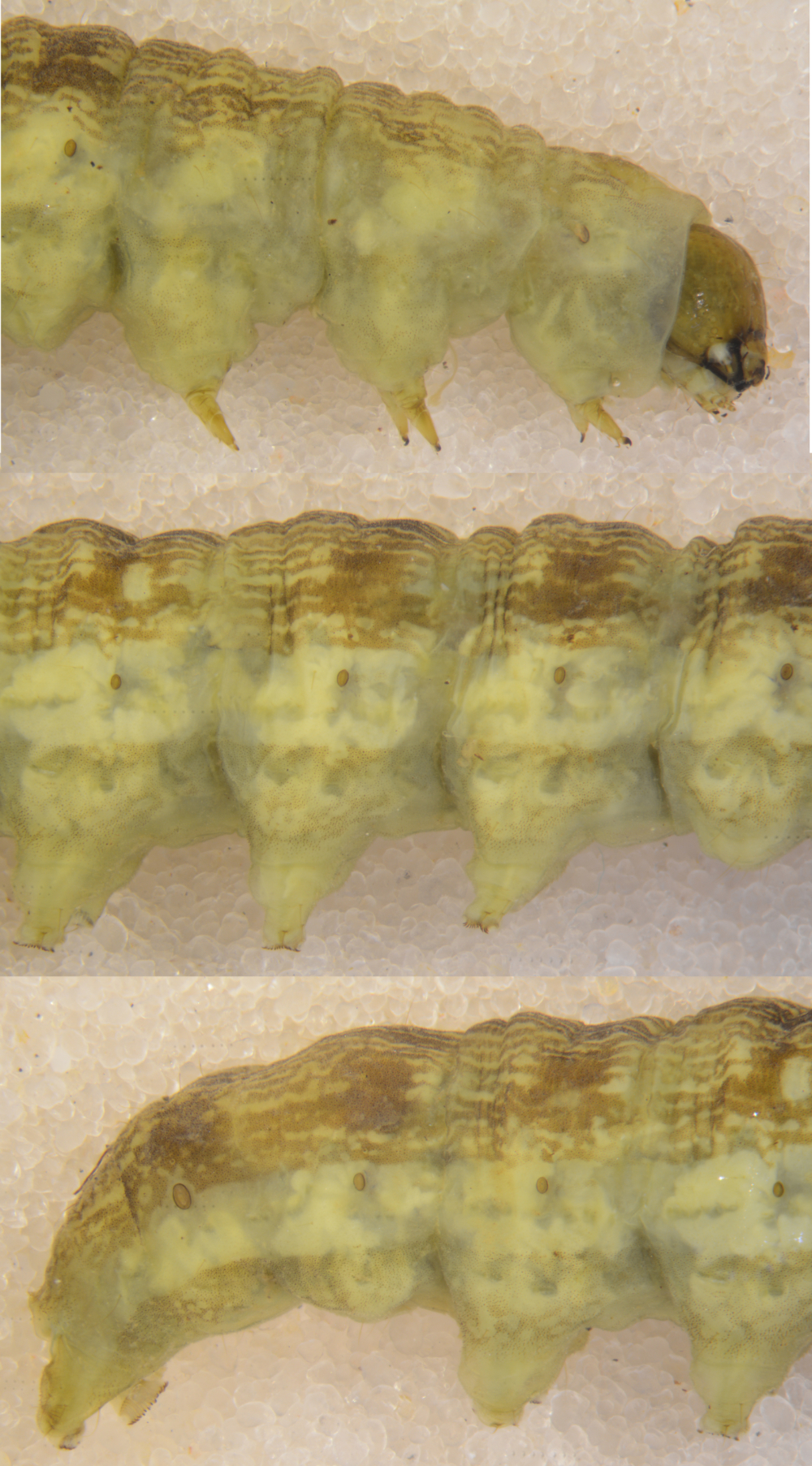
The larva of Helicoverpa hawaiiensis was described in detail by Hardwick (1965)Hardwick (1965):
Hardwick DF. 1965. The corn earworm complex. Memoirs of the Entomological Society of Canada. 40:1–247..
The fully grown larva has the head light greenish-orange to dark orange. The prothoracic and anal shields are concolorous with body. The body is green, pink or brown, often with a checkered appearance and numerous, partially overlapping white lines running the length of the body. The spiracles have medium- to dark-brown rims with yellow to light-brown centers. A detailed description of larval chaetotaxy description is available in Hardwick (1965)Hardwick (1965):
Hardwick DF. 1965. The corn earworm complex. Memoirs of the Entomological Society of Canada. 40:1–247..
More information available on LepIntercept.
All four native species of Helicoverpa look very similar to the introduced H. zea. Adults of both H. hawaiiensis and H. pallida can be separated by the entirely dark marginal bandmarginal band:
a dark, broad band along the outer margin of the hindwing across the dorsal surface of the hindwinghindwing:
the back wing of an insect; the wing attached to the third segment of the thorax (the metathorax) (H. zea, H. confusa, and H. minuta typically have a pale patch partially interrupting this band).
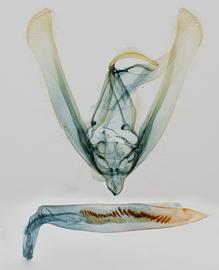
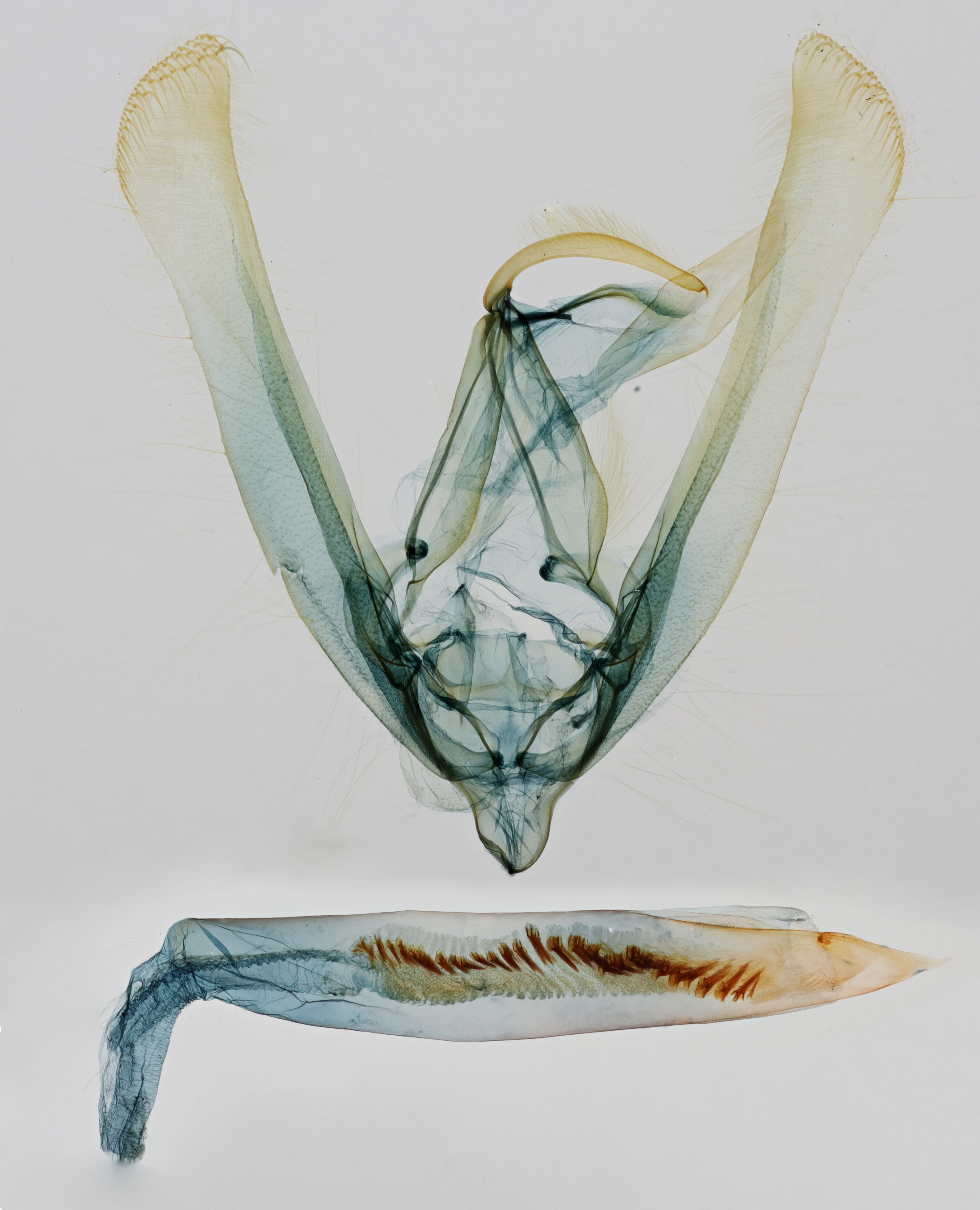
Adults of H. minuta are much smaller than typical H. zea and are restricted to Lisianski Island. Adults of H. confusa and H. zea cannot be separated reliably externally; dissection is usually required (see Hardwick 1965Hardwick 1965:
Hardwick DF. 1965. The corn earworm complex. Memoirs of the Entomological Society of Canada. 40:1–247.). The number and distribution of cornuti on the male phallus is diagnostic. H. confusa is believed to be extinct (Austin and Rubinoff 2024bAustin and Rubinoff 2024b:
Austin KA, Rubinoff D. 2024b. Patterns of extinction across Hawaiian Lepidoptera offer lessons from a diverse, neglected, and vulnerable endemic fauna. Biodiversity and Conservation. 34:917–930.).
Helicoverpa confusa: Oʻahu, Molokaʻi, Lānaʻi, Maui, Hawaiʻi island
Helicoverpa hawaiiensis: Kauaʻi, Oʻahu, Molokaʻi, Hawaiʻi island
Helicoverpa minuta: Lisianski
Helicoverpa pallida pallida: Necker
Helicoverpa pallida nihoaensis: Nihoa
Because of the early confusion surrounding the identification of native Hawaiian Helicoverpa and the introduced H. zea, some host plant records require verification. For example, records of Heliothis obsoleta (Fabricius) on tobacco (Nicotiana spp.) (Van Dine 1909Van Dine 1909:
Van Dine D. 1909. A revised list of the injurious insects of Hawaii. Annual Report of the Hawaii Agricultural Experiment Station for 1908. p 29–37.), tomato (Solanum lycopersicum L.) (Fullaway 1914Fullaway 1914:
Fullaway DT. 1914. Report of the entomologist. Annual Report of the Hawaii Agricultural Experiment Station for 1913. p 18–21.), and pigeon pea (Cajanus cajan (L.) Huth) (Fullaway 1914Fullaway 1914:
Fullaway DT. 1914. Report of the entomologist. Annual Report of the Hawaii Agricultural Experiment Station for 1913. p 18–21.) predate the arrival of H. zea and likely represent misidentifications of H. confusa or H. hawaiiensis.
The following host records can be considered more reliable, but likely incomplete: Helicoverpa confusa has been reared from "snapdragon" (Antirrhinum?) and stems of tomato (Solanum lycopersicum L.); Helicoverpa hawaiiensis has been recorded on Gnaphalium spp. and Sida spp. (Zimmerman 1958Zimmerman 1958:
Zimmerman EC. 1958. Insects of Hawaii, Volume 7. Macrolepidoptera. University of Hawaii Press, Honolulu. 542 pp.) and has been reared in the laboratory on green beans (Phaseolus vulgaris L.) (Hardwick 1965Hardwick 1965:
Hardwick DF. 1965. The corn earworm complex. Memoirs of the Entomological Society of Canada. 40:1–247.) and artificial diet; both subspecies of Helicoverpa pallida have been reared from Chenopodium oahuense (Meyen) Aellen (Amaranthaceae) (Hardwick 1965Hardwick 1965:
Hardwick DF. 1965. The corn earworm complex. Memoirs of the Entomological Society of Canada. 40:1–247.). The host(s) of H. minuta is unknown.
Females of H. hawaiiensis lay ~1400 eggs on average, up to ~2400 eggs in one individual. The larvae undergo six instars, seven in rare instances. Each instar takes between 2–4 days except for the final instar, which takes on average eight days (Hardwick 1965Hardwick 1965:
Hardwick DF. 1965. The corn earworm complex. Memoirs of the Entomological Society of Canada. 40:1–247.).
The pupa is "usually less heavily sclerotized and more lightly pigmented than that of other species in the genus; colour varying from orange-brown to dark greenish-yellow" (Hardwick 1965Hardwick 1965:
Hardwick DF. 1965. The corn earworm complex. Memoirs of the Entomological Society of Canada. 40:1–247.). Adults eclose on average 15–18 days later (Hardwick 1965Hardwick 1965:
Hardwick DF. 1965. The corn earworm complex. Memoirs of the Entomological Society of Canada. 40:1–247.).
Author: Kyhl A. Austin
Content last updated May 2026
idtools.org