NATIVE
Haliophyle Warren, 1912
Higher taxonomy: Noctuidae: Noctuinae: Tribal placement unknown
Common name: Hawaiian fern moths
Species known to occur in Hawaiʻi:
NATIVE
Haliophyle anthracias (Meyrick, 1899Meyrick, 1899:
Meyrick E. 1899. Macrolepidoptera. In: Sharp D, Fauna Hawaiiensis. Cambridge University Press, Cambridge. p 123–275. ); Haliophyle compsias (Meyrick, 1899Meyrick, 1899:
Meyrick E. 1899. Macrolepidoptera. In: Sharp D, Fauna Hawaiiensis. Cambridge University Press, Cambridge. p 123–275. ); Haliophyle connexa Zimmerman, 1958Zimmerman, 1958:
Zimmerman EC. 1958. Insects of Hawaii, Volume 7. Macrolepidoptera. University of Hawaii Press, Honolulu. 542 pp.; Haliophyle euclidias (Meyrick, 1899Meyrick, 1899:
Meyrick E. 1899. Macrolepidoptera. In: Sharp D, Fauna Hawaiiensis. Cambridge University Press, Cambridge. p 123–275. ); Haliophyle ferruginea (Swezey, 1932); Haliophyle flavistigma Zimmerman, 1958; Haliophyle ignita Zimmerman, 1958; Haliophyle maio Paynter-Tavares and Austin, 2026; Haliophyle maipahi Paynter-Tavares and Austin, 2026; Haliophyle niphadopa (Meyrick, 1899Meyrick, 1899:
Meyrick E. 1899. Macrolepidoptera. In: Sharp D, Fauna Hawaiiensis. Cambridge University Press, Cambridge. p 123–275. )
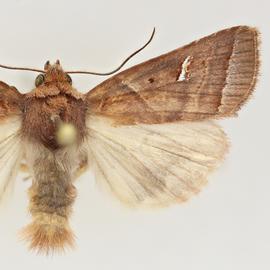
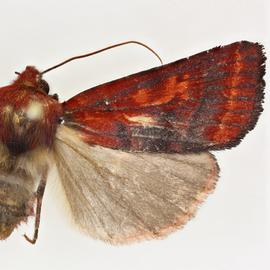
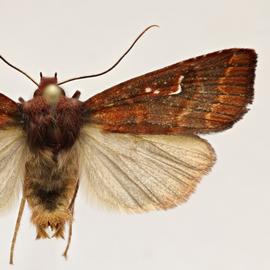
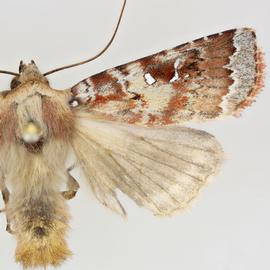
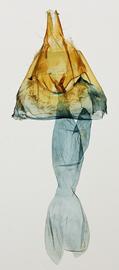
Haliophyle is one of three endemic Hawaiian noctuid genera and is by far the most diverse. Ten species are currently described with an additional twelve species undescribed. As far as is known, all species feed on various ferns as larvae. Haliophyle ferruginea (Swezey, 1932) is quite distinct from the remaining species and may belong in its own genus. Species of Haliophyle can be one of the most abundant native macromoths in wet forests across the Hawaiian Islands. Unlike many other insect radiations in Hawaiʻi, all but one species of Haliophyle are still extant (though some species are extremely localized or rare) (Paynter-Tavares et al. 2026Paynter-Tavares et al. 2026:
Paynter-Tavares S, Austin KA, Doorenweerd C, Rubinoff D. 2026. Two new single-island endemic species of Haliophyle Warren (Lepidoptera: Noctuidae) from Molokaʻi and Oʻahu. Proceedings of the Hawaiian Entomological Society, 58:5–16.).
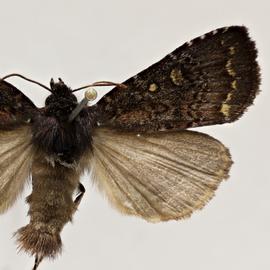
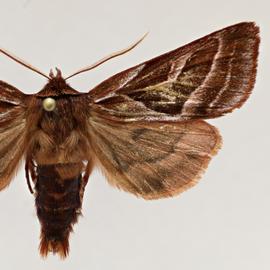
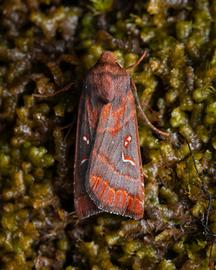
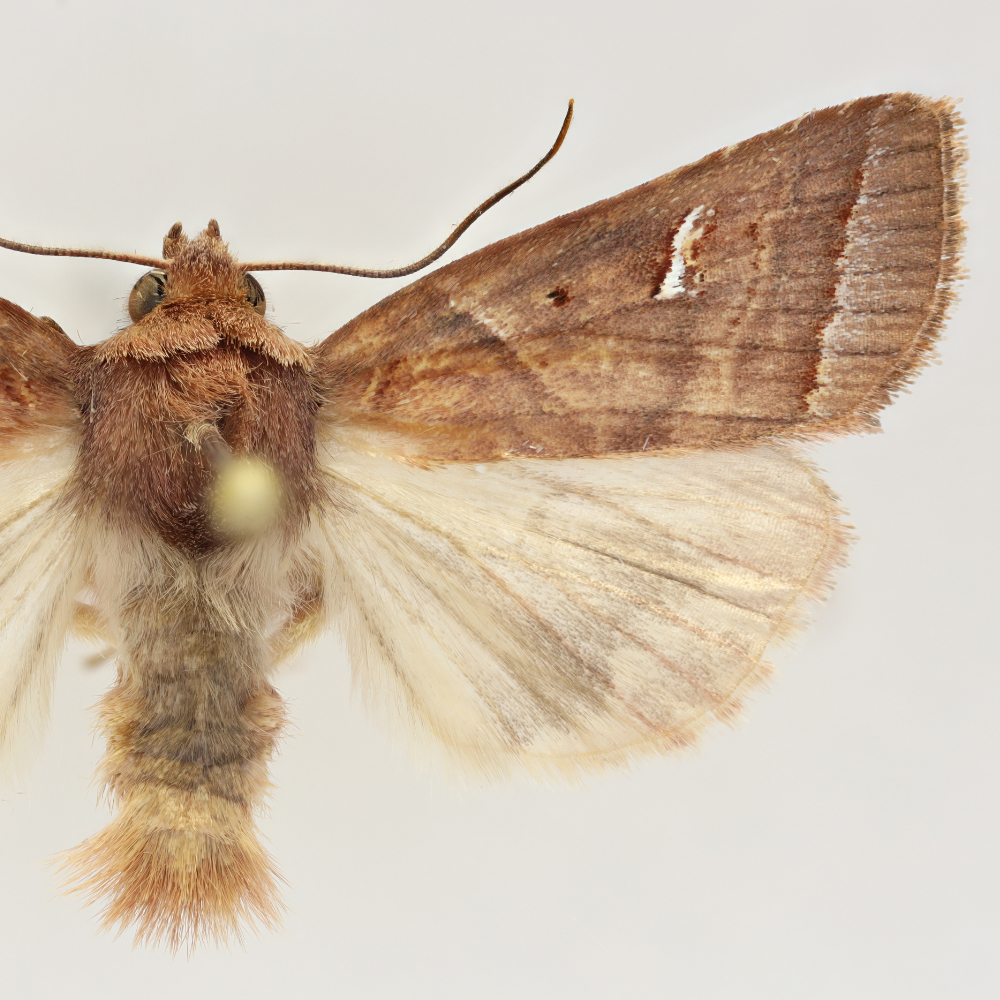
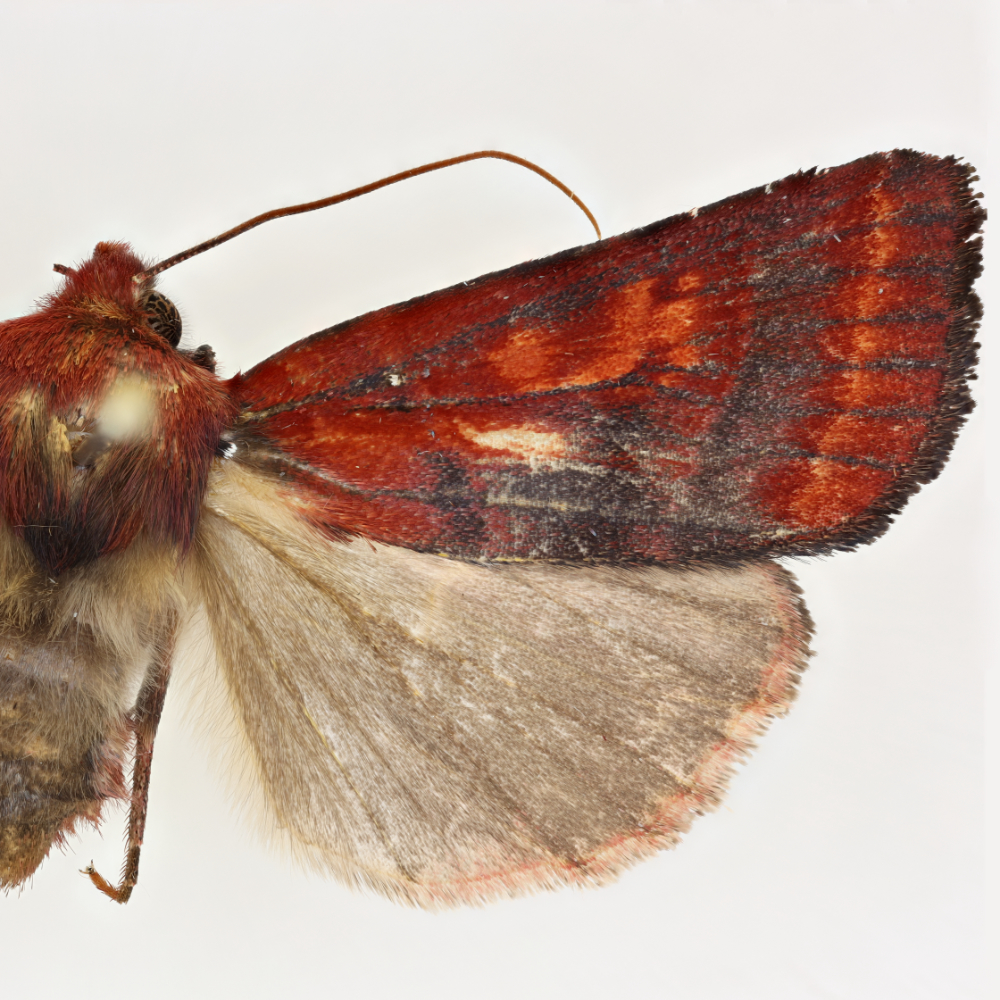
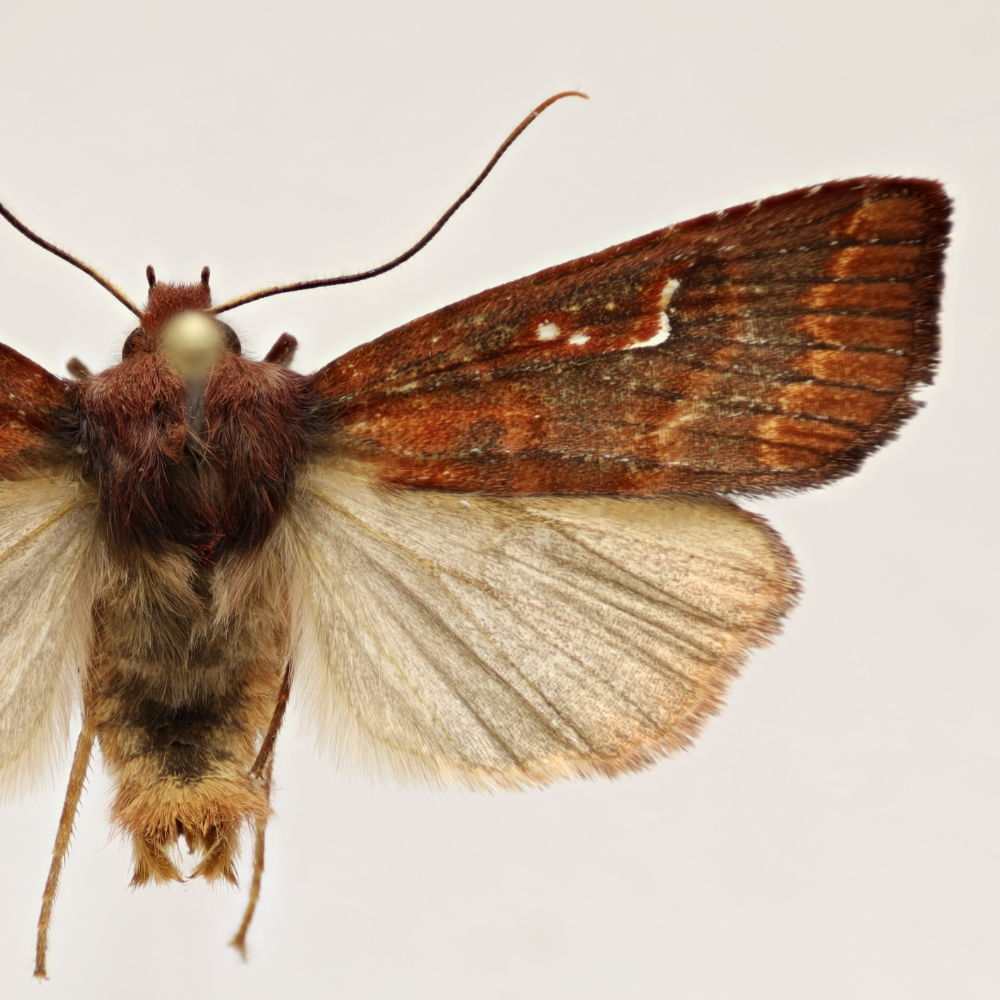
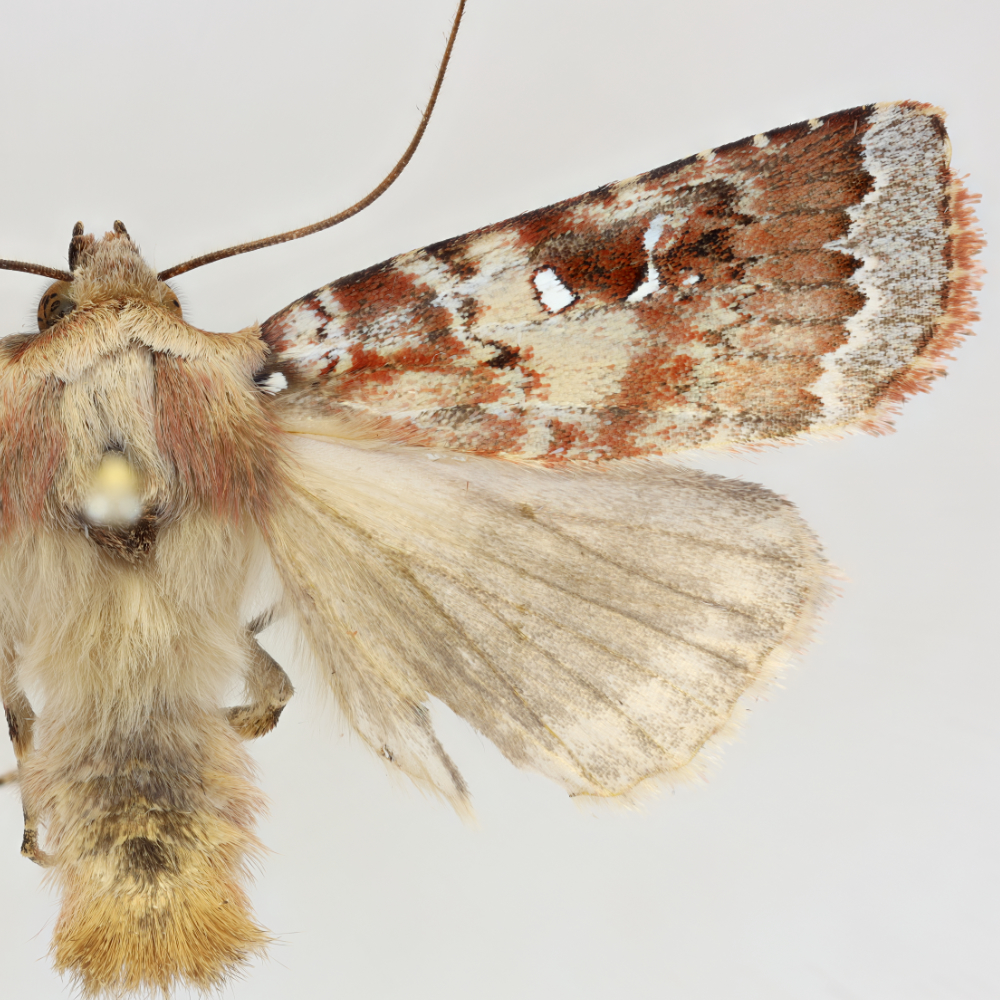
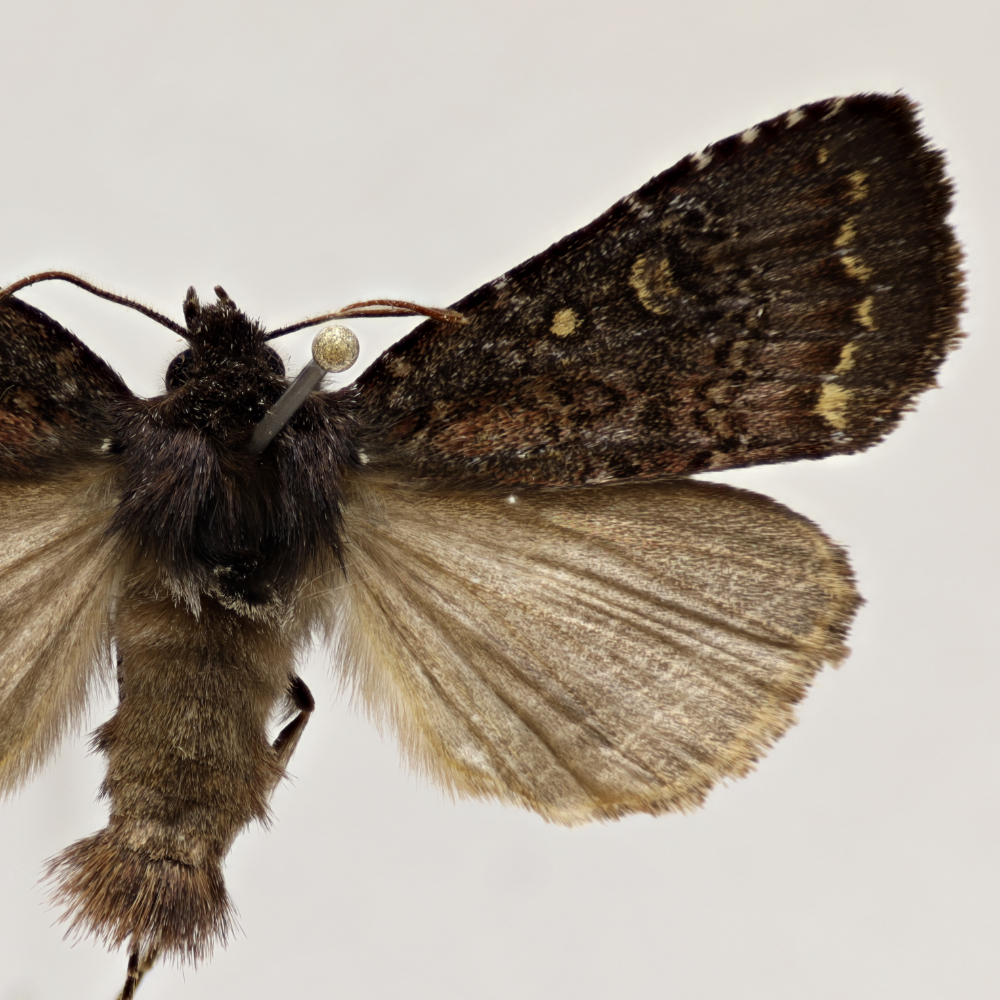
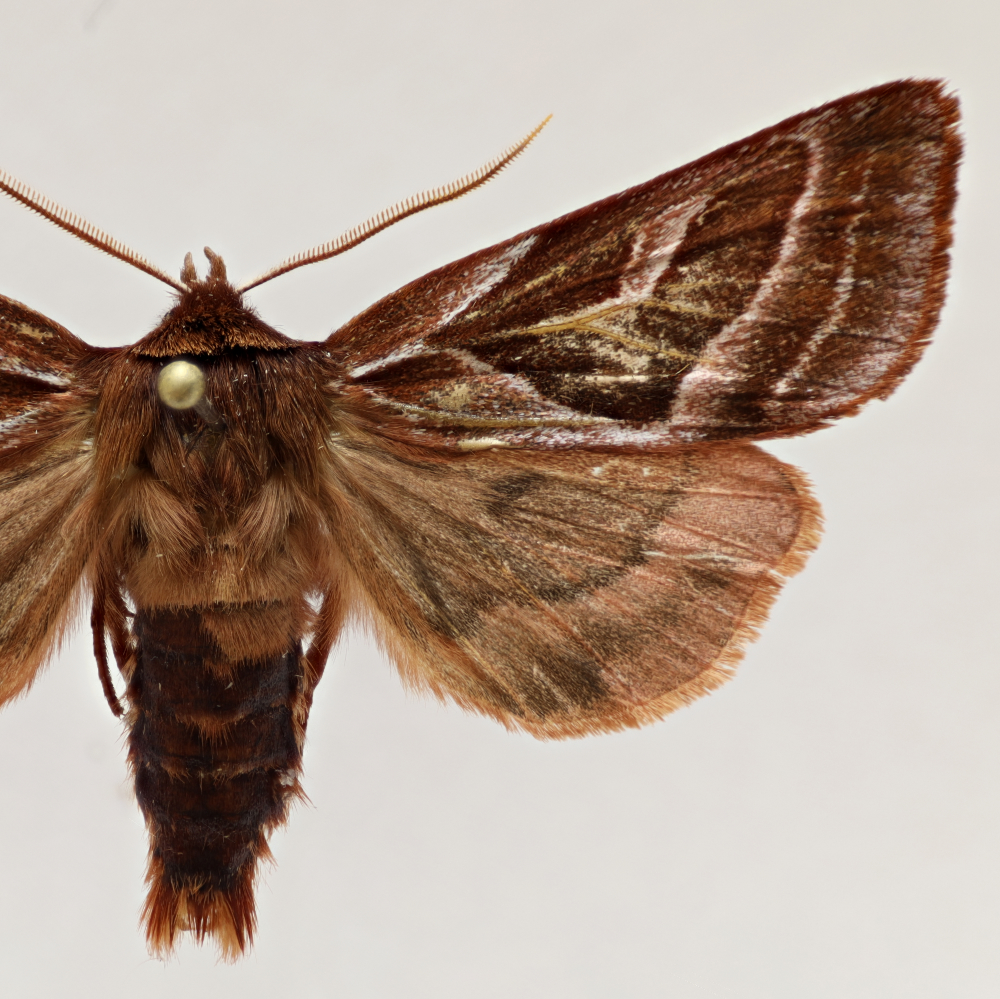
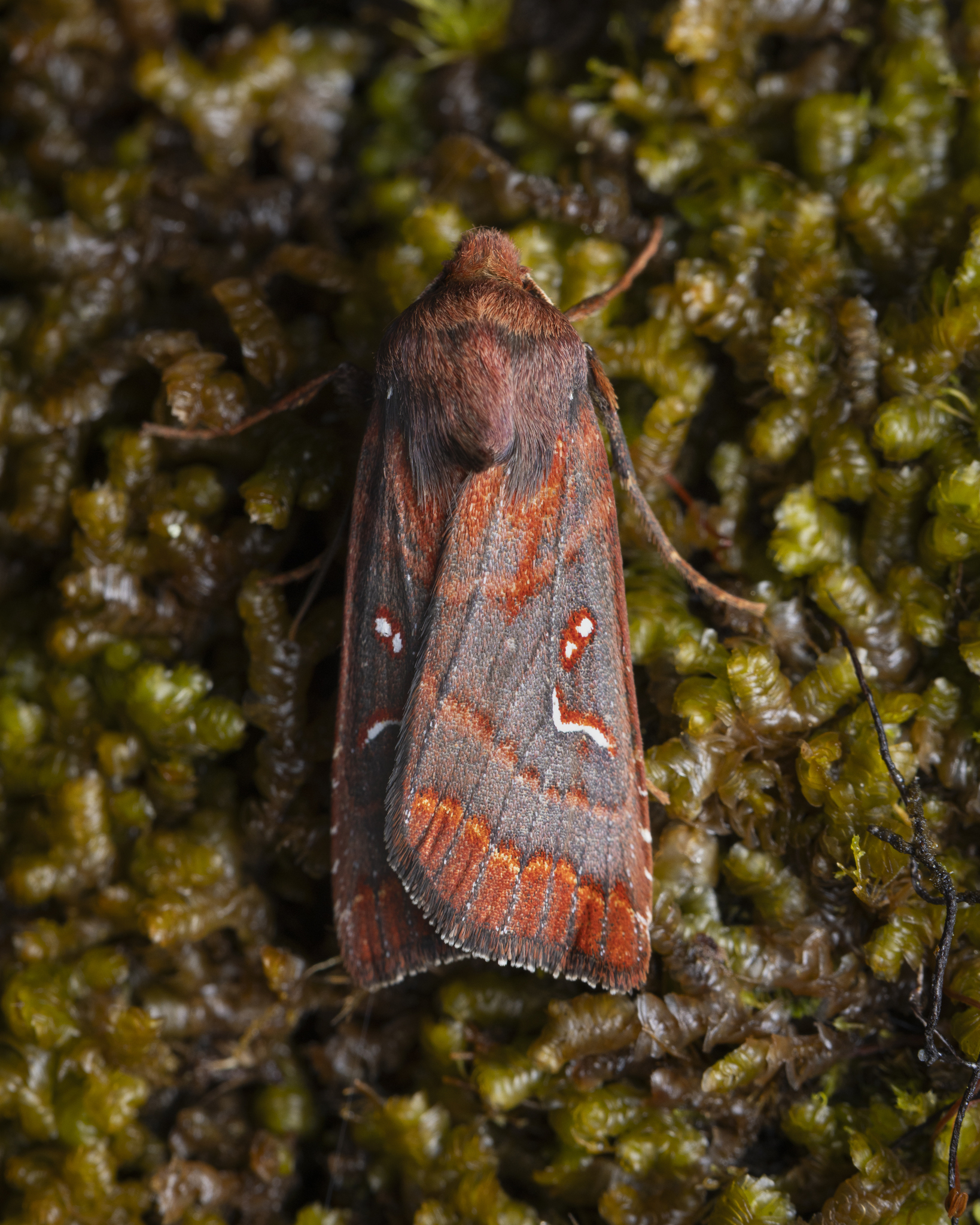
Adults of Haliophyle spp. are highly variable in forewingforewing:
the front wing of an insect; the wing attached to the second segment of the thorax (the mesothorax)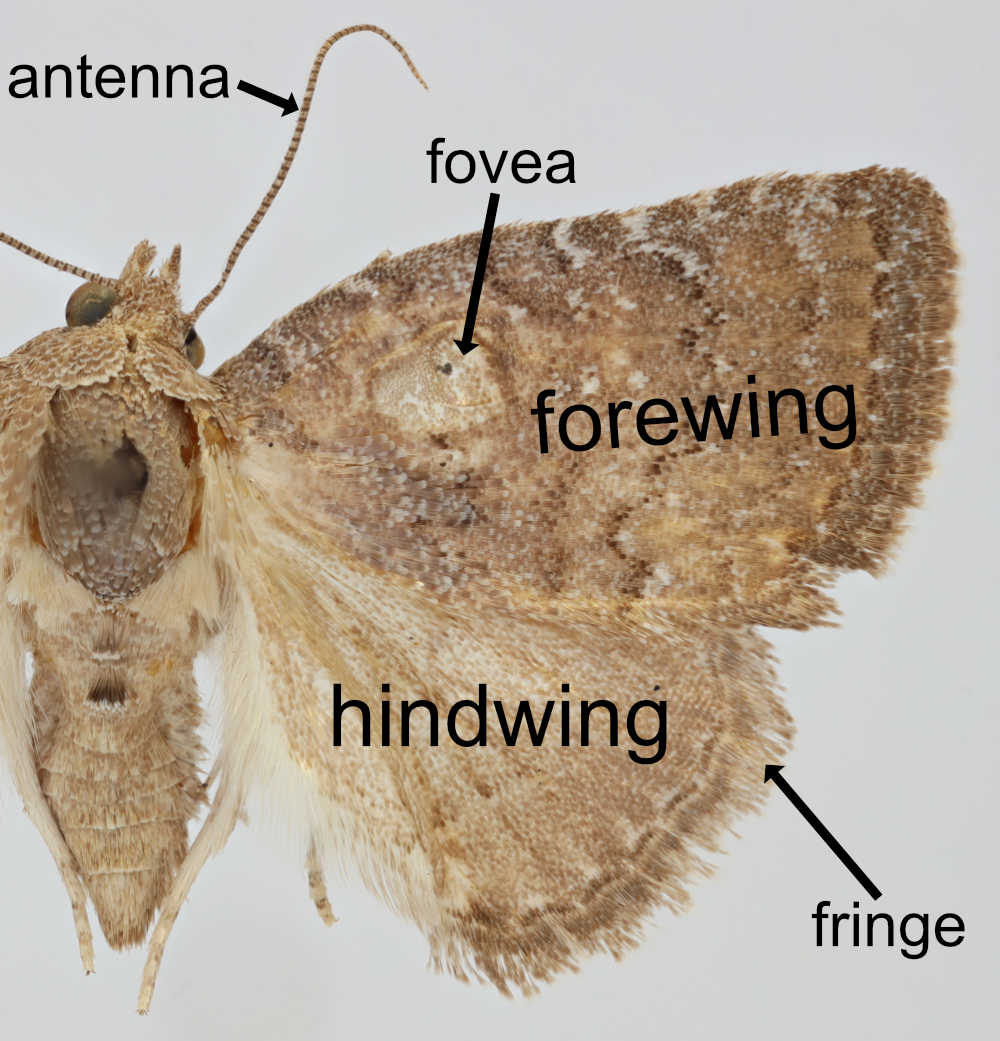 coloration, but are generally medium to large noctuids (forewing lengthforewing length:
the distance of the forewing in a straight line from the base to the tip of the apex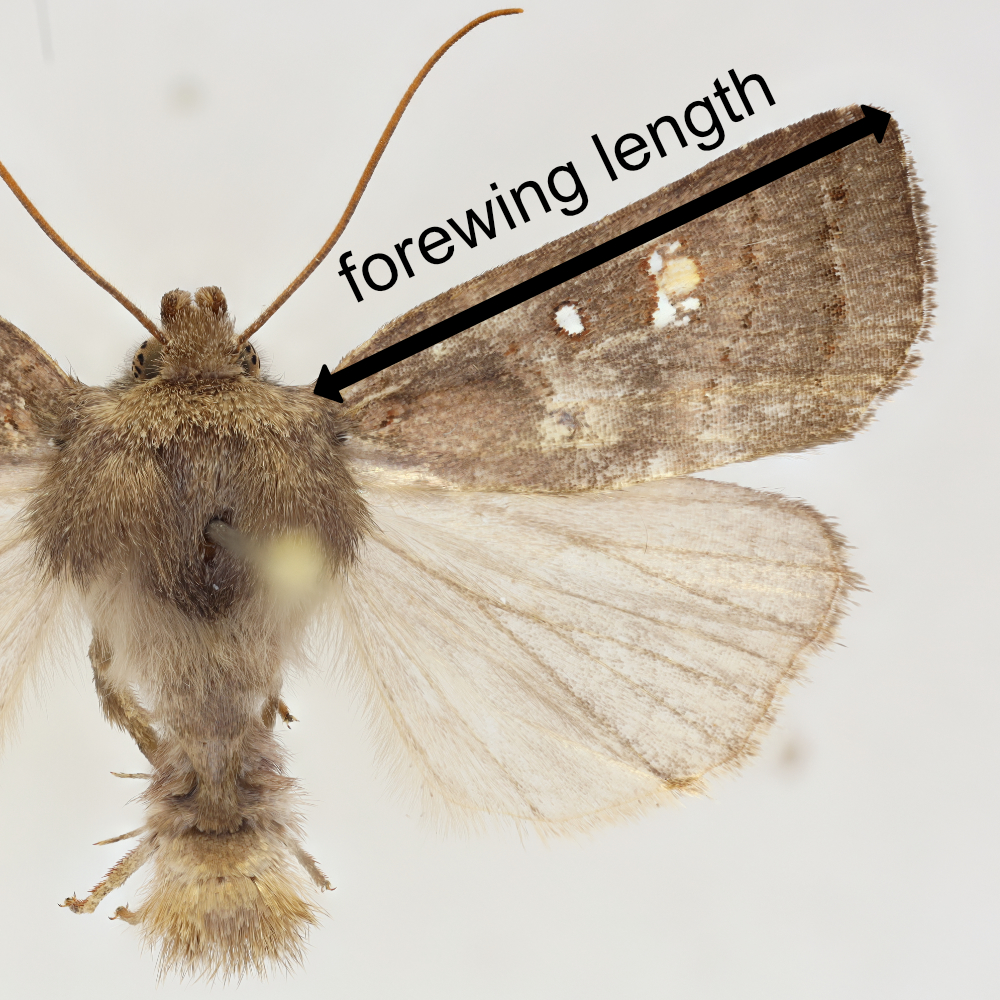 12–21 mm) with the forewingforewing:
the front wing of an insect; the wing attached to the second segment of the thorax (the mesothorax) color red, orange, pink, brown, or black. Most species have males with simple or weakly pectinate antennaeantenna:
a thin, paired, elongate, segmented sensory organ on the head that serves primarily for olfaction (smell) to find food and mates, but also aids in navigation and balance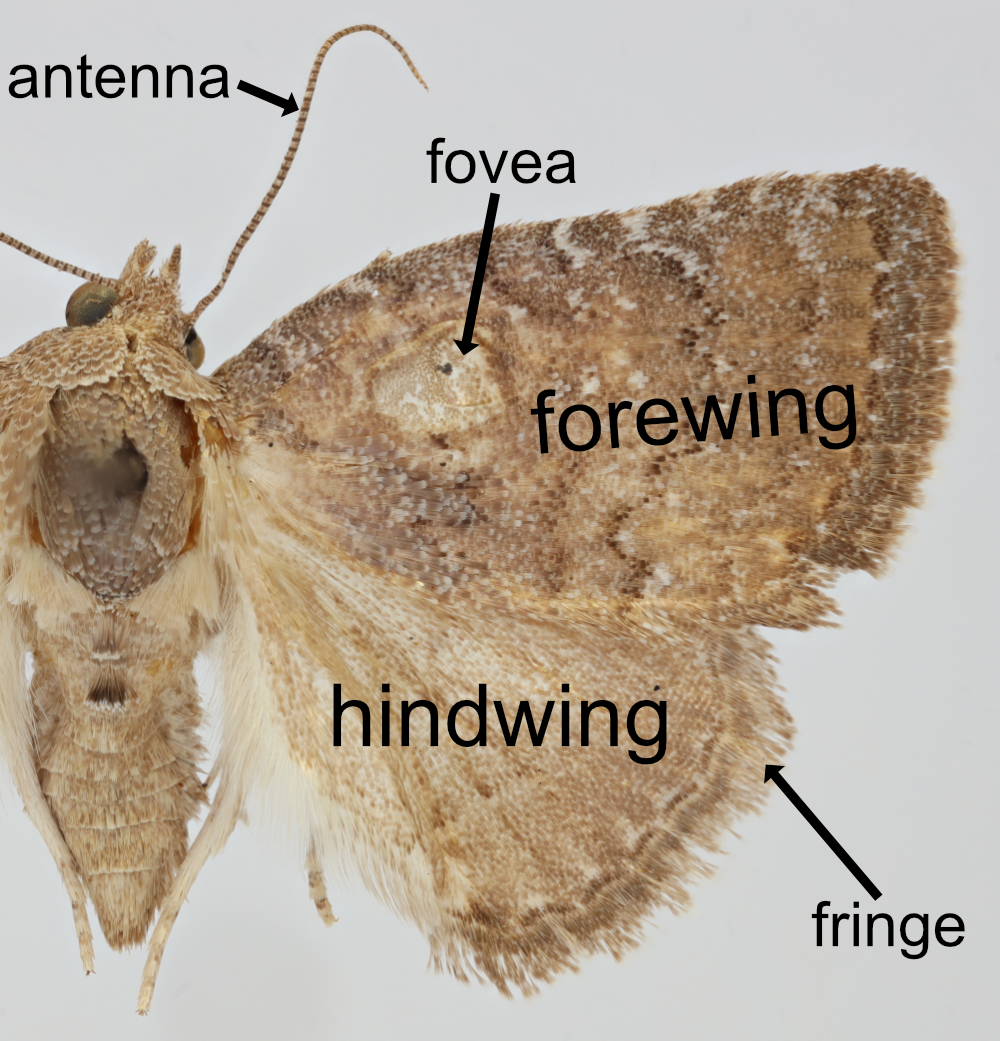 , but the males of H. ferruginea have strongly bipectinate antennaeantenna:
a thin, paired, elongate, segmented sensory organ on the head that serves primarily for olfaction (smell) to find food and mates, but also aids in navigation and balance. The eyes are setose; the orbicular spotorbicular spot:
a round or oval spot located in the middle of the discal cell of the forewing, between the antemedial and median lines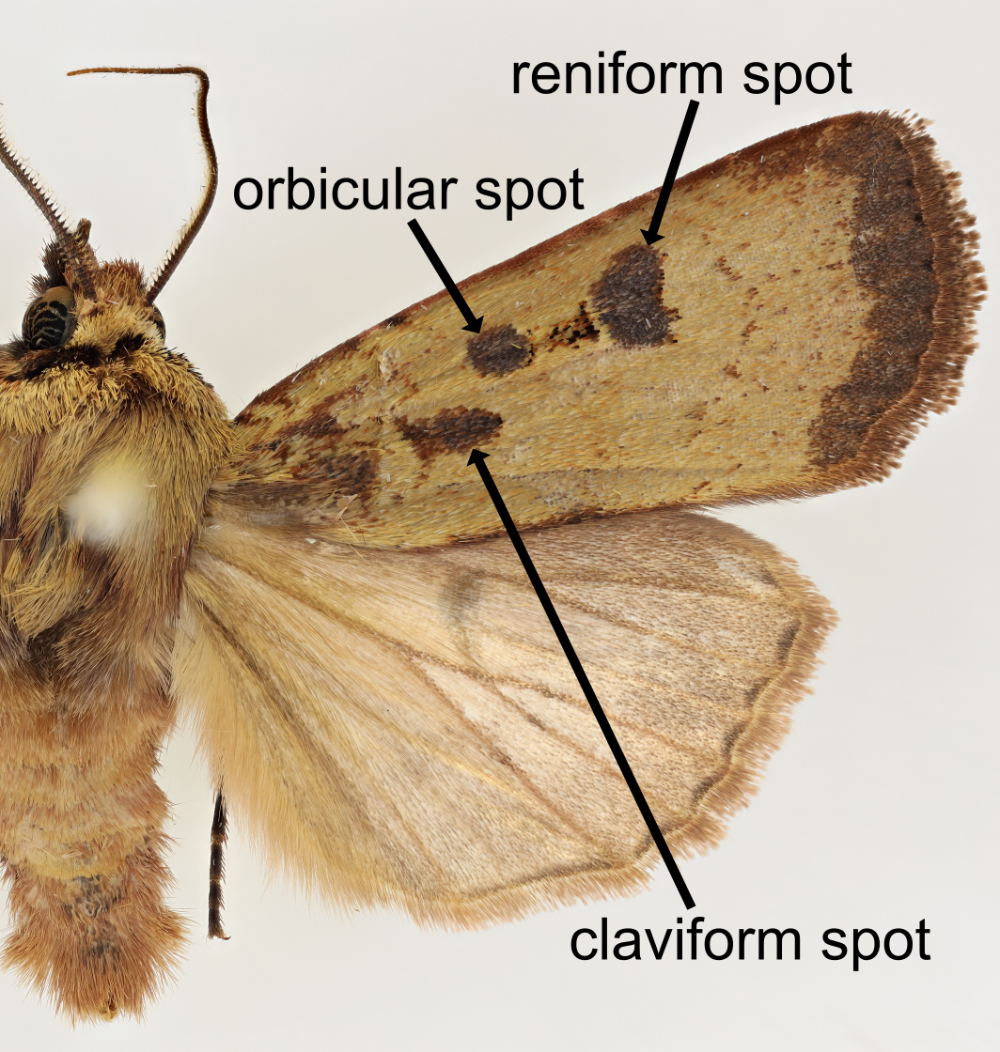 of males is reduced or obsolete in males of many species; the reniform spotreniform spot:
a spot, often broad bean- or kidney-shaped, found at the distal end of the discal cell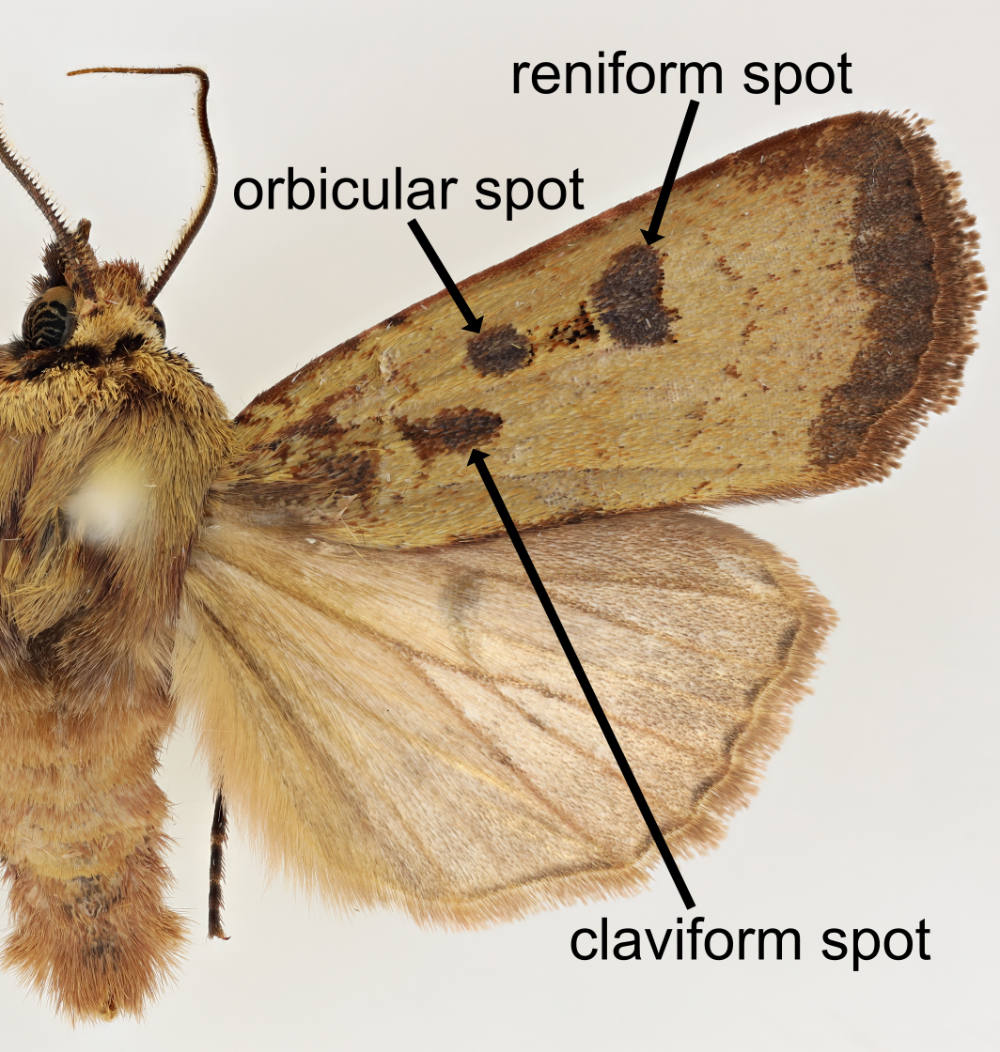 is often constricted, white, and slightly sinuous.
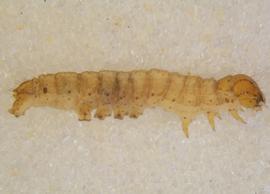
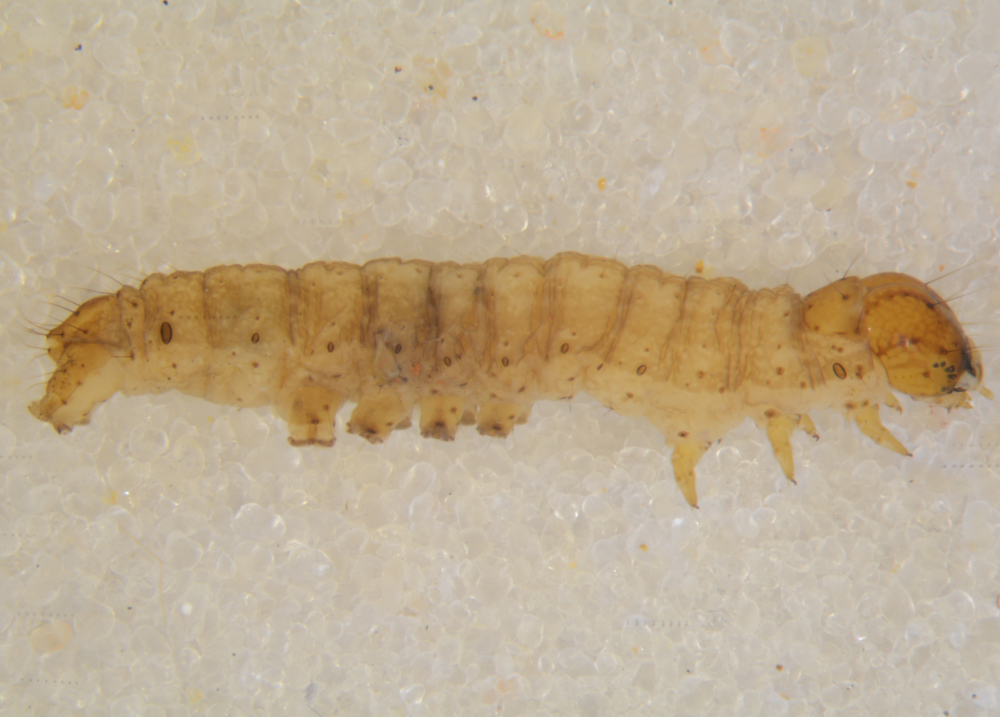
Larvae of Haliophyle spp. have never been formally described and only a single, mid-instar specimen was available to us. Though faded, it is apparently typically noctuine, darker dorsally, and with four pairs of abdominal prolegs. Closer examination of this larva or additional collected specimens may help shed light on the tribal placement of Haliophyle. Swezey (1922)Swezey (1922):
Swezey OH. 1922. Insects attacking ferns in the Hawaiian Islands. Proceedings of the Hawaiian Entomological Society. 5(1):57–65. mentioned that the larvae vary "from nearly plain green to almost black," but we were not able to locate any voucher specimens that he may have deposited in Hawaiʻi.
Though somewhat variable, Haliophyle tend to be fairly distinctive species within Hawaiʻi and are unlikely to be confused with other noctuid species in the Hawaiian Islands.
Species of Haliophyle are known from all of the main high Hawaiian Islands, with Maui and Hawaiʻi island hosting the largest diversity of species. Species exclusively occur in mesic and wet forests between 600–2000 meters elevation where native ferns can be found.
Little is known about the biology of Haliophyle spp., but a few species have been reared from various native ferns, including "Acrostichum spp." [=Elaphoglossum?] and Menisciopsis cyatheoides (Kaulf.) S.E.Fawc. (Swezey 1922Swezey 1922:
Swezey OH. 1922. Insects attacking ferns in the Hawaiian Islands. Proceedings of the Hawaiian Entomological Society. 5(1):57–65., Swezey 1954Swezey 1954:
Swezey OH. 1954. Forest entomology in Hawaii. An annotated check-list of the insect faunas of the various components of the Hawaiian forests. B. P. Bishop Museum Special Publication 44, 266 pp., 32 figs., Zimmerman 1958Zimmerman 1958:
Zimmerman EC. 1958. Insects of Hawaii, Volume 7. Macrolepidoptera. University of Hawaii Press, Honolulu. 542 pp.). They are thought to feed generally on native ferns but apparently do not feed on the larger and more ubiquitous Cibotium spp. or Sadleria spp. (Zimmerman 1958Zimmerman 1958:
Zimmerman EC. 1958. Insects of Hawaii, Volume 7. Macrolepidoptera. University of Hawaii Press, Honolulu. 542 pp.). The larvae "remain on its food-plant in daytime instead of hiding under rubbish or in the soil" (Swezey 1922Swezey 1922:
Swezey OH. 1922. Insects attacking ferns in the Hawaiian Islands. Proceedings of the Hawaiian Entomological Society. 5(1):57–65.).
Author: Kyhl A. Austin
Content last updated May 2026
idtools.org