NATIVE | ADVENTIVE
Agrotis Ochsenheimer, 1816
Higher taxonomy: Noctuidae: Noctuinae: Noctuini
Common names: Hawaiian cutworms, lesser Hawaiian cutworm (A. dislocata),
greater Hawaiian cutworm (A. crinigera)
Species known to occur in Hawaiʻi:
NATIVE
Agrotis arenivolans Butler, 1879Butler, 1879:
Butler AG. 1879. On heterocerous Lepidoptera collected in the Hawaiian Islands by the Rev. T. Blackburn. Entomologist's Monthly Magazine. 15:269–273.; Agrotis aulacias Meyrick, 1899Meyrick, 1899:
Meyrick E. 1899. Macrolepidoptera. In: Sharp D, Fauna Hawaiiensis. Cambridge University Press, Cambridge. p 123–275. ; Agrotis baliopa Meyrick, 1899Meyrick, 1899:
Meyrick E. 1899. Macrolepidoptera. In: Sharp D, Fauna Hawaiiensis. Cambridge University Press, Cambridge. p 123–275. ; Agrotis bryani Swezey, 1926; Agrotis ceramophaea Meyrick, 1899Meyrick, 1899:
Meyrick E. 1899. Macrolepidoptera. In: Sharp D, Fauna Hawaiiensis. Cambridge University Press, Cambridge. p 123–275. ; Agrotis charmocrita (Meyrick, 1928Meyrick, 1928:
Meyrick E. 1928. Some new species of Hawaiian Lepidoptera. Proceedings of the Hawaiian Entomological Society. 7(1):91–104. ); Agrotis cremata Butler, 1880Butler, 1880:
Butler AG. 1880. On two small consignments of Lepidoptera from the Hawaiian Islands. Entomologist's Monthly Magazine. 17:6–9.; Agrotis crinigera Butler, 1881; Agrotis diplosticta (Hampson, 1909); Agrotis dislocata Walker, 1856; Agrotis epicremna Meyrick, 1899Meyrick, 1899:
Meyrick E. 1899. Macrolepidoptera. In: Sharp D, Fauna Hawaiiensis. Cambridge University Press, Cambridge. p 123–275. ; Agrotis evanescens (Rothschild, 1894); Agrotis fasciata (Rothschild, 1894); Agrotis giffardi (Swezey, 1932); Agrotis helela Medeiros, 2019; Agrotis hephaestaea (Meyrick, 1899Meyrick, 1899:
Meyrick E. 1899. Macrolepidoptera. In: Sharp D, Fauna Hawaiiensis. Cambridge University Press, Cambridge. p 123–275. ); Agrotis kerri Swezey, 1920Swezey, 1920:
Swezey OH. 1920. Some new Hawaiian Lepidoptera. Proceedings of the Hawaiian Entomological Society. 4(2):376–386. ; Agrotis kuamauna Medeiros & Kirkpatrick, 2019; Agrotis laysanensis (Rothschild, 1894); Agrotis melanoneura Meyrick, 1899Meyrick, 1899:
Meyrick E. 1899. Macrolepidoptera. In: Sharp D, Fauna Hawaiiensis. Cambridge University Press, Cambridge. p 123–275. ; Agrotis mesotoxa Meyrick, 1899Meyrick, 1899:
Meyrick E. 1899. Macrolepidoptera. In: Sharp D, Fauna Hawaiiensis. Cambridge University Press, Cambridge. p 123–275. ; Agrotis microreas Meyrick, 1899Meyrick, 1899:
Meyrick E. 1899. Macrolepidoptera. In: Sharp D, Fauna Hawaiiensis. Cambridge University Press, Cambridge. p 123–275. ; Agrotis panoplias Meyrick, 1899Meyrick, 1899:
Meyrick E. 1899. Macrolepidoptera. In: Sharp D, Fauna Hawaiiensis. Cambridge University Press, Cambridge. p 123–275. ; Agrotis perigramma Meyrick, 1899Meyrick, 1899:
Meyrick E. 1899. Macrolepidoptera. In: Sharp D, Fauna Hawaiiensis. Cambridge University Press, Cambridge. p 123–275. ; Agrotis photophila (Butler, 1879Butler, 1879:
Butler AG. 1879. On heterocerous Lepidoptera collected in the Hawaiian Islands by the Rev. T. Blackburn. Entomologist's Monthly Magazine. 15:269–273.); Agrotis procellaris Meyrick, 1900; Agrotis psammophaea Meyrick, 1899Meyrick, 1899:
Meyrick E. 1899. Macrolepidoptera. In: Sharp D, Fauna Hawaiiensis. Cambridge University Press, Cambridge. p 123–275. ; Agrotis tephrias Meyrick, 1899Meyrick, 1899:
Meyrick E. 1899. Macrolepidoptera. In: Sharp D, Fauna Hawaiiensis. Cambridge University Press, Cambridge. p 123–275. ; Agrotis xiphias Meyrick, 1899Meyrick, 1899:
Meyrick E. 1899. Macrolepidoptera. In: Sharp D, Fauna Hawaiiensis. Cambridge University Press, Cambridge. p 123–275.
ADVENTIVE
Agrotis ipsilon (Hufnagel, 1766)
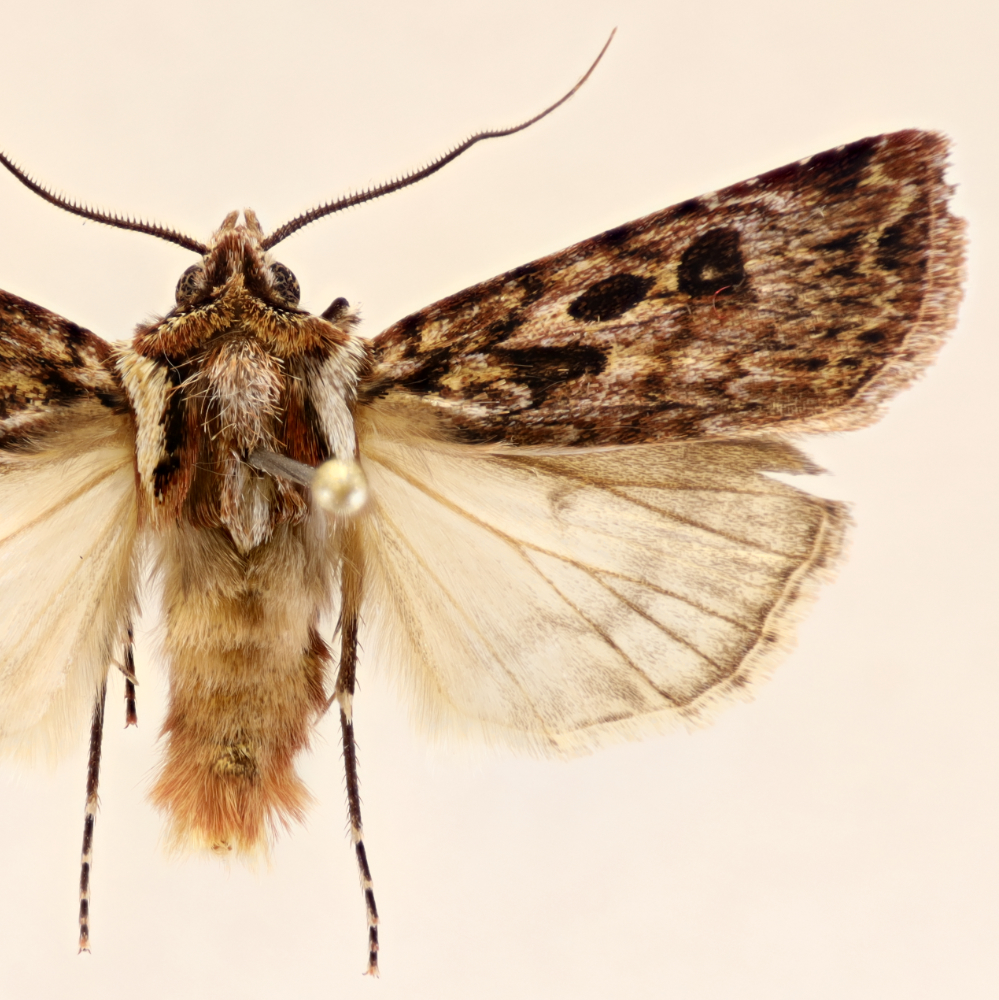
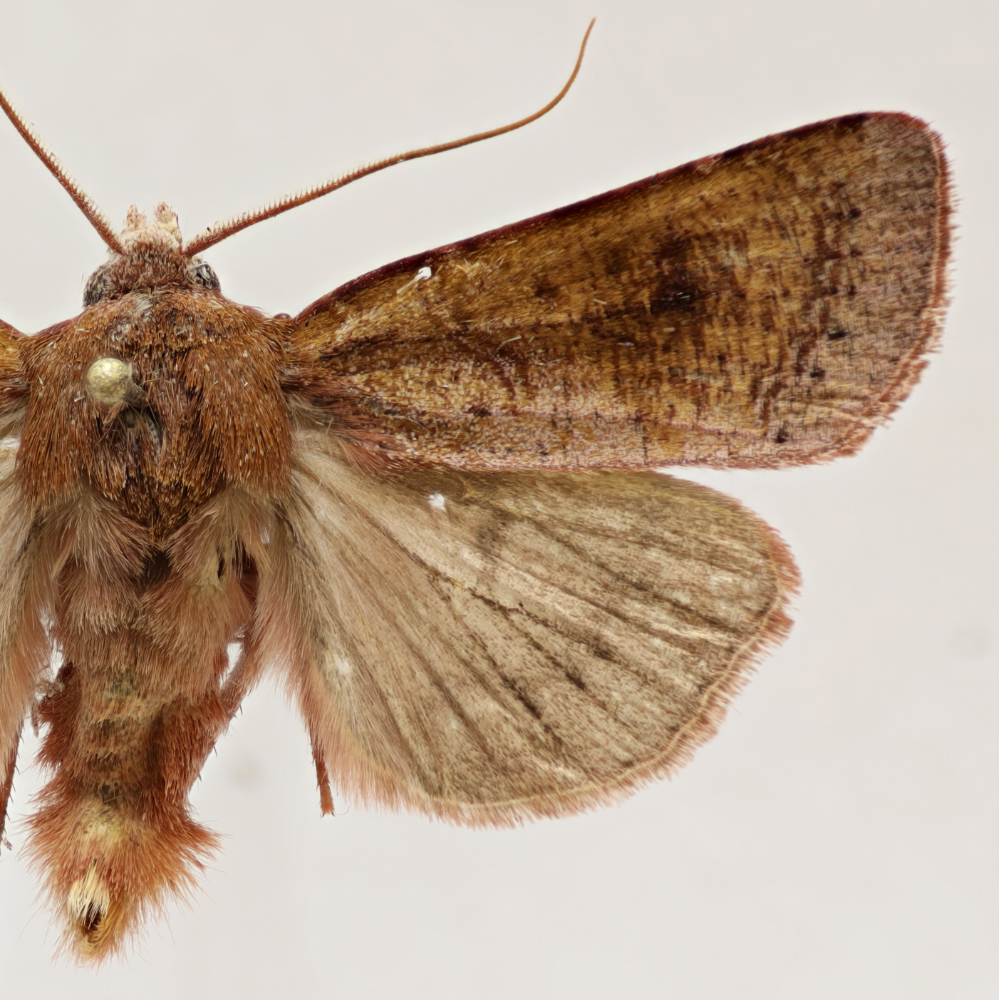
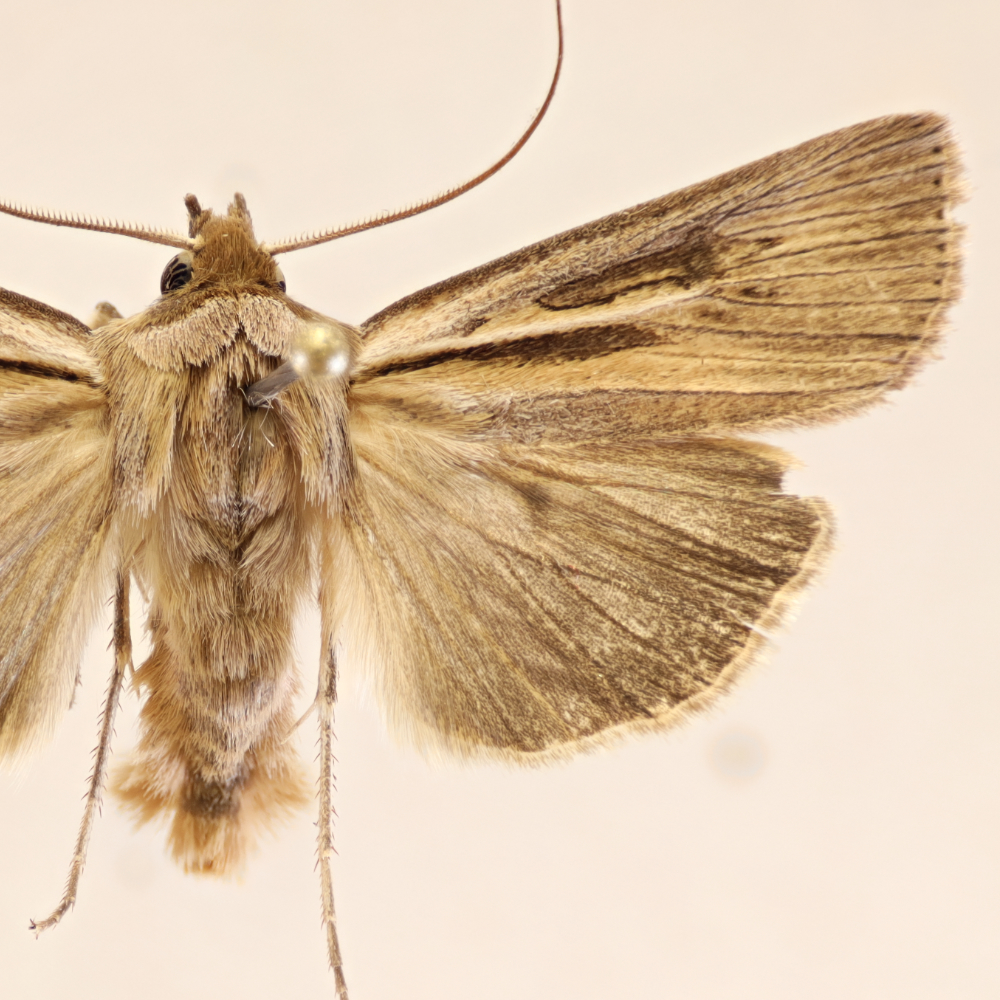
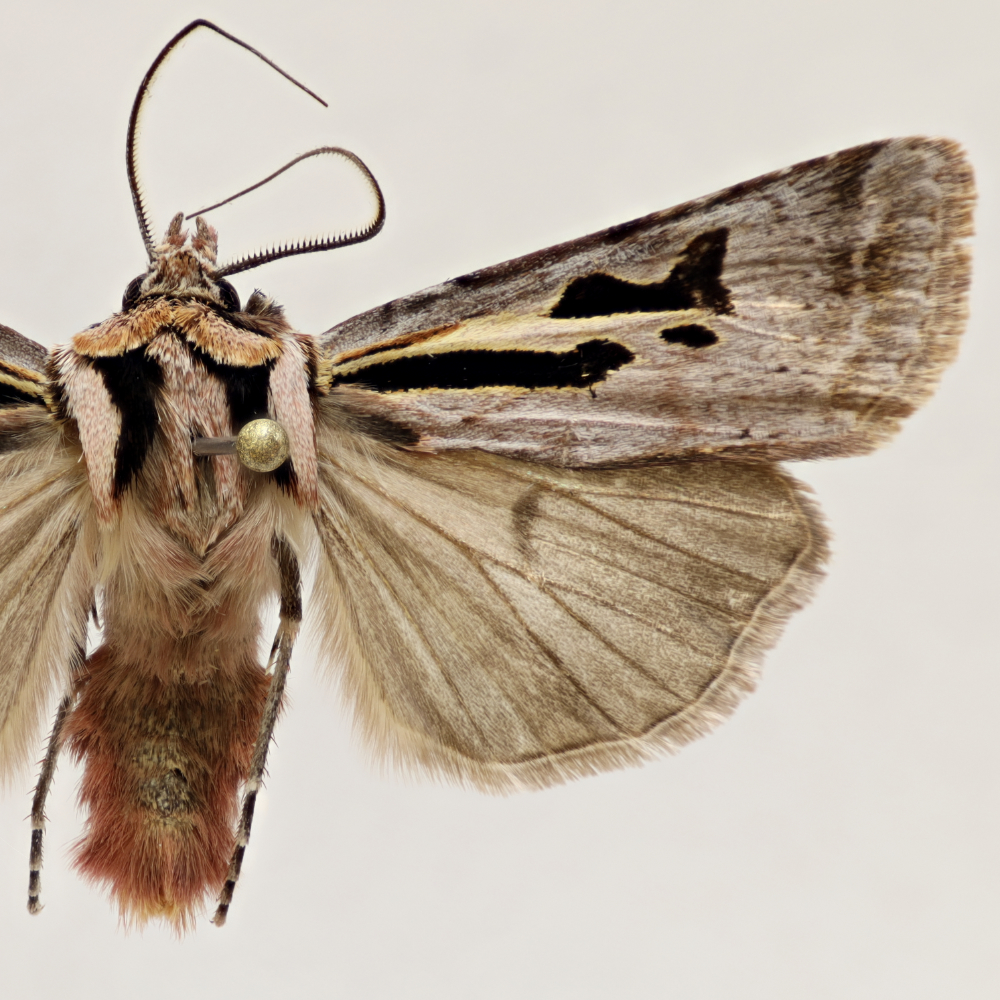
Agrotis is a diverse cosmopolitan genus of large noctuid moths. In Hawaiʻi, it is represented by 29 native species (plus an additional seven synonyms) and the non-native Agrotis ipsilon. This fact sheet covers just the native Hawaiian species. A separate fact sheet is available for A. ipsilon. Little is known of the biology of many of the native species, and at least nine may be extinct (Austin and Rubinoff 2024bAustin and Rubinoff 2024b:
Austin KA, Rubinoff D. 2024b. Patterns of extinction across Hawaiian Lepidoptera offer lessons from a diverse, neglected, and vulnerable endemic fauna. Biodiversity and Conservation. 34:917–930.). Native species of Agrotis are unlikely to be encountered in agricultural settings or at ports, but historically a few species were significant pests of sugar cane (Saccharum spp.) and other crops. Extant species are largely restricted to more natural settings now.
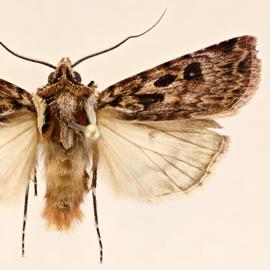
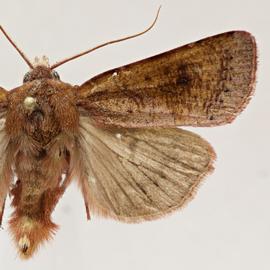
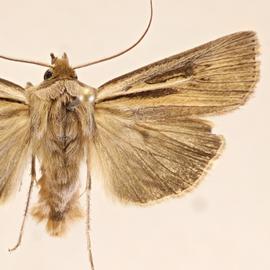
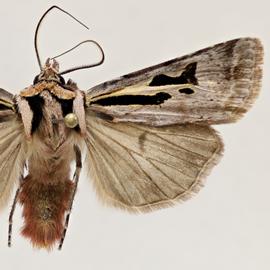
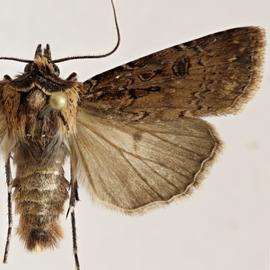
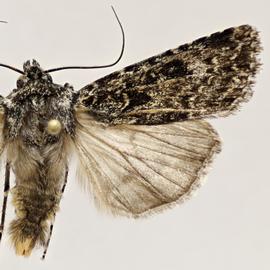
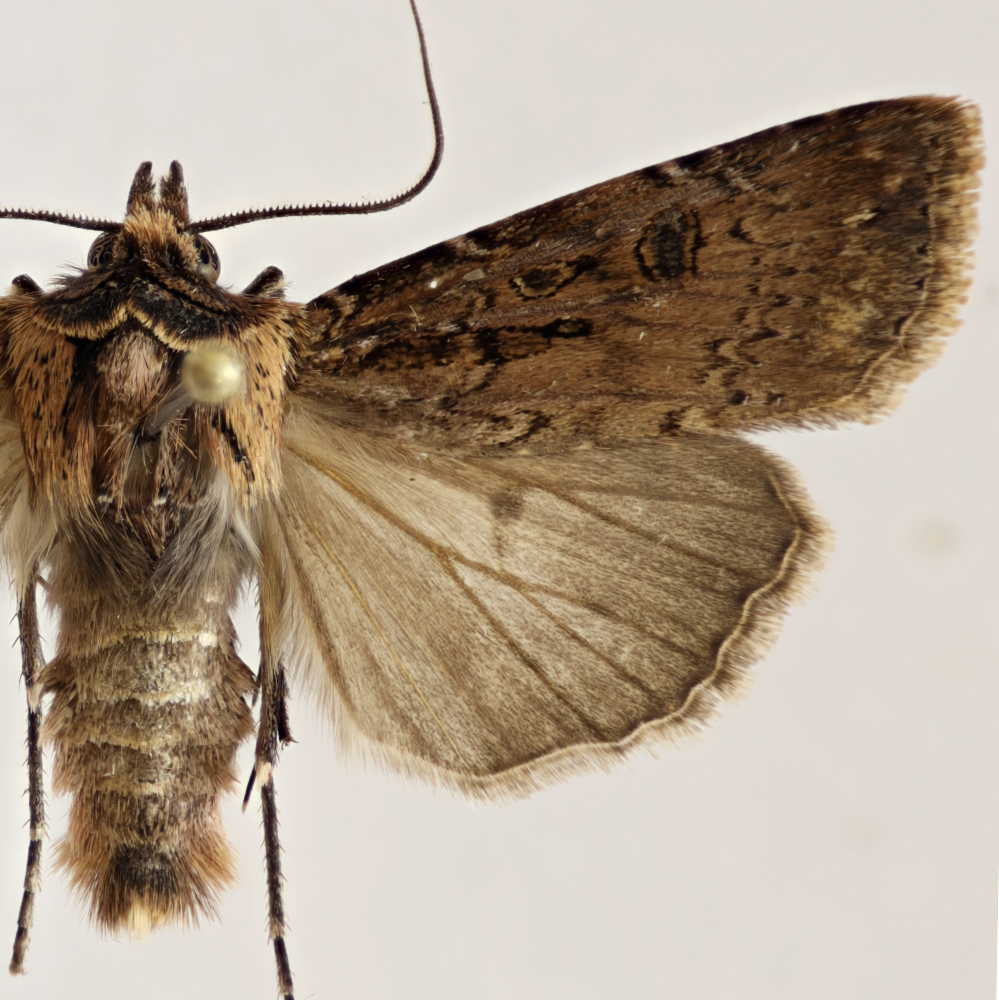
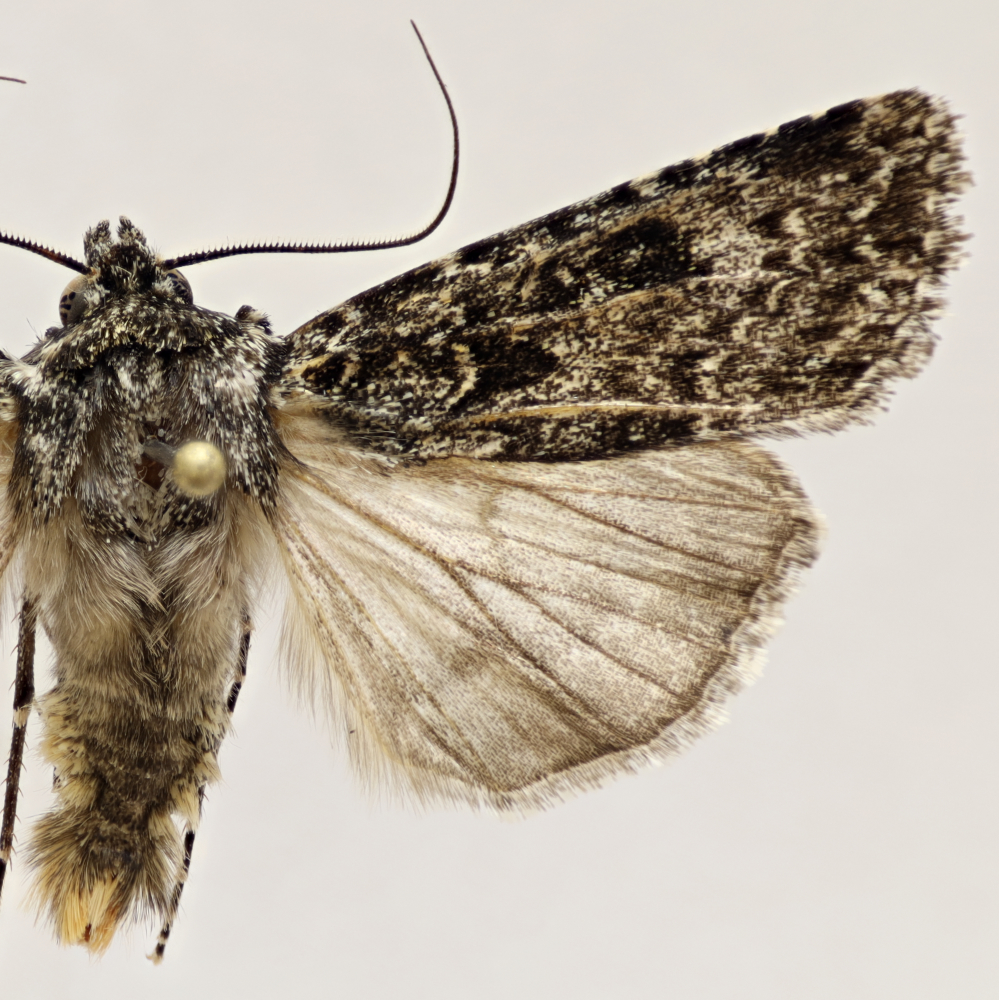
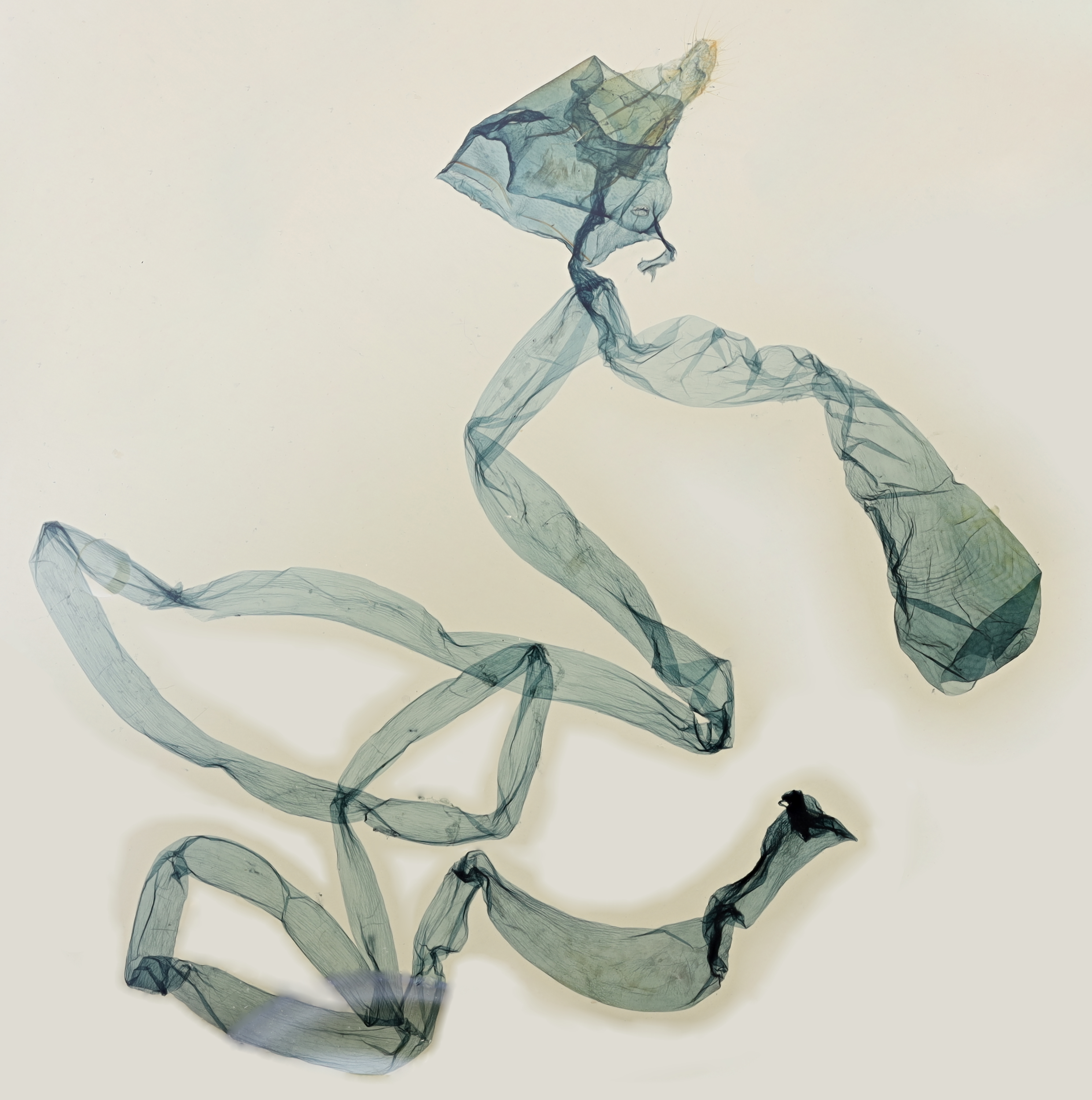
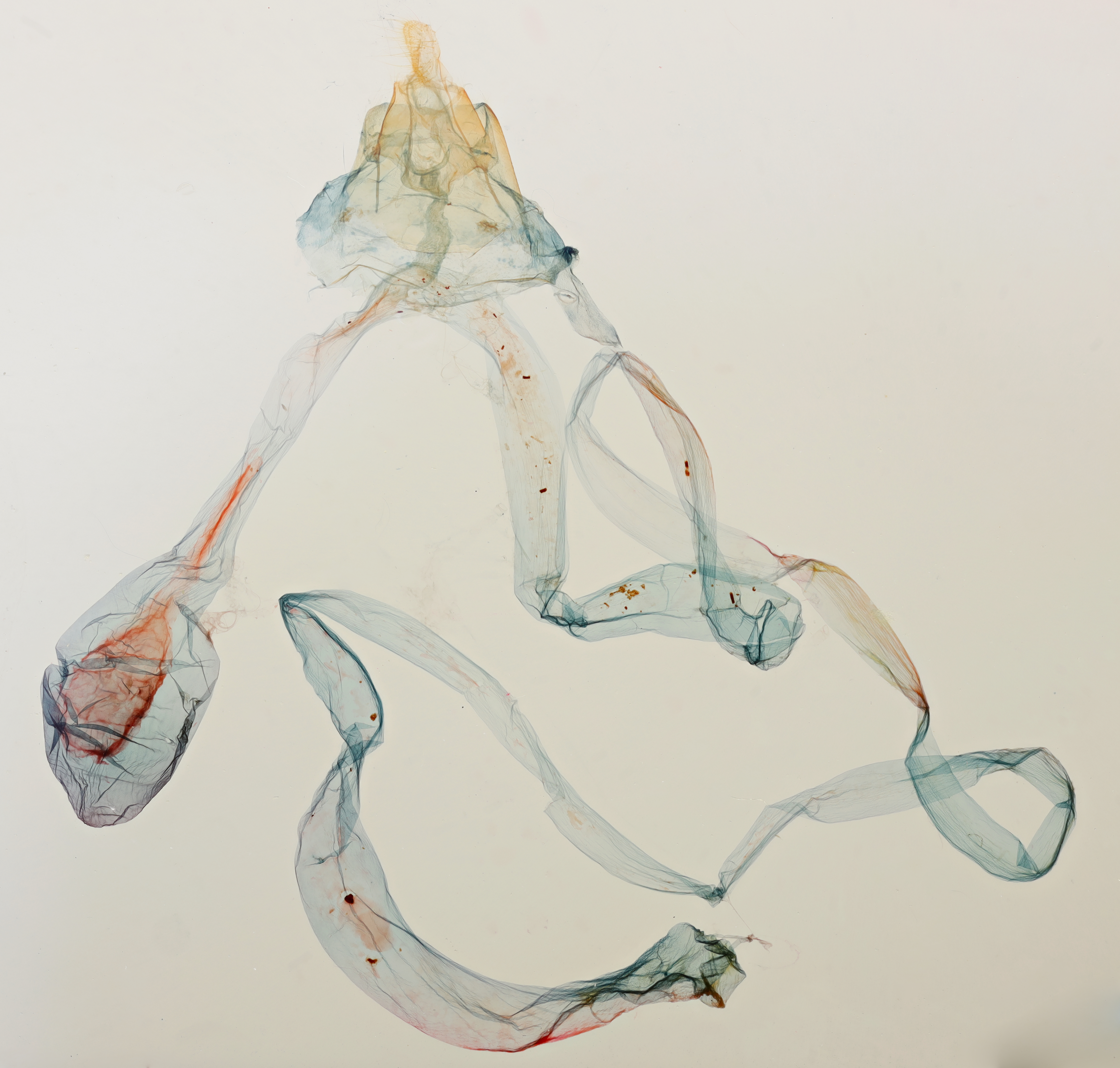
Adults of native Agrotis are highly variable in size, wing pattern, and color, but can usually be identified by the well-developed orbicular, reniform, and claviform spotclaviform spot:
an elongate spot or mark extending laterally from the antemedial line into the median area, toward and sometimes reaching the postmedial line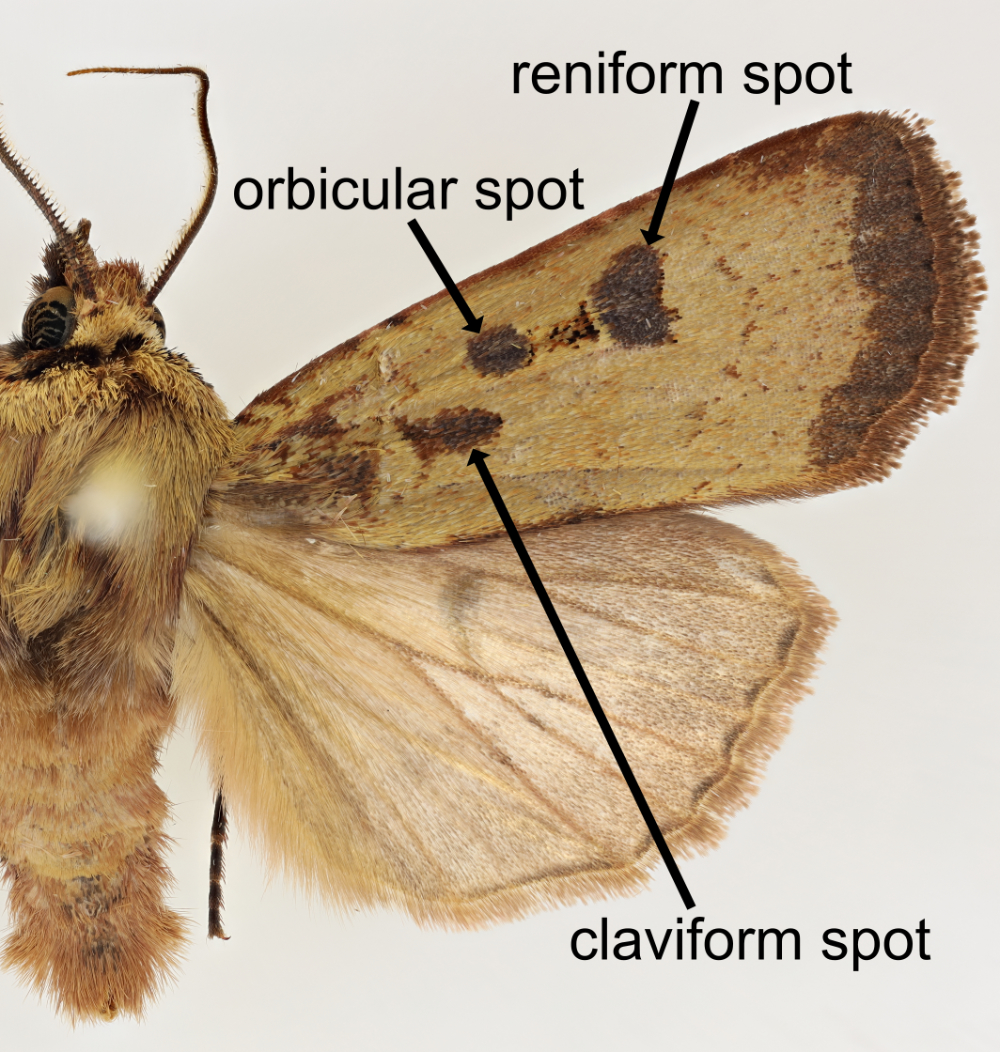 . In particular, the claviform spotclaviform spot:
an elongate spot or mark extending laterally from the antemedial line into the median area, toward and sometimes reaching the postmedial line is often distinctly elongate. Males of many species have well-developed lateral processes on each antennal segment, causing the antennaeantenna:
a thin, paired, elongate, segmented sensory organ on the head that serves primarily for olfaction (smell) to find food and mates, but also aids in navigation and balance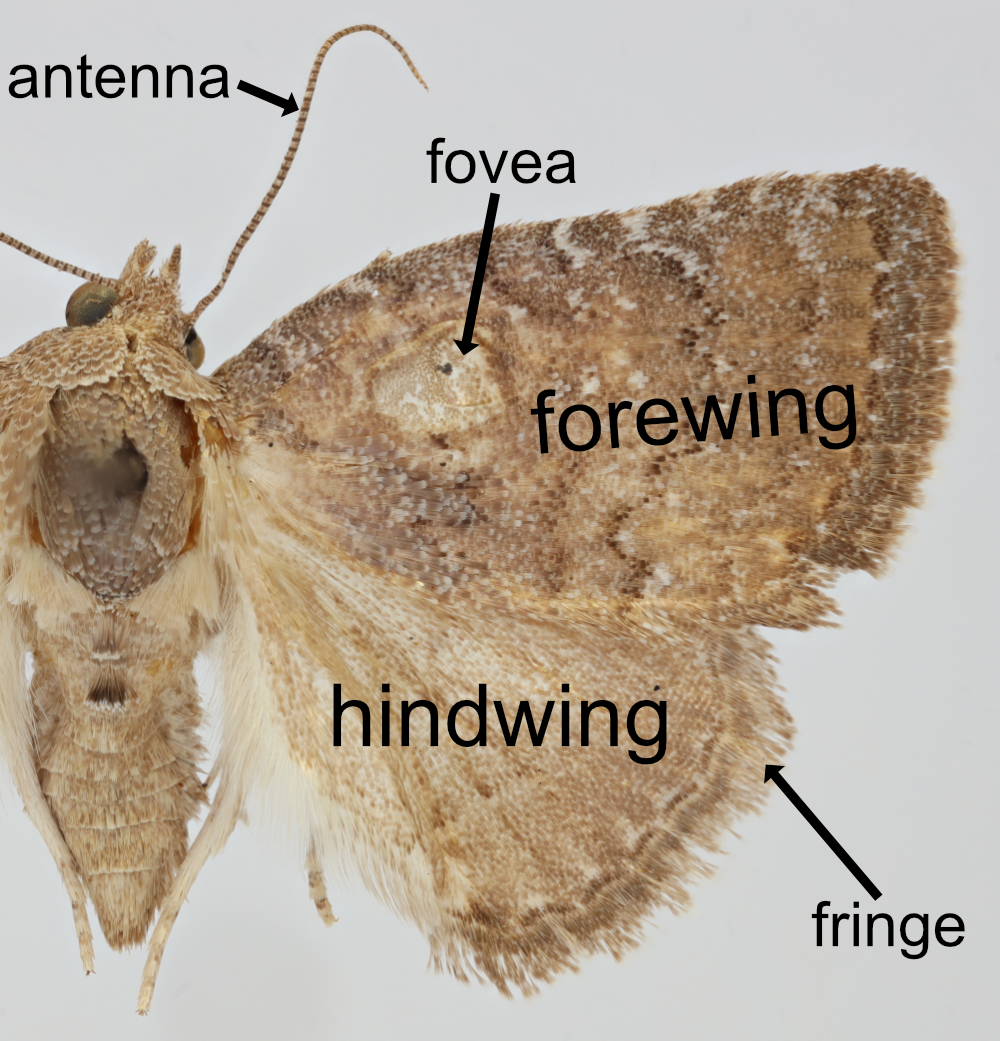 to appear bipectinatebipectinate:
referring to a structure with two opposite margins toothed like a feather, typically refers to the antenna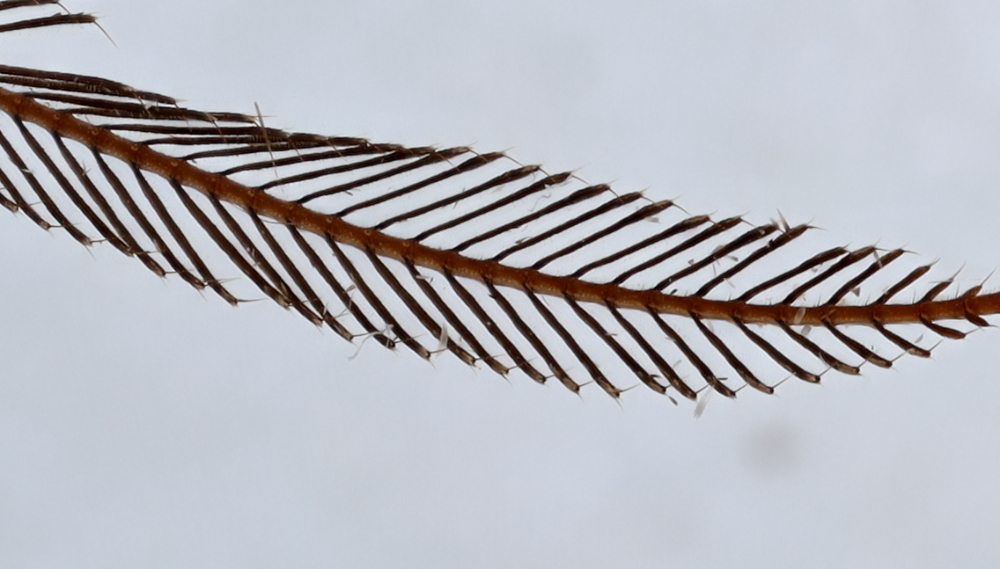 without magnification. The forewing lengthforewing length:
the distance of the forewing in a straight line from the base to the tip of the apex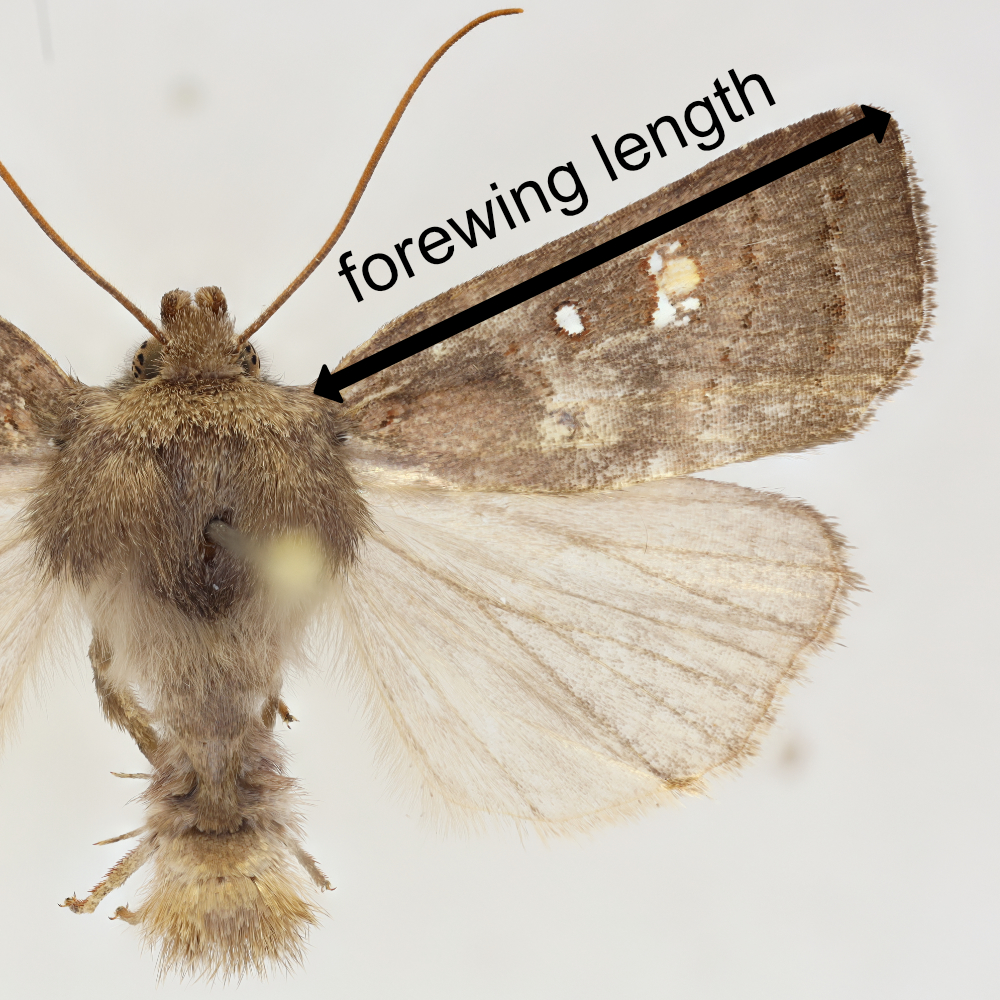 of adults ranges from 8–23 mm.
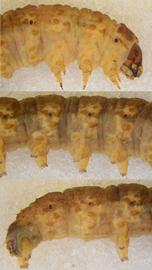
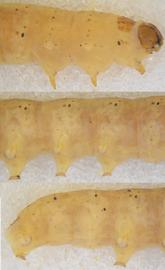
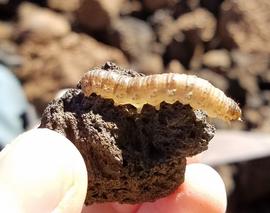
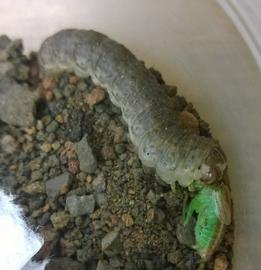
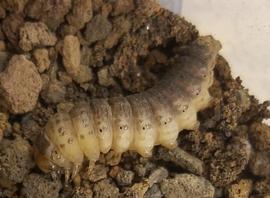
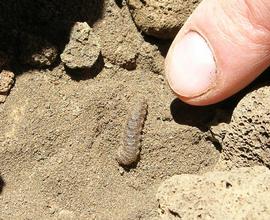
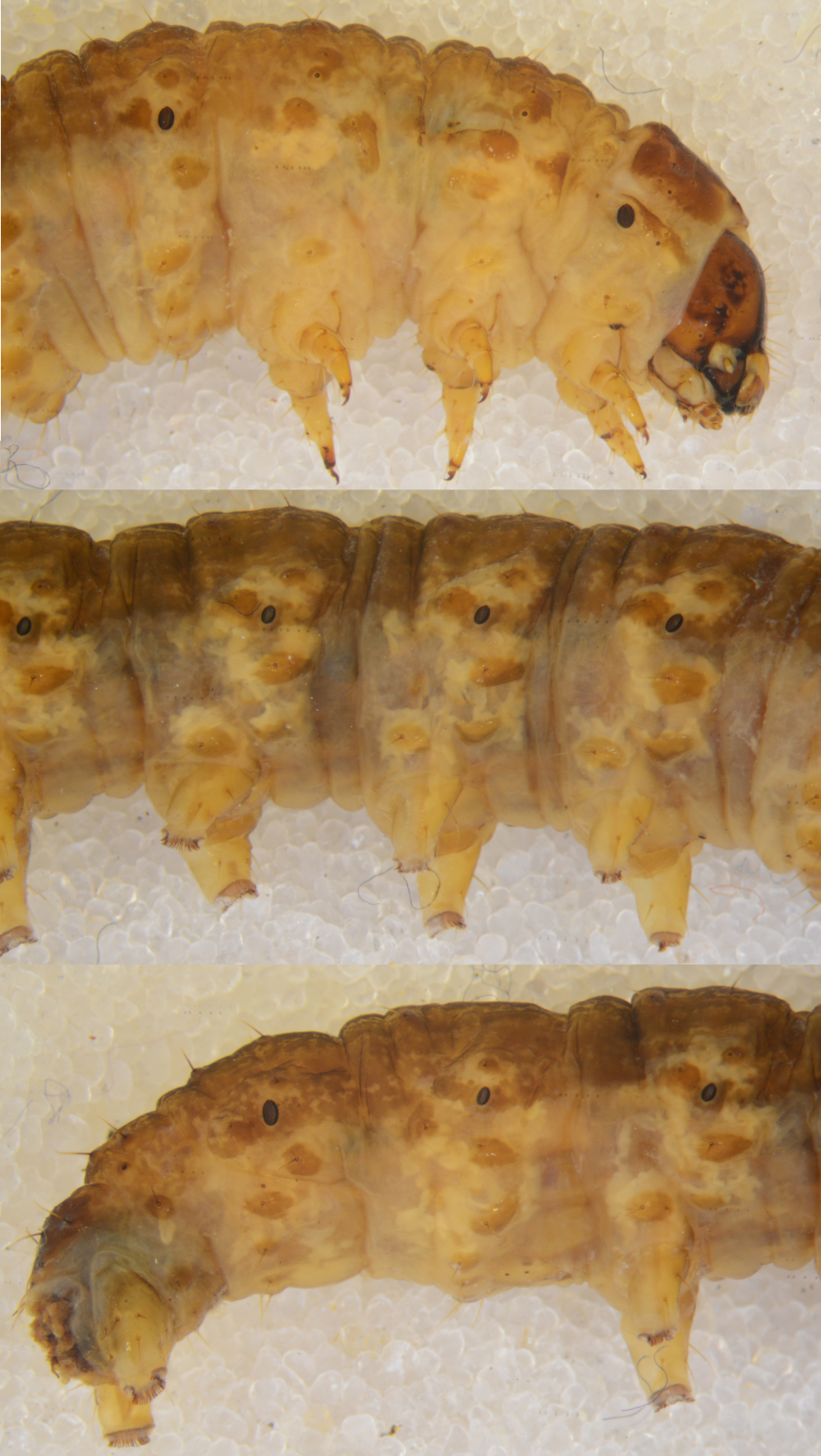
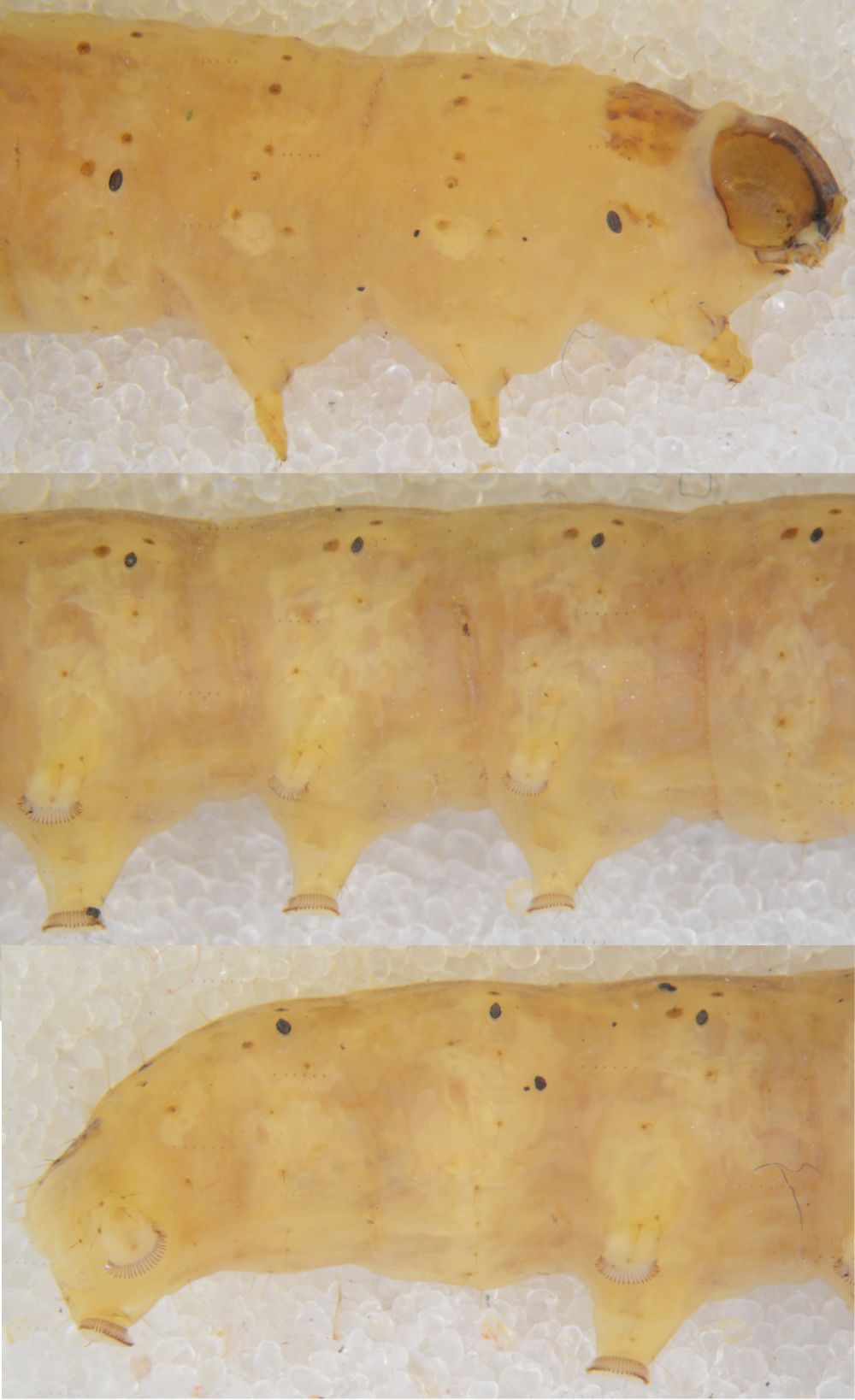
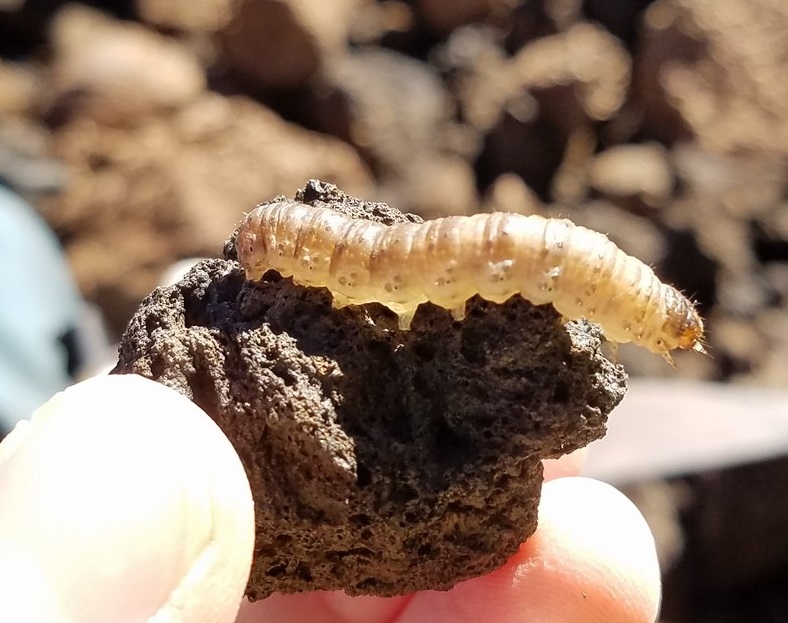
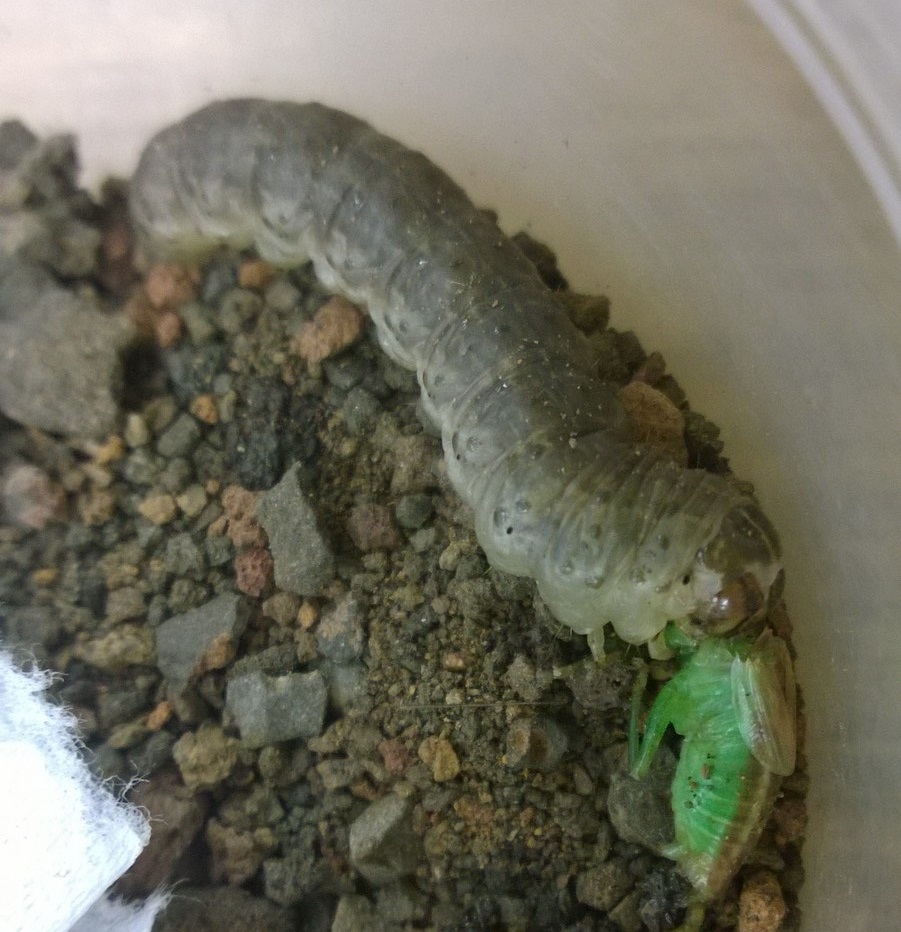
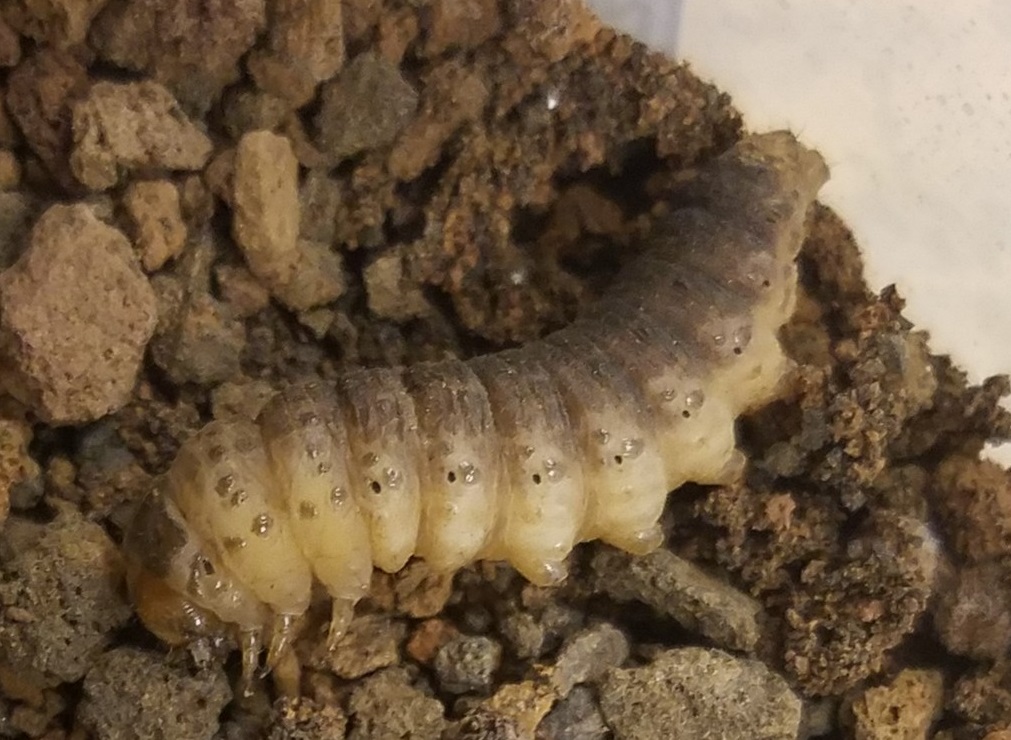
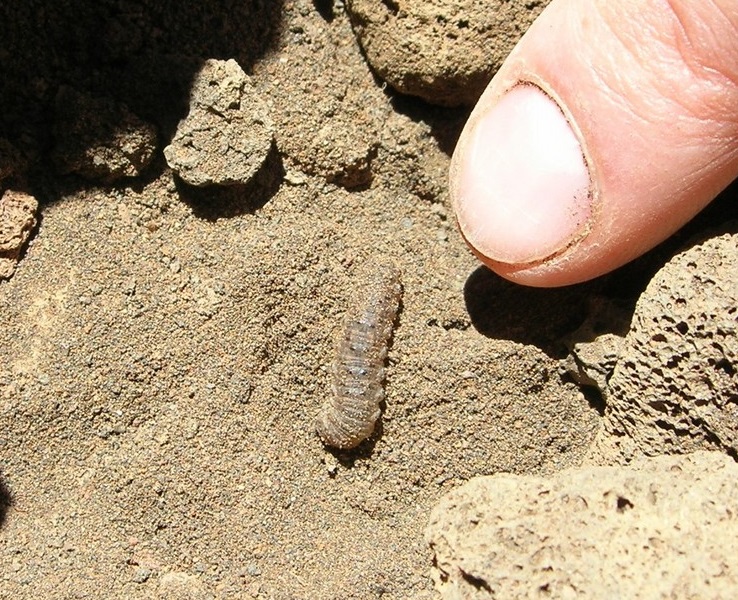
Larval descriptions are only available for three species: Agrotis crinigera, A. dislocata, and A. hephaestaea. The description by Swezey (1909)Swezey (1909):
Swezey OH. 1909. Army worms and cut worms on sugar cane in the Hawaiian Islands. Report of the Work of the Experiment Station of the Hawaiian Sugar Planters' Association, 7. Honolulu. 31 pp. of A. dislocata is the most complete: "The full-grown caterpillar is of a dirty brownish color, with a broad lighter brown stripe on the back; under side dirty whitish. Tubercles black, a row of them on each side of the dorsal lighter stripe, are larger and more conspicuous than the rest. Hairs short, black. Spiracles oval, black. Head rather small proportionately, brown with blackish spot above each eye cluster, and two black bars in front converging above. The dorsal part of first segment behind head very dark brown."
The descriptions by Swezey (1909)Swezey (1909):
Swezey OH. 1909. Army worms and cut worms on sugar cane in the Hawaiian Islands. Report of the Work of the Experiment Station of the Hawaiian Sugar Planters' Association, 7. Honolulu. 31 pp. of A. crinigera and Swezey (1920)Swezey (1920):
Swezey OH. 1920. Some new Hawaiian Lepidoptera. Proceedings of the Hawaiian Entomological Society. 4(2):376–386. of A. hephaestaea are similar. Medeiros et al. (2019)Medeiros et al. (2019):
Medeiros MJ, Kirkpatrick J, Elliott CH, Prestes A, Eiben J, Rubinoff D. 2019. Two new day-flying species of Agrotis Ochsenheimer (Lepidoptera: Noctuidae) from the alpine summit of the Maunakea Volcano. Zootaxa. 4545(2):277–285. described the larva of A. kuamauna.
Adults of Agrotis ipsilon can look superficially similar to some native Agrotis, but A. ipsilon has a distinctive dark streak below the reniform spotreniform spot:
a spot, often broad bean- or kidney-shaped, found at the distal end of the discal cell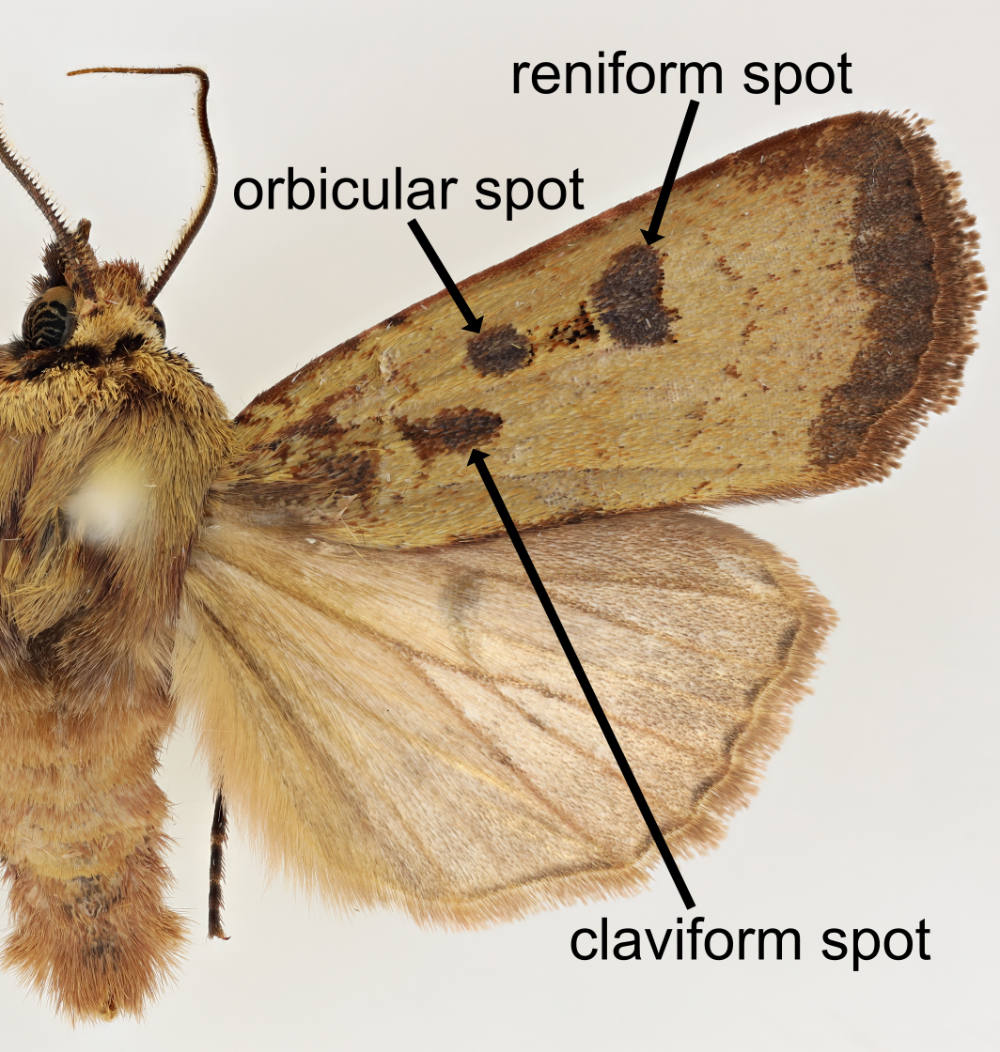 , which all of the native Agrotis lack.
Adults of Peridroma spp., including the non-native P. saucia can also appear superficially similar, but species of Peridroma typically have perfectly round orbicular spotsorbicular spot:
a round or oval spot located in the middle of the discal cell of the forewing, between the antemedial and median lines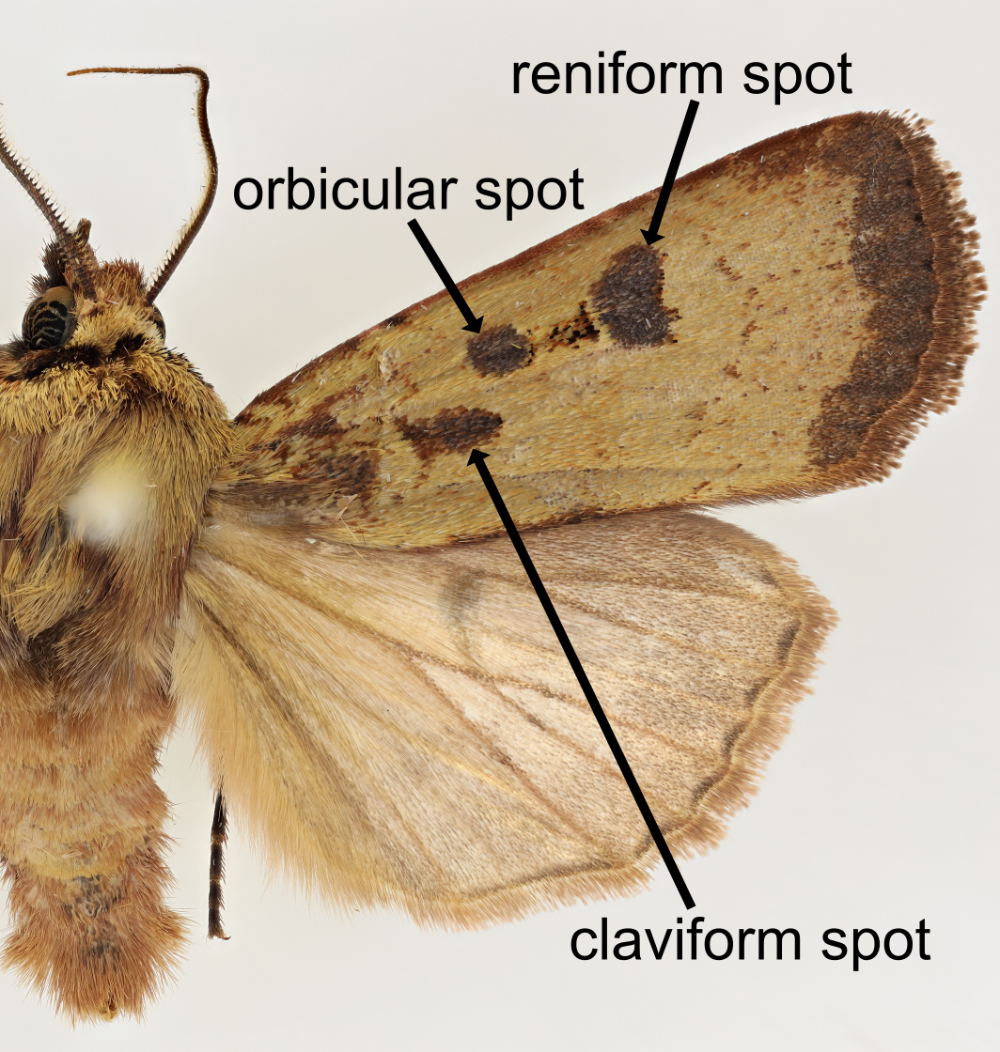 , whereas those of Agrotis are often slightly elliptical. Males of Peridroma never have laterally widened processes on the flagellomeres.
Species of Agrotis are known from nearly all of the Hawaiian Islands, including several of the Northwestern Hawaiian Islands. They are known to occur from sea level (A. crinigera) to the summit of Maunakea at nearly 14,000 feet (A. helela, A. kuamauna). Unfortunately, many of the coastal, formerly abundant species may now be extinct (Austin and Rubinoff 2024bAustin and Rubinoff 2024b:
Austin KA, Rubinoff D. 2024b. Patterns of extinction across Hawaiian Lepidoptera offer lessons from a diverse, neglected, and vulnerable endemic fauna. Biodiversity and Conservation. 34:917–930.). Extant species are largely restricted to native forests, although some (e.g., A. dislocata) can still be found in largely disturbed dryland forests.
Host plants for only a few of species of native Agrotis are known. Agrotis crinigera and A. dislocata have been reared from at least a dozen plants, mostly non-native, and are assumed to be broad generalists (Zimmerman 1958Zimmerman 1958:
Zimmerman EC. 1958. Insects of Hawaii, Volume 7. Macrolepidoptera. University of Hawaii Press, Honolulu. 542 pp.). Agrotis hephaestaea (as Agrotis wikstroemiae) has been reared from Wikstroemia Endl. (Swezey 1920Swezey 1920:
Swezey OH. 1920. Some new Hawaiian Lepidoptera. Proceedings of the Hawaiian Entomological Society. 4(2):376–386. ) but may be more polyphagous than currently known. Agrotis kerri is known to feed on Boerhavia tetrandra G.Forst. and Portulaca oleracea L. (Swezey 1920Swezey 1920:
Swezey OH. 1920. Some new Hawaiian Lepidoptera. Proceedings of the Hawaiian Entomological Society. 4(2):376–386. , Zimmerman 1958Zimmerman 1958:
Zimmerman EC. 1958. Insects of Hawaii, Volume 7. Macrolepidoptera. University of Hawaii Press, Honolulu. 542 pp.). Circumstantial evidence suggests that Agrotis epicremna feeds on Argyroxiphium spp. (Swezey and Degener 1928Swezey and Degener 1928:
Swezey OH, Degener O. 1928. Insect fauna of the silversword and greensword. Proceedings of the Hawaiian Entomological Society. 7(1):183–185.), although this has not been confirmed and additional host plants are likely. At least one species (A. kuamauna) is omnivorous, feeding on both plant matter and opportunistically on arthropods in the alpine stone desert of Maunakea (Medeiros et al. 2019Medeiros et al. 2019:
Medeiros MJ, Kirkpatrick J, Elliott CH, Prestes A, Eiben J, Rubinoff D. 2019. Two new day-flying species of Agrotis Ochsenheimer (Lepidoptera: Noctuidae) from the alpine summit of the Maunakea Volcano. Zootaxa. 4545(2):277–285.).
Swezey (1909)Swezey (1909):
Swezey OH. 1909. Army worms and cut worms on sugar cane in the Hawaiian Islands. Report of the Work of the Experiment Station of the Hawaiian Sugar Planters' Association, 7. Honolulu. 31 pp. described the life history of A. dislocata and A. crinigera. For A. dislocata, "the eggs are laid at the base of plants, or even scattered on the soil, sometimes singly, sometimes two or three adhering together, and sometimes as many as a dozen in a bunch together or even a hundred or more in an irregular one-layered mass....They hatch in a week or ten days. The caterpillars molt five times at intervals of four to six days, attaining their full-growth (36-40 mm.) in three to five weeks (sometimes much longer than this in hot, dry seasons)....The full-grown caterpillar forms an earthen cell in the ground a few inches below the surface. After four to six days it transforms to the pupa which is similar in form to the pupa of [Mythimna unipuncta], about 17 mm long, and of a pale yellowish brown color. The moth appears in 15 to 20 days, which makes a period of about two months from the time eggs were laid."
Swezey (1920)Swezey (1920):
Swezey OH. 1920. Some new Hawaiian Lepidoptera. Proceedings of the Hawaiian Entomological Society. 4(2):376–386. described the life history of A. hephastaea in detail.
Adults of A. helela and A. microreas are diurnal (Perkins 1913Perkins 1913:
Perkins RCL. 1913. Introduction, being a review of the land-fauna of Hawaii. In: Sharp D, editor. Fauna Hawaiiensis. Cambridge University Press, Cambridge. p 15–238., Medeiros et al. 2019Medeiros et al. 2019:
Medeiros MJ, Kirkpatrick J, Elliott CH, Prestes A, Eiben J, Rubinoff D. 2019. Two new day-flying species of Agrotis Ochsenheimer (Lepidoptera: Noctuidae) from the alpine summit of the Maunakea Volcano. Zootaxa. 4545(2):277–285.). Agrotis aulacias may also be diurnal (UHIM collectionUHIM collection:
UHIM collection. Based on identified specimens in the collection of the University of Hawaii Insect Museum, Honolulu, HI).
Author: Kyhl A. Austin
Content last updated May 2026
idtools.org