NATIVE
Aumakua omaomao (Hayes and Sattler 1980Hayes and Sattler 1980:
Hayes AH, Sattler K. 1980. A remarkable new genus and species of Noctuidae (Lepidoptera) from the Hawaiian Islands. Systematic Entomology. 5(3):273–280.)
Higher taxonomy: Noctuidae: Cuculliinae
Note: the taxonomic placement of Aumakua within Noctuidae is unclear. Hayes and Sattler (1980)Hayes and Sattler (1980):
Hayes AH, Sattler K. 1980. A remarkable new genus and species of Noctuidae (Lepidoptera) from the Hawaiian Islands. Systematic Entomology. 5(3):273–280. placed it in Cuculliinae, but the higher taxonomy of Noctuidae has changed significantly in recent decades, and Aumakua has not yet been included in modern phylogenetic analyses using DNA data.
Aumakua omaomao is a rare species restricted to native Hawaiian wet forests on Kauaʻi, Molokaʻi, and Maui. It was not discovered until 1957 (Hayes and Sattler 1980Hayes and Sattler 1980:
Hayes AH, Sattler K. 1980. A remarkable new genus and species of Noctuidae (Lepidoptera) from the Hawaiian Islands. Systematic Entomology. 5(3):273–280.). It is highly unlikely to be encountered in agricultural settings or at ports in Hawaiʻi.
The following account is summarized from Hayes and Sattler (1980)Hayes and Sattler (1980):
Hayes AH, Sattler K. 1980. A remarkable new genus and species of Noctuidae (Lepidoptera) from the Hawaiian Islands. Systematic Entomology. 5(3):273–280.:
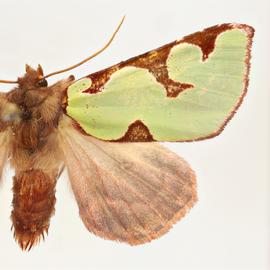
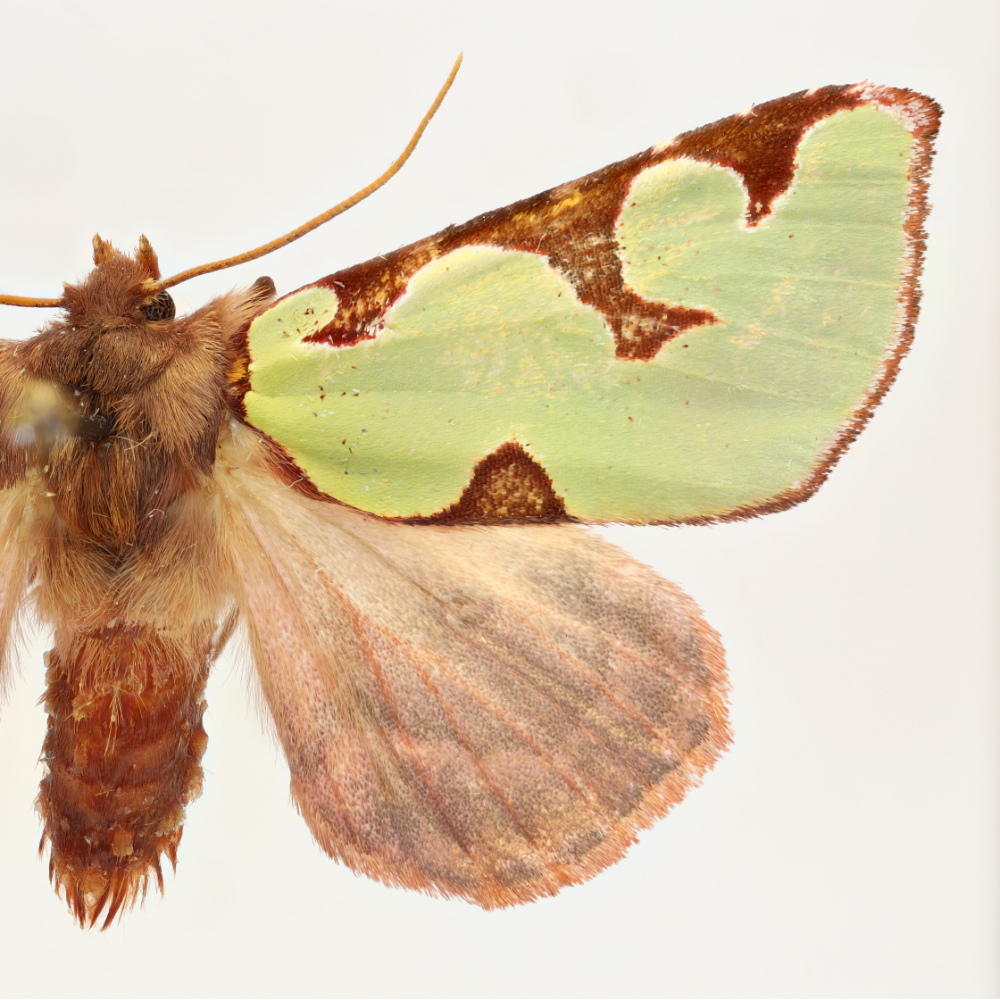
The head is reddish brown, the labial palpus is reddish orange, and the antennaantenna:
a thin, paired, elongate, segmented sensory organ on the head that serves primarily for olfaction (smell) to find food and mates, but also aids in navigation and balance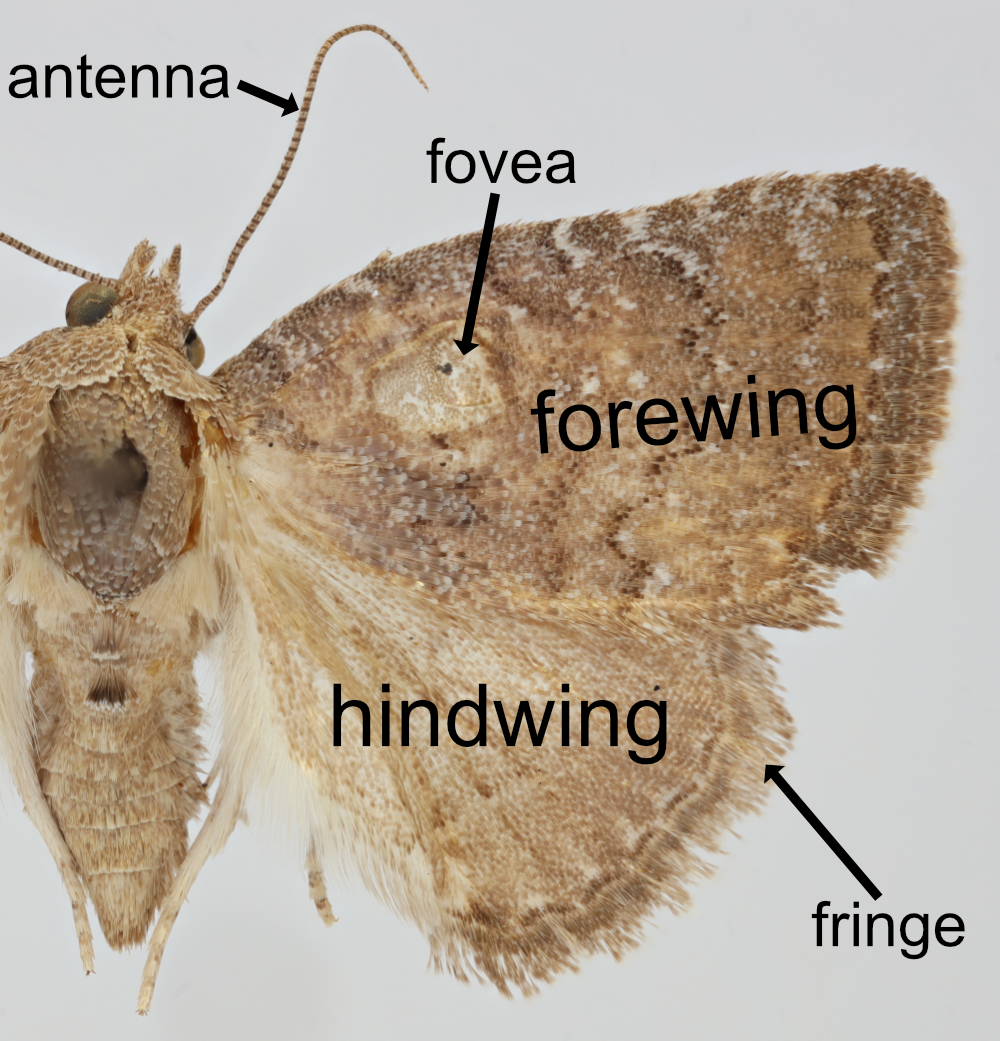 is yellowish orange, with dark grey scales dorsally. The thoraxthorax:
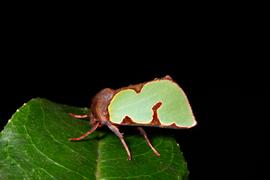
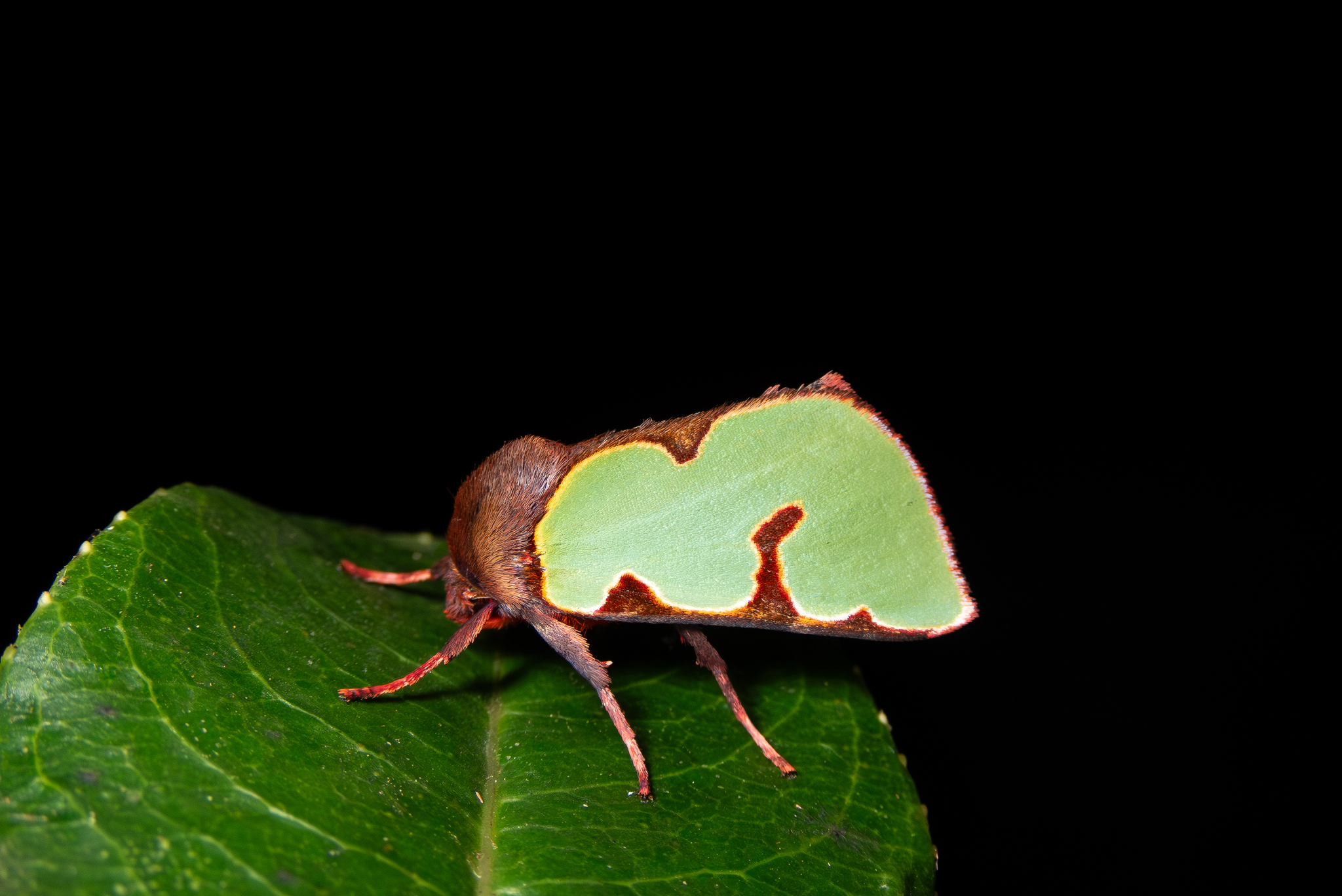
the second, or middle, body segment of an insect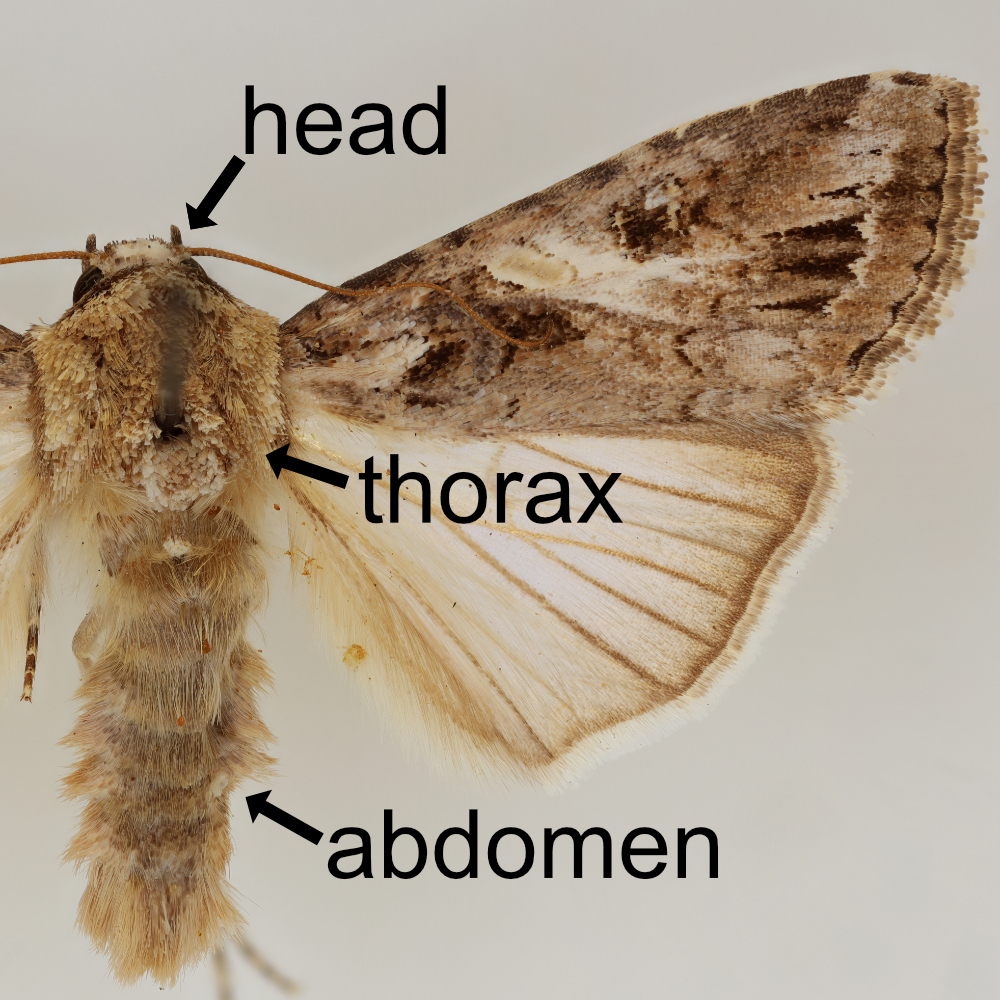 is brown brown dorsally and reddish brown to reddish orange ventrally. The legs are reddish brown, often with bright orange hairs. The dorsal surface of the forewingforewing:
the front wing of an insect; the wing attached to the second segment of the thorax (the mesothorax)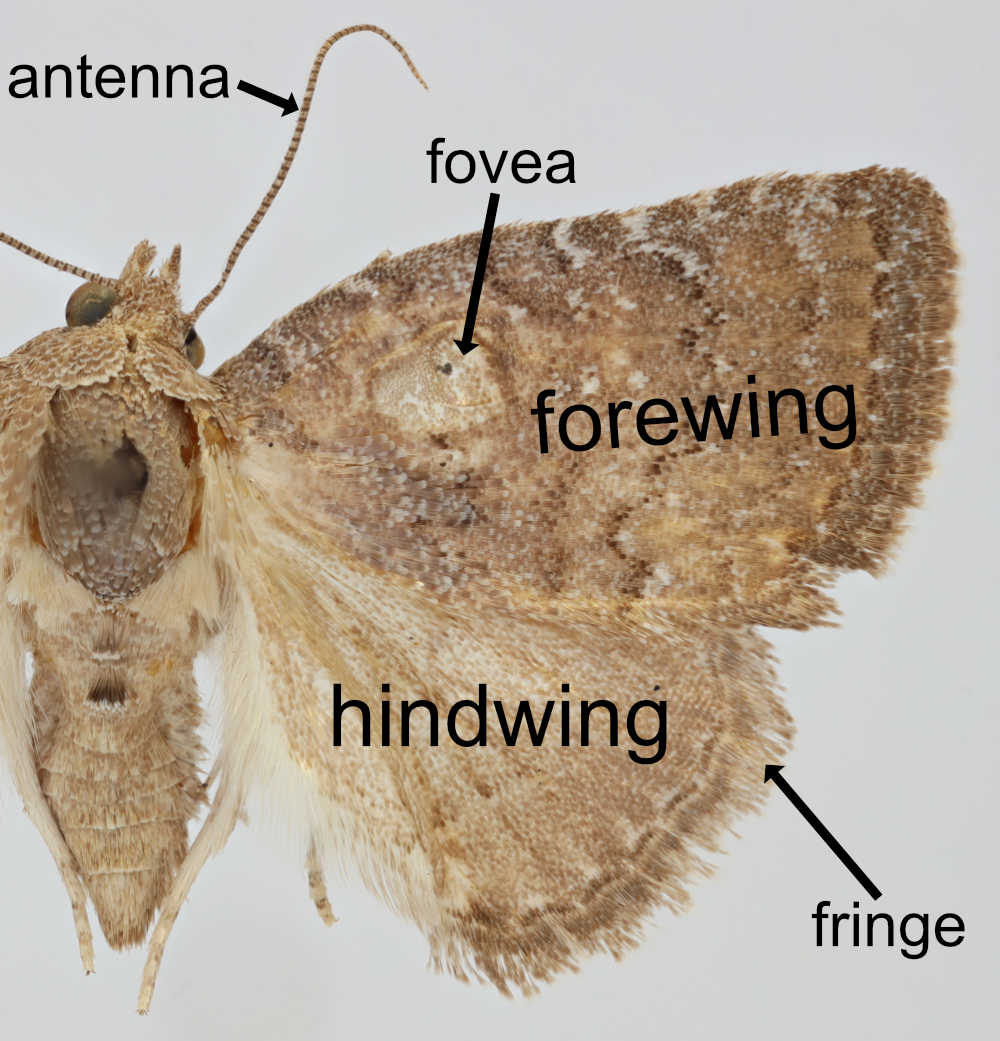 (forewing lengthforewing length:
the distance of the forewing in a straight line from the base to the tip of the apex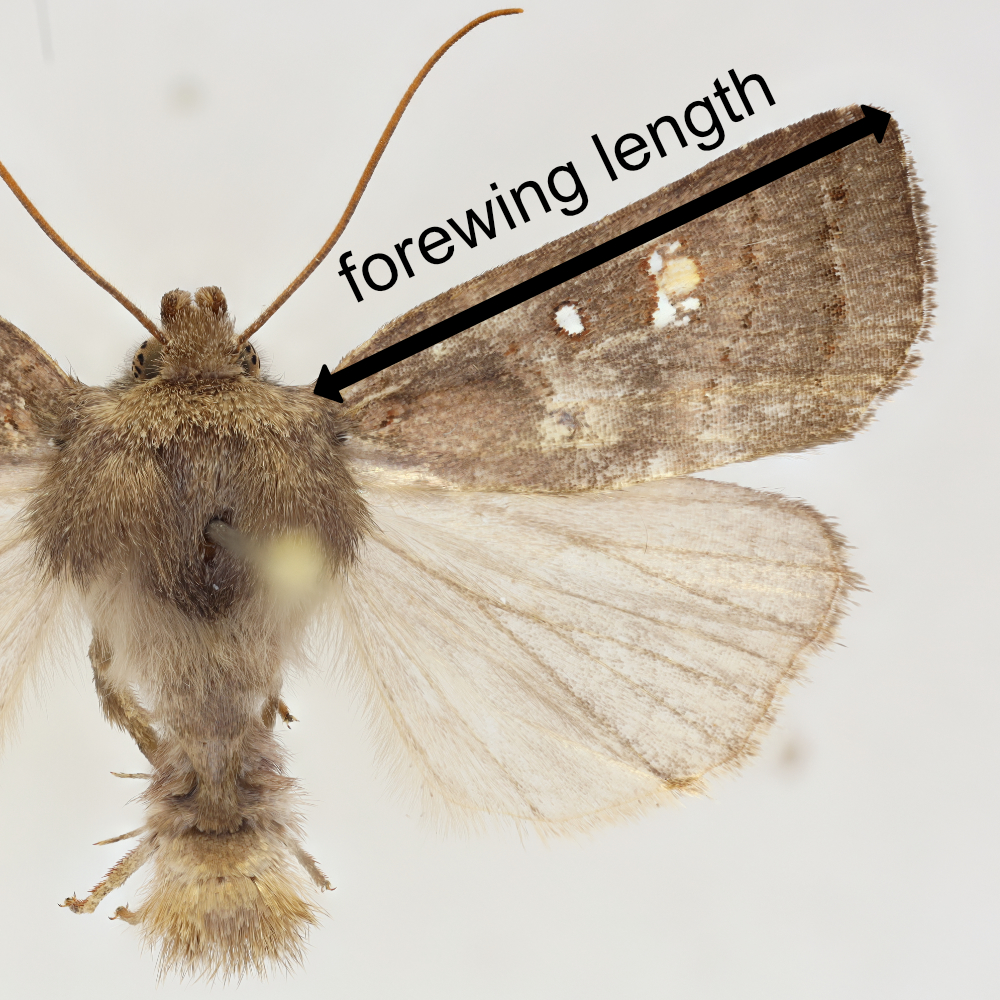 15–21 mm) is mint green or lime green, with chocolate brown markings as follows: base brown, costal margin brown with three prominent extensions. The dorsal surface of the hindwinghindwing:
the back wing of an insect; the wing attached to the third segment of the thorax (the metathorax)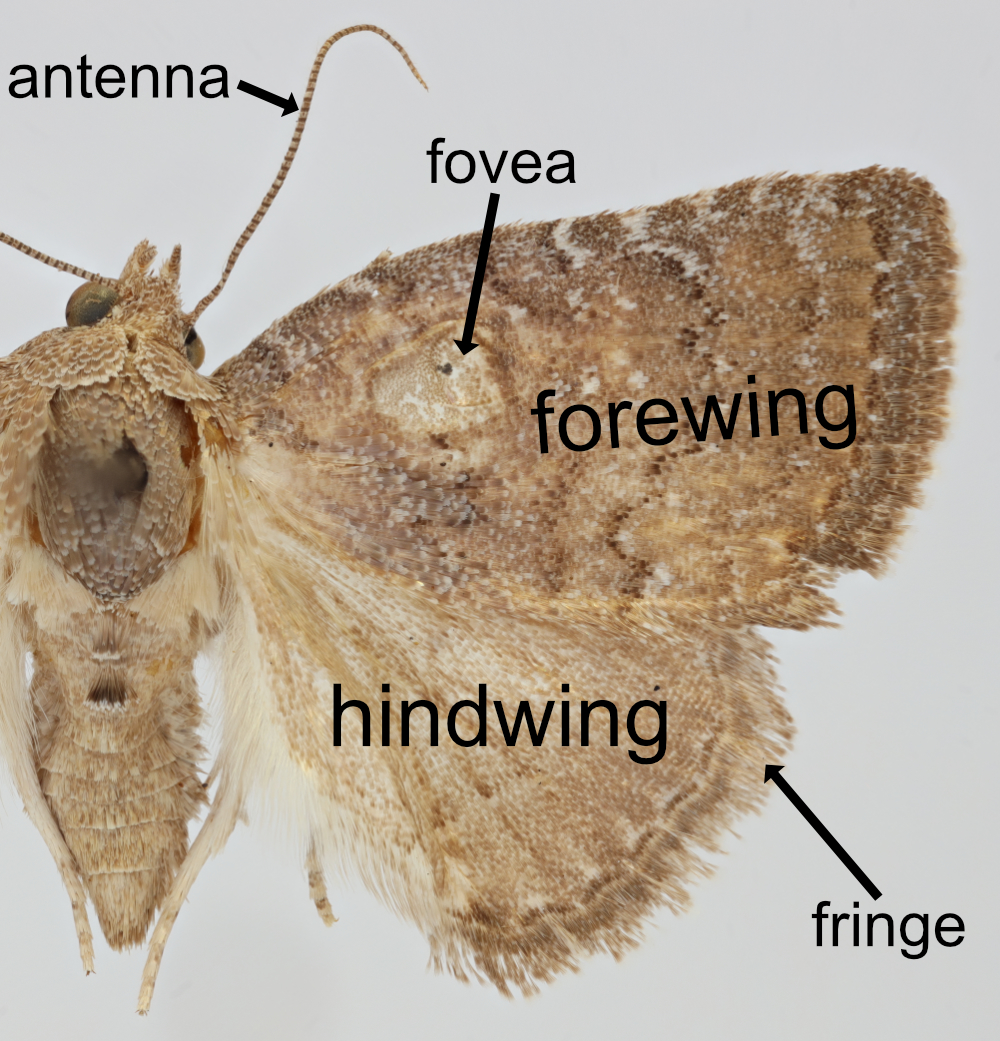 is reddish brown. The ventralventral:
refers to the bottom or underside of an organism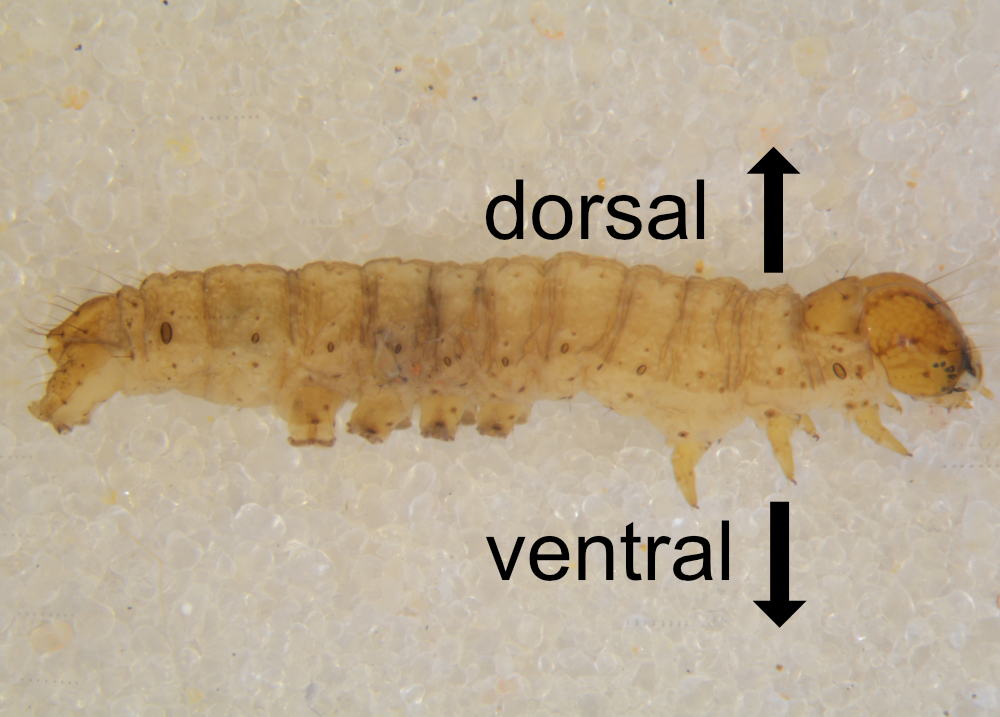 surface of the forewingforewing:
the front wing of an insect; the wing attached to the second segment of the thorax (the mesothorax) is red and brown. The ventralventral:
refers to the bottom or underside of an organism surface of the hindwinghindwing:
the back wing of an insect; the wing attached to the third segment of the thorax (the metathorax) is purple-red. The ventralventral:
refers to the bottom or underside of an organism surface of the abdomenabdomen:
the third and posterior-most body section of an insect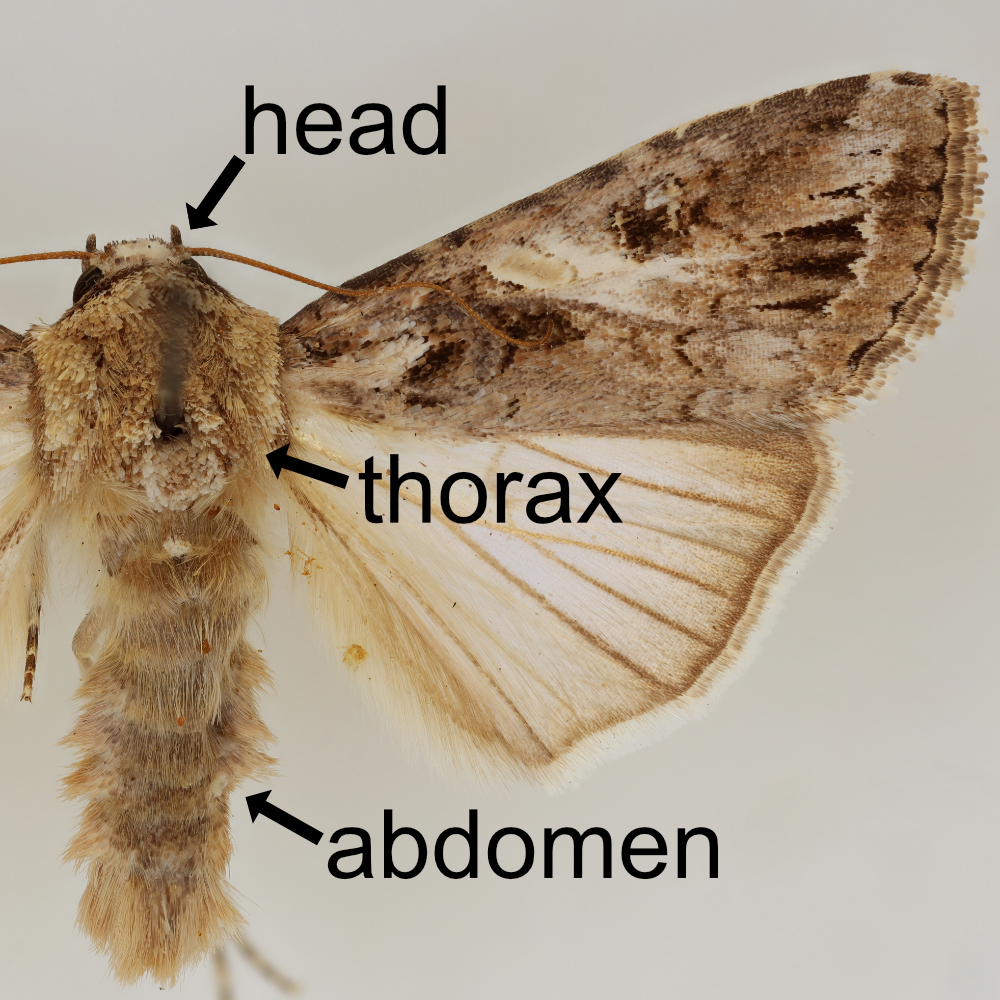 is bright red-orange.
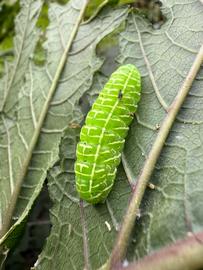
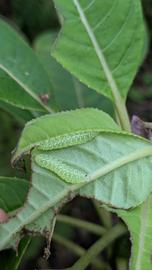
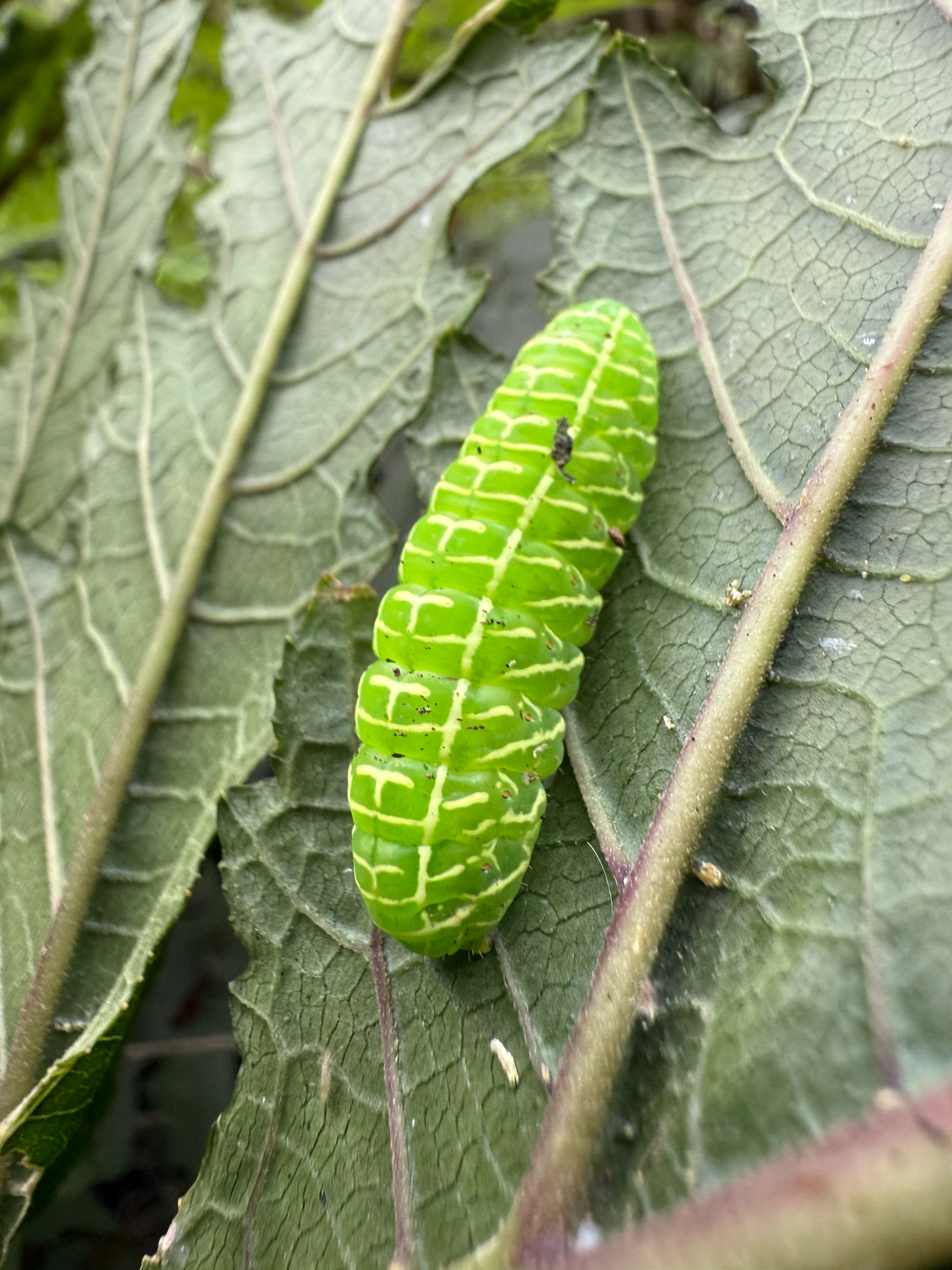
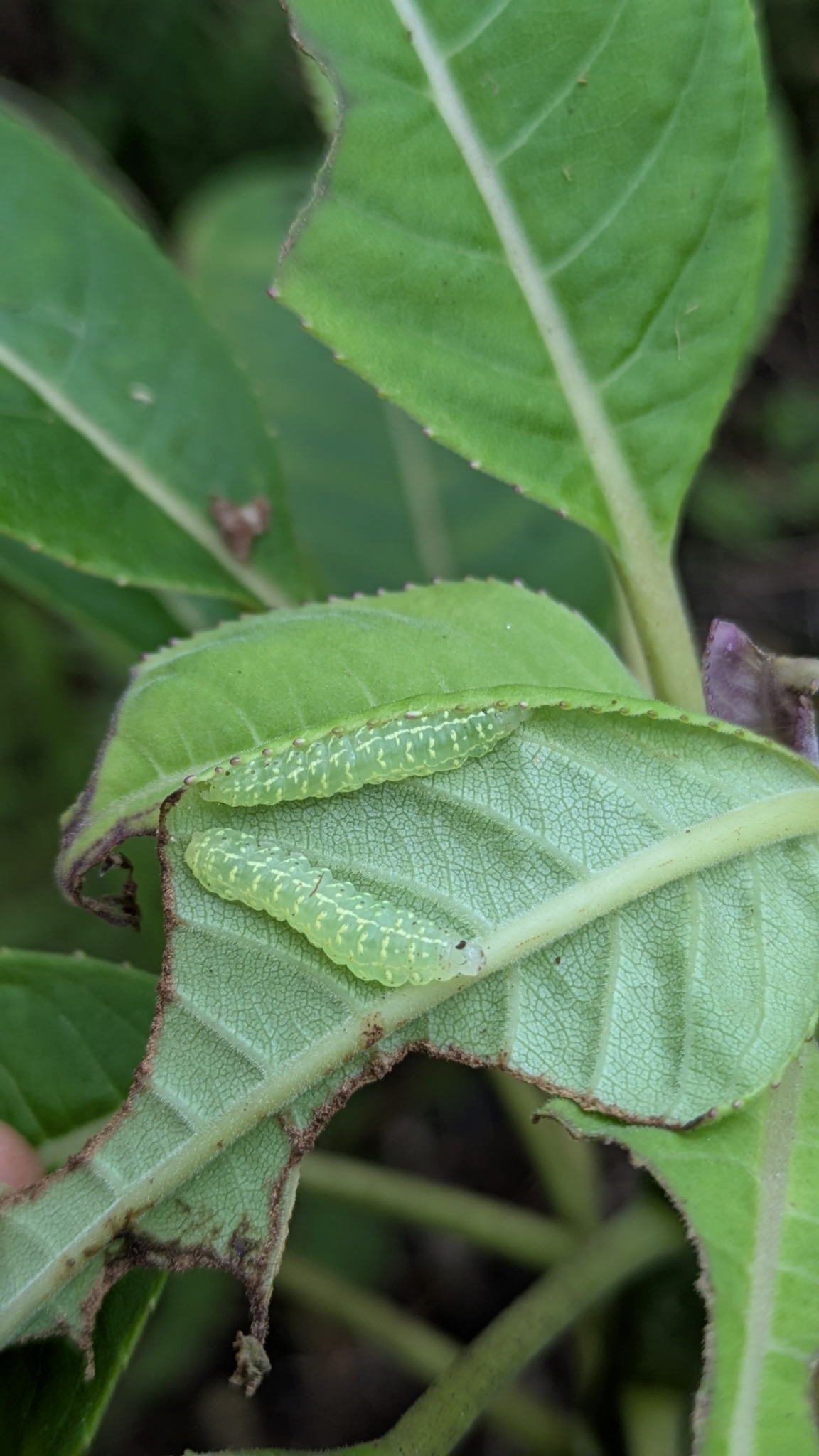
Larvae have not been formally described, but the few available photographs of Aumakua omaomao allow a brief description.
In mature larvae, the head is pale yellow-green and unmarked. The rest of the body is green, with a pair of cream colored subdorsal stripes running down the body. The subdorsal stripes are connected over the dorsum by transverse stripes (sometimes incomplete) towards the anterioranterior:
the 'head' end of an organism, as opposed to the posterior or 'tail' end of an organism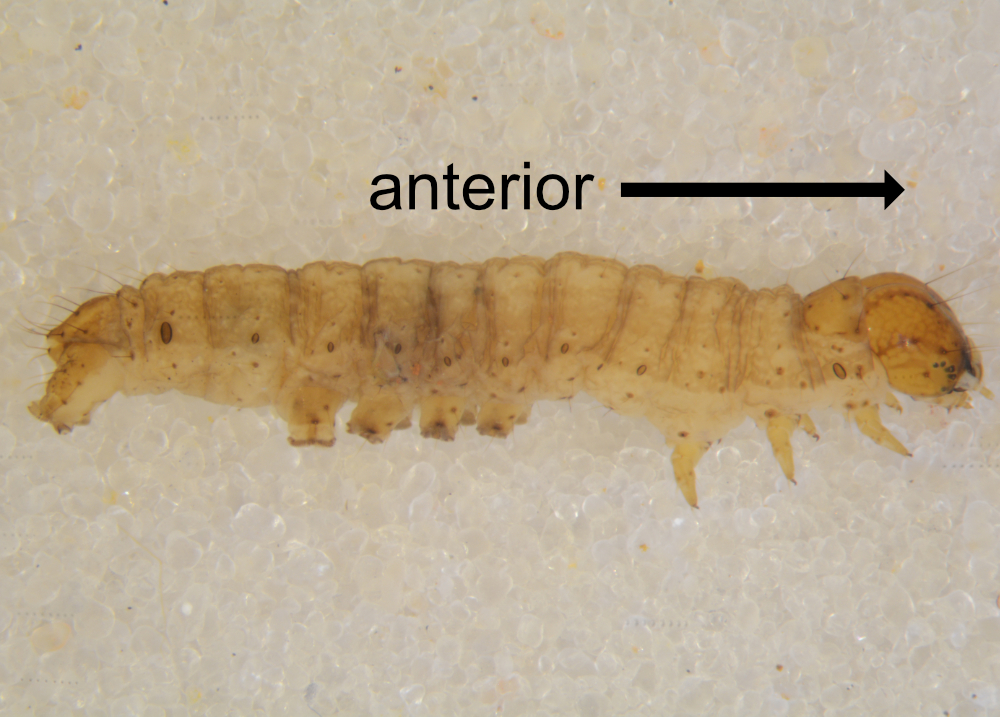 end of each abdominal segment, with a "T" marking on the dorsum on A8 through A1. Lateral areas of each segment with variable length and number of angled lines. Setae appear to be surrounded by large, elliptical cream colored spots, connected dorsally, separate laterally. Younger larvae are entirely green without cream colored spots but with small black spines towards the head.
Aumakua omaomao is unlikely to be confused with any other noctuid in Hawaiʻi. Its distinctive green coloration is highly unique.
Aumakua omaomao is known from Kauaʻi, Molokaʻi, and Maui, where it is restricted to high elevation native wet forests where its host plants grow.
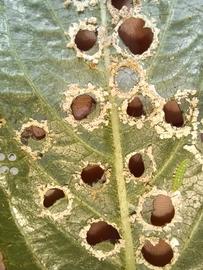
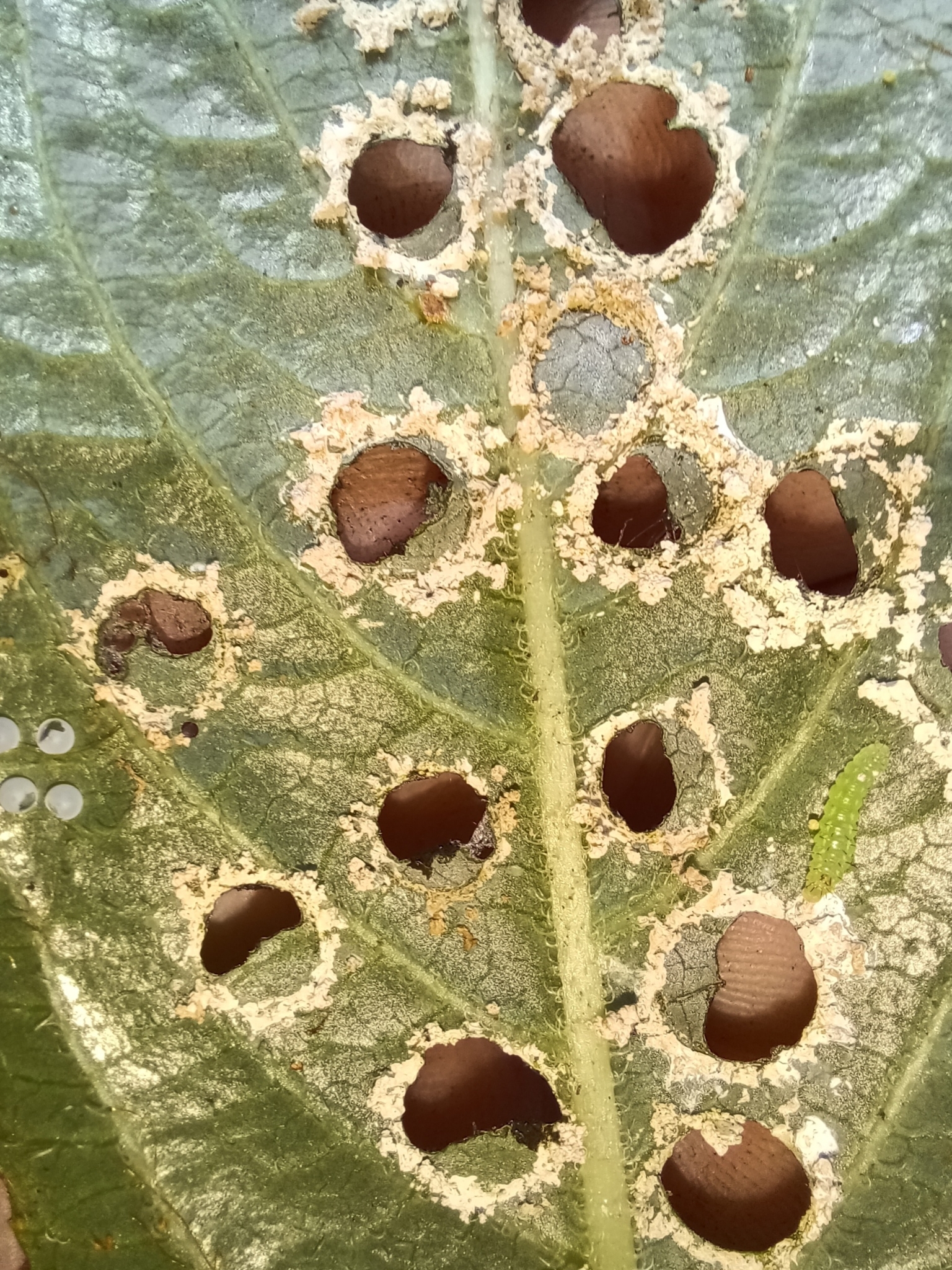
Larvae feed on the leaves of native Campanulaceae, including Clermontia spp. and Cyanea spp. They cut distinctive "feeding holes" in the leaves, allowing the toxic latex to drain out before feeding. These small, perfectly circular holes allow for easy recognition for the presence of Aumakua omaomao, although the larvae are not always visible (they may hide in the surrounding leaf litter during the day).
Author: Kyhl A. Austin
Content last updated May 2026
idtools.org