QUESTIONABLY NATIVE
Acrapex Hampson, 1894
Higher taxonomy: Noctuidae: Noctuinae: Apameini
Species known to occur in Hawaiʻi:
QUESTIONABLY NATIVE
Acrapex exanimis (Meyrick, 1899Meyrick, 1899:
Meyrick E. 1899. Macrolepidoptera. In: Sharp D, Fauna Hawaiiensis. Cambridge University Press, Cambridge. p 123–275. ); Acrapex mischus Fletcher, 1959Fletcher, 1959:
Fletcher DS. 1959. A new species of Acrapex (Lepidoptera: Noctuidae) from Hawaii. 17(1):67–69.
Acrapex is a widely distributed genus represented by two questionably native species in Hawaiʻi. However, the Hawaiian species may be misplaced in Acrapex and may actually belong to Sesamia Guenée (Bruno Le Ru, pers. comm., 2023). Neither species had been seen in over 60 years until a single adult was found on the North Shore of Oʻahu in 2026. They might only occur in dry, heavily disturbed non-native forests, which could explain why they are so rarely seen. Because of this distribution, coupled with their apparent rarity and the late description of A. mischus, it is possible that neither species is native to Hawaiʻi. Instead, they may have arrived in the late 19th century in shipments of pasture grasses or other products to Hawaiʻi.
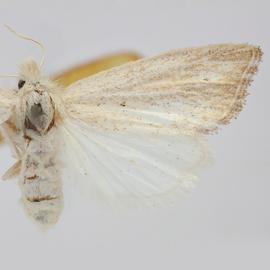
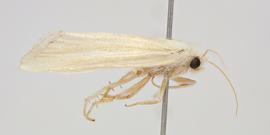
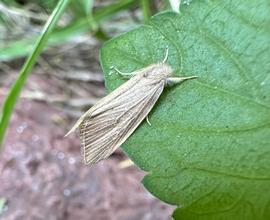
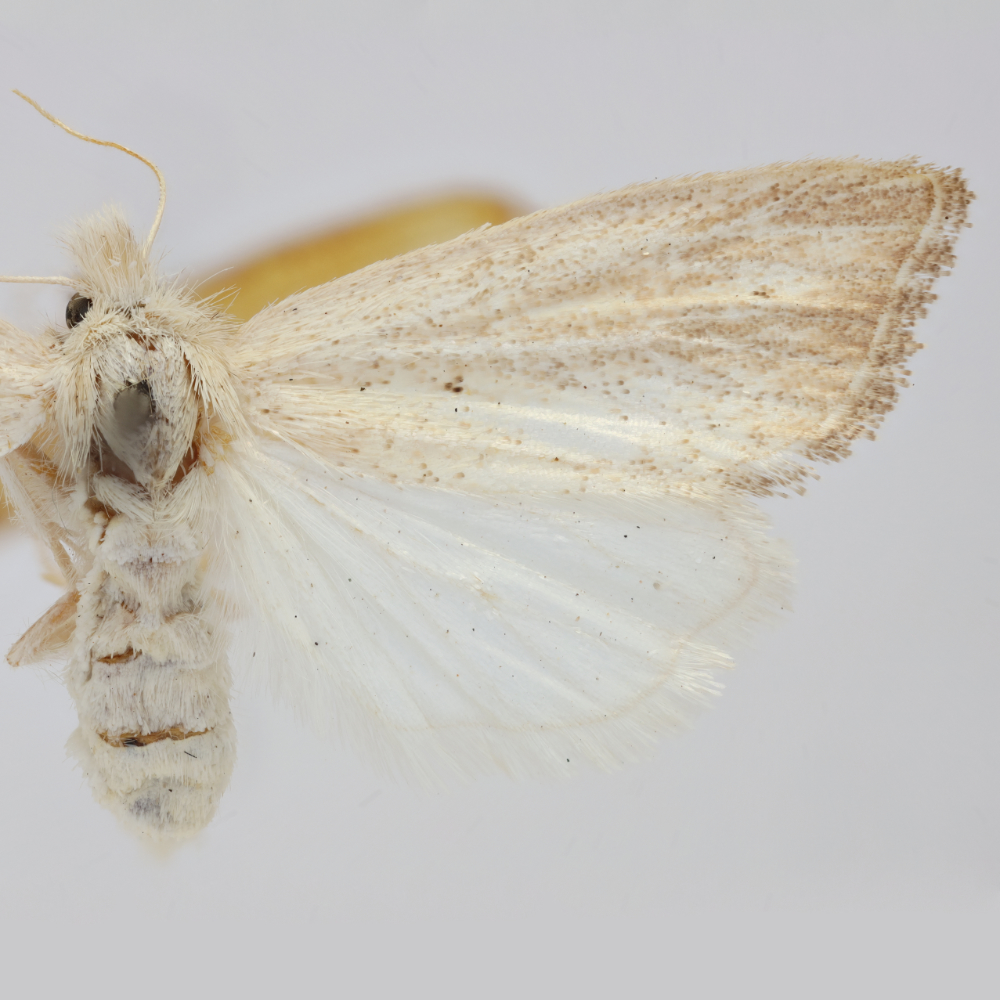
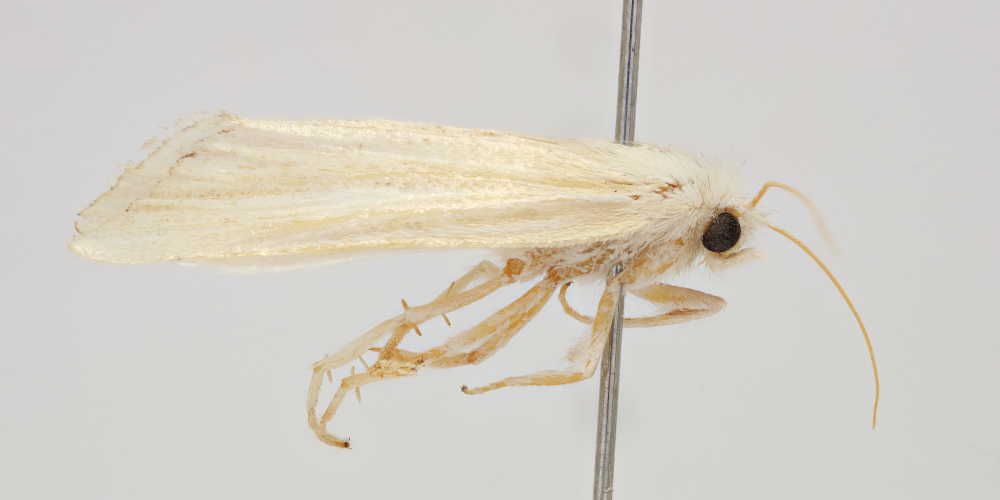
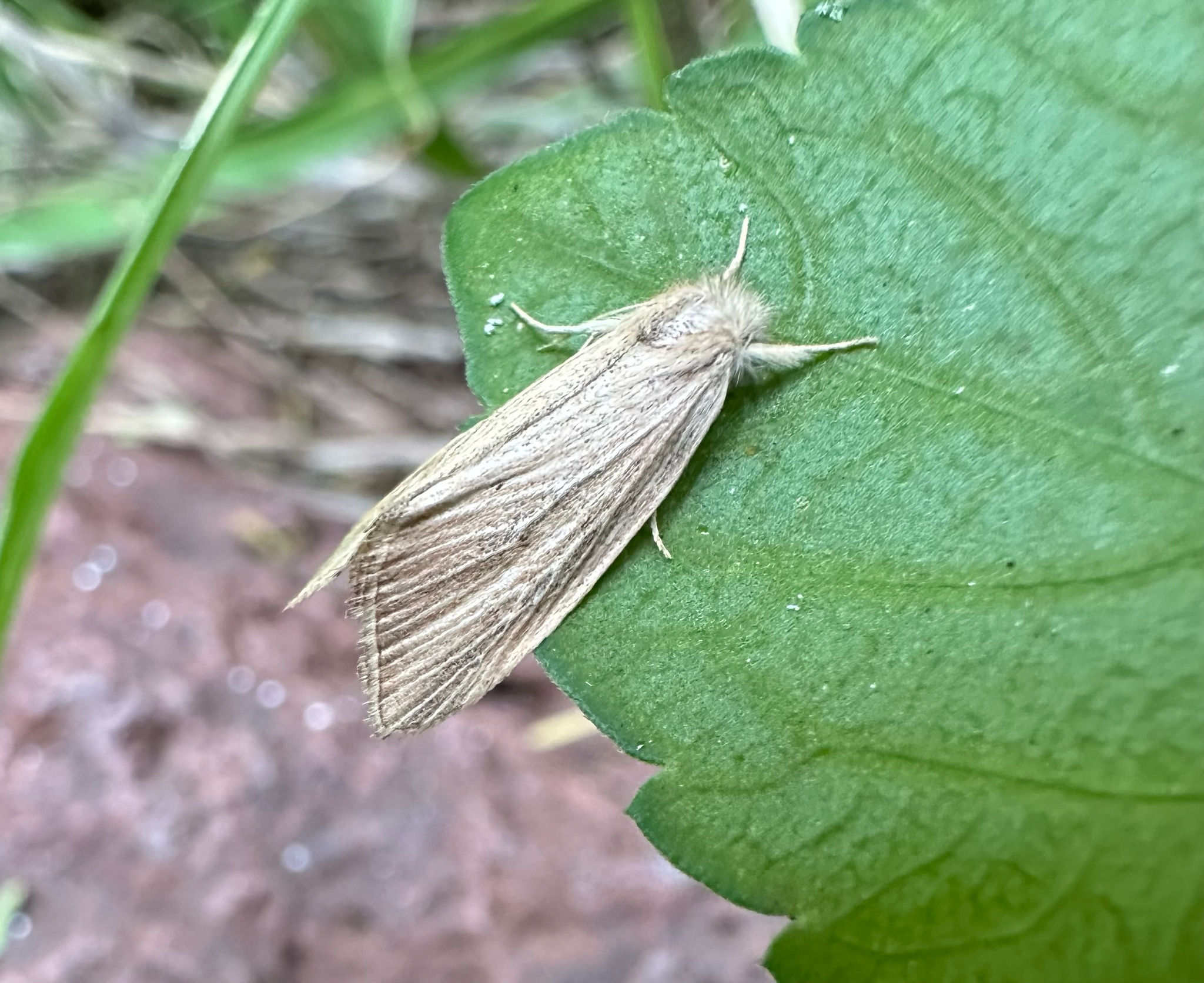
Adults of Hawaiian Acrapex are small (forewing lengthforewing length:
the distance of the forewing in a straight line from the base to the tip of the apex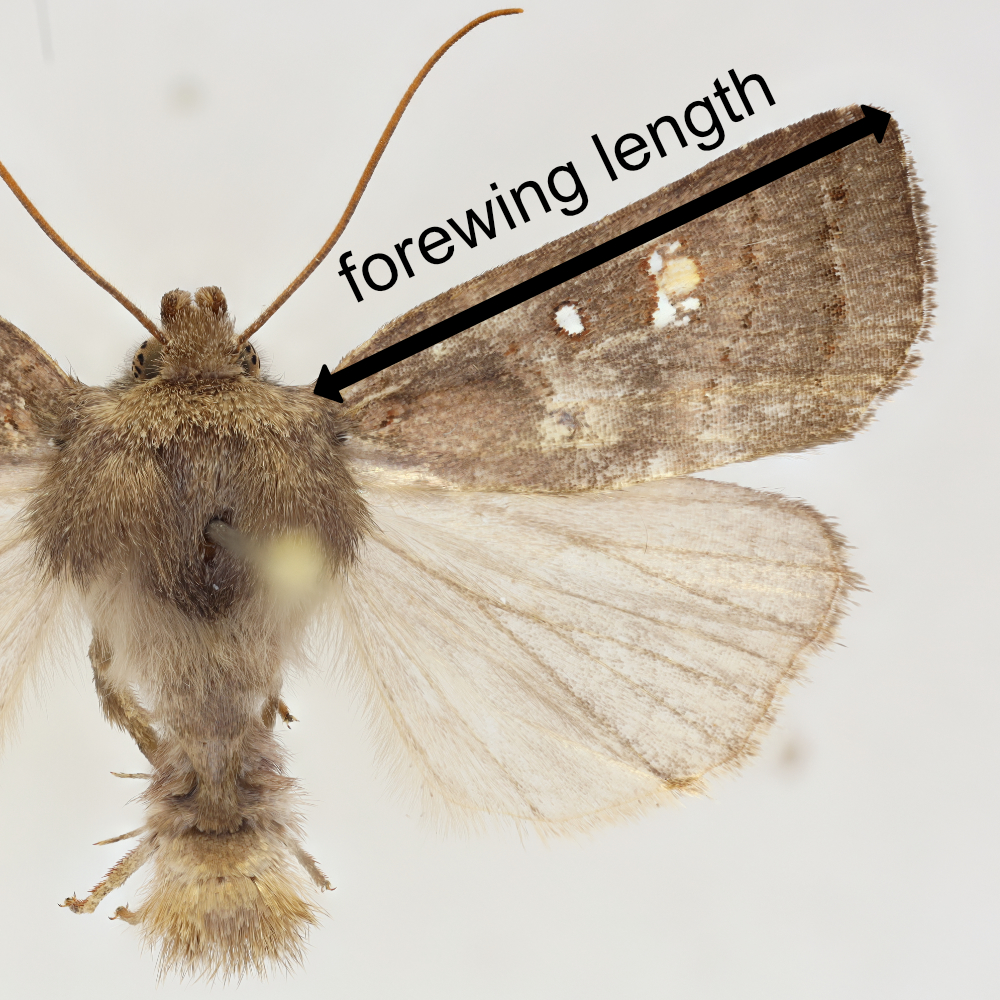 8–15 mm), pale-winged moths with little or no patterning on the forewingsforewing:
the front wing of an insect; the wing attached to the second segment of the thorax (the mesothorax)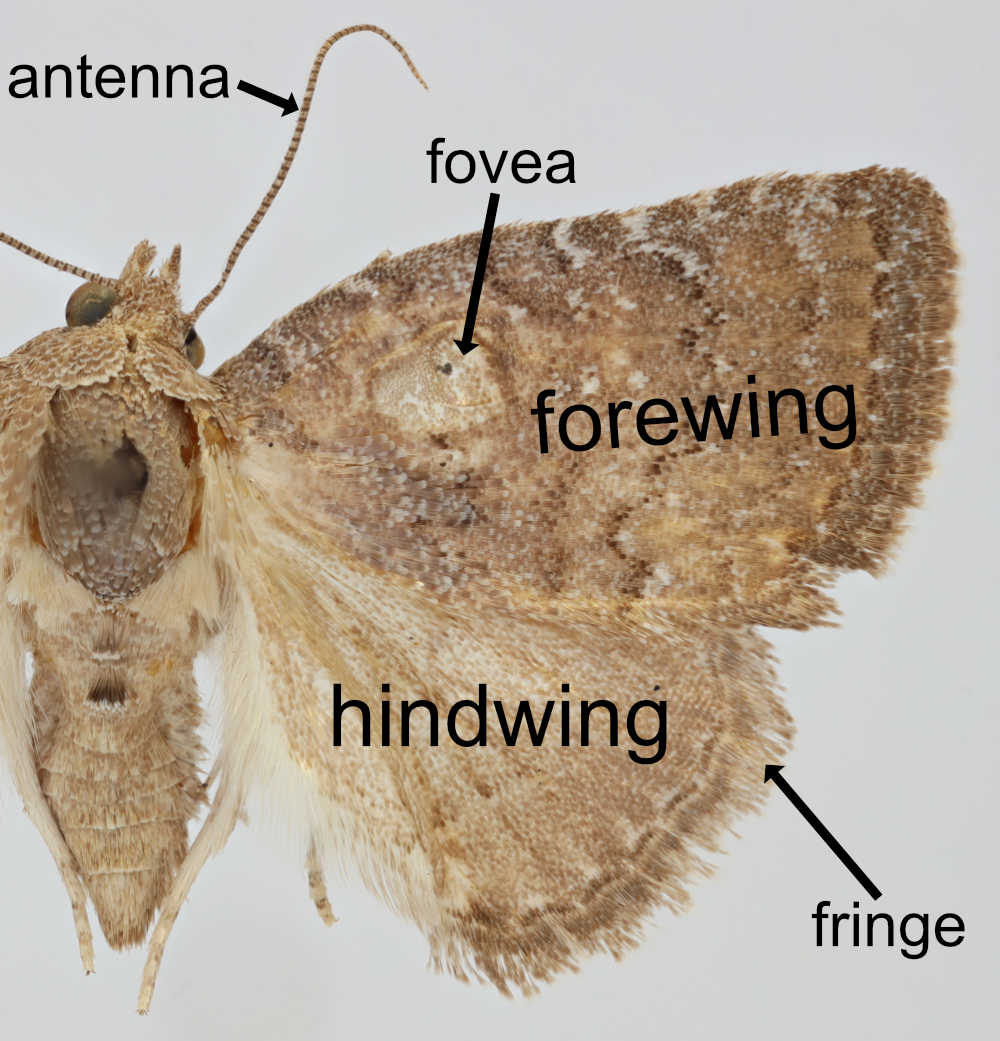 . The head is small with long, messy white scaling. The thoraxthorax:
the second, or middle, body segment of an insect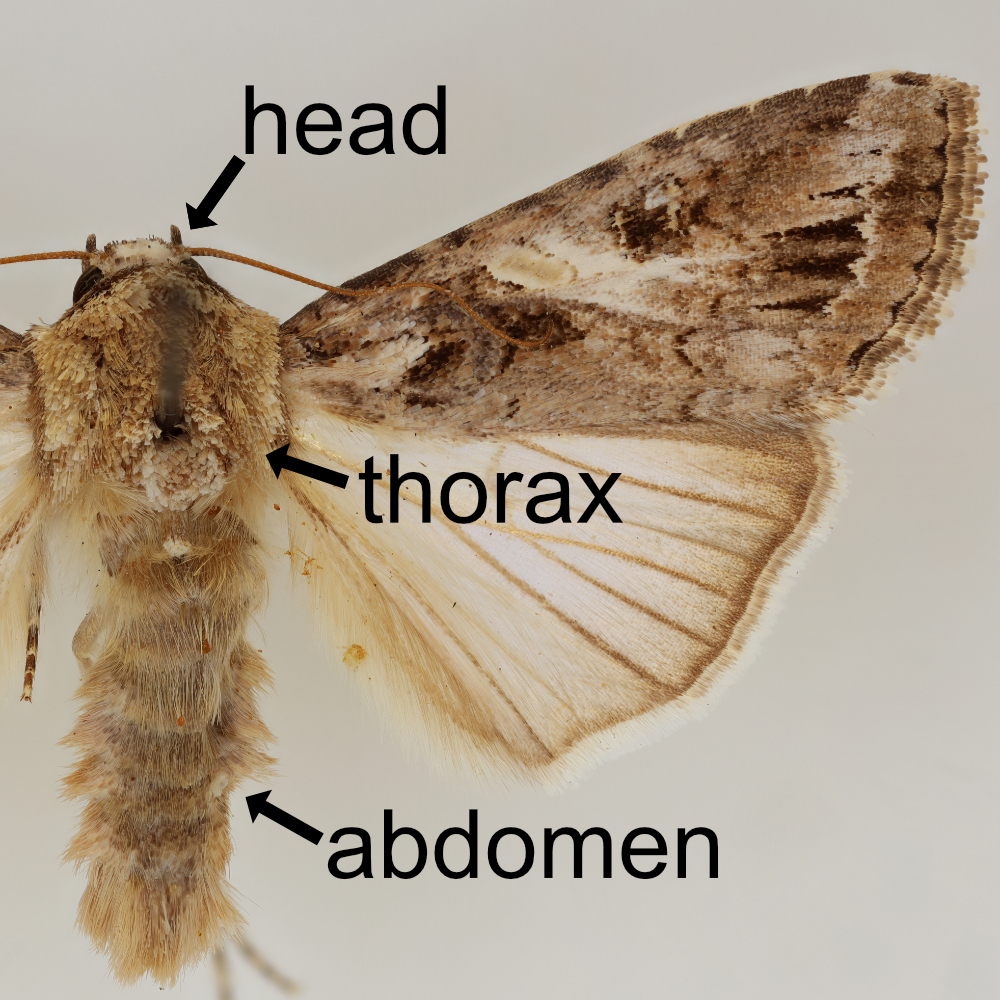 has similar pale scaling, especially on the tegulae. The forewingforewing:
the front wing of an insect; the wing attached to the second segment of the thorax (the mesothorax) is elongate, distinctly acute at the apexapex:
the point furthest from the base; the apex of the wing may be rounded, pointed, or falcate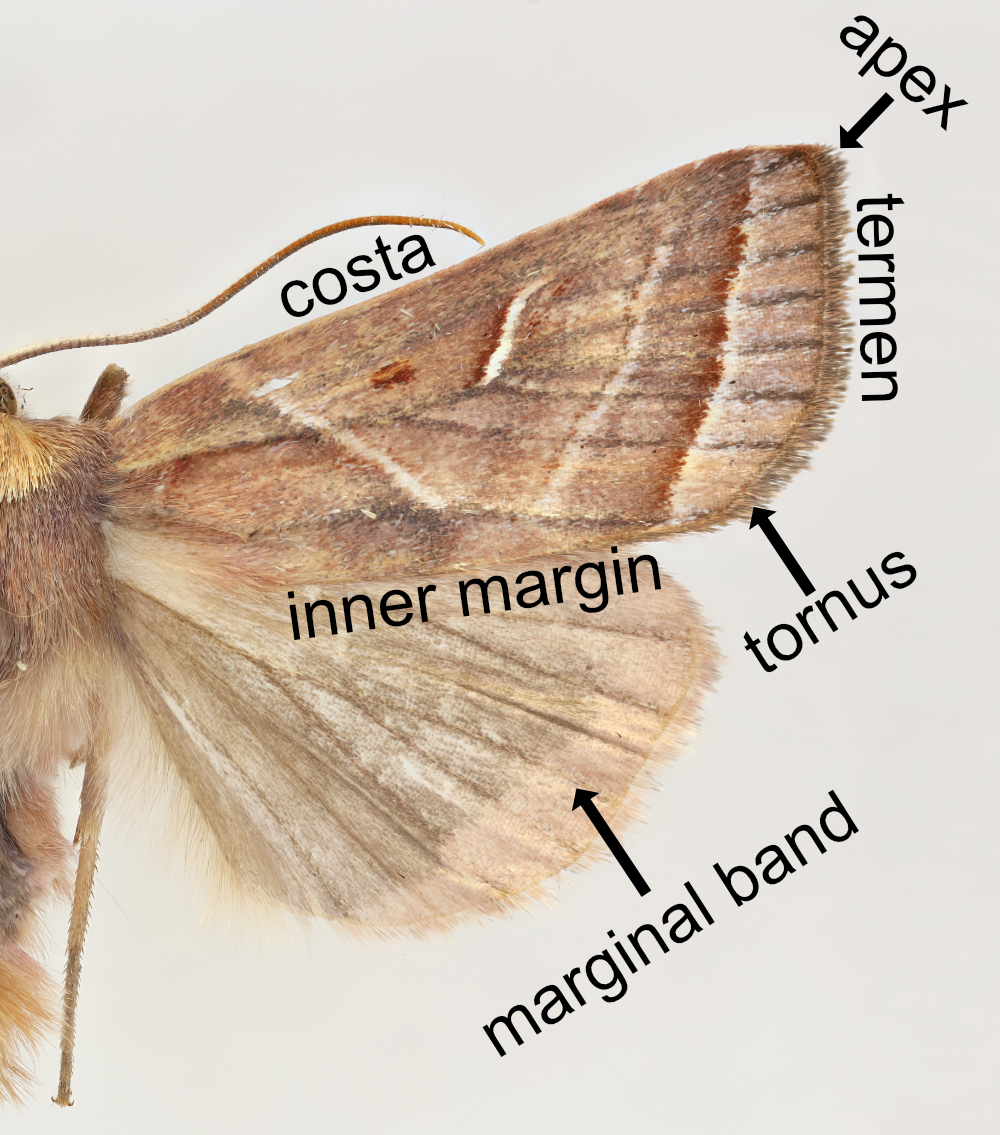 , and generally white or pale brown with paler scaling along the veins. The hindwingshindwing:
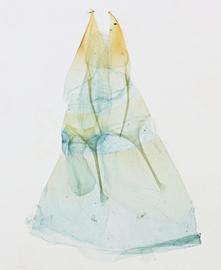
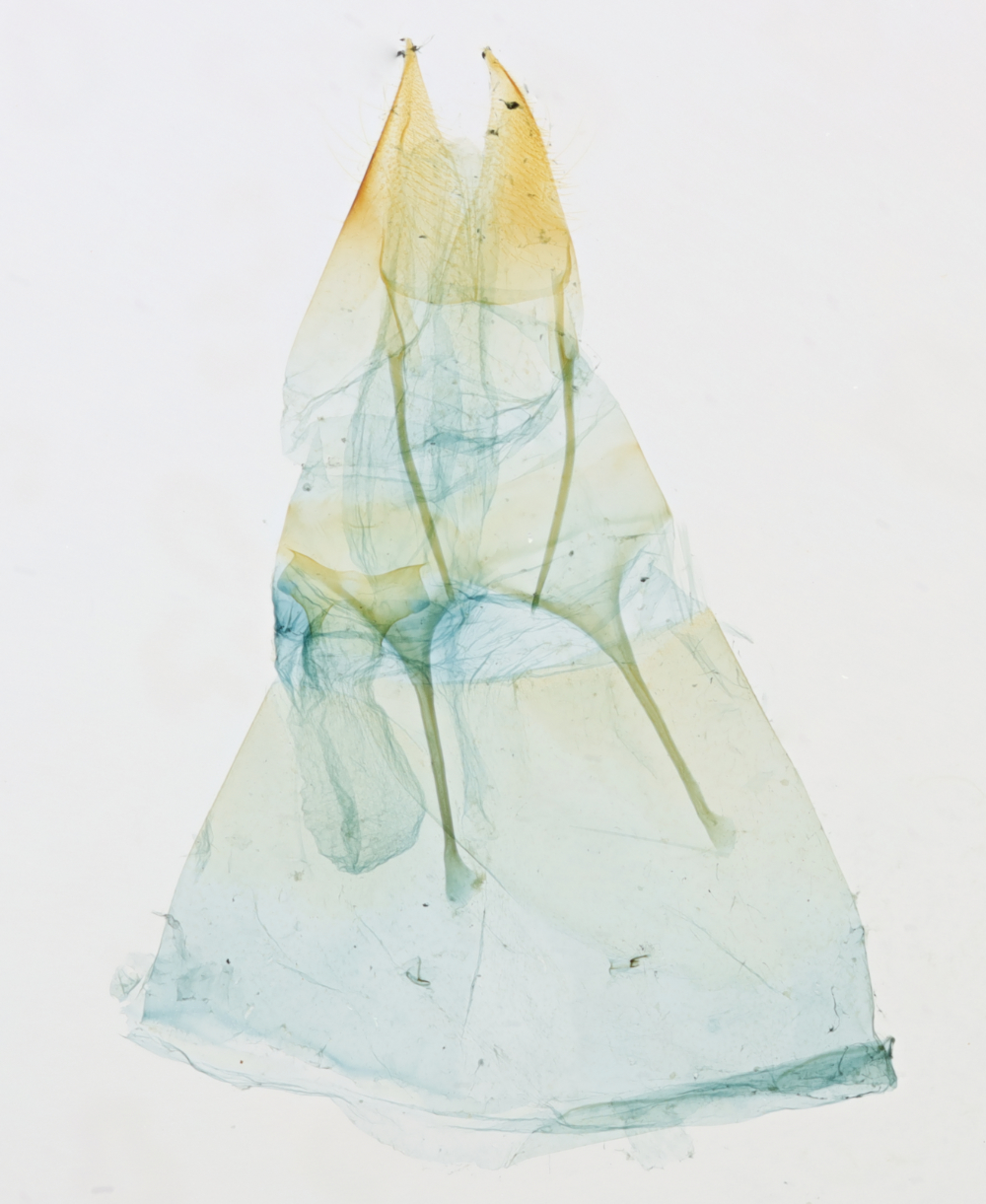
the back wing of an insect; the wing attached to the third segment of the thorax (the metathorax)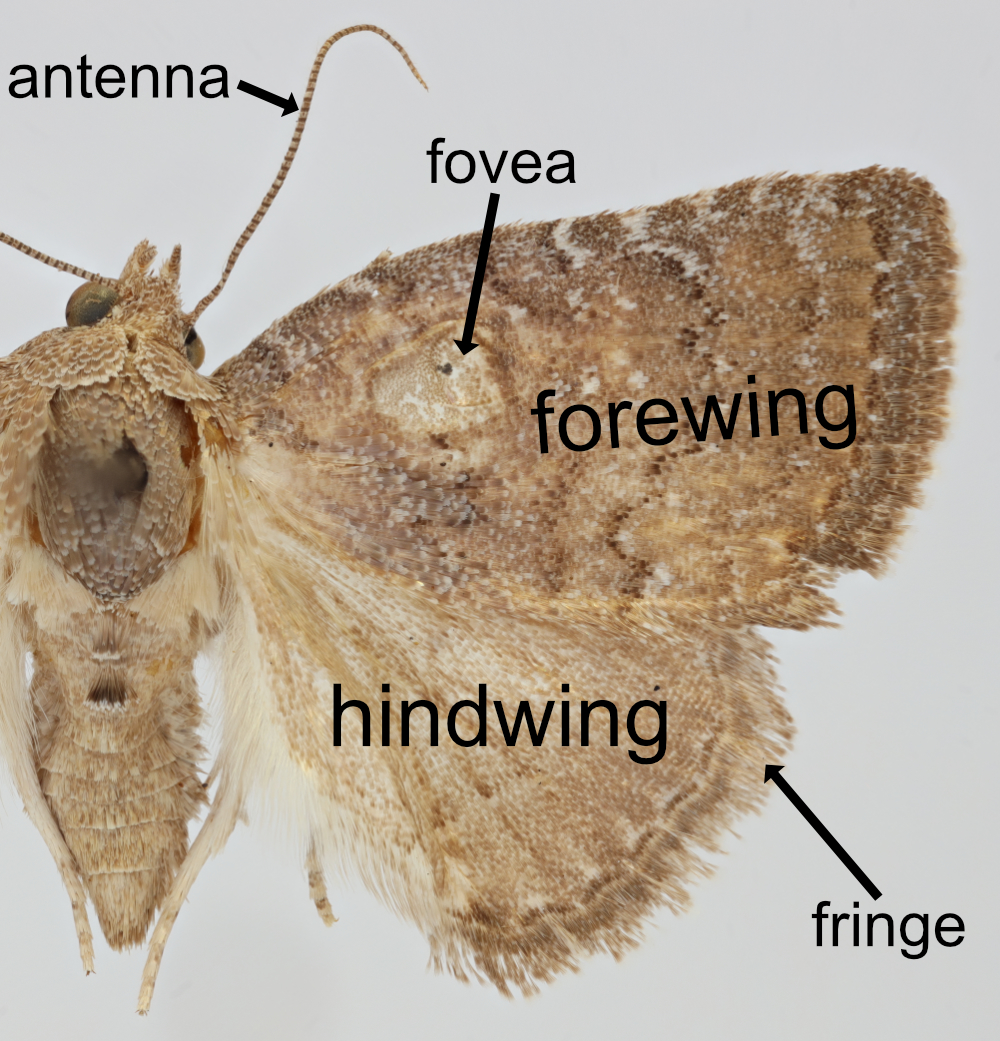 are pure white. The genitalia of both species were illustrated by Fletcher (1959)Fletcher (1959):
Fletcher DS. 1959. A new species of Acrapex (Lepidoptera: Noctuidae) from Hawaii. 17(1):67–69..
More complete descriptions are available in Meyrick (1899)Meyrick (1899):
Meyrick E. 1899. Macrolepidoptera. In: Sharp D, Fauna Hawaiiensis. Cambridge University Press, Cambridge. p 123–275. , Meyrick (1928)Meyrick (1928):
Meyrick E. 1928. Some new species of Hawaiian Lepidoptera. Proceedings of the Hawaiian Entomological Society. 7(1):91–104. , and Fletcher (1959)Fletcher (1959):
Fletcher DS. 1959. A new species of Acrapex (Lepidoptera: Noctuidae) from Hawaii. 17(1):67–69..
Swezey (1928)Swezey (1928):
Swezey OH. 1928. Insect fauna of Panicum torridum, a native grass in Hawaii. Proceedings of the Hawaiian Entomological Society. 7(1):170–176. described the larvae of what Meyrick identified as Acrapex exanimis from southeast Oʻahu: full grown larvae are "whitish without markings, spiracles black, head uniform yellowish or stramineous, eyes black, thoracic shield concolorous with head, but paler."
Because of their small size and pale coloration, adult Acrapex are unlikely to be confused with any other species of noctuid in Hawaiʻi. However, they look superficially similar to several species of Bactra Stephens, 1834 (Tortricidae) in Hawaiʻi. Acrapex can be distinguished from Bactra based on their much shorter palpi and the absence of chaetosemata behind the ocellus.
Acrapex exanimis is known from the female holotype from Kona, Hawaiʻi island at an elevation of 1,500 feet (457 meters) (Meyrick 1899Meyrick 1899:
Meyrick E. 1899. Macrolepidoptera. In: Sharp D, Fauna Hawaiiensis. Cambridge University Press, Cambridge. p 123–275. ) and small series from Koko Head and Kunia, Oʻahu (Swezey 1928Swezey 1928:
Swezey OH. 1928. Insect fauna of Panicum torridum, a native grass in Hawaii. Proceedings of the Hawaiian Entomological Society. 7(1):170–176. , Swezey 1946Swezey 1946:
Swezey OH. 1946. Notes and exhibitions: Acrapex exanimis. Proceedings of the Hawaiian Entomological Society. 12(3):482–483. ).
Acrapex mischus is known from ‘Āina Haina and Wailupe Valley, O‘ahu.
Swezey (1928)Swezey (1928):
Swezey OH. 1928. Insect fauna of Panicum torridum, a native grass in Hawaii. Proceedings of the Hawaiian Entomological Society. 7(1):170–176. reared Acrapex exanimis from Panicum torridum Gaudich., a native grass. The following account is summarized from Swezey (1928)Swezey (1928):
Swezey OH. 1928. Insect fauna of Panicum torridum, a native grass in Hawaii. Proceedings of the Hawaiian Entomological Society. 7(1):170–176. .
Clusters of 17–25 eggs are laid behind leaf sheaths. Eggs hatch within a week. Larvae apparently migrate from one stem to another, leaving behind characteristic "dead hearts" in the stems. Pupation occurs approximately one week after feeding is completed, typically in the stems. The pupal stage lasts about two weeks. The pupa is approximately 11 mm long, slender, uniformly pale brown, with the wings extending to the apexapex:
the point furthest from the base; the apex of the wing may be rounded, pointed, or falcate of the third abdominal segment; the cremaster is blackened, blunt, somewhat roughened, and without spines or hooks.
Zimmerman (1958)Zimmerman (1958):
Zimmerman EC. 1958. Insects of Hawaii, Volume 7. Macrolepidoptera. University of Hawaii Press, Honolulu. 542 pp. additionally listed Panicum kaalaense Hitchc. (=P. nephelophilum Gaudich.), as a host, but this is circumstantial (Swezey 1928Swezey 1928:
Swezey OH. 1928. Insect fauna of Panicum torridum, a native grass in Hawaii. Proceedings of the Hawaiian Entomological Society. 7(1):170–176. , Swezey 1946Swezey 1946:
Swezey OH. 1946. Notes and exhibitions: Acrapex exanimis. Proceedings of the Hawaiian Entomological Society. 12(3):482–483. ) and has not been confirmed. Larvae have been offered sugar cane (Saccharum sp.) but only ate a little and later died.
Author: Kyhl A. Austin
Content last updated May 2026
idtools.org