ADVENTIVE
Trichoplusia ni (Hufnagel, 1766)
Higher taxonomy: Noctuidae: Plusiinae: Argyrogrammatini
Common name: Cabbage looper
Trichoplusia ni is a cosmopolitan pest of cabbage and related plants. It has been present in Hawai‘i since at least 1939 (Zimmerman 1958Zimmerman 1958:
Zimmerman EC. 1958. Insects of Hawaii, Volume 7. Macrolepidoptera. University of Hawaii Press, Honolulu. 542 pp.). It is largely restricted to residential and agricultural settings, although it can occasionally be found in subalpine shrubland and dry forests, especially on Maui and Hawai‘i island (UHIM collectionUHIM collection:
UHIM collection. Based on identified specimens in the collection of the University of Hawaii Insect Museum, Honolulu, HI).
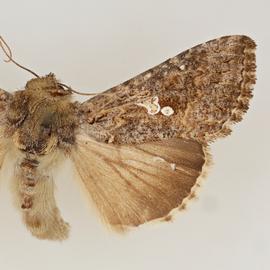
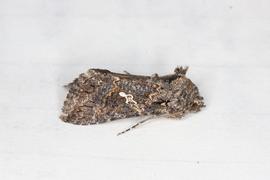
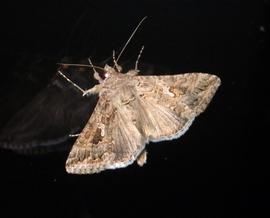
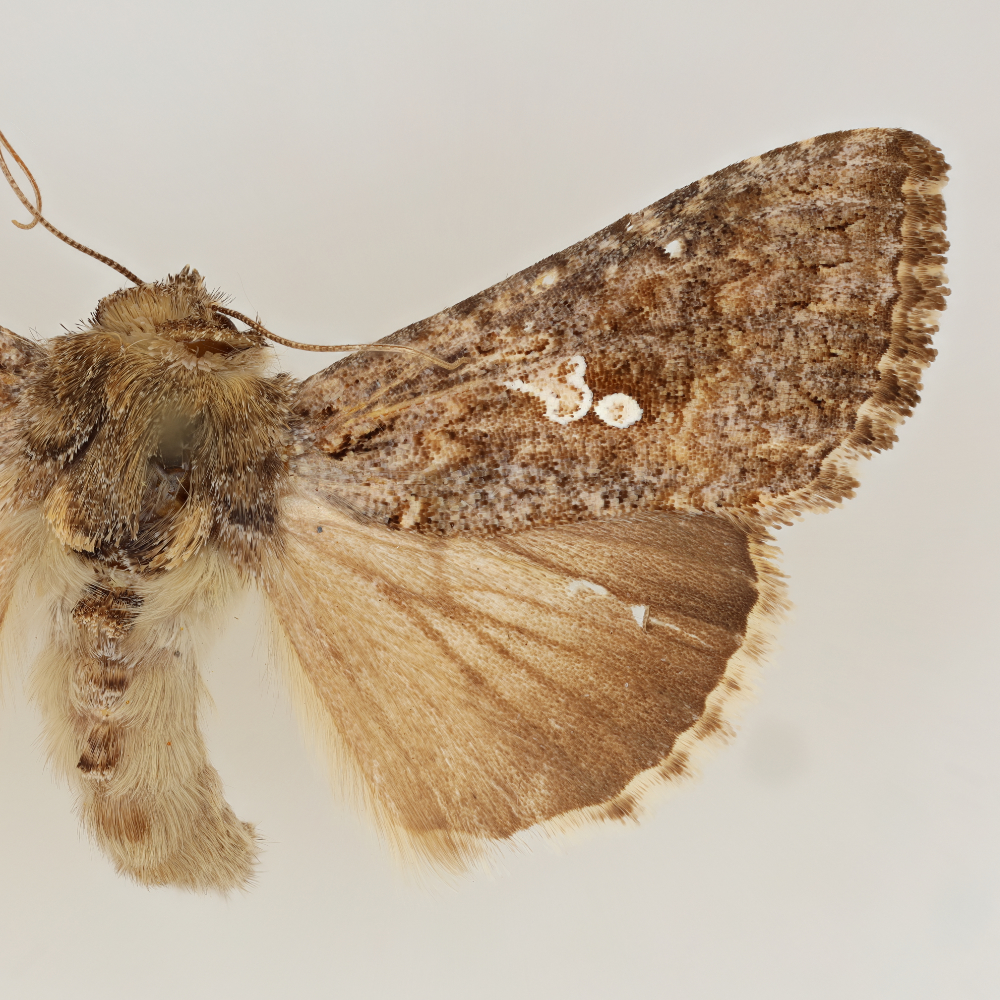
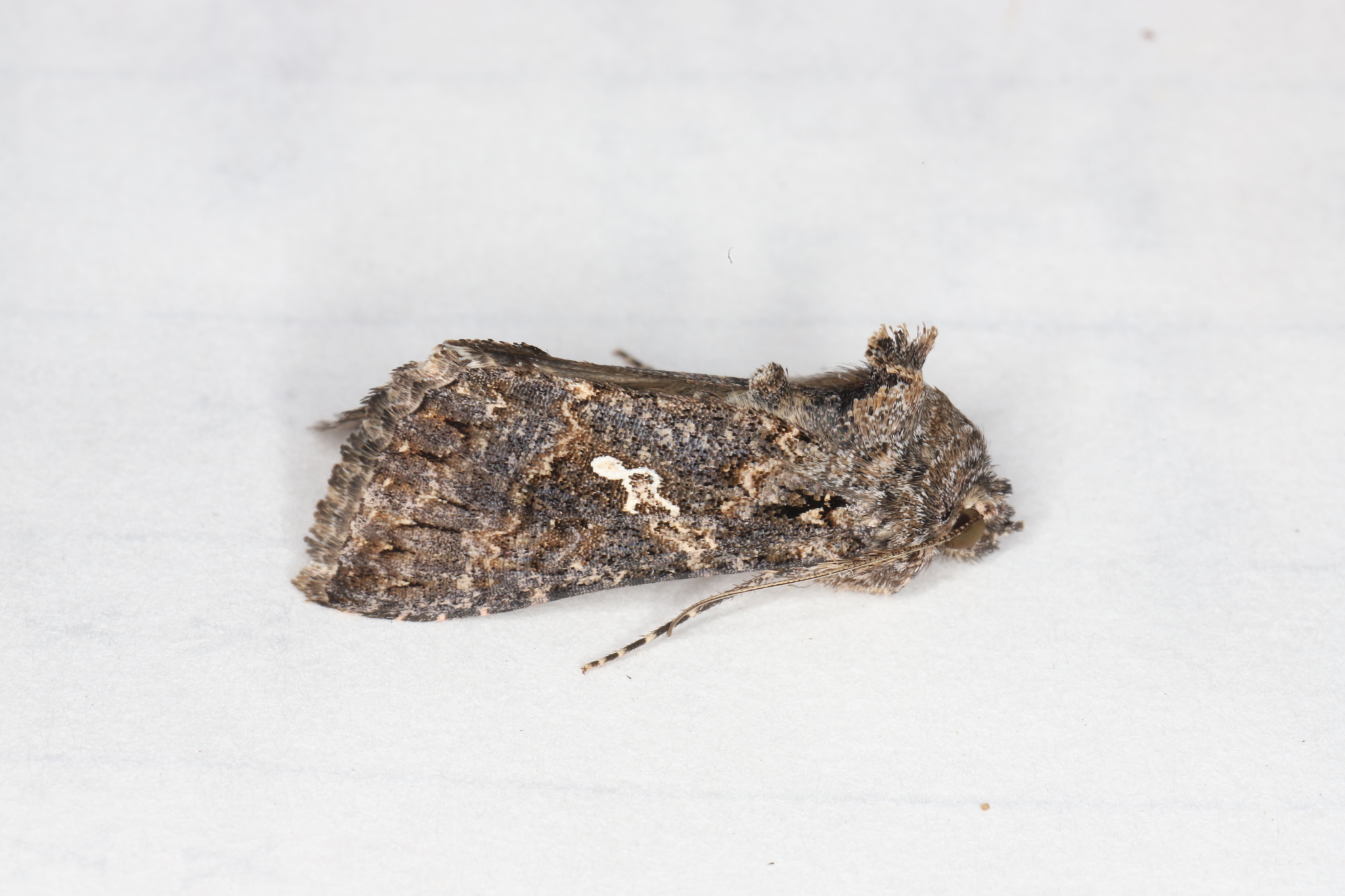
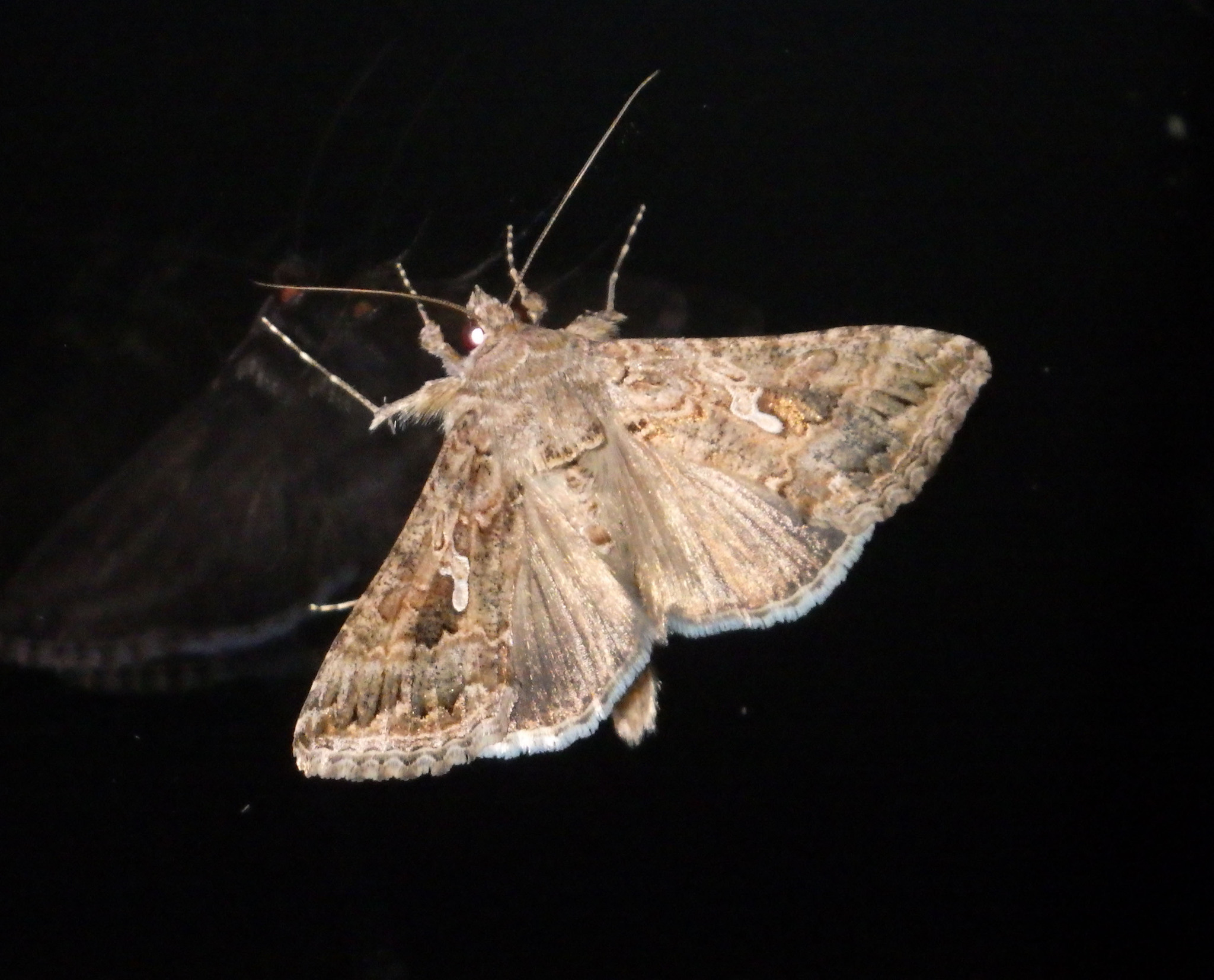
Adults of Trichoplusia ni are medium-sized noctuids (forewing lengthforewing length:
the distance of the forewing in a straight line from the base to the tip of the apex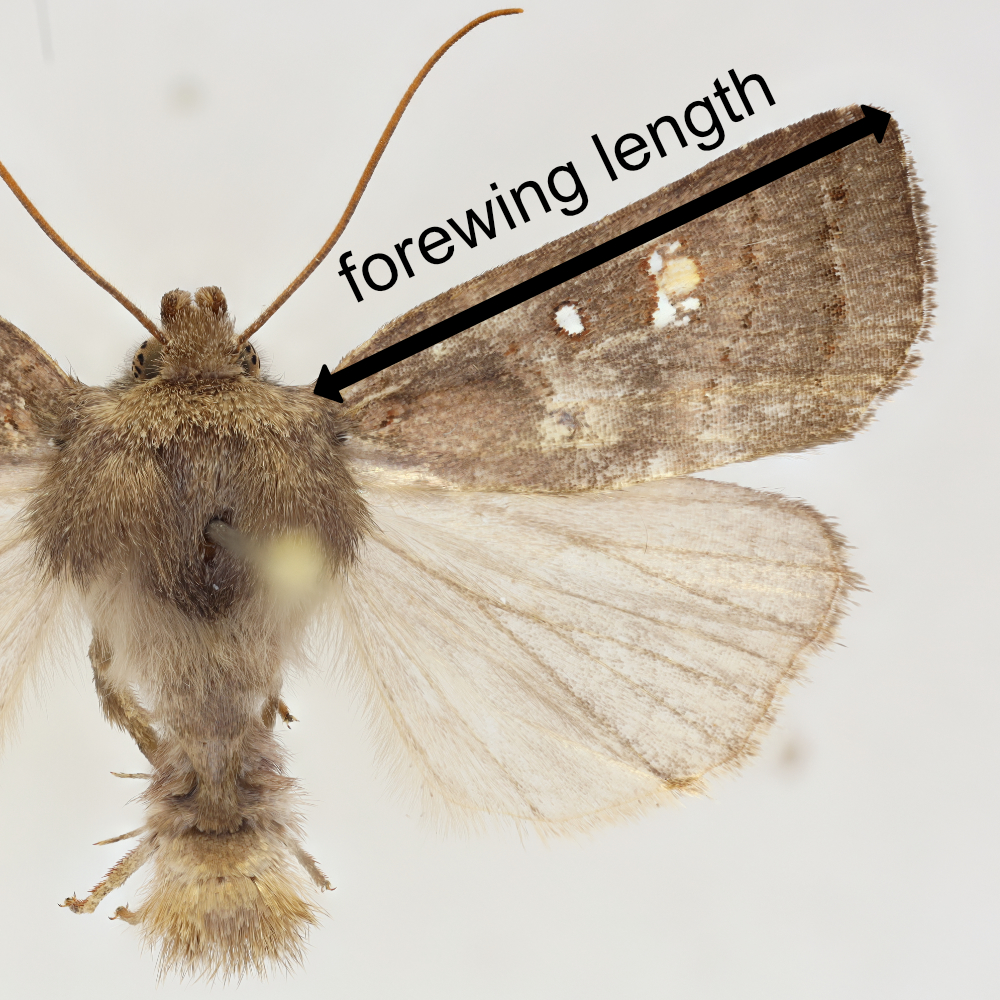 15–18 mm) and have a dull brown or gray forewingforewing:
the front wing of an insect; the wing attached to the second segment of the thorax (the mesothorax)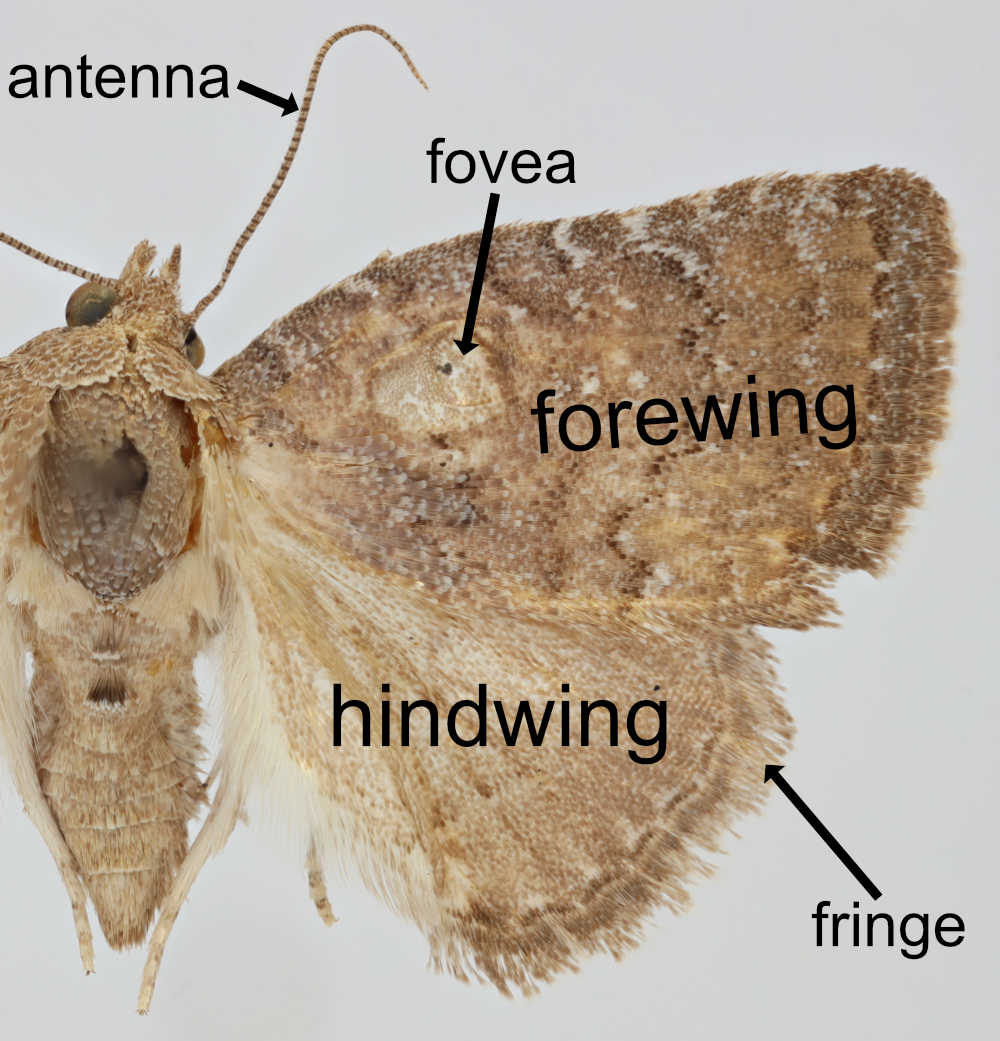 , mottled throughout, and often with the postmedial linepostmedial line:
a thin, transverse line located distal to the reniform spot, typically on the distal third of the forewing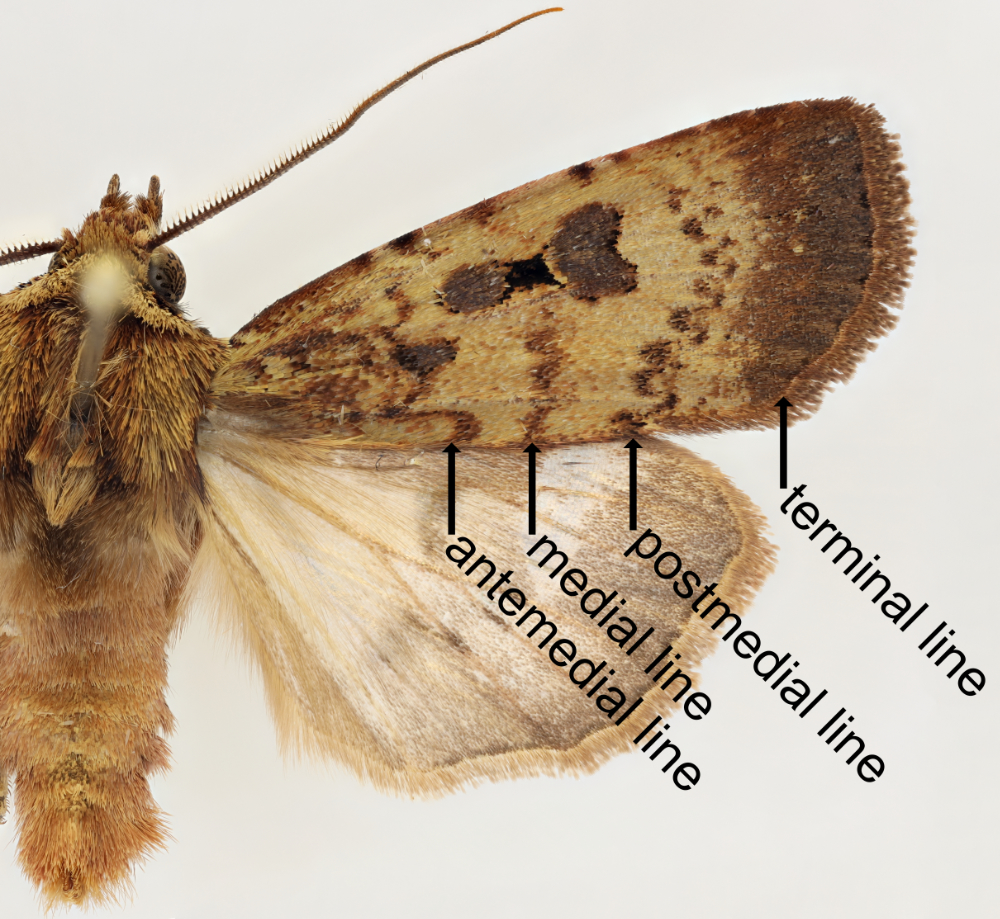 pale and obscured. The stigmastigma:
a distinctive metallic, often silver or gold-colored, marking on the forewing in many species of Plusiinae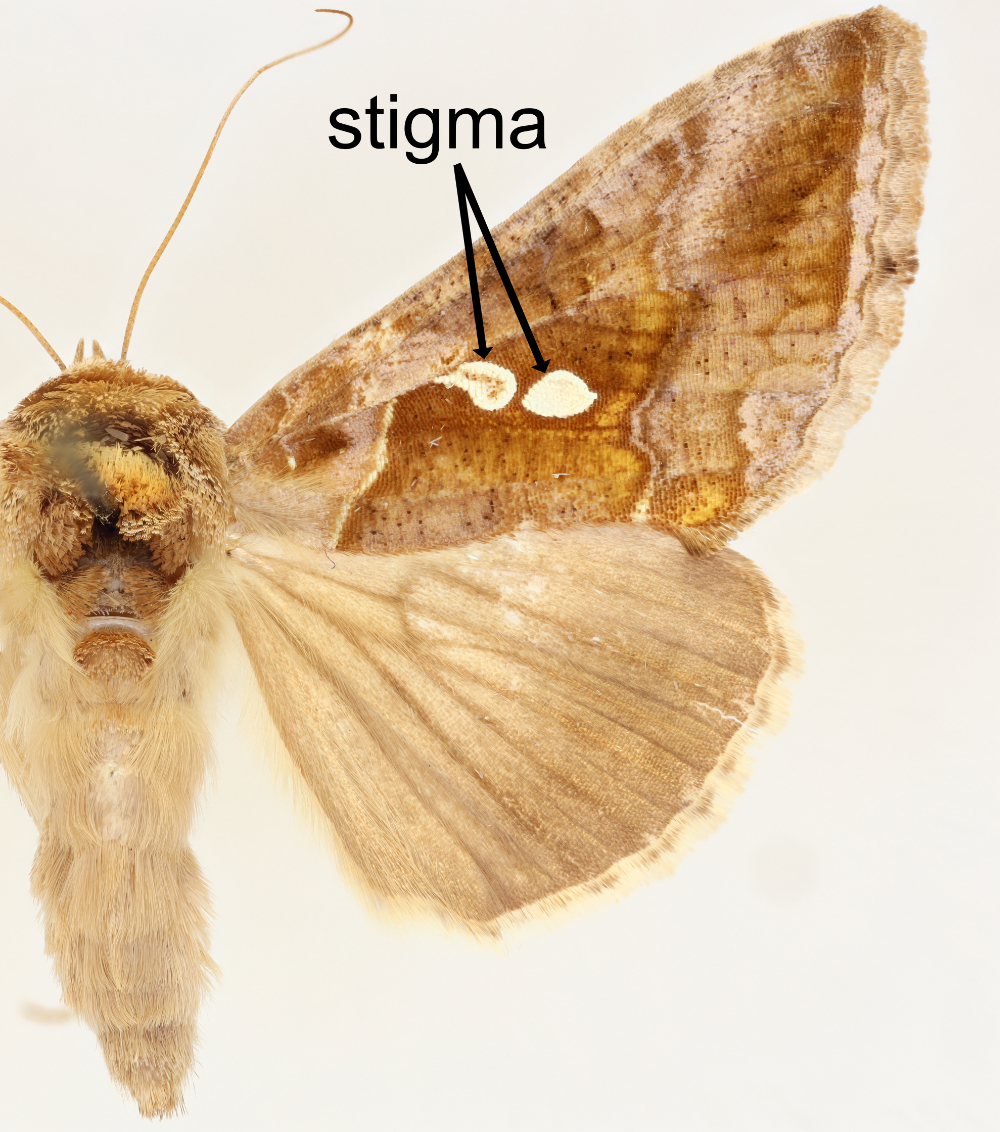 is broad and open at its base, apically rounded, and often divided into two separate spots, the distaldistal:
towards the free end of an appendage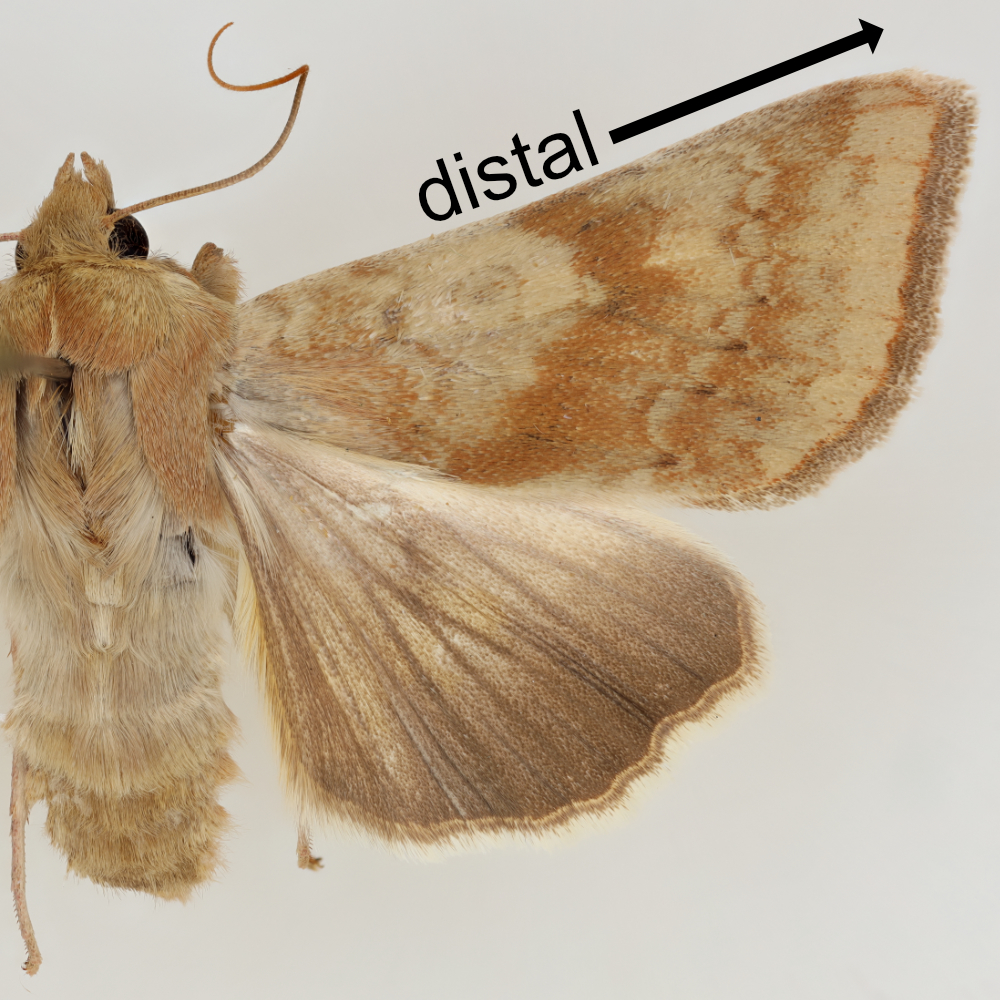 one circular. The hindwinghindwing:
the back wing of an insect; the wing attached to the third segment of the thorax (the metathorax)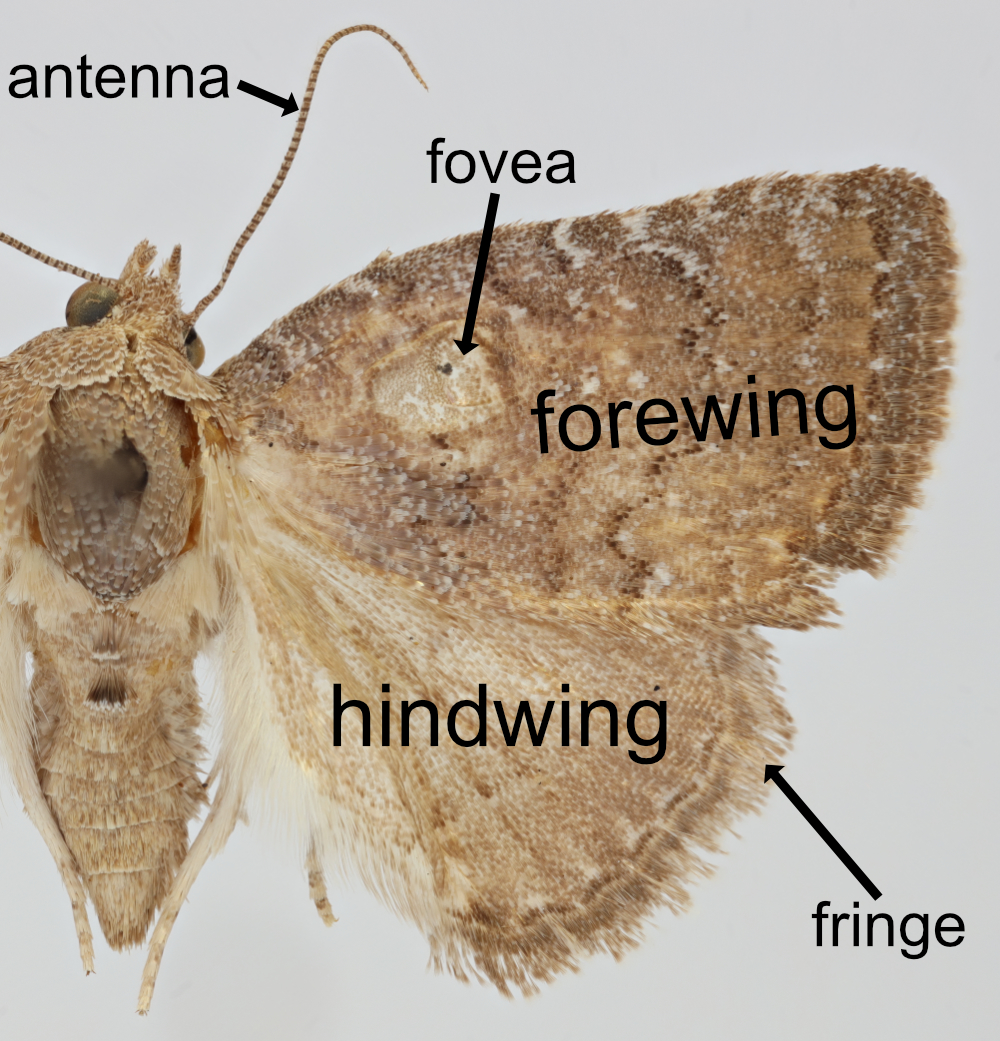 is pale brown basally, gray to dark gray distally.
Lafontaine and Poole (1991)Lafontaine and Poole (1991):
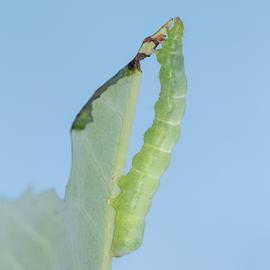
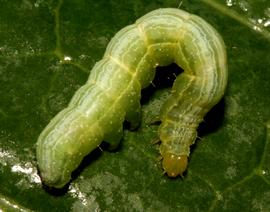
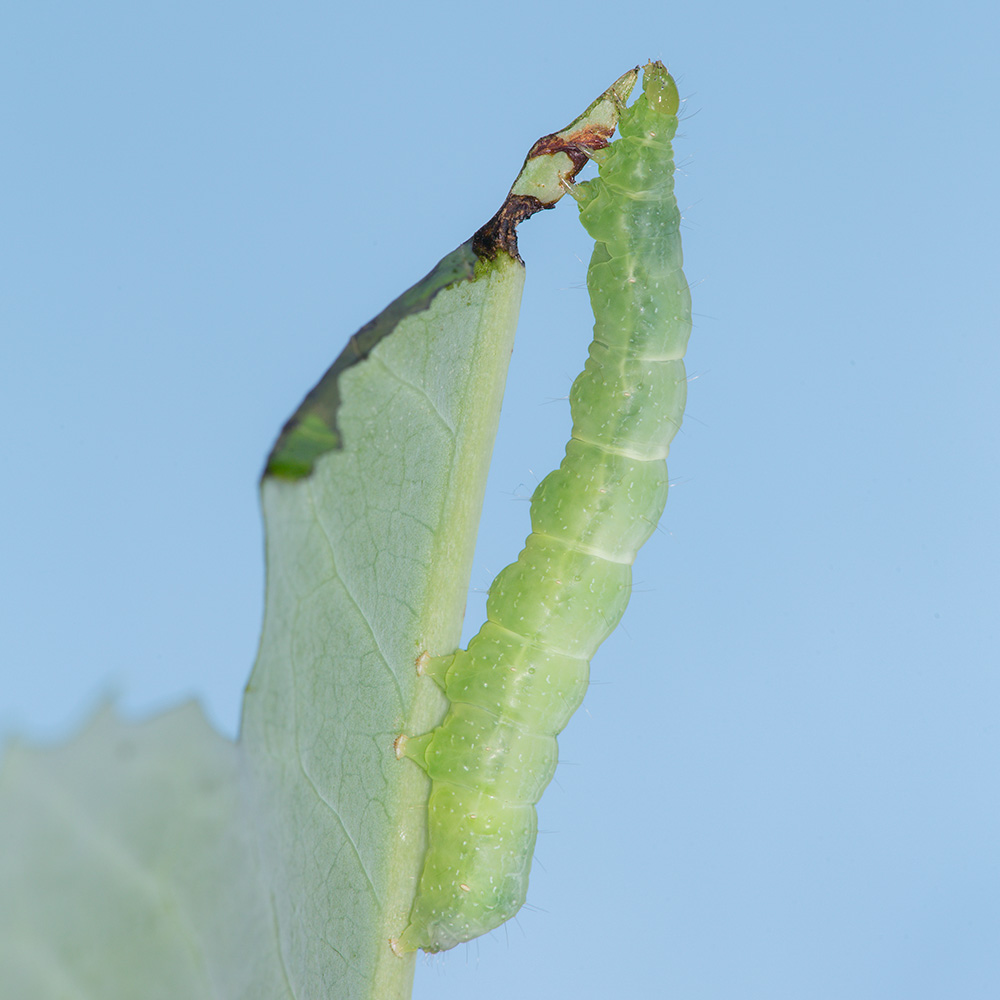
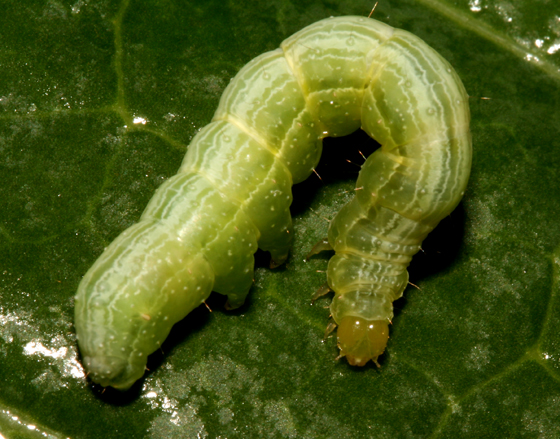
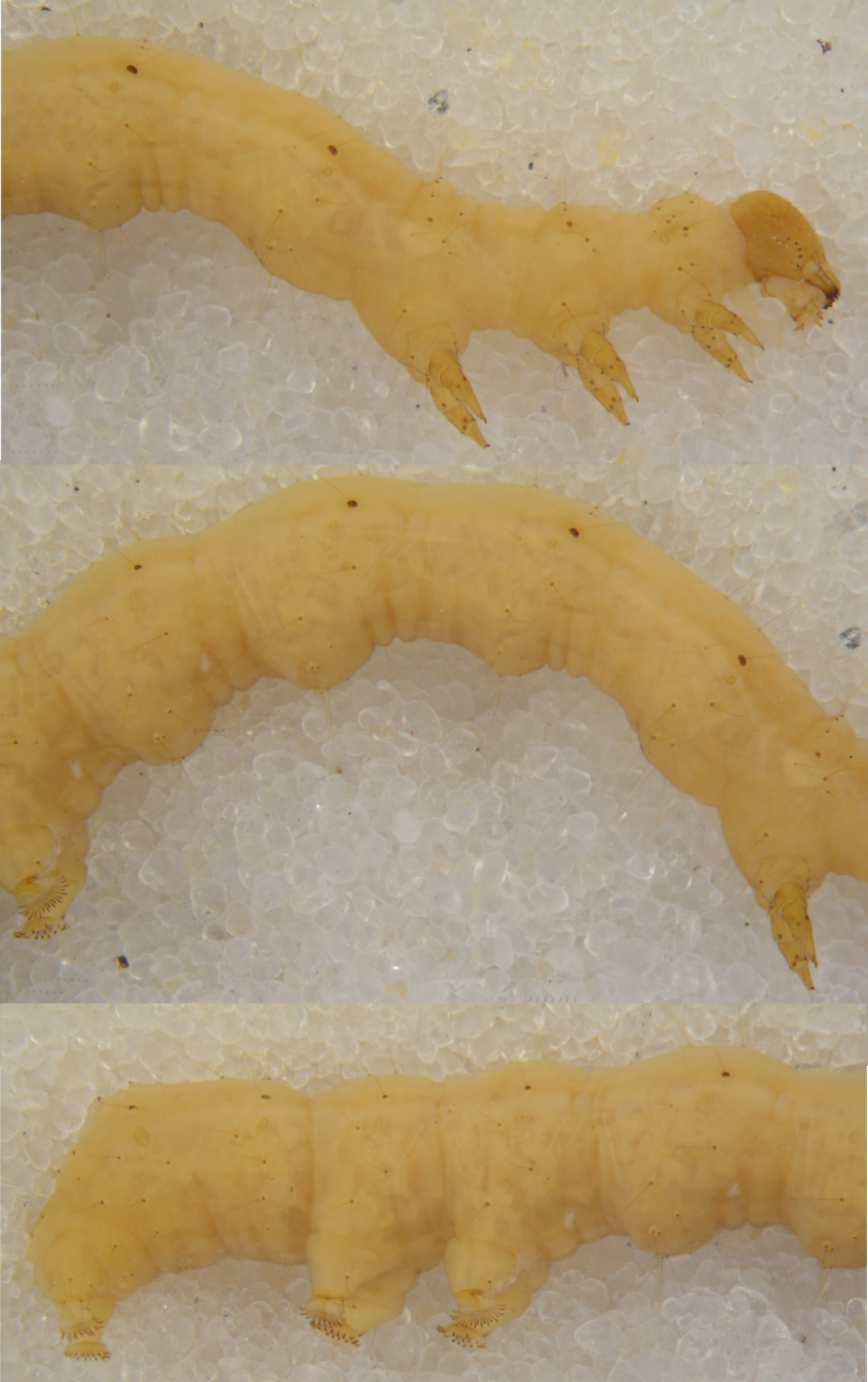
Lafontaine JD, Poole RW. 1991. The moths of America north of Mexico. Fascicle 25.1. Noctuoidea, Noctuidae (part), Plusiinae. The Wedge Entomological Research Foundation. 385 pp. described the larva of Trichoplusia ni as follows: "The larva of ni is green with three pairs of wavy white lines on the back: narrow dorsal (above seta D1) and subdorsal (below seta D2) lines, which are slightly narrower than the lateral line, and an addorsal line between them (with seta D1 in the middle), which is twice as wide as the lateral line. The lateral line is white or pale yellow and only slightly wider than the dorsal and subdorsal lines. The dorsal pinaculapinaculum:
a small, flat, or slightly elevated chitinized area bearing a seta or setae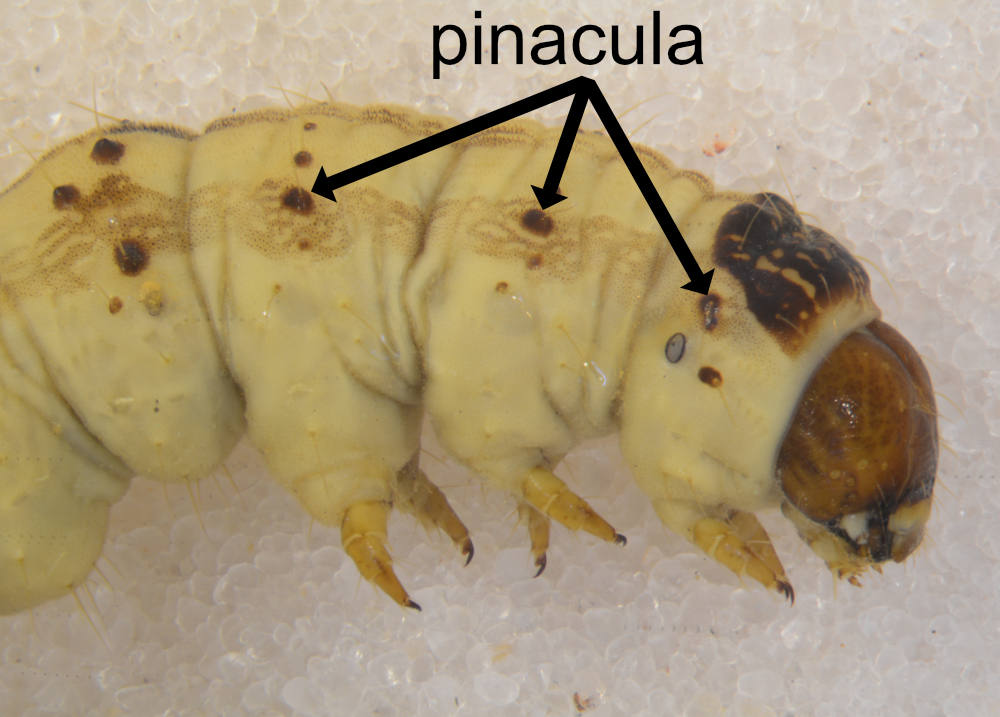 are green with white around the setal sockets. The subdorsal pinaculapinaculum:
a small, flat, or slightly elevated chitinized area bearing a seta or setae are black around the base of the setae; the black pigmented area is about half the size of the spiracles. The larval skin is minutely granular. The head is green, without a black lateral line on each side. The setal sockets on the head are similar in color to the head."
More information available on LepIntercept.
Trichoplusia ni could be confused with other species of Plusiinae in Hawai‘i, especially Argyrogramma verruca, Chrysodeixis eriosoma, and Ctenoplusia albostriata. Males of the native species of Lophoplusia have bipectinate antennaeantenna:
a thin, paired, elongate, segmented sensory organ on the head that serves primarily for olfaction (smell) to find food and mates, but also aids in navigation and balance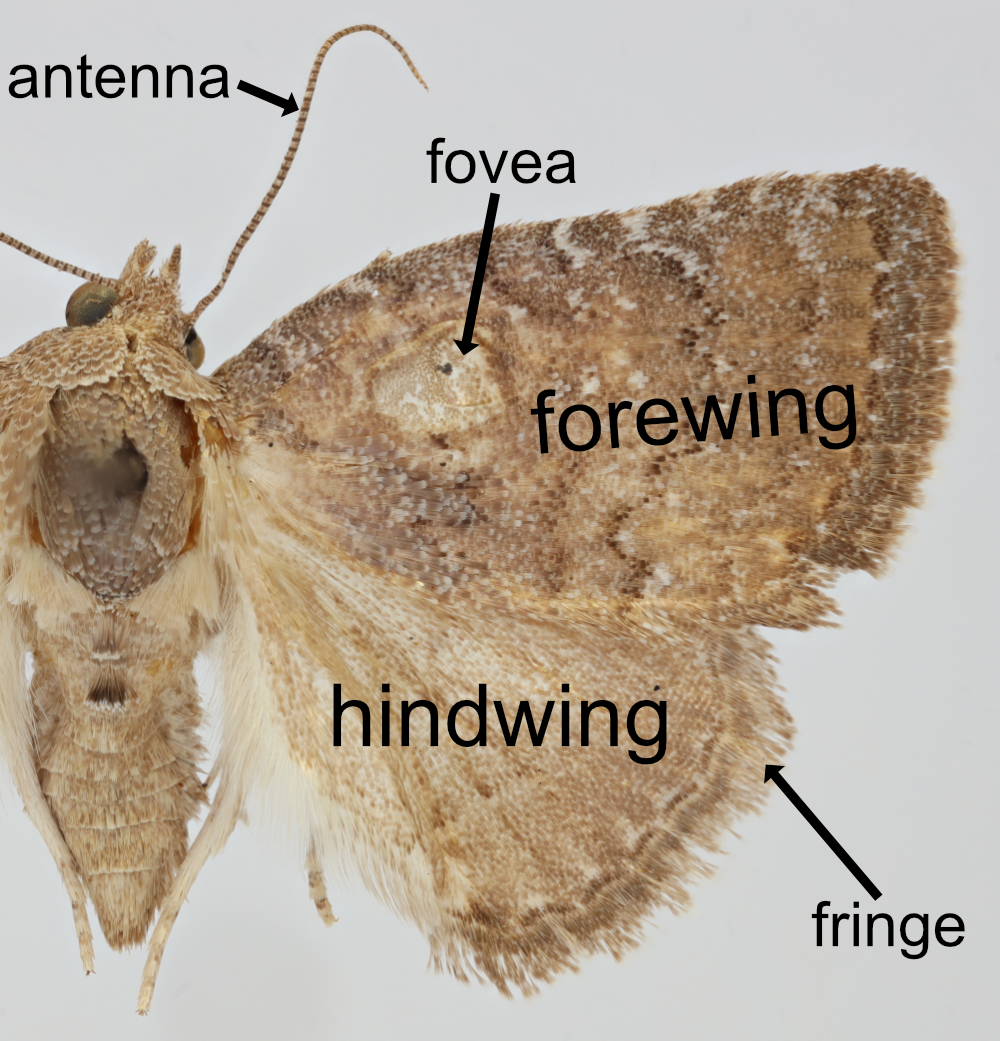 and are very rare, where they are restricted to native wet forests. From all of these species, T. ni differs in lacking the iridescent gold, silver, or brassy scales on the forewingforewing:
the front wing of an insect; the wing attached to the second segment of the thorax (the mesothorax). The shape of the stigmastigma:
a distinctive metallic, often silver or gold-colored, marking on the forewing in many species of Plusiinae, with an broadly open base, is unique in Hawai‘i.
Larvae are very similar to other species of non-native Plusiinae in Hawai‘i and rearing adults may be necessary for identification.
Trichoplusia ni is a nearly cosmopolitan species, although it is absent from colder regions, where its range is likely limited by extreme winter temperatures (Lafontaine and Poole 1991Lafontaine and Poole 1991:
Lafontaine JD, Poole RW. 1991. The moths of America north of Mexico. Fascicle 25.1. Noctuoidea, Noctuidae (part), Plusiinae. The Wedge Entomological Research Foundation. 385 pp. ). In Hawai‘i, T. ni is known from Laysan, Kaua‘i, O‘ahu, Moloka‘i, Maui, and Hawai‘i island (Nishida 2002Nishida 2002:
Nishida GM. 2002. Hawaiian terrestrial arthropod checklist. Fourth Edition. Bishop Museum Technical Report 22. 313 pp.).
Trichoplusia ni is an extremely polyphagous species, although it seems to have a preference for Brassicaceae, especially Brassica (Lafontaine and Poole 1991Lafontaine and Poole 1991:
Lafontaine JD, Poole RW. 1991. The moths of America north of Mexico. Fascicle 25.1. Noctuoidea, Noctuidae (part), Plusiinae. The Wedge Entomological Research Foundation. 385 pp. ). A comprehensive work on the biology and control of the cabbage looper is available in Sutherland and Green (1984)Sutherland and Green (1984):
Sutherland DWS, Greene GL. 1984. Cultivated and wild host plants. pp. 1–13. In: Lingren PD, Green GL, editors. Suppression and Management of Cabbage Looper Populations. USDA Technical Bulletin No. 1684. Washington DC, US Department of Agriculture..
Author: Kyhl A. Austin
Content last updated May 2026
idtools.org