ADVENTIVE
Spodoptera litura (Fabricius, 1775)
Higher taxonomy: Noctuidae: Prodeniinae
Common names: tobacco cutworm, cotton leafworm, Egyptian cotton moth
Spodoptera litura is currently only known from Midway, Kure, and French Frigate Shoals in the Northwestern Hawaiian Islands (Beardsley 1966Beardsley 1966:
Beardsley JW. 1966. Insects and other terrestrial arthropods from the Leeward Hawaiian Islands. Proceedings of the Hawaiian Entomological Society. 19(2):157–185.), where it was first detected in 1923 (Bryan et al. 1926Bryan et al. 1926:
Bryan EH et al. 1926. Insects of Hawaii, Johnston Island and Wake Island. Bernice P. Bishop Museum Bulletin 31. 94 pp.). Because of its significant pest status, extremely polyphagous diet, and an abundance of suitable habitat, great care should be taken to prevent the spread of this species to the main Hawaiian Islands.
A detailed description of Spodoptera litura is available in Pogue (2002)Pogue (2002):
Pogue MG. 2002. A world revision of the genus Spodoptera Guenée (Lepidoptera: Noctuidae). Memoirs of the American Entomological Society. 43:1–202..
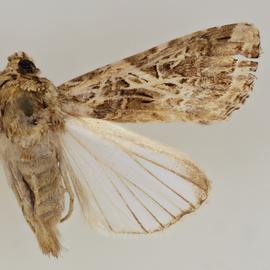
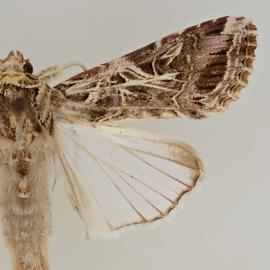
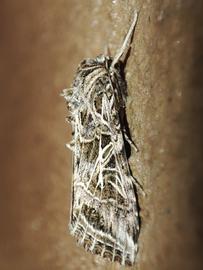
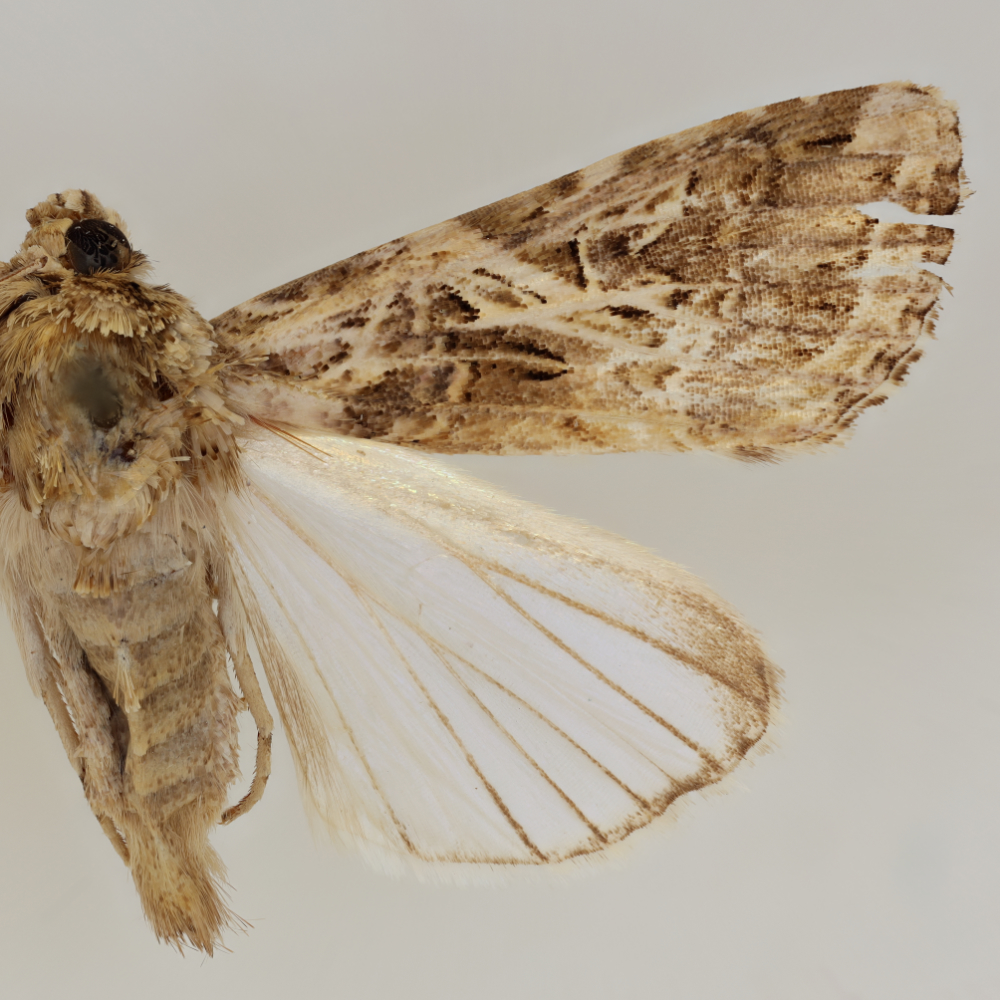
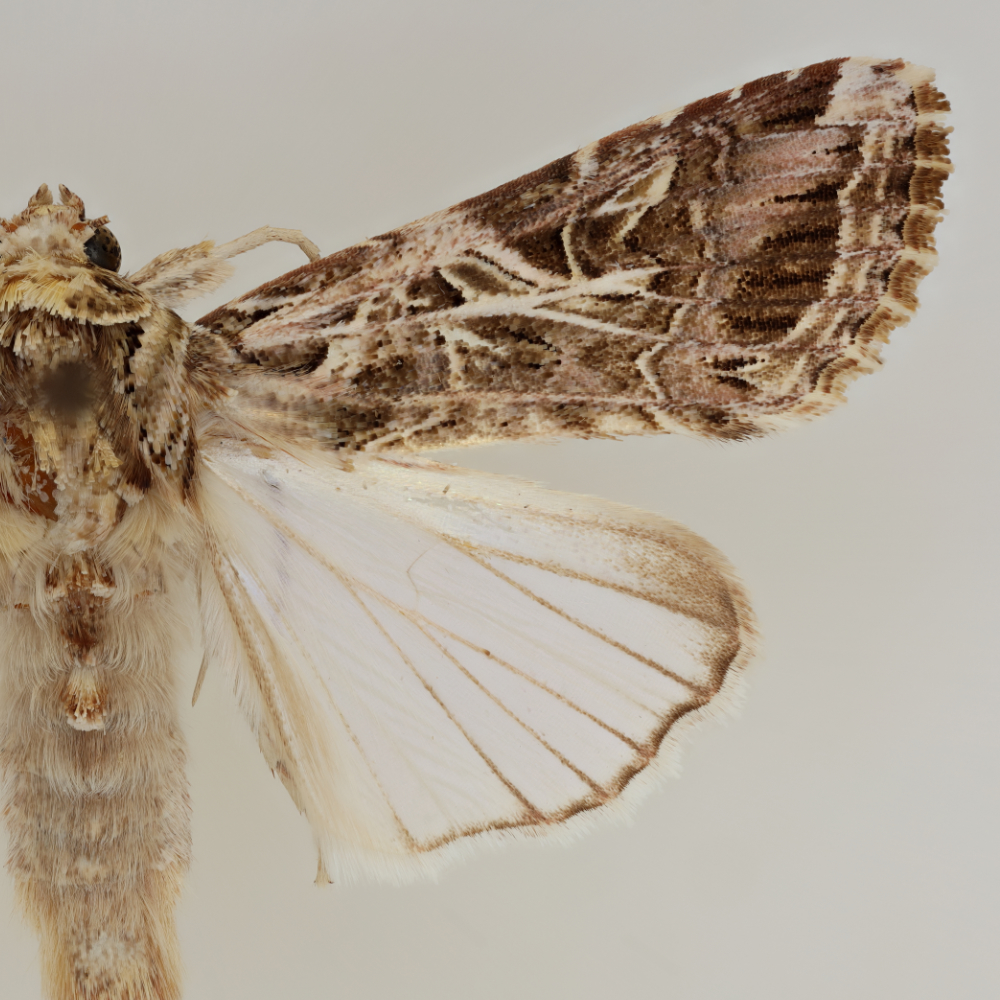
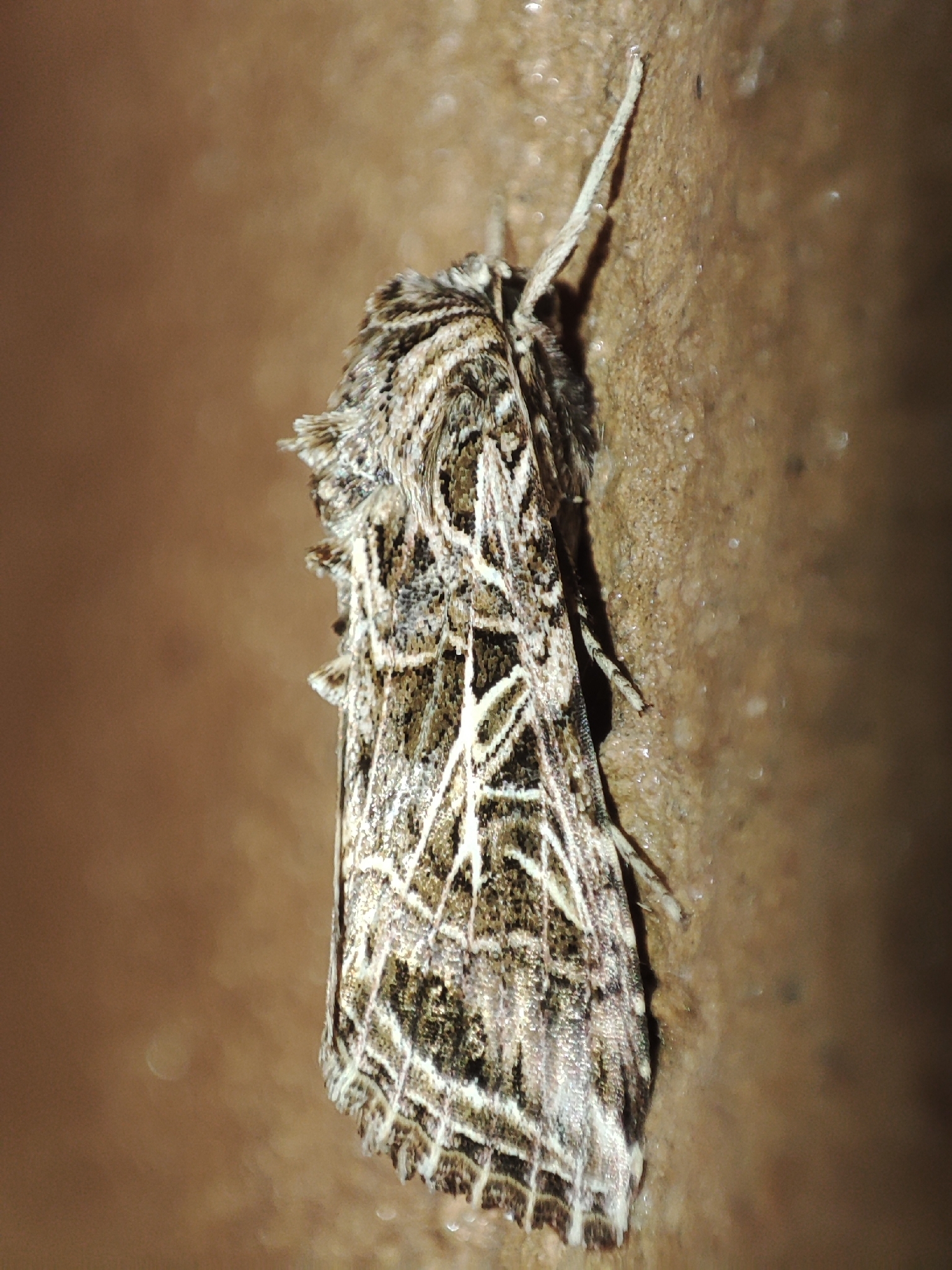
Spodoptera litura is a medium-sized noctuid (forewing lengthforewing length:
the distance of the forewing in a straight line from the base to the tip of the apex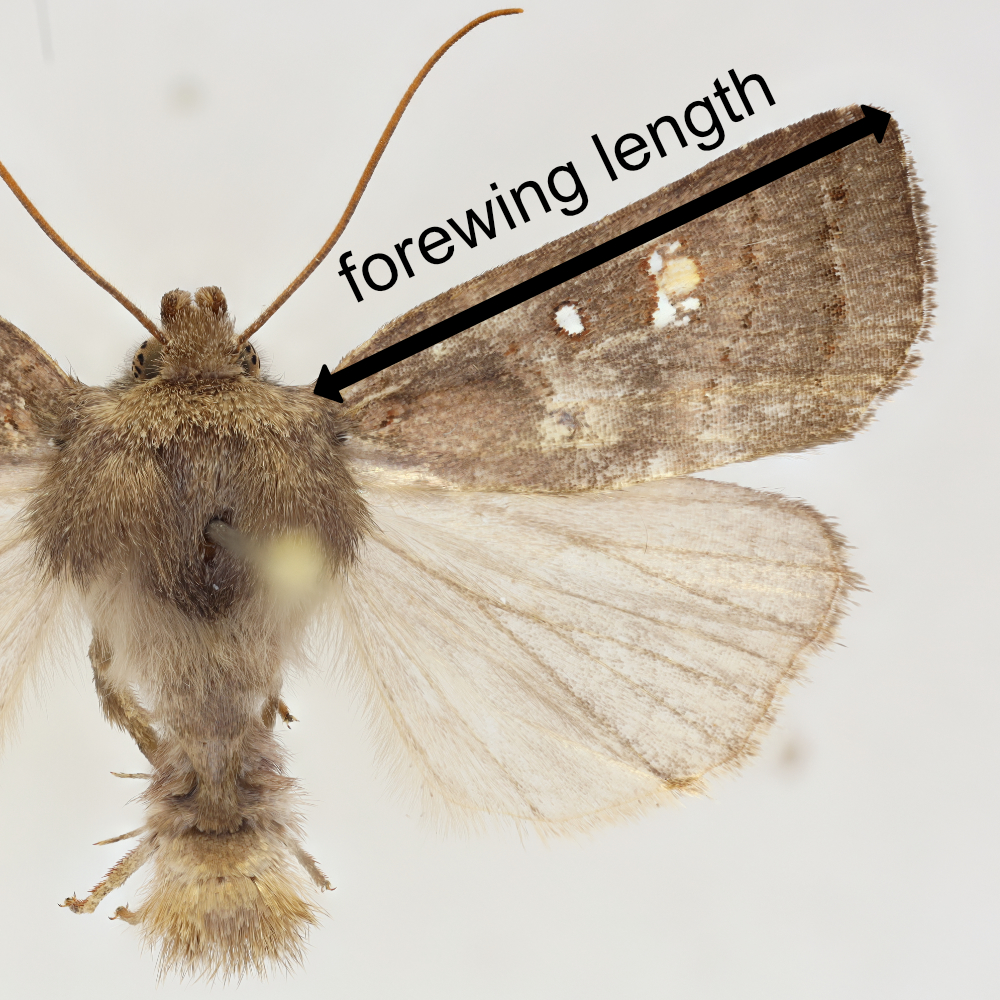 14–18 mm) characterized by distinctive white-scaled veins in the median areamedian area:
the portion of the wing between the antemedial and postmedial lines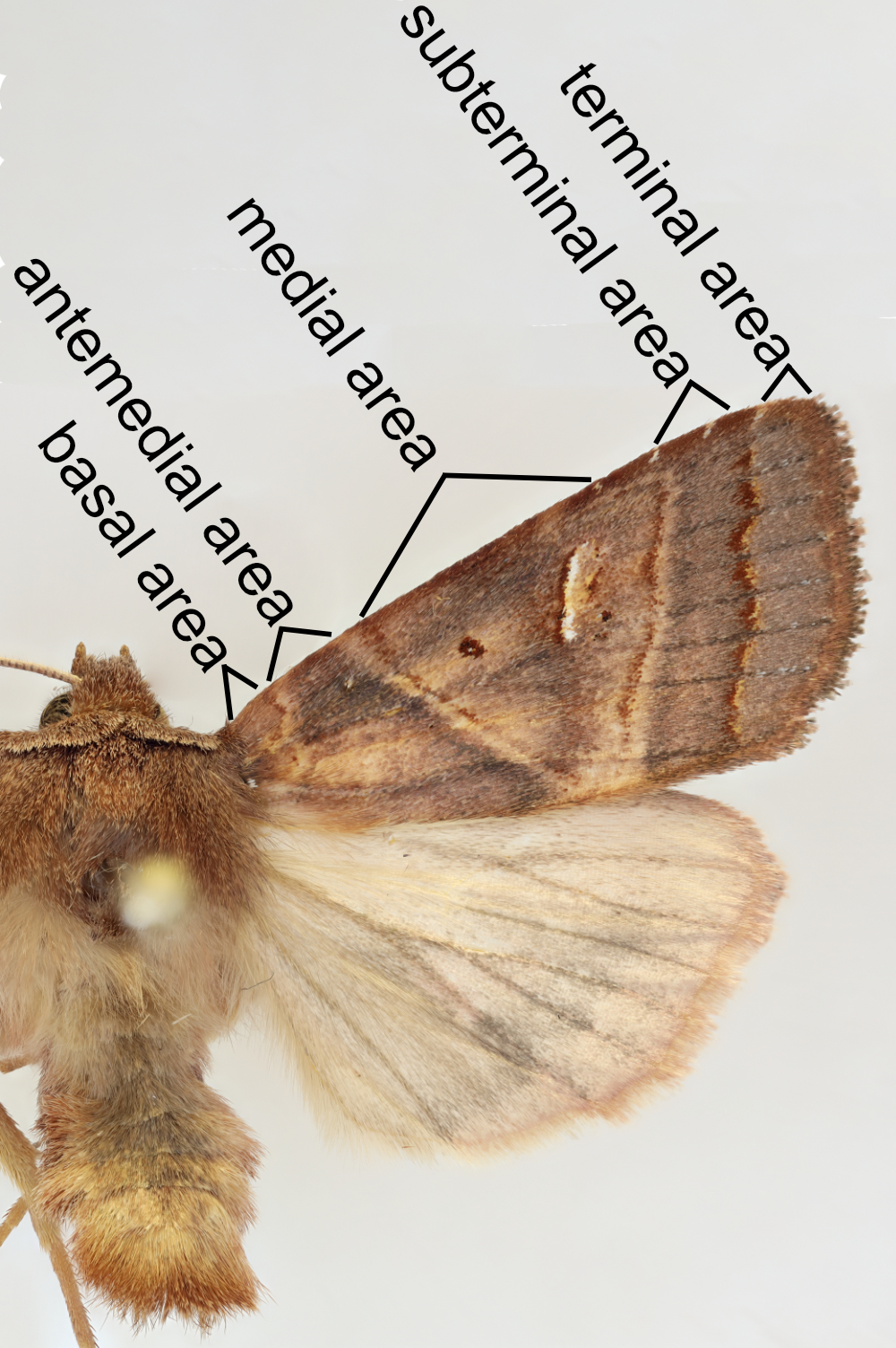 and a strong pink wash to the terminal areaterminal area:
the portion of the wing that is located distal to the subterminal line and basal of the terminal line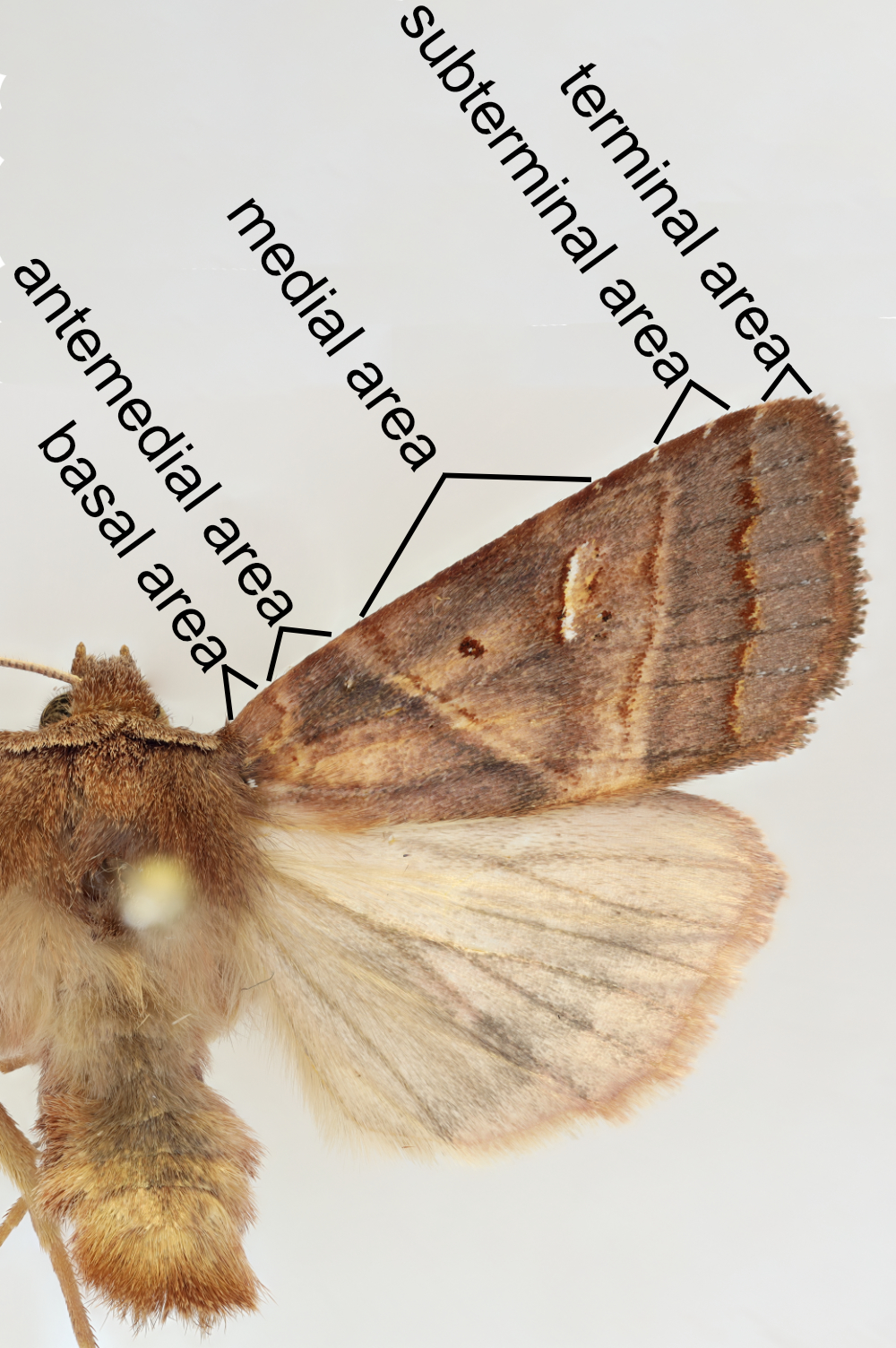 of the forewingforewing:
the front wing of an insect; the wing attached to the second segment of the thorax (the mesothorax)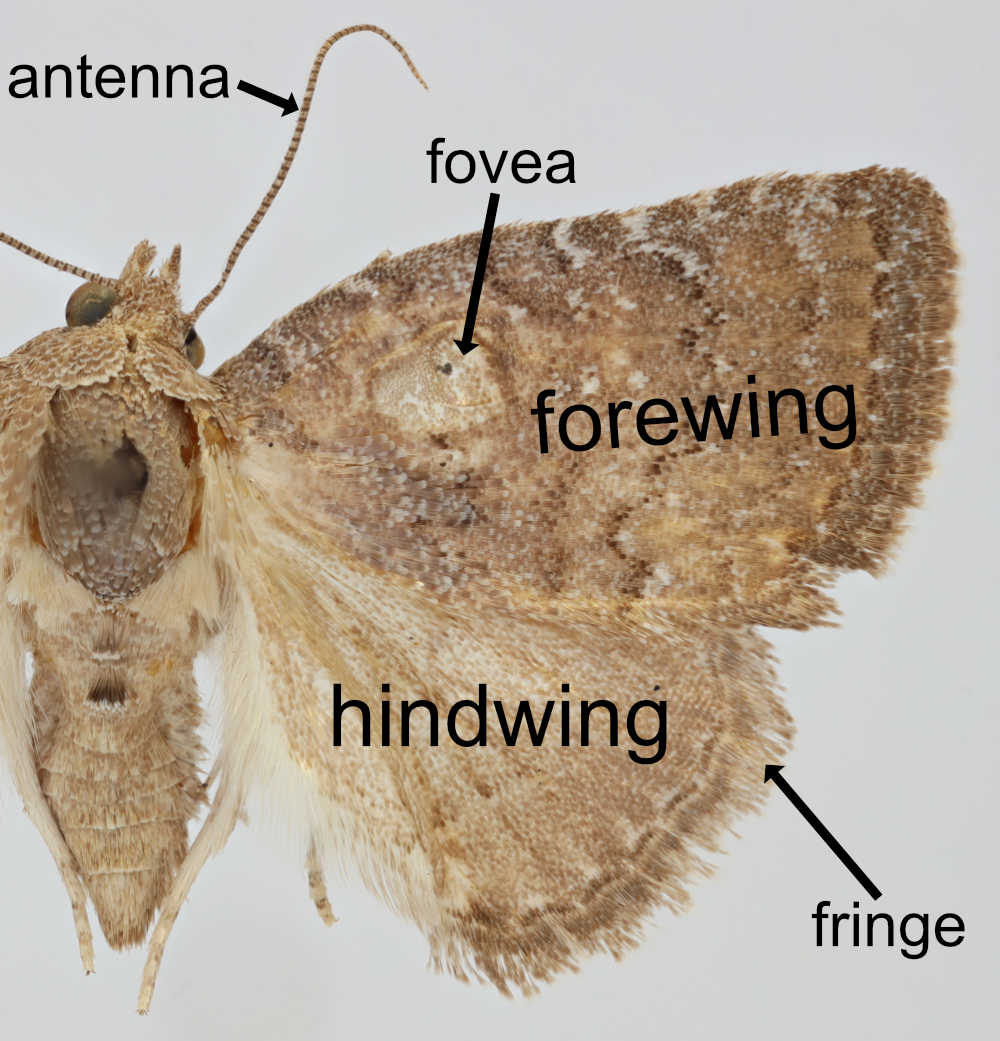 , especially in males. The orbicular spotorbicular spot:
a round or oval spot located in the middle of the discal cell of the forewing, between the antemedial and median lines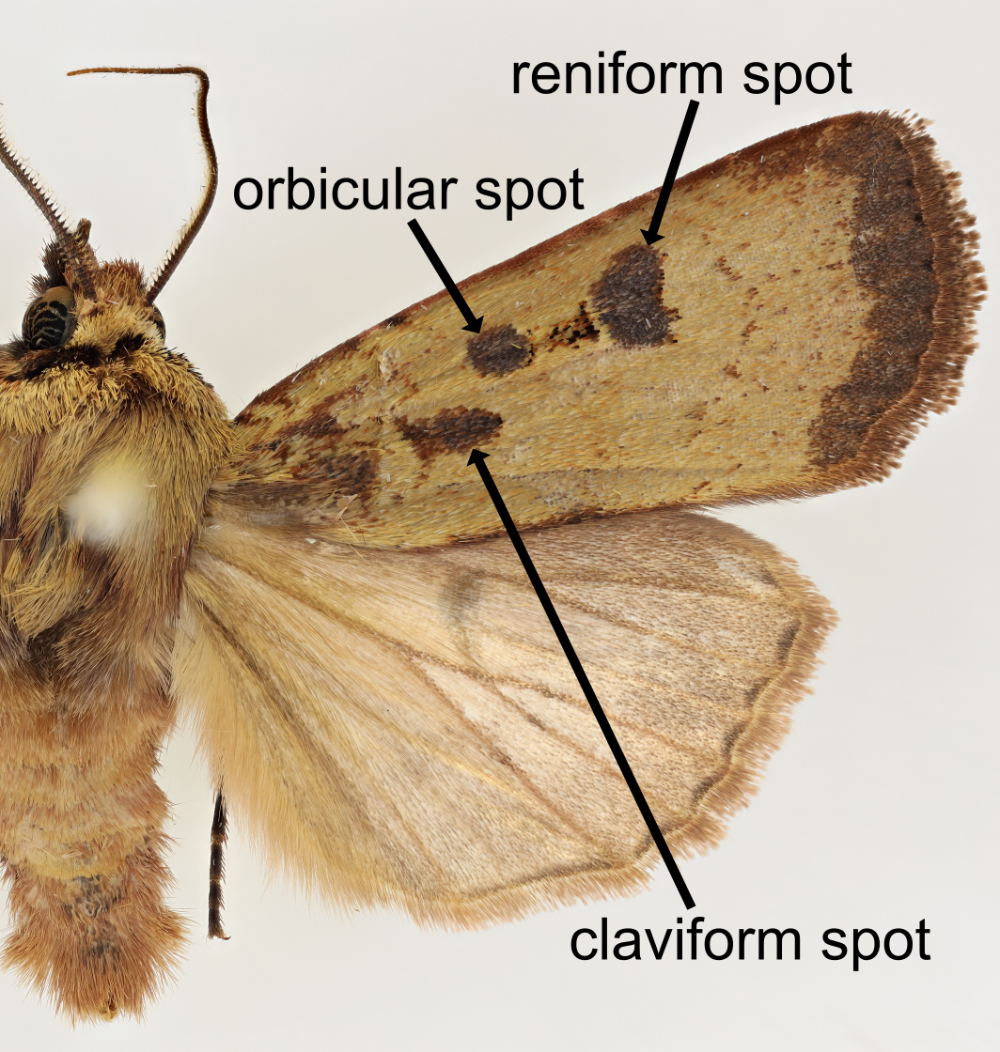 is elliptical, slightly quadrate; the reniform spotreniform spot:
a spot, often broad bean- or kidney-shaped, found at the distal end of the discal cell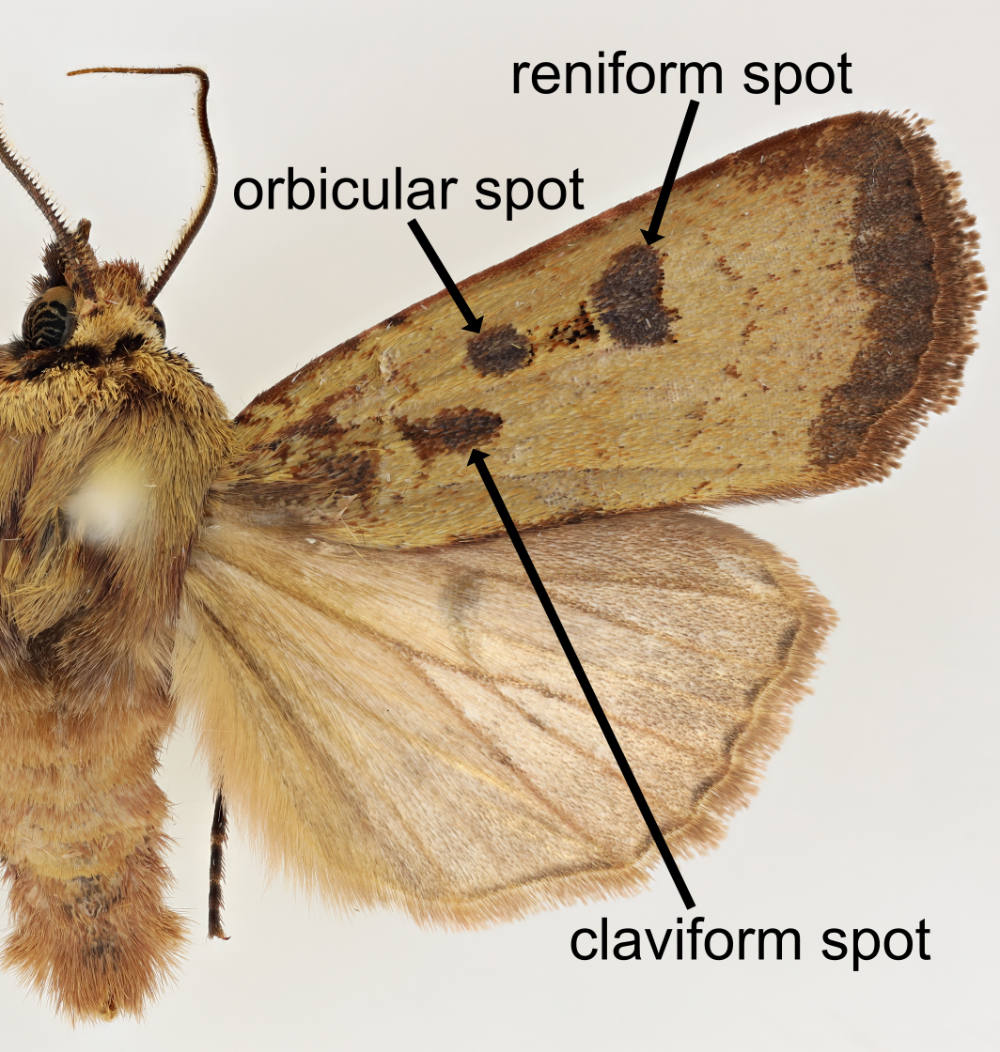 is nearly triangular. The hindwinghindwing:
the back wing of an insect; the wing attached to the third segment of the thorax (the metathorax)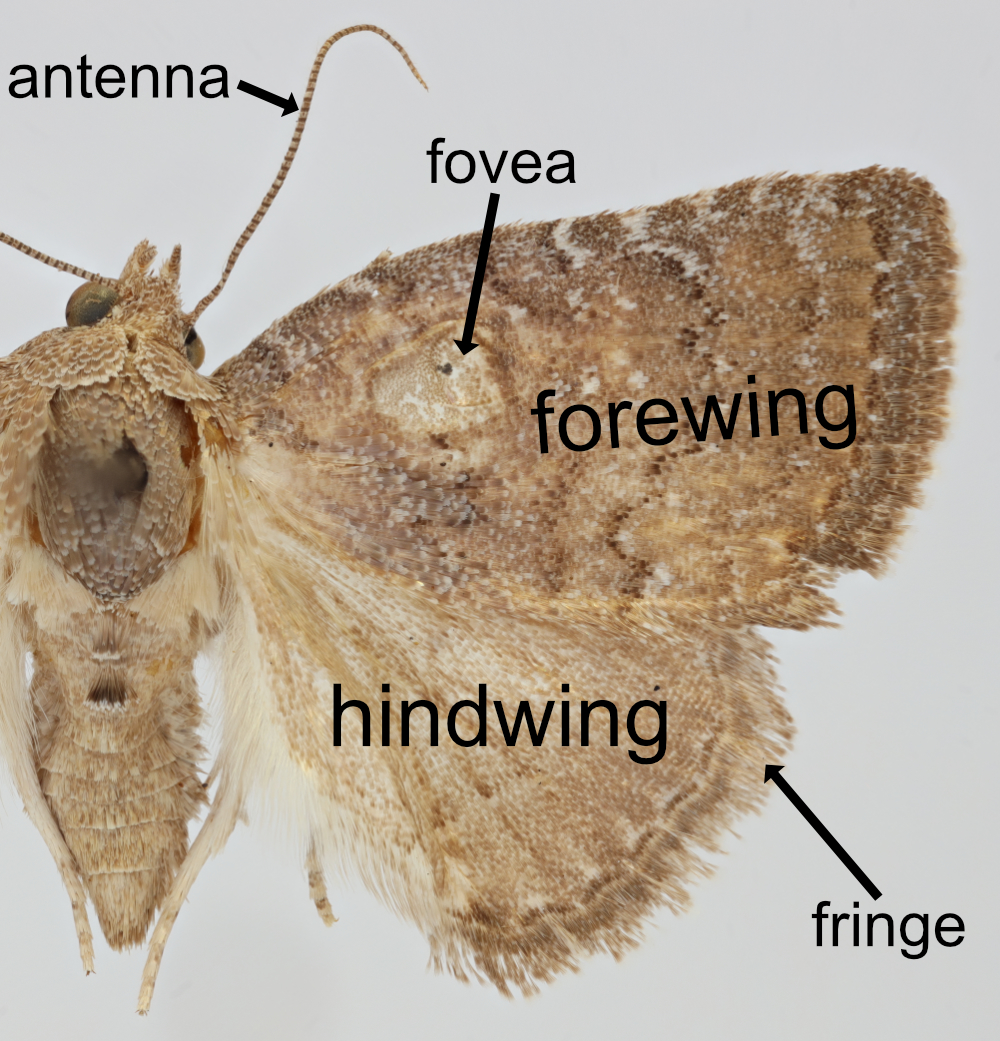 is white with dark shading distally and along the veins.
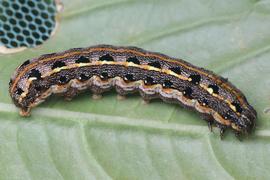
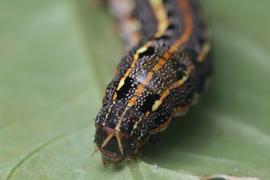
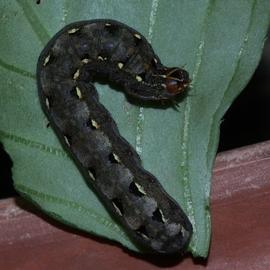
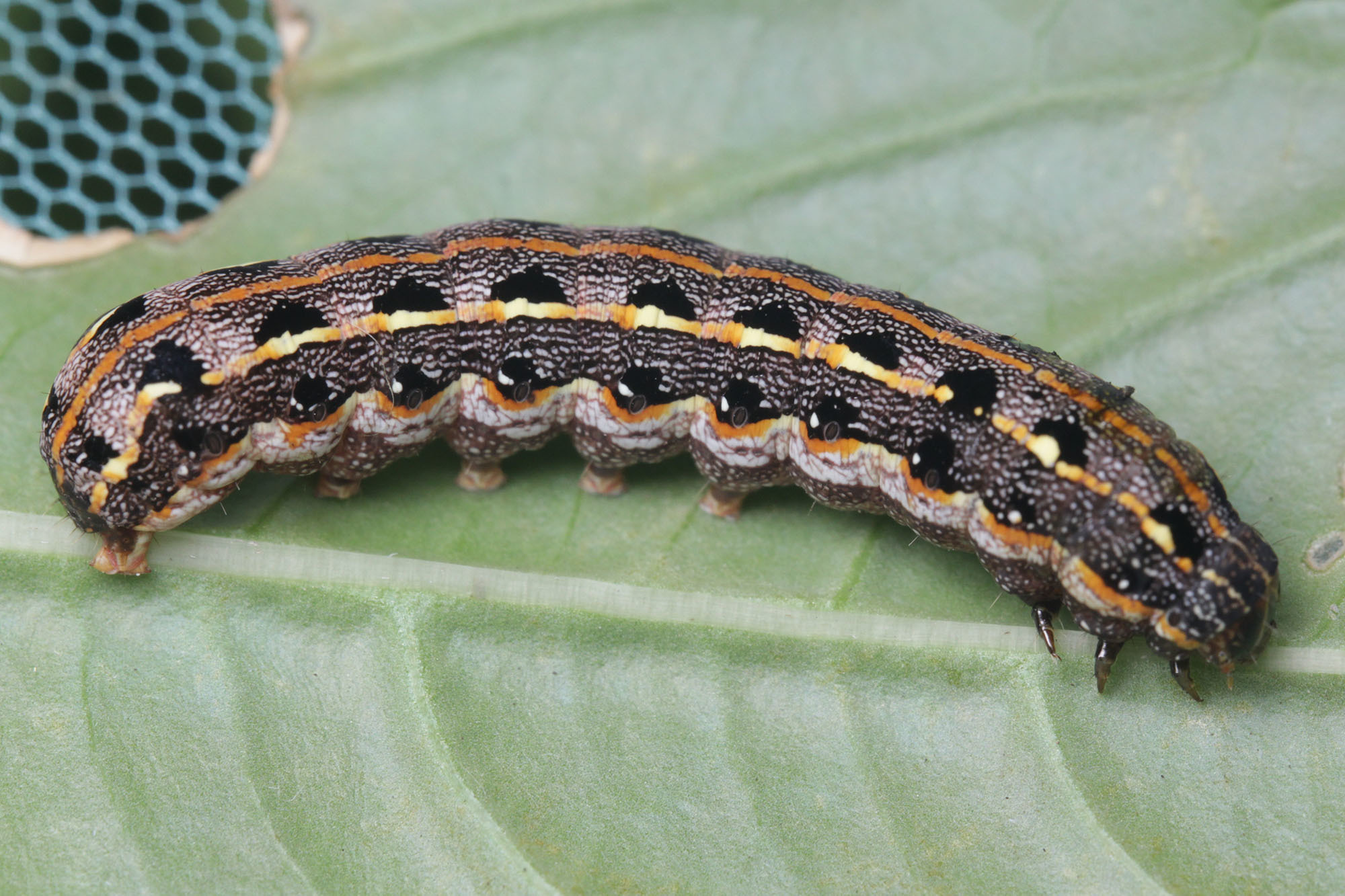
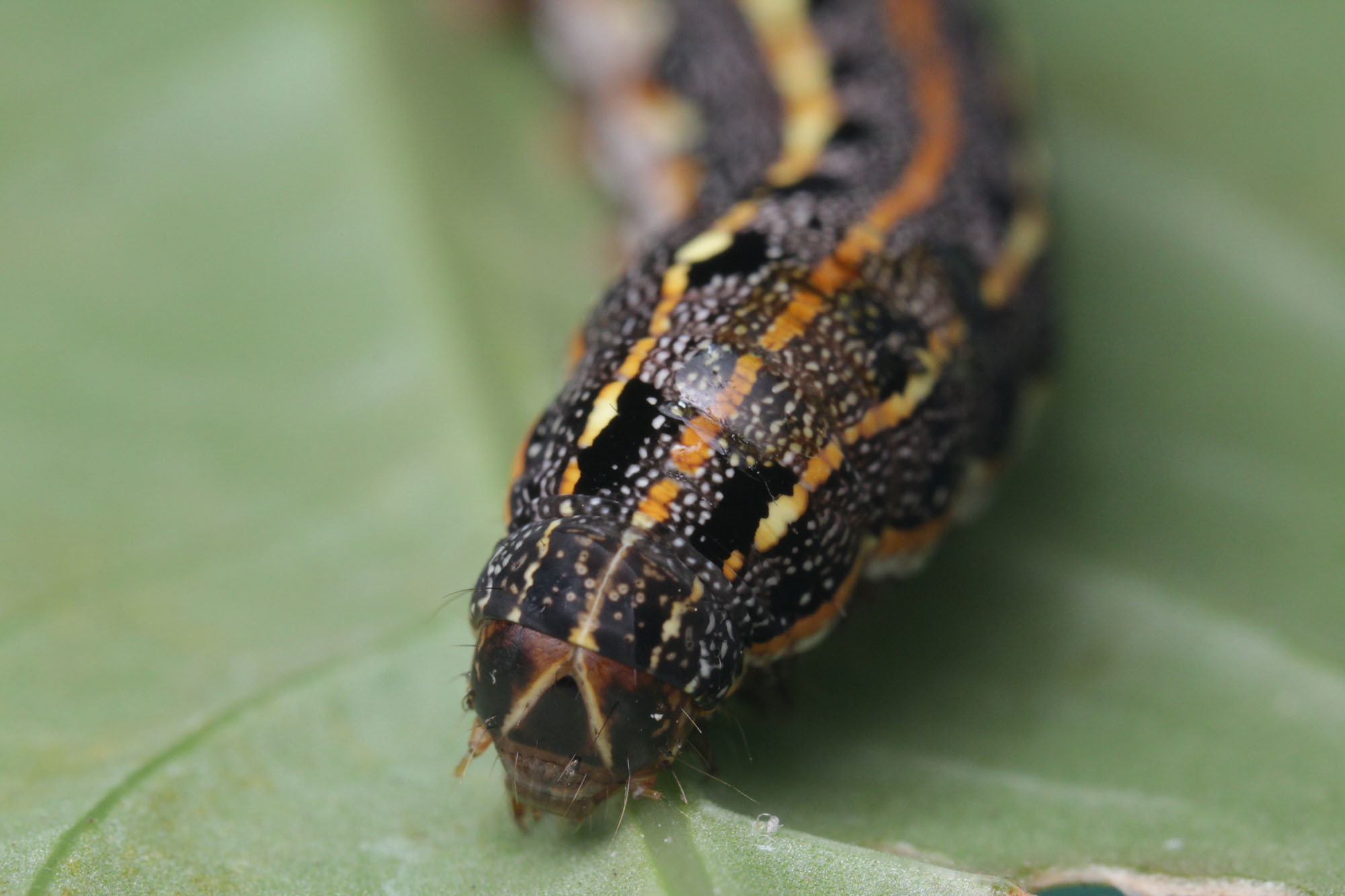
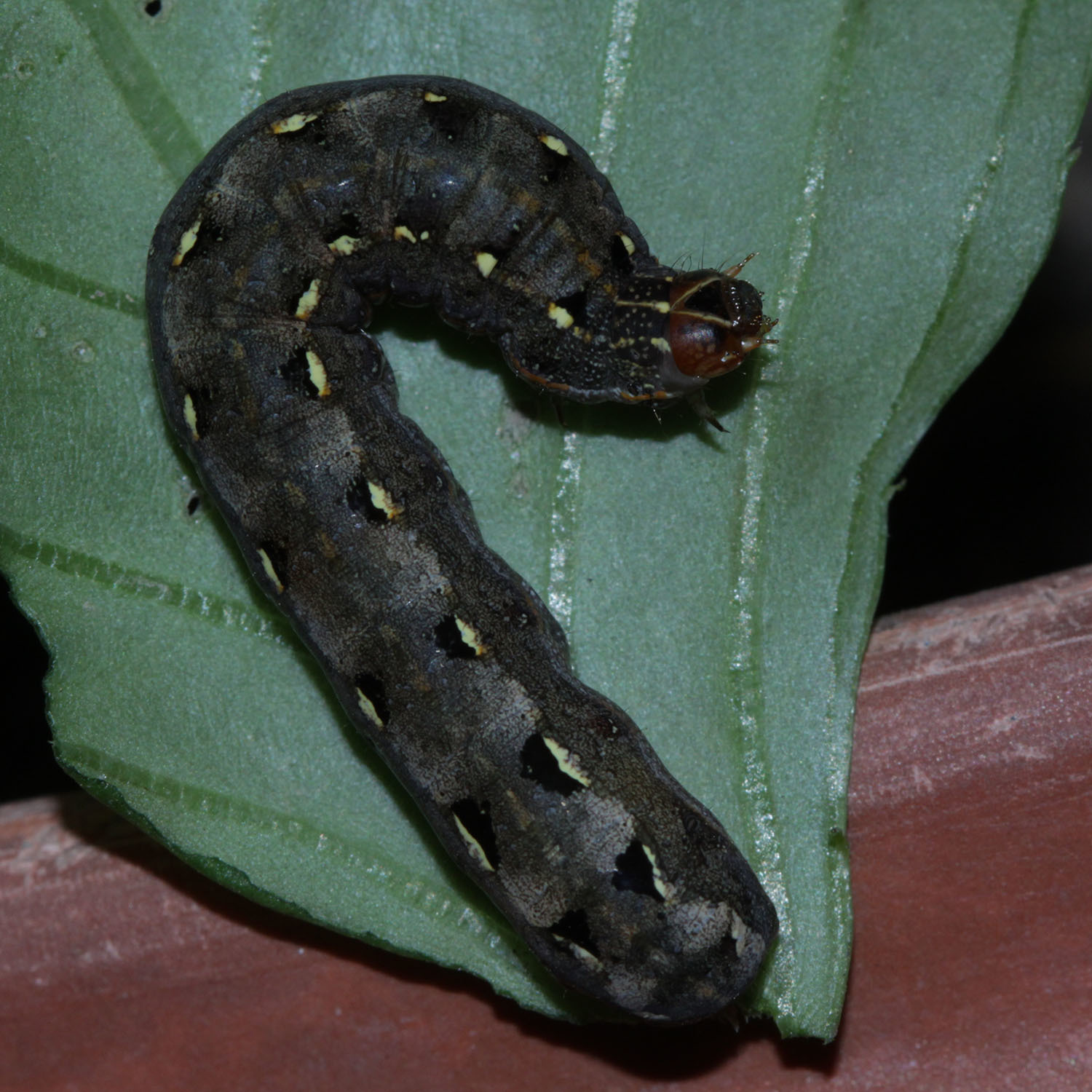
The fully grown larvae have the "head dark brown to black, pale brown on vertex and with pale marks laterally; frons dark brown to black; adfrons white. Pronotal shield black with pale speckling. Ground color dark grayish to blackish with pale speckling. Middorsal stripe yellow. Segmental spots black. Dorsolateral stripe yellow. Subspiracular stripe dull yellow. Spiracles black. Venter dull green. Thoracic legs black. Proleg shields black" (Pogue 2002Pogue 2002:
Pogue MG. 2002. A world revision of the genus Spodoptera Guenée (Lepidoptera: Noctuidae). Memoirs of the American Entomological Society. 43:1–202.).
Variation occurs in the body color with both light and dark forms known.
More information available on LepIntercept.
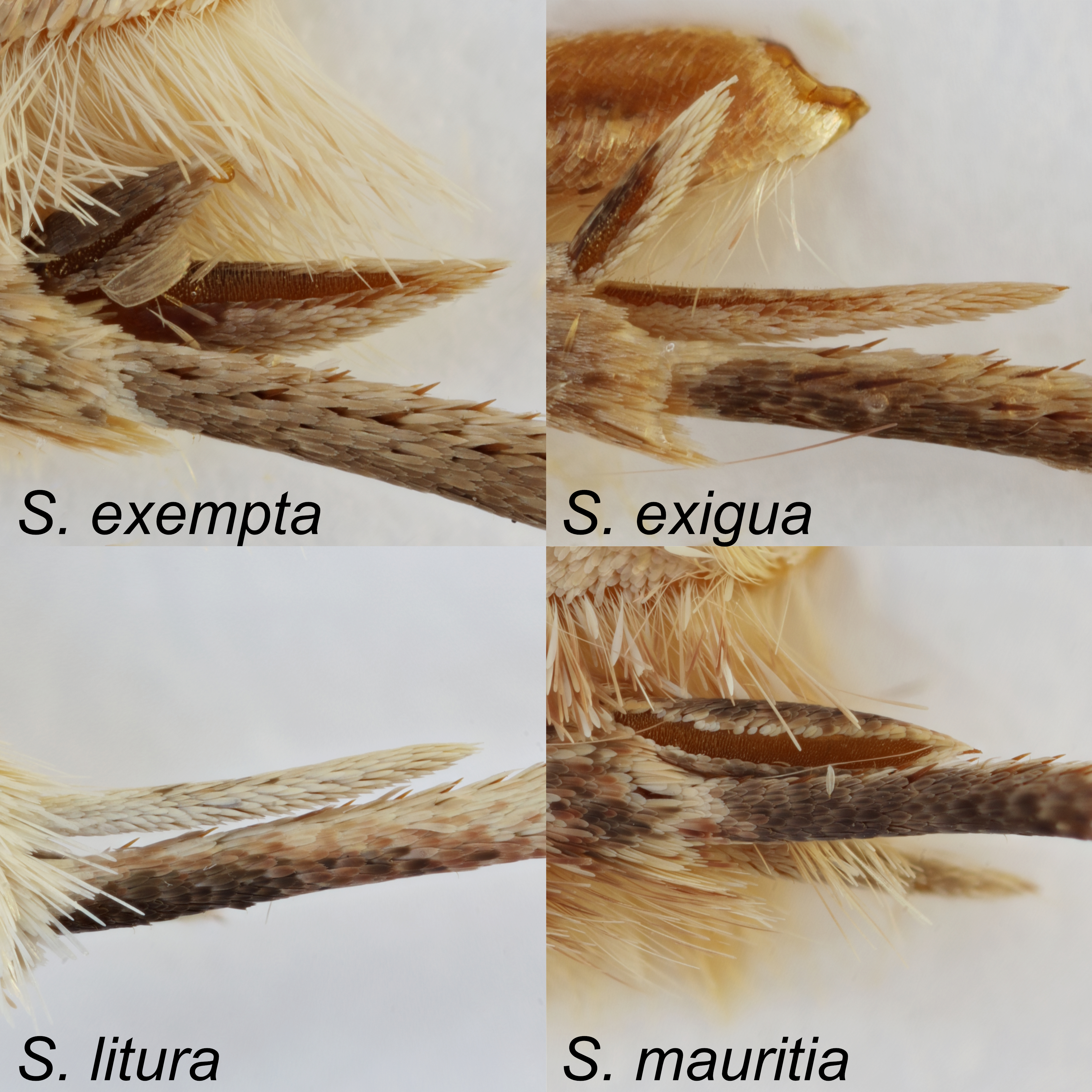
Adults of Spodoptera litura can be separated from other species of Spodoptera in Hawaiʻi by the unique triangular shape of the reniform spotreniform spot:
a spot, often broad bean- or kidney-shaped, found at the distal end of the discal cell (rounded or kidney-shaped in other species) and the pink wash to the distaldistal:
towards the free end of an appendage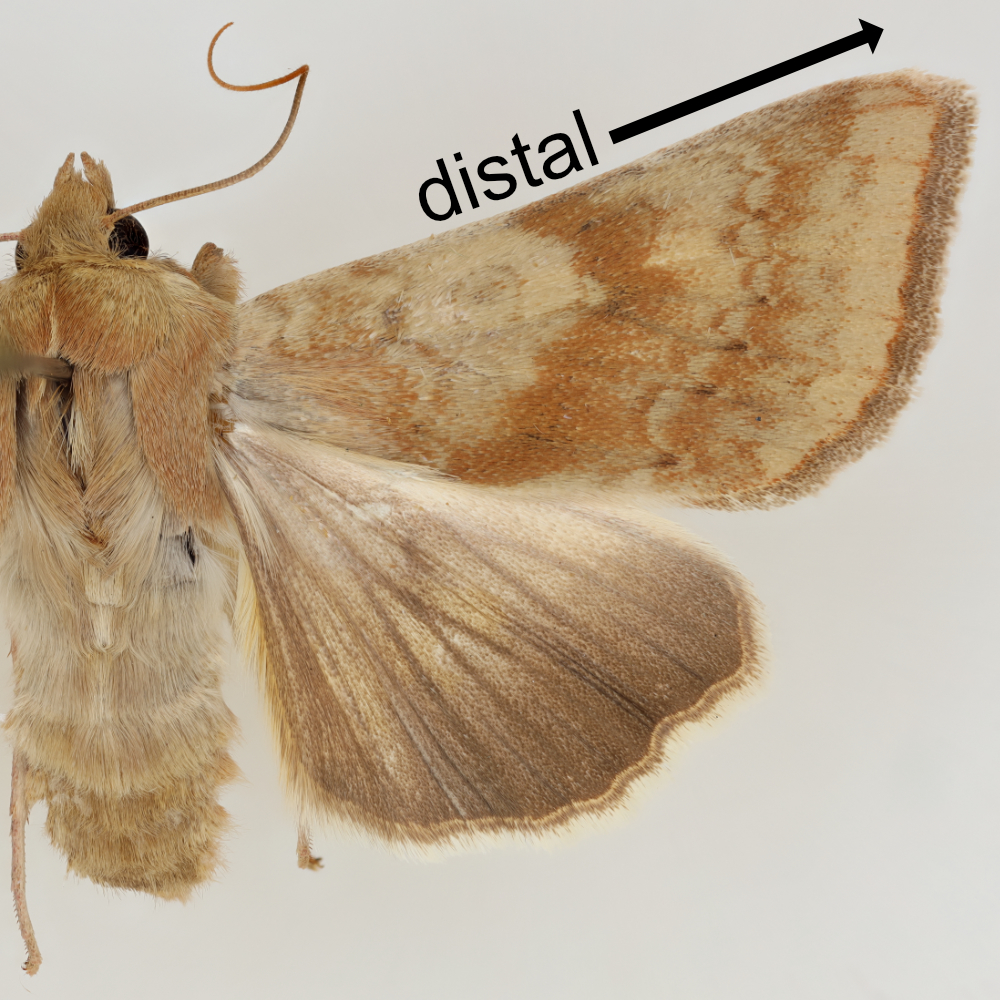 portion of the forewingforewing:
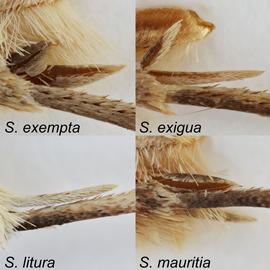
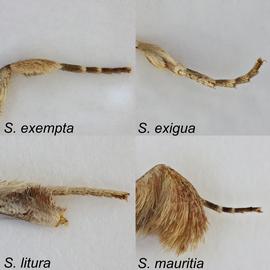
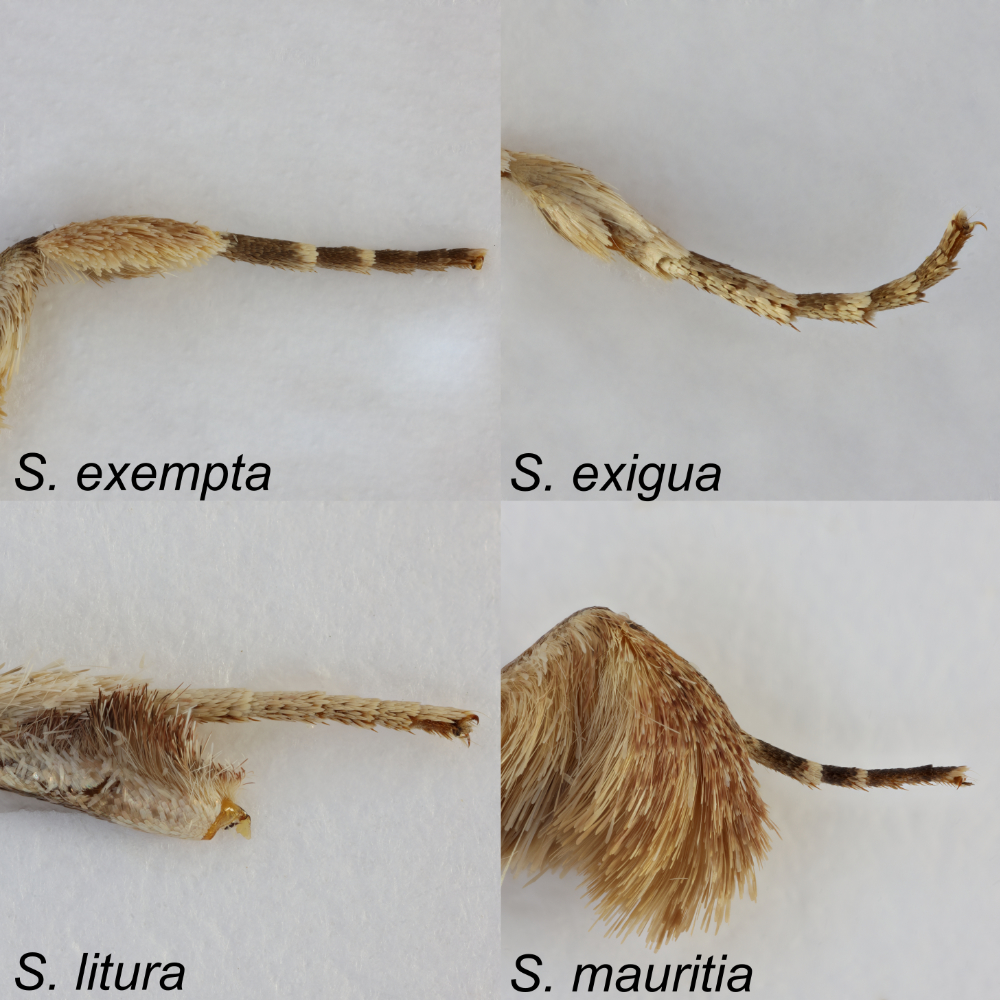
the front wing of an insect; the wing attached to the second segment of the thorax (the mesothorax). Males lack the specialized setose areas on the midleg tibiatibia:
the fourth segment of the insect leg; often a large and elongate segment with some ornamentation or identifying structures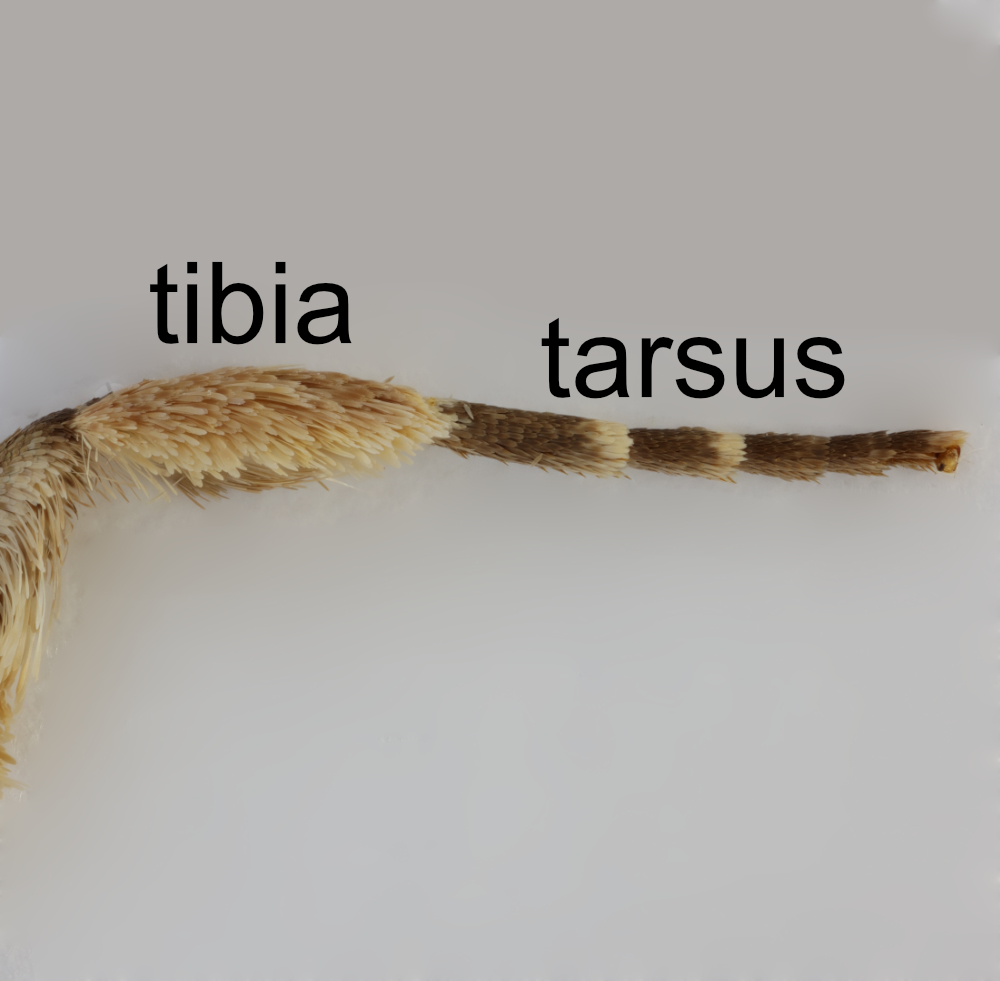 found in other species of Spodoptera in Hawaiʻi.
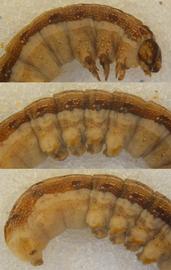
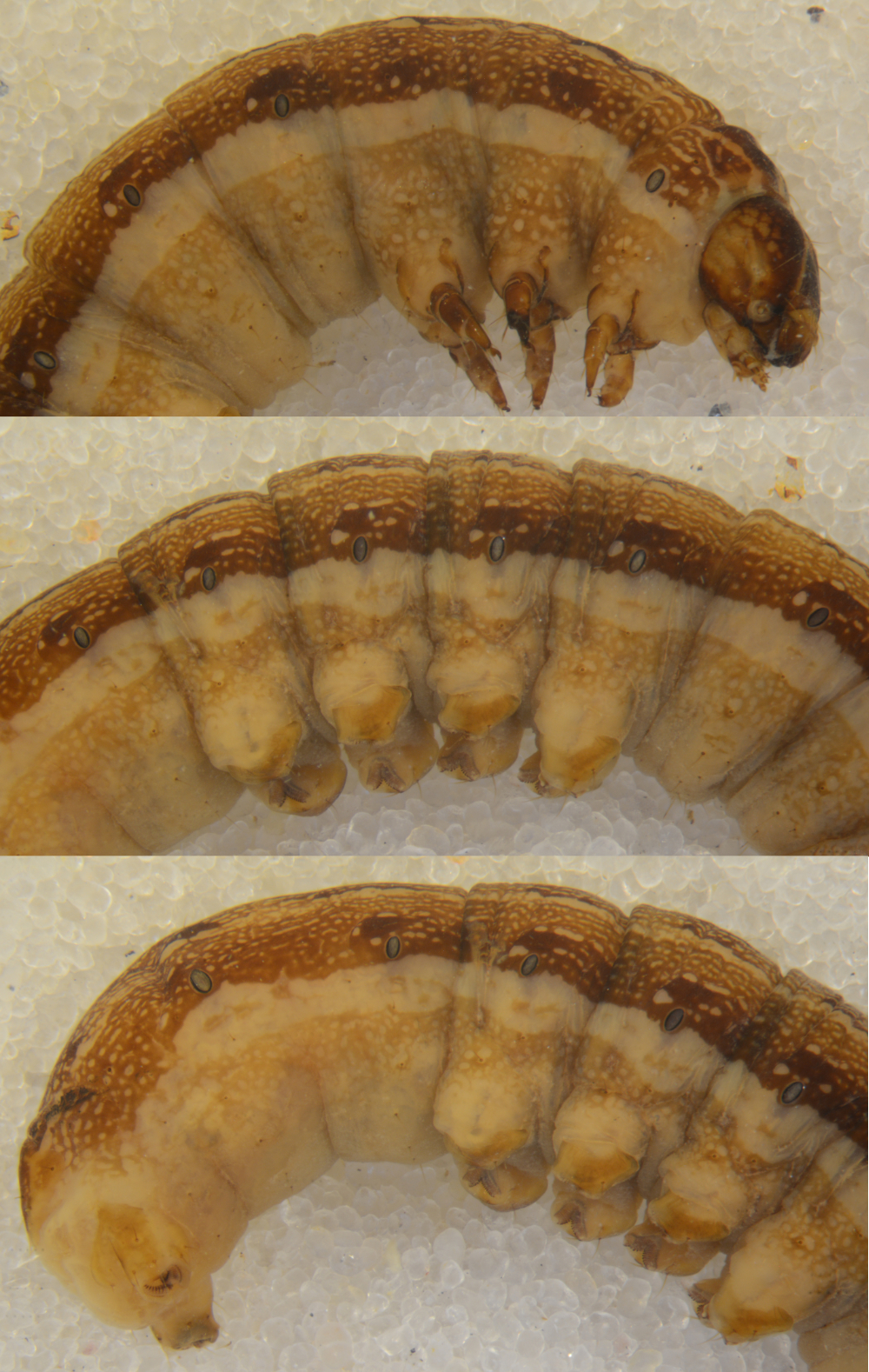
Larvae of S. litura "can be differentiated from [larvae of] S. mauritia by the serrate edge of the mandible in S. litura. [It] can be separated from S. exigua because S. litura has dorsolateral marks on the meso- and metathorax [and] a smaller number of crochetscrochets:
sclerotized, hooklike structures, usually arranged in rows or circles on the prolegs of Lepidoptera larvae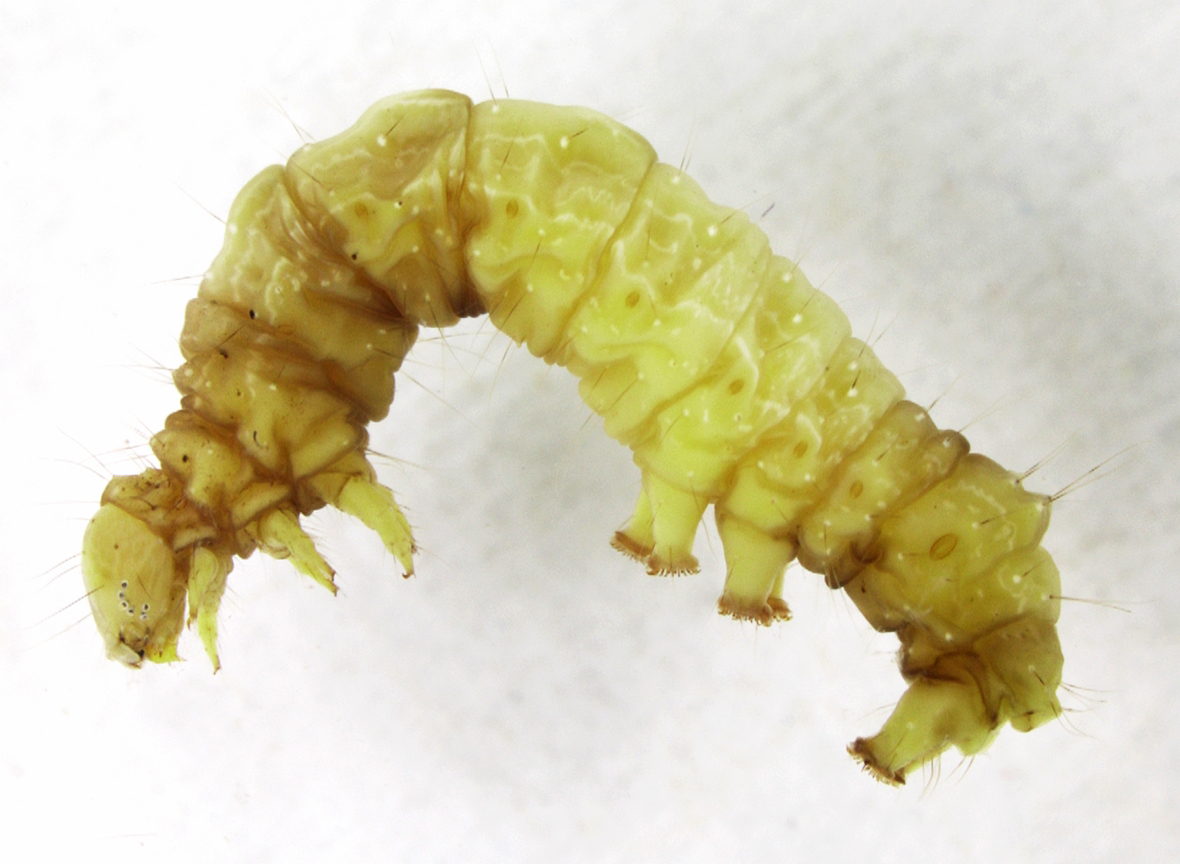 on the prolegs" (Pogue 2002Pogue 2002:
Pogue MG. 2002. A world revision of the genus Spodoptera Guenée (Lepidoptera: Noctuidae). Memoirs of the American Entomological Society. 43:1–202.).
The global range of Spodoptera exempta includes much of Asia, from Iraq and Oman east to India, Japan, and South Korea, as well as southeast Asia, Australia, New Zealand (introduced), and many South Pacific Islands (EFSA 2019EFSA 2019:
EFSA PLH Panel (EFSA Panel on Plant Health), Bragard C, Dehnen-Schmutz K, Di Serio F, Gonthier P, Jacques M-A, Jaques Miret JA, Justesen AF, Magnusson CS, Milonas P, Navas-Cortes JA., Parnell S, Potting R, Reignault PL, Thulke H-H, Van der Werf W, Vicent Civera A, Yuen J, Zappalà L, Malumphy C, Czwienczek E, MacLeod A. 2019. Pest categorisation of Spodoptera litura. EFSA Journal. 17(7):1–35.). In Hawaiʻi, S. litura is only known from Midway, Kure, and French Frigate Shoals in the Northwestern Hawaiian Islands (Beardsley 1966Beardsley 1966:
Beardsley JW. 1966. Insects and other terrestrial arthropods from the Leeward Hawaiian Islands. Proceedings of the Hawaiian Entomological Society. 19(2):157–185.).
Spodoptera litura is the most polyphagous species of Spodoptera with 151 species in 51 families of recorded host plants. Like S. littoralis, this species is not confined to a few families, and both have similar hosts plants. Agriculturally important crops attacked include cotton (Gossypium spp.), rice (Oryza sativa L.), green gram (Vigna radiata (L.) R.Wilczek), corn (Zea mays L.), cabbage (Brassica oleracea L.), beet (Beta vulgaris L.), peanut (Arachis hypogaea L.), soybean (Glycine max (L.) Merr.), castor oil plant (Ricinus communis L.), tomato (Solanum lycopersicum L.), and tobacco (Nicotiana tabacum L.). (Pogue 2002Pogue 2002:
Pogue MG. 2002. A world revision of the genus Spodoptera Guenée (Lepidoptera: Noctuidae). Memoirs of the American Entomological Society. 43:1–202.).
Author: Kyhl A. Austin
Content last updated May 2026
idtools.org